REVIEW · MOUNT ETNA
Etna: Craters of the 2002 Eruption Trekking Experience
Book on GetYourGuide →Operated by Guide Vulcanologiche Etna Nord · Bookable on GetYourGuide
Etna’s 2002 scars are still visible up close. This 3-hour guided trek on Mount Etna’s north side takes you from Piano Provenzana toward the summit craters, walking through forest ground, lava streams, eruptive fractures, and the big crater area tied to the eruption of 2002. You’ll be looking at the actual working parts of the volcano’s recent story, not just photos.
I love how the guide explains what you’re seeing in plain language, often with extra teaching tools like eruption photos and personal video clips—names you may meet include Daniele, Davide, Vincenzo, and Niko. I also love the pacing and the setting: you’re not stuck in the biggest tourist crush, and you get wide views over the eruptive theater and toward the Calabrian Coast.
One thing to consider: the trek runs over volcanic soil that can feel uneven and unstable, and the crater-edge walking can trigger dizziness if you’re sensitive to heights or slopes.
In This Review
- Key highlights you’ll feel on the walk
- The 2002 eruption’s crater walk: why this route hits different
- Where you meet (and how to avoid the wrong bar)
- The 3-hour plan: a walk with stops that actually teach
- Piano Provenzana to the summit: forest, lava streams, and fractures
- Hotel dell Betulle ruins: the one structure you can spot
- Hornitos and cinder cones: small over, big meaning
- Summit craters: looking over the edge, then going down inside
- Views: the eruptive theater and the Calabrian Coast
- What to bring: gear that keeps you comfortable and covered
- Who should do this trek (and who should skip it)
- Price and value: $41 for a guided volcano lesson
- Language, guide style, and safety feel
- Should you book this Etna 2002 Craters trek?
Key highlights you’ll feel on the walk
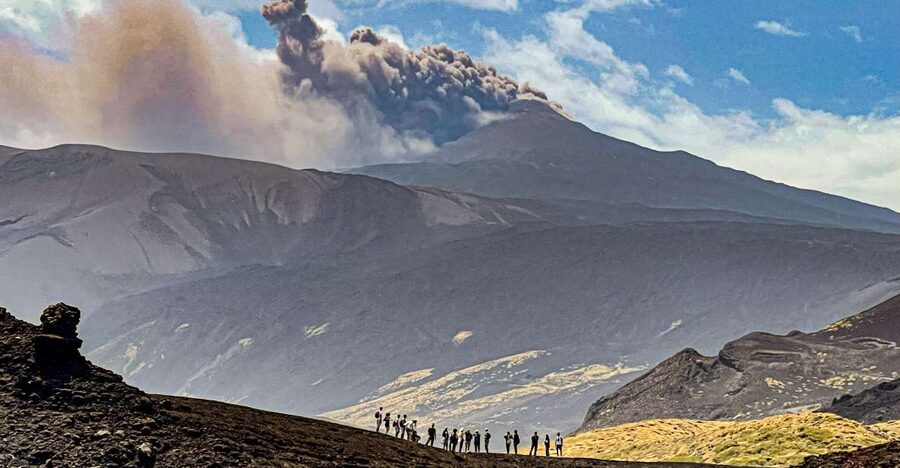
- The 2002 eruption’s craters and destruction zone at Piano Provenzana
- Forest walking plus lava streams, eruptive fractures, and other volcanic features
- A stop at the ruins of the Hotel dell Betulle, the only visible structure from that flow
- Hornitos on the way up (small “over” structures) and ascent of cinder cones
- Summit views from the crater edge and a descent through a sandy channel
- Real-life practicals: shoes, wind layers, and possible rentals if conditions change
The 2002 eruption’s crater walk: why this route hits different
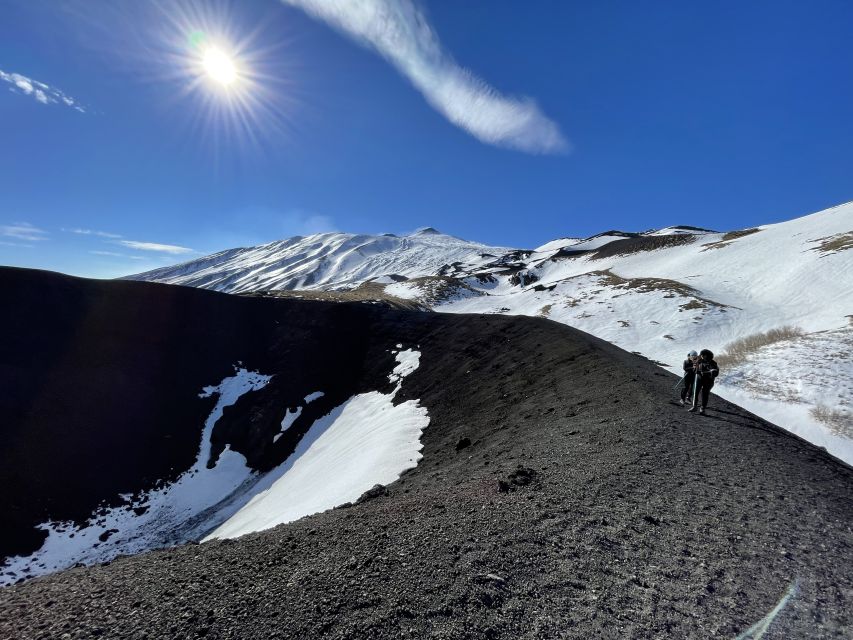
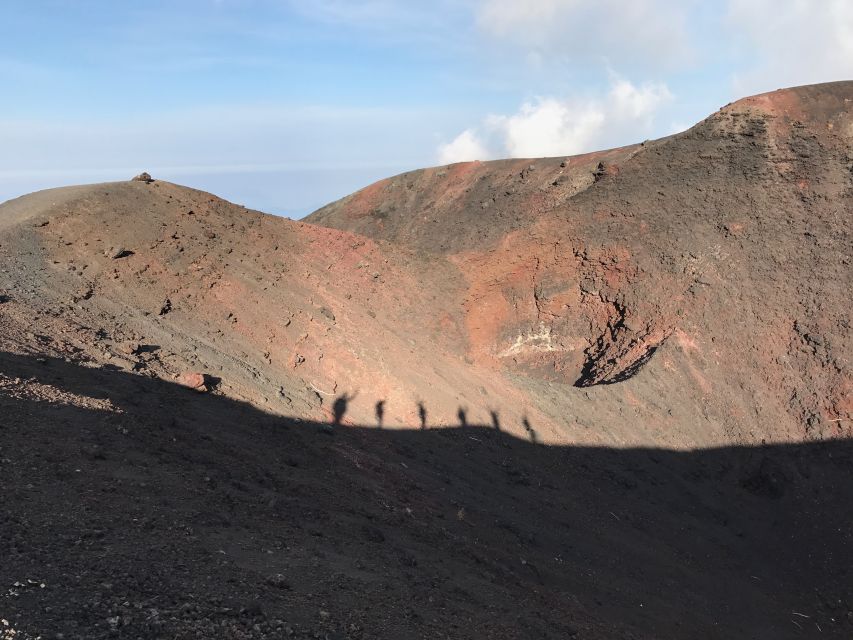
Etna is active and changing, but this trek zeroes in on a very specific slice of recent time: the 2002 eruption that devastated Piano Provenzana and reshaped parts of the north side. What makes the experience worthwhile is that you can connect each stopping point to a visible feature—fractures you can stand beside, crater forms you can look down into, and lava-related ground you walk across.
That matters for you because Etna isn’t just a mountain; it’s a process. This route trains your eyes to read volcanic terrain. Even in a 3-hour format, you’ll spend enough time at key morphologies to understand the “how” behind the “wow.”
The views are part of the payoff too. From the summit area, you’re meant to take in the eruptive theater and the wider view out toward the Calabrian Coast—so your brain gets both the close-up science and the bigger geographic context.
You can also read our reviews of more tours and experiences in Mount Etna.
Where you meet (and how to avoid the wrong bar)
Meeting point confusion is common at Etna, so I like that this one is very specific. Meet at Chiosco Bar Mareneve, not Chiosco Bar Etna Nord, which is in the lower parking lot. The correct spot is near the winter chairlift, and it’s the second house of 4 in the parking lot.
This matters for timing. You’ll have a 3-hour trek with guide-led stops, so arriving right on time helps the group flow and gives you the full tour rhythm.
The tour ends back at the meeting point, which makes logistics simpler than hikes that drop you in a different place.
The 3-hour plan: a walk with stops that actually teach
This isn’t a sprint. The trek totals about 3 hours, but the real time depends on group pace and conditions (weather, volcanic activity, or wind). Guides can adjust the route or interrupt it if conditions change, so think of this as a guided walk designed around safety and visibility—not just a fixed checklist.
You’ll start along the dirt road that leads from Piano Provenzana toward the summit craters. Early on, you’re mainly oriented: you move from road-to-trail, then into forest ground. This is a good approach for you because it gets your legs working before you’re asked to focus on steep edges and crater terrain later.
Along the way, the guide stops for explanations tied to what you can see right there. That’s a big reason people rate this trek so highly—guides like Daniele or Vincenzo are known for combining science talk with humor and keeping it varied so it doesn’t feel like a lecture.
Piano Provenzana to the summit: forest, lava streams, and fractures
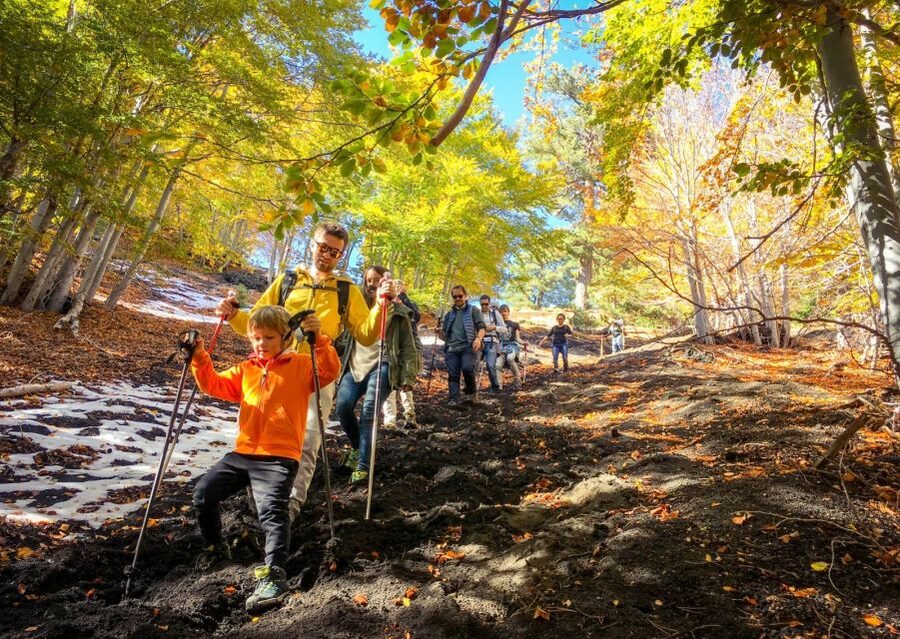
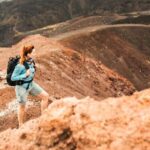
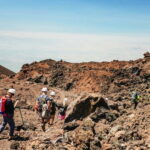
As you leave the dirt road zone, you’ll work your way into the volcanic features that mark the eruption’s impact. You should expect a mix of walking surfaces: forest paths, rougher volcanic ground, and areas where lava streams and eruptive fractures are visible.
This is where the trek becomes more than a scenic walk. Each stop is tied to “what the eruption did,” and you’re meant to study those volcanic morphologies rather than just pass by them. The route is especially focused on the north side evidence, including flank eruptions and the most recent events that threatened the city of Linguaglossa.
What to watch for:
- The soil can be inconsistent, so keep a steady pace and watch your footing.
- Some crater-edge sections may cause dizziness for susceptible people.
- Wind can increase the feeling of exposure, especially near summit points.
Hotel dell Betulle ruins: the one structure you can spot
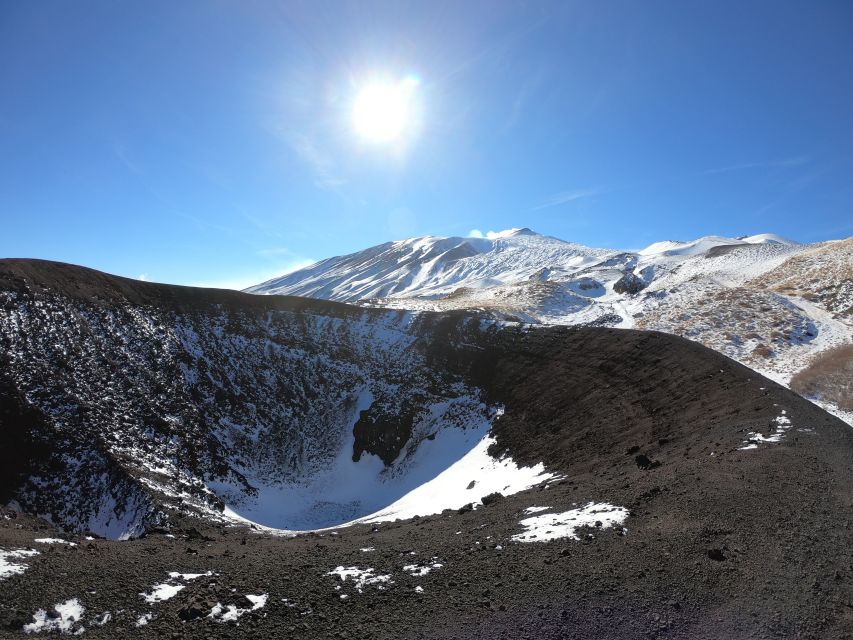
One of the most memorable stops is the ruins of the Hotel dell Betulle. It’s described as the only visible structure left standing from the 2002 lava flow, which is exactly the kind of detail that makes the eruption feel real.
For you, this stop adds emotional clarity to all the volcanic talk. Instead of thinking only about science terms, you see how the eruption affected the human side of the area—then you walk onward to interpret the ground forms that replaced normal life.
It’s also a useful visual reference point. When the guide later points out other eruption-linked features, your brain already has a landmark—an anchor that helps you remember the route.
Hornitos and cinder cones: small over, big meaning
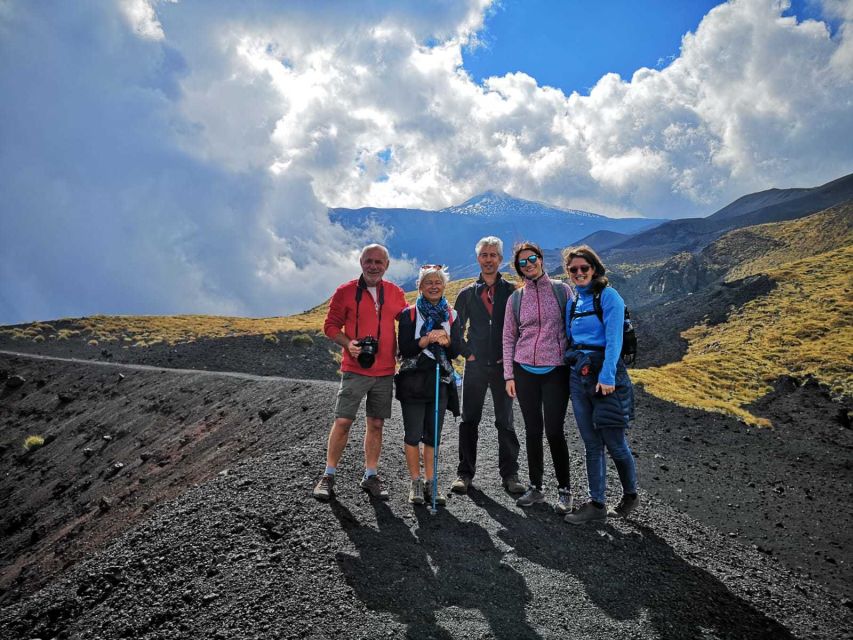
As you climb, you’ll reach structures called hornitos. The name matters: it means small over, and the guide will explain the idea as part of the eruption process you’re seeing on the ground. You’ll then continue up along the cinder cones, which are an obvious, physical way to understand how material piles up around vent activity.
This section is valuable because it shifts you from “looking at craters” to “understanding how the volcano built them.” Hornitos and cinder cones give you a more layered view of the eruption mechanics than crater rims alone.
Drawback to plan for: as you gain altitude and move along crater-adjacent terrain, the walk can feel harder, especially for people who don’t hike often. The trek is reserved for hikers with medium training, and volcanic soil can be unstable—so take the climbs one careful step at a time.
Summit craters: looking over the edge, then going down inside
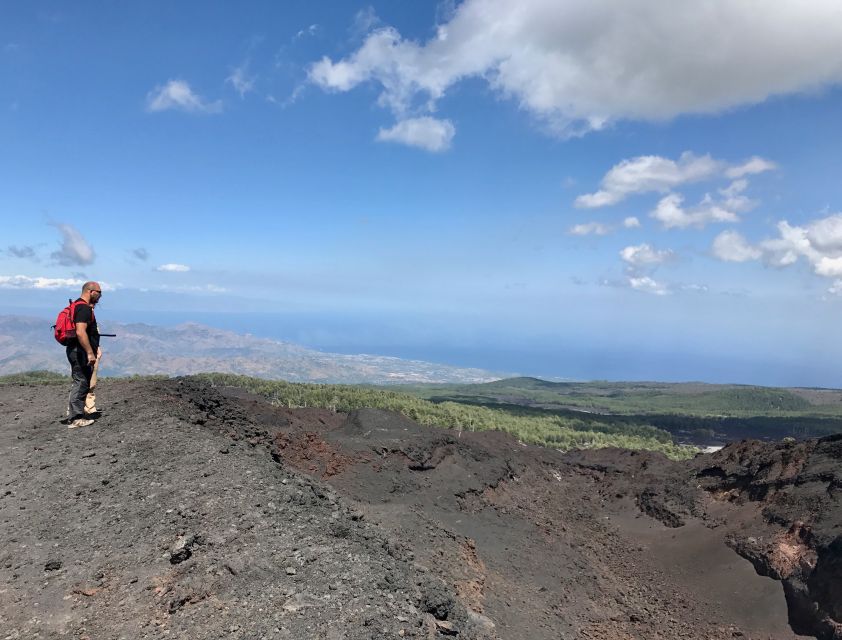
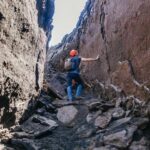
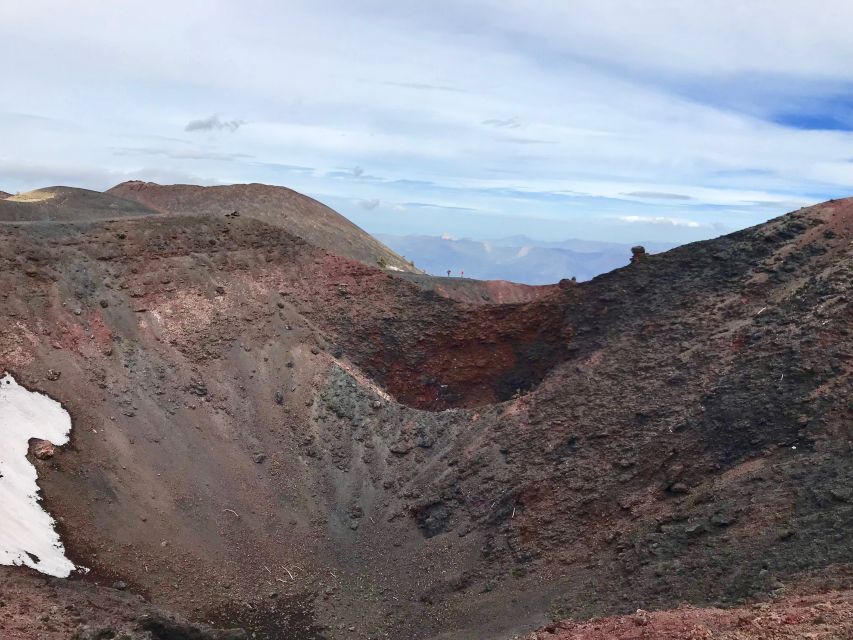
At the summit, you’ll do the main crater experience: look over the edge of the craters. After that, you’ll return by going down inside a sandy channel back toward the starting point.
This design is practical and scenic:
- The crater edge gives you the big-picture view you came for.
- The sandy channel descent gives you a clear route back without needing a separate shuttle.
But it also comes with the reason this tour has a list of “not suitable” conditions. If you’re afraid of heights, have vertigo, or get dizzy around crater edges, you’ll likely struggle here. If that’s you, it’s better to choose a different Etna hike that avoids exposed crater walking.
Views: the eruptive theater and the Calabrian Coast
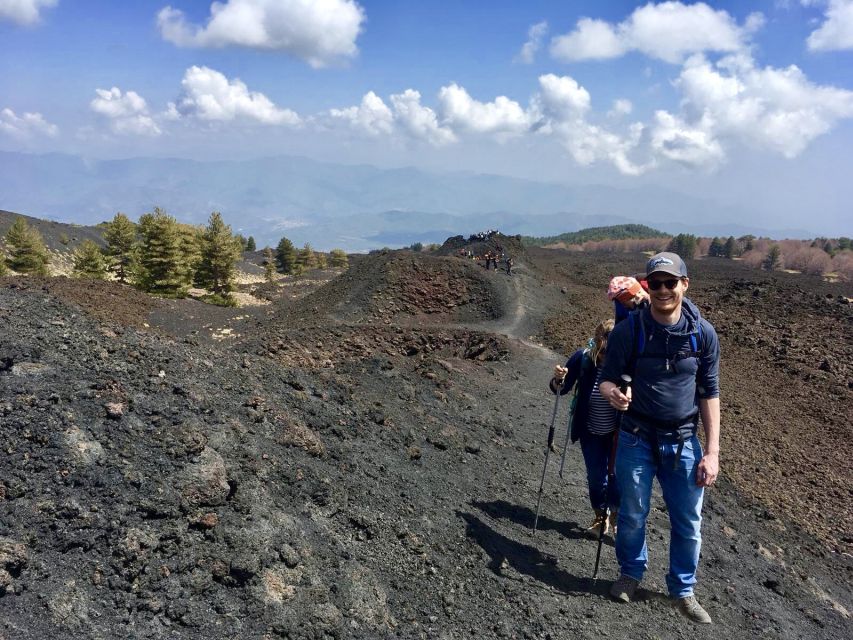
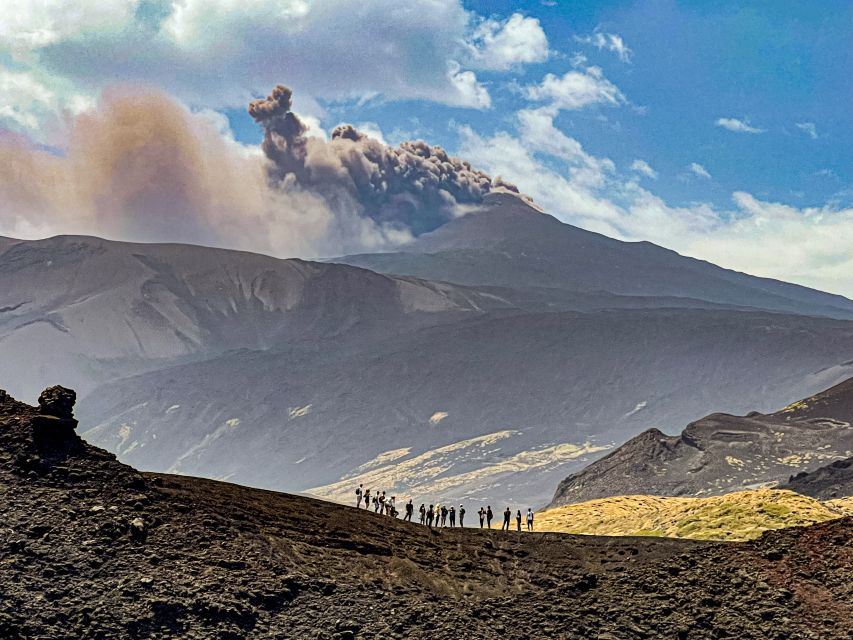
Etna’s north side offers a wide stage. During the summit portion (and sometimes earlier stops, depending on route and weather), you’ll be asked to admire views over the eruptive theater and out toward the Calabrian Coast.
This is a big part of why the experience scores so well. You’re not staring at rock all morning—you’re alternating between close-up evidence (lava, fractures, crater forms) and long-range geography (where the volcano sits in the broader world).
If conditions are windy, it can reduce how long you want to stand still for photos, but the guide can often time viewpoints for safer comfort.
What to bring: gear that keeps you comfortable and covered
This tour is short enough that you can pack smart. Bring:
- Windbreaker
- Sunglasses
- Snacks
- Hiking shoes
- Sunscreen
- Water
- Jacket and comfortable clothes suitable for weather
- A daypack
Important rules:
- No high-heeled shoes
- No sandals or flip-flops
- No baby strollers or luggage/large bags
- No skirts or slippers
Insurance is not something to treat casually. The info says you’re not covered if you don’t have adequate shoes, so don’t plan to “make do” with trail runners that don’t grip.
If you need rentals:
- Trekking shoes can be rented on the spot at authorized rentals for €5 per pair.
- If snow is present (December through March), snowshoes can be rented on-site for €12 per person.
- Windbreaker gloves or hats are not included, so pack them in cooler seasons.
A helpful extra: in real guides’ experience, some guides may carry spare layers if someone forgets a jacket. Still, don’t rely on that—pack your own wind protection.
Who should do this trek (and who should skip it)
This hike is designed for hikers with medium training. It’s not recommended if you do no regular physical activity. Even though reviews sometimes mention a wide range of ages making it through, your personal fitness and safety matter more than the group’s average.
It’s not suitable for:
- Children under 6
- Pregnant women
- People with back problems
- People with mobility impairments
- People with heart problems
- People afraid of heights or with vertigo
- People with respiratory issues
- People with epilepsy
If you’re unsure, the guiding principle is this: crater edges plus uneven ground plus wind can make a short hike feel long. If you fit any “not suitable” category, it’s the wrong day, even if you feel motivated.
Price and value: $41 for a guided volcano lesson
At about $41 per person, you’re paying for an official volcano guide plus insurance in case of accidents. For a 3-hour guided trek on active volcanic terrain, that’s pretty good value—especially because the guide time includes the interpretive stops (lava streams, fractures, hornitos, crater forms) that you can’t easily replicate on your own without knowing what you’re looking at.
What’s not included (so budget realistically):
- Transport from your accommodation to the starting point
- Trekking sticks
- Parking ticket: €3 for the whole day (paid after the excursion)
- Snacks and bottled water
- Trekking shoes rental (if needed): €5
- Windbreaker
- Gloves or hats (especially important in winter/spring/autumn)
- Snowshoes rental in winter months: €12
So the true cost is $41 plus whatever you need for shoes, winter gear, and food/water. If you already have proper footwear and you pack snacks and water, you’ll likely keep costs close to the base price.
Language, guide style, and safety feel
The guide works in Italian, French, and English. A key part of the experience is the way the guide teaches on the move. People often highlight guide names like Daniele, Davide, Vincenzo, and Niko, and that they balance science explanations with humor.
Safety-wise, the route includes:
- Walking along crater edges (with dizziness risk for susceptible people)
- Walking over volcanic soil that can be unstable
- Possible route variations if environmental, climatic, or volcanic conditions require changes
That means you should go in with a careful mindset. Keep your pace steady, follow guide instructions, and don’t try to rush crater-edge segments for photos.
Should you book this Etna 2002 Craters trek?
Book it if you want a short Etna experience that focuses on real eruption evidence: Piano Provenzana damage, the Hotel dell Betulle ruins, hornitos, cinder cones, and crater-edge viewpoints with an actual guide explaining what you’re seeing.
Skip or choose a different hike if you’re sensitive to heights, prone to dizziness, or you fall into any of the listed medical or mobility limitations. This trek is designed for medium-trained hikers, and the terrain is not the kind where you can “push through” comfortably.
If you’re well-shoed, pack wind protection, and you like your nature experiences with clear interpretation, this is one of the best ways to understand Etna’s north side without spending your whole day on the mountain.