REVIEW · KATHMANDU
Manaslu Circuit Larkya Pass Trekking 13 days From Kathmandu
Book on Viator →Operated by Three Jewels Adventures · Bookable on Viator
High passes, quiet trails, big mountain drama. This 13-day Manaslu Circuit Larkya Pass trek is built around Nepal’s restricted Manaslu region, which usually means fewer people than neighboring routes, plus a tight team that handles the permits and keeps things organized. I also like the attention to guidance quality, with guides such as Amber Tamang, and experienced Sherpas like Nursang Sherpa and Pemba, who know the rhythms of the trail and the local customs.
One drawback to be aware of: the trek is long and physical, with multiple 8–9 hour days and at least one tough pass crossing. Add in a 7–8 hour jeep ride on rough road, and you’ll want a solid moderate fitness base before you sign up.
In This Review
- Key things I like (and what they mean for you)
- Key Highlights You’ll Feel From Day One
- Manaslu Restricted Area: Why This Trek Feels Different
- Kathmandu Start: Permits, Pickup, and the Paperwork Flow
- Day 2’s Jeep Ride: Plan for the Ride, Not Just the Hike
- Days 3–6: Into the Manaslu Region and Through Changing Villages
- Day 7–8: Samagaun and a Less-Crowded Route Through Glacier Country
- Day 9: Samdo, Virendra Lake, and the Half-Day Pace
- Day 10: Larkya La Prep, and Wildlife That Might Actually Show Up
- Day 11: Larkya La Crossing and the Tough Day Down to Bimthang
- Day 12: Connecting to the Annapurna Circuit at Dharapani
- Day 13: Jeep Back Through Besishahar to Kathmandu
- Price and Value: What $1,560 Really Covers
- Who Should Book This Trek (and Who Might Want to Wait)
- Should You Book Manaslu Circuit Larkya Pass?
- FAQ
- How long is the Manaslu Circuit Larkya Pass trekking route?
- Where does the trek start and where does it end?
- Is pickup offered?
- Do I need a Manaslu restricted area permit?
- What kind of transport is used on the trek?
- What meals are included?
- What should I plan to pay for separately?
- What fitness level do I need?
Key things I like (and what they mean for you)
1) Fewer crowds from the restricted-area setup
2) Expert local guidance (Amber Tamang, Nursang Sherpa, Pemba)
3) Big mountain views built into the route, not treated like a bonus
4) Rest and acclimatization days so you can pace the altitude
Key Highlights You’ll Feel From Day One
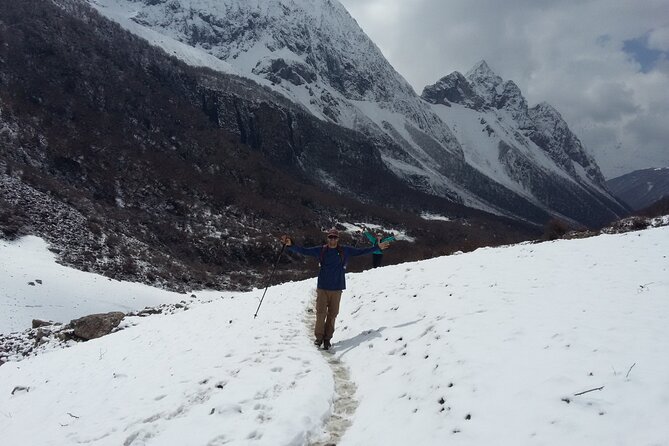
- Restricted-area trekking keeps the route quieter and more remote than many popular circuits
- Small group size (max 15) makes it feel coordinated without feeling crowded
- Permits handled early: you meet in Kathmandu and collect the documents for the restricted area
- Optional culture stops like a monastery or village visit during acclimatization days
- Wildlife chances near higher sections, with possible marmots and blue sheep sightings
- Trek connects to the Annapurna Circuit trail at Dharapani, so you get a strong route “link-up” moment
You can also read our reviews of more tours and experiences in Kathmandu.
Manaslu Restricted Area: Why This Trek Feels Different
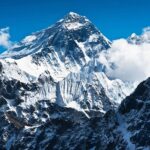
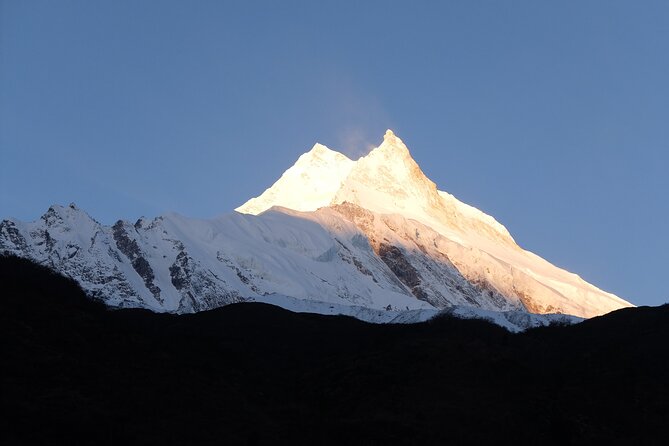
Manaslu’s appeal isn’t just the height of Mt Manaslu (8163m). The real quality is the access model. The Manaslu region is a controlled area for foreign visitors, and that tends to cut down the foot traffic. You feel it on the trail: more breathing room, a more intimate sense of place, and a calmer pace to take in villages, prayer flags, and mountain views without constant crowd pressure.
You also get a guide-led process that’s practical. You start in Kathmandu, and Day 1 includes meeting and collecting the documents tied to the Manaslu restricted area permit. That matters because you don’t want permit paperwork turning into a stress project mid-trip. The trek is already challenging enough.
Kathmandu Start: Permits, Pickup, and the Paperwork Flow
You’ll begin in Kathmandu (Day 1). The plan is simple: meet at the airport or meeting point, then handle the required documentation for the Manaslu restricted area permit. The tour offers pickup, which helps if you land and immediately need to get your bearings.
There’s also a detail that matters for your schedule: the listed start time is very early (12:15 am). In real life, that usually means you need to be ready for an early meet and quick movement. I’d treat Day 1 like a logistics day, not a sleep-in day.
Day 2’s Jeep Ride: Plan for the Ride, Not Just the Hike
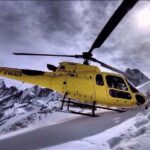
Before the trekking even starts, you do a 7–8 hour jeep drive to the trekking start point, Khorla Besi. This is important because the road is not paved for most of the way. So yes, it’s part of the adventure, but it’s also a real day of sitting and bouncing.
This is one reason I like this itinerary’s structure. It doesn’t pretend the journey is smooth. It builds the reality into the schedule so you can focus on trekking once you’re out of the vehicle.
Days 3–6: Into the Manaslu Region and Through Changing Villages
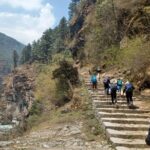
Day 3 is the big threshold moment: you enter the restricted area, then keep trekking with your guide and staff. Expect long hiking blocks (around 8 hours in the schedule). This is where your body starts learning the rhythm: steady uphill, short pauses for photos and breath, and lots of small view breaks as you gain altitude.
By Day 4, the itinerary leans into the gradual transformation of the trek. You move through different vegetation and settlement patterns as you go higher. That’s not just scenic trivia. In a high-altitude region, vegetation changes help you track how your body is adapting and how the environment is shifting.
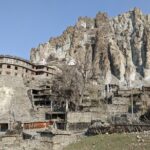
Day 5 brings you to Namrung. This is one of the itinerary’s culture-and-history stops on paper: old villages and a more lived-in feel as you pass through. You’re still hiking, but you get that sense that you’re moving through communities, not just landscapes.
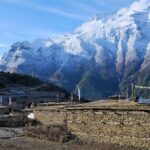
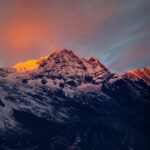
Day 6 is tagged around an amazing view of Mt Manaslu. Even without guessing the exact viewpoint, the key thing is the itinerary places strong Manaslu views before you settle deeper into the high-altitude staging areas.
Day 7–8: Samagaun and a Less-Crowded Route Through Glacier Country
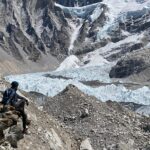
Day 7 is designed to improve your odds of seeing the best views. You take a less-trekked alternative route that runs through glacier scenery and hits Mt Manaslu view moments at its best. The guide on this route is described as someone who has done it many times, and that matters. In remote trekking, “been there before” often means fewer mistakes, better timing, and less wandering.
You arrive at Samagaun after about 6 hours of trekking (the schedule also shows 8 hours as the day’s block, but the core hiking time is noted as 6 hours). Samagaun is your base for the next step.
Day 8 is acclimatization and downtime. That rest day is a big deal. The itinerary specifically gives you time to adjust to altitude and stay safe, not just “keep moving because we can.” You’ll also have an optional cultural choice: you can visit a monastery or a village. If you like understanding where you are—religion, daily life, and how people cope with mountain living—that option is worth taking.
Day 9: Samdo, Virendra Lake, and the Half-Day Pace
Day 9 keeps the day structure gentler: a half-day easy trek and a half-day rest. This is a smart way to keep your momentum without burning you out at altitude.
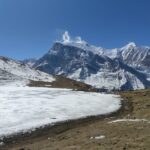
On the way, you visit Virendra Lake. The itinerary calls it wonderful, and while you shouldn’t treat that as a promise of a perfect postcard, the practical value is that it breaks up the day and gives you a reason to slow down. In the high Himalaya, the best moments are often the quiet ones where you stop and watch the weather and light shift.
Day 10: Larkya La Prep, and Wildlife That Might Actually Show Up
On Day 10, you do more “approach” work with half-day trek and half-day rest, aiming toward Larkya La pass territory. This day is also where the itinerary notes wildlife possibilities: marmot and blue sheep sightings.
Can you guarantee wildlife? No. But when a route explicitly mentions animals, it’s usually because they’re common in the region’s higher and rockier zones. If you’re the type who likes scanning ridgelines and watching the movement of small life against big rock, this is the day where that habit pays off.
Day 11: Larkya La Crossing and the Tough Day Down to Bimthang
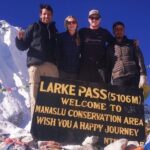
Day 11 is your big pass day. It starts early, crosses Larkya La, and then you trek down to Bimthang. The day is described as tough, and that’s exactly the right expectation. High passes often feel like two different hikes: the steady climb up (work, patience) and then the descent (legs burn, focus matters).
The schedule calls it 9 hours, and that’s believable for a day where the pass is the focal event. I’d plan your mental energy for it. This isn’t a “wander and see” day. It’s a “move carefully and keep breathing” day.
Day 12: Connecting to the Annapurna Circuit at Dharapani
Day 12 is a neat route-link moment. You trek to Dharapani and meet the Annapurna Circuit trail. That’s meaningful in two ways.
First, it signals you’re nearing a more established trekking corridor. Second, it gives you a psychological boost: you’re not just surviving Manaslu’s remote end—you’re also stepping into a trail network that many trekkers talk about, and you can feel that change in the environment and flow of walkers.
The day runs about 8 hours in the schedule. It’s enough walking to keep you moving, but not framed as another pass ordeal.
Day 13: Jeep Back Through Besishahar to Kathmandu
On Day 13, the plan shifts from boots to vehicle. You trek to or pass through Besisahar, then take a jeep drive back to Kathmandu via Besisahar. There’s also a stop for lunch before arriving at your hotel.
This is the day you’ll appreciate organization. After 12 days of hiking, you want smooth transitions: food, transport, and a clear arrival plan. The itinerary doesn’t leave you guessing; it’s built to get you back efficiently while still allowing a normal human lunch stop.
Price and Value: What $1,560 Really Covers
The price is listed at $1,560 per person for about 13 days. That’s not cheap, but it’s also not random. For this kind of controlled-access trek, you’re paying for several things that add real cost on the ground: restricted-area permit processes, guide and staff support throughout, and the logistics that make a remote route feel manageable.
Here’s what you do get:
- Meals included: breakfast (11), lunch (12), dinner (11)
- Support staff and a guided trek plan inside the Manaslu restricted area
- Jeep transport segments as outlined in the itinerary (including the long ride to start and the return)
- Pickup offered and a mobile ticket
Here’s what you should budget extra for (because it’s not included):
- Beverage drinks and hot shower
- Tips and personal expenses
- Travel insurance (important for high-altitude trekking)
- Emergency expenses
I’d treat this trek as value-driven if you want a guided, controlled-area experience that’s structured to maximize view potential and reduce needless hassle.
Who Should Book This Trek (and Who Might Want to Wait)
This trek fits best if you:
- Have moderate physical fitness
- Are okay with long hiking days and an early start schedule
- Like remote trekking with villages, monasteries, and real mountain culture
- Want the pass experience without it being a chaotic, unstructured free-for-all
It may not fit if you:
- Want mostly easy days
- Get stressed by long sitting time (the jeep ride is long)
- Are sensitive to altitude and would struggle without the included rest/acclimatization pacing
A nice bonus for solo trekkers: the trip can form a team with your guide and porter, and you can still find a friendly group rhythm when others share jeep segments earlier in the route.
Should You Book Manaslu Circuit Larkya Pass?
If you’re chasing a high-altitude trek that feels quieter than the biggest-name circuits, this is a strong choice. The restricted-area setup helps you avoid that constant crowded feeling, and the itinerary’s pacing includes actual acclimatization and rest days, not just nonstop movement. The pass crossing is tough by design, but it’s staged with approach time and a guided plan.
Book it if you can handle 8–9 hour days, you want real mountain remoteness, and you appreciate a team that knows the route. If that describes you, the trek has the right mix of culture, adventure, and mountain focus to make the work feel worth it.
FAQ
How long is the Manaslu Circuit Larkya Pass trekking route?
It runs for about 13 days.
Where does the trek start and where does it end?
It starts in Kathmandu (Day 1) and ends with a jeep drive back to Kathmandu via Besisahar (Day 13).
Is pickup offered?
Yes. Pickup is offered.
Do I need a Manaslu restricted area permit?
Yes. The trip includes time in Kathmandu to collect documents for the Manaslu Restricted Area Permit.
What kind of transport is used on the trek?
Most of the road is not paved, so you take a jeep to the trekking start point (Khorla Besi) and later return by jeep via Besisahar. Private transportation is not included.
What meals are included?
Breakfast is included 11 times, lunch 12 times, and dinner 11 times.
What should I plan to pay for separately?
Beverage drinks, hot shower, emergency expenses, tips, personal nature expenses, and travel insurance are not included.
What fitness level do I need?
The tour is recommended for people with a moderate physical fitness level.