REVIEW · KATHMANDU
Langtang valley trek
Book on Viator →Operated by Outshine Adventure Pvt Ltd · Bookable on Viator
Langtang Valley turns your altitude dreams real, and this trek blends forests, Tamang villages, and big Himalayan viewpoints into an 8-day rhythm. I like the Tserko Ri sunrise views that make the long climb feel worth it, and I like that the trip takes care of the core paperwork with Langtang National Park permits and a TIMS card.
One possible drawback: you’re trading comfort for distance. Expect full hiking days with serious altitude going up to Kyangjin Gompa (3,740 m), plus teahouse nights—great for most people, but not for anyone hoping for easy walking or total privacy.
In This Review
- Key highlights worth your attention
- From Kathmandu to Syabrubesi: starting in the valley doorway
- Lama Hotel trail days: bamboo forest to real altitude
- Into Langtang Valley: rhododendron, pine, and Langtang village altitude
- Kyangjin Gompa approach: glaciers, monasteries, and Yala’s cheese world
- Tserko Ri sunrise and the monastery hour you won’t skip
- Heading back down: forests, Tamang villages, and Syabrubesi hot springs
- Price and value: what $995 covers on this trek
- Outshine Adventure team strengths: responsive logistics and solid guiding
- Comfort and gear: teahouses with provided sleep layers
- How to enjoy each day without rushing the mountains
- Should you book the Langtang Valley Trek with Outshine Adventure?
- FAQ
- How long is the Langtang Valley trek?
- Where does the trek start and where does it end?
- What does the trek cost?
- Is pickup offered?
- Do I get an English-speaking guide and porters?
- Are permits included?
- What kind of lodging and meals are included?
- Is the down jacket and sleeping bag included?
- Is travel insurance included?
- Is tipping expected?
Key highlights worth your attention
- Licensed English-speaking guide + porters to keep the trail manageable and your gear sorted
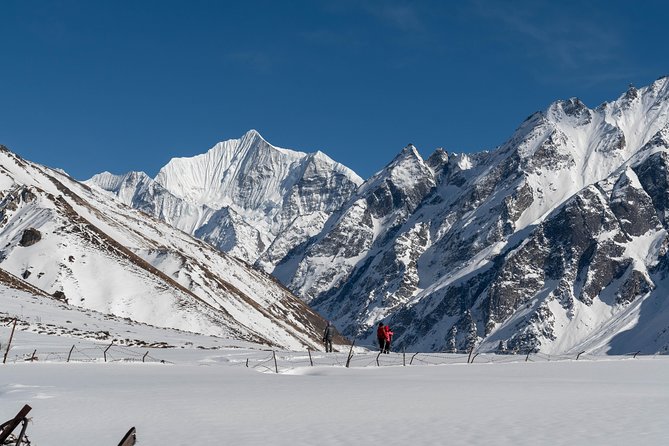
- Tserko Ri early climb for an extraordinary sunrise payoff over Langtang and the glaciers
- Kyangjin Gompa area exploration that includes monastery time and valley views
- Yala Cheese Factory + small lakes reached within about half a day from Kyangjin Gompa
- Return to Syabrubesi with hot spring time that actually helps your legs cool down
From Kathmandu to Syabrubesi: starting in the valley doorway
Your trip begins in Kathmandu and heads out by tourist bus, with pickup offered and the ride timed to get you into the trekking start point by the next day. The classic departure is Syabrubesi, the lower valley starting point where your hiking story really begins. On a clear day, you can catch outstanding views of Manaslu, Annapurna, and Ganesh Himal from the route out of the city.
This first transfer matters more than it sounds. If you start tired, you walk slower and you feel the altitude climb earlier. Here, the schedule is built so you get moving with less stress right away, and then you can settle into a steady pace once you hit the trail.
Syabrubesi also sets expectations for the kind of trekking you’ll do: village paths, forest sections, and gradual transitions up toward alpine terrain. You’re not just chasing views—you’re moving through a working human landscape of farms, herding, and monastery life.
You can also read our reviews of more tours and experiences in Kathmandu.



Lama Hotel trail days: bamboo forest to real altitude
The early trekking day pattern is climb, rest, then climb again. You begin walking at your own pace, and the trail ascends through forest for about two hours, then continues with another uphill push to reach Bamboo village (around 1,850 m) for lunch. After that, the route climbs again—this time steeply through the bamboo forest—until you reach Lama Hotel (2,560 m) for overnight at a local teahouse.
I like this segment because it’s not just altitude work. The forest path is described as well stabilized, and you’re walking a trail where you can actually pay attention to details—birds life around bushes, and even bee hives hanging on a cliff. Those small “wait, look at that” moments make a big difference on days when you’re breathing harder.
The tradeoff is that the ascent is steady, not gentle. You’ll want to keep your pace controlled, especially after the lunch stop, so you arrive in Lama Hotel feeling tired but not wrecked.
Into Langtang Valley: rhododendron, pine, and Langtang village altitude
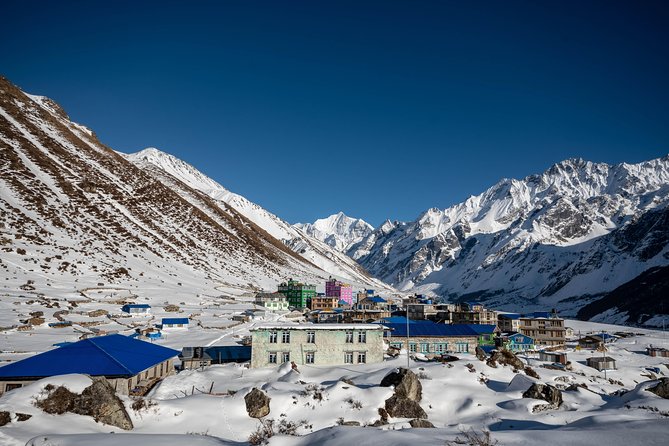
From Lama Hotel, the trek continues into the heart of Langtang Valley terrain. Today’s walk goes through rhododendron and pine forest for around three hours before lunch at Ghoda Tabela. After lunch, you keep hiking on a scenic trail for another three hours to reach Langtang village (around 3,455 m) where you relax for the evening.
This is where the valley starts to feel like a place, not just a route. Ghoda Tabela is described as a dense wild habitat area, with small babblers and herbal plants you may spot along the way. It’s the kind of setting where you slow down naturally, because the trail gives you more to notice than just the next viewpoint.
One practical note: Langtang village sits at significant altitude. You’ll still be able to enjoy the evening, but you should treat that night like part of your acclimatization. Go easy with exertion and focus on resting, hydrating, and eating well.
Kyangjin Gompa approach: glaciers, monasteries, and Yala’s cheese world
As you move onward, the trail pushes you toward Kyangjin Gompa (3,740 m). The route continues past mountain surroundings with strong cultural and spiritual energy, and you’ll visit Kyangjin Gompa, a sacred Buddhist monastery with breathtaking Himalayan views.
What makes this area special is the way it connects high-altitude scenery with daily spiritual practice. You’re not just looking at mountains—you’re stepping into a living place where monastery life and herding rhythms shape the day.
Then comes a standout side mission: the Yala Cheese Factory and the small lakes. Yala can be reached within about half a day from Kyangjin Gompa, and the cheese factory is highlighted as a must-visit. The small lakes around there are described as truly amazing, which matches the kind of feeling you get when a high valley suddenly opens into calm water and pale stone and sky.
Also worth knowing: the region includes pasture areas like Langsisa (around 4,084 m), where you can see numerous glaciers. Some huts in Langsisa are reachable within about one day’s walk from Kyangjin Gompa if you want a more local-feeling detour.
And yes, there’s a detail that adds to the remoteness: there’s a STOL airstrip at Chhaldang, a short distance east of Kyangjin. Even if you’re not using it, it’s a reminder that this isn’t only a trekking route—it’s part of a practical network for the region.
The only drawback here is planning your time. The Gompa day is rich, and if you try to do everything back-to-back, you may feel rushed at high altitude. The best approach is to pick what matters most to you—monastery time, views, and then one extra excursion like Yala and the lakes.
Tserko Ri sunrise and the monastery hour you won’t skip
On the next part of the trek, you start early and head toward Tserko Ri. The trail passes through yak pastures, then climbs up to the viewpoint. The sunrise view from the top of Tserko Ri is described as extraordinary, and the timing is the point—this is one of those moments when the Himalayas feel quiet and sharp.
After you return to Kyangjin Gompa by late afternoon, you get time to explore the monastery area again. You can enjoy views of Himalayas, glaciers, birds, and yaks while you take in the spiritual setting.
Here’s why that matters for your experience. In many treks, the viewpoint is a quick photo stop. This one gives you a real rhythm: climb early, watch sunrise, come down, then linger where the scenery and local life overlap. It’s a calmer kind of day even though you’ve already worked hard.




Heading back down: forests, Tamang villages, and Syabrubesi hot springs
The return journey shifts the mood. From Kyangjin Gompa, you retrace your steps back toward Lama Hotel, and most of the trekking today is downhill. The path passes through forests and Tamang villages, and you’ll get different views of the Himalayas that you missed on the way up.
Downhill days are tricky in a different way. Your legs may feel fine early, but the knee and ankle stress can add up. If you’re carrying trekking poles, this is a good day to use them. Also, take short, frequent breaks so you don’t push too hard because it feels “easier.”
On the final trekking day, you head back to Syabrubesi. The trek is easier since it’s mostly descending, and you’ll overnight in Syabrubesi. The big payoff is the Syabrubesi hot spring stop—exactly the kind of recovery moment that turns a hard week into something you remember fondly.
When you reach Kathmandu on the last day, you’ll drive back and be taken to your hotel for rest. It’s not a sightseeing-heavy finale, which I like. You’ve earned quiet time.
Price and value: what $995 covers on this trek
At $995 per person, this package sits in the mid-range for Nepal trekking tours, but the value comes from what’s included rather than from the headline number.
Here’s what you’re getting:
- Best available guesthouses accommodation during the trek
- A local government licensed English-speaking guide
- Staff and porters to carry your luggage
- Langtang National Park permits and TIMS card
- Meals: breakfast (8), lunch (8), dinner (7)
- Down jacket and sleeping bag by Outshine Adventure
- Surface transfer from and to Kathmandu by tourist bus
- Government taxes
What’s not included:
- Travel insurance
- Alcoholic and hot/cold drinks and laundry
- Tips for trekking staff and driver (tipping is expected)
To me, the value equation is simple. If you had to source permits, a guide, and major gear, the cost would grow fast. Here, those basics are handled, and you can focus on the trail.
Still, you should budget for what’s missing. Travel insurance is a big one, and small expenses like drinks add up in Nepal just like anywhere else.
Outshine Adventure team strengths: responsive logistics and solid guiding
This trek runs with a cap of maximum 14 travelers, which usually means you won’t be stuck in a massive, slow-moving line on the trail. A smaller group can make it easier to find your rhythm and get help quickly when conditions change.
The tour also emphasizes licensed guiding and staffing. You’ll have an English-speaking guide during the trek, plus porters to carry your luggage. That combination is practical. It keeps you from overloading your body, and it helps your schedule stay realistic.
From the company’s broader customer feedback, names like Gokul and Asmita show up as responsive organizers, and Bikram is repeatedly praised as a fantastic guide in the trekking context. Even if you don’t know your exact guide yet, the pattern matters: the people doing the work are described as attentive and supportive, which is what you want when you’re walking at altitude.
Comfort and gear: teahouses with provided sleep layers
You’ll sleep in local teahouses, and the trek includes the “sleep problem” solution: Outshine Adventure provides a down jacket and sleeping bag. That’s a practical inclusion, because it can save you from either buying gear in Kathmandu or worrying about whether your insulation is good enough.
Food is also structured into the trip with breakfast, lunch, and dinner included on the listed counts. That means you’re not constantly negotiating your meal plan at high elevation, where choices can be limited and prices can be higher.
The main “comfort” tradeoff is the teahouse setup itself. You should expect basic lodging, shared dining areas, and the kind of nights where you feel the mountain air once you’re lying down. The sleeping bag helps, but it still won’t turn a mountain night into a hotel night.
How to enjoy each day without rushing the mountains
A good Langtang trek comes down to pacing. Since you’re starting from Syabrubesi and moving up toward Kyangjin Gompa, you’ll want to keep effort steady rather than spiking early. When you can walk at your own pace—as the trek does—you should use that freedom. Slow early makes climbing later feel smoother.
On monastery days, give yourself time to look beyond the big photo angles. Kyangjin Gompa is sacred, so your best move is quiet, respectful curiosity, then a slow scan of the views: glaciers, birds, and yaks are all part of the scene.
For the Yala Cheese Factory and the small lakes outing, treat it as the kind of half-day that rewards staying present. If you chase the hike only for its checklist item, you’ll miss the calm, high-valley feel that makes the lakes memorable.
And on return days, protect your joints. Downhill feels easier, but it can be harder on the body.
Should you book the Langtang Valley Trek with Outshine Adventure?
I’d book this trek if you want a classic Langtang route that mixes real hiking with high-altitude highlights like Kyangjin Gompa and the Tserko Ri sunrise, while keeping logistics handled for you. The inclusion of permits, guide, porters, meals, guesthouses, and even a down jacket and sleeping bag makes it easier to travel lighter and start with confidence.
You might skip it if you need very easy walking, lots of downtime, or full hotel comfort. This is a trekking experience: rewarding, scenic, and physically demanding in the way altitude treks are.
If you’re aiming for a balanced week that feels local—forests, rhododendron paths, Tamang villages, monastery time, and hot springs recovery—this is a strong fit.
FAQ
How long is the Langtang Valley trek?
The trek is about 8 days.
Where does the trek start and where does it end?
It starts with a drive from Kathmandu to Syabrubesi, and it ends with a return drive from Syabrubesi back to Kathmandu.
What does the trek cost?
The price is $995.00 per person.
Is pickup offered?
Yes, pickup is offered.
Do I get an English-speaking guide and porters?
Yes. You get a local government licensed English-speaking guide, plus staff and porters to carry your luggage.
Are permits included?
Yes. Langtang National Park permits and a TIMS card are included.
What kind of lodging and meals are included?
Accommodation is in guesthouses during the trek. Breakfast (8), lunch (8), and dinner (7) are included.
Is the down jacket and sleeping bag included?
Yes. Outshine Adventure provides a down jacket and sleeping bag.
Is travel insurance included?
No. Travel insurance is not included.
Is tipping expected?
Yes. Tips for the trekking staff and driver are expected.