REVIEW · KATHMANDU
Everest Chola Pass Trek-17 Days
Book on Viator →Operated by Himalayan Adventure Treks and Tours Pvt Ltd · Bookable on Viator
A pass at altitude with Everest on your mind. This 17-day trek through the Khumbu region pairs big-mountain days like Chola Pass with payoff viewpoints such as Kala Patthar. I especially like how the route threads in Gokyo Lakes and Gokyo Ri before you commit to Everest Base Camp country. One consideration: you’re dealing with real altitude and cold, especially on the higher pass and glacier stretches, so pacing and acclimatization matter.
From Kathmandu, the logistics are handled for you: airport pickup by private vehicle, a 3 hotel with breakfast for two nights, and then flights that get you from city life to Lukla fast. Your trek support is also part of the value here, with an experienced guide plus porter support (1 porter for 2 clients), plus rescue and first-aid coverage. I’d plan your expectations around lodge trekking—comfort is basic, and you’ll need to be flexible if weather disrupts flights in the mountains.
In This Review
- Key things I’d spotlight before you book
- Kathmandu setup: private pickup and a smooth first night
- Lukla flight: short hop, huge mood shift
- Phakding to Namche: forests, riverside walking, and your first big village
- Namche acclimatization day: the hike that helps later
- Dhole and Machhermo: the climb begins to define the trek
- Gokyo Lakes and Gokyo Ri: when the views reset your sense of scale
- Thagnag and Chola Pass: the signature day at 5,368m
- Lobuche and Gorakshep: Everest Base Camp without the usual treadmill
- Kala Patthar and Pangboche: seeing Everest from a different angle
- Namche and Lukla return: Wi-Fi moments and a well-earned finish
- What $2,100 really covers (and where you may spend extra)
- The guides and service style: helpful, practical, and responsive
- Who this trek fits best (and who should reconsider)
- Practical planning: how to make the days easier on yourself
- Should you book this 17-day Everest Chola Pass trek?
- FAQ
- How do I get between Kathmandu and Lukla on this trek?
- Is airport pickup included in Kathmandu?
- Are permits and park fees included?
- What meals are included during the trek?
- Can I request vegetarian meals?
- Do I need strong fitness for this trek?
- Is this a private tour?
- Do you provide medical and rescue support?
Key things I’d spotlight before you book
- Lukla flights are short (under 40 minutes) but change everything once you land.
- Namche acclimatization includes a hike to Hotel Everest View so you’re not just guessing at altitude.
- Gokyo Lakes and Gokyo Ri stack two unforgettable viewpoints at high elevation.
- Chola Pass at 5,368m is the route’s signature day, with sweeping Everest-area panoramas.
- Everest Base Camp on foot via Gorakhshep keeps you close to expedition energy.
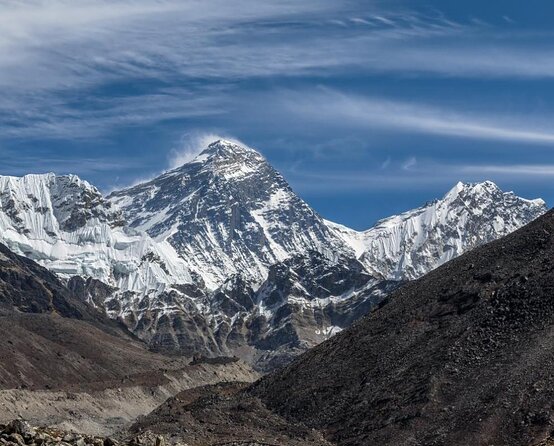
- Kala Patthar gives a close, dramatic angle on Everest and nearby giants.
Kathmandu setup: private pickup and a smooth first night
Your trek starts in Kathmandu with a planned arrival flow. You land at Tribhuvan International Airport, meet a company representative, and get transferred to your hotel by private vehicle. After that, you’ll have time to meet your group, ask questions, and get your gear in order before the mountains start making decisions for you.
This matters more than it sounds. Kathmandu can be loud, confusing, and full of options. Having the pickup handled means you spend your energy on preparing for altitude and cold—not on figuring out transport or missing documents.
You also get two nights in a 3 hotel with breakfast. That’s not luxury—just a functional reset before trekking begins. And you’ll be glad for it because the first big day (getting to Lukla and starting your walking) doesn’t leave much room for jet lag.
You can also read our reviews of more tours and experiences in Kathmandu.



Lukla flight: short hop, huge mood shift
The next move is a scenic flight to Lukla. It’s less than 40 minutes, and the view during the flight is part of the point: forests, river valleys, and mountains appear in a way that makes the trek feel real immediately.
Then you shift from airplane pacing to trail pacing. From Lukla, you’ll walk for a few hours to Phakding, keeping things gentle enough to start building rhythm. This early section is perfect for “learning the trek body language”—how you breathe at elevation, how your legs react, and how often you’ll want to stop for photos and water.
Also note: you have both Kathmandu to Lukla and Kathmandu/Ramachap to Lukla flight coverage listed as part of the trip. That gives you some flexibility in case routing changes.
Phakding to Namche: forests, riverside walking, and your first big village
After Phakding, you trek toward Namche Bazaar through the Dudh Koshi riverside area. The trail is described as pleasant, passing pine, oak, and rhododendron forests. This is the kind of walking day that helps you settle into the culture of the Khumbu—small settlements, lodge stops, and the steady rhythm of other trekkers and porters moving past you.
You’ll pass Monjo, the entrance area for Sagarmatha National Park. It’s a checkpoint moment: you’re no longer just walking in the region—you’re entering a protected area tied to the world’s most famous peaks.
By the time you reach Namche Bazaar, the trek becomes less about “getting somewhere” and more about “getting your body ready.” And that leads directly to the best part of this route design.
Namche acclimatization day: the hike that helps later
You get a full acclimatization day in Namche. This is not free time in the lazy sense—it’s a planned physiology reset. The trek includes a hike to Hotel Everest View, giving you panoramic views of the Khumbu region while still keeping the effort controlled.
This is smart because acclimatization isn’t just a concept; it’s something you feel. In real life, it’s the difference between a smoother next few days and a struggle to recover at night. The route also gives you a chance to explore local community life on the way to and around the viewpoint area.
If you’re the type who wants to get ahead, this is the day to resist that urge. Use it for slow walking, good hydration, and keeping your breathing calm. Your later days—especially high passes and glacier zones—will reward patience.
Dhole and Machhermo: the climb begins to define the trek
Once Namche acclimatization is done, you move on toward Dhole. The route keeps you trekking with giant mountain views close enough to feel almost unreal. When you reach Dhole, you get a pause day pattern: explore the area around the village and settle.
Then the next step is Machherma (Machhermo), with a trek that includes ascending up to about 4,470m. This section matters because you’re moving from “high but manageable” into a colder, sharper altitude world. Even before you hit the signature pass and glacier days, you’ll start noticing how your body handles effort.
The Machhermo overnight includes free time to walk around and understand Sherpa village life. That’s one of the quieter values of this route. You’re not rushing through culture—you’re passing through it at a pace that lets it register.




Gokyo Lakes and Gokyo Ri: when the views reset your sense of scale
Now the trek shifts into its most visually dramatic phase: Gokyo. You’ll hike to Gokyo Lake (around 4,470m), with a rocky climb to reach the water. The highlights here are the clarity of the lakes and the way mountain reflections show up. It’s the kind of scene that makes you stop moving just to process what you’re seeing.
After that, you go for a full excursion to Gokyo Ri (5,360m). This is the kind of viewpoint day you plan for in advance mentally. Your effort is likely to feel bigger than the actual distance, because altitude changes everything about walking. From the top, the views are described as astonishing: Everest, Makalu, Cho Oyu, and many other peaks appear in a wide panorama.
This portion is valuable for two reasons. First, it breaks the Everest story into multiple “chapters” rather than only one big day. Second, it gives you high-elevation success experience before Chola Pass—useful when you’re deciding how to ration energy.
Thagnag and Chola Pass: the signature day at 5,368m
After Gokyo, the route moves toward Thagnag via snowfields and mountain views. This is the part of the trek where conditions can shift. Even if the day feels doable, the altitude and snow travel require attention and good pacing.
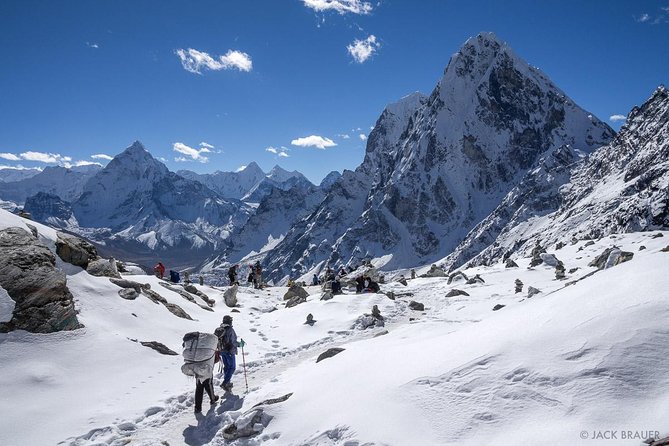
Then comes Chola Pass day. You climb up to Chola Pass (5,368m) and descend to Dzongla. This is the signature challenge day of the trek, and it’s not only because of elevation. It’s because your goal is a complex high-altitude crossing with big exposures and constant scenery demands.
From the pass, the views are described as impressive and wide-ranging, including Everest, Ama Dablam, Cho Oyu, Lhotse, Nuptse, Makalu, and other named peaks. That list matters less than the feeling: you’ll look around and realize how many “headline” mountains sit in the same region.
Evening in Dzongla is part of the value because it gives you time to recover and get your legs back into working order. If you treat Chola Pass as a once-in-a-lifetime photo stop only, you’ll feel worse afterward. Better approach: treat it as a big work day, then focus on recovery—warm layers, fluids, and early rest.
Lobuche and Gorakshep: Everest Base Camp without the usual treadmill
After Dzongla, the route continues with a move toward the Khumbu Glacier area and then on to Lobuche. You’ll feel the altitude here; cold can be intense, and the walking demands patience.
From Lobuche, you trek to Everest Base Camp from Lobuche to Gorakshep, then visit Everest Base Camp. The experience of being at the foothill of the world’s highest mountain is described as hard to put into words—so instead of trying to force meaning, just give yourself time. Watch the details: the lodge area energy, expedition chatter, and the way people react when they realize they’re truly there.
Then you return to Gorakshep for overnight. This is a classic tradeoff in Everest-area trekking: you get the meaning and the memory, and you pay for it with effort and cold at night.
Kala Patthar and Pangboche: seeing Everest from a different angle
The next highlight is Kala Patthar. You’ll trek there from Gorakshep, with views of mountains and glaciers all around and a close-up sense of Everest, Ama Dablam, and Pumori. This is one of those moments where you stop thinking like a tourist and start thinking like a walker in the Himalaya: your breath, your footing, and your sightlines all become part of the experience.
After Kala Patthar, the trek continues toward Pangboche, with time to explore the village of Pangboche. This helps balance the gravity of the high-altitude days. You’re still in mountain country, but you’re back in a place with village rhythm—less exposure, more community.
Namche and Lukla return: Wi-Fi moments and a well-earned finish
From Pangboche, the route heads back to Namche Bazaar. You’ll reach Namche and—importantly—have time to touch base with loved ones. The route notes that Wi-Fi is available there, which can be comforting after days when communication is limited to what you can manage on the trail.
Then you continue toward Lukla. The final walking day is described as strenuous with sandy paths. That’s believable. When you’re tired, even “normal” ground can feel heavy, and you’ll likely notice your pace isn’t what it was back in the first week.
Once you arrive in Lukla, you get time to explore Lukla Bazaar and shop local items. There’s also a chance to celebrate the trek’s completion with drinks. Then you fly back to Kathmandu in the morning, followed by a transfer to your hotel. Your farewell dinner includes an authentic Nepalese restaurant meal with cultural performance, which is a good way to close the story.
What $2,100 really covers (and where you may spend extra)
At $2,100 per person for about 17 days, you’re paying for more than the walking. You’re paying for the machine behind the scenes: airport pickup, two nights in Kathmandu in a 3* hotel with breakfast, and flights to and from Lukla (including Kathmandu/Ramachap to Lukla options).
The trek cost also includes lodge accommodations on a twin-share basis, plus all meals on the trekking portion (listed totals include 14 lunches, 16 breakfasts, and 15 dinners). You also get TIMS permit/Khumbu Valley fees and a duffle bag (returned after the trek). There’s a guide and porter arrangement too: an experienced guide, plus porter support at 1 porter for 2 clients. It’s not just convenience; it can be a major difference in how you feel on pass days.
Also included: travel and rescue arrangements and medical supplies (a first-aid kit). Not the same thing as your own insurance, but still meaningful.
What’s not included is where you should budget carefully: Nepal visa fee, international airfare to/from Kathmandu, extra hotel nights in Kathmandu if your schedule shifts, meals in Kathmandu if you return early, travel and rescue insurance, personal expenses (phone calls, laundry, battery recharge, hot shower, bottle/boiled water), and tips for guide and porter.
If you like predictable totals, this is where you should do your homework before you go—so money doesn’t distract you once you’re already in the mountains.
The guides and service style: helpful, practical, and responsive
Service quality can make or break a trek like this, and the available feedback points to a team that takes care of the details: punctual airport pickup and help with paperwork and trip coordination. You’ll likely work with an experienced guide, and you may also be supported by a porter team in a structured ratio.
One specific guide name that shows up in feedback is Ang Pemba, described as friendly and helpful. Another recurring name connected with the agency is Bhagwat Simkhada, tied to responsive service. Use that as a signal: the company appears to prioritize clear coordination, not just getting you from lodge to lodge.
Who this trek fits best (and who should reconsider)
This trek suits hikers with strong physical fitness who want a classic Everest-region route but with variety: EBC plus Gokyo Lakes, Gokyo Ri, and the Chola Pass crossing.
If you’re comfortable with long trekking days and can handle altitude steadily, this is a strong match. If you know you struggle with cold, or you tend to rush at the first hint of progress, you might feel stressed on the higher parts of the route.
The route is built around acclimatization and high-altitude progression. That means you’ll get the most out of it if you take rest days seriously, hydrate well, and keep effort controlled—especially around Namche and during the pass-to-glacier transition.
Practical planning: how to make the days easier on yourself
The big practical issue in the Everest region is not just distance—it’s altitude and temperature. The trip includes a first-aid kit, travel and rescue arrangements, and an emphasis on pacing with acclimatization. Still, you should plan your own body like it’s part of the gear list.
A few practical thoughts:
- Bring layers you can manage quickly. On cold days, being able to add warmth fast helps your comfort and energy.
- Plan to keep your eating consistent. The trip includes meals during trekking, but you’ll feel better if you eat even when you don’t feel hungry.
- Take the acclimatization day seriously. That hike to Hotel Everest View isn’t a random extra; it helps you adapt before higher passes.
If you’re vegetarian, you can request that option at booking. The trip also lists dietary requirements as something to advise ahead of time, so don’t wait until you’re on the trail to sort it out.
Should you book this 17-day Everest Chola Pass trek?
Book it if you want the full Everest-region story with a smart route mix: Namche acclimatization, Gokyo Lakes and Gokyo Ri, Chola Pass, Everest Base Camp, and Kala Patthar—all with an operator that handles the core logistics and supports you with guides, porters, and permits.
I’d skip (or at least rethink) if you’re expecting a low-stress walk or if your fitness isn’t solid. This is a serious high-altitude trek with cold and altitude effects, and Chola Pass is not a day to treat lightly.
FAQ
How do I get between Kathmandu and Lukla on this trek?
You’ll take a short scenic flight between Kathmandu and Lukla (listed as less than 40 minutes). The trip also covers Kathmandu/Ramachap to Lukla options as part of the included flights.
Is airport pickup included in Kathmandu?
Yes. The tour includes pickup from the airport and transfer to your hotel by private vehicle.
Are permits and park fees included?
Yes. TIMS permit and Khumbu Valley fees are included as part of the trek.
What meals are included during the trek?
The trek includes lunch, dinner, and breakfast during the trekking days (with totals listed as 14 lunches, 15 dinners, and 16 breakfasts). Meals in Kathmandu are not included.
Can I request vegetarian meals?
Yes. A vegetarian option is available. You should advise this at the time of booking, along with any dietary requirements.
Do I need strong fitness for this trek?
Yes. The tour notes that travelers should have a strong physical fitness level.
Is this a private tour?
Yes. It’s listed as a private tour/activity, meaning only your group will participate. Guide and porter support is included, with 1 porter for 2 clients.
Do you provide medical and rescue support?
Travel and rescue arrangements are included, and there is a first-aid kit provided as part of the trip’s medical supplies.