REVIEW · SOUTH ICELAND
4 Days Laugavegur Trekking Tour
Book on Viator →Operated by Arctic Adventures · Bookable on Viator
Four days, one of Iceland’s best trails. This trek strings together rhyolite colorlands, lava and obsidian deserts, glacier-stared valleys, and a classic Landmannalaugar hot springs evening. I like that the day-to-day setup is handled for you—luggage transport and camp meals mean you can spend your energy on the trail, not logistics.
The main catch: you’ll hike big distances in changeable Highland weather and you’re sleeping in tents with other people (choose single tent only if you want privacy). If you’re the kind of hiker who gets grumpy with wet wind and long days, this might test you.
In This Review
- Key things that make this trek work
- Four Days on Laugavegur: what your feet will learn
- Day 1 Landmannalaugar: lava fields, Vonugil canyon, and a soak
- Day 2 from Hrafntinnusker to Jökultungur: the big day
- Day 3 Mælifellssandur to Botnar: volcano viewpoints and a 200m drop
- Day 4 Emstrur to Þórsmörk: Almenningar gorge, birch forest, and the finish feeling
- Price and logistics: what you’re actually paying for
- Packing advice that keeps you comfortable (and moving)
- Who this trek fits best (and who should be cautious)
- Should you book the 4-Day Laugavegur Trek?
- FAQ
- What are the main start locations in Reykjavik?
- Is pickup offered outside Reykjavik?
- What time does the trek return to Reykjavik?
- How much hiking do you do each day?
- What meals are included?
- Is camping gear included?
- Do you transport luggage between camping spots?
- What happens if the tour can’t run due to weather?
Key things that make this trek work
- Landmannalaugar hot springs after a lava-field morning hike
- Obsidian desert crossing on Day 2, plus a real river crossing
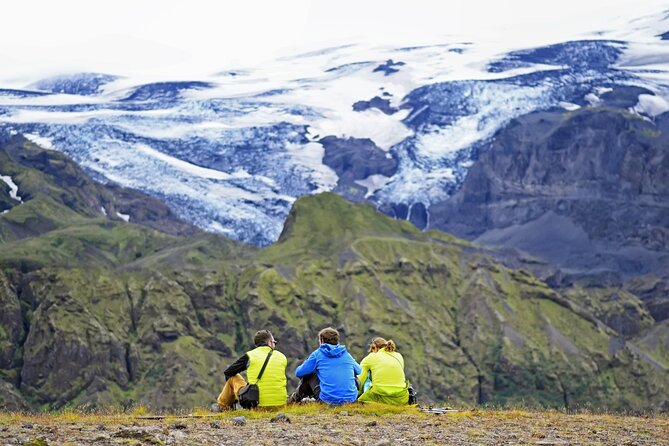
- Volcano and glacier viewpoints tied to Stórasúla, Hattafell, and nearby ice caps
- Markarfljótsgljúfur gorge on the way to Botnar, dropping about 200m
- Tent camping logistics handled with minibus rides and luggage transport between camps
- English-speaking guidance plus a group cap (small enough to feel personal)
Four Days on Laugavegur: what your feet will learn
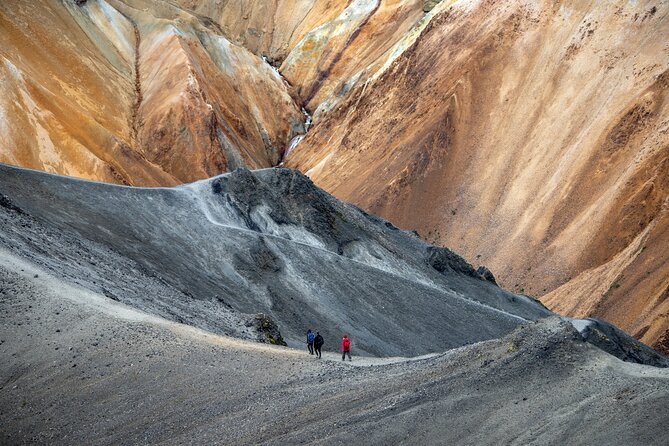
The Laugavegur Trail is famous for a reason: it’s short enough to do in a week, but varied enough that each day feels like a different part of Iceland. In four days you get volcanic geology up close—lava fields, black obsidian sands, and bright rhyolite mountains—plus the kind of weather that makes you pay attention.
Your hiking load is not extreme on paper, but it’s real in wind, rain, and slippery trail. Day 1 is a steadier warm-up (about 8 km / 4 hours with a climb of 470 m), while Day 2 is the effort day (about 24 km and roughly 900 m ascent). After that you still hike solid hours, just with different terrain.
The biggest “value” feature isn’t the scenery—it’s the way the trip is arranged so you’re not constantly solving problems. You start at 7:00 am (with pick-up options around Reykjavík), ride by minibus between areas, and have meals planned so you refuel fast and move on.
Day 1 Landmannalaugar: lava fields, Vonugil canyon, and a soak
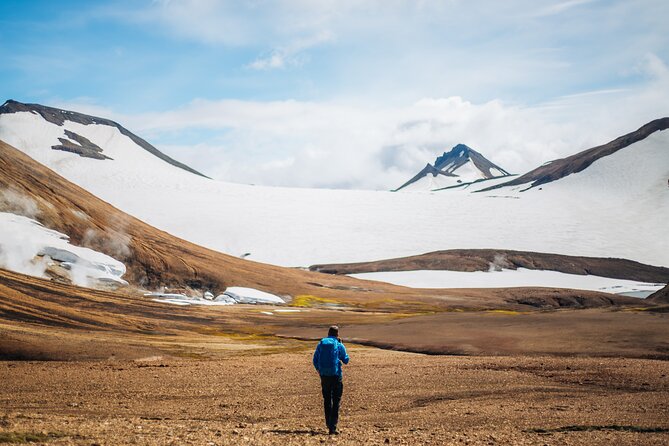
You begin at Landmannalaugar, the classic starting point for this trail system. First focus time is in the Laugahraun lava field and around Vonugil canyon, where the ground looks broken and sculpted by volcanic activity rather than like “normal” hiking country. The rhyolite mountains around here show that famous multicolored look, including the standout Mt. Brennisteinsalda.
You’ll also have a chance to explore areas like Graenagil and, if timing allows, climb Blahnukur. This is a great day for the camera, but it’s also a great day for learning how the trail feels: uneven terrain, exposed sections, and the way Iceland’s colors change as the light shifts.
The hike portion is relatively moderate compared with later days—about 8 km and around 4 hours walking with 470 m of ascent. Then comes what I consider the best “reward design” on the whole trek: dinner, meeting your group, and a dip in the Landmannalaugar hot springs.
Practical takeaway: Day 1 sets the tone. If you take your time early, eat well at camp, and don’t go too hard on the first ascent options, Day 2 will feel much more manageable.
Day 2 from Hrafntinnusker to Jökultungur: the big day
Day 2 is where the trek earns its reputation. You start after breakfast and head toward the next section with some truly dramatic surfaces—beginning with a crossing of the Hrafntinnusker black obsidian desert. It’s not just a visual: the ground can be sharp and oddly textured, and you’ll want steady boots and careful footing.
From there you move through Reykjafjöll, known for vividly colored rhyolite mountains. The highlight push is reaching the peak of Jökultungur, where you get views over Fjallabak and Álfavatn lake. It’s the kind of payoff that makes you understand why people plan weeks around this area.
Then you add one of those Iceland moments that are hard to fake: a river crossing with your feet. When the water is cold (it will be), it forces you to slow down and commit to good technique—watch the footing, balance, and keep moving.
Distance is about 24 km with 7–8 hours walking and roughly 900 m ascent. In other words, it’s the day you treat like a hike, not a photo walk. When you finish, you get dinner and time to relax while you look out over the Icelandic Highlands.
Practical takeaway: pace yourself on the obsidian and don’t save all your “energy” for later. If you spend too much time stopping, you’ll feel it on the climb to Jökultungur.
Day 3 Mælifellssandur to Botnar: volcano viewpoints and a 200m drop
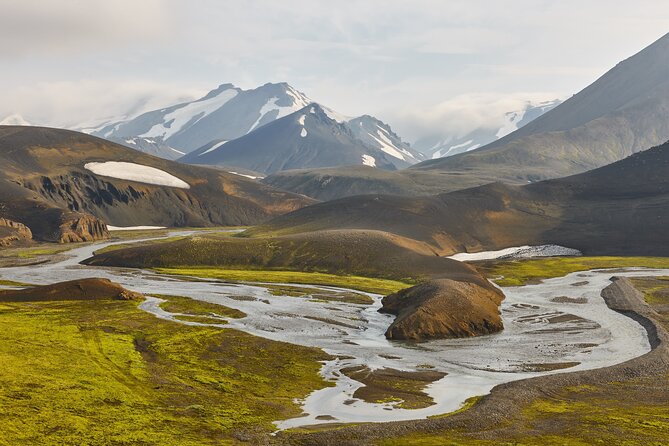
If Day 2 is the punch, Day 3 is the rich geography. You start by heading via Mælifellssandur and passing Stórasúla and Hattafell. This is one of the best days for big glacier-and-volcano sightlines, with views of Mýrdalsjökull and Eyjafjallajökull from the route.
As you hike toward Botnar, you’ll come across Markarfljótsgljúfur, a deep gorge created by glacial water. The provided details put the drop at about 200 m, which is hard to grasp until you’re looking down and realizing the water carved that shape over time.
The hike itself is about 15 km with 6–7 hours walking. The descent is listed around 40 m, which means you’ll likely feel more “work” from the terrain than from constant downhills. You’ll end the day in Botnar with dinner and time to hang out—exactly the kind of evening that turns a tough day into a social one.
Practical takeaway: on Day 3, you’ll want to keep your eyes up as much as your feet. The views are part of the effort here, and the gorge is a good place to slow down and breathe.
Day 4 Emstrur to Þórsmörk: Almenningar gorge, birch forest, and the finish feeling
Day 4 starts with departure from Emstrur and a move toward Þórsmörk. You go through Almenningar gorge near Mount Einhyrningur, with views of glaciers ahead—this is your final “big reveal” stretch before the route ends.
Then Þórsmörk changes the mood. Instead of open, exposed ground, you step into a more sheltered environment with dense birch forest and dramatic mountainous scenery. That contrast matters. After days of wind, wide plains, and raw geology, the forested feeling is like a breath of calmer air.
You’ll complete the Laugavegur Trail here. After the hike, you head back toward Reykjavík by minibus and can catch a glimpse of Seljalandsfoss along the way. The trip returns to Reykjavík around 21:30, with drop-off at the BSI bus stop.
Distance is about 15 km with 6–7 hours walking and roughly 300 m of descent. You still get a solid end-of-trek workout, just with scenery that feels more “human-scale” than the exposed highlands.
Practical takeaway: plan to enjoy the finish, not rush it. Day 4 has enough going on that you’ll likely remember the last hour more clearly than the first mile.
Price and logistics: what you’re actually paying for
At $2,090.44 per person, this isn’t a budget hike. The best way to think about the price is that you’re paying for reduced friction: minibus transport, luggage transportation between camping spots, and a planned rhythm of breakfasts, lunches, and dinners.
Meals are included in a structured way: breakfast (3), lunch (4), and dinner (3). Accommodation is in private tents plus large assembly tents for dinners, and that matters because it turns the “camping job” into a background task rather than a constant chore. You also get a mobile ticket, and the tour runs in English.
Admission tickets are listed as free for each day in the itinerary. That sounds small, but when you’re stacking travel costs in remote areas, it adds up to fewer surprise line items.
Where the price can bite is what’s not included. You may need to rent or buy gear like a sleeping bag, waterproof jacket, waterproof pants, hiking poles, and hiking boots. If you already own good rain gear and cold-weather layers, your real out-of-pocket cost drops a lot. If you’re starting from scratch, the “not included” list becomes the difference between comfortable and miserable.
Practical takeaway: before booking, figure out what gear you truly have. The trip assumes you can sleep and hike in cold, wet conditions.
Packing advice that keeps you comfortable (and moving)
You’ll need to plan for Iceland weather, not just the forecasts. The itinerary includes waterproof clothing as a rented option, which is a clear hint about what you should assume: you’ll get rain, mist, and wind at some point.
At minimum, treat these categories like non-negotiables:
- Rain protection: waterproof jacket and waterproof pants (rent is available)
- Cold-night sleep: sleeping bag rental is available
- Foot safety: waterproof hiking boots rental is available
- Grip and endurance: hiking poles are available for rent
If you’re considering a single tent, know that it’s an optional extra. The standard camping setup involves shared areas, and you’ll want to think about how much quiet you need to recover between hike days.
Practical takeaway: if you’re on the fence about gear rentals, pick comfort items first—sleeping bag and waterproof shell. Those two reduce the risk that one bad night makes the next day feel twice as hard.
Who this trek fits best (and who should be cautious)
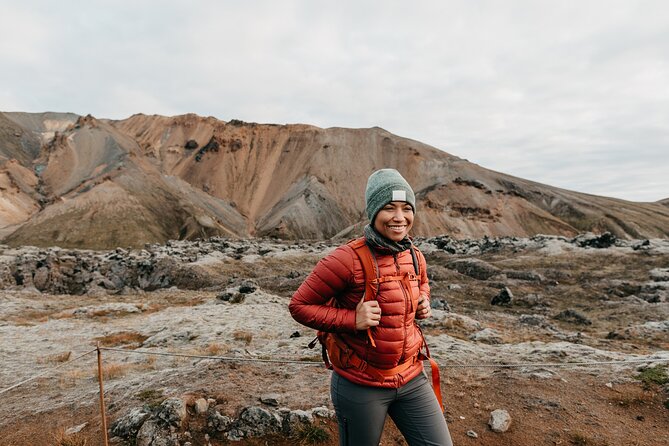
This tour is listed as needing moderate physical fitness. That fits most hikers who can handle 6–8 hours walking on uneven ground and who don’t mind working uphill in cold air. Day 2, with its 24 km and big ascent, is the test you should take seriously.
The trip also works best if you’re okay sharing group space—tent camping and dinners in assembly tents. One caution from real-world expectations: groups can feel large once you’re tired, especially when you’re rotating around shared facilities and waiting for everyone to pack up.
Weather is another factor you should respect. The experience is described as requiring good weather, and there’s a stated plan if it’s canceled due to poor conditions: you’ll be offered a different date or a full refund.
Practical takeaway: book this if you like planning less and hiking more. If you’re the type who needs total control over pace, privacy, and quiet, you should consider whether the shared camp style matches your style.
Should you book the 4-Day Laugavegur Trek?
I’d book this trek if you want a well-run way to experience Iceland’s best mix of volcanic scenery—lava fields, obsidian sands, glacier views, and the Þórsmörk birch forest finish—without having to manage logistics every day. The included tent setup, minibus rides, and luggage transfer are exactly what turn a good route into a stress-free trip.
You should think twice if you don’t want to rent gear or you’re not comfortable hiking long days in changing weather. Also, decide now whether you’re okay with shared sleeping arrangements; upgrading to a single tent is one way to protect your recovery if that matters to you.
If you’re ready for a real Highland adventure with simple, organized support, this is a strong value for your money—because the cost is paying for reliability in a place where you don’t want reliability as an afterthought.
FAQ
What are the main start locations in Reykjavik?
Meeting points in Reykjavik are between 7:00 and 7:30 a.m. at City Hall (Ráðhúsið) on Vonarstræti, Hallgrímskirkja Church, or Reykjavík Campsite.
Is pickup offered outside Reykjavik?
Yes. The tour lists pickup at 8:15 from Selfoss N1 Gas Station and at 9:00 from Hella Bus Stop (Olís Gas Station).
What time does the trek return to Reykjavik?
You arrive back in Reykjavík around 21:30, with drop-off at the BSI bus stop.
How much hiking do you do each day?
Day 1 is about 8 km (around 4 hours). Day 2 is about 24 km (7–8 hours). Day 3 is about 15 km (6–7 hours). Day 4 is about 15 km (6–7 hours).
What meals are included?
Breakfast is included 3 times, lunch 4 times, and dinner 3 times.
Is camping gear included?
No. A sleeping bag is not included (listed as a rental option). Waterproof jacket, waterproof pants, hiking poles, and hiking boots are also listed as not included but available to rent.
Do you transport luggage between camping spots?
Yes. Luggage transportation between camping spots is included.
What happens if the tour can’t run due to weather?
The tour requires good weather. If it’s canceled due to poor weather, you’ll be offered a different date or a full refund.