REVIEW · KATHMANDU
Annapurna Base Camp Trek – 10 Days
Book on Viator →Operated by Himalayan Recreation Treks & Expedition Pvt.Ltd · Bookable on Viator
One trip in Nepal can change your whole rhythm. This 10-day Annapurna Base Camp trek blends big Himalayan views with real village walking and solid day-by-day pacing. You start with Kathmandu and Pokhara, then head into the Annapurna Conservation Area on a guided hike to Annapurna Base Camp at 4,130m.
What I really like is the practical structure: you get tea-house accommodation for your trekking nights, plus a professional, licensed guide and the support side (first aid kit, equipment help, and local taxes). Another standout is how you can shape the feel of the trip because the itinerary leaves room for your pace and preferences.
The main drawback to consider is altitude. You’ll be trekking at demanding heights around 4,130m, and weather can swing fast. You’ll want a doctor’s go-ahead and travel insurance that covers medical evacuation.
In This Review
- Key highlights worth knowing before you go
- Price and what $699 buys you (and what it doesn’t)
- The Annapurna Base Camp experience: a route built for survival and views
- Day 1 in Kathmandu: first steps, jet lag control, and easy sights
- Day 2 connecting to the Pokhara side: bus time and viewpoint options
- Trek Day 3: Chhomrong and the rhododendron-and-steps rhythm
- Trek Day 4: Sinuwa and the big step sections
- Trek Day 5: the final approach to Annapurna Base Camp (4,130m)
- Trek Day 6: the “give your legs a break” descent back toward Sinuwa
- Trek Day 7: Jhinu Danda and the Chhomrong climb-back
- Trek Day 8: back to Pokhara, Phewa Tal, and Sarangkot time
- Day 9 and 10 in Kathmandu: culture wrap-up and last-morning wandering
- Guides, tea houses, and the support system that makes ABC work
- Altitude, health, and packing: don’t guess, prepare
- Should you book this Annapurna Base Camp trek?
- FAQ
- How many days is the Annapurna Base Camp trek?
- Where does the tour start and end?
- What altitude do you reach at Annapurna Base Camp?
- What’s included for accommodation?
- Do you include airport transfers?
- Are meals included throughout the trip?
- Do I need travel insurance?
- What documents do I need for permits?
- How big is the group?
Key highlights worth knowing before you go
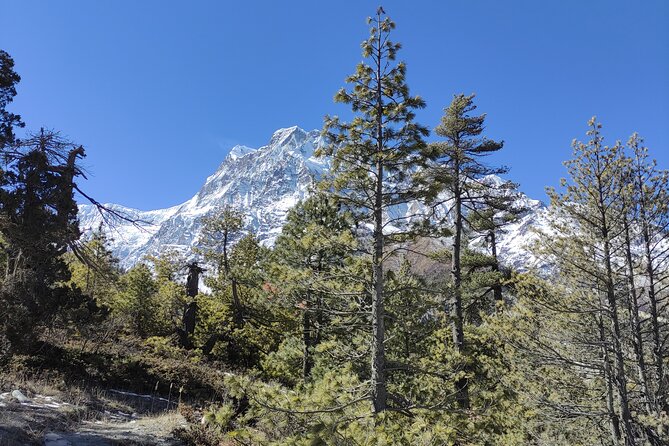
- Annapurna Base Camp at 4,130m: the classic target altitude, reached with guided pacing and teahouse logistics.
- Tea-house trekking, not camping: 6 trekking nights in lodges make this ABC hike more doable for many people.
- Guides with real local support: in past trips, Santosh and Asok (and others) were specifically praised for steady help on the trail.
- Comfortable start and finish: 2 nights in Kathmandu and 2 in Pokhara with breakfast, then a final-city wrap-up in Kathmandu.
- Group size stays small: up to 12 people, and only your group participates.
- Post-trek view time in Pokhara: stops like Phewa Tal and Sarangkot give you a graceful landing back to sea-level life.
Price and what $699 buys you (and what it doesn’t)
At $699 per person, this ABC trek isn’t just selling mountain air. It bundles the big cost drivers you’d otherwise piece together on your own: airport transfers, Kathmandu and Pokhara hotel nights, trekking tea-house stays, and guided transport on both ends of the route. It also includes a government-licensed trekking guide and the local support system (food/drinks/accommodation during the trek side, insurance coverage as part of the guide’s package, and their salary and equipment plan).
You also get value in the “someone is handling it” category. A company member meets you in Kathmandu after you land, and you’re taken care of through the airport-to-hotel connection. Then the trip carries you through the transport legs: Kathmandu to Pokhara by luxury tourist bus, and Pokhara to Nayapul and back by private car.
One thing to budget for: city meals and drinks. Lunch and dinner in Kathmandu and Pokhara are listed as not included, and the operator estimates $150 per person for those. Gratuities are also separate at $50 per person. Add that to $699 and you’ll have a clearer picture of your full trip cost.
You can also read our reviews of more tours and experiences in Kathmandu.

The Annapurna Base Camp experience: a route built for survival and views
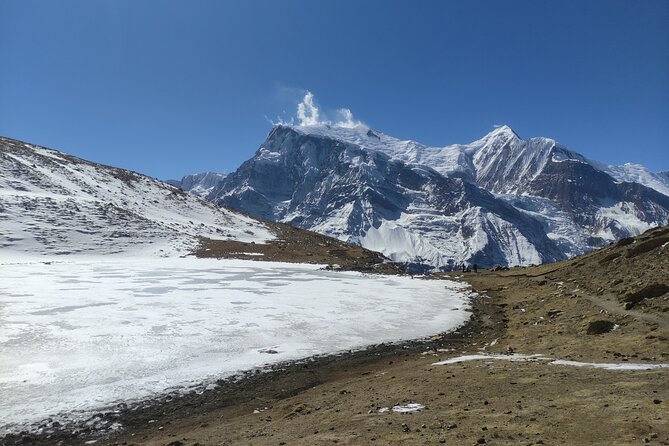
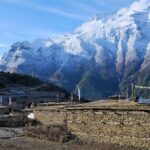
Annapurna Base Camp trekking works because the trail does two jobs at once. It slowly introduces altitude and effort, then saves the real payoff for the final push. You’re walking through villages and rhododendron-lined paths, and you keep moving between small settlements rather than dealing with long stretches of nothing.
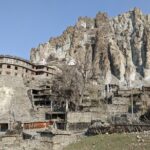
This route also gives you a taste of the Annapurna region’s day-to-day life. Along the way, you pass traditional ethnic villages and walk inside the Annapurna Conservation Area. That’s a big part of why ABC feels like a real journey, not just a photo stop at the end.
Your pacing is key. The plan is described as moderate fitness, but it also notes “demanding altitudes” and “extreme variations in weather” are common at these heights. So I’d treat this as a hike that you can do, but only if you respect the slow-down rules: drink water, move steadily, and don’t try to win a race to the next village.
Day 1 in Kathmandu: first steps, jet lag control, and easy sights
Your first day is about getting your bearings. After landing at Tribhuvan International Airport, you’ll be greeted and taken to your hotel in Kathmandu. Then you meet your guide and get your overnight plan squared away.
Kathmandu’s neighborhoods are perfect for loosening up without exhausting yourself. In Thamel, you’ll find the kind of streets where you can pick up last-minute trekking needs, ask gear questions, and eat something familiar enough after a flight. You’re also set up to see iconic landmarks like Kathmandu Durbar Square and Pashupatinath Temple, depending on timing.
This is also where the trip’s support system becomes real. In past experiences with this operator, guides and local porters were repeatedly praised for being friendly and helpful. That matters on day one because you’ll be tired, and you’ll want someone to make decisions easier.
Day 2 connecting to the Pokhara side: bus time and viewpoint options
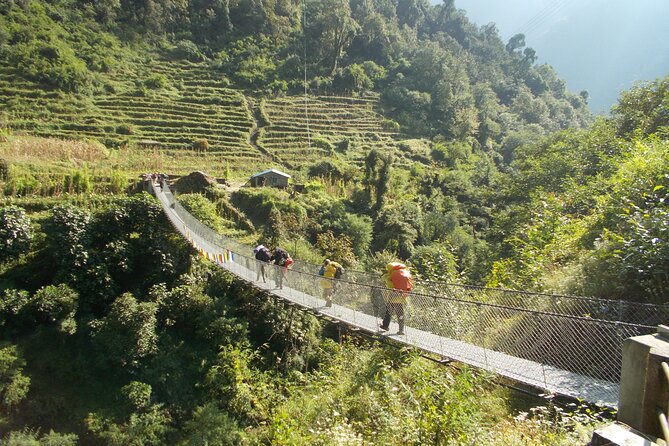
Day 2 is the bridge day. You’ll be taken toward the Pokhara area, starting with an early pickup and scheduled bus drive. The bus ride itself is part of the experience, with river views and countryside scenes along the way.
The itinerary also lists sightseeing stops that can help you understand Nepal beyond the trail. Swayambhunath and Chandragiri Hills show different sides of the Kathmandu-Pokhara corridor: temple views and higher viewpoints that give you a sense of terrain before you start hiking for real.
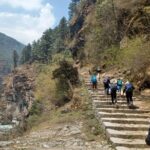
This matters because ABC is not just “up and up.” It’s a sequence of ups and downs—stone steps, river crossings, and forest paths. Getting that terrain in your head early helps you walk smarter later.
Trek Day 3: Chhomrong and the rhododendron-and-steps rhythm
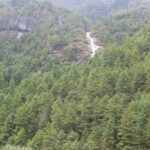
Chhomrong is one of those trail names that sounds simple, but it’s where you start feeling the trek’s structure. The day includes a steady uphill-and-downhill climb through lush woodlands and rhododendron-heavy sections to reach Chhomrong.
This is also a day where the ground can be uneven. The plan calls out that today might be tough on uneven trails. That’s normal for ABC, and it’s why having a guide who can keep you moving safely matters.
Chhomrong is a practical “checkpoint village.” It helps you acclimate because you’re not going from flatlands to 4,000m in a single leap. At the same time, you’ll be close enough to the action that the next days feel like they connect to something bigger.
One useful tip from the way guides are praised on this trek: if you’re unsure how hard to push, ask. Guides like Santosh and Asok have been singled out for steady support, and that’s exactly what you want on the days when your legs argue with your brain.
Trek Day 4: Sinuwa and the big step sections
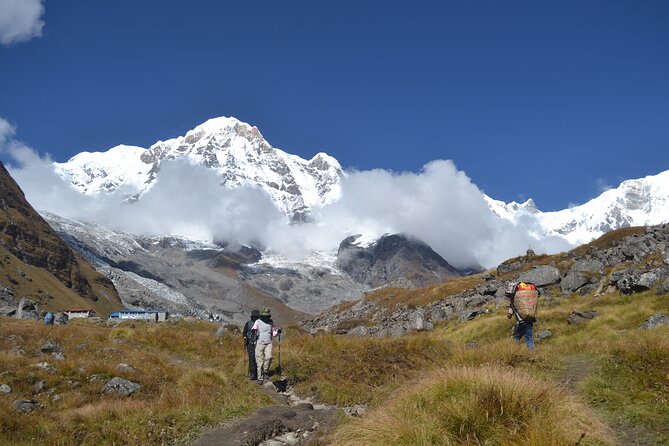
Day 4 moves you toward Sinuwa. The description is specific about crossing rivers, then ascending about 2,500 stone steps carved into the hillside. That’s a lot of footwork in one day, and the “stone steps” detail matters because it changes your strategy.
On step days, your best pace is controlled pace. You want short steps, steady breathing, and no sprinting. If you go too fast here, you’ll feel it later.
The reward is that Sinuwa sits along the trail where your view of the Annapurna region starts to feel more continuous. It’s also a location where you’ll get another tea-house night, keeping the whole trek within the lodge-and-meal rhythm instead of forcing camp-style logistics.
Trek Day 5: the final approach to Annapurna Base Camp (4,130m)
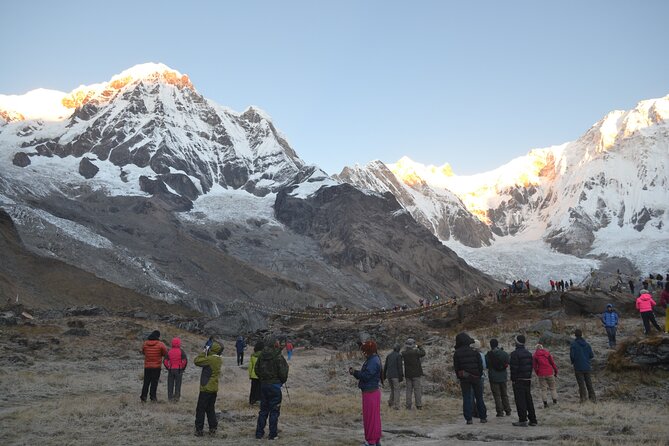
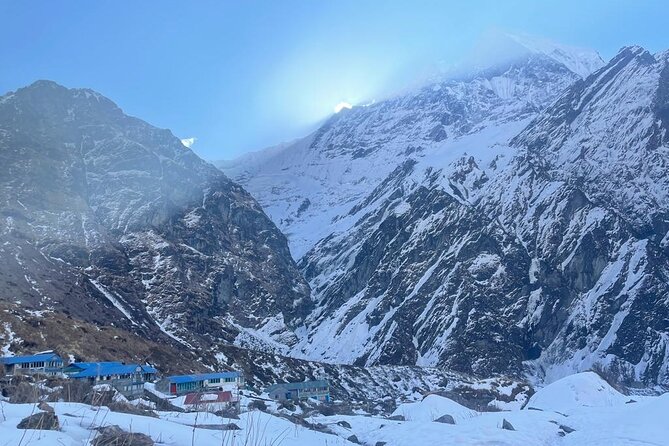
This is the day you plan your energy around. You start climbing gently alongside the riverbed, then continue over mountainside terrain as you make your way toward Bagar and the route leading up to Annapurna Base Camp. The itinerary also references Machhapuchhre Base Camp in this general approach.
Even if you’ve trained, ABC can still surprise you with effort near the top. The key is that your day is described as strenuous, and altitude is already in the mix. Plan for slow movement and extra patience with your breathing.
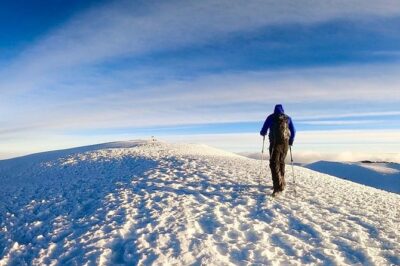
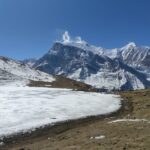
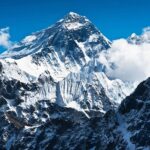
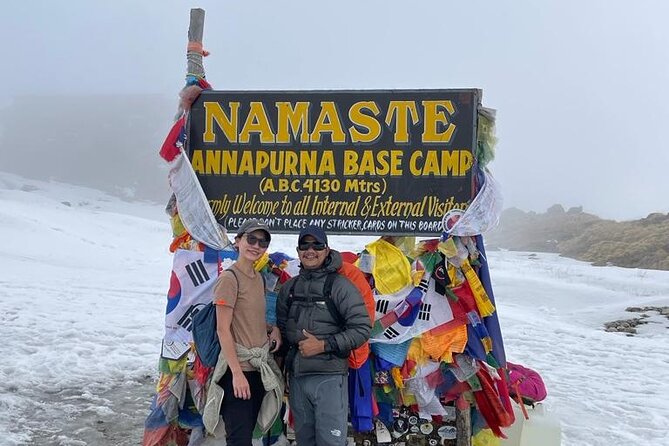
Reaching ABC at 4,130m is the whole point. This is the tenth tallest mountain in the world feature region, and your location at base camp puts the peaks and glacier terrain into a different emotional category than earlier village days. You’re not just passing through a place; you’re arriving at the destination.
I’ll be blunt about the physical reality: if you show early signs of altitude sickness, your best move is to stop pushing and tell your guide right away. The trip notes that health effects can happen to anyone at these heights. That’s not fear talk; it’s a safety reminder.
Trek Day 6: the “give your legs a break” descent back toward Sinuwa
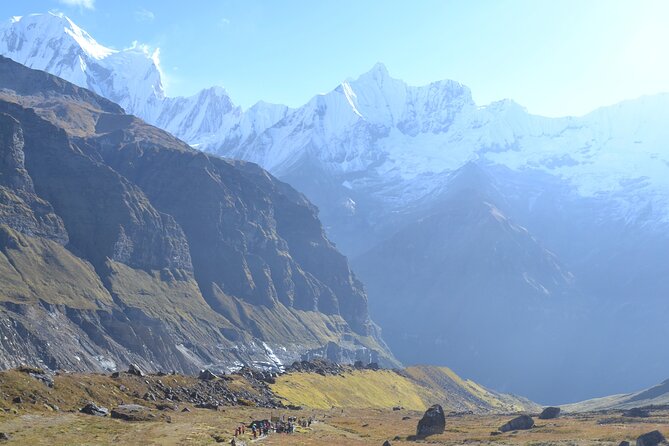
Day 6 is about retracing your steps back toward bamboo and Sinuwa. This is smart design. After the emotional hit of reaching base camp, your body needs recovery. Retracing also helps you lock in navigation without adding new trail complexity.
The description highlights a sanctuary area and a moist, wetland feel, so expect a different environment than the earlier stone-and-rhododendron feel. That contrast can be refreshing when your mind is tired from the altitude work.
Also, this is where guides earn trust. In multiple experiences with Himalayan Recreation Treks & Expedition, support and professionalism were specifically praised, with named guides like Santosh showing up again and again. That’s exactly what helps on a “return” day when motivation can drop.
Trek Day 7: Jhinu Danda and the Chhomrong climb-back
Day 7 is another up-and-down pattern, moving from bamboo toward Kuldighar, then descending to Chhomrong Khola and climbing again to Chhomrong. The route is described as racing your steps back, then dealing with stone steps once more.
This day can feel repetitive if you treat it like the same trek again. Don’t. Instead, treat it as a controlled recovery day with a clear goal: get back through the same terrain with better technique. If you learned how to walk efficiently up to base camp, use that knowledge.
Jhinu Danda is listed as the stop for this day, and Jhinu is often known for its hot spring reputation—but the information you provided only names Jhinu Danda as a stop, so I’ll keep it at that. Even without assuming spring time, Jhinu Danda functions as a mid-trek anchor that helps you break the descent into manageable pieces.
Trek Day 8: back to Pokhara, Phewa Tal, and Sarangkot time
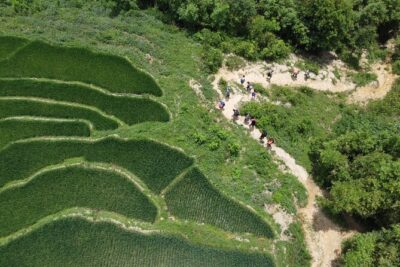
Day 8 is the transition day: you trek from Jhinu toward Nayapul and then back to Pokhara. The description calls out distant views of Annapurna Mountains and countryside farms with rice plantations. After days of hiking, it’s a shock in a good way.
In Pokhara, you’ll get Phewa Tal time. The itinerary calls it a beautiful lake, and this stop is a classic way to let your body stop bracing for each new step. If Sarangkot is included on your schedule (it is listed), you’ll likely also get viewpoint time over the region.
This “soft landing” matters. Many ABC treks feel like one long test. Pokhara gives you a chance to return to normal human pace and enjoy a real sit-down moment.
Day 9 and 10 in Kathmandu: culture wrap-up and last-morning wandering
Day 9 brings you back to Kathmandu from Pokhara. The itinerary also lists Patan Durbar Square, which is a strong add-on if you want more than just quick temple photos. Patan’s architecture is a different flavor than the main Durbar Square area.
On Day 10, you finish with a drop-off at Tribhuvan International Airport and farewell from the team. Two listed stops for the final day include Garden of Dreams and Narayanhiti Palace Museum. It’s a nice choice set for a last-day stroll: one park-style calm, one museum stop for context.
If you like buying small souvenirs or snacks to finish your trip well, Kathmandu’s final day is usually when you’ll have the mental energy to enjoy it.
Guides, tea houses, and the support system that makes ABC work
This trek’s best reputation point is not just the trail. It’s the humans running the plan.
In past ABC experiences with Himalayan Recreation, names like Dibo and Varat appear in customer thanks, and guides such as Santosh show up repeatedly. Raju Simkhada, nicknamed Rash in one set of messages, is praised for caring support through the journey. Other guides like Asok are also mentioned for friendly help.
Why that matters: on ABC, your biggest risk isn’t only the mountain. It’s confusion—about pace, about symptoms, about which step is safe, about what to do when weather changes. A professional guide can keep the group together and make the day decisions feel simple.
Tea houses are part of that same story. The trek includes 6 nights of tea-house accommodation. That usually means you’re not carrying a full kitchen or tent system, and that makes the trek more accessible while still keeping the route authentic.
Also, the operator includes a farewell dinner with cultural show. That’s not an afterthought. It’s a cultural landing after a physically draining week, and it gives you a shared “we did it” evening with your group.
Altitude, health, and packing: don’t guess, prepare
ABC is listed as trekking at about 4,130m and highlights that health effects can happen regardless of age and fitness. The trip strongly recommends you discuss the plan with your doctor and carry travel insurance that covers medical expenses and emergency repatriation. You must show proof of insurance to the tour leader on the first day.
That’s the right mindset. At altitude, the goal isn’t toughness. It’s smart adaptation.
You’ll also want to plan your gear early. The itinerary notes that required trekking gears are available to buy or rent in Kathmandu, and your guide will help arrange it. If you pack for cold and layers, you’ll thank yourself, because mountain weather changes quickly.
One more practical point: extra luggage. You can leave luggage at the company office or your hotel and pick it up upon return. That keeps the trek days lighter and less annoying.
Should you book this Annapurna Base Camp trek?
I’d book it if you want a classic ABC route with guided structure, tea-house comfort, and a support team that has been praised by name for professionalism. The $699 base price looks fair when you factor in transfers, Kathmandu and Pokhara hotel nights, guided trekking logistics, and the fact that you’re trekking to 4,130m with a licensed guide.
I’d hesitate if altitude risk feels like a question mark for you, or if you want a fully custom itinerary day-by-day with no group rhythm. This is set up as a small-group experience (up to 12) where the value comes from coordination, not from total independence.
If you’re a moderate-fit hiker who likes real villages and wants the main prize—Annapurna Base Camp—this trek is a strong match.
FAQ
How many days is the Annapurna Base Camp trek?
The trek is listed as 10 days (approx.).
Where does the tour start and end?
It starts in Kathmandu, Nepal and returns to Kathmandu at the end.
What altitude do you reach at Annapurna Base Camp?
Annapurna Base Camp is listed at 4,130m (13,550 feet).
What’s included for accommodation?
You get 2 nights in Kathmandu and 2 nights in Pokhara with breakfast, plus 6 nights in tea houses during the trek.
Do you include airport transfers?
Yes. Transfers from and to the airport are included.
Are meals included throughout the trip?
Breakfast is included (9), and dinner is included. Lunch and dinner in Kathmandu and Pokhara are not included, and the estimate provided is $150 per person for those meals.
Do I need travel insurance?
Yes. The trip requires insurance that covers medical expenses, including emergency repatriation, and you must show proof on the first day.
What documents do I need for permits?
You need a passport photo copy (clear color scan), validity minimum 6 months, 2 passport size photos, plus occupation and home details address.
How big is the group?
The maximum is 12 people per booking, and it’s a private tour/activity for your group only.