REVIEW · MARRAKECH
Atlas Mountains Valley Trek – 3 Days
Book on Viator →Operated by Toubkal Guide · Bookable on Viator
Mountain mornings in the Atlas start early. This 3-day Atlas Mountains Valley Trek gets you out of Marrakech and into high, quiet valleys where you’ll walk past streams and fruit trees, then meet real Berber life with your English-speaking guide. In small groups up to 15, the pace feels human and the trip logistics feel handled.
What I like most is how much gets folded into one price: round-trip transport, gîtes, meals, a mule, and even entrance fees so you’re not stopping to pay at random points. You’ll also hear real local context from guides like Mohammad Sarcosi and Hassan, plus support in camp credited in particular to Muhammed for the food. One thing to consider: you’re walking up to 6–7 hours on Day 2, with long stretches between villages, so it’s not a stroll.
In This Review
- Key Highlights Worth Noticing
- Leaving Marrakech for Imlil: The Trek That Doesn’t Waste Your Time
- Day 1: Imlil to Tinerhourhine via Tamatert and Tizi ’n Tamatert
- Day 2: Imnane Valley, Ikkiss, and the Long Walk to Aït Aïssa
- Day 3: Back Toward Imlil via Tizi Oussem and Mzik
- What’s Really Included (And Why That Drives Value)
- Price and Value: What $255.52 Covers (and What It Doesn’t)
- Comfort, Fitness, and Gear: Make It Enjoyable on the Mountain
- The Guide and the Group Dynamic: The Real Difference Maker
- Good Fit vs. Not-So-Good Fit
- Should You Book This Atlas Mountains Valley Trek?
- FAQ
- Where is the meeting point, and when does the tour start?
- How long is the trek, and how much walking is planned each day?
- What’s included for meals and lodging?
- Are entrance fees included?
- Do I need to bring a sleeping bag?
- Is this a small group, and are children allowed?
Key Highlights Worth Noticing
- Small group size (max 15) keeps the trek from feeling crowded
- Round-trip transport from Jemaa el-Fna means you start and end cleanly
- Meals + gîte lodging included takes the guesswork out of where to eat and sleep
- Entrance fees are handled so you don’t pay on the spot
- Mule support helps with carrying, not just walking
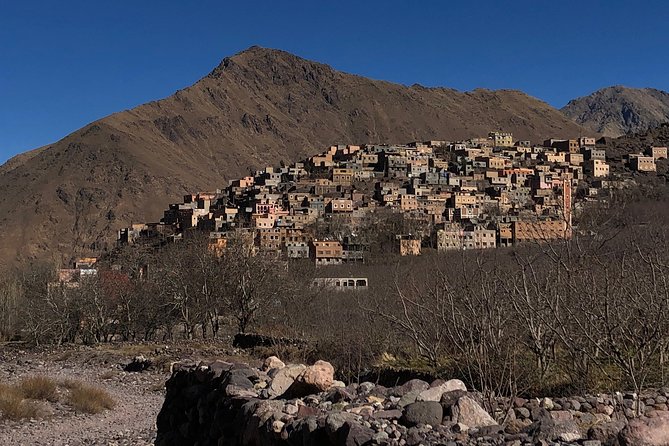
- Berber villages like Ikkiss and Mzik add culture alongside scenery
Leaving Marrakech for Imlil: The Trek That Doesn’t Waste Your Time
This is one of those trips where the hard parts are planned for you. You meet in Marrakech at Jemaa el-Fna at 9:00 am, then the group transfers about 1.5 hours to Imlil, a common jumping-off point for Atlas hikes. Imlil is your “reset” moment: by the time you start walking, you’re already in trekking mode.
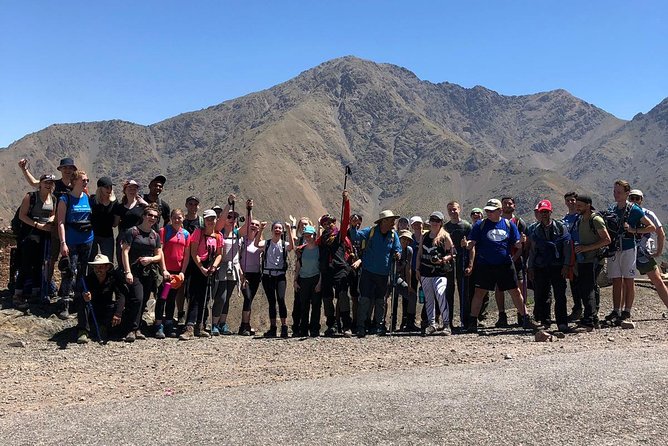
The small-group setup matters more than you might think. With a maximum of 15 travelers, you usually get to move at a steady pace without constant waiting, and your guide can actually manage questions and small course corrections. That’s a big deal on mountain paths where timing affects everything from water stops to arriving for lunch.
And then there’s the cultural layer. The trek passes through valleys tied to everyday Berber life, not just viewpoints. Expect village moments and a guide who can explain customs rather than recite facts at you.
You can also read our reviews of more tours and experiences in Marrakech.

Day 1: Imlil to Tinerhourhine via Tamatert and Tizi ’n Tamatert
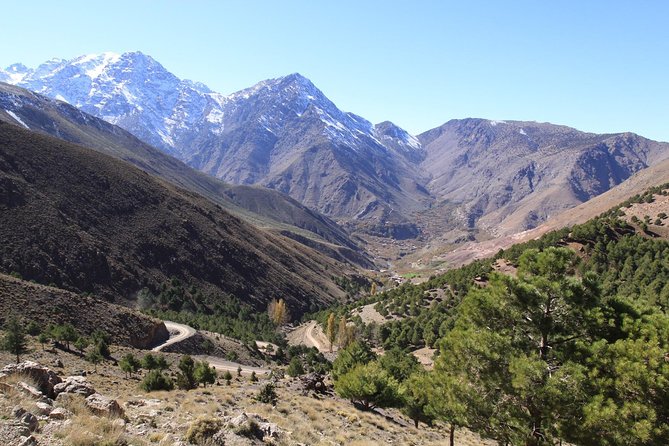
You start easy but not lazy: from Imlil (1740m), the route runs toward Tinerhourhine, passing by Tamatert. After some initial walking, you reach the col of Tizi ’n Tamatert (2279m) for lunch. That lunch stop at a higher point is practical. You’re not just eating—you’re getting a break at a natural “landmark” moment where the route changes character.
After lunch, you keep moving toward Ouanesekra–Tamguist, and then continue until you reach Tinerhourhine (1600m) for the night at a local gîte. The Day 1 walk is about 4 hours (with the day scheduled around 5 hours total walking time in the description you’ll see). It’s a good first day: enough effort to feel like you earned the mountains, without turning your legs into jelly.
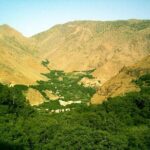
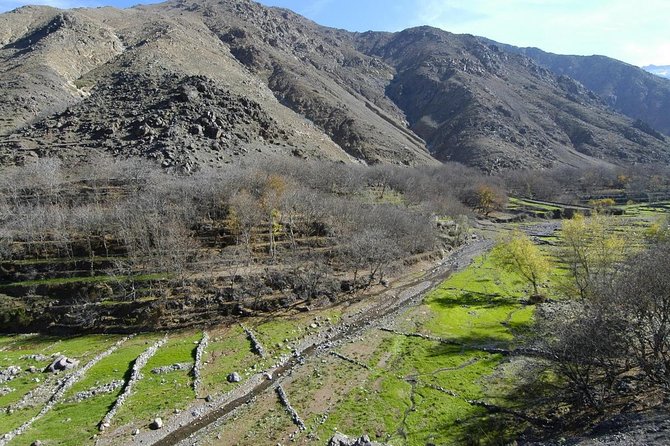
What makes this day feel special is the mix of route variety and “valley rhythm.” You’ll walk through areas described as groves of cherry and walnut trees, and the guide helps connect the landscape to local life. If you enjoy walking that feels lived-in—paths used by people, not just tourists—that’s the mood here.
Day 2: Imnane Valley, Ikkiss, and the Long Walk to Aït Aïssa
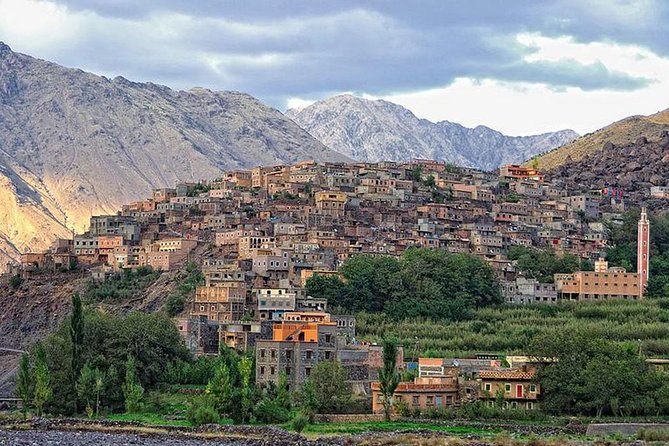
Day 2 is the workday. You depart from Tinerhourhine and head along the Imnane Valley, passing the Berber village of Ikkiss (1700m). Then you continue upward to Tizi n’Aguersioual (2000m). Lunch is planned at Matate (2000m).
The scheduled hiking time is about 6 to 7 hours, which means you’ll want to pace yourself rather than sprint. Take a steady rhythm, and let the views come to you as the path rises and falls.
After lunch, you continue and finish at Aït Aïssa (1800m) for another local gîte night. In your camp rhythm, Day 2 matters because it sets up what you’re able to enjoy on Day 3. If you manage your energy on this long day, the last day feels fun instead of grindy.
Cultural moments are woven in here, not stapled on. Ikkiss gives you the chance to slow down around a real village setting. And because your guide is English-speaking (and reported as friendly and accommodating in guide names like Hassan and Lahcen), the cultural explanation tends to land naturally while you’re walking, not like a lecture between photo stops.
Day 3: Back Toward Imlil via Tizi Oussem and Mzik
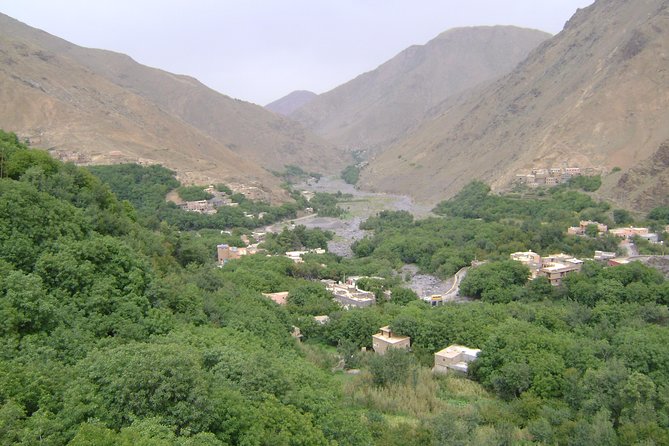
On the final day, you walk toward Tizi Oussem (1900m) and pass Tizi Mzik (2400m) and the village of Mzik, before arriving back in Imlil. Your scheduled hiking time is about 4 hours, then you transfer back to Marrakech and get dropped at the same place you started.
Day 3 is often when hikes turn into a check-in. You’ll have enough walking done to feel proud, but not so much that you’re worn out before the last descent. The route reaching up to around 2400m means you still get that high-altitude feel, then you end by easing back down toward Imlil’s lower elevation.
If you liked the village texture on Day 2, the Mzik area is a strong closing note. It’s the kind of stop that makes the trek feel like a real local circuit through communities, not just a loop of trails.
What’s Really Included (And Why That Drives Value)
This is a classic “take the burden off you” trek package. Included in the price:
- Transport from Marrakech and back
- Accommodation at local gîtes
- Meals: 3 lunches, 2 dinners, 2 breakfasts
- Mule support, plus a cook
- An English-speaking guide
- Entrance fees, so you don’t pay on the spot
That last line—entrance fees—matters if you’ve ever done trips where you’re handed a bill right in the middle of your day. Here, you can keep your focus on walking and conversations.
The meals and cook piece is also a quiet win. After long mountain days, you don’t just want food—you want food you’ll actually be happy to eat and that fits your energy needs. In the feedback you provided, food gets singled out as a highlight, with Muhammed thanked for the meals. Even if your personal menu experience differs, you can reasonably expect that feeding people on a trek is part of the plan, not an afterthought.
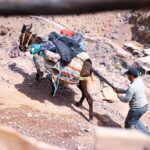
The mule support is another practical inclusion. You’re still walking, but having a mule to help with carrying can make the difference between finishing Days 2 and 3 feeling like yourself or like you’re playing catch-up with your own energy.
Price and Value: What $255.52 Covers (and What It Doesn’t)
At $255.52 per person for a 3-day trek, the big value isn’t just the walking. It’s the fact that many “trip costs” are folded in:
You’re paying for transport, guide time, lodging, meals, a cook, mule support, and entrance fees. Those add up fast when you try to build the same trip on your own—especially in a region where getting the routing, food, and local stays stitched together takes real work.
What’s not included is straightforward:
- Sleeping bags
- Soft drinks like mineral water or Fanta (you’ll be buying them separately)
- Tips
- Travel insurance
That doesn’t make the price “cheap” or “expensive” in the abstract—it makes it simple. If you’re the kind of traveler who wants fewer moving parts, this price can feel fair quickly.
Comfort, Fitness, and Gear: Make It Enjoyable on the Mountain
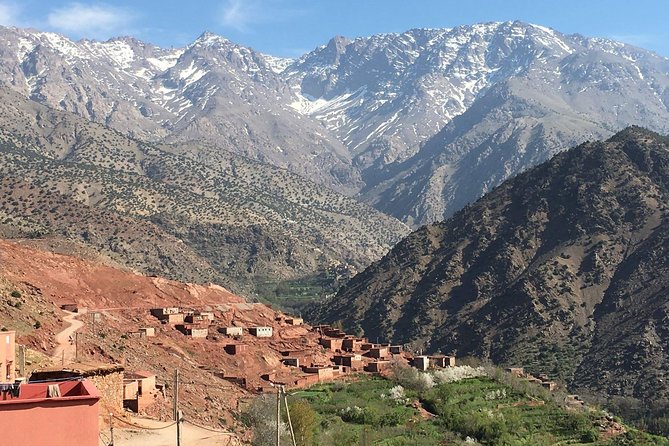
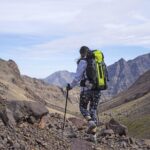
This trek is best suited to people who can handle steady hiking on uneven paths. The walk times look manageable on paper, but Day 2 stretches to 6–7 hours, and the route climbs and descends across elevations roughly from 1600m to 2400m.
Two comfort considerations that follow directly from the plan:
1) Bring your own sleeping bag
Local gîtes are included, but sleeping bags are explicitly not. Plan for what you’ll need to sleep comfortably.
2) Plan for long walking days
Day 1 is about 4 hours, Day 2 is the long one, and Day 3 returns you to Imlil after about 4 hours. If you’re building your fitness, I’d focus more on steady walking stamina than on “can I climb one steep hill.”
Also, consider that you’re starting your day from Marrakech at 9:00 am. You’ll want to treat this as a full travel day, not something you can casually roll into. If you like mornings, this trek rewards you.
The Guide and the Group Dynamic: The Real Difference Maker
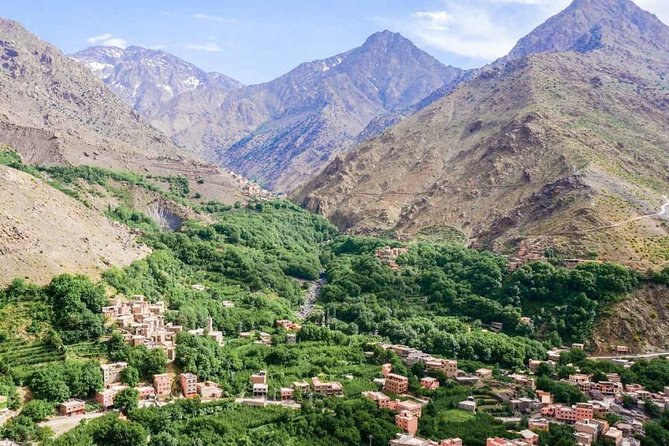
Even when the itinerary looks great, the guide can make it worth repeating. Your info includes repeated praise for guides and how they treat the group. Mohammad Sarcosi is mentioned as friendly, knowledgeable, and accommodating, with Hassan described as wonderful and from the area, sharing culture and customs. Lahcen also gets strong credit as a phenomenal guide, and Muhammed gets thanks for the food.
What that translates to in real life is this: you’ll likely get better answers to the questions you naturally have while walking, like why villages are arranged a certain way, what people grow, and how everyday life works in the Atlas valleys. The route isn’t just about checking off geography—it’s about understanding what you’re passing.
And with a maximum of 15 people, the group can stay together without feeling like a marching band.
Good Fit vs. Not-So-Good Fit
This trek is a strong match if you want:
- A classic Atlas valley experience over just one viewpoint
- Local Berber village encounters alongside walking
- A trip where meals, lodging, transport, and fees are handled for you
- A small group rather than a big bus-and-trail setup
It may be less ideal if you want:
- A very short walk (Day 2 is long)
- Total independence (this is a guided package with planned meals and gîtes)
- To avoid buying add-ons like soft drinks (those aren’t included)
Should You Book This Atlas Mountains Valley Trek?
I’d book it if you want a structured, guided 3 days in the Atlas that keeps your costs predictable and your days moving at a solid, enjoyable pace. The included logistics—transport from Marrakech, gîte nights, meals, mule support, and entrance fees—are exactly the kind of things that make a hike feel like a vacation instead of a project.
I wouldn’t book it if you’re looking for an ultra-light walk or you don’t want to manage basic hiking needs like bringing a sleeping bag and dealing with a full day of walking on Day 2.
If you’re choosing between “just go for a stroll” and “actually see how people live in the valleys,” this trek leans the right way. You get walking days, village moments, and meals that keep you fueled, without you having to coordinate the whole thing yourself.
FAQ
Where is the meeting point, and when does the tour start?
You meet at Jemaa el-Fna in Marrakech at 9:00 am.
How long is the trek, and how much walking is planned each day?
It’s about 3 days total. Day 1 is about 4 hours walking, Day 2 is about 6 to 7 hours, and Day 3 is about 4 hours.
What’s included for meals and lodging?
The tour includes accommodation at local gîtes and meals: 3 lunches, 2 dinners, and 2 breakfasts.
Are entrance fees included?
Yes. Entrance fees are covered, so you don’t need to pay on the spot.
Do I need to bring a sleeping bag?
Yes. Sleeping bags are not included, so you’ll need to bring your own.
Is this a small group, and are children allowed?
The group size is limited to a maximum of 15 travelers, and children must be accompanied by an adult.