REVIEW · MARRAKECH
4 Days Group Budget Merzouga Desert Tour and Trekking
Book on Viator →Operated by Morocco First Gate · Bookable on Viator
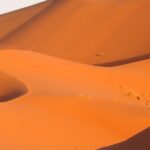
That first view of the dunes changes your mood. This 4-day Marrakech to Merzouga tour stitches together Atlas mountains, Ait Benhaddou, gorge trekking, and real Saharan nights in Erg Chebbi. You get a full rhythm of driving, short walks, desert camp time, and two dune moments that feel very different from each other.
I especially love the extra time this 4-day format gives you versus the shorter trips: it feels less like a sprint. I also like that the trip includes both sunset and sunrise camel experiences in Erg Chebbi, plus an actual trek in the Todra Gorge that gets you out of the vehicle. One thing to consider: the days are long on the road, and the itinerary asks for moderate physical fitness for the gorge walk and dune time.
In This Review
- Key Things That Make This 4-Day Merzouga Tour Different
- The Big Picture: What You’re Really Booking in 4 Days
- Day 1: Marrakech to Dades Gorge via Tizi n Tichka and Ait Benhaddou
- Day 2: Dades gorges, Todra canyon trek, then Erg Chebbi by camel
- Day 3: Sunrise dunes, Rissani souks, and the Draa Valley ride to Ouarzazate
- Day 4: Ouarzazate morning sights, then back over the High Atlas to Marrakech
- Desert Camp Reality Check: Comfort, Stars, and What to Expect at Night
- Price and Value: Is $587.28 a Fair Deal for 4 Days?
- Guide and Group Experience: The Human Factor Matters
- Who This Tour Suits Best (and Who Should Think Twice)
- Should You Book This 4-Day Merzouga Tour?
- FAQ
- How long is the 4 Days Group Budget Merzouga Desert Tour and Trekking?
- What’s included in the tour price?
- Do I get meals included, or do I need to budget for lunch?
- Is camel trekking part of the itinerary?
- What kind of physical activity should I expect?
- How big is the group?
- What happens if weather is poor?
Key Things That Make This 4-Day Merzouga Tour Different

- Erg Chebbi twice: sunset camel ride plus a sunrise dune moment
- Todra Gorge trek: a canyon walk near 300 m tall cliffs for real scenery on foot
- Real desert sleep: bivouac under nomadic tents (jaima-style) or outside under stars
- Big sights, not just desert: Tizi n Tichka, Ait Benhaddou, Skoura, Ouarzazate, and Rissani
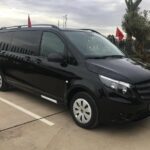
- Smallish group feel: maximum 30 travelers with an air-conditioned vehicle
The Big Picture: What You’re Really Booking in 4 Days
This tour is built for people who want the Sahara without giving up the rest of Morocco. You’re not only chasing dunes. You’re also getting a serious chunk of Atlas mountain road and classic southern Morocco stops—Ait Benhaddou, Skoura, Dades, and Ouarzazate—so the desert feels like the payoff, not the only event.
You’ll also get a more balanced pacing than many shorter Merzouga options. Two nights in the wider region of the Dades side, then desert nights, then a final return day gives you time to reset between big drives. That matters because you’re spending a lot of time traveling, and the tour wisely breaks it up with scenery stops and short walks.
Best of all, the tour doesn’t treat the dunes like a photo-op only. The sunset ride is paired with camp time, and the next morning includes an early dune moment and then a return for shower and breakfast. That mix is why the desert part doesn’t feel rushed.
You can also read our reviews of more tours and experiences in Marrakech.
Day 1: Marrakech to Dades Gorge via Tizi n Tichka and Ait Benhaddou

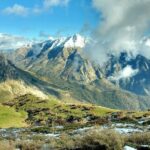
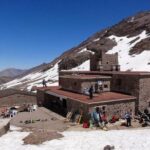
Day 1 starts with a morning departure from Marrakech and a drive over the High Atlas via Tizi n Tichka (listed at 2260 m). This road is one of those stretches where you can feel Morocco changing as you climb. The higher you go, the more dramatic the mountain scenery becomes, and the drive itself becomes part of the experience rather than just transportation.
Your next major stop is Ait Benhaddou, the fortified ksar village known for its kasbahs. This place has been used as film scenery for years, but even without that angle, it’s a strong visual. You’re walking around a built environment made for defense and climate, with layers of earthen architecture. It’s the kind of stop where you’ll want to slow down and look at how the village is arranged.
From there, the route continues toward Dades, with Ouarzazate and Skoura on the way, including the palm grove and Valley of Roses area. Then you reach the Dades gorge region for the first night in a traditional hotel.
What to watch for on Day 1: it’s a long day of driving and sightseeing. The scenery stops help, but you still want to plan your comfort—light layers for temperature shifts and a good water strategy for the ride.
Day 2: Dades gorges, Todra canyon trek, then Erg Chebbi by camel

Day 2 is where the trip really turns into two different kinds of adventure: canyon walking, then desert riding.
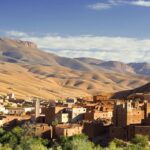
You’ll start with the drive through Dades Valley along the road of 1000 kasbahs. It’s framed as a route circling Berber villages, and that’s a good way to think about it: you’re seeing everyday settlement patterns and the scale of the valley while the bus keeps moving. The scenery can be surprisingly moving even when you’re not getting out often.
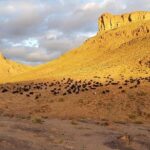
Next comes Todra Gorge. You’ll have a trek along the canyon, where cliffs are listed at about 300 m high. This is a genuine walk, not just a viewpoint stop. If you’re comfortable with moderate exertion and uneven ground, you’ll enjoy it. If you’re the type who struggles with steep canyon edges or slippery stone after a change in weather, you might feel the day more than others.
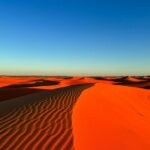
After Todra, you head toward Erg Chebbi dunes in Merzouga. The itinerary includes time for lunch on the way, then arrival at the dunes. You take a camel ride for about 1 h 30 min while watching the sunset. That timing is smart: late-day light makes the dunes look different from every angle.
Finally, you reach the camp near an oasis and spend the night in a bivouac under nomadic tents or outside under the stars. One detail I love from the trip’s descriptions is the human side: you can play drums with the camel drivers. It’s not a staged performance every second; it’s the social rhythm that happens when you share a slow evening in the desert.
Practical consideration for Day 2: bring a little patience. Between driving, the gorge trek, and the camel ride, you’ll feel like you’re always in motion—just with breaks at the right moments.
Day 3: Sunrise dunes, Rissani souks, and the Draa Valley ride to Ouarzazate

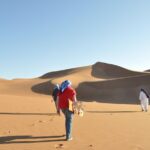
The desert part continues with an early start. You wake up and climb the dunes to watch sunrise. This is a different experience from sunset because the dunes tend to feel quieter and more open at first light. The sunrise moment also sets the tone for the day: after a night under a sky that makes you look up, morning looks crisp and real.
Then you pack up the camels and trek back to the duneline. After that, the tour includes a shower and breakfast at the hotel, which is a huge quality-of-life win. You get to reset your day in a way that keeps the travel from turning into pure survival mode.
Next, you drive to Ouarzazate via Rissani. You’ll stop to visit traditional souks, described as the largest in southern Morocco. Even if you don’t plan to buy anything, souks are worth seeing for how they organize daily life: colors, textures, and a busy layout that tells you this is a working region, not only a tourist stage.
From Rissani, the route continues through the Draa valley, described as having millions of palm trees. That drive is a steady contrast to the sand: softer green tones and long lines of palms that make the road feel calmer.
In the evening, you arrive in Ouarzazate and check into your hotel.
What to remember on Day 3: this is the day of recovery plus culture. You get the desert hangover in the best way—broad sky, then breakfast, then souks and palms, then a proper hotel night.
Day 4: Ouarzazate morning sights, then back over the High Atlas to Marrakech

Day 4 keeps the return drive from feeling like a nonstop commute. After breakfast, you visit Ouarzazate and then head back toward Marrakech.
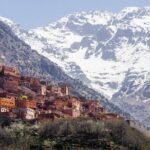
Along the way, there’s a detour to a traditional High Atlas Berber village, followed by crossing the High Atlas again. This is a nice way to connect the start of the trip to the end. Day 1 climbs into the mountains via Tizi n Tichka, and Day 4 brings you back with another mountain crossing, so you get a full loop of elevation and terrain.
At the end, you’re dropped off near your hotel in Marrakech.
Day 4 drawback to consider: it’s still a drive-heavy day. If you’re someone who hates being in a vehicle for long stretches, this is the point where you’ll feel the hours. But the stops prevent it from being dull.
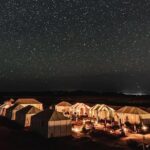
Desert Camp Reality Check: Comfort, Stars, and What to Expect at Night

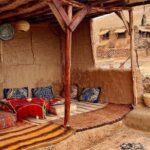
This is a budget tour, but it’s not trying to sell hardship as an attraction. The included stay is described as comfortable, and the camping setup is either nomadic tents (jaima-style) or outdoor star time. That’s exactly what you want in Erg Chebbi: you’re close enough to feel the desert without losing the basic comforts that make a multi-day trip bearable.
Food is also a big part of why this tour works. Dinner is included three times, and breakfast is included twice. That means you’re not hunting meals every time you arrive somewhere new, and you can keep your timing smooth.
A detail that stands out from the experience feedback is how good the food feels once you’re actually out there. Moroccan meals after a long day of trekking and sand time tend to hit harder than you expect.
What I recommend you bring for the desert night (not from the tour data, but from practical experience in similar conditions): a layer you can sleep in. Temperatures can drop after sunset, and the desert wind can feel sharper than you’d guess during the day.
Price and Value: Is $587.28 a Fair Deal for 4 Days?

At $587.28 per person, this tour is positioned as a budget option, but it’s not empty. Here’s what’s doing the heavy lifting for value:
You get pickup and drop-off, an air-conditioned vehicle, and a full chain of guided stops across several regions—so your cost isn’t just for the desert. You also get both camel experiences connected to sunset and sunrise in Erg Chebbi, plus the gorge trek and multiple hotel/camp overnights.
Meals included are meaningful for a 4-day trip: 2 breakfasts and 3 dinners. Lunch is not included, and drinks aren’t included. That’s normal, but it does mean you should set aside money for lunch and anything you drink during free time.
When I look at tours in this price range, the question is usually this: are you paying only for transport, or also for the experience elements that are hard to self-organize? This itinerary includes the desert camel logistics, the camp nights, and the structured route through Ait Benhaddou, Dades, Todra, and Ouarzazate. In that sense, you’re paying for convenience plus time.
Also note the group size: maximum 30 travelers. It’s not tiny, but it’s large enough to keep transport efficient and budget-friendly. You still get the group flow, but you’re not in a private car bubble.
Guide and Group Experience: The Human Factor Matters

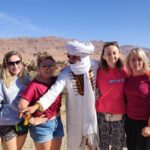
One of the strongest signals from this tour is the guide support. A named guide shows up in the experience details: Hamid. The feedback associated with that name highlights knowledge and confidence in explaining what you’re seeing, especially helpful when you’re passing through places with history and local meaning like Ait Benhaddou and the souks in Rissani.
You’ll also notice the camp feels more social because there’s time built in for evenings in the desert. The option to play drums with camel drivers is a small thing, but it’s also the kind of moment that makes a group tour feel like a shared story instead of a series of checkboxes.
Who This Tour Suits Best (and Who Should Think Twice)
This tour is a strong match if you want a classic Morocco route plus the Sahara, and you prefer not to plan everything on your own. It’s also ideal if you’re okay with long drive days in exchange for big variety.
The tour lists a requirement of moderate physical fitness level. That mainly relates to the trek in Todra Gorge and the physical effort involved with early morning dune time and walking segments.
This might be less ideal if:
- You strongly dislike group schedules and want total control of timing.
- You have trouble with canyon walking on uneven terrain.
- You want lots of free hours to roam independently rather than structured stops.
Still, for many people, the compromise works beautifully: you get enough structure to feel safe and supported, without losing the magic of stopping for sunrise and sunset where they matter.
Should You Book This 4-Day Merzouga Tour?
You should book if you want the Sahara experience that actually includes both sunrise and sunset moments, plus a real gorge trek and classic southern Morocco stops. The itinerary gives you a well-shaped arc: Atlas mountains up close, fortified villages like Ait Benhaddou, canyon walking at Todra, then Erg Chebbi dunes with camel rides and camp nights.
I’d also recommend it if you care about value. The mix of included transport, camel trekking, overnight stays, and included dinners means you’re not constantly paying extra just to keep the day moving.
Think twice if you’re sensitive to long road hours or if you’d rather avoid any physical effort beyond easy walking. This is not a lounging vacation. It’s more like a guided route through Morocco’s highlights, with the desert as the reward.
If you want a desert trip that feels like an actual journey instead of a quick photo run, this 4-day format is a smart way to do it.
FAQ
How long is the 4 Days Group Budget Merzouga Desert Tour and Trekking?
It runs for 4 days approximately, with 3 overnights included.
What’s included in the tour price?
The tour includes air-conditioned vehicle, pickup and drop-off, sunset and sunrise camel trekking in Erg Chebbi, 3 overnights, breakfast (2), and dinner (3).
Do I get meals included, or do I need to budget for lunch?
Breakfast is included twice and dinner is included three times. Lunch and drinks are not included.
Is camel trekking part of the itinerary?
Yes. You’ll do a camel ride for about 1 h 30 min at sunset in Erg Chebbi, and you’ll also have a sunrise camel trekking component included.
What kind of physical activity should I expect?
The tour calls for moderate physical fitness. There’s a trek along Todra Gorge canyon areas and time walking around dunes.
How big is the group?
The tour has a maximum of 30 travelers.
What happens if weather is poor?
The experience requires good weather. If it’s canceled due to poor weather, you’ll be offered a different date or a full refund.