REVIEW · KATHMANDU
Annapurna Base Camp Trek
Book on Viator →Operated by Mount Elegance Treks and Expedition · Bookable on Viator
There’s something about Annapurna that makes your legs work harder and your mind calmer. This trek has a strong mix of real altitude—up to Annapurna Base Camp at 4,130m—and good organization, from airport pickup in Kathmandu to an English-speaking, government-licensed guide. You also get a porter service (1 porter for every 2 trekkers), plus permits handled for you, which matters when you’re focused on the trail and not paperwork.
I like that the package keeps you fueled and sleeping as well as the route allows, with full-board meals during the trek and a mix of 3-star hotels in Kathmandu and Pokhara before the hiking starts. One thing to consider: the plan includes teahouse stays and does not include hot showers during the trek, so the comfort is about smooth logistics and solid basics—not spa-level luxury.
In This Review
- Key things to know before you go
- Annapurna Base Camp: why this trek is worth your time
- Value at about $240: where the money goes (and what to budget)
- Kathmandu arrival day: you get your bearings fast
- Pokhara drive days: long roads, good staging
- Trek Day 3 to 5: from village trails toward altitude
- Ghandruk (Day 3): your first big village climb
- Sinuwa (Day 4): a longer push through the middle elevations
- Deurali (Day 5): the ramp up toward the base camp zone
- Annapurna Base Camp days: the high point and the emotional payoff
- Reaching Annapurna Base Camp (Day 6): 4,130m day
- Base Camp to Bamboo (Day 7): descent that still takes work
- Jhinu Danda and the return toward Pokhara: finishing strong
- Jhinu Danda (Day 8): lower, greener, and a real relief
- Short trek plus drive (Day 9): back to lakeside comfort
- Kathmandu wrap-up (Days 10–11): time to land softly
- What comfort looks like here: teahouses, meals, and honest expectations
- Who this trek fits best (and who should rethink it)
- Should you book this Annapurna Base Camp trek?
- FAQ
- What is the highest altitude on this Annapurna Base Camp trek?
- Where does the trip start?
- Are permits included?
- What meals are included during the trek?
- Do I get a porter?
- Is hot shower included during the trek?
- What transport is covered?
Key things to know before you go
- Altitude reality check: highest point is Annapurna Base Camp at 4,130m, so pacing matters.
- Guide + permits are built in: ACAP and TIMS are included, handled by your team.
- Porter support: 1 porter for 2 trekkers helps you stay more comfortable on climbs and long days.
- Meal plan is practical: breakfast, lunch, and dinner are included during trekking (plus tea/coffee).
- Teahouses, not hotels: you’ll stay in best-available twin sharing teahouses on the trail, then return to 3-star hotels.
- A lot of road time: Pokhara is reached via a long drive from Kathmandu (7–8 hours).
Annapurna Base Camp: why this trek is worth your time
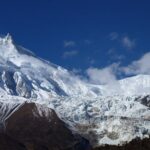
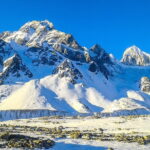
If you want the Annapurna region, this is one of the most direct ways to earn it. You don’t just pass viewpoints—you hike into the zone where the mountains start feeling close enough to reach out and touch. The big draw here is the combination of daily effort and repeated scenery payoffs, with a high point at Annapurna Base Camp followed by a satisfying descent.
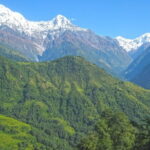
What makes this trek feel special is how the trail stages your experience. You start in lower, warmer terrain around Nepal’s cities and lakeside life, then step into rhododendron and village country, and finally work your way toward the base camp zone. Even if you’ve seen photos, the real thing hits differently once you’re at elevation and the air gets thin.
Also, this version of the trip focuses on getting you there with minimal friction. You’re not juggling transfers, permits, or meal planning day by day. That doesn’t remove the challenge of trekking—it just keeps your energy for the mountain.
You can also read our reviews of more tours and experiences in Kathmandu.
Value at about $240: where the money goes (and what to budget)
At $240 per person, the value is mostly in what’s bundled: transfers, permits, guide, porter support, accommodation during key parts of the trip, and meals while you’re trekking. For many treks, those categories are exactly where costs and stress add up.
Here’s what you’re getting that tends to be pricey or annoying to arrange on your own:
- Airport transfers in Kathmandu
- Tourist bus drives between Kathmandu and Pokhara
- ACAP permit + TIMS card included
- 3-star hotels in Kathmandu and Pokhara with breakfast
- Teahouse twin sharing accommodation during the trek (best available)
- Full-board meals on trekking days (breakfast, lunch, dinner) with tea/coffee
- A government-licensed English-speaking trekking guide
- Porter service (1 porter for every 2 trekkers)
- First aid medical kit, plus a farewell dinner
What you should budget separately (because it’s not included):
- Travel and rescue insurance (strongly recommended, especially with 4,130m altitude)
- Nepal entry visa and international airfare
- Tips for the guide, porters, and driver
- Alcohol and bottled water
- Hot shower during the trek
- Lunch and dinner in Kathmandu and Pokhara
So the price is attractive, but think of it as value for logistics and guidance, not as a deal that includes every comfort you might want.
Kathmandu arrival day: you get your bearings fast
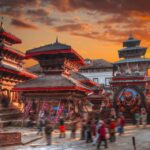
Your trip starts at Tribhuvan International Airport in Kathmandu with an airport representative and a transfer to your hotel. This matters more than it sounds. After a flight, the first win is being put in motion without confusion—especially in a city where traffic can be intense.
You’ll have a full day in Kathmandu before the long push to Pokhara. That’s useful if you need to:
- pick up anything small you forgot (a warm layer, blister care, batteries)
- adjust to Nepal time and settle in
- keep hydration and snacks ready for the drives ahead
Practical note: Kathmandu is at about 1,400m (4,600ft). It’s not the hard part of the trek, but it’s enough that you should take the day easy and avoid running around like you’re training for a marathon.
Pokhara drive days: long roads, good staging
Day 2 is a long haul from Kathmandu to Pokhara—200 km (about 124 miles) in roughly 7–8 hours. On paper that’s just transit. In real life, it’s your setup day for the trek.
Pokhara is your reset: lakeside calm, easier food choices, and a chance to handle the little details like final gear checks and tea breaks before the walking starts. Then you start the trek the next morning with less to stress about.
Day 9 also includes time back toward Pokhara, with a shorter trek before a 2–3 hour drive. That makes Day 9 feel like a bridge between the mountain work and city comfort.
If you hate car rides, schedule some patience. The roads are part of this trek’s rhythm.
Trek Day 3 to 5: from village trails toward altitude
The trekking portion starts after a drive toward the trailhead area near Nayapul, followed by hiking into the first village stop.
Ghandruk (Day 3): your first big village climb
You trek about 5 km (3.1 miles) in roughly 3–4 hours, reaching around 1,940m (6,365ft) at Ghandruk. This is a smart first day because it’s active without being a full-on grind.
Ghandruk also serves as a cultural landing point—small settlements, local rhythms, and that mountain-village feeling. It’s where you start understanding how the Annapurna region works: people live with the seasons, and the trek route is woven into daily life.
Sinuwa (Day 4): a longer push through the middle elevations
Day 4 is 12 km (7.5 miles) and about 6–7 hours, climbing to 2,340m (7,677ft) at Sinuwa. This is the day where your body starts noticing the work more clearly. Not because it’s extreme, but because time on the trail adds up.
A practical trick: keep your effort steady. At these elevations, you don’t need to race. You need to breathe well, sip water, and keep legs moving.
Deurali (Day 5): the ramp up toward the base camp zone
Day 5 is 10 km (6.2 miles) with 6–7 hours of walking, reaching about 3,200m (10,498ft) at Deurali. This is where the trek becomes more about altitude management than just distance.
Deurali is also a key staging point. By the end of the day, you’re high enough that sleep can feel different and mornings can require a slower start. This is also where that included porter support starts to feel like a lifesaver if your pack is heavy.
Annapurna Base Camp days: the high point and the emotional payoff
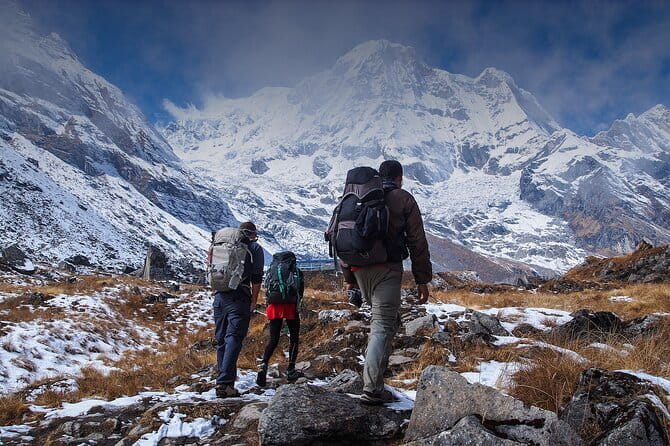
Two days define the main summit feel: reaching base camp and then stepping down.
Reaching Annapurna Base Camp (Day 6): 4,130m day
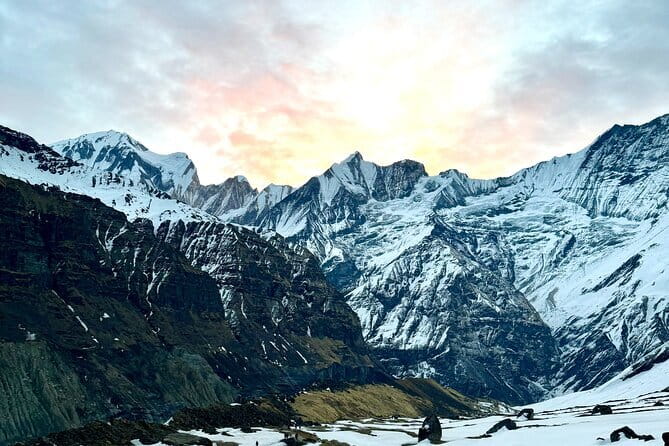
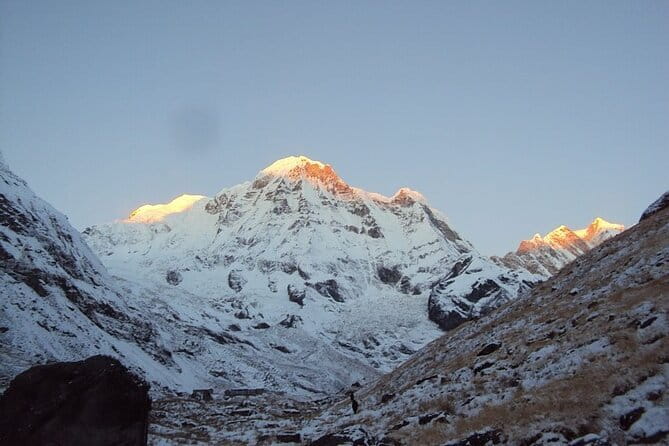
Day 6 is 9 km (5.6 miles), about 6–7 hours, topping out at Annapurna Base Camp (4,130m / 13,550ft). This is the highest point on your route.
If you’re new to altitude trekking, treat this day like it’s about control. Your pace should be slow enough that you can hold a conversation (even if it’s a short one). The goal is to arrive feeling like you still have strength left for photos, snacks, and a calm reset.
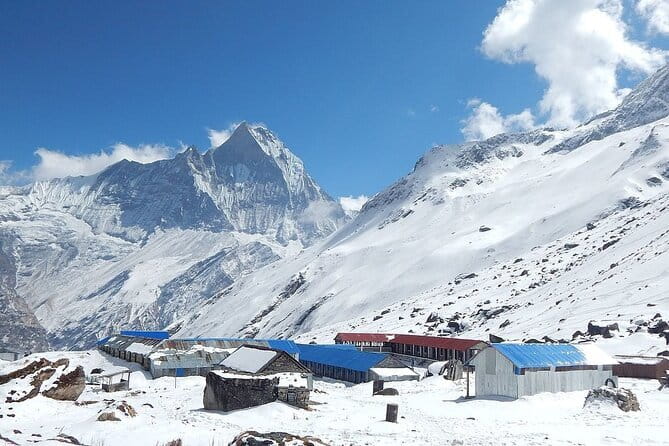
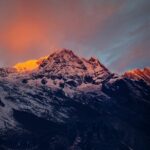
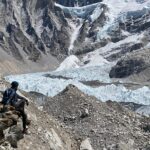
At base camp, the mountain presence becomes the story. You get the payoff for everything you’ve built—each prior day’s climb has been preparing you for this moment.
Base Camp to Bamboo (Day 7): descent that still takes work
After time at base camp, you descend to Bamboo at about 2,310m (7,580ft). The trek is 13 km (8 miles) and 6–7 hours.
Descent sounds easier, but it isn’t always gentler. Your quads do the talking. Also, longer days can mean you’re tired even if you’re not gaining altitude.
This day is also a reminder that success isn’t only reaching the high point. It’s walking safely back down.
Jhinu Danda and the return toward Pokhara: finishing strong
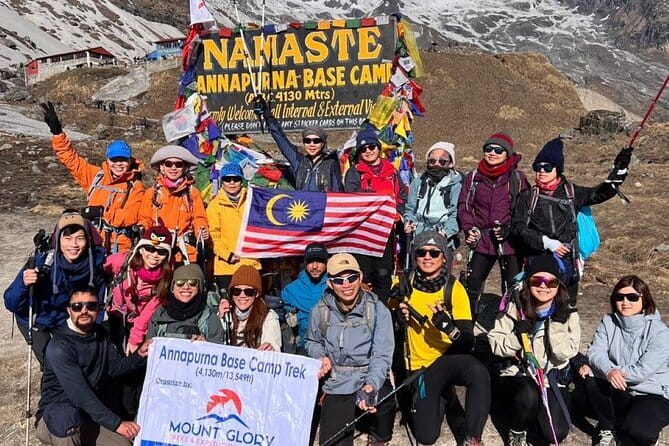
Jhinu Danda (Day 8): lower, greener, and a real relief
Day 8 is 11 km (6.8 miles) for about 5–6 hours, reaching Jhinu Danda (1,780m / 5,839ft). You’ve dropped a good amount since base camp, and the lower elevation often makes breathing feel easier.
This stretch can feel restorative. You’re still walking, but the altitude pressure is off. It’s a good day for moving steadily and keeping the day enjoyable rather than just survivable.
Short trek plus drive (Day 9): back to lakeside comfort
Day 9 includes a shorter trek of 6 km (3.7 miles), plus a 2–3 hour drive back to Pokhara at 822m (2,697ft). It’s framed as an easy day, and it really helps psychologically.
When you’re done with the steep work, a shorter walking day makes the shift back to comfortable meals and rest feel natural.
Kathmandu wrap-up (Days 10–11): time to land softly
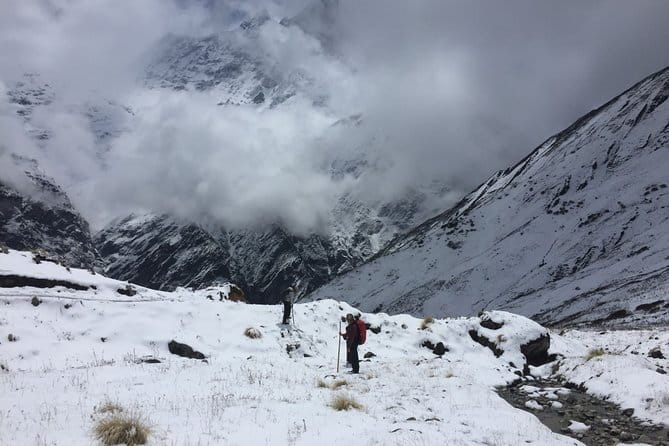
Day 10 returns you to Kathmandu via 200 km drive (about 7–8 hours). Day 11 is a short final transfer and time to relax depending on your flight.
This matters. Some treks rush the ending. Here, you get a calmer landing period. Use it for a warm meal, a slow stroll, and stretching that doesn’t feel like punishment.
One small planning note: the trip’s duration is listed as about 11 days, while the overview also mentions over 12 days. Make sure your exact dates match what you’re booking so you don’t get surprised.
What comfort looks like here: teahouses, meals, and honest expectations
This trip includes “premium comfort” in the sense that the basics are handled: meals show up on schedule, your guide is there to manage the plan, and you don’t have to arrange permits or carry everything yourself.
But you should still expect:
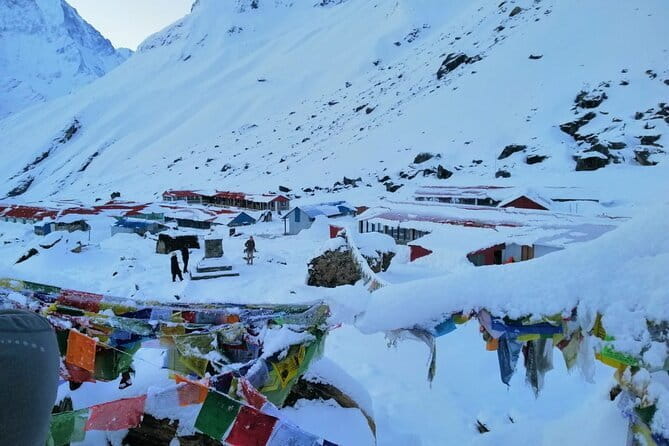
- Teahouse twin sharing accommodation on the trek
- No hot shower during the trek
- Tea/coffee included, but bottled water and alcohol are not
That’s not a dealbreaker. It’s just being honest. In the mountains, comfort mostly comes from good timing, clean-enough basics, warm layers, and not being stuck improvising. The included sleeping bag and duffel bag also help you travel lighter and pack smarter. (You’ll need to return them after the trek.)
The best “luxury” on this kind of hike is the reduction of hassle—so you can focus on walking and adjusting to altitude.
Who this trek fits best (and who should rethink it)
You’ll likely love this Annapurna Base Camp experience if:
- you have moderate physical fitness
- you want a guided trek with permits and logistics taken care of
- you prefer group travel over going solo
- you want porter help (1 porter for 2 trekkers)
You might rethink the trip if:
- you have a strong need for hot showers during the trek
- you dislike long driving days between Kathmandu and Pokhara
- you want a fully hotel-style experience on the trail (this is teahouse territory)
Should you book this Annapurna Base Camp trek?
I’d book it if your priority is a well-run trek at a price that covers the heavy lift: permits, guide, porter support, and full-board meals while you hike. The itinerary is built around manageable trek days with a clear climb-up to Annapurna Base Camp at 4,130m, then a descent that brings you down to livable elevation again.
I’d pause and confirm details if you’re particular about:
- whether the trip is 11 or 12 days for your exact departure
- your expectations for comfort (teahouses, no hot shower)
- how you plan to handle excluded costs like visa, insurance, and tips
If you show up with reasonable expectations, pack smart, and walk at a safe pace, this is the kind of trek that delivers big mountain rewards with less stress than you’d get from trying to piece everything together alone.
FAQ
What is the highest altitude on this Annapurna Base Camp trek?
The trek reaches Annapurna Base Camp at 4,130m (13,550ft).
Where does the trip start?
The meeting point is Tribhuvan Airport, Kathmandu, Nepal.
Are permits included?
Yes. The Annapurna Conservation Area Permit (ACAP) and the TIMS card are included.
What meals are included during the trek?
During the trekking days, you get full board meals: breakfast, lunch, and dinner, plus tea/coffee.
Do I get a porter?
Yes. One porter for every two trekkers is included.
Is hot shower included during the trek?
No. Hot shower during the trek is not included.
What transport is covered?
You get airport transfers in Kathmandu and drives between Kathmandu and Pokhara via tourist bus (and back again).