REVIEW · CATANIA
Piano Provenzana: Guided Mt. Etna Snowshoeing Trek
Book on GetYourGuide →Operated by Guide Vulcanologiche Etna Nord · Bookable on GetYourGuide
Snow on Etna feels unreal. This guided snowshoe hike in Sicily gives you snow-covered volcanic terrain and a clear look at how Etna reshapes land, with volcanology-guided stops that make the scenery click. I also love that you get big viewpoints over the sea, plus time to pause for photos. One drawback to plan around: you’re walking in winter conditions on uneven ground, so it’s not a fit if you’re sensitive to heights or have serious breathing/heart or mobility limits.
You’ll start at about 1,800 meters in Piano Provenzana, move through snowy forest and dark lava, and finish near the larger side craters around 2,200 meters. The trek is about 3 hours for a round trip of roughly 5 km, with a total climb of about 300 meters—far enough to feel like an outing, not so long that you’re exhausted before the views. If you’ve never snowshoed before, the extra rentals (snowshoes/poles, and sometimes shoes) can add to your budget, but the trail context is the whole point here.
In This Review
- Key Highlights You’ll Care About
- Why Piano Provenzana on Etna Works So Well in Winter
- Getting to the Start at Etna Nord: The Meeting Point You Should Find Easily
- The Snowshoe Route: 5 km Round Trip, 300 m Climb, 3 Hours
- Piano Provenzana Arrival: Safety Briefing and First Glimpses
- What to watch for right away
- Photo Stops and Guided Interpretation Along the Way
- Walking Across Lava Flows and the Scars of Piano Provenzana
- Why this section is worth your attention
- Up to the Large Side Craters (Around 2,200 Meters): The Big Moment
- What to do with the viewpoint time
- Sea and Summit Views: What You’re Really Looking At
- What’s Included, What Costs Extra, and How to Budget Smartly
- My practical budgeting tip
- What to Bring: The Cold-Weather List That Actually Helps
- Who This Snowshoe Trek Fits (and Who Should Skip It)
- Who will enjoy it most
- Book It? My Decision Guide for Piano Provenzana on Etna
- FAQ
- How long is the Piano Provenzana guided Mt. Etna snowshoeing trek?
- Where do I meet the guide?
- What route distance and elevation gain should I expect?
- What altitude do we start and reach?
- Is the price ($44) inclusive of snowshoes and trekking poles?
- What is included in the tour price?
- What languages are the guides available in?
- Is this tour suitable for people with mobility impairments?
Key Highlights You’ll Care About
- Sea-to-crater panoramas from Sicily, with visibility sometimes reaching Calabria
- Snow vs. dark lava rock contrast that makes Etna look like a planet-set in winter
- Real volcanic terrain: lava flows, fractures, lateral craters, and the scars around Piano Provenzana
- Guided volcanology through the route, not just a generic walk in the woods
- Short, focused time: a 3-hour experience with photo stops and sightseeing breaks
- Regenerating feel: trees and weather pushing back on volcanic destruction
Why Piano Provenzana on Etna Works So Well in Winter
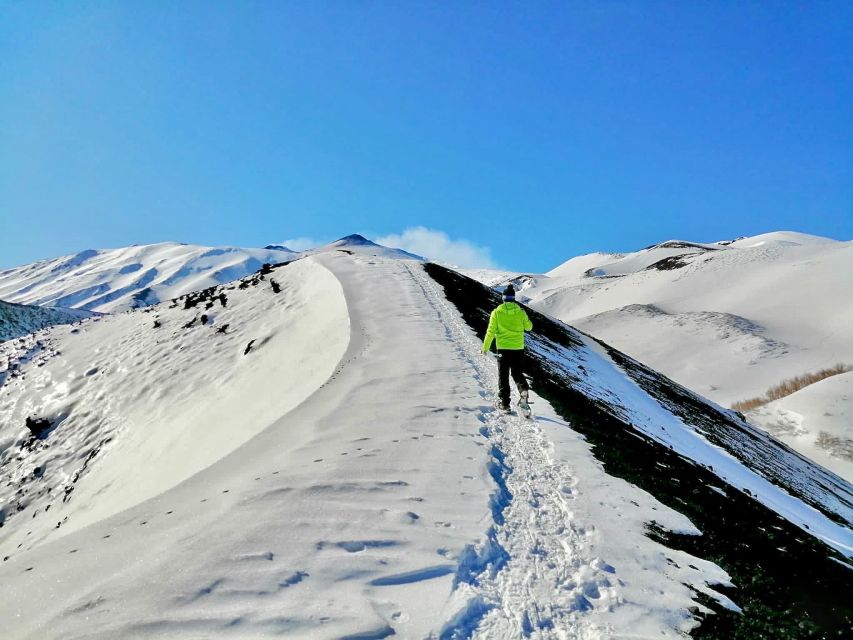
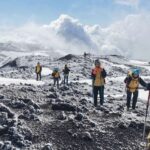
Winter on Mt. Etna is not about skiing. It’s about seeing how a live volcano behaves when the weather turns it into a snow globe. This snowshoe trek starts in Piano Provenzana at roughly 1,800 meters, where the route immediately mixes two worlds: crisp white snow and the dark, broken look of Etna’s volcanic surfaces.
I like this kind of outing because it’s visual and educational at the same time. You’re not only enjoying the view—you’re walking across the kind of ground that explains Etna’s power. The route takes you over and around lava flows from eruptions on the north side, through areas tied to the structures destroyed by lava, and toward larger craters connected with the destruction of the Piano Provenzana tourist area.
That mix—woods plus lava scars—also helps you read the landscape. Snow can hide detail, but it also sharpens contrast. When you’re surrounded by dark volcanic rock under pale snow, it’s easier to notice fractures and changes in the ground texture. And when your guide ties what you see to volcanic activity, the whole hike turns from pretty to meaningful.
You can also read our reviews of more tours and experiences in Catania.
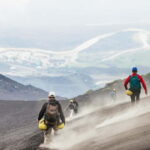
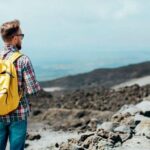
Getting to the Start at Etna Nord: The Meeting Point You Should Find Easily
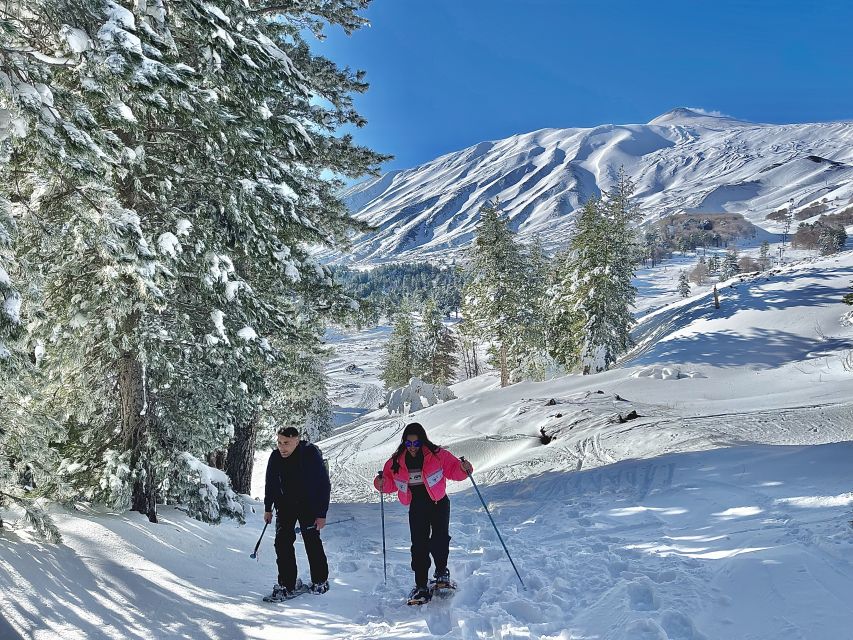
You meet your guide at the parking lot near the active chairlift at Etna Nord in winter, outside Chiosco Bar Mareneve. It’s a practical setup: you’re starting from a known point on the mountain access side, and it keeps the day from feeling like a scavenger hunt.
Timing matters here. The meeting time can shift and may be brought forward to around 8:45 or 9:00 so you can park without losing your spot. That’s a real-world detail worth respecting—Etna mornings in winter can get busy with skiers, and finding parking can be the one thing that stresses you out if you show up late.
Plan to arrive with enough buffer to park, walk to the meeting area, and get your gear sorted. Once the hike starts, there’s no magic fix for a “we’ll figure it out” attitude in snow.
The Snowshoe Route: 5 km Round Trip, 300 m Climb, 3 Hours

This trek is designed as a manageable effort, with enough time for stops and conversation. Here’s the basic math you can plan around:
- Duration: about 3 hours
- Distance: about 5 km round trip
- Total height gain: about 300 meters
- Start altitude: about 1,800 meters
- High point: around 2,200 meters near the larger side craters
On paper, the climb looks modest. In snow, it can feel different—traction, uneven ground, and cold wind all add effort. Still, the route is structured so you’re not just marching nonstop. You’ll have a safety briefing, photo stops, guided segments, and a longer sightseeing window near the upper craters.
If you’re generally fit, this should feel like a solid outdoor outing rather than a grind. If you’re not used to snowy walking, focus on steady steps and keeping your energy controlled. Snowshoe hiking is less about speed and more about rhythm.
Piano Provenzana Arrival: Safety Briefing and First Glimpses
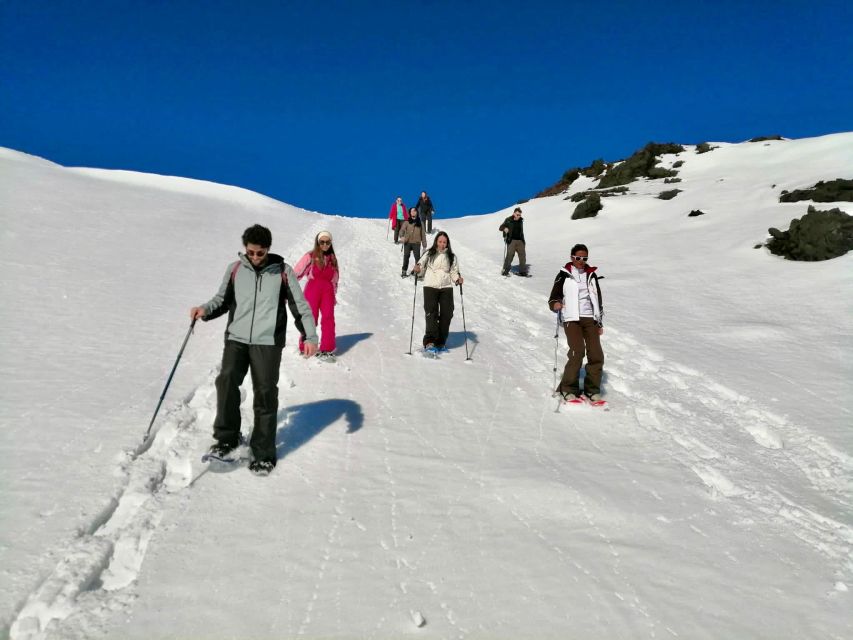
When you arrive at Piano Provenzana, you get a short window of free time and then a safety briefing that lasts about 15 minutes. That matters, because winter on a volcano isn’t just winter in the forest. You’re moving over volcanic surfaces that can be uneven, and the ground can vary quickly under snow.
After the briefing, you’ll have a short photo stop for about 10 minutes. This is the moment to settle your bearings—what direction you’re walking, where the bigger volcanic shapes show up, and how the sea views frame the area. Even if the visibility isn’t perfect, you’ll still pick up the contrast between the snowy forest feel and the darker volcanic textures.
What to watch for right away
- How the snow sits on slopes and rocky edges
- Any visible breaks in the ground texture (the guide will connect these to volcanic features)
- Where the sea seems to “open up” in the distance
These early moments help you enjoy the upper stops more, because you’ll recognize what you saw from below.
Photo Stops and Guided Interpretation Along the Way
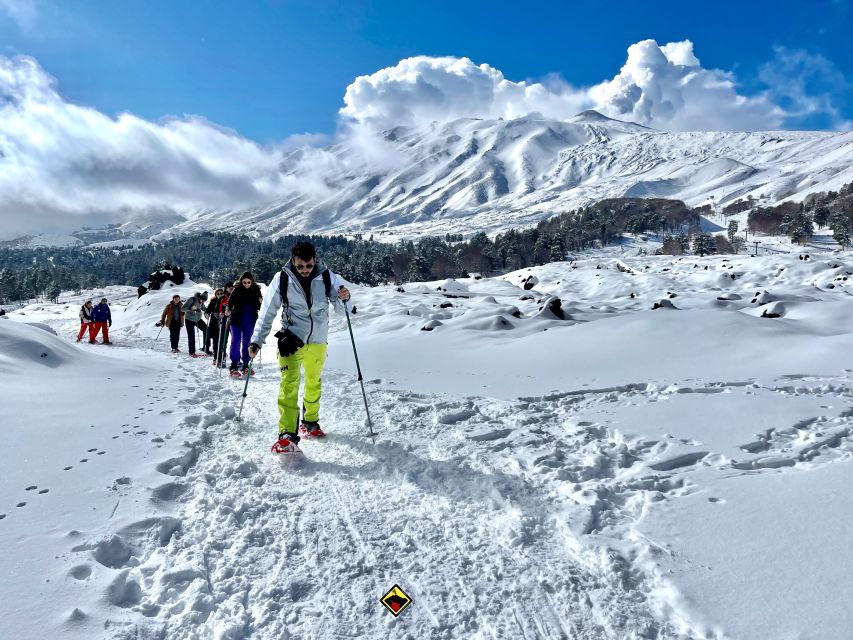
The itinerary is paced to keep your attention on what you’re walking past. Right after the initial photo moments, you’ll have a guided tour segment of about 20 minutes. This is where you start connecting the visual clues—snow patterns, rock color, and terrain shape—to Etna’s volcanic behavior.
Then comes another stretch where you’ll do a mix of photo stops, guided time, and sightseeing. Expect a larger block of about 30 minutes that includes guided tour plus time for sightseeing and a bit of breathing room.
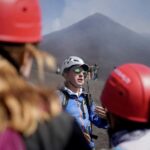
I like this structure because it avoids the two extremes: it’s not an endless lecture, and it’s not a “follow the leader” walk where you don’t learn why the ground looks the way it does. The volcanology-focused guidance is the value anchor of the trip. You’ll understand what you’re seeing instead of just taking photos and hoping the meaning appears later.
Walking Across Lava Flows and the Scars of Piano Provenzana
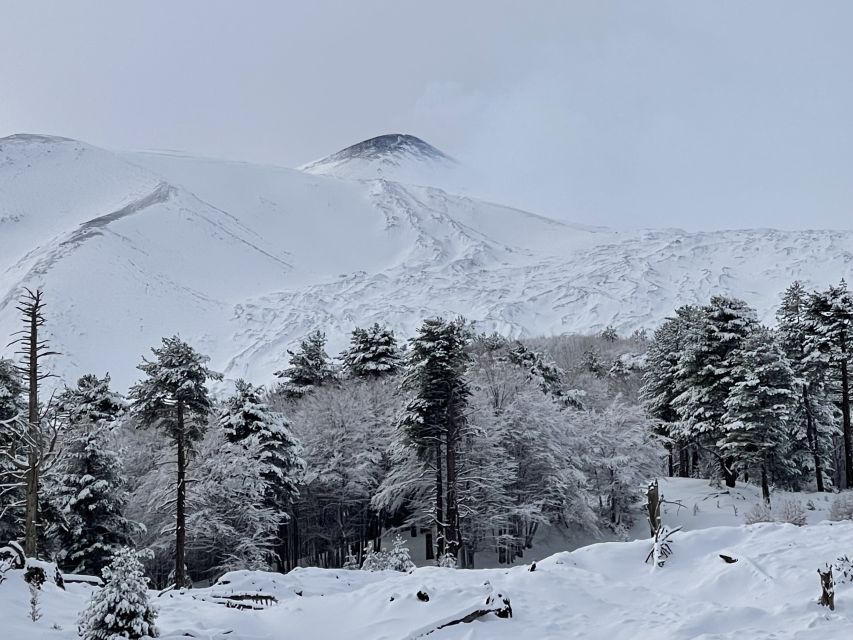
One of the best parts of this hike is that you’re not only moving from point A to point B. You’re crossing the evidence.
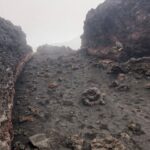
As you go, you’ll cross lava flows linked to eruptions on the north side of Etna, and you’ll pass through areas tied to structures destroyed by lava. You also head toward the larger craters associated with the destruction of the tourist resort of Piano Provenzana.
That’s a lot of weight for a 3-hour walk, but it’s handled in a way that still feels like a winter outing. The snowy setting makes the route calmer, while the volcanic features keep it real. This is where the “regenerating experience” idea shows up. You can see how life and vegetation try to reclaim land that was brutally altered—at a pace that makes sense in human time, even if the volcanic timeline is much faster and much more violent.
Why this section is worth your attention
- You get the snow-and-lava contrast as you move across different ground textures
- You can spot fractures and terrain shifts better than you might on a purely rocky day
- The guide’s context turns the route into a story you can track step by step
Up to the Large Side Craters (Around 2,200 Meters): The Big Moment
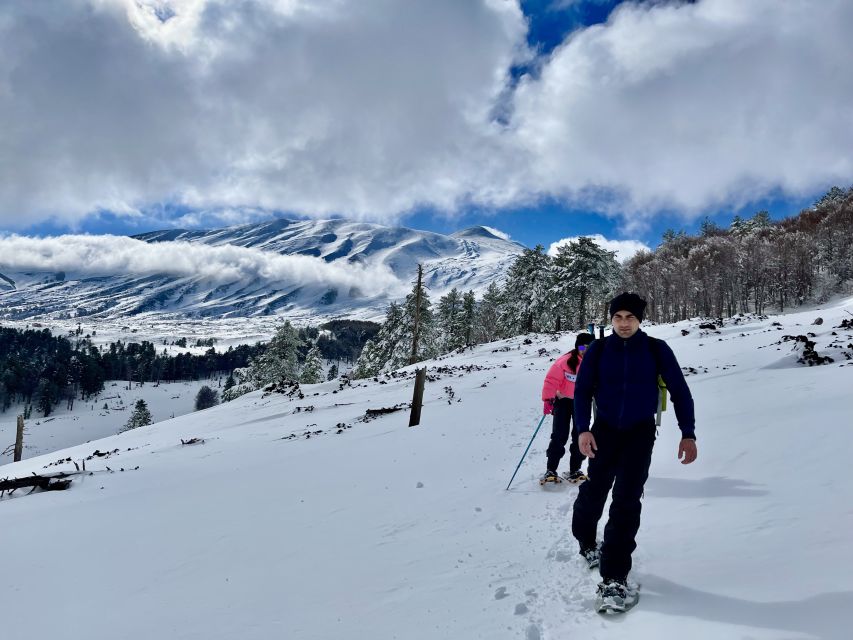
The top part is what most people remember. You reach higher ground around 2,200 meters, near the large side craters that were part of the eruption damage footprint.
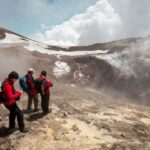
From there, you get a wide panorama of Etna—snow-covered, cratered, and visibly “alive” in the sense that volcanic gases are still emitted from the summit area. You don’t need to be a geology nerd to appreciate the feeling. It’s the difference between watching volcano footage online and standing in the cold air where the shape and scale are suddenly obvious.
This is also the time when the view can include the sea again: Giardini Naxos and Taormina sit out toward the horizon, and in good visibility you can even see Calabria. That horizon line makes the volcano feel connected to the whole region, not just an isolated mountain.
What to do with the viewpoint time
- Pause long enough to scan left-to-right. Don’t just snap a single photo and rush on.
- Watch how the dark volcanic shapes frame the lighter snow areas.
- If wind is sharp, keep your face protected and your breathing steady—cold air can make you underestimate how fast you’re losing warmth.
Sea and Summit Views: What You’re Really Looking At
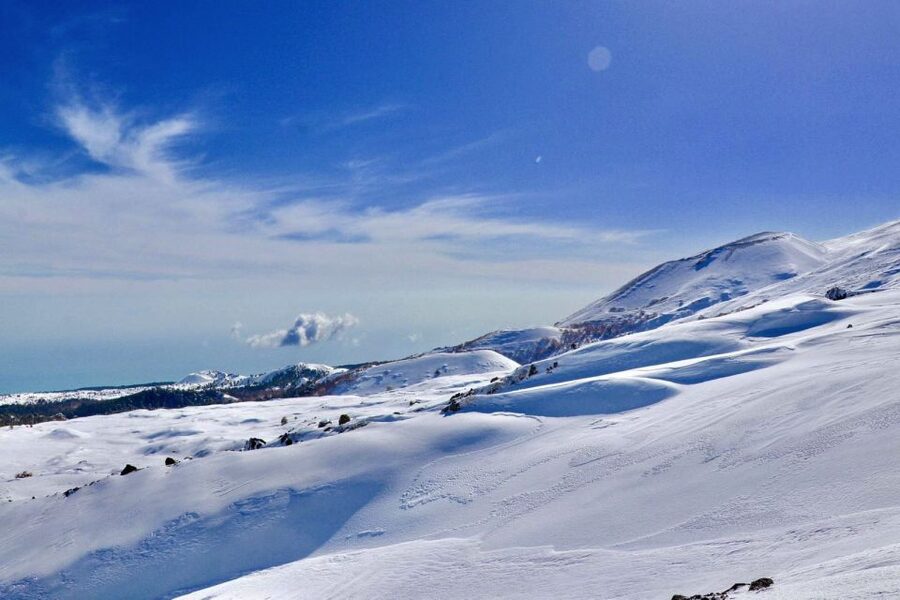
The hike is sold with “panoramic views,” but here’s what that means in practical terms. You’re climbing to a point where multiple layers of Etna become visible: crater zones, lava-field textures, and the summit area in the distance. Then the sea views add perspective—Sicily isn’t only mountains; it’s a coastline world.
From the route, you can admire the sea of Giardini Naxos and Taormina. If weather cooperates, the view stretches far enough that Calabria may appear. That’s not a guarantee, but it’s the kind of conditional payoff you can plan for by bringing sunglasses and expecting variable light.
Also, even though you’re not standing on the summit itself, the guide points out the summit craters and the idea that the volcano stays active with emissions of volcanic gases. Seeing that from a distance makes the volcano feel closer, not like a distant headline.
What’s Included, What Costs Extra, and How to Budget Smartly
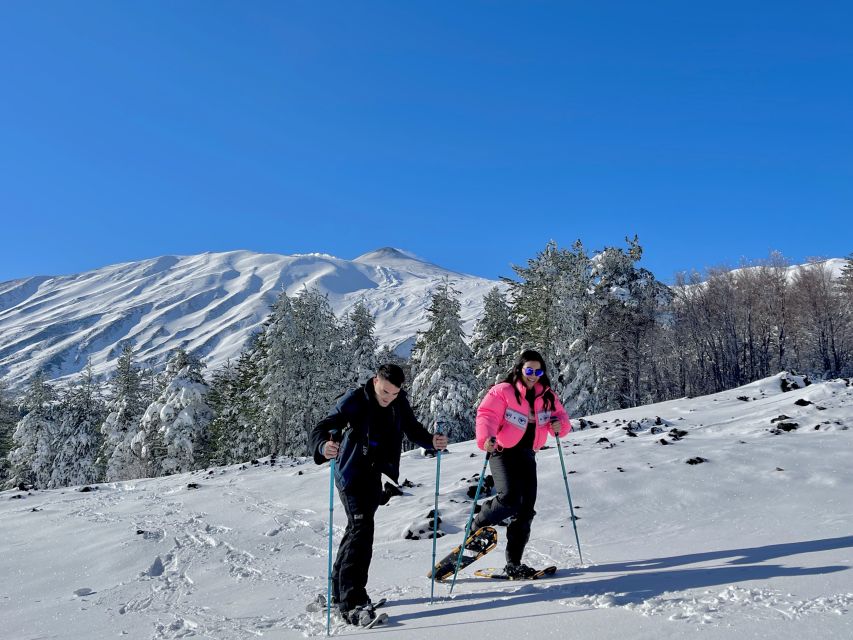
The tour price is $44 per person for a 3-hour guided experience, and it includes a volcanological guide service. That’s the core value: you’re paying for interpretation and safety on real terrain, not just walking with a basic escort.
What’s not included is where you’ll want to plan your budget:
- Snowshoes + trekking poles: rental costs €12 per person
- Windbreaker: can be rented on site for €5
- Trekking shoes: rental €5 per pair
- Snack: not included
- Sunscreen, gloves, and a hat: not all provided; gloves and hats are specifically noted as not included
- Bottled water, ski suit, jacket: not included
If you don’t already have snow-ready gear, assume you’ll spend extra on rentals like snowshoes/poles and possibly shoes. The windbreaker rental is also an easy add-on if you’re underdressed for the cold wind at altitude.
My practical budgeting tip
Bring what you can from home (gloves, hat, warm layers), then rent only the snow-critical items you truly need. That usually keeps the day cost-effective without forcing you to carry heavy gear when you travel.
What to Bring: The Cold-Weather List That Actually Helps
You’ll be walking at altitude in winter, so follow the provided packing guidance closely. Essentials include warm clothing and weather-appropriate layers, plus traction-ready hiking shoes (not sandals). You’ll want:
- Warm clothing and snow clothing
- Long pants and breathable layers
- Gloves and a hat (not provided)
- Sunglasses and sunscreen
- A jacket and rain gear
- Change of clothes for after
- Comfortable clothes and a real hiking setup
Not allowed footwear includes high-heeled shoes and sandals/flip-flops. That’s not just “rules”—it’s about safety and traction.
Also, think about comfort. The route is only about 3 hours, but cold air makes small discomforts bigger. If you run cold easily, add an extra warmth layer before you assume you’ll “heat up later.”
Who This Snowshoe Trek Fits (and Who Should Skip It)
This is a guided trek on uneven winter volcanic ground, so it’s best for people who can handle outdoors, cold, and some exposure. It’s not suitable if you have:
- Back problems
- Mobility impairments
- Heart problems
- Respiratory issues
- Epilepsy
- High blood pressure
- Recent surgeries
- Low fitness
- Fear of heights
Even if you’re “mostly okay,” take the limits seriously. Winter snowshoe walking can be slower and more physically demanding than you expect, especially when the ground changes from snowy forest to volcanic rock.
Who will enjoy it most
You’ll likely love this if you:
- Want a guided view of Etna’s volcanic features
- Enjoy nature + science connections
- Want sea views plus crater panoramas in a short outing
If you’re after a gentle stroll, this isn’t that. If you want a real winter mountain experience with strong context, it fits well.
Book It? My Decision Guide for Piano Provenzana on Etna
If your goal is snow + volcano + meaning, I think this is a strong choice. You’re getting volcanology guidance, a structured route with photo and sightseeing breaks, and a viewpoint at around 2,200 meters where Etna’s winter scale becomes obvious. The short duration (about 3 hours) also makes it easier to fit into a Sicily schedule.
Book it if you:
- Can handle cold weather walking and uneven terrain
- Want sea views over Giardini Naxos and Taormina alongside crater scenery
- Prefer a guided interpretation over a self-led hike
I’d skip it if you’re dealing with any of the listed medical concerns, strong fear of heights, or mobility limitations. In winter, those risks matter more than comfort.
Also, do a quick gear check before you book. Budget a little extra for snowshoes/poles (€12) and possibly trekking shoes (€5) or a windbreaker (€5). Once you’re set up, the day feels worth it because the setting is genuinely unusual: snow on a live volcano, with lava scars you can walk across.
FAQ
How long is the Piano Provenzana guided Mt. Etna snowshoeing trek?
The experience lasts about 3 hours.
Where do I meet the guide?
Meet your guide in the parking lot near the active chairlift at Etna Nord in winter, outside Chiosco Bar Mareneve.
What route distance and elevation gain should I expect?
The round trip route is about 5 km, with a total positive difference in height of about 300 meters.
What altitude do we start and reach?
The hike starts at around 1,800 meters in Piano Provenzana and reaches about 2,200 meters near the larger side craters.
Is the price ($44) inclusive of snowshoes and trekking poles?
No. Snowshoes and trekking poles are rented on site for €12 per person.
What is included in the tour price?
The volcanological guide service is included.
What languages are the guides available in?
The live tour guide is available in Italian, French, and English.
Is this tour suitable for people with mobility impairments?
No. The experience is not suitable for people with mobility impairments (as well as several other medical or physical conditions listed by the operator).