REVIEW · CATANIA
Etna: Trekking to the summit craters at 3340 meters
Book on GetYourGuide →Operated by Sicilying S.R.L. · Bookable on GetYourGuide
A live volcano changes your scale fast. This trek takes you from 1900 m up to Etna’s summit craters at 3340 m, with a volcanology guide who turns the terrain into a lesson you can feel under your boots.
I also love the crater-edge walking, because you get close to the conduits and the logic of eruptions, not just photos.
Biggest thing to factor: weather can shut down summit access, and the day may adjust. You still get an organized volcano experience, but you should expect that the route to the very top can be affected.
In This Review
- Key moments you’ll remember
- Why Etna’s summit craters feel different from a normal hike
- Starting at Rifugio Sapienza: the day begins at altitude
- Getting to the hiking zone: cable car and 4×4 in practice
- The 2-hour trek to 3340 m: what the ground is teaching you
- At the central crater: edge walking and the “chasm” views
- Southeast crater segment: where recent eruptions have mattered
- Descent to lunch near 3000 m: rest without losing the rhythm
- Barbagallo craters (2002/2003): walking eruption edges
- Valle del Bove viewpoint: Etna’s ancient caldera in plain sight
- Pace, weather, and knee reality checks
- Gear that makes the difference on volcanic ground
- Price and value: what you pay, what you don’t
- Languages, group vibe, and how flexible the day can feel
- Should you book the Etna summit craters trek?
- FAQ
- How long is the hike to the summit craters?
- Where does the tour start?
- What is the total duration of the tour?
- What cable car and 4×4 costs are paid on site?
- Is lunch included?
- What gear is included in the tour price?
- What should I bring?
- Can children join the tour?
- Who should avoid this tour?
- What languages are offered?
- Is alcohol allowed?
Key moments you’ll remember
- Cable car + 4×4 vans: quick altitude gain before the hiking starts
- 2-hour summit trek through recent lava, sand, and volcanic lapilli
- Cratere Centrale dell’Etna edge walking with views of key conduits
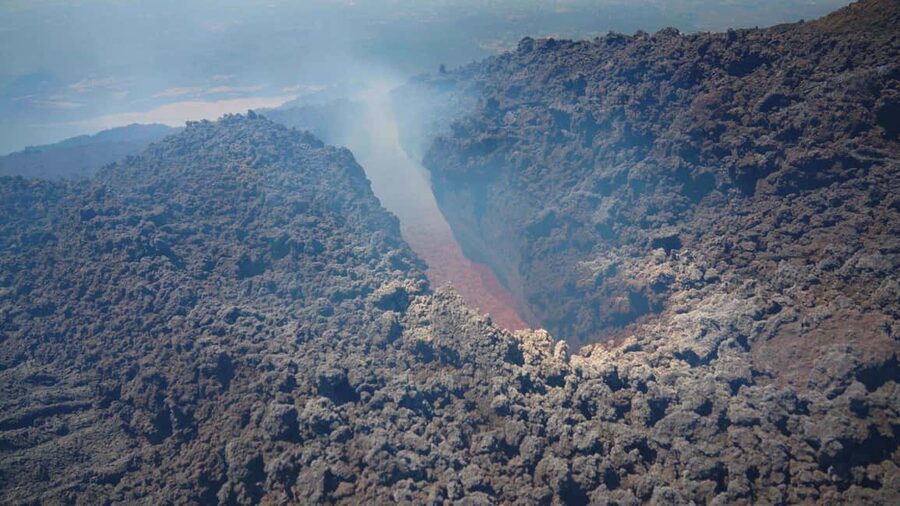
- Descent by crater rims and lava channels shaped by eruptions in recent decades
- Valle del Bove viewpoint tied to Etna’s ancient caldera collapse
- Helmet and poles provided, so you’re not hunting gear at the last minute
Why Etna’s summit craters feel different from a normal hike
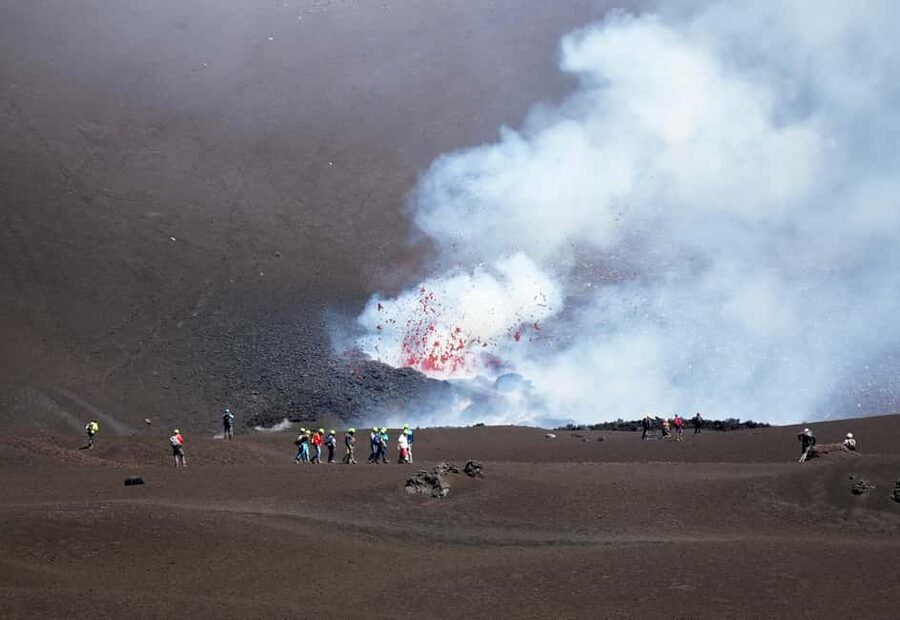
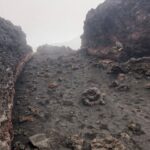
Etna isn’t a “nice mountain.” It’s an active system, and you notice that immediately once you’re near the crater terrain. You’re climbing through ground that looks almost man-made—sharp, pale volcanic fragments and channels where lava once moved.
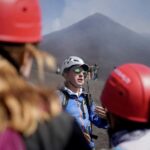
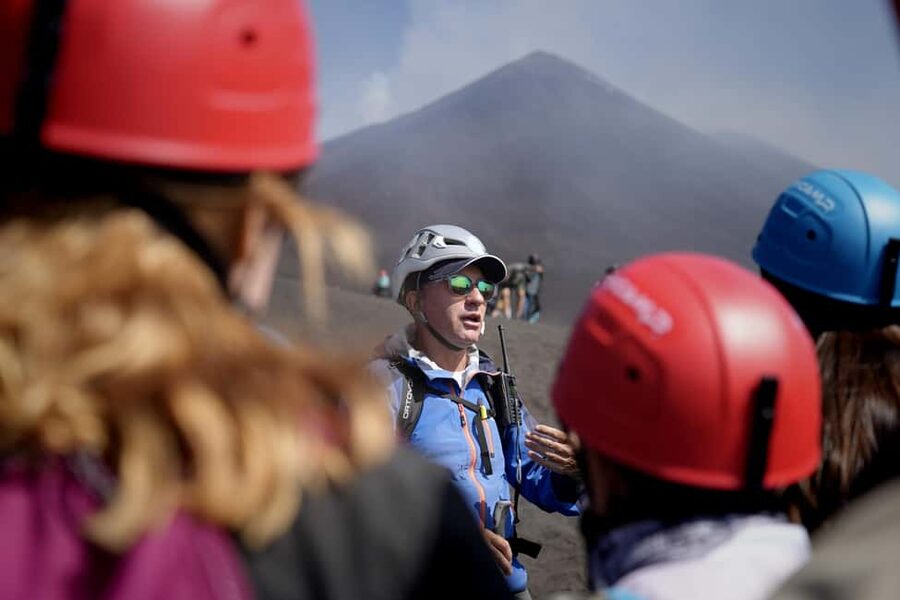
I especially liked two things. First, the volcanology guide angle. Instead of random facts, you get an interpretation of what you’re seeing: how the landscape formed, and what eruption activity means for the ground under you. Second, the summit-crater walking. Being able to look along the edge of the central crater and spot features like the main conduits makes it feel real, not like a viewpoint you rush through.
Your main consideration is intensity and conditions. This is not stroller sightseeing. You’ll hike on uneven volcanic surfaces, and you’ll want solid knees and steady pacing.
You can also read our reviews of more tours and experiences in Catania.
Starting at Rifugio Sapienza: the day begins at altitude
You start around the Rifugio Sapienza area, sitting at about 1900 m. The meeting setup is straightforward: park comfortably at Rifugio Sapienza square, then head to the Monte Gebel souvenir shop.
From there, the tour moves fast into altitude gain so the hiking portion feels focused, not endless uphill scrambling. You’ll take a cable car up to 2,500 m (about 15 minutes), then shift to 4×4 minibuses up to around 2,850 m (about 20 minutes).
This matters because it turns the day into a “real Etna walk” instead of a long grind just to reach the volcanic zone. You’re starting your trek already feeling the thinner air, but not so high that the hike becomes about survival.
Getting to the hiking zone: cable car and 4×4 in practice
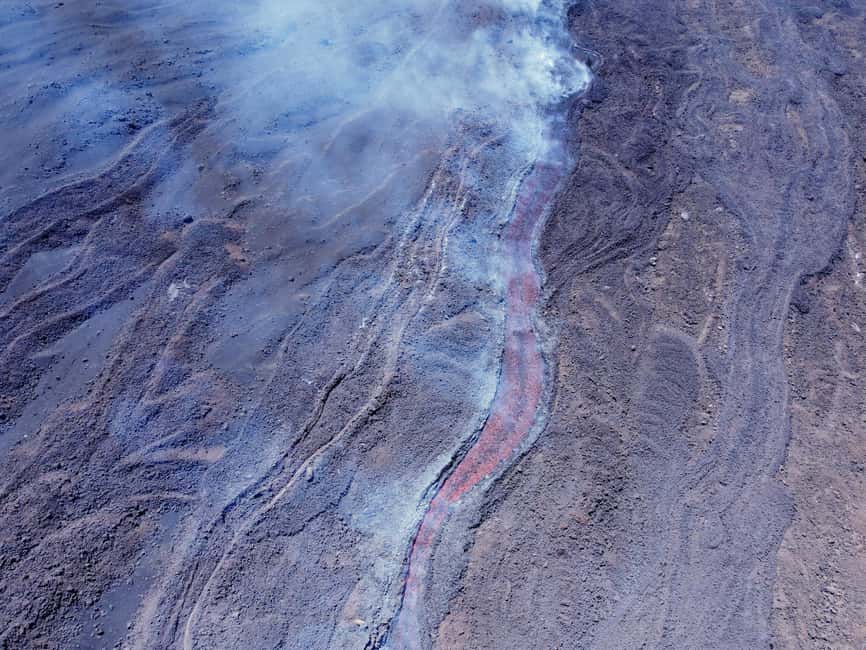
The 15-minute cable car ride is a quick way to move from the main Sapienza area toward the upper Etna zones. It’s also a helpful reset for your body. You’re not breathless from steep climbs before you even start.
Then the 4×4 minibuses finish the work, carrying you up to about 2,850 m. You’ll feel the environment shift as you climb—less greenery, more stark volcanic texture. It’s not just scenery. That change is a clue that you’re moving into recent eruption terrain.
If you get motion-sick easily, you might want to plan for that on the bumpy van portion. The day is organized, but it’s still rugged road access.
The 2-hour trek to 3340 m: what the ground is teaching you
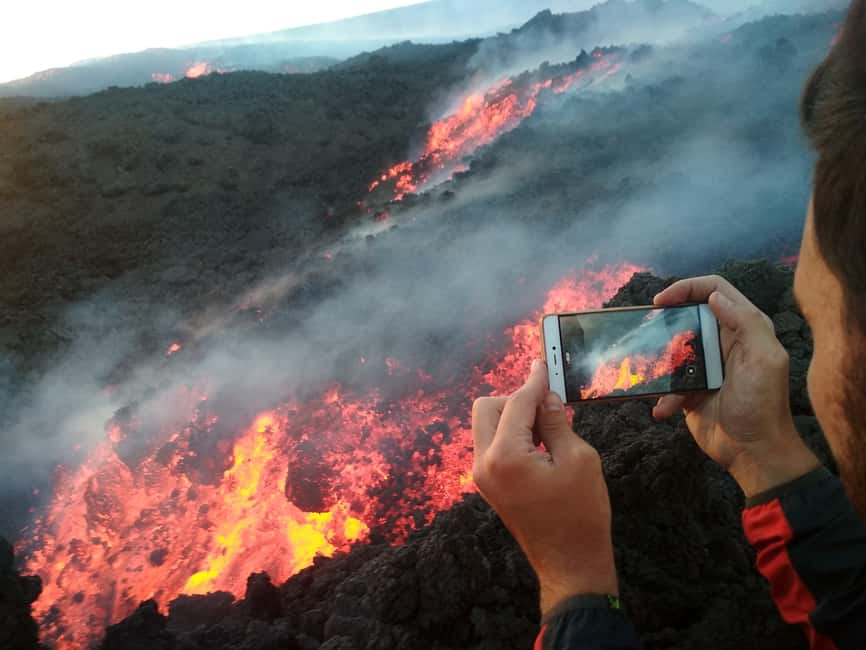
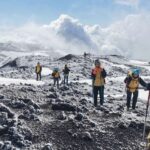
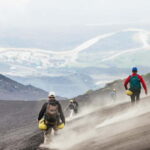
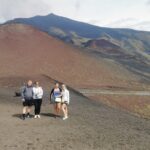
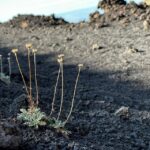
The heart of the tour is the hike from the upper starting point to the summit craters at around 3340 m. Expect about 2 hours of trekking through very recent lava flows and areas of sand and volcanic lapilli.
What makes this segment special is how “walkable” the lunar look is. You’re not climbing a trail of smooth stones. You’re moving across volcanic material that changes underfoot. Lapilli can make footing feel loose or springy. Recent flow zones can be jagged in places. It’s thrilling, but it’s also why you’ll feel better with trekking poles.
Two practical tips:
- Your legs will do the work, but your calves and ankles will pay attention too. Go slow.
- Bring and drink water. The tour recommends at least 1.5 liters per person, and at this altitude your body asks for it.
On the approach to the crater, the air and lighting can shift quickly. Layer clothing is smart, and the tour provides a windbreaker, which helps when the wind comes in.
At the central crater: edge walking and the “chasm” views
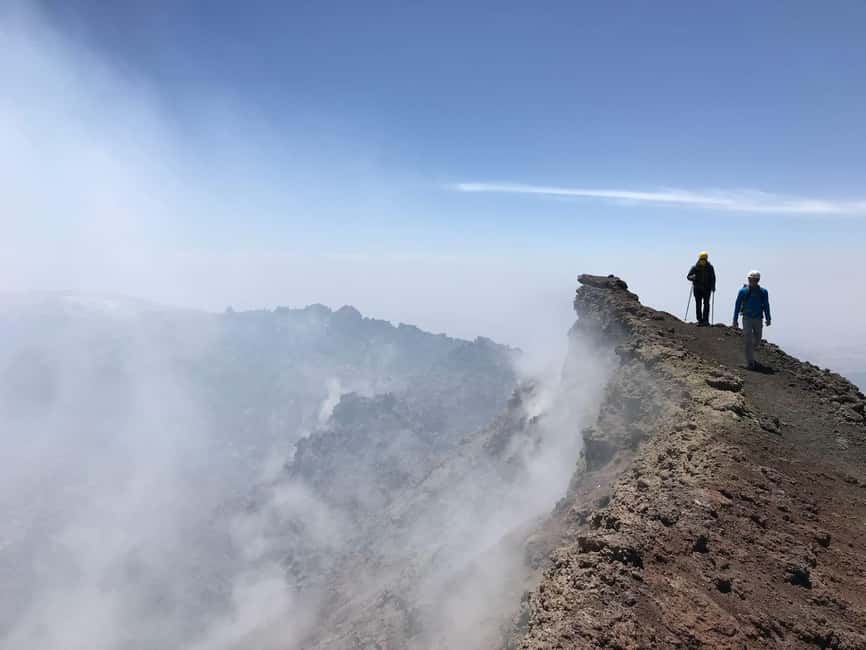
Reaching the Cratere Centrale dell’Etna at roughly 3340 m is when the day snaps into focus. You don’t just stand and point. You walk along the edge of the central crater to admire the two main conduits: the chasm and the new mouth.
This part is worth taking seriously, because you’re close to the system that’s still active. You’re also at the highest point of the hike, so take a moment to steady your breathing and let your eyes adjust.
The view is powerful for simple reasons:
- You’re looking down into a crater world where eruption pathways have physical form.
- You can see the terrain as layers and routes, not just a single peak.
If your group is fast-moving, this is where you might wish for more time on the way up or more frequent view stops. The pacing can feel brisk on some days, and on one day like this you want to be confident in your fitness and that your knees can handle uneven ground.
Southeast crater segment: where recent eruptions have mattered
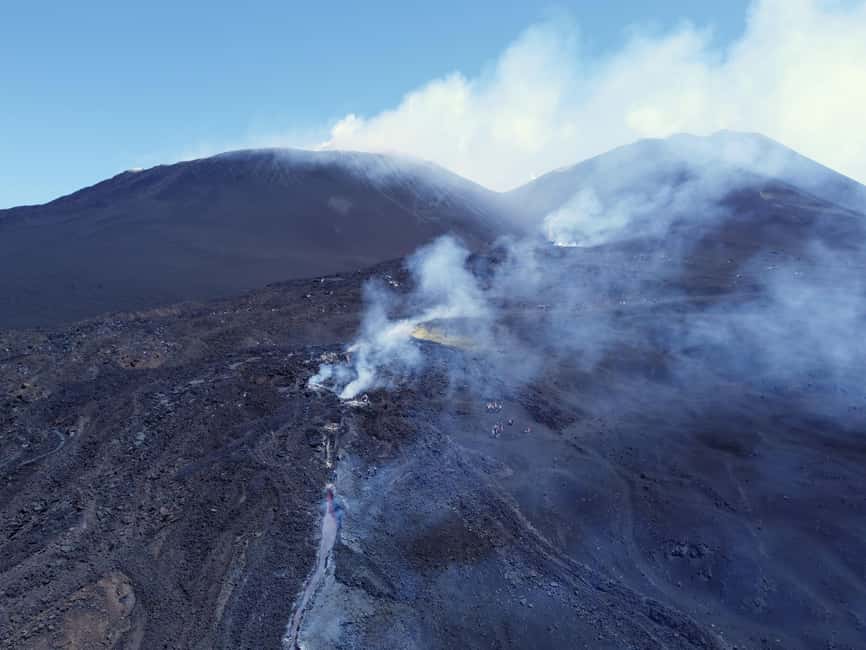
After the central crater moments, you continue toward the southeast crater, the source of many eruptions in recent decades. This stop isn’t only for photos. It’s your guided connection between eruption history and what you can see now.
You’ll spend time admiring the surrounding views and taking photos, then begin the descent. The descent starts with a sandy slope, which can feel like stepping onto loose beach sand—just at altitude.
This is also where you’ll benefit from the protective gear. The tour supplies a protective helmet, which is one of those “small details” that becomes big peace of mind on volcanic terrain.
Descent to lunch near 3000 m: rest without losing the rhythm
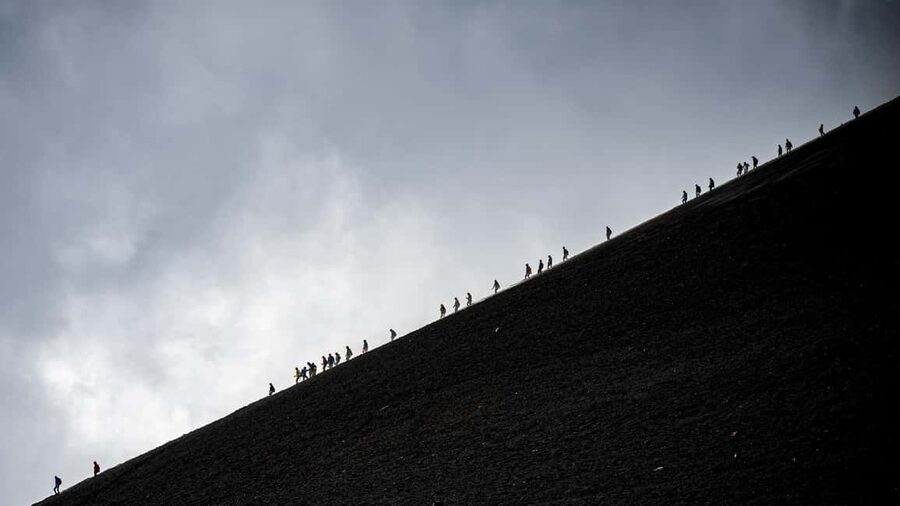
You’ll descend fairly quickly and reach about 3000 m, where you get a lunch break. Even though lunch isn’t included, this stop gives you a clear moment to refuel, rehydrate, and regroup.
What I like about this structure is that it prevents the day from turning into one long slog. You get a high payoff early (crater area), then a planned break before the lower eruption features.
If you bring food, keep it simple and pack calories you can eat even when you’re not starving. At altitude, you may not feel “hungry” in the normal sense, but you still need fuel.
Barbagallo craters (2002/2003): walking eruption edges
After lunch, the tour continues your descent to the northern base of the Barbagallo craters, tied to a lateral eruption in 2002/2003. You’ll walk around the perimeter and then descend toward the mouth of a lava flow channel—a canyon formed by lava—before entering it.
This is one of the most memorable parts because it’s physical. You’re not just viewing volcanic work from above. You’re moving through a passage shaped by the flow of molten rock.
And inside, the temperature and air movement can feel different than outside. It’s a short “lunar” tunnel experience that makes the day feel even more like an active volcano tour, not just a summit hike.
Valle del Bove viewpoint: Etna’s ancient caldera in plain sight
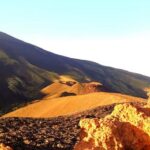
You continue your descent until you reach the viewpoint of Valle del Bove, an ancient caldera that dates to about 9,000 years ago after collapse of older eruptive centers.
You’ll get a short stop here before continuing toward a lateral crater formed during the 2001 eruption and finishing your descent back toward the cable car area.
Why this matters: it gives you time scale. Earlier, you’re seeing volcanic material shaped by recent activity. At Valle del Bove, you’re seeing evidence of older structural change. Your guide ties both together so your brain maps the volcano as a system that evolves, not a single event.
Pace, weather, and knee reality checks
This tour has a reputation for moving well—sometimes fast. On some days, you may get fewer “linger here” pauses and more steady progress. If you love lots of slow photo stops, you’ll need to manage your expectations.
Also, summit access can be affected by weather. On at least one day, summit access was prevented due to meteorological conditions, and the guide adjusted the outing into something still very worthwhile. So yes, it’s possible the day changes. That’s normal on Etna.
Who this fits best:
- Confident hikers with good knees
- People who pack layers and water without cutting corners
- Anyone who wants a guided volcano lesson with real effort
Who should skip:
- Children under 9
- Pregnant women
- People with heart problems, altitude sickness issues, or high blood pressure
- People over 95
If any of those apply, look for a different Etna option with less altitude pressure and lower strain.
Gear that makes the difference on volcanic ground
Good news: you don’t arrive empty-handed. The tour includes a windbreaker, trekking poles, and a protective helmet, plus insurance.
Still, you should bring:
- Long pants (required)
- Layered clothing (recommended)
- At least 1.5 liters of water per person
The equipment is there to help your comfort, but your comfort depends on you too. If you’re unsure about how your shoes handle loose volcanic debris, test them. Tighten laces. Expect the ground to feel different from a normal trail.
One more practical point: the day is strict about what you bring in terms of conduct—no alcohol and no drugs.
Price and value: what you pay, what you don’t
The advertised price is about $77 per person, for a 6-hour experience. But you’ll still need to pay separately for transport up and down the Etna access points.
On site, you pay:
- Cable car and 4×4 vehicle: €82 for adults
- €51 for children up to 10 years old
- Lunch is not included
So the true day cost is the base tour price plus the on-site access fees, plus whatever you choose for lunch.
Here’s why I still see this as good value: you’re buying more than a ticket. You’re paying for a volcanology guide, guided navigation through recent eruption terrain, and included safety gear (helmet) plus helpful hiking tools (poles). The structure—cable car, van, then a guided descent through multiple eruption areas—means you’re not piecing together transportation and interpretation by yourself.
If you’re the kind of traveler who wants Etna meaningfully explained and not just photographed, the guide component justifies the spend.
Languages, group vibe, and how flexible the day can feel
The live guide works in English, French, and Italian. There are options for private or small groups, which is helpful if you want to set a pace that matches your comfort with altitude and footing.
The tour is designed to last around 6 hours, but the day’s pace can shift based on terrain conditions and weather. That’s part of being on an active volcano. The best approach is to stay flexible and treat the schedule as a guideline, not a contract.
Should you book the Etna summit craters trek?
Book it if you want:
- A real summit experience up to about 3340 m
- A guided walk that explains the volcano while you’re standing in the evidence
- Included safety and support gear (helmet, poles, windbreaker)
- The kind of adventure where the terrain looks like another planet, because it is
Skip it (or pick a gentler Etna day) if:
- You have medical reasons that make altitude risky (heart issues, high blood pressure, altitude sickness history)
- Your knees aren’t reliable on uneven ground
- You need lots of long view breaks, because the hike can feel brisk
- Weather sensitivity is a big concern for you, since summit access can be limited
If you’re prepared—layers, water, long pants, and a steady hiking mindset—this is one of the best ways to experience Etna as an active place, not just a destination on a map.
FAQ
How long is the hike to the summit craters?
The trek to the summit craters takes about 2 hours, reaching around 3340 meters.
Where does the tour start?
You start from the Rifugio Sapienza area (about 1900 meters), with meeting directions to head to the Monte Gebel souvenir shop.
What is the total duration of the tour?
The tour duration is about 6 hours.
What cable car and 4×4 costs are paid on site?
You pay for the cable car and 4×4 vehicle on site: €82 for adults, or €51 for children up to 10 years old.
Is lunch included?
Lunch is not included.
What gear is included in the tour price?
The tour includes an Etna hike, a volcanology guide, windbreaker, trekking poles, protective helmet, and insurance.
What should I bring?
Long pants are recommended/required, and you should pack layered clothing and at least 1.5 liters of water per person.
Can children join the tour?
The tour is not suitable for children under 9.
Who should avoid this tour?
It’s not suitable for pregnant women, people with heart problems, people with altitude sickness, people with high blood pressure, and people over 95.
What languages are offered?
The live guide is available in English, French, and Italian.
Is alcohol allowed?
No. Alcohol and drugs are not allowed.