REVIEW · FEZ
3 Days: Desert Tour from Fes to Marrakech – Nomad Camp & Camel Trek
Book on Viator →Operated by Morocco Getaways · Bookable on Viator
The Sahara starts with a camel step. This 3-day Fez to Marrakech route turns the dial down on city life fast: you’ll cross mountain passes, watch the Middle Atlas forests give way to desert dunes, then sleep under stars on the Erg Chebbi sand. What makes it feel more human is the guide layer—people are guided by names like Ahmed, Aziz, or Mouad, and you’ll get cultural context while you drive and stop.
I really like the pacing here. You get early-morning desert time (including sunrise on the dunes) and then you swap that for red-rock air and shade at Todra Gorge. I also like the mix of big-name sights and in-between places: Ziz Valley viewpoints, the “One Thousand Kasbahs” road, the UNESCO kasbah at Ait Benhaddou, plus stops for rose products and argan oil.
One thing to consider: this is a road-trip style itinerary with long days of driving over high passes. If you’re sensitive to motion or want lots of free time with zero schedules, you may feel the schedule pressure.
In This Review
- Key highlights that make this trip worth it
- Why this Fez to Marrakech desert route works in 3 days
- Day 1: Col du Zad to Merzouga, with macaques and Ziz Valley views
- Day 2: Desert sunrise, Rissani’s gate, and Todra Gorge cool air
- Day 3: Valley of a Thousand Kasbahs to Ait Benhaddou, roses, cinema, and argan
- The “One Thousand Kasbah road” effect: seeing how Morocco is built for trade
- Price and value: what $469.82 gets you (and what to budget)
- Group style, pickup, and why “private” changes the feel
- Packing for desert nights and mountain mornings
- Who this tour suits best
- Should you book this Fez to Marrakech desert tour?
- FAQ
- How long is the desert tour from Fez to Marrakech?
- Where does the tour go during the 3 days?
- Is pickup offered?
- Does the tour include a camel trek and an overnight in the desert?
- Are entrance fees included?
- Are flights included?
- What is the price per person?
- Is the tour private or shared?
- Can I bring a service animal?
- Is personal travel insurance included?
Key highlights that make this trip worth it
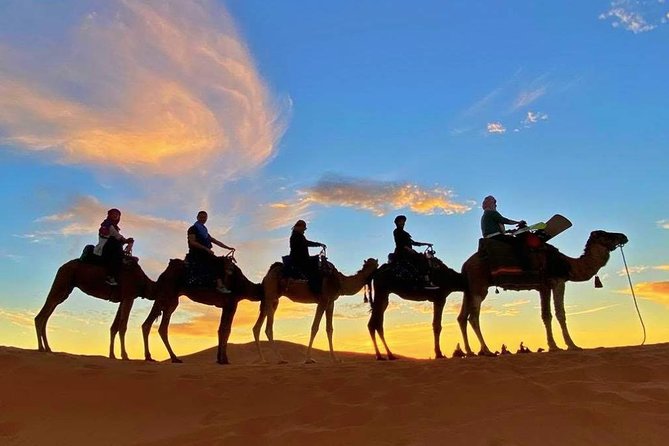
- Erg Chebbi camel trek plus a nomad-style desert night where the night sky is the main event
- Ziz Valley and its ksars (fortified houses)—a real sense of how people protected trade goods
- Todra Gorge walk through cool, carved red limestone
- The Monkey Fingers rock formation stop for a quick, oddball photo break
- Ait Benhaddou UNESCO kasbah plus a cinema/film stop in the Ouarzazate area
- High Atlas crossing via Tizi n’Tichka with mountain views before Marrakech
Why this Fez to Marrakech desert route works in 3 days
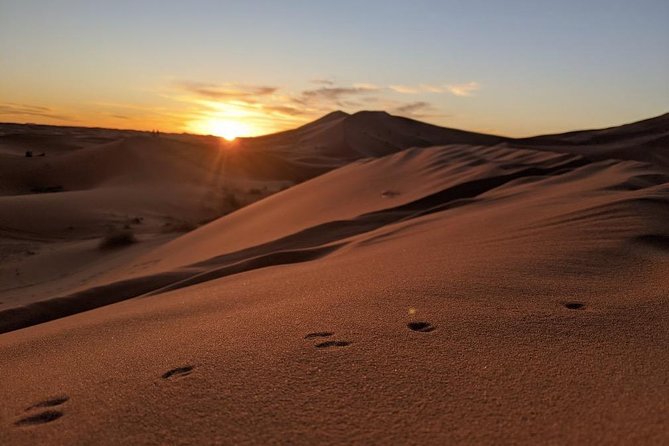
This kind of trip is all about trade-offs. In three days you won’t “slow travel” the country, but you can still get the best hits: Atlas mountains, the desert edge, the Sahara itself, and the dramatic change into Marrakech.
You’re also not just doing the desert as a single photo moment. The route bounces between different terrains—cedar forests to apple country to palm-lined valleys to sand dunes—so the Sahara doesn’t feel random. It feels like the end of a story you’ve been watching unfold.
And because the company runs it as a private-group experience (only your group participates), the whole thing tends to move smoother than the classic “everyone out, everyone in” vibe you sometimes get with large shared tours.
You can also read our reviews of more tours and experiences in Fez.
Day 1: Col du Zad to Merzouga, with macaques and Ziz Valley views
You start south over the Col du Zad pass and into the Middle Atlas. The driving isn’t just transportation here; it’s part of the show. One of the more memorable early details is the chance to spot Barbary macaque monkeys in the cedar forests. It’s the kind of stop that makes the whole day feel alive, even before you reach the dunes.
Then you swing toward Midelt, often called the apple city. You get a lunch break with the chance to see orchards and river scenery tied to the region. After that comes another climb over the Tizi n’Talremt pass, and this is where the scenery shift really starts to matter. Roads that look like “just roads” suddenly become your lead-in to desert country.
Next is the Ziz Valley, dotted with oases and palm clusters. You’ll also pass ksars—fortified settlements merchants built to protect valuables like gold, salt, and spices. That detail is worth paying attention to. It explains why the valley towns exist where they do and why trade routes shaped the architecture.
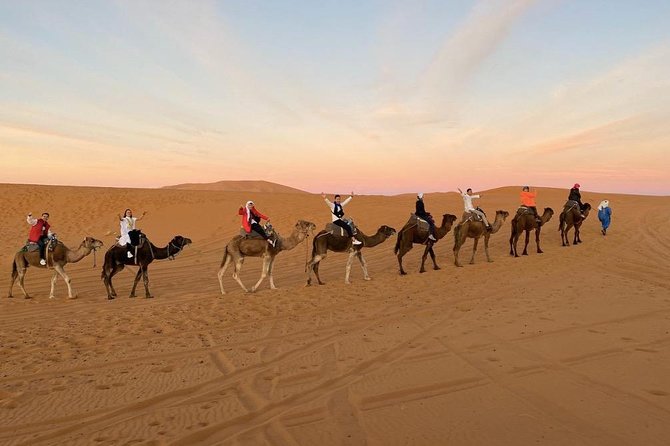
The day ends in the Merzouga area, where you start seeing the earliest signs of the Erg Chebbi dunes. From there, the tour’s main desert moment takes over: you ride camels across the dunes and end up at a nomad-style camp for the night. Your “travel” becomes more like a slow drift, with wind, silence, and the big sky taking over your senses.
Practical note: camel treks can be surprisingly firm on the seat and legs, so I’d plan for a bit of soreness the next morning.
Day 2: Desert sunrise, Rissani’s gate, and Todra Gorge cool air
This is the day you feel the desert in two different ways.
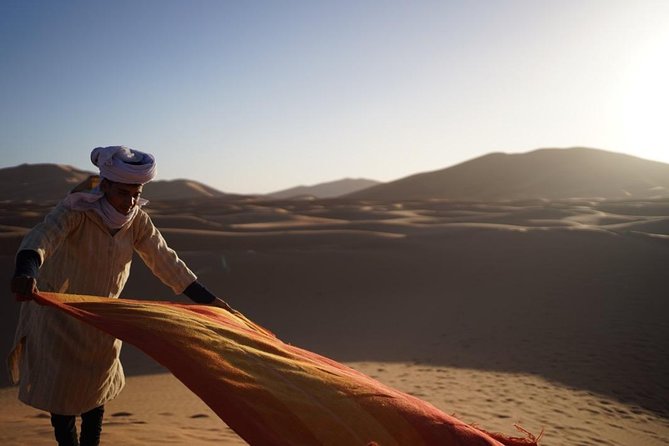
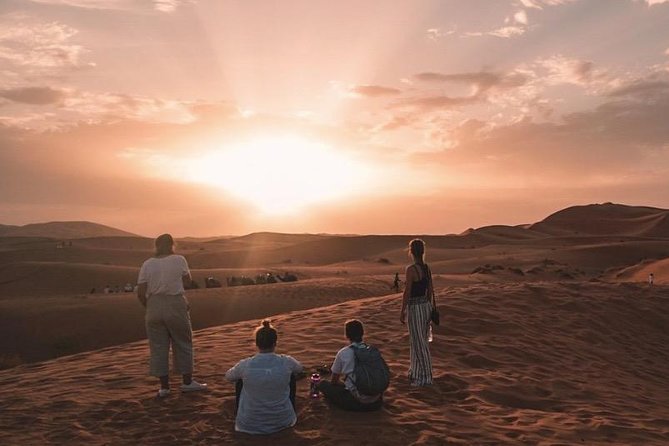
First: wake early and catch desert sunrise. Morning on the dunes has a different temperature and mood than sunset. Even if you’re not a “sunrise person,” it’s one of those times when the whole desert looks larger and quieter.
After that, you leave the dunes behind and move toward Rissani, a market town known for its livestock auction. The route includes passing through an impressive gate, and you’ll have time to look around. One small but funny practical detail: you’re encouraged to find the donkey parking lot. It’s goofy, but it also tells you you’re in the real rhythm of the town, not just a tourist stop.
Then the driving continues toward Tinerhir and into the Todra area. Todra Gorge is carved by the Todra River through red limestone. The gorge walls can reach about 984 feet (300 meters), and walking through it feels cooler and more sheltered than the open desert. The day’s best moments here tend to be simple: a slow walk, shaded breaks, and the sound of the river working against the rock.
There’s time to relax in and around the gorge, including the shallow water areas. If you’re traveling in warmer months, this “cool pocket” effect is a big part of why Todra works so well as a mid-journey recovery stop.
Possible drawback for day 2: it’s a long day of transitions—sunrise, then driving, then a gorge walk—so pack layers. Early morning can feel colder than you expect.
Day 3: Valley of a Thousand Kasbahs to Ait Benhaddou, roses, cinema, and argan
Day 3 turns toward the big cultural anchors, but it still moves through smaller stops that add texture.
You drive the Valley of a Thousand Kasbahs, also called the road of many ksars. Along the way you pass through areas tied to orchards and palms, including stops described around the Rose Valley and the palm grove of Shokura oasis. This part matters because it bridges desert travel with living agriculture. You see that Morocco isn’t only dunes and stone walls—it’s also farms, roses, olives, and daily work.
Your first notable side trip is Kela’a M’Gouna, known for roses. Here you can admire rose bushes bordering farmland and visit a rose collective where rose petals are turned into rose water and rose oil. If you’ve ever wondered why rose water shows up in tea and perfumes, this is the kind of stop that makes it make sense.
Then you head toward Ouarzazate, a region tied to films. The route includes a movie studio tour and the Musée du Cinema, so you’re not only seeing buildings—you’re seeing how stories get staged in desert-country settings. Even if you’re not a cinema nerd, it adds an angle to why this region looks the way it does in movies.
After that comes the headline: Ait Benhaddou, the UNESCO World Heritage site. This old ksar dates back to the 11th century, and it’s the kind of place where you can feel the logic of the settlement layout. It’s built to last, built for defense, and built to handle the traffic of trade.
Then you start crossing the High Atlas Mountains. The pass is Tizi n’Tichka, and the route includes a stop with a panoramic view where you can spot Mount Toubkal. This is where you’ll notice the climate shift in a very physical way: mountain air to warmer valley air, quieter country to city noise.
Later, you stop in Taddert to visit an Argan Oil Cooperative. You’ll learn about olive processing (as described in the route) and sample products. Again, the value is in the practical connection—how food and oils travel from local production to what you buy at home.
Finally, you descend and arrive in Marrakech. That moment can feel like culture shock in a good way: the countryside stops talking, and the city starts up again.
The “One Thousand Kasbah road” effect: seeing how Morocco is built for trade
A lot of desert trips treat kasbahs like photo backdrops. This one frames them more like living infrastructure.
When you think about ksars and kasbahs together—fortified spaces for goods, families, and protection—the road between them starts to feel like a map of old logistics. That’s why the stops in the Ziz Valley and along the One Thousand Kasbah route matter.
You’re not just collecting landmarks. You’re learning the geography of survival and commerce:
- valleys that support palms and oases
- passes that connect regions
- fortified settlements that protect valuable shipments
It’s a more satisfying way to look at the places because your brain gets a reason behind the shapes and walls.
Price and value: what $469.82 gets you (and what to budget)
At $469.82 per person, you’re paying for a full 3-day guided circuit with the major “big moments” built in: driving from Fez down through mountain passes toward Merzouga, camel trek with an overnight desert bivouac, and key cultural stops like Todra Gorge and Ait Benhaddou.
The things not included are important for budgeting:
- entrance fees to monuments, studios, and kasbahs
- flights to and from Morocco
- personal travel insurance
- extra drinks, snacks, and additional meals
- (so if you want full-day snacking, you’ll need cash or card)
So the value depends on how you travel. If you’re okay using lunch times as planned breaks and you don’t need lots of add-ons, this price can feel like a deal because the transport and core experiences are packaged. If you expect private drivers everywhere, flexible detours, or frequent paid attractions on top, you’ll want to set aside additional money.
Group style, pickup, and why “private” changes the feel
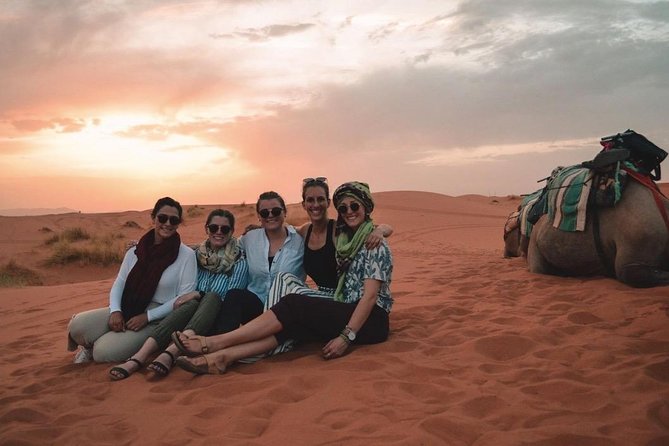
The tour offers pickup, and it’s described as a private experience where only your group participates. That usually means fewer delays and more control over pacing, especially in places where crowds can slow everyone down.
It also helps with practical questions. When you have a guide who can explain what you’re seeing—whether it’s why ksars are built the way they are or how desert life organizes around seasons—you stop feeling like you’re just following a route with no story.
From the guide names associated with this operator (Ahmed, Aziz, Mouad), the consistent theme is friendliness and lots of conversation during driving and stops. That can turn “I guess we’ll see this” into “I get why this place exists.”
Packing for desert nights and mountain mornings
Even with good planning, comfort can hinge on your small choices.
Bring layers. The tour includes early starts for desert sunrise and then it climbs through mountain passes like Tizi n’Tichka. That’s a recipe for temperature swings. Also plan for the camel trek: wear shoes you can walk in and clothes you can handle if sand gets into everything.
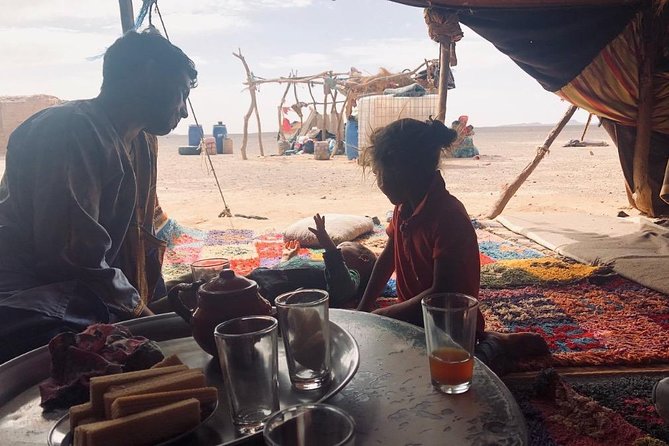
For the overnight in the nomad bivouac, you’ll be in tents on the dunes. So think warm outerwear for nighttime and a hat for wind.
Finally, bring some patience for long drives. Morocco roads can be dramatic. Your job is to arrive at stops with energy, not to race the road.
Who this tour suits best
This is a great fit if you want:
- a real taste of Sahara desert life without planning every detail
- one trip that covers Merzouga, Todra Gorge, and Ait Benhaddou
- guided explanations so the places mean something
- a structured 3-day format that still feels varied
It might not be ideal if you prefer:
- minimal driving and lots of free time in a single city
- a “luxury only” comfort level every hour
- lots of unscheduled stops
But for most people chasing the Fez to Marrakech desert highlight reel, this is a solid, practical route.
Should you book this Fez to Marrakech desert tour?
If you want the desert night plus major cultural anchors in one go, I’d say yes—especially if you like your sightseeing explained, not just photographed. The value is strongest when you keep expectations realistic: you’re trading some free time for a well-sequenced route that hits the dunes, the gorges, and the kasbahs.
Book this tour if the idea of sunrise on Erg Chebbi and an overnight under the stars is your priority. Also book it if you’re comfortable with long driving days and you want the guide to handle the pacing.
If you hate early mornings or you need lots of room to roam on your own schedule, you may feel constrained. In that case, consider a slower itinerary that spends more time in one region before moving on.
FAQ
How long is the desert tour from Fez to Marrakech?
It runs for 3 days (about 3D/2N), moving from Fez down into the desert and ending in Marrakech.
Where does the tour go during the 3 days?
You’ll travel through areas including Merzouga/Erg Chebbi dunes, Rissani, Todra Gorge, and Ait Benhaddou, with stops along the Ziz Valley, the One Thousand Kasbah road, and the High Atlas crossing toward Marrakech.
Is pickup offered?
Yes, pickup is offered as part of the experience.
Does the tour include a camel trek and an overnight in the desert?
Yes. The highlights include a camel trek with an overnight in a nomad desert bivouac with starlit tents among the dunes.
Are entrance fees included?
No. Entrance fees to monuments, studios, and kasbahs are not included.
Are flights included?
No. Flights to and from Morocco are not included.
What is the price per person?
The listed price is $469.82 per person.
Is the tour private or shared?
It is private. Only your group will participate.
Can I bring a service animal?
Yes, service animals are allowed.
Is personal travel insurance included?
No. Personal travel insurance is not included.