REVIEW · CATANIA
Trekking at 3000 meters on Etna
Book on GetYourGuide →Operated by ETNA QUAD E TREKKING · Bookable on GetYourGuide
At 3000 meters, Etna feels like another planet. You’re taken up by cable car and then walk across recent 2002 lava with qualified volcanological guides, the kind who can turn crater edges and lava tubes into real, understandable geology. I especially like the guided pacing: reports mention standouts like Giuseppe and Antonio keeping the group moving and talking in a way that makes the whole climb feel manageable.
The best part is also the catch: this is high, windy terrain with uneven volcanic ground, so the trek can feel moderately exhausting, especially if the weather is pushing you around. If you’re not comfortable at altitude or with exposure, take the fitness and health limits seriously before you book.
In This Review
- Key things I’d focus on
- What makes the Etna 3000-meter craters trek feel worth your time
- Starting at Bar Ristorante Crateri Silvestri and riding up to 2500 m
- Walking the 2002 lava flows: where the geology starts to click
- Entering the 2002 effusive crater channel at 2700 m
- From crater edges to the highest 2002 explosive craters on the south slope
- Belvedere della Valle del Bove and the Laghetto crater: big views with a purpose
- Guides, safety briefings, and the small details that make it work
- Price and value: what $59 covers, and what costs extra
- Gear checklist: what to wear when Etna is cold, windy, or both
- Who should book it, and who should skip it
- Should you book this 3000-meter Etna crater trek?
- FAQ
- How long is the Etna Craters Excursion 3000 meters?
- Where do I meet the tour?
- Is the cable car included, and what does it cost?
- What’s included in the $59 per person price?
- What should I bring with me?
- What languages are the guides?
- Is this trek suitable for people with low fitness or limited walking ability?
- What ages is the tour not suitable for?
- Who should not take this excursion due to health or comfort concerns?
- Is there free cancellation?
Key things I’d focus on
- Cable car lift to 2500 m, then a true walking route on lava terrain
- 2002 effusive crater walking, including a lava-flow channel on the route
- Summit-crater look close up, not just distant photo stops
- Guides who explain volcanology clearly, with pace adjusted to the group
- Helmet + trekking poles provided, useful for traction and safety
- Belvedere del Valle del Bove overlook, plus the Laghetto crater area later on
What makes the Etna 3000-meter craters trek feel worth your time
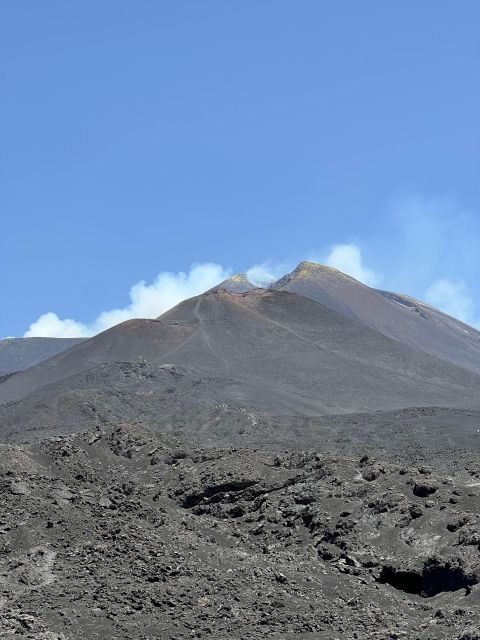
Etna is active, and you can feel that energy when the ground under your boots is literally shaped by recent eruptions. This trek is built around that idea: you don’t just look at craters from a viewpoint. You walk on and through the volcanic features created by the 2001 and 2002 lateral activities.
You’ll also get the kind of altitude variety that makes Etna special. You start lower, gain elevation fast via cable car, then spend the walking hours moving through distinct zones—lava surfaces, crater edges, and dramatic viewpoints. That mix is what keeps the day interesting and prevents it from feeling like one long slog.
Finally, the guide component matters. A good volcanological guide helps you connect what you’re seeing with how it formed—lava flows, effusive channels, and the layout of eruptive centers. You’ll get more out of the scenery when it has a story, not just a silhouette.
You can also read our reviews of more tours and experiences in Catania.
Starting at Bar Ristorante Crateri Silvestri and riding up to 2500 m
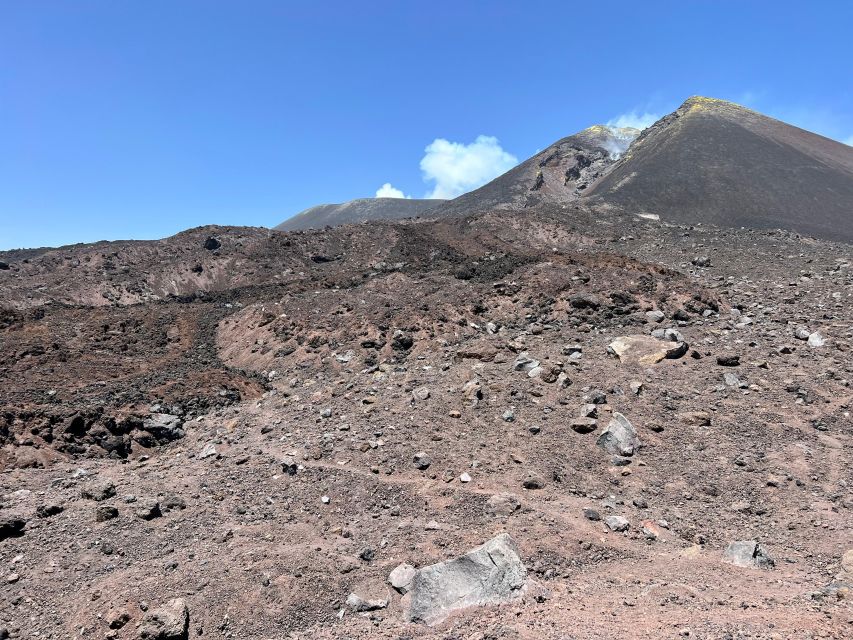
The day starts at Bar Ristorante Crateri Silvestri. The key practical note: you enter inside the bar to find the group, not outside like some hikes do.
From there, you’ll be taken up to Etna by scenic drive and then transferred to the Etna cable car. The big value of this approach is how quickly you reach the working altitude range without turning the morning into a slow grind. You go from around 1900 m to about 2500 m by cable car, which sets you up for a real hiking experience rather than a long transit day.
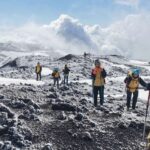
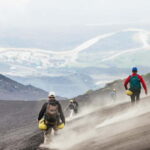
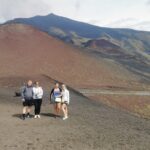
Once you’re near 2500 m, the trekking begins heading north-west. This is where the experience turns from transportation into geology on foot—because the path runs over lava erupted during the 2002 eruption. Expect volcanic surfaces that can be sharp, dusty, or uneven depending on conditions, so your footwear matters.
Walking the 2002 lava flows: where the geology starts to click
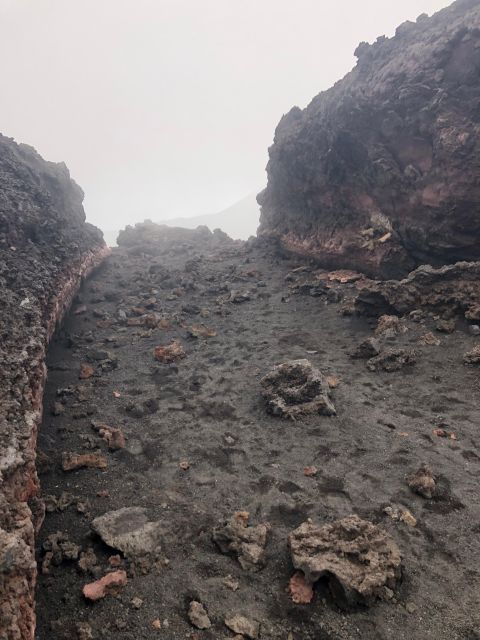
At around 2500 m, you step into the terrain shaped by the 2002 activity. This matters because lava isn’t all the same. Some stretches feel more like walking on hardened, irregular rock; others can be more like broken volcanic textures. The guide’s job here is both safety and interpretation—showing you the differences and explaining what they suggest about flow and cooling.
This is also where you’ll notice why the trek includes high-collar hiking shoes and trekking poles. High collars help with ankle stability on rocky ground. Poles can take pressure off your knees and give you extra balance when the surface changes.
The route continues upward until roughly 2700 m, where the terrain shifts again. If you like nature that’s not frozen in time, this section is great. You’re walking across evidence of a recent event, not a distant monument.
Entering the 2002 effusive crater channel at 2700 m
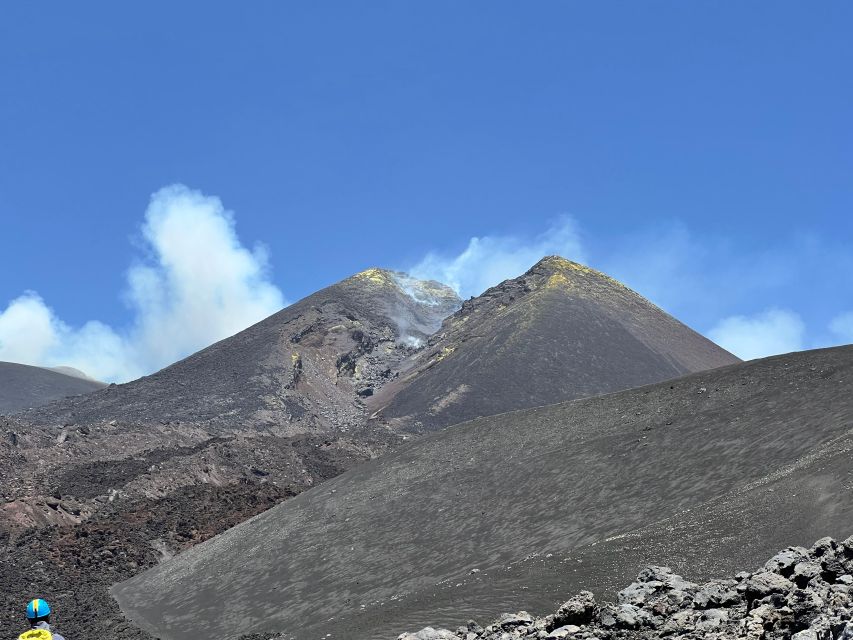
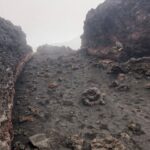
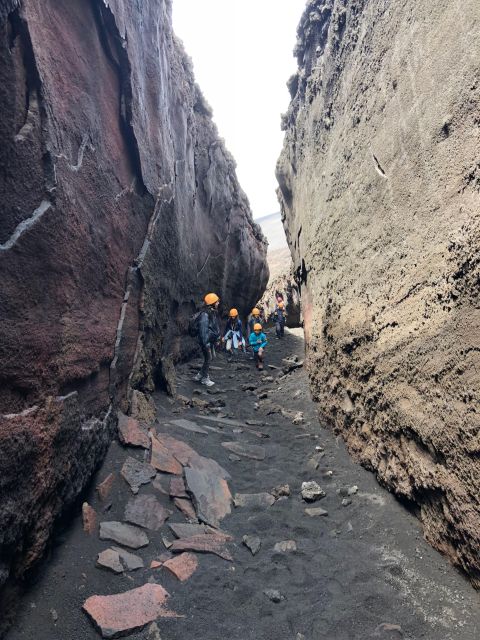
Reaching about 2700 m, you enter the effusive crater area tied to the 2002 eruption. The standout detail here is that you’re not only walking around volcanic features—you’re walking inside a lava flow channel created during that eruption.
That lava channel detail changes the feel of the hike. Instead of just looking at craters from the outside, you move through a formed pathway that tells you how molten rock traveled and where it pooled or drained. It’s one of the best moments for understanding how an eruption behaves, not just that it happened.
You’ll also be close to what wind does at altitude. If conditions are gusty, you’ll want that windbreaker you bring or the one provided in the included kit. You’ll also want to keep your rhythm steady—short steps and frequent brief pauses help more than trying to power through.
There’s a short break here. It’s practical: you’re gaining altitude, and a quick reset keeps you safer later when you’re heading toward the higher crater zones.
From crater edges to the highest 2002 explosive craters on the south slope
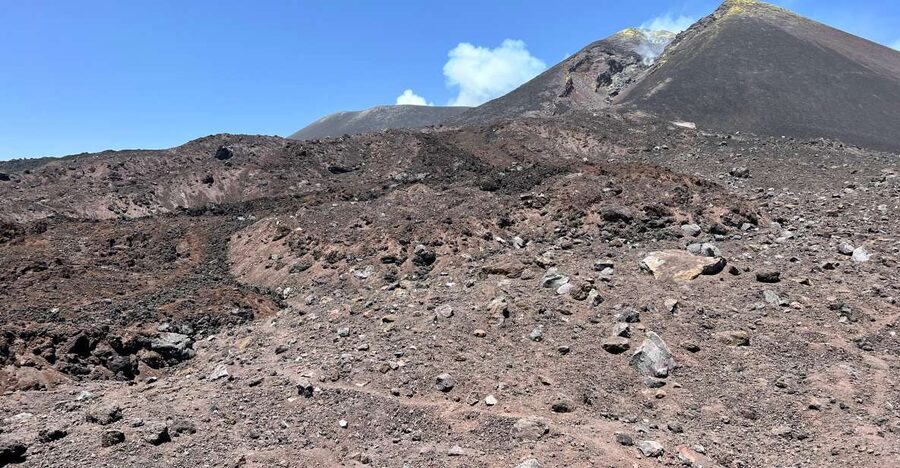
After the crater-channel section, you climb again until you reach the highest point of the explosive craters formed in 2002 on the southern slope of Etna. This is the moment many people remember most: you can walk along the edge of the craters and admire the summit craters up close, including the latest lava flows you can see during the day.
This isn’t just a view. It’s a perspective shift. At the top, the volcano stops feeling like a background and starts feeling like a map made of rock. You can often spot how different eruptive episodes shaped different portions of the cone and crater system.
In guide reports, you’ll find a common theme: the best leaders adjust the pace so everyone reaches the summit point without turning it into a race. That’s the difference between a hike that feels like pure endurance and one that feels like you can actually take it in.
Belvedere della Valle del Bove and the Laghetto crater: big views with a purpose
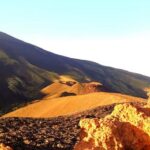
After the summit-focused section, the trek continues through lunar-like terrain, a phrase that fits how Etna’s surfaces can look at altitude—scarred, pale, and sharply textured. Then the route brings you to a high overlook of the Belvedere della Valle del Bove, connected to ancient eruptive centers.
This viewpoint is valuable because it broadens what you understand. Earlier on, you’re mostly in the immediate aftermath of 2002. Here, you’re looking at a larger system—an area tied to older eruptive behavior—so the day becomes more than a single event. It’s a timeline you can see from above.
Next, you skirt the eruptive cone of the Laghetto crater, born during the 2001 eruption. By placing Laghetto after the Belvedere overlook, the route gives you a cleaner story arc: newer lava and crater channels first, then a wider look at the surrounding eruptive geography.
Finally, you reach the cable car terminal. From there, the cable car ride brings you comfortably back down toward the starting point area.
Guides, safety briefings, and the small details that make it work
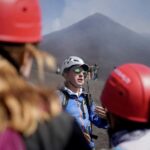
The tour is led by qualified alpine and volcanological guides, and safety isn’t treated like a formality. You get a safety briefing as part of the guided time, and the included gear supports real walking conditions.
Helmet use is a big deal on volcanic terrain, not because you’re expecting anything dramatic, but because crater edges and rocky paths demand head protection and secure footing. Trekking poles also help with stability when the ground transitions between textures.
Guide quality is one of the most praised parts of this experience. People have highlighted volcanology explanations that stay clear and friendly, and pacing that’s adapted to the group. Names like Edo and Mario come up in that context—useful if you care about how much you learn, not only how high you go. If you’re the type who asks questions, this kind of guide will reward that.
Price and value: what $59 covers, and what costs extra
This trek is listed at $59 per person for a one-day Etna experience. That’s a strong base price considering what’s included: guide service (volcanological or mountain guide), hiking shoes with high collar, new socks, windbreaker, trekking poles, and a protective helmet.
There’s also a small but thoughtful value add: you get a 20% discount on sandwiches, snacks, and drinks. Even if you don’t buy much, it can help when food costs at tourist spots feel inflated.
The one clear extra expense is the return cable car ticket, listed at €52. That’s the biggest item to plan for. Also note the route uses the cable car to reach the higher starting altitude, but the return ride is what’s specifically called out as not included.
So the value calculation is simple:
- You pay $59 for the guided geology trek plus key safety gear.
- You add the return cable car cost to complete the day.
If you already own solid hiking boots and don’t need poles, you still likely come out well because the included gear is what makes the trek feel safer and less stressful. If you’re traveling light and don’t want to source poles and helmets yourself, the bundled gear is a real benefit.
Gear checklist: what to wear when Etna is cold, windy, or both
Even with provided items, you should dress like you expect altitude wind. The recommended equipment list is straightforward: long pants, cap, gloves, sunglasses, protective creams, and a scarf.
I’d treat this as your minimum layer plan:
- Long pants for abrasion and ground contact
- Gloves for grip and warmth
- A scarf or neck layer against wind
- Sunglasses for glare off pale volcanic rock
- Sunscreen/protective cream because UV can feel sharp at altitude
The tour includes hiking shoes (high collar), trekking poles, a windbreaker, and socks. That reduces what you must pack, but it doesn’t replace the need for a sensible base outfit and head protection. If you’re someone who gets cold quickly, plan for that early—wind tends to arrive fast on Etna.
Also, bring a practical attitude to socks and footwear. If your socks are already well-broken-in and you don’t like novelty socks, you’ll still be given new socks as part of the included kit, so treat that as standard operating procedure for comfort and blisters.
Who should book it, and who should skip it
This is not a casual stroll. It’s a hike that works best for people who handle altitude and steady uphill walking on rocky ground. One guide-reported theme is that it can be moderately exhausting, and you should expect that to be true on your day.
It’s also clearly not suitable for a long list of health and comfort situations, including:
- Children under 6
- Pregnant women
- People with mobility impairments
- People with heart problems
- People with vertigo
- People with respiratory issues
- People with epilepsy
- Visually impaired people
- People with altitude sickness
- People with high blood pressure
- People with low level of fitness
- People over 95
If any of those apply, skip this specific trek and look for a lower-altitude or less exposed Etna option instead.
For everyone else, it’s a great fit if you:
- Want to learn volcanology in the field, not only through photos
- Enjoy walking on real terrain with safety gear and guidance
- Have the fitness for several hours of uphill and crater-edge walking
- Like landscapes that are more about geology than vegetation
Should you book this 3000-meter Etna crater trek?
If you want an Etna day that feels like geology class with a view—and you’re comfortable with altitude, wind, and rocky ground—this is a strong choice. The route hits the best points: lava flows from 2002, a walk through a lava channel, summit-crater edges, and the Belvedere del Valle del Bove overlook with the Laghetto area.
Book it especially if you value how the guides work. Reported guide impressions consistently point to friendly, passionate explanations and a pace that keeps people together without leaving weaker hikers behind.
Don’t book it if you’re sensitive to heights, wind, or altitude, or if any health limits apply. In that case, the day will feel like stress, not satisfaction.
FAQ
How long is the Etna Craters Excursion 3000 meters?
The guided tour duration is listed as 4 hours, and it is a one-day experience.
Where do I meet the tour?
You meet at Bar Ristorante Crateri Silvestri, and you need to enter inside the bar.
Is the cable car included, and what does it cost?
The tour uses the Etna cable car up to around 2500 m. The return cable car ticket is not included, and it costs €52.
What’s included in the $59 per person price?
Included are the guide service (volcanological or mountain guide), hiking shoes with high collar, new socks, a windbreaker, trekking poles, a protective helmet, and a 20% discount on sandwiches, snacks, and drinks.
What should I bring with me?
You’re recommended to bring long pants, a cap, gloves, sunglasses, protective creams, and a scarf.
What languages are the guides?
The live tour guide is available in English and Italian.
Is this trek suitable for people with low fitness or limited walking ability?
No. It is not suitable for people with low level of fitness, and the route involves trekking at summit altitudes.
What ages is the tour not suitable for?
It is not suitable for children under 6 years.
Who should not take this excursion due to health or comfort concerns?
It is not suitable for pregnant women, people with mobility impairments, heart problems, vertigo, respiratory issues, epilepsy, visual impairment, altitude sickness, high blood pressure, or for people over 95 years.
Is there free cancellation?
Yes. You can cancel up to 24 hours in advance for a full refund, and you can also reserve now and pay later.