REVIEW · KATHMANDU
Helicopter Return Everest Base Camp Trek, KTM-LUKLA & Gorakshep-KTM by Heli
Book on Viator →Operated by Himalaya Holiday service Pvt. Ltd.(HHS) · Bookable on Viator
Everest, but with a helicopter on your side. This is an Everest Base Camp route that takes you into the Khumbu on foot, with a helicopter return option from Gorakshep, after you’ve worked your way through Sagarmatha National Park at teahouse pace.
I love how the trek is built around real acclimatization: you get rest days in Namche Bazaar and Dingboche, not just nonstop hiking. I also love the human factor—Buddhi organizing on the Nepal side and guides like Dipak keeping you informed, calm, and moving at the right speed. One consideration: the helicopter legs are listed as extra costs, and weather can still affect flight plans.
In This Review
- Key Things I’d Tell a Friend Before You Go
- The Heli-Return Twist: How It Changes the Everest Base Camp Experience
- Getting Started in Kathmandu: Permits, Pickup, and Early Mornings
- Lukla Day: The Jump into the Khumbu and the First Real Trek
- Phakding to Namche Bazaar: Bridges, Villages, and Breathing Practice
- Rest Day in Namche: Why You Don’t Want to Skip It
- Tengboche and Dingboche: Monasteries, Views, and a Higher Ceiling
- Lobuche to Gorakshep: Getting Closer to the Ice and the Big Day
- Kala Patthar at 5545m: The View That Makes the Cold Worth It
- The Return Part: Either Trek Back or Use the Heli Option
- Helicopter Flights: When They Save You, and When Weather Still Wins
- Tea House Life and What You’re Actually Paying For
- The Real Value: What $9,999 Covers (and What You’ll Add)
- Guides, Porters, and How This Trip Stays Calm
- Packing Checklist That Matches the Cold Reality
- Who Should Book This Everest Base Camp Trek with Heli Return
- Should You Book This Tour?
- FAQ
- What’s included in the trek package?
- Are lunch and dinner included?
- How much does the helicopter cost, and where does it fly?
- Is a porter included?
- What time does the trip start each day?
- Is a sleeping bag provided?
- FAQ (Weather and Cancellation)
- Is free cancellation available?
- What happens if weather cancels the experience?
Key Things I’d Tell a Friend Before You Go
- Buddhi’s coordination + Dipak’s guiding style: smooth communication and a plan you can actually follow day to day.
- Real acclimatization stops in Namche Bazaar and Dingboche, which matters at these altitudes.
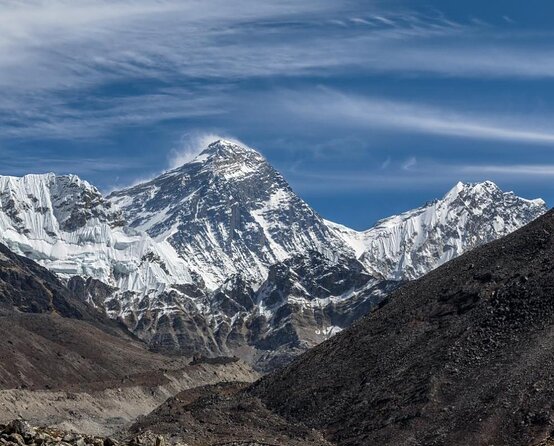
- Kala Patthar for the big payoff (5545m): Everest views plus Icefall and glacier scenery when skies cooperate.
- Teahouse rhythm: breakfast is included, while lunch and dinner are pay-locally so you can choose.
- Small group size: maximum 15 people, so you won’t feel lost in a crowd.
- Weather contingency is real: Lukla flights can be disrupted, and helicopter routing may be needed.
The Heli-Return Twist: How It Changes the Everest Base Camp Experience
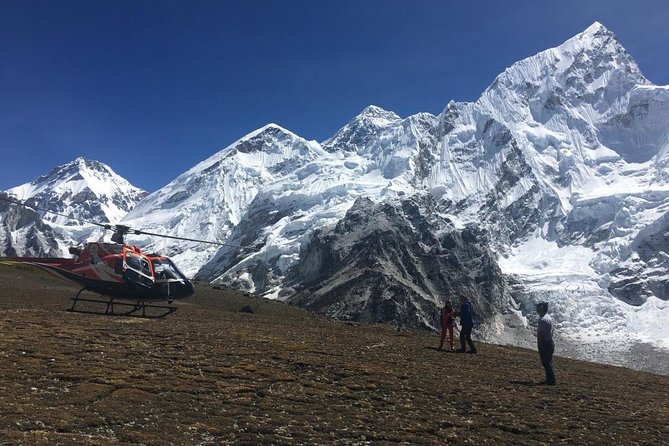
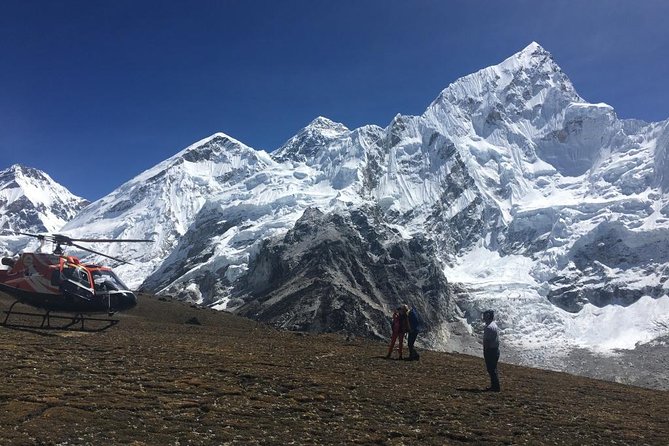
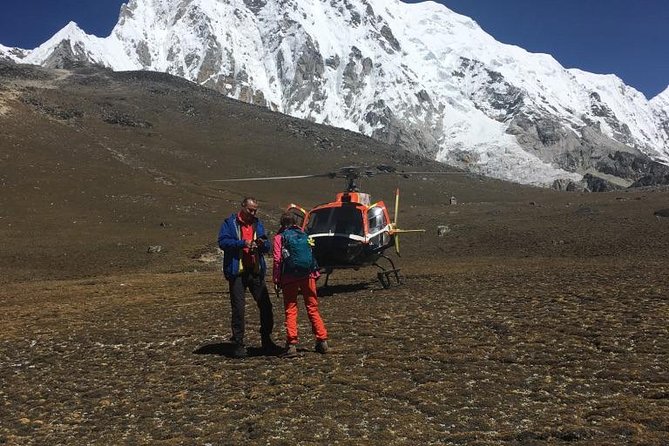
The classic Everest Base Camp story is simple: walk up, walk down, repeat. This version adds a helicopter option on the back end, which can be a big deal for your energy. At high altitude, your legs don’t just get tired—they get slow. A return by air from the Gorakshep area can reduce that final drain, especially if you’re reaching the top days feeling the thin-air squeeze.
That said, you should treat the helicopter as an optional tool, not a guaranteed magic wand. The pricing shows helicopter legs have separate fees (sharing and private options), and the whole experience is weather-dependent. Translation: plan for a trek experience first, then treat heli return as a bonus if you choose it and conditions allow.
You can also read our reviews of more tours and experiences in Kathmandu.
Getting Started in Kathmandu: Permits, Pickup, and Early Mornings
Your trip starts in Kathmandu at about 1350m/4430ft. The big practical win here is that the essentials are handled for you: entry permits and trekking permits are included. That saves time and stress before you’re even in the mountains.
You’ll also want to be ready for an early schedule. The meeting start time is listed as 5:45 am, so don’t treat packing like an evening project. If you arrive the day before, I’d set out your day pack contents (layers, gloves, water bottle, torch) so morning is just grab-and-go.
If pickup is offered, take it. Moving between points in Kathmandu is easier when someone helps with the handoff. The tour notes that private transportation isn’t included, so you’ll still want to be clear on what kind of transfer you’re getting and where.
Lukla Day: The Jump into the Khumbu and the First Real Trek
The plan sends you from Kathmandu to Lukla by flight, landing around 2828m/9279ft. That short hop is why Everest feels different from other big mountains: you go from city altitude to mountain altitude fast, then immediately start walking.
On day 2, after the flight, you trek to Phakding (around 2780m/9121ft). This is the “wake-up” leg. It’s not about speed—it’s about settling into your hiking rhythm, your breathing, and your pack comfort. It’s also where you’ll learn what your water intake needs to look like. In the early days, you can still move steadily, so use the time to dial in your pace.
One small tip that matters at Lukla altitude: keep your first-day layers easy to manage. You’ll likely hike in a fleece or light jacket, then stop for rests when it gets colder. Your goal is to stay warm without soaking yourself.
Phakding to Namche Bazaar: Bridges, Villages, and Breathing Practice
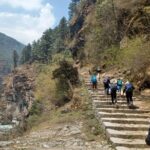
On day 3 you move up toward Namche Bazaar (about 3440m/11287ft) with roughly 5–6 hours of hiking. This is where the route starts to feel “Everest,” with suspension bridges and villages wrapped around prayer flags, prayer wheels, and small monasteries and chortens along the way.
Namche is a highlight because it’s not just a town—it’s a trading hub with real culture and choices. You’ll find shops, and you’ll eat at teahouses that cater to a mix of trekkers and locals. The altitude is serious enough that you’ll start to feel it, but it’s not the top of the climb. Think of Namche as your body’s checkpoint.
Then comes the smart part: day 4 is a rest day in Namche Bazaar. This is where acclimatization turns from theory into results.
Rest Day in Namche: Why You Don’t Want to Skip It
A rest day isn’t wasted time here. It’s your best chance to reduce altitude stress before you go higher. With Namche at roughly 3440m, you’ll likely feel like you can hike more. That feeling is exactly why rest days matter: your brain says go, but your body is still adjusting.
Use the day to:
- walk gently (not race)
- drink water consistently
- keep warm in the teahouse (thin-air cold gets serious fast)
This is also where the route’s “culture layer” becomes useful. You’re surrounded by Sherpa life, monasteries, and the visual language of the region—prayer flags everywhere and lots of small places with meaning. Even if you’re focused on the summit goal, this day helps the trek feel more human instead of just grind.
Tengboche and Dingboche: Monasteries, Views, and a Higher Ceiling
After Namche, day 5 hikes to Tengboche (around 3850m/12632ft) in about 4–5 hours. Tengboche is known for its religious sites, and it’s one of those stops where you feel the shift from trekking-through-nature to trekking-through-community. You’ll also start seeing the peaks more clearly on good weather days, which helps motivate you on the colder parts of the route.
Day 6 then takes you to Dingboche (about 4350m/14272ft) around 4–5 hours. Day 7 is another rest day in Dingboche, and this is your second altitude safety valve. Dingboche is higher, and the air is thinner—rest here is not a luxury. It’s part of how you get to enjoy Kala Patthar instead of just surviving it.
When you rest at these altitudes, you’ll learn a key trekking truth: your body may be calm at breakfast and then feel heavy in the afternoon. Plan for that. Don’t treat discomfort like a failure. Treat it like a signal.
Lobuche to Gorakshep: Getting Closer to the Ice and the Big Day
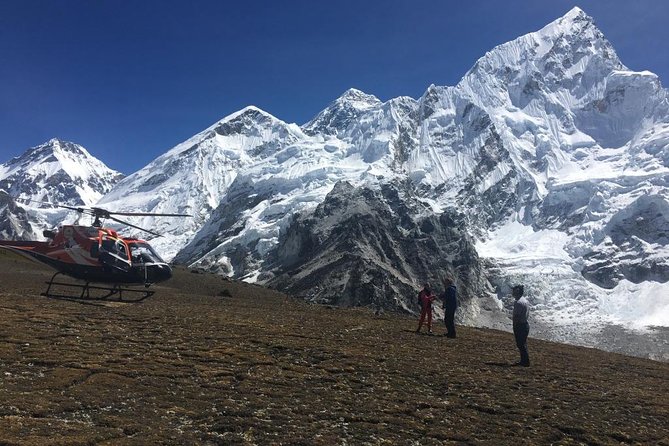
Day 8 hikes to Lobuche (around 4910m/16109ft) for about 4–5 hours. At this level, the environment starts to feel more severe. The route gets steeper mentally even when the walking isn’t the hardest part—because you’re moving into thinner air and you know the big moments are next.
Then day 9 is the push into the Base Camp zone: you head to Gorakshep (around 5180m/16995ft) and then continue to Everest Base Camp (about 5364m/17600ft) in a combined day. The walking time is listed as about 3–4 hours to Gorakshep plus 2–3 hours onward to Base Camp.
This is where you slow down and stay present. You’re not going there for speed or scenery selfies (though you will want photos). You’re going there to stand where your expedition dreams have been for decades—and to experience the sheer concentration of effort it takes to reach that altitude.
Also: the area is tied to the Khumbu Glacier and the wider Everest glacial system. In good weather, you’ll understand why the region holds so much legend for climbers and trekkers.
Kala Patthar at 5545m: The View That Makes the Cold Worth It
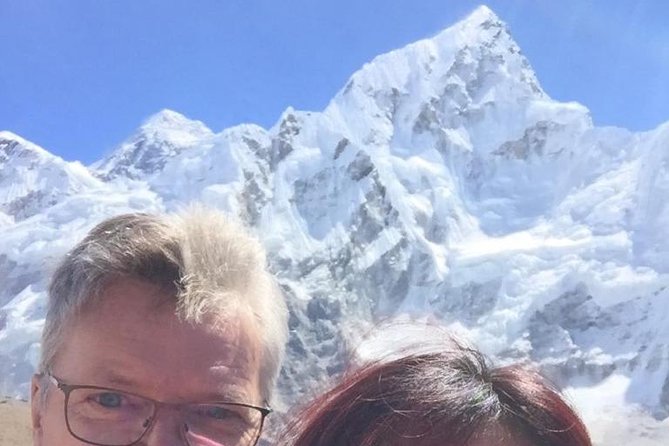
Day 10 is the big altitude moment: you trek from Gorakshep/Kala Patthar up to Kala Patthar at 5545m/18193ft, then descend toward Pheriche (about 4280m/14042ft) for roughly 5–6 hours.
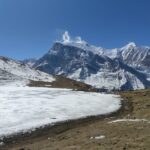
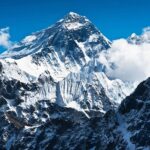
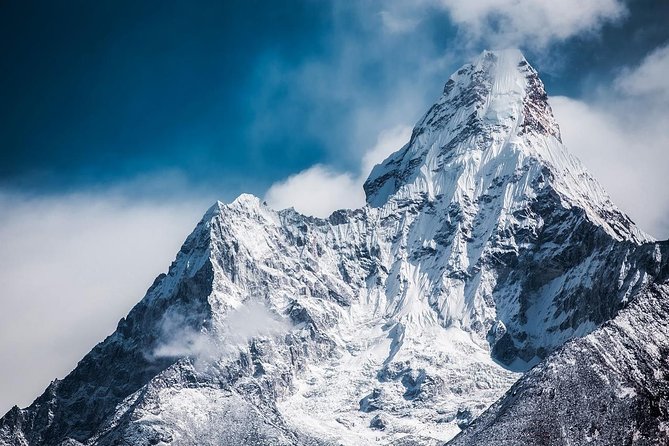
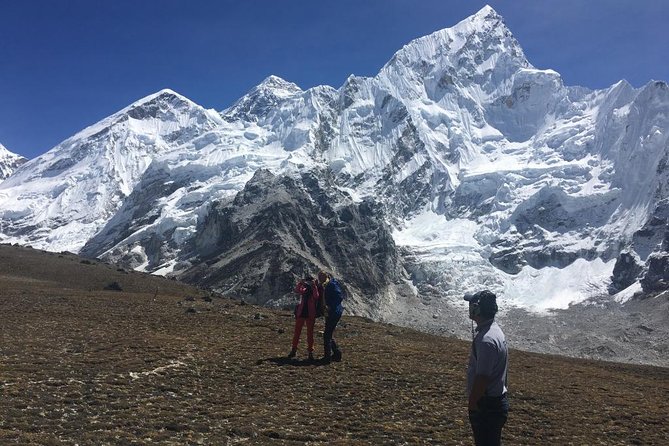
Kala Patthar is famous for a reason: you can get sweeping views of Everest, Nuptse, Pumori, Lhotse, and Changtse, plus the Khumbu Glacier, the Khumbu Icefall, glacial rivers, and avalanche paths (when conditions are clear). Even if you’re not an altitude wizard, the view tends to feel like a reward that’s bigger than your effort.
Practical reality check: it’s cold at this altitude, and the timing matters because you’ll be outside for hours. The packing list specifically calls out a down jacket as a must for staying comfortable in teahouses under 0°C. That’s not optional-sounding advice. Bring it, and layer intelligently.
The Return Part: Either Trek Back or Use the Heli Option
After Kala Patthar, the schedule continues with trekking down: day 11 to Namche Bazaar, then day 12 to Lukla, followed by a flight back to Kathmandu on day 13.
But because helicopter return is part of the tour concept, you should also understand the extra helicopter pricing:
- Gorakshep to Kathmandu helicopter: listed as $999 per person in sharing during Oct, Nov, Mar, Apr, May
- Private helicopter: listed as $3600 per heli (GORAKSHEP to KTM)
So here’s my honest advice: confirm what your chosen helicopter option changes on your specific dates. The walking return is clearly part of the described flow, but you also have the priced heli leg. The smartest move is to ask your operator to spell out which days you’ll walk and which you’ll swap if weather allows.
Either way, your return days are still work. Altitude can still make descents feel harder than you expect, especially after a high summit day.
Helicopter Flights: When They Save You, and When Weather Still Wins
Helicopters don’t remove the mountain’s logic. They just change how you pay for it—less leg work, but still cold air, and still weather gates.
One helpful detail from the trip notes: there’s also helicopter pricing for Kathmandu to Lukla (listed as $400 per person in sharing in certain months). That’s likely meant as a backup when flight operations don’t line up with conditions.
In plain terms: if Lukla flights are affected, you’re not starting from zero. You may have a helicopter fallback depending on the plan you choose and what’s possible on the day.
Tea House Life and What You’re Actually Paying For
This trek runs on a teahouse system. Tea house accommodation is included, and breakfast (9) is included. Lunch and dinner are not included and you’ll pay locally.
Why that matters for value: you have control. You can pick what fits your appetite that day—more soup and carbs when your body feels heavy, simpler options when you’re low on energy. And you’re not locked into one set menu, which is useful when high-altitude food cravings are… unpredictable.
I also like that the included meals are clearly defined (breakfasts), so you can budget lunch and dinner without guessing. This kind of clarity helps your money last until the end.
The Real Value: What $9,999 Covers (and What You’ll Add)
The price shown is $9,999 per person, and that likely covers the core planning, permits, guiding, and teahouse structure. What’s explicitly not included are the items that often surprise people on Everest treks: helicopter legs, private transportation, and some mountain meals.
Here’s what you should budget for based on the provided info:
- Lunch and dinner: pay locally
- Porter support: $30 per day per porter, paid directly at Lukla
- Helicopter options (if you choose them), including:
- KTM to Lukla sharing flight by heli: $400 per person in Oct/Nov/Mar/Apr/May
- Gorakshep to Kathmandu sharing: $999 per person in Oct/Nov/Mar/Apr/May
- Private helicopter: $3600 per heli (Gorakshep to KTM) and $2000 private (Kathmandu to Lukla)
This is where you get smart. If your main goal is to reduce late-stage trekking fatigue, the heli return leg is what you’d likely care most about. If your budget is tight, you can still plan around the walking return portion—but you should accept that your legs will do more work.
Guides, Porters, and How This Trip Stays Calm
This is one of the strongest parts of the experience. The names Buddhi and Dipak come up repeatedly in the trip feedback, and they’re exactly the kind of people you want in the mountains: responsive, organized, and able to solve problems quickly.
One story that stands out in the trip data: a Lukla flight was disrupted due to weather, and Buddhi’s team found helicopter options so the group could keep moving. That’s not trivia. That’s peace of mind.
Porters also matter. Your effort goes up with every kilo you carry at altitude. Porters like Carmen and Desantis are named in the notes, and the overall impression is that they helped keep the trek manageable.
Packing Checklist That Matches the Cold Reality
The provided gear list is practical and altitude-aware. The main idea: bring warm layers that you can use at teahouse comfort level, not just during walking.
Key items you should take seriously:
- A down jacket (called out as a must for teahouses under 0°C)
- Warm fleece jacket or puffy jacket
- Waterproof Gore-Tex layer and a raincoat
- Sun hat/cap, warm woolen cap, hand gloves
- Sun glasses
- A 4-season sleeping bag is optional; the operator can provide one if needed, and it must be returned
- A day pack and a main bag (you get one complimentary trekking planner duffel bag that you return after the trip)
Also, bring socks. The list calls for 4/5 pairs of good quality socks. On Everest, wet feet are not a problem you want to practice.
Who Should Book This Everest Base Camp Trek with Heli Return
This works best for you if:
- you’re in decent hiking shape and can handle multiple days of uphill walking
- you want teahouse trekking with guidance and permits already handled
- you value acclimatization rest days (Namche and Dingboche are not skipped)
- you like the idea of using helicopter support if you’re tired of the long back half
It may not be ideal if:
- you’re uncomfortable with cold teahouse nights
- you need a guaranteed flight schedule regardless of weather (because it’s weather-dependent)
- you can’t budget extra costs for helicopter legs if you want that option
Should You Book This Tour?
I think you should book if you want the full Everest Base Camp feeling—prayer flags, monasteries, suspension bridges, and big-altitude days—with a realistic safety valve in the form of helicopter return pricing. The biggest reason to choose this trip is the mix of guidance quality and careful coordination, backed by people like Buddhi and guides such as Dipak who can handle disruptions.
Just go in with clear expectations: the helicopter is an option with separate fees, and weather can still change timing. If that trade-off fits your style, this is a strong way to plan Everest.
FAQ
What’s included in the trek package?
The package includes tea house accommodation in the mountain, a trekking guide, entry permits and trekking permits, and breakfast (9 breakfasts).
Are lunch and dinner included?
No. Lunch and dinner are not included and you pay locally.
How much does the helicopter cost, and where does it fly?
Helicopter legs listed as extra include:
- Kathmandu to Lukla sharing flight by heli: $400 per person (for Oct, Nov, Mar, Apr, May)
- Gorakshep to Kathmandu sharing: $999 per person (for Oct, Nov, Mar, Apr, May)
- Private helicopter options are also listed: $3600 per heli for Gorakshep to KTM, and $2000 for Kathmandu to Lukla.
Is a porter included?
Porter support is not included in the base cost. The notes specify $30 per day paid directly to your porter at Lukla.
What time does the trip start each day?
The listed start time at the meeting point is 5:45 am.
Is a sleeping bag provided?
A 4-season sleeping bag is optional. The operator can provide one if you need it, and it must be returned after the trip.
FAQ (Weather and Cancellation)
Is free cancellation available?
Yes. You can cancel up to 24 hours in advance for a full refund.
What happens if weather cancels the experience?
The notes say the experience requires good weather. If it’s canceled due to poor weather, you’ll be offered a different date or a full refund.