REVIEW · POKHARA
Annapurna Base Camp Trek -8 days
Book on Viator →Operated by Trekking Planner Nepal · Bookable on Viator
One week to stand under the Annapurnas. This short trek packs farm villages, rhododendron and pine forest, and the Annapurna Sanctuary into an 8-day run that tops out above 4,130m. You start in Pokhara, head toward Nayapul, and end back by Lake Phewa, with big mountain scenery almost the whole time.
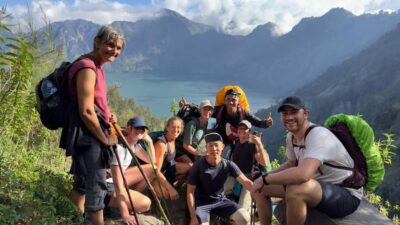
I love the English-speaking guides who stay hands-on and practical. Guides named in past trips, like Binod, Anish Phuyal, Dibash, Kiran, and Achyut Mishra, were praised for caring attention, quick communication, and pacing that respects slower hikers. You’ll also get an unusually clear “view progression,” from Ghandruk’s valley panorama to Machhapuchhare Base Camp and then straight into Annapurna Base Camp.
The main drawback is time pressure. Most days run long (often around 10–12 hours), and the climate at Annapurna Base Camp and the sanctuary can feel very cold compared with the warmer lower villages—so you’ll need a solid, steady pace and cold-weather gear.
In This Review
- Key highlights worth booking
- Pokhara Morning to Nayapul: getting on-trail momentum
- Ghandruk’s Gurung village views: your first Annapurna hit
- Chhomrong and Kimrong Danda: ridge walking with a rhythm
- Bamboo and Dovan: rhododendron-pine calm after the climb
- Machhapuchhare Base Camp: Fish Tail’s intimidating neighborhood
- Annapurna Base Camp at 4,130m: the Sanctuary’s payoff
- Descend to Bamboo: smart recovery built into the route
- Jhinu Danda hot springs: the reward near the Modi River
- Pokhara Lake Phewa finish: easing back to normal
- Price and what $899 actually buys you
- Why the guides and porters matter on ABC
- Daily timing, altitude reality, and what to pack
- Who should choose this 8-day Annapurna Base Camp plan
- Should you book this Annapurna Base Camp trek?
- FAQ
- How long is the Annapurna Base Camp trek?
- Where does the trek start and end?
- What time does the trek start?
- Is pickup or transportation included?
- What’s included in the price?
- Are Kathmandu and Pokhara accommodations included?
- What’s the highest altitude on this trek?
- Can I cancel for a full refund?
Key highlights worth booking
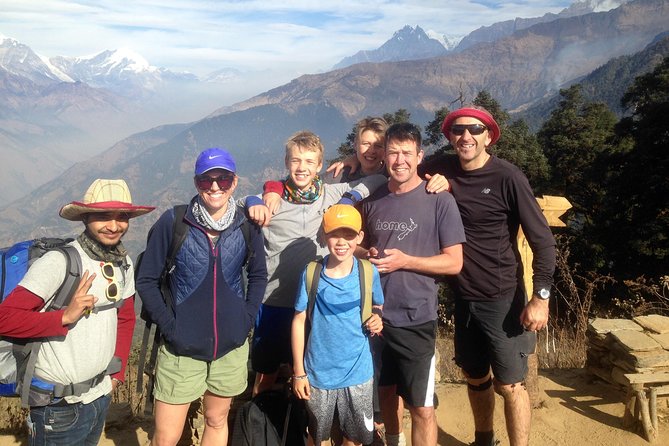
- 4,130m Annapurna Base Camp with a lodge and rooms facing mountain views
- Machhapuchhare Base Camp at the foot of Fish Tail’s north face
- Permits included with TIMS and national park entrance fees handled in the package
- Guide support that matches your pace, with multiple guides praised for patient care
- Jhinu Danda hot springs option close to the Modi River on day 7
- Private-group feel plus private vehicle transfers between Pokhara and Nayapul
Pokhara Morning to Nayapul: getting on-trail momentum
Your trek starts in Pokhara with an 8:15am start time. You’ll use private vehicle transport for the Pokhara to Nayapul to Pokhara legs, which matters because it cuts out the “how do we get there?” hassle before the walking begins.
Pokhara is also a practical launch pad. The meeting point is near public transportation, so if you need to move around before the start, it’s not a headache. And because you’re driving out right away, you get an earlier rhythm on Day 1—useful when you’re trying to fit Annapurna Base Camp into a short, roughly 8-day window.
One thing to keep in mind: the package does not include meals and accommodation in Kathmandu (not mentioned as part of this trek) or in Pokhara outside the trekking days. If you’re building in extra buffer time for rest and altitude prep, you’ll want to budget for that hotel plan separately.
You can also read our reviews of more tours and experiences in Pokhara.
Ghandruk’s Gurung village views: your first Annapurna hit
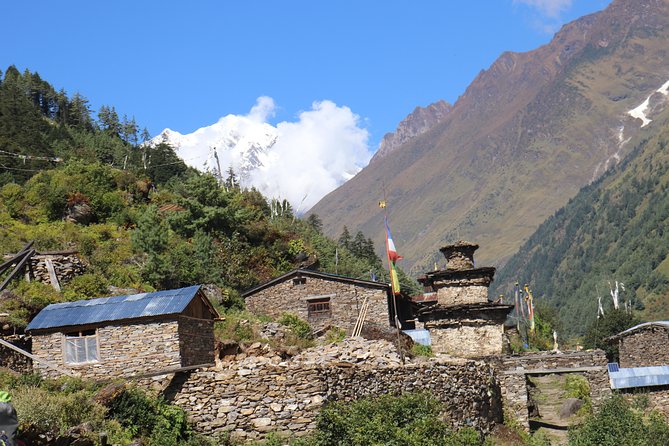
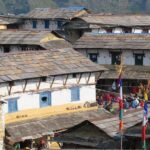
Day 1 is all about transitioning from Pokhara into real trekking country. After breakfast in Pokhara, you drive beyond the city to begin the walk, passing farm villages and towns and then reaching Bhirethati. From there, the route follows the Modi River briefly through warmer, low areas before you start stone-step climbing toward Ghandruk, one of the most recognizable Gurung villages in the region.
The reason I like this day is simple: Ghandruk gives you both culture and a view payoff. You’ll sleep in a lodge with Annapurna-range views and get time to explore the village atmosphere. Ghandruk is also a jumping-off point for a lot of Annapurna-area hiking, so it’s the kind of place where you start picking up local trekking “language” fast.
Practical consideration: stone steps plus a first-day climb can feel like a lot if you’re coming from warm cities. Take the first hour easy. You’re setting up your whole week.
Chhomrong and Kimrong Danda: ridge walking with a rhythm
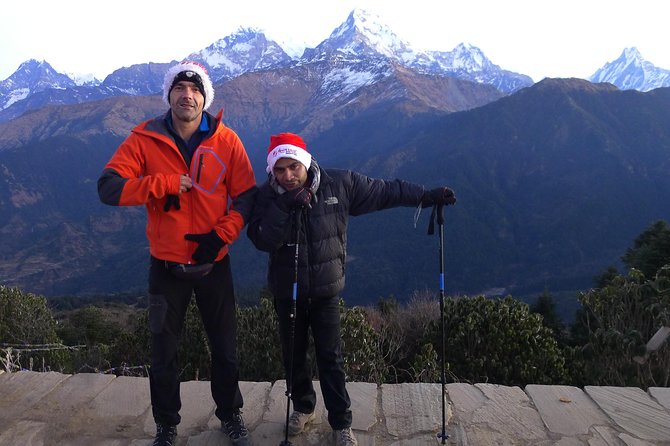
Day 2 continues in a classic Annapurna pattern: climb, pause, and then descend into valleys before the next push. You walk from the top of Ghandruk and then take a gradual path toward Kimrong Danda (a ridge area) where tea-houses and lodges show up—useful if you want short breaks without losing your footing.
From Kimrong Danda, you go downhill into the Kimrong River valley, then begin a climb that lands you above Chhomrong village. The path is described as winding and paved with fine stonework, which is good news for stability, even if the effort level stays steady.
Why you’ll probably like this day: Chhomrong is a big Gurung village vibe like Ghandruk, just with a different feel. It’s a strong “base village” experience before you go deeper into the forested gorge country later in the trek.
Main thing to watch: the day runs long (listed around 12 hours). Even if you feel okay early, don’t “save energy” by speeding up. This is a week-long pace game.
Bamboo and Dovan: rhododendron-pine calm after the climb
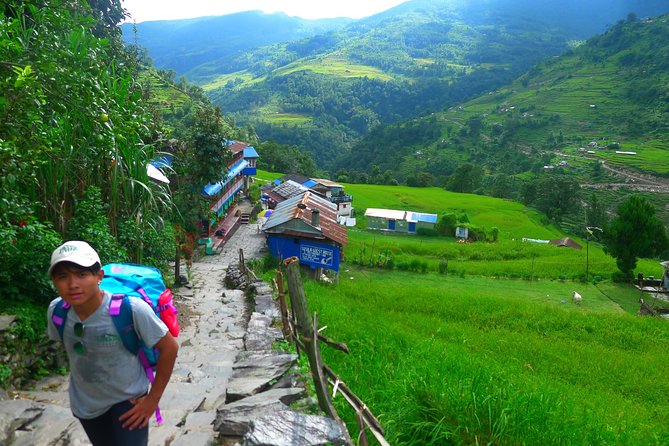
On Day 3, you cross a bridge over the Chhomrong River and start climbing toward Sinuwa Danda (a ridge) where you’ll find tea-house and shop stops. After that, the trek shifts into deep forest trails—winding up through rhododendron and pine, then descending into areas marked by bamboo grooves.
The route description calls out a small settlement known as Bamboo. It’s not a fancy place; it’s practical and it exists because trekkers pass through there. Then the day continues with gradual walking and easy ups to reach Dovan for overnight. Dovan is described as small and remote, with only a few lodges—exactly the kind of night where you can hear the forest and sleep well.
Why this day is valuable: it’s a mental decompression. After two village-heavy days, the forest gorge feel helps you reset. Your legs get a change of scenery, and your body gets a bit of variety compared with ridge climbing.
Practical drawback: because the lodges are limited, you’ll want to be okay with simpler amenities. If you’re expecting a hotel-style vibe, you’ll likely feel disappointed.
Machhapuchhare Base Camp: Fish Tail’s intimidating neighborhood
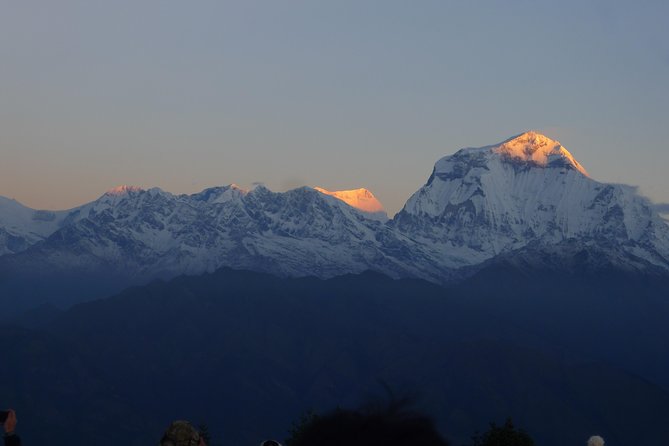
Day 4 is where the trek gets serious in the best way. You move closer to your highlight as the trail winds uphill through forest past a spot called Himalaya Hotel, with the overhanging cave Hinko located beneath Annapurna South and Huin-Chuli.
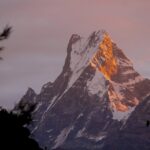
Then the route goes downhill near the Modi River before you climb up toward Deurali, described as a zone where tall tree lines stop and alpine bushes begin. From there, you keep following the Modi River uphill to Machhapuchhare Base Camp, placed at the bottom of the north face of Machhapuchhare, often called Fish Tail.
If you care about views, this is one of the days you should not rush. Machhapuchhare looks different depending on light and weather, and you’ll likely want time to stand still and notice the shape changes.
Main consideration: you’re moving toward higher, colder air. Even without a “white-knuckle” feel described here, you’ll want layers that handle real temperature swings between morning and afternoon.
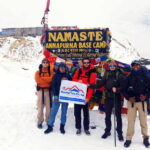
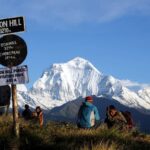
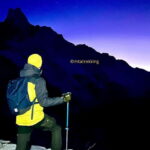
Annapurna Base Camp at 4,130m: the Sanctuary’s payoff
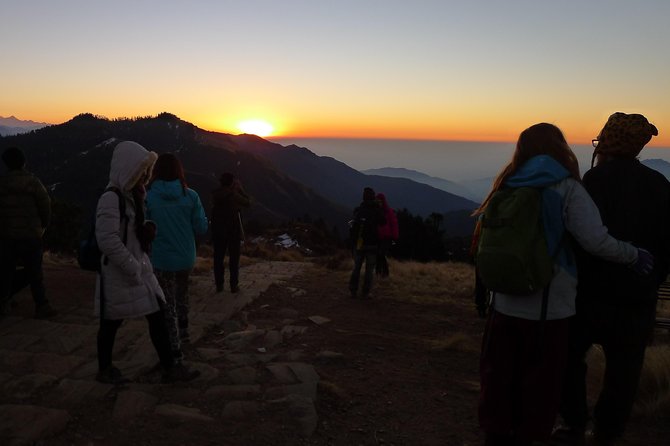
Day 5 is your summit day—not of a peak, but of the trek’s goal. You’ll have an easy and short morning walk to Annapurna Base Camp, starting from Machhapuchhare where the Annapurna Sanctuary begins.
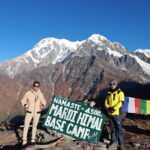
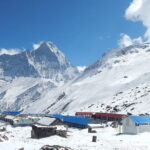
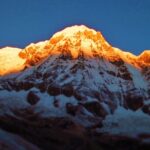
The path leads you into the Sanctuary where you’ll walk onto level ground in a huge field or plateau surrounded by high peaks. There’s a sign-post for Annapurna Base Camp, and from there you’re in the area above 4,130m, beneath Mt. Annapurna with nearby peaks such as Vara-Shikar, Gangapurna, and Annapurna South.
One detail that matters for comfort: Annapurna Base Camp is described as the only base camp in the Himalaya region with a cozy lodge and rooms facing mountain views. That means you’re not just stopping for a photo. You can actually settle and enjoy the area for a while, which helps if you’re managing altitude and fatigue.
The reality check: the day is listed around 12 hours. Even if the final approach is described as short, the whole “goal day” still demands patience and steady walking. Treat it like a long day, not a quick sprint.
Descend to Bamboo: smart recovery built into the route
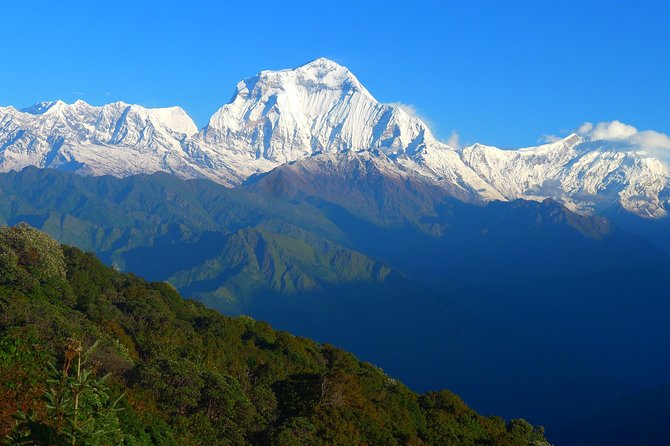
Day 6 is a recovery day by design. You’ll leave the base camp/sanctuary area and take a long walk of nearly six hours downhill with short ups, returning toward Bamboo.
The big win here is how the route changes climate. You’re described as going from the harsher, colder feel of the high area back into taller tree lines and lush vegetation. That shift is a gift for your body: lower altitude generally means easier breathing, warmer temps, and more comfortable walking conditions.
I also like the route logic. If Day 5 is goal-focused, Day 6 is body-focused. It helps you avoid the classic mistake of treating a “big day” as if the week ends the moment you arrive.
Jhinu Danda hot springs: the reward near the Modi River
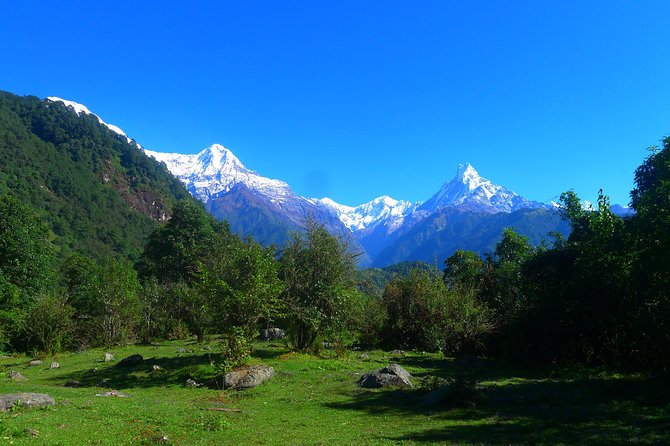
Day 7 turns the corner from mountains to comfort. You return back toward Chomrong with ups and downhill trails, then your route diverts onto a fresh path to Jhinu Danda, a ridge village with grand views of rolling hills and mountains.
Jhinu’s standout feature is the natural hot springs. It’s described as only about a half-hour downhill from Jhinu Danda, near the Modi River, with two warm pools. After several long walking days at altitude, soaking like this is a practical form of recovery, not just a fun extra.
One thing to plan: your day still includes trekking back from Chhomrong, so don’t assume you’ll have energy for everything. But if you want a tangible, non-touristy reward, this part is hard to beat.
Pokhara Lake Phewa finish: easing back to normal
Day 8 keeps things gentle compared with the higher days. Morning walking takes you downhill through low and warmer areas, including farm and paddy fields. Then there’s a scenic drive back to Pokhara for your overnight stay by Lake Phewa.
I like endings like this. You’re not dropped directly into a city sprint after a high-altitude effort. Instead, the day gives you a natural wind-down: fields and familiar terrain, then lake views.
Worth knowing: the trek ends back at the meeting point in Pokhara. If you have flights or additional plans the same day, build buffer time. Walking days run long, even when the route says downhill.
Price and what $899 actually buys you
At $899 per person, the value of this short Annapurna Base Camp trek comes down to what’s handled for you.
Included items you can treat as “real savings”:
- TIMS card and national park entrance fees handled as part of the package
- A highly experienced English-speaking guide (this is consistently praised)
- A first aid kit
- Trekking Planner’s branded items like a t-shirt, cap, duffle bags, plus city and trekking route maps
- Emergency evacuation service arrangement
- Private vehicle transfers: Pokhara to Nayapul and back
- Meals during the trek: breakfast (8), lunch (8), dinner (7)
Not included (you should budget for these):
- Meals and accommodation in Kathmandu and in Pokhara outside the trekking days
- Travel and health insurance, including helicopter evacuation insurance
- Tips for trekking crews and drive
- Personal expenses like laundry, phone calls, battery recharge, beverages, and boiled water
My practical take: if you’re new to trekking or you just want fewer things to organize, this is the kind of package that saves mental energy. But it’s still your job to cover insurance and plan for personal costs on the trail.
Also, note that it’s listed as a private tour/activity. That can be great for comfort and pace matching, but it’s also one reason the price stays steady rather than “budget-low.”
Why the guides and porters matter on ABC
This trek lives or dies on pacing. You’ll be walking in long days, changing climates, and at altitudes that can wear you down faster than expected. That’s why so many past travelers highlighted the same thing: the team’s care.
Guides named in past trips include Anish Phuyal, Binod, Dibash, Kiran, and Achyut Mishra. The praise patterns are consistent:
- Guides made sure you knew what to expect each day
- Communication was quick and responsive before the trek
- Slower hikers were given space and not pushed
- Support on rough roads and during transitions was attentive
- Porters (names mentioned include Sujan, Rabin, Prakash, Kisan, and others) helped keep the load manageable and the experience smoother
One funny-but-real detail from the trip stories: some guides kept spirits up at night with games and playful challenges. That’s not just entertainment. It helps morale when weather or fatigue makes the day feel longer.
Daily timing, altitude reality, and what to pack
The trek is described for moderate physical fitness. That’s a helpful label, but it doesn’t mean “easy.” Several days are listed around 10–12 hours, and you’re climbing through different ecological zones—from warmer low areas up into alpine zones, then down again.
Altitude-wise, your highest point is described as above 4,130m at Annapurna Base Camp. The route also mentions that you’ll be in an “arctic zone climate” around the sanctuary and base camp area. Translation: even if the sun feels good at midday, mornings and shade can turn cold fast.
Packing advice that fits this trek (and the data you have):
- Bring layered clothing you can adjust on long climbs and colder nights
- Expect cold temperatures at/near base camp
- Plan for extra effort on long days rather than trying to “beat the clock”
- Budget for purchases on the trail like beverages and boiled water, since those are personal expenses
If you’re sensitive to cold, don’t treat this as a “light jacket trek.” You’ll want real warmth for the highest nights.
Who should choose this 8-day Annapurna Base Camp plan
This short Annapurna Base Camp trek is a good match if:
- You have limited time in Nepal and want the Annapurna Sanctuary experience without a longer route
- You want a classic progression: villages → forests → ridge walking → base camp
- You prefer a structured plan with permits and logistics handled
- You value a guide who respects your pace and keeps things calm
It’s also a strong fit for first-time trekkers who still want the big goal. The route descriptions call it moderate difficulty, and the structure gives you enough stops to make the week feel achievable.
If you’re the type who wants lots of slack time—extra acclimatization days, slow mornings, long afternoons at viewpoints—this specific short format may feel packed.
Should you book this Annapurna Base Camp trek?
I’d book it if your priority is a focused 8-day Annapurna Base Camp experience with the hard parts managed: TIMS and park fees, an English-speaking guide, private vehicle transfers, and trekking meals. The emphasis on pace care from guides like Binod and Anish Phuyal is a big reason this plan works for real humans, not just athletic hikers.
I’d think twice if you hate long walking days or you’re not comfortable with a serious cold factor at 4,130m. Also, make sure you’re okay handling the extra costs not included—especially travel/health insurance and tips.
If you’re ready for a demanding but rewarding week, this is a well-put-together way to reach the Sanctuary.
FAQ
How long is the Annapurna Base Camp trek?
The duration is listed as 8 days (approx.).
Where does the trek start and end?
It starts in Pokhara, Nepal, and ends back at the same meeting point in Pokhara.
What time does the trek start?
The start time is 8:15am.
Is pickup or transportation included?
Pickup is offered, and the package includes private vehicle transport from Pokhara to Nayapul to Pokhara.
What’s included in the price?
Included items are national park entrance fee and TIMS card, an experienced English-speaking guide, first aid kit, emergency evacuation service arrangement, trekking planner items (t-shirt, cap, duffle bags, maps), and meals during the trekking days.
Are Kathmandu and Pokhara accommodations included?
No. Meals and accommodation in Kathmandu and in Pokhara are not included.
What’s the highest altitude on this trek?
The highest spot is described as above 4,130m at Annapurna Base Camp.
Can I cancel for a full refund?
Yes. Free cancellation is available up to 24 hours in advance for a full refund.