REVIEW · CHIVAY
2 day 1 night trek / Colca Canyon
Book on GetYourGuide →Operated by Exploor Trip E.R.L · Bookable on GetYourGuide
Those condors make the early start worth it. This 2-day, 1-night hike in Peru’s Colca Canyon pairs a real chance to watch condor flight from Cruz del Cóndor with a long walk on the canyon floor from the Pampas of San Miguel down toward Sangalle, and I like how the route balances views with actual time on your feet. One heads-up: the whole thing is built around a 3:30 a.m. departure and big altitude changes, so if you hate early mornings or long climbs, you’ll feel it.
I also like that you’re in a small group (up to 15) with an English-Spanish guide, and you’re not left to figure out meals and transport: breakfast, lunch, and dinner are built in, plus a night in Sangalle with time to relax. The only drawback I’d watch carefully is comfort and expectations around guides—one participant reported inappropriate behavior involving a guide named Paul—so if you feel uneasy at any point, speak up fast.
In This Review
- Key things I’d plan for
- The 3:30 a.m. start that shapes the whole Colca Canyon day
- Cruz del Cóndor: your morning chance to see the big wings
- The canyon floor hike: Pampas of San Miguel down to Sangalle
- The Sangalle night: dinner, a pool break, and altitude reset
- Day 2 sunrise climb: up to Cabanaconde with bigger views
- Chivay, Maca, and the Antahuilque viewpoint: finishing strong
- Hot springs and what costs extra (so you don’t get surprised)
- Price and value: where the $90 makes sense
- Small group, guide quality, and comfort: the one thing to watch closely
- Who this Colca Canyon trek fits best
- Should you book this 2-day Colca Canyon trek?
- FAQ
- FAQ
- What time do you get picked up in Arequipa?
- How long is the trek?
- What’s the highest altitude you reach?
- How much walking is included?
- What meals are included?
- Are the Yanque hot springs included?
- Do I need to buy a tourist ticket?
- How do you return after the trek?
Key things I’d plan for
- 3:30 a.m. pickup from Arequipa means you’ll need to be ready before sunrise
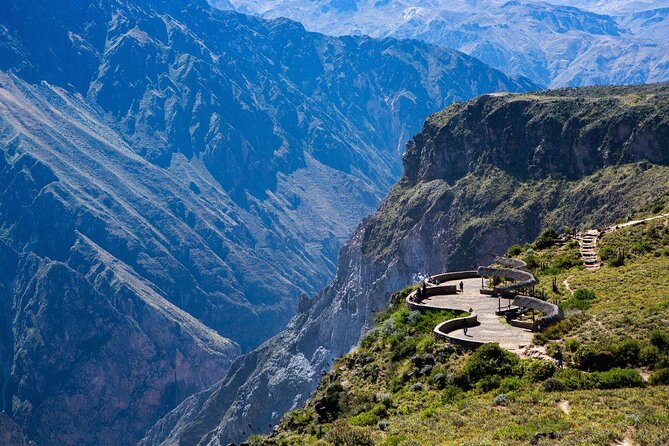
- Cruz del Cóndor (3,800 m) is your prime condor-viewing stop
- A 6 km descent (about 3 hours) plus another canyon-floor walk before reaching Sangalle
- Sangalle (2,225 m) offers a pool and a proper dinner at the end of Day 1
- Sunrise hike back up to Cabanaconde (3,230 m) on Day 2
- Hot springs at Yanque are optional and cost extra
The 3:30 a.m. start that shapes the whole Colca Canyon day
This trek starts long before most people are awake. Your pickup is between 3:00 and 3:30 a.m., with a 3:30 a.m. start. You’ll ride about 3 hours from Arequipa to the Colca Valley area, with a short breakfast stop in Chivay along the way.
That early timing matters. Colca Canyon is high, the views change fast with light, and the condor-watching point at Cruz del Cóndor (3,800 m) is part of the morning’s rhythm. If you show up thinking you’ll sleep in, you’ll be disappointed. If you’re okay trading comfort for better timing, it works.
Also note how the tour paces the hiking. Day 1 includes a long downhill stretch and a steady walk through small towns; Day 2 switches to a morning climb. You’re not doing one short scenic walk—you’re walking as the core activity. For me, that’s what makes it worth the money. You’re paying for time in the canyon, not just a few photo stops.
You can also read our reviews of more tours and experiences in Chivay.
Cruz del Cóndor: your morning chance to see the big wings
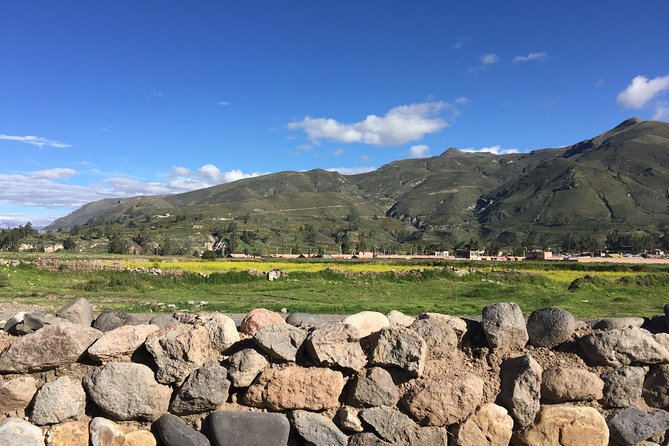
After the ride and breakfast in Chivay, you head to Cruz del Cóndor, at 3,800 meters. This is one of the iconic viewpoints for condors, and the tour’s description is clear about the goal: contemplate the natural wonder of the flight.
How I’d think about it: condor viewing is always weather- and timing-dependent. You’re not being sold a guarantee—what you are getting is the chance, from the right viewpoint, as part of a structured early-day plan.
Cruz del Cóndor also acts like a spiritual checkpoint in the itinerary. You’re arriving at altitude, looking out over the canyon, and the whole trip starts to make sense once you see the scale. When the light is right, the canyon doesn’t feel like a postcard. It feels like a place where wind does its own work.
The canyon floor hike: Pampas of San Miguel down to Sangalle
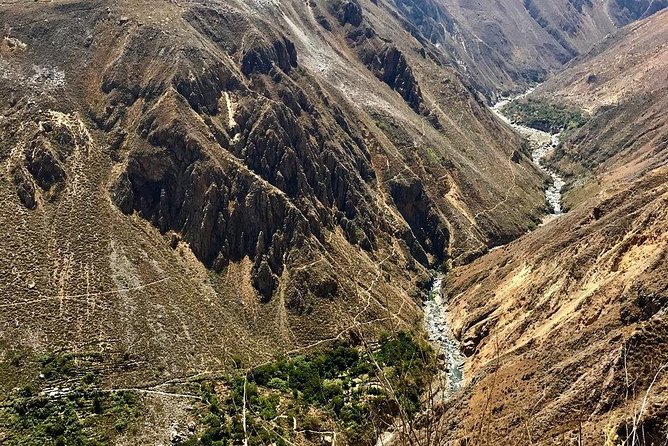
The trekking part begins at the Pampas of San Miguel (3,300 meters). From there you start the biggest “walk you came for” segment: a 6 km route down into the canyon, about 3 hours on the move.
Walking downhill like this changes your focus. You spend less time looking for the next viewpoint and more time watching your footing, checking the slope, and letting the canyon walls fill your field of view. It’s work, but it’s also where you get that Colca feeling—vast and quiet, with small human paths threaded through it.
Along the way you reach San Juan de Chuccho for rest and lunch. Then the route continues through Cosñirhua and Malata, adding another 3 km (about 2.5 hours). By the time you arrive at Sangalle (2,225 m), you’ve gained distance and lost altitude, which is exactly what the tour is designed to do: drain some of the harshness of the higher elevations so you can sleep and recharge.
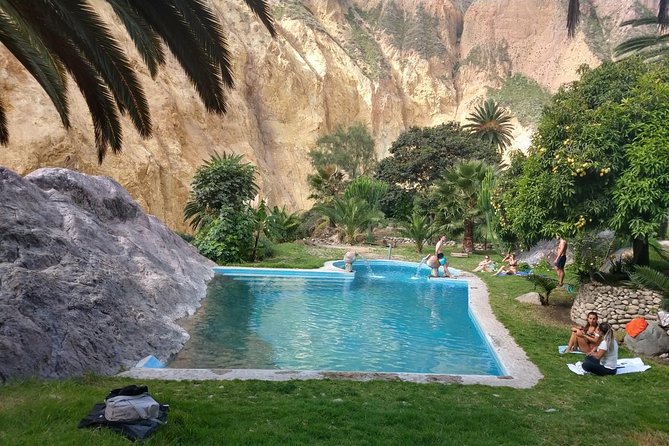
Sangalle itself is a major payoff. The tour calls it a spectacular oasis, and in practical terms that means you’re rewarded with a night lower down, plus built-in downtime. You get time to swim in the pool and a dinner in the evening.
The Sangalle night: dinner, a pool break, and altitude reset
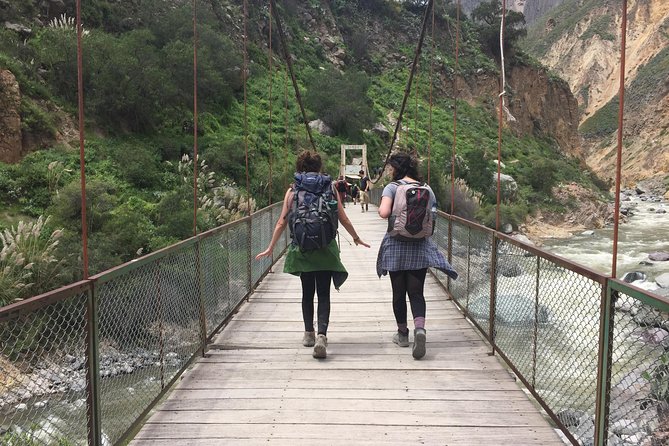
Day 1 ends at Sangalle (2,225 m), which is a meaningful drop from where you started. That altitude change isn’t just numbers on paper; it makes sleep and recovery more realistic after a long downhill day.
This is also where the tour gives you something you’d probably otherwise scramble to find: evening structure. You’re not just dumped at a lodging with vague instructions. You get dinner, and you have time to relax—especially important when you’ve already been up since before sunrise.
The pool swim matters more than you might think. It’s one of the few explicit recovery options in the itinerary, and you’ll feel the difference in your legs when you wake up for the next morning’s climb. I like that the tour doesn’t pretend the next day won’t hurt. It just gives you a way to soften the landing.
Day 2 sunrise climb: up to Cabanaconde with bigger views
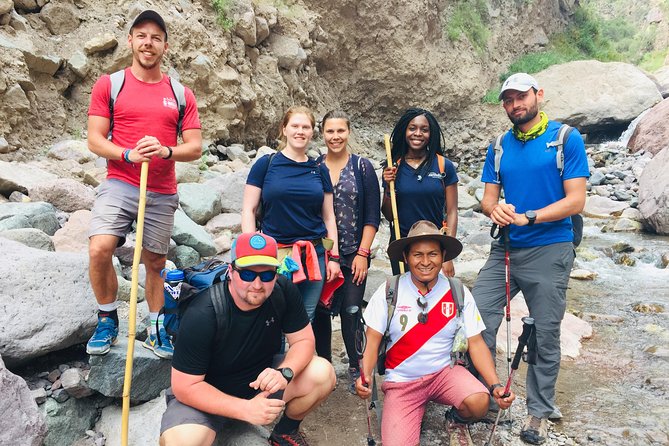
The next morning starts early again. You’ll get up to begin the 3 km walk ascending the side of the canyon, about 3 hours, with the goal of watching sunrise from the climb and reaching Cabanaconde (3,230 m).
This is the part you should mentally prepare for. Even if you feel fine on Day 1, uphill hiking at altitude is a different sport. Your pace slows. Your breathing changes. Your focus narrows. The good news is that the tour is timed so the effort buys you impressive early light and wide views.
When you arrive in Cabanaconde, the rest of Day 2 shifts toward viewpoints and soaking, which is a smart contrast: you earn the comfort by doing the hard work first.
Chivay, Maca, and the Antahuilque viewpoint: finishing strong
After Cabanaconde, you head back toward Chivay, and the tour includes a couple of viewpoint stops that help you see the canyon and surrounding terraces from angles you didn’t have earlier.
One stop is at Antahuilque viewpoint, where the focus is on views of Andean terraces and the Colca Valley. Another is Maca, with a panoramic visit to its colonial church. These aren’t random add-ons. They round out the story of the region: a lived-in canyon shaped by agriculture and history, not just a dramatic natural cut.
Then comes the most relaxing segment: Yanqué hot springs. The itinerary calls them powerful hot water pools with healing and relaxing properties, and they’re a nice reward after two days of walking. Just remember they’re optional and not included in the base price.
Hot springs and what costs extra (so you don’t get surprised)
From the tour data, these are the key “you’ll likely pay this” items:
- Tourist ticket: s/. 40.00 for Latin foreigners, s/. 70.00 for other countries
- Hot springs at Yanque: optional, s/. 15.00
- Waters and snacks: not included
- Last lunch: not included
- Photos, personal spending, and any extra items you choose at stops are, of course, on you
I like that the itinerary is clear on what’s included. You get breakfast (2), lunch, and dinner during the trek, plus transfers from Arequipa to the trek start and back from Cabanaconde. But because waters/snacks aren’t included, you should plan for that. If you arrive thinking the tour provides everything, the canyon will remind you it’s real hiking, not a bus tour.
Price and value: where the $90 makes sense
The price is listed as $90 per person for a 2-day / 1-night trek. On paper, that’s only two days. In practice, you’re getting a lot bundled in:
- One-way transportation from Arequipa to the start
- Return transportation from Cabanaconde to Arequipa
- A guide (English and Spanish)
- Meals: breakfast (2), lunch, dinner
- A small group setting (up to 15 people)
Where the value lands best is for people who don’t want to plan. The tour does the timing—pickup at 3:00–3:30 a.m., the drive, the key viewpoints like Cruz del Cóndor, the long canyon segments, and the transition back to town.
Where I’d be cautious is the “hidden” costs that aren’t included: the tourist ticket, hot springs, and food/snacks/water beyond what’s listed. Still, even with those add-ons, the structure is strong because you’re paying for logistics plus guided time.
One more practical note from a participant: they noticed different group members paid different prices for the same product. That’s not something I can fix, but it’s a good reminder to check exactly what’s covered in your confirmation so there aren’t any last-minute surprises.
Small group, guide quality, and comfort: the one thing to watch closely
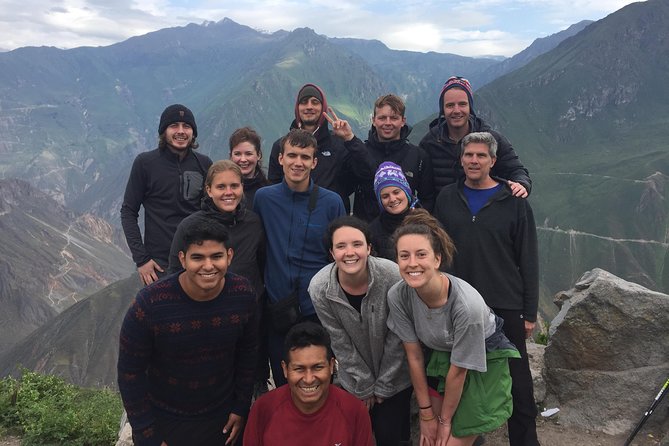
Most of the experience is about canyon time. Still, the guide is a big part of how the day feels, especially with early starts and altitude.
One participant described the guide as okay. Another reported a serious comfort and boundaries issue involving a guide named Paul, including entering a room to wake them and then physical contact that made them uncomfortable.
I’m not going to scare you off based on one account. But I do think it’s fair to say you should trust your instincts. If you feel pressured, embarrassed, or unsafe at any point—say something immediately to the group or operator. Good trekking tours respect personal space, period.
For your own peace of mind:
- Go in knowing this is a guided, close-up experience (up at dawn, shared transport).
- If your gut says something is off, address it early rather than hoping it will pass.
Who this Colca Canyon trek fits best
This tour is a solid match if you want:
- Real hiking time (not just short walks)
- A structured route with a clear rhythm from Arequipa to canyon downhills and back up
- The big stops: Cruz del Cóndor, Sangalle, and Yanque hot springs
It’s less ideal if you:
- Can’t handle early mornings and altitude changes (you’ll reach 3,800 m and hike accordingly)
- Prefer fully flexible pacing, because the itinerary is timed tightly around viewpoints and transfers
- Really need every meal and drink provided, since water/snacks aren’t included
And if you like meeting fellow walkers in a compact group, the “up to 15” size helps keep the hike from feeling chaotic.
Should you book this 2-day Colca Canyon trek?
If you want the classic Colca Canyon experience—condor viewing at Cruz del Cóndor, a long descent to the canyon floor, a night in Sangalle, then a sunrise climb back up—you should seriously consider booking. The price feels fair for what’s packaged: transport, meals, guide support, and a real guided hiking itinerary.
Before you go, budget for what’s not included (especially the tourist ticket and optional hot springs), and plan for the early start. One last piece of advice: treat guide behavior as a real part of trip quality. If you’re not comfortable, speak up early.
If you’re the type who likes walking into the world rather than just passing through it, this trek can be a memorable two days.
FAQ
FAQ
What time do you get picked up in Arequipa?
Pickup is between 3:00 and 3:30 in the morning from the square, so the trek starts around 3:30 a.m.
How long is the trek?
It’s a 2-day, 1-night hiking tour.
What’s the highest altitude you reach?
You visit Cruz del Cóndor at about 3,800 meters, and you also reach Cabanaconde at about 3,230 meters.
How much walking is included?
Day 1 includes a 6 km walk (about 3 hours) down the canyon and an additional 3 km walk (about 2.5 hours). Day 2 includes a 3 km uphill walk (about 3 hours).
What meals are included?
The tour includes breakfast (2), lunch, and dinner.
Are the Yanque hot springs included?
No, the hot springs are optional and cost an extra s/. 15.00.
Do I need to buy a tourist ticket?
Yes. The tourist ticket costs s/. 40.00 for Latin foreigners and s/. 70.00 for people from other countries.
How do you return after the trek?
You have options after Chivay: you can take a regular bus to Puno (leaves 1:00 p.m., arrives around 7:00 p.m.) or return to Arequipa, with the tour leaving you about two blocks from the Plaza de Armas.