REVIEW · CHIVAY
Arequipa: 2-day Colca Canyon Trekking, Ending in Puno
Book on GetYourGuide →Operated by AREQUIPA EXPLORER Y ACTIVIDADES TURISTICAS · Bookable on GetYourGuide
The Colca Canyon hits hard—in the best way. This 2-day trek links Arequipa with the canyon’s famous viewpoints and ends in Puno, so you don’t waste time backtracking. I like how the route mixes big wildlife moments (hello, condors) with real walking through villages and canyon life. You’ll also get a professional guide and a small group, which matters when the schedule starts early.
My favorite part is the combination of the Cruz del Cóndor stop and the actual canyon hiking. One day you’re descending toward the Colca River, and the next you’re climbing back up at dawn—so the views feel earned, not just purchased. The second big win is Sangalle Oasis, where you finish with time to enjoy the pools in a quiet adobe-bungalow setting.
One consideration: this is not a casual stroll. The itinerary includes a steep descent on Day 1 and a steep climb starting at 4:30 a.m. on Day 2, and one guide detail that could help is that you may need proper trekking gear (especially for a dark start).
In This Review
- Key things to know before you go
- A 2-day Colca Canyon trek that ends in Puno’s Titicaca gateway
- Pick-up in Arequipa and the early run to Cruz del Cóndor
- Day 1: descending from Pampas de San Miguel to the Colca River
- San Juan de Chuccho, Malata, and Cosñirhua: the walk stays human
- Sangalle Oasis by 5:00 p.m.: pools, palms, and an adobe-bungalow night
- Day 2: a 4:30 a.m. start and the climb back to Cabanaconde
- Volcano viewpoint stops, llamas, and Lagunillas on the way to Puno
- Thermal baths in Chacapi (or Yanque): optional, but time it right
- Price and value: what’s included vs what you’ll pay on top
- What to pack: the safety stuff that can make or break the trek
- Who should book this trek (and who should think twice)
- Should you book this 2-day Colca Canyon trek to Puno?
- FAQ
- What time is hotel pickup in Arequipa?
- Where do we see the condors?
- Is the entrance ticket to Colca Canyon included?
- Is the hot spring included?
- What meals are included?
- How does the tour end in Puno?
Key things to know before you go
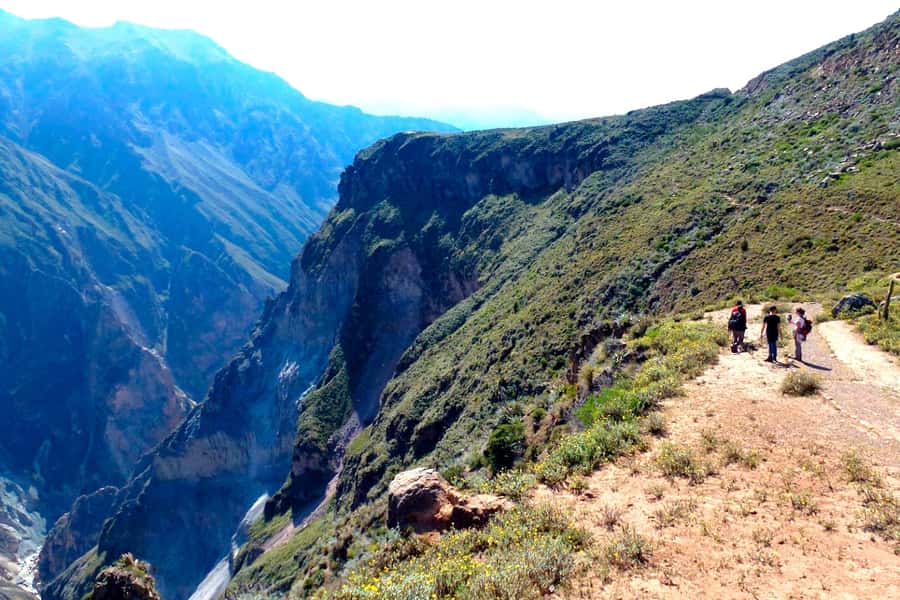
- Cruz del Cóndor condor viewing: you get a focused window at the canyon’s best-known viewpoint.
- Sangalle Oasis pools + adobe bungalow night: the trek ends in a calmer, scenic place with waterpools included.
- Steep back-and-forth hiking: Day 1 is a long downhill; Day 2 starts with a 3-hour uphill before breakfast.
- English/Spanish professional guiding in a small group: limited to 18 participants.
- You finish in Puno: transport is arranged after Chivay, with three sightseeing stops along the way.
A 2-day Colca Canyon trek that ends in Puno’s Titicaca gateway
This experience is designed like a corridor through southern Peru: start near Arequipa, walk the Colca Canyon with a good chance of condors, then travel onward to Puno for Titicaca. The value is in the pacing—two full days that blend hiking, sightseeing, and transport, instead of treating each one as a separate booking.
You’re not just doing a viewpoint tour. You’re also doing the physical part: descending into the canyon, crossing a suspension bridge, reaching the oasis area, then climbing back out. If you want a trek that feels purposeful without turning into a multi-day logistics headache, this format fits.
The group size is limited to 18, which usually means you can move as a group without feeling like you’re stuck behind a crowd.
You can also read our reviews of more tours and experiences in Chivay.
Pick-up in Arequipa and the early run to Cruz del Cóndor
The day starts with hotel pickup near Arequipa’s historic center around 3:00 to 3:30 a.m. After a drive of about three hours to Chivay, you stop for breakfast at roughly 6:30 a.m. Then you continue for about one hour to Cruz del Cóndor.
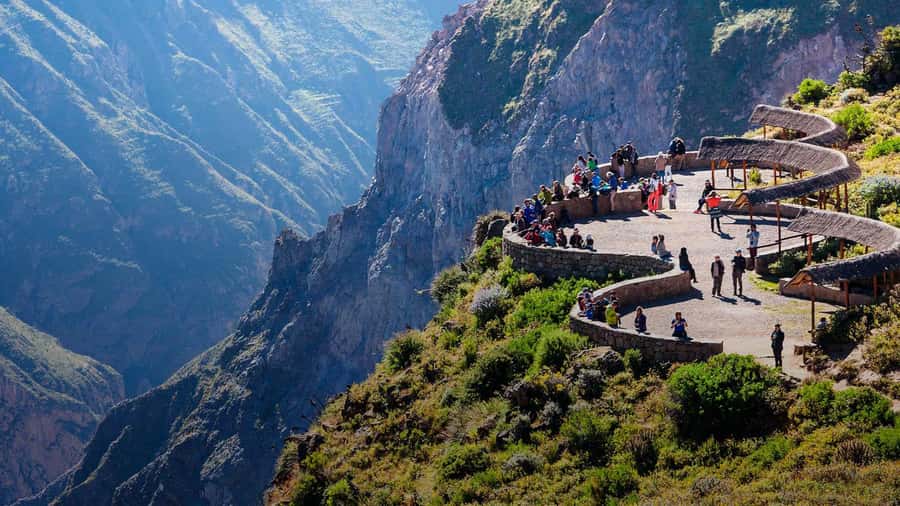
Cruz del Cóndor is the headliner. You get about 40 minutes here to appreciate the canyon depth—listed as over 3,400 meters—and to watch for the famous condor flights. Condors aren’t a guaranteed show every minute, but this is still the right place to be, and you’ll have enough time to stand, look, and adjust if wind and thermals shift.
Practical note: since the start is so early, plan to eat your breakfast and move on fast. Waiting around can make the canyon climb feel worse later.
Day 1: descending from Pampas de San Miguel to the Colca River
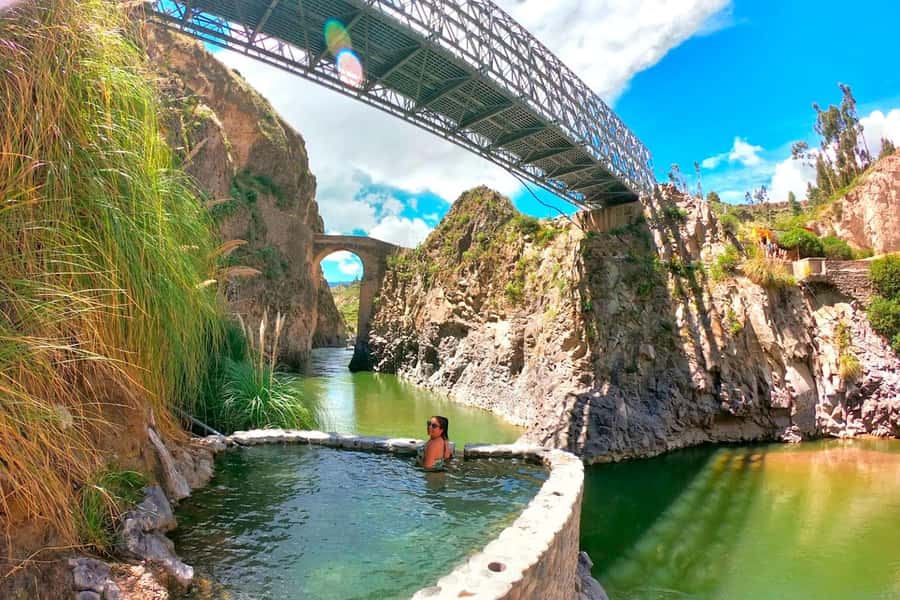
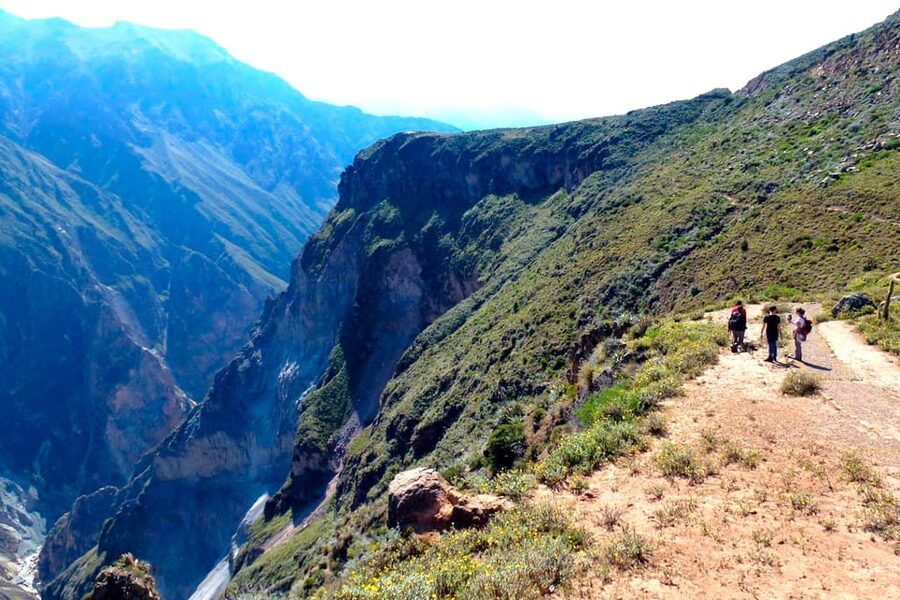
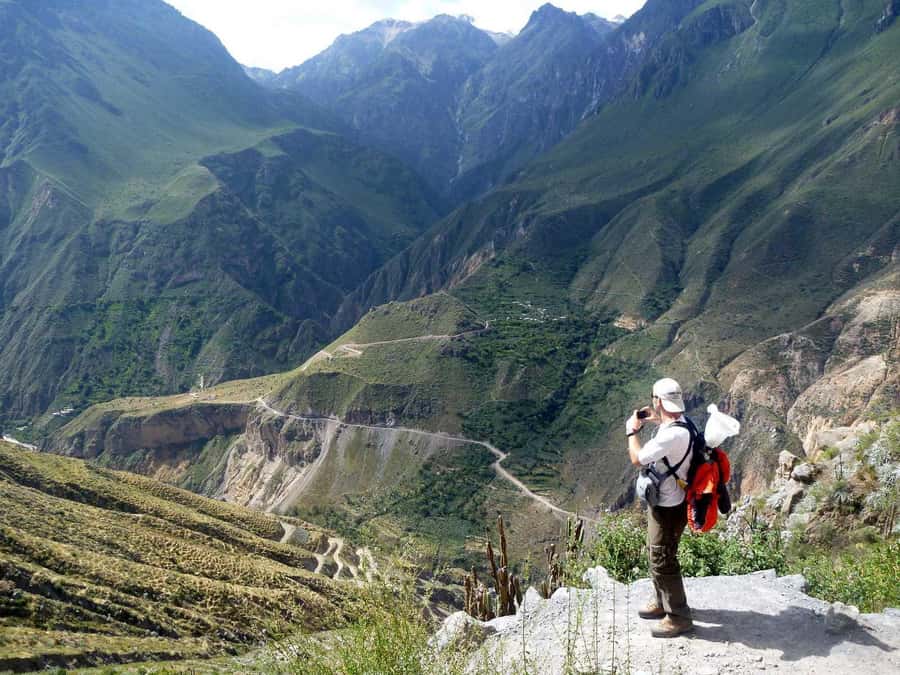
After the condor viewpoint, you head toward Pampas de San Miguel in the Cabanaconde area. From there, you begin the hike, with the schedule calling for a long downhill walk of about 3.5 hours (the itinerary notes 3:30 a.m., but what matters is the long descent). The goal is to reach the Colca River, where you rest.
This is where the trek earns its reputation. Descending long distances can be easier on your breathing than uphill, but harder on your legs. I’d treat it like a “leg workout” day: go slower than your ego wants to go, and watch your footing on any uneven sections.
You’ll also cross the first suspension bridge in the area. That’s one of those moments that breaks up the long canyon descent and adds a fun change of scenery—just keep both hands steady and take your time.
San Juan de Chuccho, Malata, and Cosñirhua: the walk stays human
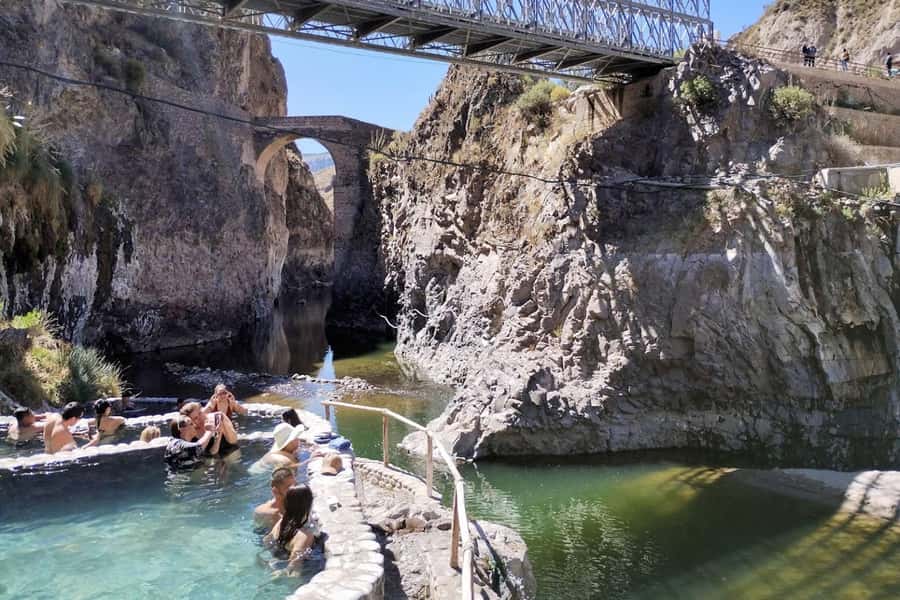
Once you reach the river area and reset, the route continues toward San Juan de Chuccho. You have arrival and lunch there, plus a rest period. After lunch, you continue the journey by visiting the towns of Malata and Cosñirhua.
These stops matter because they turn the canyon from a backdrop into a lived-in place. Instead of only thinking about the destination, you get small transitions: villages, pauses, and the feeling that your hike is part of local geography—not just a scenic product.
Also, because the itinerary is built around these communities, you won’t feel like you’re on a lonely trail the entire time. It’s still rugged, but it feels connected.
Sangalle Oasis by 5:00 p.m.: pools, palms, and an adobe-bungalow night
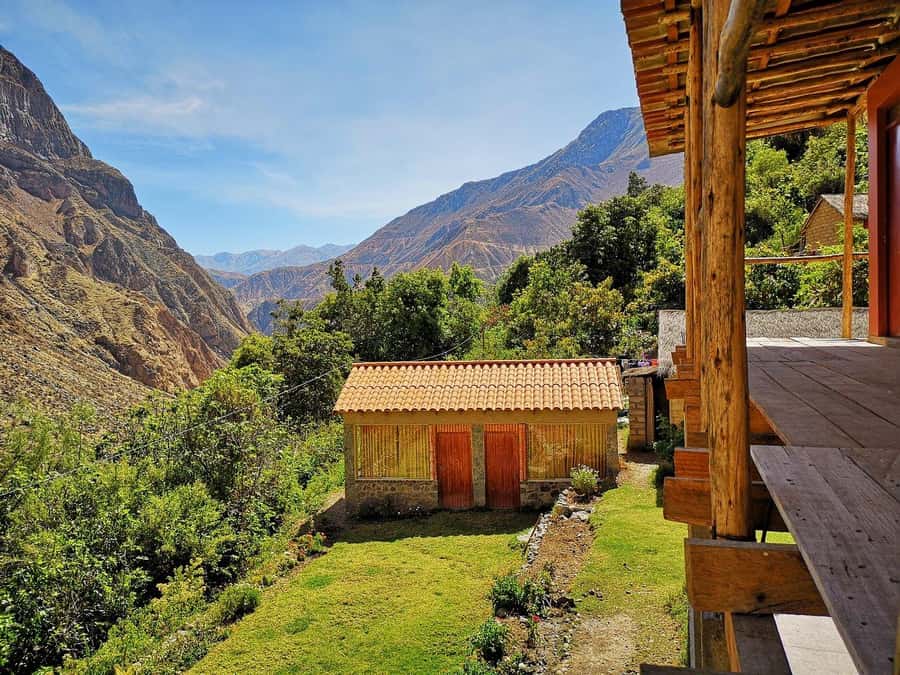
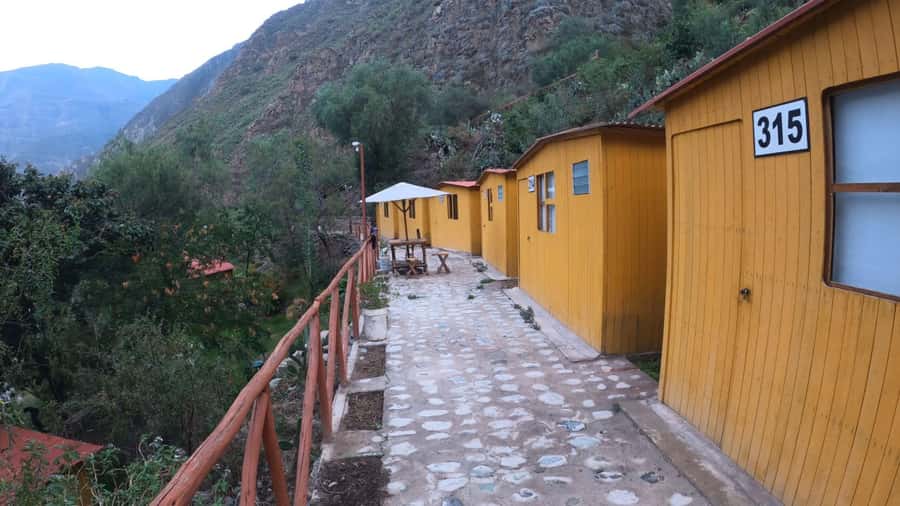
By about 5:00 p.m., you arrive at Sangalle Oasis. It’s described as a peaceful place with pools surrounded by palm trees and a hostel atmosphere. The trek’s end isn’t just “arrive and sleep”—you actually get time to enjoy the waterpools, which are included.
Then you overnight in a typical adobe bungalow in the oasis area. The lodging style is part of the charm: simple, local-feeling, and exactly what you want after a long day on the trail. I’d expect basic comforts rather than hotel polish.
One gear-related reality check: starting early and hiking hard can leave you tired in a hurry. Pack for comfort at camp—something warm for evening, since early starts usually mean cooler nighttime air.
Day 2: a 4:30 a.m. start and the climb back to Cabanaconde
Day 2 begins around 4:30 a.m. You start with the hike uphill for about 3 hours, climbing from Sangalle back toward Cabanaconde. Breakfast is in Cabanaconde once you arrive.
This is the hardest part for most people—not because it’s longer than Day 1, but because it starts so early. If you’re the type who needs time to wake up, plan to move before you feel fully alive. One practical tip from real-world experience: you’ll really want to handle the dark morning safely, and items like a headlamp are worth bringing even if the schedule doesn’t spell it out clearly.
After breakfast, you board transport back toward Chivay. On the way, you get a tourist stop at a natural viewpoint to appreciate pre-Inca terraces, plus a visit to the traditional village of Maca.
This stretch is valuable because it turns the morning effort into meaning. You’re still seeing the region, not just ticking off a hike.
Volcano viewpoint stops, llamas, and Lagunillas on the way to Puno
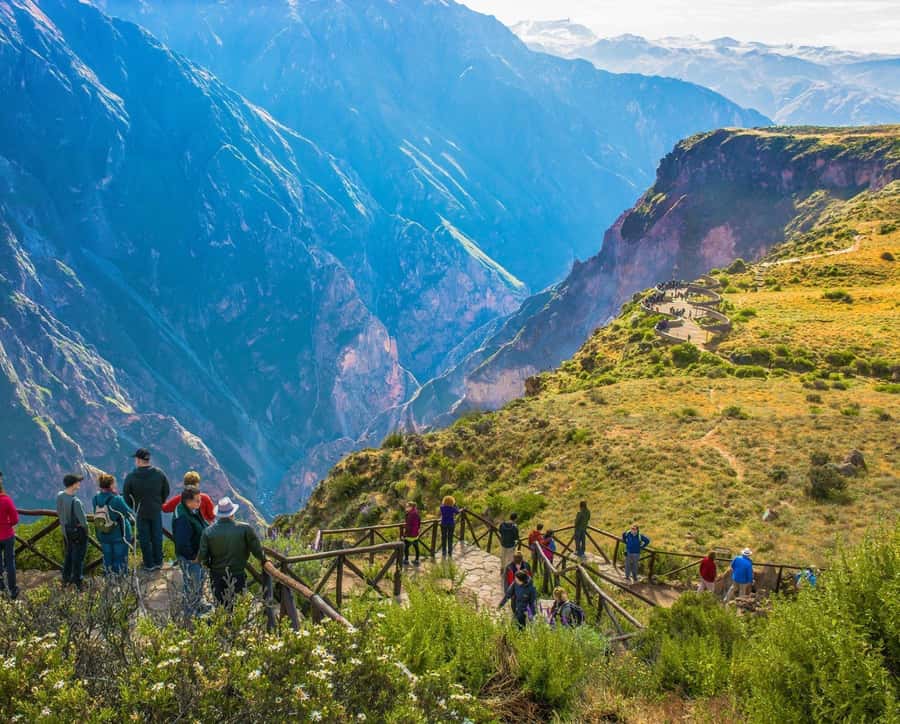
Once the trek segment is over, the itinerary shifts into travel mode. In Chivay, you have about an hour for an included meal break; buffet lunch is optional and not included.
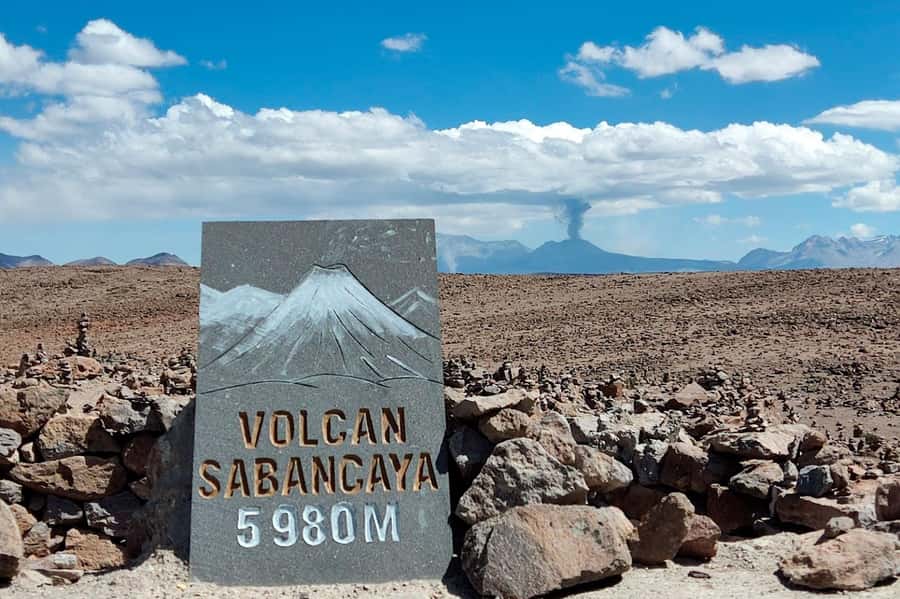
Then you transfer with coordination by your guide to Puno, with three tourist stops along the way and additional professional guidance at each stop. The stops include:
- a viewpoint for volcanoes
- a stop for variety llamas
- a stop at Lagunillas, with chances to see Andean birds and scenic views
I like this structure for one simple reason: it stops you from feeling like the day is only driving. You get short visual breaks that keep your energy from draining completely after an already intense two-day schedule.
You arrive around 7:30 p.m., with drop-off near Puno’s Plaza de Armas (generally about one block from the main square).
Thermal baths in Chacapi (or Yanque): optional, but time it right
At roughly 11:00 a.m., you have the optional use of the hot spring. The schedule notes it’s generally in Yanque, and it could be Chacapi. The hot spring ticket is not included, and it’s listed as 15 soles.
If you’re the kind of person who loves a soak after walking, this is the perfect window. You’re sitting somewhere between “tired but functional” and “legs are still angry,” so a thermal dip can feel like a reset button.
If your budget is tight or you want to save time, you can skip it. The rest of the day still has sightseeing stops and a late arrival to Puno.
Price and value: what’s included vs what you’ll pay on top
The price is $139 per person for a 2-day program. For that, you get a lot of the heavy lifting: hotel pickup, transport, a professional guide, meals (two breakfasts, one lunch, one dinner), and your night lodging in a private room at the oasis area.
You also get included entry to the waterpools in the oasis, plus the transport from Chivay (Colca) to Puno.
Two key extras you should plan for:
- Mandatory entrance ticket to Colca Canyon: listed as 20 soles for Peruvians, 40 soles for South Americans, 70 soles for others.
- Optional hot spring ticket: listed as 15 soles.
- Lunch on Day 2: the buffet lunch in Chivay is optional and not included.
Is it good value? For most people, yes—because you’re not only hiking. You’re also getting organized transfers, guiding, and a real night stay that matches the trek rhythm. If you were doing this independently, you’d likely spend time and energy coordinating transport and meals, and you’d still have to handle canyon-entry timing yourself.
What to pack: the safety stuff that can make or break the trek
The itinerary is early and physical. I’d pack like the morning matters, because it does.
Based on what people learn the hard way on this route, consider bringing:
- tough hiking shoes with good grip
- trekking poles if you like stability on steep downhills
- a headlamp for the early start on Day 2 (the hike begins at 4:30 a.m., so you’re likely moving in low light)
- layers for cool mornings and warm afternoons
- a small daypack for water and snacks
The tour itself includes guiding and transport, but your footwear and lighting are on you. This is where you can turn a stressful trek into a confident one.
Who should book this trek (and who should think twice)
This trek suits you if you want:
- a true two-day hike with major canyon viewpoints
- a realistic chance of condors at Cruz del Cóndor
- organized transport that gets you to Puno by evening
- a small-group experience with a professional guide speaking English or Spanish
It may not suit you if:
- you hate early mornings or steep hikes
- you’re not comfortable with a long descent followed by an uphill climb the next day
- you want a strictly relaxed pacing with no significant physical effort
If you’re on the fence, be honest about your legs and your comfort with dawn starts. This is a “work for the views” kind of itinerary.
Should you book this 2-day Colca Canyon trek to Puno?
If you want a trip that links Arequipa → Colca Canyon → Puno with real walking and solid guiding, this is a smart choice. You get canyon scale at Cruz del Cóndor, a canyon hiking day with villages and a suspension bridge, a rewarding oasis night with pools, and then a travel day that still includes memorable stops.
Book it if you’re ready for steep sections and early starts. If that sounds like your kind of challenge, you’ll come away with the kind of experience that feels bigger than a checklist.
FAQ
What time is hotel pickup in Arequipa?
Pickup is included from hotels near Arequipa’s historic center, around 3:00 to 3:30 a.m.
Where do we see the condors?
You visit Cruz del Cóndor after breakfast in Chivay. You have about 40 minutes at the viewpoint.
Is the entrance ticket to Colca Canyon included?
No. The canyon entrance ticket is mandatory and not included. Costs are listed as 20 soles (Peruvians), 40 soles (South Americans), and 70 soles (others).
Is the hot spring included?
No. Hot spring use is optional. The ticket is listed as 15 soles, and it may be in Yanque or Chacapi.
What meals are included?
You get 2 breakfasts, 1 lunch, and 1 dinner.
How does the tour end in Puno?
After the Chivay-to-Puno transport with stops, the tour finishes around 7:30 p.m. with drop-off near Plaza de Armas in Puno (typically about one block away).