REVIEW · CAT BA
Halfday trekking Cat Ba Butterfly valley (more intense)
Book on Viator →Operated by Cat Ba Local Tour · Bookable on Viator
A steep rainforest trek that earns its views. This Cat Ba Butterfly Valley experience is interesting because it mixes a rugged limestone climb with chances to spot wildlife in Cat Ba National Park’s biosphere reserve zone. I love the strong local guide focus—English-speaking and watchful—plus the payoff of emerging into open viewpoints over Cat Ba Island. The only real drawback: it’s genuinely intense, with slippery, muddy sections and little in the way of easy paths, so you’ll want to go prepared.
It’s set up as a short, efficient day: you’ll be picked up, hike for about 3 hours, then be back by around noon. If you’re the kind of traveler who likes real jungle effort (not a stroll), this fits well—especially with a maximum group size of 8, which keeps the pace and safety more manageable. I also like that the route is guided in a way that can put you in position for wildlife moments, including luck with Cat Ba langurs.
In This Review
- Key things to know before you go
- Cat Ba Butterfly Valley: where the hike gets steep fast
- Timing and a tight 8:00 start that keeps things moving
- Butterfly Valley stop: the rainforest-to-viewpoint rhythm
- Cat Ba National Park biosphere reserve: your wildlife spotting window
- The viewpoint over Cat Ba Island: why the last stretch is worth it
- Guides make or break this trek: Rio and Mario’s impact
- How intense is intense: slippery limestone, mud, and no easy paths
- Small-group trekking: max 8 and why it helps
- Price and value: $30 for an intense half-day with real guidance
- What to bring and how to avoid the common mistakes
- Who this Cat Ba trek suits best (and who should skip it)
- Should you book this trek?
- FAQ
- How long is the Cat Ba Halfday trekking Cat Ba Butterfly valley tour?
- What time does the tour start?
- Where do I meet for the tour?
- What does the tour include?
- Are drinks included?
- How difficult is the trekking?
- Is there a vegetarian option?
- How big is the group?
- What happens if the weather is bad?
Key things to know before you go
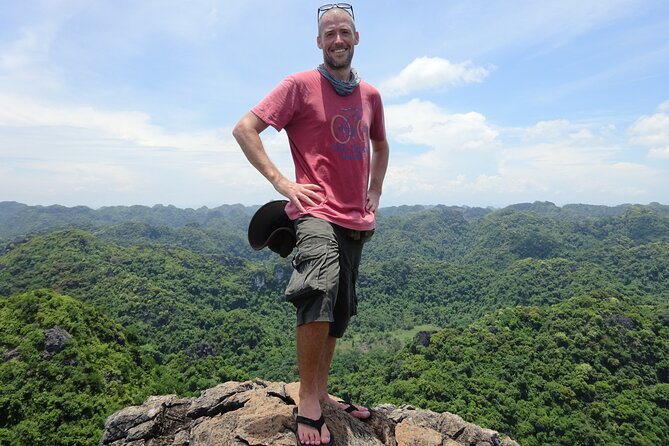
- A more intense Butterfly Valley route than a casual half-day: expect steep climbs and uneven footing
- Small groups (max 8), which usually means more attention from the guide
- Wildlife odds in the rainforests: butterflies, snakes, squirrels, spotted deer, and even Cat Ba langurs if you’re lucky
- Three big beats in one outing: Butterfly Valley, Cat Ba National Park, then an island viewpoint
- Strictly short timing: about 4 hours total, so you’ll want water, snacks, and shoes ready
Cat Ba Butterfly Valley: where the hike gets steep fast
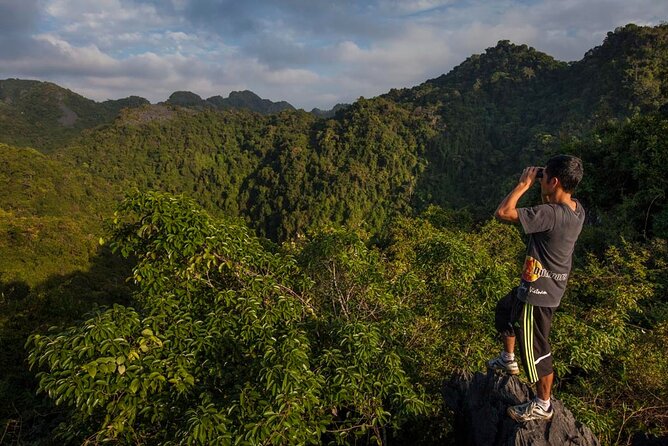
This is not a “walk in the park” kind of Cat Ba trekking day. The core idea is to move through dense rainforest on a rugged route, then come out into viewpoint time where you can actually feel like you earned the air and the view. The “more intense” label makes sense once you understand the terrain: you’re dealing with damp ground, mud, and sharp, rock-adjacent climbing sections.
That intensity is the point. Cat Ba’s inland areas feel different from the shoreline—cooler under the canopy, louder with birds and insects, and more alive when you’re climbing rather than resting. If you like your days active and your photos earned with sweat, you’ll probably enjoy the feeling of pushing through the jungle and then pausing at the top to take it in.
On the plus side, this tour is built around a short timeframe—around 4 hours total—so it doesn’t swallow your whole day in logistics. On the “watch it” side, the intensity does mean slipping is a real risk, especially after moisture and rainfall. If you’re prone to slipping or you hate heights or rock scrambles, this is not the gentle option.
You can also read our reviews of more tours and experiences in Cat Ba.



Timing and a tight 8:00 start that keeps things moving
You’ll start at 8:00 am at the Cat Ba Local meeting point on Một Tháng Tư street (Cát Hải, Hải Phòng). The day runs like this in practice: meet up, transfer out, and then you hit the trail around 8:30 am.
From there you’ve got roughly 3 hours of trekking, then you’re back around 12:00 pm. That makes the outing ideal if you want a “get one big hiking day” without losing an entire day to travel, meals, and lingering in slow spots.
It also means you should plan like a morning person. Start early enough that you’re not rushing breakfast. Keep your gear light and functional. And because this is only half a day, you’ll want to bring what you need for comfort—especially since drinks are not included.
Butterfly Valley stop: the rainforest-to-viewpoint rhythm
Butterfly Valley is the name that draws people in, but what you’re really buying is a rhythm: canopy jungle movement first, then a payoff moment when you break out and can see more of Cat Ba.
The tour is described as a trek through mountain rainforests before reaching the National Park area. In other words, Butterfly Valley is part of a sequence, not a single flat area. You’ll be walking and climbing enough that you’ll feel you’re earning any wildlife sightings.
What to watch for here:
- Butterflies: thousands are mentioned as a possibility, and in rainforest areas that can happen when conditions are right
- Small wildlife movement: cats, squirrels, and snakes are all included in the wildlife list
- Bird-and-insect soundscape: even if you don’t spot much, the jungle atmosphere is often the best part early on
If you’re hoping for big, guaranteed animal sightings, keep expectations realistic. The tour lists possible animals, but nature is nature. The better goal is to be present and steady on the route so you don’t miss moments when animals actually show up.
Cat Ba National Park biosphere reserve: your wildlife spotting window
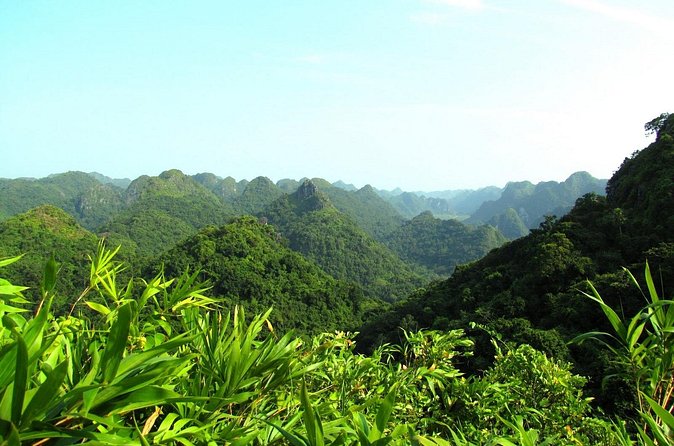
A big reason this tour feels different is the setting: Cat Ba National Park, part of a biosphere reserve area. That matters because biosphere reserve zones typically protect habitats in a way that supports wildlife life cycles—so you’re hiking in a place that’s meant to stay biologically active.
The wildlife possibilities listed for this trek are bold: cats, squirrels, spotted deer, snakes, thousands of butterflies, and luck permitting Cat Ba langurs. There’s a key detail here: langurs are mentioned specifically, which suggests your guide is aware of where sightings are more likely and will help you stay safe and observant in the right parts of the trail.
What I’d tell you to do to maximize your chances:
- Move steadily and don’t sprint early. The fastest pace can make you miss movement signals.
- Stay quiet when you see the guide pause. Jungle wildlife tends to respond to noise and abrupt motion.
- Expect “small but real” sightings more often than dramatic wildlife photography scenes.
Also, don’t count on a perfectly marked trail experience. One caution from a safety-minded perspective: the trek is described as dangerous and intense especially when slippery, with the sense of climbing straight up sharp rock faces and walking through dense jungle without clear paths. A careful guide can manage this, but your preparation still matters.
The viewpoint over Cat Ba Island: why the last stretch is worth it

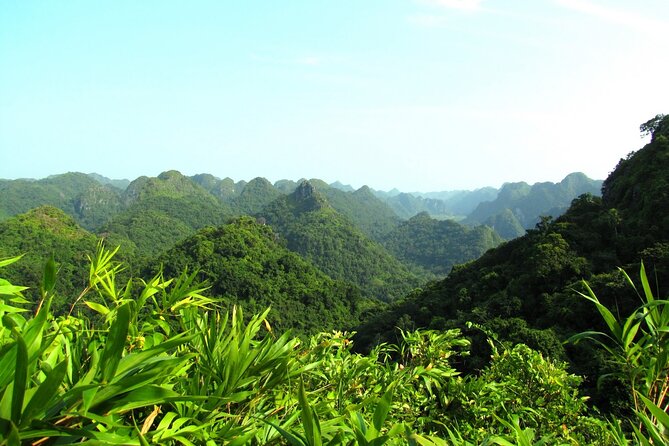
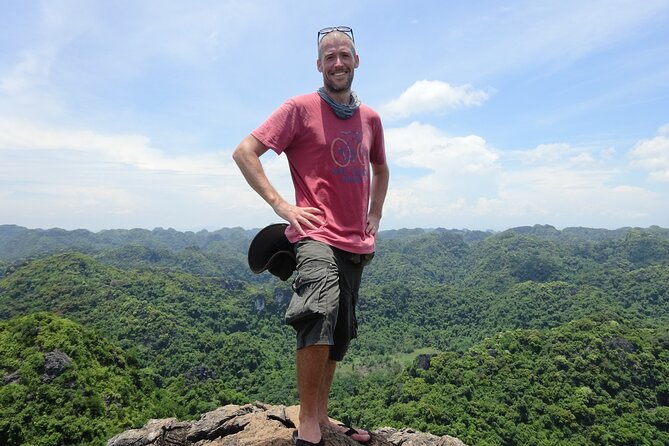
The route’s final emotional payoff is when you emerge from the canopy for views over Cat Ba Island. This is where the trek shifts from effort to reward, and it’s the reason you’ll see people talk about the top time—stopping long enough to look around, take photos, and just breathe.
The itinerary is built so you return to the pickup area at 12:00 pm, which means viewpoint time is not an all-day stop. Still, it’s long enough for a real break. One helpful note: since the top area may require safe footing and controlled pauses, you’ll likely move slower here than you think you will.
If you hate stopping on uneven ground, this might feel annoying. But if you enjoy the moment when the jungle becomes a view, you’ll probably appreciate the short stillness. This is also where you’ll better understand Cat Ba’s terrain—how steep and segmented the island feels when you’re looking down from above rather than staring at it from a boat.
Guides make or break this trek: Rio and Mario’s impact
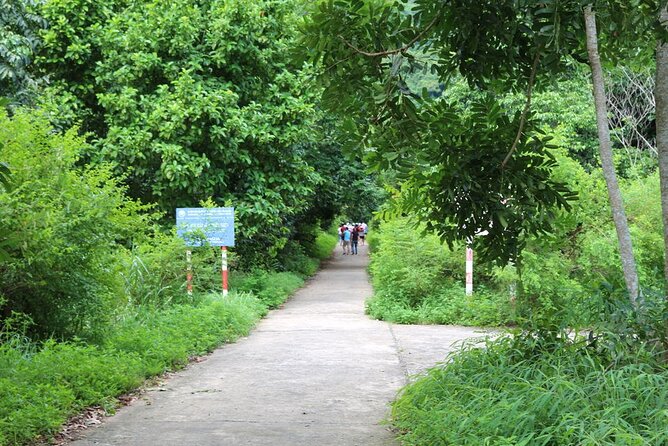
This is one of those hikes where the guide matters a lot. You’re in terrain where slips can happen and where the jungle hides surprises. The tour includes a local, English-speaking guide, and that’s not just for conversation—it’s for safety and for helping you manage the pace.
One review highlights a guide named Rio, praising his friendliness, kindness, and impeccable English, and noting that he looked out for the group throughout the trek. Another review specifically mentions Mario as the guide for a hiker traveling alone, calling the day the best of the trip and emphasizing Mario’s positivity and humor.
There’s also mention of Judy for consultation and support in choosing the best hike and kayak options. That’s useful because it means the company may help tailor choices if you’re doing multiple activities in Cat Ba.
What you can take from this, even without meeting them:
- Ask your guide how the group will handle slippery sections and whether you should bring trekking shoes with good grip.
- Be ready to follow instructions quickly. In steep jungle terrain, hesitation is what turns a minor slip into a bigger problem.
- Use your guide to manage timing. A short day means you want to hit the best windows without rushing the hazardous parts.
How intense is intense: slippery limestone, mud, and no easy paths
Let’s talk honesty, because this trek earns its caution label.
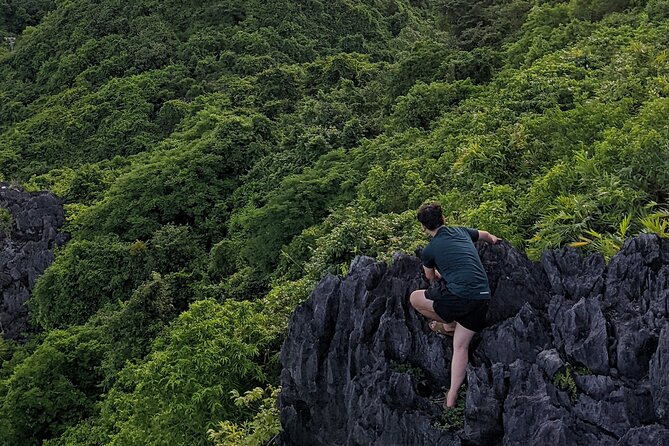
The most practical warning from the experience feedback is about conditions: it can be dangerous and intense when it’s slippery—especially with moisture and mud. The trek involves climbing up sharp rock faces and walking through dense jungle, with the sense that there may be no clearly marked paths the whole way.
That means your personal comfort with uneven footing is the deciding factor.
I recommend you bring:
- Shoes with strong tread (not just sneakers with flat soles)
- Something grippy for wet limestone conditions
- Layers you can move in, since jungle mornings can shift from cool shade to warmer sun when you break out
If you don’t like climbing, if you struggle with balance, or if you’re carrying heavy items, you’ll likely find this more stressful than fun. If you do like adventure hiking and you’re okay slowing down to stay safe, it can feel like a very satisfying day.
Small-group trekking: max 8 and why it helps
A maximum group size of 8 travelers changes the vibe. In bigger groups, someone often gets left behind or the guide has to manage the slowest pace for safety. Here, the smaller number likely helps keep everyone closer together and makes it easier for the guide to spot problems—like a slip risk or someone who needs a pause.
It can also improve the experience feel. When you have fewer people, the jungle sounds less cluttered and wildlife spotting becomes less about competing attention and more about watching movement.
If you’re traveling solo or as a couple, the small group can make the day feel approachable. You won’t be stuck in a giant line, and you’re more likely to get real guidance rather than generic instructions.
Price and value: $30 for an intense half-day with real guidance
At $30 per person for a half-day trek, the value depends on what you need.
You’re not just paying for walking time. You’re paying for:
- A local experienced guide
- Pickup and drop-off
- Access to the protected-area setting that shapes the wildlife and rainforest experience
- A route that’s described as challenging, not a casual promenade
If you’ve got limited time in Cat Ba and want one outing that gives you effort, wildlife potential, and views, $30 can feel fair. If you want a low-effort, photo-only experience with zero risk and fully maintained paths, you’d likely feel underwhelmed and stressed.
So my advice is simple: this is good value if you match the physical style. It’s not value if you’re looking for comfort-first hiking.
Also remember what’s not included: drinks. Factor that into your spending and your comfort. Bring water, and consider a small snack so you’re not dragging through the last portion hungry.
What to bring and how to avoid the common mistakes
Because this trek is intense and slippery, your preparation can make the difference between a great story and a bad ending.
Bring:
- Water (drinks are not included)
- Snacks if you need them for a steady energy level
- Sun protection for the viewpoint portion
- Good traction shoes
- Light rain protection if conditions are wet
Wear:
- Clothes you can handle rubbing against rough vegetation
- Something quick-drying if you expect moisture
Plan mentally:
- Expect a slower pace than you’re used to on level ground
- Don’t assume the trail will feel easy just because it’s only a few hours
A final practical note: the tour runs on good weather. If weather is poor, it may be rescheduled or refunded, so don’t pack your entire schedule tightly around the trek.
Who this Cat Ba trek suits best (and who should skip it)
This is ideal for:
- People with moderate physical fitness
- Travelers who like hiking in rugged terrain
- Folks who enjoy wildlife spotting, even when sightings aren’t guaranteed
- Anyone who wants a short, active day that still has a real viewpoint payoff
It’s less suitable for:
- Anyone who dislikes steep climbs or slippery surfaces
- Travelers who need perfectly clear paths and minimal scrambling
- People who feel anxious in dense jungle terrain where footing can be unpredictable
If you’re not sure, consider asking questions before booking—especially about how your group will handle the steeper, rockier sections. A good guide can adapt pace and safety approach, but your comfort level matters most.
Should you book this trek?
Book it if you want an intense Cat Ba rainforest hike with a real chance at butterflies and wildlife, plus a view over Cat Ba Island, all within half a day. The small group size and strong guide emphasis make it a solid choice for people who take safety seriously and are ready for uneven, slippery footing.
Don’t book it if you want an easy walk, if you’re avoiding climbs, or if you know you struggle with wet, muddy, uneven trails. In that case, the same time window might be better spent on a gentler option.
If you match the fitness level and you bring grippy shoes, this is the kind of hike that can make Cat Ba feel like more than boats and beach time.
FAQ
How long is the Cat Ba Halfday trekking Cat Ba Butterfly valley tour?
It runs for about 4 hours, including trekking time and the return to the pickup address.
What time does the tour start?
The tour starts at 8:00 am.
Where do I meet for the tour?
The meeting point is at Cat Ba Local, address 229 Một Tháng Tư, street, Cát Hải, Hải Phòng 187300, Vietnam.
What does the tour include?
It includes all activities, a local experienced guide, and pickup & drop-off.
Are drinks included?
No. Drinks are not included, so you’ll want to bring your own.
How difficult is the trekking?
It’s aimed at travelers with a moderate physical fitness level, and it can be intense, with slippery and rugged terrain.
Is there a vegetarian option?
Yes. A vegetarian option is available if you advise at the time of booking.
How big is the group?
The tour has a maximum of 8 travelers.
What happens if the weather is bad?
The tour requires good weather. If it’s canceled due to poor weather, you’ll be offered a different date or a full refund.