REVIEW · KATHMANDU
Everest Base Camp Trek
Book on Viator →Operated by Accessible Adventure Pvt. Ltd · Bookable on Viator
Everest Base Camp feels closer than you think. This 14-day private guided trek pairs big Himalaya views with Sherpa village life, plus the payoff of Kala Patthar for the closest practical look at Everest.
I like the support level for the effort you’re putting in: a government-licensed English-speaking trek leader trained in first aid, backed by an assistant guide and a porter (with a clear porter ratio). You’ll also appreciate the practical “stress reducers” included in the package: full-board meals, comfortable tea houses, and even a pulse oximeter and essential altitude medicines.
One thing to plan around: altitude plus travel logistics. Several days run 5–8 hours, and the trek notes possible flight routing changes to Lukla via Manthali with a night drive, which can add fatigue before you even start walking.
In This Review
- Key highlights worth booking around
- Everest Base Camp: the real wow factor is how close it gets
- Price and what you’re paying for (and what you’re not)
- Kathmandu Day 1: Thamel logistics and a clear game plan
- The Lukla access plan: possible Manthali reroute before you start trekking
- Phakding to Namche Bazaar: suspension bridges and that first Everest glimpse
- Namche acclimatization: choose views, shops, and a few gentle climbs
- Tengboche to Dingboche: monasteries, Ama Dablam views, and altitude that tightens
- Lobuche and the road along glacier moraine
- Everest Base Camp day: glacier walking to 5,365 m
- Kala Patthar: why the highest viewpoint day is worth the pain
- The return loop: Pheriche to Namche, then Lukla back to civilization
- Guides and real-world support: what you should look for
- Gear and take-home items: don’t treat the package as a full outfitter
- Who this trek suits best (and who should think twice)
- Should you book Accessible Adventure’s Everest Base Camp trek?
- FAQ
- How long is the Everest Base Camp trek?
- Where does the trek start?
- How many people are in a group?
- What kind of lodging and meals are included?
- Is there a porter and assistant guide?
- Do you get any medical support during the trek?
- What are the top altitude targets on the route?
- What souvenirs and gear are included?
- Are park fees included?
- Is the Lukla flight included in the price?
- What’s the cancellation rule?
Key highlights worth booking around
- First-aid trek leadership with pulse oximeter support
- Teahouses with full-board meals, twin-share lodging, and porter help
- Kala Patthar (5,550 m) for close-up Everest viewing
- Acclimatization built in at Namche Bazaar and Dingboche
- Cultural stops that go beyond scenery (Tengboche monastery, Sherpa villages, Hillary Bridge)
- Lukla access plan that may shift to Manthali (Ramechhap) due to regulations and airport upgrades
Everest Base Camp: the real wow factor is how close it gets
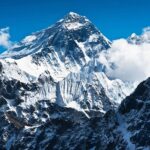
If your Everest dream is mostly about seeing the mountain up close rather than climbing it, this trek fits nicely. You walk to Everest Base Camp at about 5,365 m, then you climb even higher toward Kala Patthar for the view most people come for. The difference between the two is simple: base camp is about being there, while Kala Patthar is about seeing the mountain in a way that feels almost unfair.
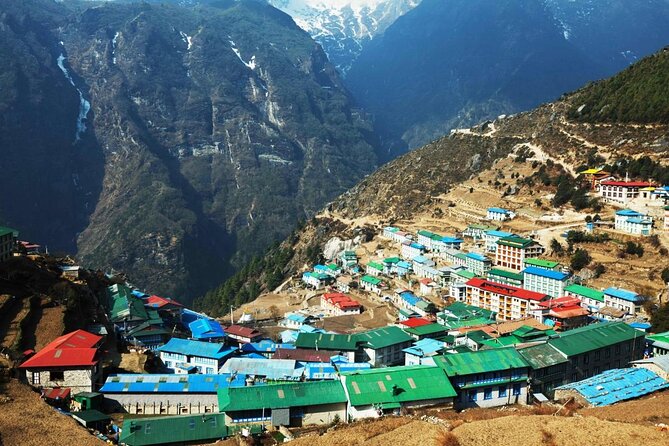
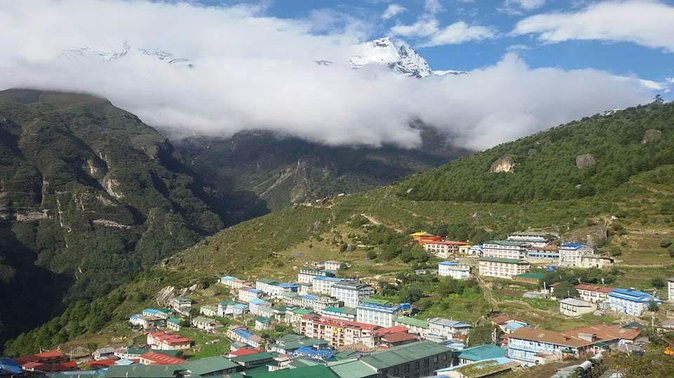
I also like how the trek keeps the focus on everyday life along the way. You don’t just march through scenery; you hit Sherpa towns and landmarks like Namche Bazaar and Tengboche, where monastery calm and local daily rhythm slow the whole adventure down.
The pace is still real mountain travel. Expect long walks, cold mornings, and days where your body is doing extra work just to stay comfortable.
You can also read our reviews of more tours and experiences in Kathmandu.
Price and what you’re paying for (and what you’re not)
At $1,169 per person, the price makes the most sense if you want less hassle and more structure. This package includes a lot of the big-ticket logistics: airport pickup/drop-off in a private vehicle in Kathmandu, a trained trek leader, an assistant guide, a porter, and the main on-trail support. It also covers Sagarmatha National Park entry and the community fee, plus organized tea house stays and full-board meals during the trek.
You’re also getting take-home gear: a duffel bag, T-shirt, and trekking map. There’s additional gear support, too: a down jacket and sleeping bag are provided during the trek, and you return them afterward.
What’s not included matters for budgeting:
- Accommodation in Kathmandu (before/after your trek)
- Lukla flight (explicitly listed as not included)
- Travel and medical insurance
- Tips for guide, porter, and driver
- Personal expenses like phone/internet/laundry and snack runs
This is where I’d be practical: if you want a single, tidy bill with minimal add-ons, make sure you understand exactly how the Lukla flight piece is handled for your exact dates.
Kathmandu Day 1: Thamel logistics and a clear game plan
Your first day is all about getting your footing in Kathmandu and sorting out the trip details with your trek leader and team. After arriving, you get met at the airport and escorted to a hotel, then you do a briefing so you’re not guessing later when the mountain starts doing its best impression of a mood killer.
You can also use this day to handle last-minute gear shopping or just walk around Thamel, the tourist hub that makes it easy to grab small essentials. I like Day 1 because it turns stress into errands you can actually manage instead of turning it into chaos after you’re already at altitude.
One more practical note: the tour lists that extra nights in Kathmandu might not be included if your schedule forces it. So if your flight timings are tight, it’s worth planning a little buffer.
The Lukla access plan: possible Manthali reroute before you start trekking
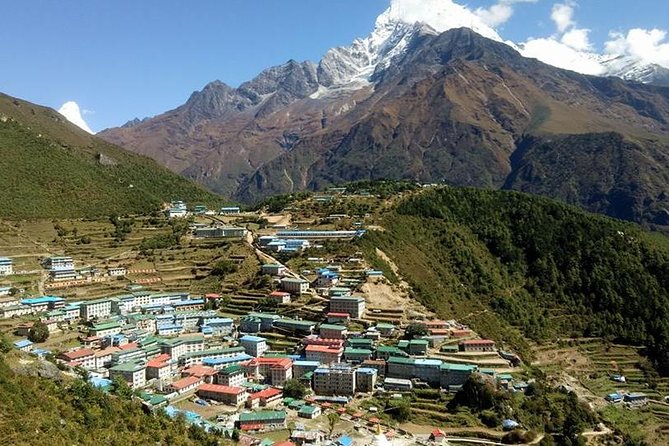
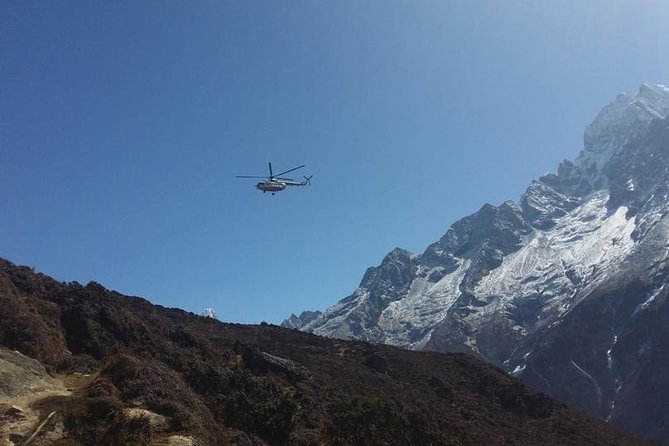
The Everest region has a way of making travel days feel like part of the trek. Because of changes in regulations and domestic airport upgrades, flights to Lukla may operate out of Manthali Airport in the Ramechhap District. That means a four-hour drive from Kathmandu during the night, then an early morning flight of about 20 minutes to Lukla.
This is one of those details that changes your energy level for Day 2, so treat it like it’s a real hiking factor. Also, the flight into Lukla is described as spectacular, and it’s an easy place to remember you’re heading toward a mountain, not a hotel view.
If your departure route is affected, the good news is that the trek still keeps the start moving: you’ll land in Lukla and then head on to Phakding to begin the walking.
Phakding to Namche Bazaar: suspension bridges and that first Everest glimpse
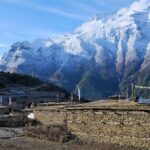
From Lukla, the trek immediately drops you into classic Khumbu rhythm. On the way to Phakding (2,610 m) you pass through places like Chauri Kharka village, then descend toward the Dudh Koshi river. The trail follows the valley with scenery that changes every hour, and you also get a glimpse of Khumbila, a sacred peak Sherpa communities worshipped, with special restrictions noted in the route description.
Phakding is small and Sherpa-run, so you’ll have a chance to slow down a bit. If you’re not too tired, it’s a good place to interact with locals or grab a warm drink in a cafe setting.
Then comes Namche Bazaar, often the mental checkpoint where your body realizes altitude is no joke. The route includes crossings over suspension bridges (including the famous Hillary Suspension Bridge), plus a climb through pine forest. You approach the entry point for Sagarmatha National Park, then continue onward, stopping for lunch near Jorsale before pushing up into Namche.
The trek also points out a first vantage for seeing Everest from a spot known as Tope Danda. That’s the moment where the mountain shifts from map idea to real target.
Namche acclimatization: choose views, shops, and a few gentle climbs
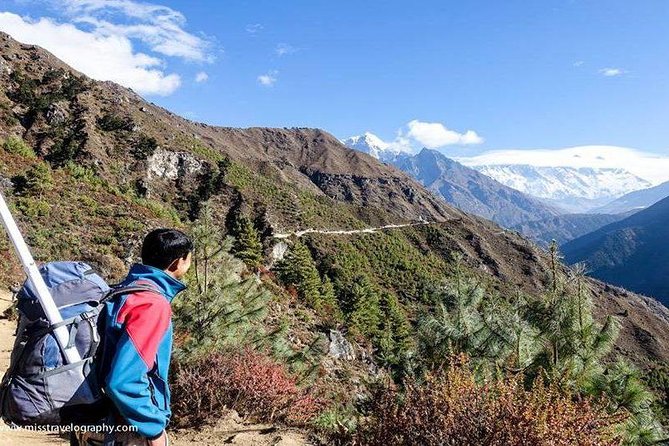
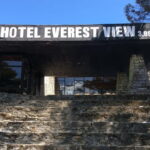
Day 4 is an acclimatization day in Namche Bazaar, and it’s set up to help you adjust without wasting the day. You’ll find plenty to do: wifi-linked cafes and restaurants, plus souvenir and gear shops. If you want the Everest angle, you can hike toward Everest View Hotel for dramatic range views.
If you prefer culture and local texture, there are options mentioned like visiting Hillary School, exploring a Sherpa settlement, stopping near Syangboche Airport, or checking out yak farms. You’re not stuck; you’re choosing how your day gets spent.
I like this approach because it respects two truths: you need acclimatization, and you also want your time up high to feel purposeful.
Tengboche to Dingboche: monasteries, Ama Dablam views, and altitude that tightens
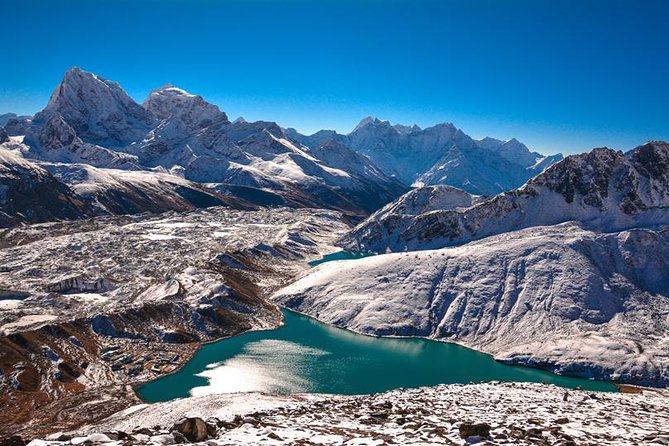
Your trekking day toward Tengboche is where the mountains start feeling close enough to talk back. The route passes through juniper and rhododendron forests, and it explicitly calls out big names in the skyline: Everest, Nuptse, Lhotse, Ama Dablam, Thamserku, and Kwangde.
Tengboche ends in the Sherpa village of Tengboche, with Tengboche Monastery (Tengboche Gompa) as the emotional centerpiece. The description highlights that it’s the largest monastery in the Khumbu region, and it’s at about 3,867 m. Even if you’re not a church-and-temple person, a monastery stop is often the best kind of break: quiet, human-scale, and a reminder that this trek is about more than peaks.
Then you move onward toward Dingboche (Day 6), crossing into areas near Pangboche and the Imja Khola river. The route notes the biggest and highest permanent Sherpa settlement in the region, which is exactly the kind of detail that helps your time feel grounded in place.
By Day 7, you get a second acclimatization day in Dingboche. You’ll hike to Nagarjun Hill (about 5,100 m), with no technical climbing—just a hard upward effort at altitude. The reward is described as huge: 360-degree views including Makalu, Lhotse, Ama Dablam, and more, plus a close look at the Imja glacier.
This is the kind of “work for the view” day that makes the rest of the trek feel more confident. You learn what altitude feels like on a walking day before you push deeper.
Lobuche and the road along glacier moraine
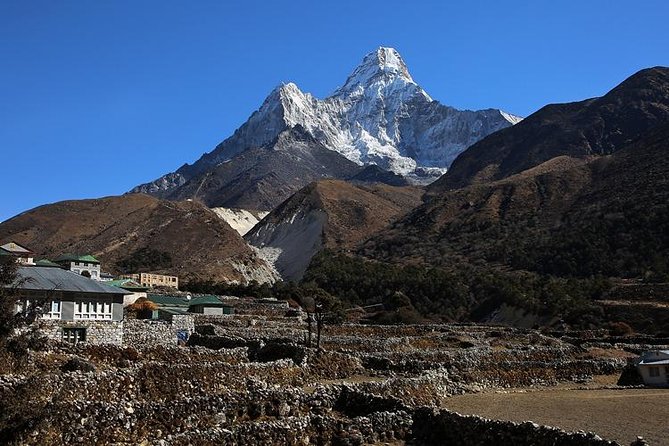
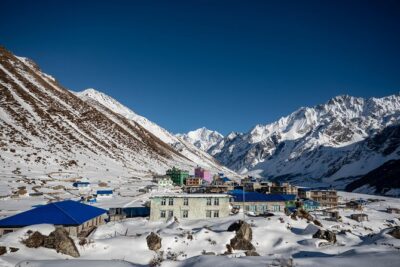
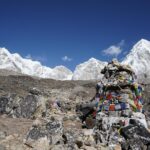
As you head toward Lobuche, the route shifts to a more intense high-altitude feel. It follows the lateral moraine of the Khumbu Glacier, and you pass by stone memorials for climbers who’ve died on nearby summits. That’s not a sightseeing stop. It’s a reminder that the mountain demands respect, even when you’re only doing the base-camp version.
The trek description calls out that you may feel breathing issues today due to altitude. That’s where having a first-aid trained leader and a pulse oximeter matters, at least as a safety net and a decision-support tool.
You sleep in Lobuche at the foot of Lobuche peak, then set up for the big day.
Everest Base Camp day: glacier walking to 5,365 m
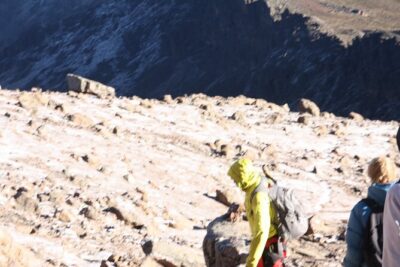
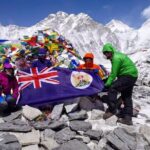
Day 9 is the signature effort. The walking distance is listed as about 7–8 hours (around 12 km), moving along the Khumbu Glacier and up to Everest Base Camp at 5,365 m. This is described as the closest you can get to Everest without mountaineering gear and technical climbing.
Base camp is also linked with expedition activity in spring, so you may see teams getting ready or working through schedules. The trek highlights the view of the Khumbu Icefall from base camp as spectacular.
You’ll return to Gorak Shep for the night, which is important because it keeps energy reasonable for the next morning’s big climb. Gorak Shep itself is described as a small settlement near a frozen lakebed covered with sand at about 5,164 m.
Kala Patthar: why the highest viewpoint day is worth the pain
Kala Patthar is the trek’s peak-feeling moment. After breakfast, you hike toward Kala Patthar, described as the highest point of the trek at 5,550 m. The route also explains a key limitation: the Everest summit isn’t visible from Everest Base Camp, so trekkers climb Kala Patthar for the close-up view.
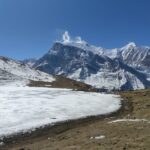
On a clear day, you’re surrounded by icy walls and named peaks like Pumori, Everest, Nuptse, and Lhotse. The description also mentions watching the sun’s rays hit the rocky pinnacle of Everest. That kind of sunrise moment can be the difference between just seeing Everest and feeling it.
After the viewpoint, you descend to Pheriche for the night. The plan then turns your long climbing days into long descending days, which still burn legs but feel a lot more controllable.
The return loop: Pheriche to Namche, then Lukla back to civilization
Day 11 is comparatively easier: a downhill trek from Pheriche to Tengboche, then onward until you reach Namche Bazaar by late afternoon. This part matters because you finally get to recover while still staying in the Everest rhythm.
Day 12 brings you back to Lukla. After breakfast, the route includes trekking to the Hillary Suspension Bridge and then through local villages. You celebrate your conquest in Lukla, and it’s described as your last night in the mountains.
Day 13 is Kathmandu again. You’ll be transferred to your hotel, with time to relax or explore Thamel and enjoy a final meal out. Day 14 wraps by heading to the airport for your international flight.
Guides and real-world support: what you should look for
This trek is built around trained leadership and hands-on help. The package includes an English-speaking, government-licensed trek leader trained in first aid, plus an assistant trekking guide with a 4 trekkers : 1 assistant guide ratio. Main luggage is carried by a porter with a 2 trekkers : 1 porter ratio.
That matters because it affects how you walk. With lighter loads, you can focus on steady steps instead of constant balance corrections. And with strong leadership, you’re more likely to keep acclimatization decisions practical instead of brave.
The reviews for this operator repeatedly point to guides like Shiva Shrestha, Avi, and leadership support from Hari and Himal. The common theme is safety-minded coaching and strong communication before and during the trek. If you value someone who explains what you’re doing and keeps morale up when altitude gets cranky, that pattern is a good sign.
Gear and take-home items: don’t treat the package as a full outfitter
You get some meaningful gear support: a down jacket and sleeping bag are provided during the trek, with a return requirement after completion. You also get the souvenir set: duffel bag, T-shirt, and trekking map.
That’s helpful, but I’d still plan like you’re responsible for your everyday comfort items: layers, gloves/hat, a headlamp, and anything you know you need to sleep well in cold conditions. The tour data only guarantees the jacket and bag, not the rest of your comfort kit.
Also watch for personal expense traps. The tour notes phone calls, internet, laundry, bar bills, snacks, and battery charging as personal expenses, so have a cash buffer.
Who this trek suits best (and who should think twice)
This trek is a great match if you want:
- A structured Everest Base Camp experience with Kala Patthar
- Tea house lodging and full-board meals instead of logistics hunting
- A guide and support team that handles key safety pieces and pacing
- Sherpa culture stops like Tengboche Monastery and village walks
It might be less ideal if:
- You hate long walking days (several are described around 5–8 hours)
- You’re fragile with cold mornings or altitude discomfort
- You need private, single-room accommodation everywhere, since the package specifies twin-share lodging
And if you’re counting every dollar: Lukla flight is listed as not included, so confirm that cost early.
Should you book Accessible Adventure’s Everest Base Camp trek?
If you want Everest without the summit fight, and you like the idea of a small group capped at 9 travelers with strong medical-minded support, I think this is a solid choice. The included guide structure, porter support, and included park fees take out a lot of friction that can turn a dream into a stress test.
I’d book if you can handle the basics: altitude, steep days, and the possibility of a Lukla routing change to Manthali with a night drive. If those travel uncertainties would ruin your trip, ask tough questions before you pay, especially about the Lukla flight portion.
If you’re okay with that reality, this trek has the right ingredients: Everest views you can earn, Sherpa culture you can actually see, and a team setup designed to keep you moving safely rather than just pushing you up a mountain.
FAQ
How long is the Everest Base Camp trek?
It’s listed as about 14 days.
Where does the trek start?
It starts in Kathmandu, Nepal, with airport pickup and a hotel transfer for Day 1.
How many people are in a group?
The tour notes a maximum of 9 travelers.
What kind of lodging and meals are included?
The trek includes twin-share accommodation in tea houses and full-board meals during the trek (breakfast, lunch, and dinner).
Is there a porter and assistant guide?
Yes. A porter is included to carry your main luggage (2 trekkers : 1 porter). An assistant trekking guide is also included (4 trekkers : 1 assistant guide).
Do you get any medical support during the trek?
The package includes a first-aid kit, a pulse oximeter, and essential medicines such as Paracetamol and Diamox, and it includes a trek leader trained in first aid.
What are the top altitude targets on the route?
Everest Base Camp is described at about 5,365 m, and Kala Patthar is described as the highest point of the trek at about 5,550 m.
What souvenirs and gear are included?
You receive a duffel bag, a T-shirt, and a trekking map. A down jacket and sleeping bag are also provided during the trek and must be returned after the trek completion.
Are park fees included?
Yes. Sagarmatha National Park entry fees and community fees are included.
Is the Lukla flight included in the price?
Lukla flight is listed as not included, even though the trek describes mountain flights as part of the journey. The Manthali-to-Lukla routing possibility is also noted in the trek plan.
What’s the cancellation rule?
You can cancel up to 3 days in advance for a full refund. If you cancel less than 3 days before the start time, the amount paid is not refunded.