REVIEW · KATHMANDU
Everest Base Camp Trek – 14 Days
Book on Viator →Operated by Nepal Trek Adventure and Expedition P.Ltd · Bookable on Viator
Everest Base Camp is a trek with a built-in wow factor. You fly into Lukla, hike through Sherpa country, and end at the world’s most famous staging point for Everest climbs, with guided support from operators like Binod Sapkota and guides such as TB, Shiva, Sujan Nepal, and Dipak. It’s the kind of trip where culture and altitude both matter, not just photos.
I like how this plan builds in real breathing room. You get structured acclimatization days around Namche Bazaar and time to adjust before heading higher, plus the trek is organized with permits, flights, and an English-speaking guide who’s been doing this for 10+ years. I also appreciate that you’re not hiking with everything on your back thanks to a porter arrangement (2 trekkers sharing 1 porter).
One thing to weigh: this is a high-altitude route that depends on weather, especially for flights in and out of Lukla. If conditions go sideways, you may need to pivot rather than stick to the exact plan.
In This Review
- Key Highlights at a Glance
- Kathmandu Setup: Hotel Nights, Permits, and Getting Your Footing
- Lukla Flight Day: Where the Trek Really Begins
- Phakding to Namche Bazaar: Forests, Yak Pastures, and Your First Big Sherpa Hub
- Namche Acclimatization Day: Hillary’s School and High Views Without Rushing
- Namche to Tengboche: Forest Walks and Ama Dablam’s Dominance
- Dingboche Days: Getting Used to Higher Altitude with Options
- Past the Tree Line to Lobuche: Tea Houses, Snowy Slopes, and a Different World
- Gorakshep to Everest Base Camp: The Moon-Glacier Segment and the Short, Big Finale
- Kala Patthar: Everest Up Close at 5,545 m
- The Return: Namche, Tengboche, and a Slower Satisfaction
- Lukla Back to Kathmandu: Closing the Loop with a Real Finish
- Price and Value: What $1,800 Buys You Here
- The Altitude Reality Check: Why These Stopovers Matter
- Group Size, Guide Power, and How Support Shows Up
- Should You Book This 14-Day Everest Base Camp Trek?
- FAQ
- Where does this Everest Base Camp trek start?
- How long is the trek?
- What’s included in the price?
- Is pickup in Kathmandu offered?
- Do I need travel insurance?
- What group size should I expect?
- What fitness level is required?
- What happens if the trip is canceled due to weather?
Key Highlights at a Glance
- Kathmandu-Lukla-Kathmandu flights included so you don’t waste days getting to the trailhead
- Acclimatization in Namche Bazaar and Dingboche to help your body handle the altitude
- Kala Patthar at 5,545 m for one of the trek’s best viewpoints of Everest and the surrounding peaks
- Sherpa culture stops, including a visit around Khumjung linked to Sir Edmund Hillary
- A porter setup for shared luggage that keeps your hiking day more manageable
- Strong local support culture, with guides like TB, Shiva, Dipak, and Sujan Nepal repeatedly highlighted for keeping trips running smoothly
Kathmandu Setup: Hotel Nights, Permits, and Getting Your Footing
Your experience starts in Kathmandu at Tribhuvan International Airport, with an airport representative meeting you outside the terminal. You’ll be transferred to a hotel for two nights in a 3-star property (or similar), which matters because the first goal in a trek like this is rest plus logistics.
From here, you’re not left sorting paperwork in a chaotic city. The package includes key trail logistics such as all permits and the Kathmandu-Lukla-Kathmandu flights, and you also have an English-speaking trekking guide lined up for the mountain portion. That kind of pre-assembly reduces stress when your head is already full of altitude and timing.
Also pay attention to the meeting details: the start time is listed as 6:15 am, and there’s a redemption point at Nepal Trek Adventure and Expedition P. Ltd. in the Thamel area. If you like to travel calm, show up early, because Kathmandu mornings can move faster than you expect.
You can also read our reviews of more tours and experiences in Kathmandu.
Lukla Flight Day: Where the Trek Really Begins
On the second day, you’ll take a short scenic flight from Tribhuvan International Airport to Tenzing-Hillary Airport in Lukla at 2,804 m. This flight is more than a transfer. It’s the first altitude marker you feel in your breathing, and it puts you into the Everest region on day one of hiking.
Once you land, your guide gives a briefing and introduces your porters. Then the walking begins with a descent toward the Dudh Kosi River, where you connect to the main trail leading toward Namche Bazaar. The route goes down and along the valley rhythm, and there’s even a mention that it’s an easy walking day—good news if you want your legs to settle before steeper climbs.
You’ll end the day in Phakding at 2,610 m, a classic first-night base for Everest trekkers. In a trek like this, that first night is where you learn whether your pack setup works for you and whether your water plan is realistic.
Phakding to Namche Bazaar: Forests, Yak Pastures, and Your First Big Sherpa Hub
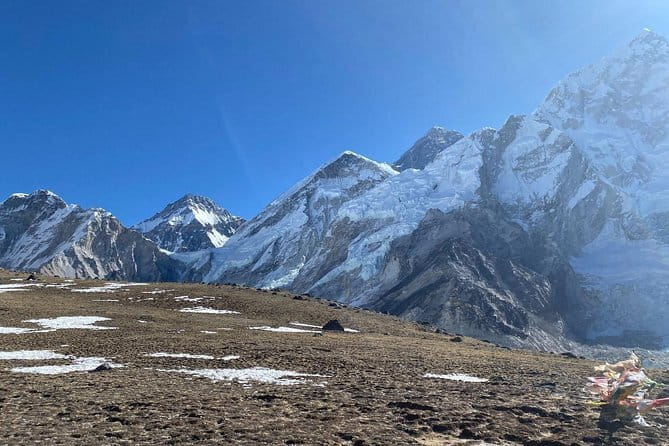
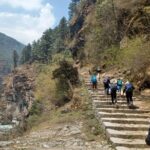
The next day brings you into the traditional Everest rhythm: forests, villages with plowed fields, and yak pastures as you work toward the entrance to Sagarmatha National Park. Approaching the Namche area, you’re in a zone where the mountains feel close enough to judge your pace—Thamserku is one of the peaks you can see as you near the big hub.
Then you arrive at Namche Bazaar, the biggest Sherpa village in the Khumbu region. This is where expeditions and trekking groups start, and it has a practical side: it’s where you can pick up last-minute items like chocolate if you forgot them back in Kathmandu.
One subtle benefit of staying in Namche is how it changes your mindspace. You’re no longer just hiking through villages; you’re living in a mountain town that caters to altitude travelers. That makes it easier to handle everything you’ll need later—hot drinks, basic supplies, and the sense that you’re part of a bigger mountain community.
Namche Acclimatization Day: Hillary’s School and High Views Without Rushing
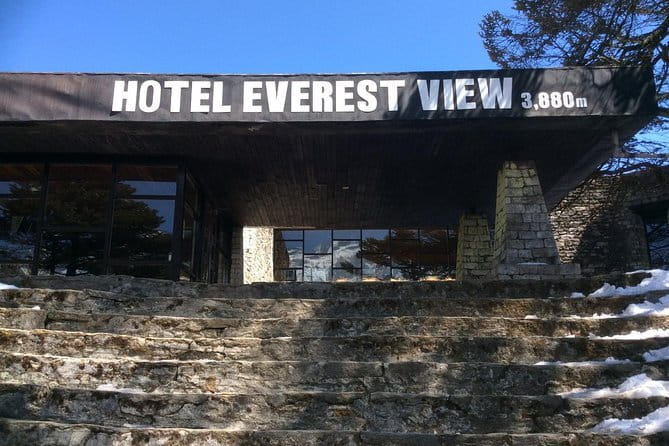
A key part of this trek’s success is that you don’t just sprint upward. After Namche Bazaar, you get a day focused on altitude adjustment so your body has time to respond before you go higher.
You still walk, because the best acclimatization isn’t lying still all day. You can take a few hours around the area, and there’s also the option to visit the school Sir Edmund Hillary built in Khumjung. It’s one of those cultural stops that feels meaningful in a trek tied to Everest, because it connects the mountain story to local education and partnership rather than just climbing fame.
This is also a day filled with mountain viewing. You can see peaks including Kwangde, Thamserku, Kangtega, Nuptse, Lhotse, Ama Dablam, and of course Everest. You’ll feel like you’re collecting landmarks for the next stage—like the mountains are giving you a preview so the higher days don’t come as a surprise.
Namche to Tengboche: Forest Walks and Ama Dablam’s Dominance
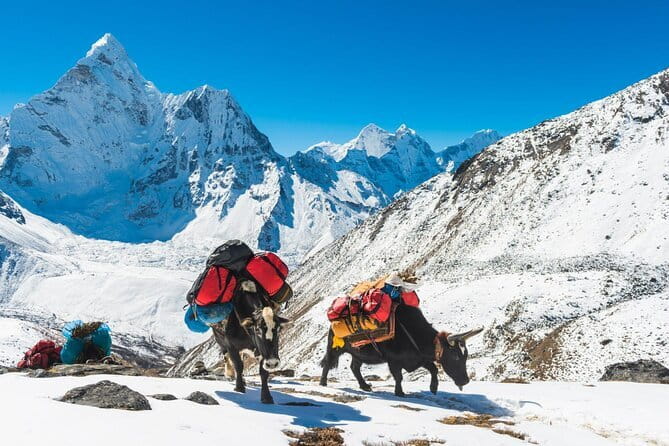
Leaving Namche, you continue toward Base Camp with a trail that goes up slowly, sometimes near steep slopes. Along the way, Ama Dablam is a standout sight. The trek description makes a big point of how it towers above the valley below, which is exactly what you experience once you’re in the right angles around Tengboche.
Lunch is planned at around 3,680 m, and the route includes a stop at a location where Lama Sange Dorje was born. That kind of detail helps this trek feel more human than just altitude math.
After lunch, you hike to Tengboche for the night. Expect rhododendron color, pine trees, waterfalls, and that sense of being in a place that’s visually busy even when you’re quietly walking. Tengboche is where the trek begins to feel more ceremonial—like you’re moving through a landscape with its own rhythm and rules.
Dingboche Days: Getting Used to Higher Altitude with Options
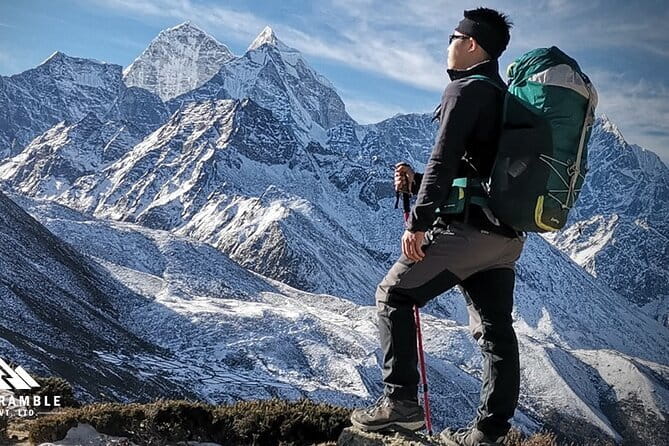
As you climb toward Dingboche (4,410 m), the trek description highlights a common strategy: follow a lower path on the way up, and later take an upper path on the return. You pass Pangboche, then cross an alpine meadow above the tree line, and you’ll reach Orsho where the route splits—one path goes toward Dingboche.
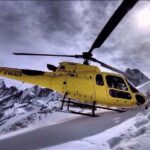
Dingboche is a viewpoint town. From here, you can look at Ama Dablam, the Imja River, and surrounding peaks. It also has specific landmarks mentioned in the plan: a helicopter landing pad near Moonlight Lodge, plus an Internet Café and even a billiards spot noted as one of the highest of its kind.
You get a second day in Dingboche as another altitude adjustment option. One choice is climbing Chhukung Ri (5,550 m) for views of Makalu, Ama Dablam, and Baruntse. Another is a hike around Chhukung village (4,730 m). If you’re trying to manage energy on a high-altitude trek, this kind of option day is a smart design.
Past the Tree Line to Lobuche: Tea Houses, Snowy Slopes, and a Different World
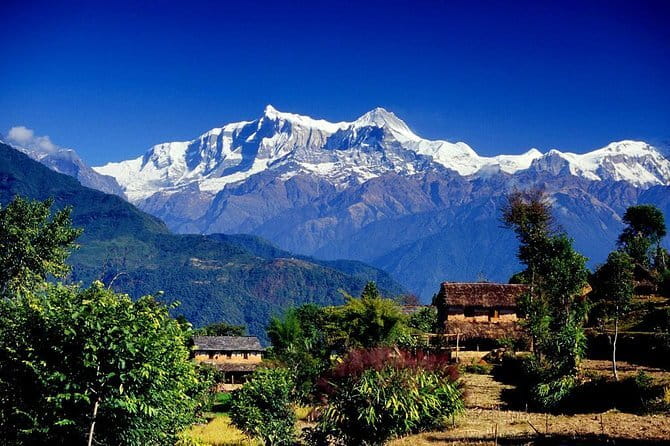
As the route pushes higher toward Lobuche, the environment changes fast. The trail goes between wide valleys, routes through places like Dusa and Dughla, and eventually heads up to Lobuche at 4,910 m.
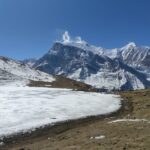
A big signal that you’re moving into a different altitude zone: above the tree line, the paths are described as empty and snow-covered. You don’t have the same soft woodland framework. Instead you’re walking more exposed slopes, with mountain views dominating your daily attention.
Lobuche also feels different because there aren’t Sherpa villages that stay here year-round, according to the trek description. You get views of Tawache, Pumari Peak, and Cholaste, and you notice the tea house feel of the route: simple structures, practical warmth, and the sense that your main conversation is with the sky.
Gorakshep to Everest Base Camp: The Moon-Glacier Segment and the Short, Big Finale
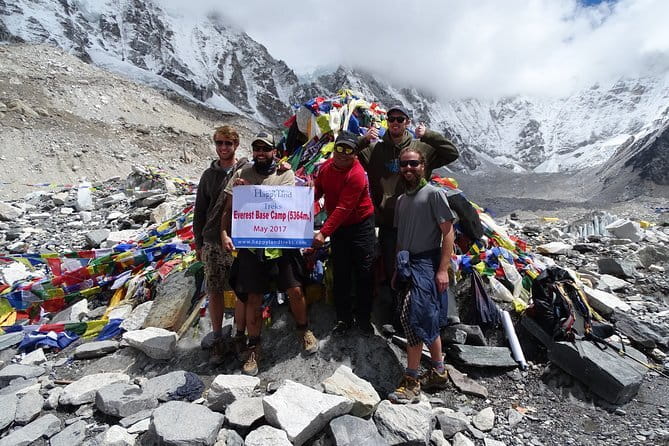
Day nine is where your Everest dream becomes a physical place. You hike from Lobuche to Gorakshep, then head toward Everest Base Camp. The walking is described as about two to three hours between Lobuche and Gorakshep, and once you reach the Khumbu Glacier, you’re dealing with one of the route’s most unforgettable features: it’s described as the world’s tallest glacier and shaped like the moon.
It’s also described as around 12 km long, with ice formations and small water pools. If you like dramatic natural engineering—ice carving its own geography—this is the part where it stops being scenery and starts being a living environment.
Everest Base Camp itself is approached as a short distance from Gorakshep. The trek description says the base is where mountain climbers start their journey to the top, and when you stand there, it’s a different kind of emotional height. Then you head back down to Gorakshep for the next day’s big viewpoint push.
Kala Patthar: Everest Up Close at 5,545 m
Kala Patthar is the highest point mentioned for this specific trek, at 5,545 m. The walking here is worth treating as the day’s main event, not a side quest.
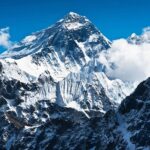
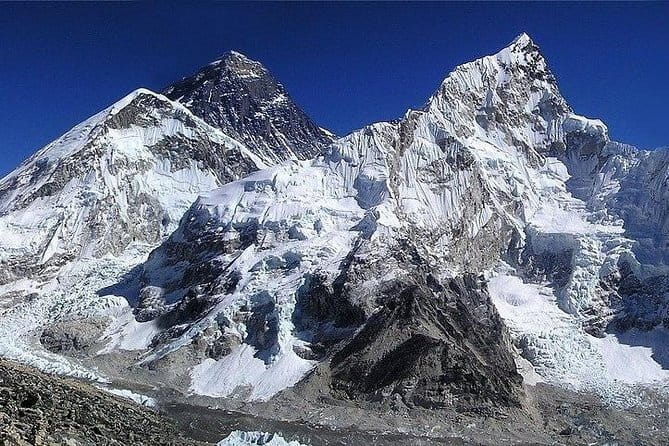
You move toward the viewpoint for big, close views of Mount Everest, plus Ama Dablam and Pumori. The trek plan also mentions glacier and mountain views all around that can make it feel like you’re in a different atmosphere.
After a few hours, you can also visit the H.M.A.R. hospital, built in 1975, or the nearby village at 4,371 m. That’s a helpful reminder that this region is more than a climbing destination—it’s a working human landscape with real services.
The Return: Namche, Tengboche, and a Slower Satisfaction
On the way back, the trail is described as easier and you move slowly through towns such as Orsho, Somare, Pangboche, and Tengboche back toward Namche Bazaar. This matters because the return part of a trek can either feel rushed or restorative, and a slower rhythm gives you time to actually process what you walked through.
You also get more chances to enjoy forest and mountain views without the same pressure of making altitude gains. Stops for short looks at the Everest region’s vistas are built into the return plan, so the day isn’t just “keep walking until it’s over.”
Then you reach Namche Bazaar again, and the trek’s social side grows louder. You’re also already thinking about what you’ll do in Kathmandu later—warm showers, soft meals, and sleeping without altitude alarms.
Lukla Back to Kathmandu: Closing the Loop with a Real Finish
The last trekking day takes you back to Lukla, the trailhead where your adventure started. The plan includes time in the afternoon to relax, get a hot shower, and spend the evening with group drinks and dancing.
After that, you fly back to Kathmandu. The flight is listed as 35 minutes, and once you land, you’re met and transferred back to your Kathmandu hotel and then to Tribhuvan International Airport for your departure.
For a lot of people, that final day feels like a reset. You’ve lived for nearly two weeks inside a narrow altitude corridor. After you return to Kathmandu, you can finally feel how long you were in the mountains—properly.
Price and Value: What $1,800 Buys You Here
At $1,800 per person, the big question is what you’re paying for besides the walking. In this package, the cost is supported by major components you’d otherwise have to piece together yourself: all permits, Kathmandu-Lukla-Kathmandu flights, an English-speaking guide with 10+ years of experience, and a porter setup with 2 guests sharing 1 porter.
It also includes two nights in Kathmandu at a 3-star hotel (or similar), plus meals listed as breakfasts (12) and trek lunches/dinners (10 each). If you’ve ever planned a trek and realized how quickly costs add up once you include flights, permits, and local staff, this package structure makes more sense.
What’s not included is where you should plan ahead: tips for guide and porter, travel insurance that covers medical and emergency evacuation, and any expenses outside the listed meals and lodging. For me, that’s a reasonable trade—especially for an Everest trek where staff support and flight scheduling can make or break your comfort level.
The Altitude Reality Check: Why These Stopovers Matter
This trek is built around altitude changes with real stopping points. You begin at low-to-mid elevation in Kathmandu, then jump to Lukla at 2,804 m, settle around Phakding at 2,610 m, then climb to Namche, and later higher to Dingboche at 4,410 m, Lobuche at 4,910 m, and the Everest area at the top.
The plan’s structure includes days that are effectively body-adjustment time. Namche is your first real checkpoint, and Dingboche is another. Those are not wasted days. They’re the difference between managing altitude like a system and managing it like a guess.
Still, you should respect the basic truth: you’re hiking at high altitude, and everyone’s response varies. The route has options on some days (like the Chhukung choices), which helps you avoid forcing speed when your body is asking for patience.
Group Size, Guide Power, and How Support Shows Up
This trek caps at 15 travelers, which is a sweet spot for group logistics. Large enough for comfort, small enough that you can still follow your guide and stay together without feeling like a moving airport line.
One pattern that stands out in the way this operator runs trips is attention to smooth coordination. The director Binod Sapkota is repeatedly associated with early briefings and keeping things moving from the first airport handshake. Guides listed include Sujan Nepal, TB, Shiva, and Dipak, and the recurring theme is that your guide isn’t just walking ahead—they’re watching for issues and helping you stay comfortable and safe.
Also, there’s a clear culture of flexibility when the mountain throws curveballs. Even if your dream plan needs adjusting, the team approach is described as proactive rather than panicked.
Should You Book This 14-Day Everest Base Camp Trek?
Book it if you want a classic Everest route with structured acclimatization, included flights and permits, and a support team that’s experienced with keeping plans running in a weather-dependent environment. The added benefit is that this trek doesn’t treat Everest like a theme park—it includes Sherpa culture stops like the Khumjung school connection and highlights mountain viewing days that help you understand where you are.
Skip it or rethink your timing if you know you need total predictability around every segment, because Lukla weather can affect timing. And if your fitness is only light, consider building up first; this trek asks for a moderate physical fitness level and rewards those who pace themselves.
If you’re ready for altitude, Sherpa villages, glaciers, and the kind of viewpoint day you’ll talk about for years, this is a solid, value-heavy way to do it.
FAQ
Where does this Everest Base Camp trek start?
It starts in Kathmandu. You’ll be picked up at Tribhuvan International Airport, with the meeting and redemption details provided for Nepal Trek Adventure and Expedition P.Ltd. in the Thamel area.
How long is the trek?
The duration is listed as 14 days (approx.), including travel days connected to the Lukla flights.
What’s included in the price?
Included are the porter service (with 2 guests sharing 1 porter), permits, flights (Kathmandu-Lukla-Kathmandu), two nights in Kathmandu in a 3-star hotel (or similar), an English-speaking guide with 10+ years of experience, and meals including breakfast, lunch, and dinner as specified.
Is pickup in Kathmandu offered?
Yes. Pickup is offered.
Do I need travel insurance?
Yes. Travel insurance must be covered for both medical and emergency evacuation.
What group size should I expect?
The maximum group size is 15 travelers.
What fitness level is required?
The listing says travelers should have a moderate physical fitness level.
What happens if the trip is canceled due to weather?
This experience requires good weather. If it’s canceled due to poor weather, you’ll be offered a different date or a full refund.