REVIEW · KATHMANDU
Everest Base Camp Budget Trekking
Book on Viator →Operated by Global Holidays Adventure P. Ltd · Bookable on Viator
Altitude waits, but pacing helps. This Everest Base Camp Budget Trek is a 14-day guided trek out of Kathmandu, hopping to Lukla and then working your way up through the Khumbu corridor to Everest Base Camp and high viewpoints like Kalapattar. It’s built for people who are moderately fit and want the real effort of walking, not just a box-checking tour.
I especially like how the plan takes altitude seriously. You get two acclimatization days (with Namche Bazaar breaks) and a slow climb above 4500m, which matters for avoiding acute mountain sickness. I also like the “details covered” approach: English-speaking guide, necessary porters, park permits, TIMS, community fees, a first aid kit, and even sleeping baggage for the trek.
One consideration: the price is budget-friendly, but trekking meals, drinks, and mineral water/boiled water aren’t included. That means you’ll need extra cash and you should expect a cold, basic rhythm without hot showers on the trail. Also, Lukla flights allow only 15 kg of luggage, so packing light is not optional.
In This Review
- Key highlights worth your attention
- Everest Base Camp, but with a breathing-friendly altitude plan
- Price and logistics: what $900 really buys (and what it doesn’t)
- Day-by-day breakdown: 14 days from Kathmandu to the high points
- Day 1: Arrival and Kathmandu transfer
- Day 2: Fly to Lukla, trek to Phakding (2652m)
- Day 3: Phakding to Namche Bazaar (3440m)
- Day 4: Acclimatization day in Namche Bazaar
- Day 5: Namche to Tengboche (3860m)
- Day 6: Tengboche to Dingboche (4410m)
- Day 7: Second acclimatization day (Dingboche area)
- Day 8: Dingboche to Lobuche (4910m)
- Day 9: Lobuche to Everest Base Camp (5160m) and back toward Gorekshep
- Day 10: Kalapattar hike (5545m) and down to Pheriche (4210m)
- Day 11: Pheriche back to Namche Bazaar
- Day 12: Namche back to Lukla
- Day 13: Fly back to Kathmandu (1337m)
- Day 14: Final departure
- What the guide and porters do for you (and why it matters on budget treks)
- Packing for Lukla: 15 kg means plan ahead
- Permits and TIMS: the boring stuff that keeps your trek smooth
- Fitness and altitude sickness: the honest way to prepare
- Where the views pay off: Everest Base Camp and Kalapattar
- Should you book this Everest Base Camp budget trek?
- FAQ
- How long is the Everest Base Camp budget trek?
- Where does the trek start and end?
- What is included in the price?
- Is international airfare included?
- Are meals included during the trek?
- How much luggage can I bring on the Lukla flights?
- Do I need an Everest National Park permit and TIMS?
- Is there a guide and porters?
- What is the highest elevation on the itinerary?
- Is the tour private?
- What is the cancellation timeframe for a full refund?
Key highlights worth your attention
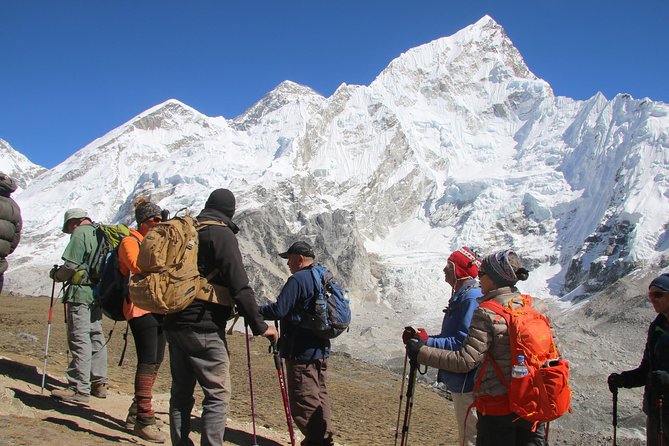
- Two acclimatization pauses in Namche to help you adjust before higher nights
- Permits and TIMS handled so you spend time walking instead of paperwork
- Lukla flight logistics included, with a strict 15 kg luggage limit
- High points that pay off: Everest Base Camp (5160m) and Kalapattar (5545m)
- Private tour with only your group plus an English-speaking guide and porters
- Sleeping baggage provided and refundable after the trek ends
Everest Base Camp, but with a breathing-friendly altitude plan
This trek is not shy about height. You’ll start from Phakding at 2652m, then climb to Namche Bazaar at 3440m, and you’ll keep sleeping higher as you move toward Tengboche, Dingboche, Lobuche, Everest Base Camp, and finally Kalapattar. Since many trekking days climb above 4500m, the risk of AMS (acute mountain sickness) is real here, not theoretical.
That’s why the schedule’s built-in rest matters. You have a full acclimatization day in Namche Bazaar (Day 4), and another acclimatization day later (Day 7). In plain terms: you’ll walk enough to keep fit, then pause long enough to let your body adapt. If you’ve ever rushed an altitude change and felt it in your head or lungs, this “slow first, high second” pacing is the smart move.
The second big thing: you’re not just climbing to a single high point and turning around immediately. You’ll reach Everest Base Camp, then you’ll go back down to Gorekshep and later climb to Kalapattar at 5545m before dropping to lower villages. That up-and-down approach is a good match for what your body needs, if you take it seriously.
You can also read our reviews of more tours and experiences in Kathmandu.
Price and logistics: what $900 really buys (and what it doesn’t)
At $900 per person, the value comes from what’s included rather than what’s added on later. Your package covers a lot of the “hard parts” that can turn an Everest trip into a planning headache:
- Airport transfers in Kathmandu
- Kathmandu–Lukla–Kathmandu flights
- An English-speaking guide plus necessary porters
- Everest National Park permit, TIMS, and community fees
- Staff insurance, equipment/medicine, accommodation, food, and salaries
- A first aid kit and sleeping baggage used during the trek
- A complimentary farewell cultural Nepali dinner on the last day
Now the tradeoffs. The big one is that all foods during the trek are not included. Also, beverages, alcoholic drinks, mineral water, and boiled water during trekking aren’t included. Hot showers aren’t included either. And if weather messes with flights, helicopter charter fees aren’t included.
That means you should budget for daily meals and hydration on the trail, plus Kathmandu costs that aren’t included (like lunches/dinners and other expenses). If you’re the kind of traveler who likes knowing every meal is paid for, this is not that kind of trip. If you’re okay managing food day-to-day with your guide’s input, it’s a solid budget fit.
Day-by-day breakdown: 14 days from Kathmandu to the high points
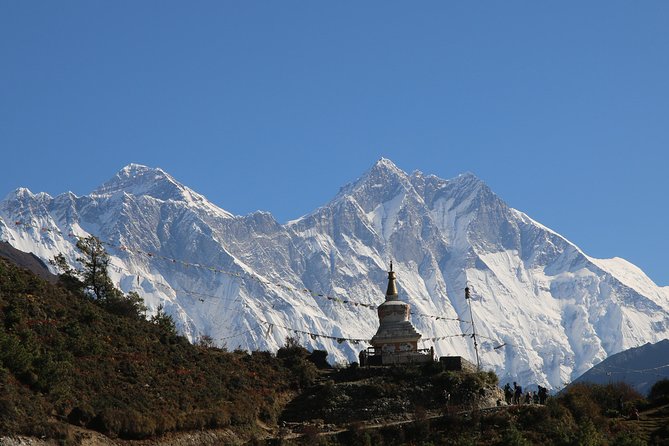
Here’s how the trek unfolds, and what each section means for your body and your expectations.
Day 1: Arrival and Kathmandu transfer
You’ll get picked up at the international airport in Kathmandu and transferred to a hotel. This is your buffer day. Use it to rest, eat something familiar, and start thinking about altitude. Keep things simple.
Day 2: Fly to Lukla, trek to Phakding (2652m)
After the Kathmandu–Lukla flight, you hike to Phakding for about 3–4 hours. This day is short enough to keep you from feeling “behind,” but it still gets you moving right away. Expect a warm-up effort more than a conquest.
Day 3: Phakding to Namche Bazaar (3440m)
You’ll climb to Namche Bazaar for roughly 5–6 hours. Namche is where altitude starts to feel more personal. Take it slow, and don’t treat this like cardio training. You’re learning the rhythm you’ll need all trek.
Day 4: Acclimatization day in Namche Bazaar
This is a key day. You stay in Namche for acclimatization. The point is not to “push hard,” it’s to help your body adjust before higher sleeping elevations. If you feel head pressure or unusual fatigue, your best strategy is calm activity, plenty of fluids, and early sleep.
Day 5: Namche to Tengboche (3860m)
Trek for about 5–6 hours to Tengboche (3860m). The hike is longer than the “easy days,” but not extreme on paper. In practice, the thinner air turns steady walking into real work. Pace is your friend.
Day 6: Tengboche to Dingboche (4410m)
You hike around 5–6 hours to Dingboche (4410m). You’re getting close to the altitude band where AMS risk increases sharply. Watch how you breathe at rest, not only while walking.
Day 7: Second acclimatization day (Dingboche area)
You get another acclimatization day. This is where the itinerary earns its keep. Don’t rush this day. Your goal is to arrive at the next stage feeling better than when you started.
Day 8: Dingboche to Lobuche (4910m)
About 5–6 hours to Lobuche (4910m). The climb is a reminder of why slow acclimatization matters. By now, even small delays for breath control can feel significant.
Day 9: Lobuche to Everest Base Camp (5160m) and back toward Gorekshep
You’ll trek to Everest Base Camp around 5–6 hours, then return to Gorekshep. This day is the emotional peak. It’s also physically demanding—because you’ll be both going and coming back at high elevation. Treat it as a big day, not a speed trial.
Day 10: Kalapattar hike (5545m) and down to Pheriche (4210m)
You hike up to Kalapattar (5545m) for about 6–7 hours total, then descend to Pheriche at 4210m. Kalapattar is the highest point listed, and it’s also the most punishing on your breathing. Descending afterward is not a victory lap—it’s a recovery phase. Walk carefully and keep your steps steady.
Day 11: Pheriche back to Namche Bazaar
Another 6–7 hours down the corridor to Namche. This is good for your legs and your lungs, because you’re losing altitude while still staying active. Still, long descents can beat up knees if you don’t control your pace.
Day 12: Namche back to Lukla
You trek around 6–7 hours to Lukla. By now, you know the trail’s rhythm. Mentally, it’s a transition day: less “achievement,” more “home stretch.”
Day 13: Fly back to Kathmandu (1337m)
You fly from Lukla to Kathmandu (1337m). The air feels thicker right away, and you’ll likely feel it in your sleep and energy level.
Day 14: Final departure
Your trip ends with departure to your onward destination. You’ll also have that farewell cultural Nepali dinner on the last day.
What the guide and porters do for you (and why it matters on budget treks)
This trek includes one professional English-speaking trekking guide and necessary porters. On Everest Base Camp, that’s not a luxury—it’s a safety and efficiency boost.
Your guide helps you:
- stay on schedule while respecting altitude reality
- manage the flow of days so you actually get those acclimatization pauses
- handle the required trek paperwork framework through included permits and TIMS
The company behind this trek is listed as Global Holidays Adventure P. Ltd, and in their communications they’ve referenced Surya and Samsher as key contacts. That kind of planning support shows in how the trip is run: you don’t have to do the logistics homework yourself.
Private tour also matters here. The tour is private, meaning it’s only your group. That can help if you prefer a consistent pace and want fewer variables than you’d get in a shared group situation.
Packing for Lukla: 15 kg means plan ahead
The Lukla flight rule is very clear: only 15 kg of luggage per person is allowed. That limit shapes your whole packing strategy.
Practical approach:
- pack only what you truly need for cold nights and layered hiking days
- keep essentials easy to access, because you’re dealing with a high-elevation environment where discomfort turns into problems fast
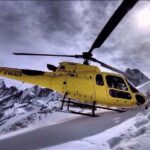
Also remember: flight delays and cancellations due to bad weather can happen in the mountains. The package notes that helicopter charter fees are not included, and that’s exactly the kind of risk you’ll want to think about when deciding on travel insurance.
Permits and TIMS: the boring stuff that keeps your trek smooth
You don’t need to hunt down paperwork or figure out fees on your own. The trip includes:
- Everest National Park permit
- TIMS (Trekking Information Management System)
- local community fees
This matters because your trek is part of a regulated system. When permits and cards are handled properly, you spend your energy hiking instead of waiting.
For your own sanity, keep your passport info and travel documents organized. Even when things are included, you’ll want quick access if asked.
Fitness and altitude sickness: the honest way to prepare
This trek is described as suitable for people who are moderately fit. No previous adventure experience is required, but you should prepare with physical fitness activities like running, swimming, and walking. That matters less for “toughness” and more for how quickly you recover between walking hours.
If you have pre-existing medical conditions, the info is clear: you should seek medical advice before considering the trek. That’s not scare talk. Altitude changes your physiology, and you don’t want to guess.
During the trek, the itinerary itself signals caution:
- multiple days above 4500m
- explicit acclimatization days
- an approach that includes both high points (Everest Base Camp, Kalapattar) and recovery descents (Pheriche, Namche, Lukla)
If you want a simple rule for yourself: let your guide’s pacing drive the plan, not your ego.
Where the views pay off: Everest Base Camp and Kalapattar
The itinerary is built around two big “I came here for this” moments.
First is reaching Everest Base Camp at 5160m (Day 9). On a budget trek, this is the heart of the trip because it turns all the planning into one clear objective: you’ll get there on foot, step by step.
Second is Kalapattar at 5545m (Day 10). Higher than Everest Base Camp in this plan, it’s the kind of day that tests breathing but rewards you with that sense of scale you can’t get from photos.
And then you do the part many people underestimate: you go back down to Pheriche (4210m). The mountains don’t care how inspired you feel; your body needs descent to recover.
Should you book this Everest Base Camp budget trek?
I think this trek is a strong choice if you want:
- a guided, private plan with permits and logistics handled
- a serious altitude approach with acclimatization days
- the value of included flights to Lukla and key trek support
Skip it (or at least ask more questions before booking) if you:
- want meals and drinks included on the trail
- need hot showers as part of comfort expectations
- can’t commit to the 15 kg Lukla luggage limit
- have medical concerns and haven’t gotten clearance for high altitude
If you’re ready to walk, pace yourself, and budget for food and hydration, this is the kind of Everest Base Camp experience that feels real—not padded.
FAQ
How long is the Everest Base Camp budget trek?
It’s listed as 14 days approximately, including travel between Kathmandu and Lukla and the full hiking route to and from Everest Base Camp.
Where does the trek start and end?
It starts in Kathmandu with an airport pickup and hotel transfer, then ends in Kathmandu after flying back from Lukla.
What is included in the price?
The package includes airport transport in Kathmandu, Kathmandu–Lukla–Kathmandu flights, a professional English-speaking trekking guide, necessary porters, Everest National Park permit, TIMS card fees, local community fees, first aid kit, sleeping baggage, and a farewell cultural Nepali dinner on the last day.
Is international airfare included?
No. International airfare and Nepal entry visa fees are not included.
Are meals included during the trek?
No. All foods during the trekking are not included, and beverages, alcoholic drinks, mineral water, and boiled water during the trekking are also not included.
How much luggage can I bring on the Lukla flights?
Lukla flights allow only 15 kg of luggage per person.
Do I need an Everest National Park permit and TIMS?
The trip includes the Everest National Park permit and TIMS card fees, so you don’t have to purchase those separately.
Is there a guide and porters?
Yes. The trek includes one professional English-speaking trekking guide and necessary potters/porters.
What is the highest elevation on the itinerary?
The highest point listed is Kalapattar at 5545m. Everest Base Camp on the itinerary is at 5160m, and the route includes many days above 4500m.
Is the tour private?
Yes. It’s listed as a private tour/activity, with only your group participating.
What is the cancellation timeframe for a full refund?
You can cancel up to 24 hours in advance of the experience’s start time for a full refund.