REVIEW · KATHMANDU
Annapurna Base Camp Trek
Book on Viator →Operated by Ace the Himalaya · Bookable on Viator
Hike into the Annapurna Sanctuary. This 13-day trek is built around the big prize: Annapurna Base Camp at 4,130 m and the dramatic surround of Annapurna peaks and Machapuchhre, plus a close-up look at modern hill life along the way.
I really like two things here: the Poon Hill sunrise morning early enough to beat the clouds, and the way the team handles the hard parts of logistics so you can focus on walking and adjusting to altitude. Guides I’ve seen associated with this company include Ramesh Karki and Maddy, often backed by assistant support such as Bhawishya KC and a porter crew that makes steep, rocky days feel manageable.
One consideration before you book: you’ll earn the views. This trek asks for moderate fitness and lots of steps, and the included support still means you should pack light because porters carry the load. Also, travel insurance covering high-altitude rescue and evacuation is not included, so you’ll want to line that up before you go.
In This Review
- Key highlights that matter
- Kathmandu arrival: the easy start that sets the tone
- Pokhara lakeside: a calmer base before the real climbs
- From Pokhara to Tikhedhunga: a gentle first day that’s not actually short
- Ulleri, Ghorepani, and the Poon Hill sunrise morning
- Chhomrong to Dovan: rhododendron forests and the rhythm change
- Machapuchhre Base Camp and the Annapurna Base Camp wall of views
- Jhinu Danda hot springs: the descent reward you’ll remember
- Final days: the easy walk out, Pokhara by boat, then Kathmandu
- Price and logistics: what $1,350 actually covers
- Guides, porters, and group size that affects your pace
- Packing and training: how not to suffer more than necessary
- Who should book this Annapurna Base Camp trek (and who should slow down)
- Should you book Ace the Himalaya for Annapurna Base Camp?
- FAQ
- How long is the Annapurna Base Camp trek?
- Where does the trip start and end?
- What’s included in the trekking portion?
- What are the hotel arrangements in Kathmandu and Pokhara?
- Do you provide permits and transportation?
- Do I need travel insurance?
- Is tipping included?
- What happens if weather is poor?
- Can I get a refund if I cancel?
Key highlights that matter
- Poon Hill sunrise at about 3,210 m for wide, early-morning mountain views
- Porter support (1 porter for every two clients) so you’re not hauling everything yourself
- Permits and national park fees included, which removes a bunch of paperwork stress
- Two nights each in Kathmandu and Pokhara in three-star hotels, then guesthouse trekking for 8 nights
- Hot springs at Jhinu Danda after a long day of descending (and yes, it’s a real payoff)
- Small group size (max 15), which usually keeps the pace and communication better
Kathmandu arrival: the easy start that sets the tone
You land at Tribhuvan International Airport and get met by an airport representative holding an Ace the Himalaya sign. From there, you’re transferred to a three-star hotel in Kathmandu in a private tourist vehicle.
This trip also includes a pre-trip meeting in the company office, either on Day 1 or Day 2. It’s not just a chat. Bring your passport, three passport-size photos, and a readable copy of your travel insurance policy. You’ll also clear any due balance (if applicable), then sign the trip paperwork and a non-liability disclaimer.
Why this matters: when the meeting is handled in advance, you’re less likely to scramble for documents or misunderstand what’s included. It also gives you a chance to ask practical questions before you ever hit the trail.
You can also read our reviews of more tours and experiences in Kathmandu.
Pokhara lakeside: a calmer base before the real climbs
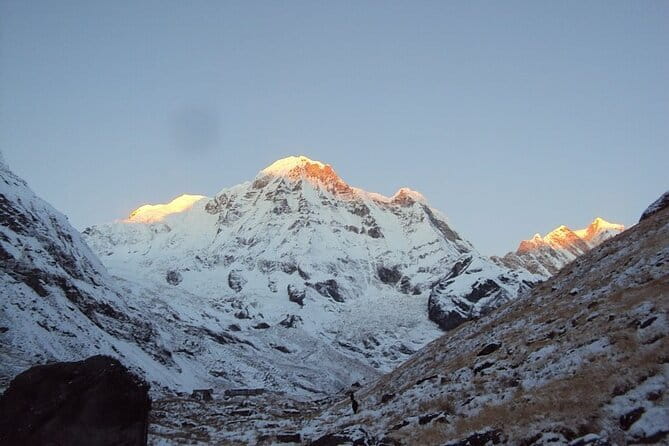
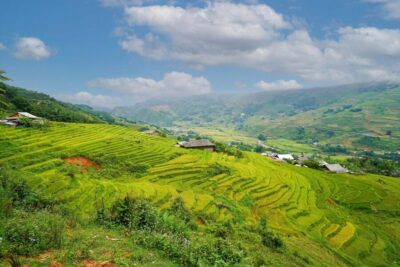
On the morning transfer day, the staff pick you up at about 6:30 am and move you to the tourist bus station for the ride to Pokhara (leaving around 7:30 am). Pokhara is much less intense than Kathmandu, and it’s also where you get your first big taste of the Annapurna region’s look—Annapurna and Machapuchhre in the north, with other giants hinted around the horizon.
Pokhara lakeside is also a smart timing choice. After the bus ride and a hotel check-in, you get a softer rhythm before the walking starts. You even get a later lakeside break at the end of the trek with a boat trip to Barahi Temple.
Value tip: use Pokhara time to eat well, hydrate, and rest. Your legs will notice the difference on the first two trekking days.
From Pokhara to Tikhedhunga: a gentle first day that’s not actually short
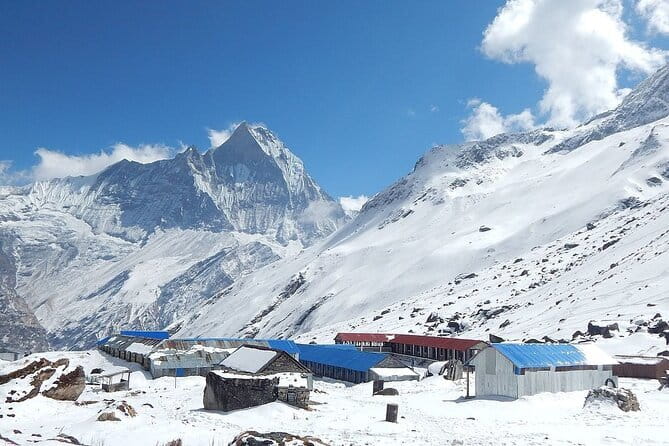
You start trekking after an hour drive from Pokhara to Nayapul. From there, you walk along the Modi Khola bank and reach Birethanti (about 1,015 m), a village area with shops and teahouses.
Then the trail climbs steadily up valley sides—first to Hille (about 1,495 m), then onward to Tikhedhunga (about 1,570 m). Today is described as relatively short and easy, and it’s true compared with later days—but it still gets you moving and used to a daypack rhythm.
Practical note: this first walking day is where people either get into good walking form or start speeding. Keep a steady pace. This isn’t the day to sprint for camp.
Ulleri, Ghorepani, and the Poon Hill sunrise morning
From Tikhedhunga, you work toward Ulleri (about 2,070 m) and then through forests of oak and rhododendron. The climb continues through Banthanti (about 2,250 m) and Nangethanti (about 2,460 m) to Ghorepani (about 2,840 m).
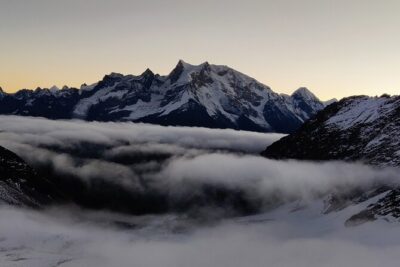
The next morning is the star: an early hike to Poon Hill at about 3,210 m. Plan for a start early enough to catch sunrise with a clearer view. At the viewpoint, you’ll spend about an hour, then return to Ghorepani for a hot breakfast.
Then you keep moving: ridge walking through pine and rhododendron forests toward Deurali (about 2,960 m), with a descent back down toward Banthanti and a turn toward Tadapani.
Why Ghorepani and Poon Hill are so important: they’re your altitude confidence boost. Even if later days feel harder, this is where you see the big mountain payoff early, before you’re fully deep in the Sanctuary.
Chhomrong to Dovan: rhododendron forests and the rhythm change
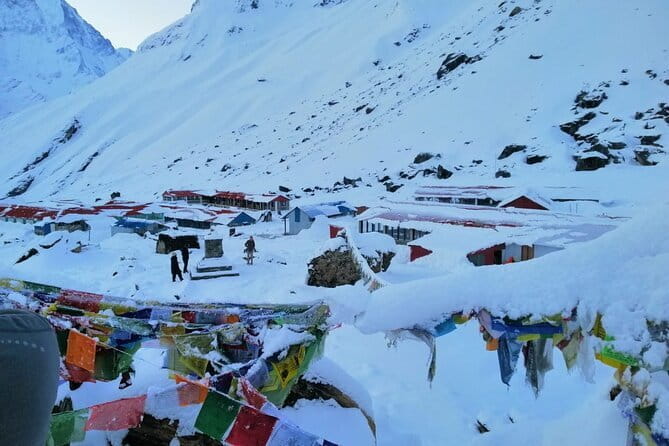
After Tadapani, the route drops steeply through rhododendron forests to Gurjung, a Gurung village area, and then continues to Chhomrong (about 2,140 m).
Chhomrong is one of those trekking-day transition points. You’re leaving a forested, valley-wrapped world and getting ready for more dramatic terrain.
Day after that includes a major change in feel. The trail drops toward the Chomrong Khola and then you climb again to Khuldighar (about 2,380 m), where there used to be an ACAP check post. From there, you follow a steep-down-and-level route through bamboo and rhododendron forests, keeping to the west side of the river, reaching the Himalayan Hotel area.
Reality check: expect stairs, steep sections, and lots of “step, step, step.” This is also a good time to remember a tip people often learn the hard way—train for stairs before you come. It helps more than you’d think.
Machapuchhre Base Camp and the Annapurna Base Camp wall of views
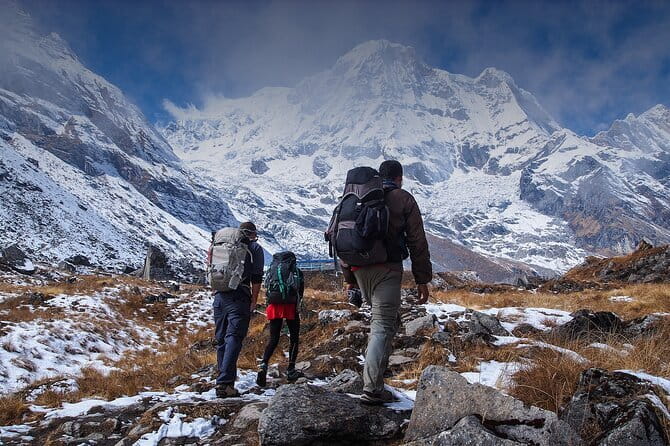
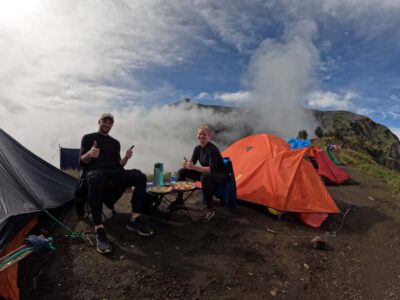
This is the day most people picture when they think of Annapurna Base Camp. The trail climbs past Hinko Cave and Deurali and continues toward Machapuchhare Base Camp. Important detail: Machapuchhare Base Camp is not really a climbable base camp in the normal sense because climbing Machapuchhre isn’t permitted, so you’re mostly there for the scenery.
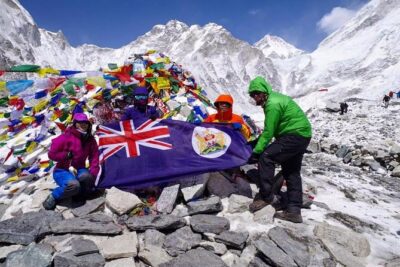
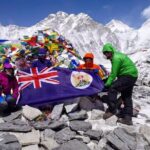
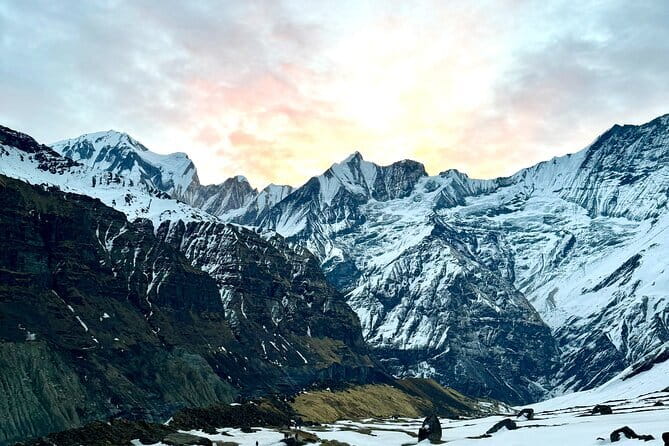
From Machapuchhre Base Camp, it takes about two hours to reach Annapurna Base Camp at 4,130 m. When you arrive, you’re in the Annapurna Sanctuary: peaks around you on multiple sides, with views that feel locked in place.
After that, you come back down the same general way to bamboo and teahouse areas around 2,345 m.
Altitude note that you should take seriously: even if the itinerary keeps your walking moving, you still need to go slow and keep breathing steady. Don’t force speed just because everyone else seems to be moving.
Jhinu Danda hot springs: the descent reward you’ll remember
On the way back down, you follow the trail until Chomrong, and after Khuldighar the route continues through rhododendron and bamboo fields. Then you reach Jhinu Danda, where you can bathe in natural hot springs.
If you’ve never done hot springs after a long mountain day, it’s hard to describe the relief. Your legs will feel different within minutes, and it’s also a morale boost before the final leg toward Pokhara.
One more reason to appreciate this day: the walking after Jhinu can feel like a victory lap because you’re already through the hardest altitude push.
Final days: the easy walk out, Pokhara by boat, then Kathmandu
From Jhinu, you walk along the right side of Modi Khola for about 4.5 hours to Birethanti and then on to Nayapul. It’s described as one of the most relaxing walks of the trek, and you’ll feel why once the steep days are behind you.
Then you drive back to Pokhara for a hotel check-in. In the afternoon, you head to Fewa Lake for a boating trip to Barahi Temple.
Next morning you drive back to Kathmandu. That evening includes a farewell dinner at a traditional Nepalese restaurant with cultural performances—an upbeat, lower-effort end after days of trail focus.
Finally, on the last day you’re dropped at Tribhuvan International Airport for your departure.
Price and logistics: what $1,350 actually covers
At $1,350 per person, this trek is pricing itself as a full-service package. And that matters here, because Annapurna Base Camp isn’t just walking—it’s permits, guides, transport, and the day-to-day decisions that keep a trek running.
Included highlights:
- Airport transfers, plus bus between Kathmandu and Pokhara and vehicle between Pokhara and Nayapul
- Three-star hotels in Kathmandu (2 nights) and Pokhara (2 nights), with twin-share/double rooms
- Guesthouse lodging for 8 nights on trek (twin-share and dormitory rooms)
- A licensed English-speaking trekking guide
- 1 porter for every two clients
- Trekking permits
- Meals mostly covered on trekking days: breakfast (12), lunch (9), dinner (9)
- Free Ace the Himalaya duffel/kit bag and sun hat
- All government taxes, VAT, and official expenses
Not included:
- Travel insurance (especially important for high-altitude rescue/evacuation)
- Nepal entry visa and international airfare
- Lunch and dinner in Kathmandu and Pokhara
- Personal drinks and alcoholic drinks
- Tips for trekking staff and driver (tipping is expected)
- Personal trekking equipment
Value take: the biggest “you’re getting your money’s worth” items are the guide and porter support, the permits, and the fact that transport and lodging are handled for you. You still pay for your own insurance and visa, but you avoid a lot of the common trekking headaches.
Guides, porters, and group size that affects your pace
This trip runs with a maximum of 15 travelers. That’s not huge, and it tends to keep things from turning into a moving crowd.
The support team structure is consistent: licensed English-speaking lead guide plus porter support at about 1 porter per two clients. In past experiences with this company, I’ve seen lead guides such as Raj Kumar, Ramesh Karki, Maddy, Ganesh, Shyam, and Resham—supported by assistant guides like Bhawishya KC. Porters I’ve seen named include Prakash, Bhagwan, Tenzing, Shantiraj, Ram Prasad, Tika Ram, Lumbu Dai, Robin, Binod, Santosh, Sauma, Yogendra, Milan, and Hom (among others).
You’ll care about names less than you care about behavior. A good guiding team keeps your pace realistic, helps you with altitude questions, and makes sure you’re not stuck waiting around for simple logistics.
Packing and training: how not to suffer more than necessary
The trek gives you a free duffel/kit bag and sun hat, which helps with the basics. But you still need to bring what you need personally.
Two practical lessons show up again and again:
- Don’t overpack. Porters carry your load, so pack only what you’ll actually use.
- Train for stairs. A lot of trekking feels like endless steps, especially when you’re tired and the trail is uneven.
What I’d do if you’re planning now: practice hikes with stairs or repeated step climbing a few times a week. Then pack with rules: fewer layers, better layering, and gear that dries fast.
Who should book this Annapurna Base Camp trek (and who should slow down)
This trek is a good fit if you:
- Have a moderate fitness level and can handle daily walking with steep moments
- Like structured support, especially for permits, lodging, and transport
- Want the big Annapurna scenery reward without having to plan every logistics step yourself
You might want to think twice or talk to your doctor first if you’re:
- Not comfortable with sustained hiking and repeated elevation changes
- Not ready to manage altitude with a slower pace and steady breathing
- Relying on a trip package without strong travel insurance coverage
A smart way to choose: if you’re the type who likes clear schedules, known guides, and a team carrying some of the burden, this fits well.
Should you book Ace the Himalaya for Annapurna Base Camp?
I’d book this trek if you want a well-run, full-service approach: guides, permits, transport, and meals mostly handled, with a porter ratio that keeps your pack realistic. The combination of Poon Hill sunrise, Sanctuary trekking to ABC at 4,130 m, and the Jhinu hot springs payoff is a classic Annapurna arc done with practical support.
If you’re the independent type who wants to self-plan permits, routes, and lodging at every step, you might choose another style of trek. But for most people aiming to reach Annapurna Base Camp with less stress and better pacing, this package is a strong option.
FAQ
How long is the Annapurna Base Camp trek?
The trek is listed as about 13 days.
Where does the trip start and end?
It starts with an airport pickup at Tribhuvan International Airport in Kathmandu and ends with a drop-off back at Tribhuvan International Airport.
What’s included in the trekking portion?
The package includes a licensed English-speaking trekking guide, permits for trekking, guesthouse accommodation during the trek, and most meals on trekking days, plus a porter for every two clients.
What are the hotel arrangements in Kathmandu and Pokhara?
You get three-star hotel rooms in Kathmandu (2 nights) and Pokhara (2 nights), in twin-share or double rooms.
Do you provide permits and transportation?
Yes. Trekking permits are included, and you’ll have tourist bus transport between Kathmandu and Pokhara and a tourist vehicle between Pokhara and Nayapul.
Do I need travel insurance?
Travel insurance is not included, and it’s important for high-altitude rescue and evacuation coverage.
Is tipping included?
Tipping is expected, and tips for trekking staff and drivers are not listed as included.
What happens if weather is poor?
This experience requires good weather. If it’s canceled due to poor weather, you’ll be offered a different date or a full refund.
Can I get a refund if I cancel?
You can cancel up to 3 days in advance for a full refund. If you cancel less than 3 full days before the start time, the amount paid will not be refunded.