REVIEW · KATHMANDU
12 Days Everest Base Camp Trek
Book on Viator →Operated by himalayan sanctuary adventure private limited · Bookable on Viator
Few treks match Everest Base Camp for sheer awe. This 12-day route through the Khumbu keeps the logistics handled—permits, domestic flights, and teahouse stays—so you can focus on the trail, the villages, and the mountain moments that feel almost unreal.
What I like most is the mix of real support and real mountain time: you get an English-speaking, government-licensed guide plus a porter service (planned as 1 porter for 2 trekkers). I also like that the itinerary builds in acclimatization days in Namche Bazaar and Dingboche, not just a long climb with wishful thinking.
The one possible drawback is the biggest Everest reality: flights can be delayed or canceled due to weather. You should plan for waits at Lukla or Kathmandu, even when everything is scheduled.
In This Review
- Key highlights worth caring about
- A Trek That Feels Organized, Not Chaotic
- Kathmandu to Lukla: Day 1’s Big Moment Starts Early
- Phakding to Namche Bazaar: Rivers, Suspension Bridges, and a Real Entrance to the Park
- Namche Acclimatization: Sunrise Views and a Gentle Second Climb
- Tengboche to Dingboche: Monastery Time and Altitude Practice
- Lobuche, Gorak Shep, and Everest Base Camp: When the Trek Gets Long
- Kala Patthar at Dawn and the Descent Back to Namche and Lukla
- Food, Teahouses, and Porter Support: What’s Actually Included
- Price and Logistics: Is $1,390 Good Value for Everest Base Camp?
- Who Should Book This Trek (and Who Might Reconsider)
- Should You Book This 12-Day Everest Base Camp Trek?
- FAQ
- What time do we meet on Day 1?
- Is airport pickup and hotel transfer included in Kathmandu?
- Are trekking permits and paperwork handled for me?
- What flights are included in the trek?
- Are teahouse accommodations and meals included?
- Do I get a guide and porter support?
- What costs are not included in the $1,390 price?
- What if the Lukla flight gets delayed or canceled?
- Can I cancel and get a full refund?
Key highlights worth caring about
- Permits and paperwork handled (TIMS and Sagarmatha/National Park permit) so you’re not scrambling on arrival
- Private group tour meaning only your party participates
- Teahouse lodging plus full trek meals (breakfast, lunch, dinner during the trek)
- Climb smart with acclimatization stops in Namche Bazaar and Dingboche
- Classic view days built in (including sunrise viewpoints and Kala Patthar)
- Local service that’s stayed consistent—communication and staff support were specifically praised by past guests, including help from Bishnu
A Trek That Feels Organized, Not Chaotic
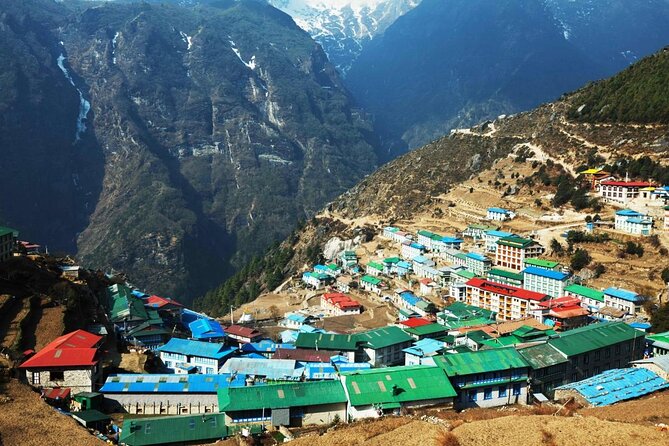
Everest Base Camp sounds like a bucket-list leap, but the best versions of this trek feel managed. This one is built to take care of the stuff that can stress you out: trekking permits, domestic flights between Kathmandu and Lukla, and pre-arranged teahouse accommodations along the way.
That matters because Everest isn’t just about trekking. It’s paperwork, altitude, timing, and small decisions each day. When those basics run smoothly, you’re more likely to walk at the right pace and actually enjoy the scenery as it changes day by day.
You’re also traveling as a private group. That tends to make the daily rhythm feel calmer—less waiting around, fewer mismatched hiking speeds, and more straightforward guidance from your leader.
And yes, there’s a practical detail that can make a difference: you’re told a mobile ticket is used, plus pickup and drop in Kathmandu is offered, so Day 1 doesn’t start with a scavenger hunt.
You can also read our reviews of more tours and experiences in Kathmandu.
Kathmandu to Lukla: Day 1’s Big Moment Starts Early
Day 1 begins with a serious early start: the meeting time is 5:15 am, and the schedule is built around getting you into Lukla quickly. From Kathmandu, you take a short domestic flight—about 30 minutes—to Lukla, then start hiking to Phakding.
Phakding is at about 2,651m / 8,700 ft, and the first trek stretch is typically 3–4 hours. The trail runs through places like Cheplung village, and the view component is part of the payoff—there’s mention of a spectacular look out at Mt. Khumbila, a sacred mountain that has never been summited.
What I like about Day 1 is that it gives you a taste of the Khumbu without immediately grinding you down. You’re walking, sure, but you’re also settling into the reality that you’re already in the mountains. Teahouse lodging is arranged, and you’ll have meals covered during the trek.
Also, Lukla-to-Phakding timing matters. If you arrive tired, you tend to overpace. If you arrive rested, you can start moving with purpose and save energy for the altitude work ahead.
Phakding to Namche Bazaar: Rivers, Suspension Bridges, and a Real Entrance to the Park
By Day 2, you’re moving on from Phakding toward Namche Bazaar, around 3,438m / 11,280 ft. Expect about 4–5 hours on the trail.
This is the day you feel the geography tighten. You cross the Dudh Koshi River, pass Chumoa and Monjo villages, and reach the entrance area for Everest National Park. Then you’re walking alongside the rivers—Dudh Koshi and Bhote Koshi—with a steep trail section that keeps your legs awake.
The suspension bridge element matters more than it sounds. Bridges are where you learn how the trail changes with every step—wind exposure, footing, and the way you’ll need to keep your focus when you’re slightly tired.
You’ll also get your first real “I’m here” moment at Namche. It’s one of the most important towns in this region because it’s a hub: markets, guesthouses, and the feeling that civilization and mountain trails overlap.
Overnight is in Namche Bazaar, and that sets you up perfectly for Day 3’s acclimatization plan.
Namche Acclimatization: Sunrise Views and a Gentle Second Climb
Day 3 is an acclimatization day in Namche Bazaar, staying around 3,440m / 11,284 ft. You explore Namche itself, then hike toward viewpoints connected to Sagarmatha National Park.
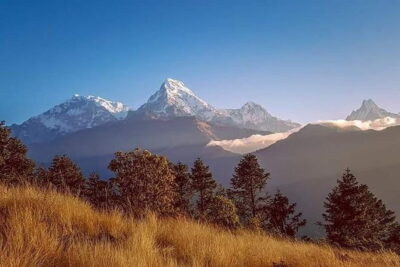
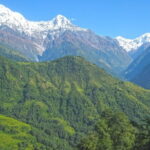
This is where the trek becomes less about effort and more about time. The plan includes enjoying sunrise over the Himalayas with views that can include Mt. Everest, Lhotse, Nuptse, Ama Dablam, Thamserku, and Kongde. That list tells you the scale: you’re not just seeing one peak, you’re seeing a whole system of giants.
There’s also an optional day hike to Khumjung village if you want something more than viewpoints. That kind of flexibility can help if your group includes different fitness levels. You can choose the amount of walking without ruining everyone’s day.
Why this acclimatization day is so valuable: altitude doesn’t care how tough you are. You want your body to adjust before you go higher. Namche offers the right mix of movement and recovery—plus the comfort of teahouse life already lined up.
Tengboche to Dingboche: Monastery Time and Altitude Practice
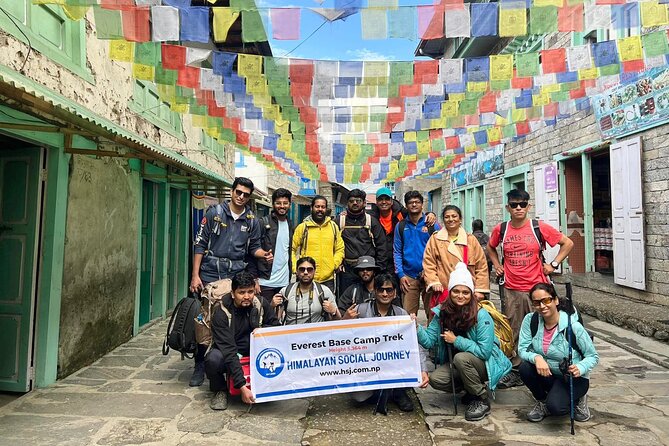
Day 4 takes you from Namche toward Tengboche, around 3,870m / 12,694 ft. Expect 5–6 hours, and the route includes a steady climb with an easier section until Phunki.
Tengboche is famous for its monastery, and this trek includes a visit to the Tengboche Monastery, described as the biggest monastery in the Everest region. It sits within the protected area of Sagarmatha National Park, a UNESCO World Heritage Site, which adds a layer of meaning beyond just stopping for photos.
One practical detail: the monastery opens around 3:00 pm. The trek description notes that if you reach by about 4 o’clock, you may catch a Buddhist religious ceremony. If you do, it’s a real cultural moment, not a manufactured performance.
On Day 5, you move on to Dingboche (about 4,360m / 14,300 ft). The day includes downhill walking toward Debuche, crossing the Imja River, passing Pangboche, and exploring Pangboche Monastery before continuing to Dingboche.
Day 6 is another acclimatization day, this time in Dingboche, staying there for a full day. The hike behind Dingboche is described as about four hours, built specifically to give you views of major peaks like Lhotse, Makalu, and Cho Oyu.
This is one of the smarter design choices in the trek. Dingboche gives you a recovery day while still keeping you active. You’re not just sitting at altitude waiting to see if you’ll feel okay. You’re learning how your body reacts while staying within the day’s manageable effort.
Lobuche, Gorak Shep, and Everest Base Camp: When the Trek Gets Long
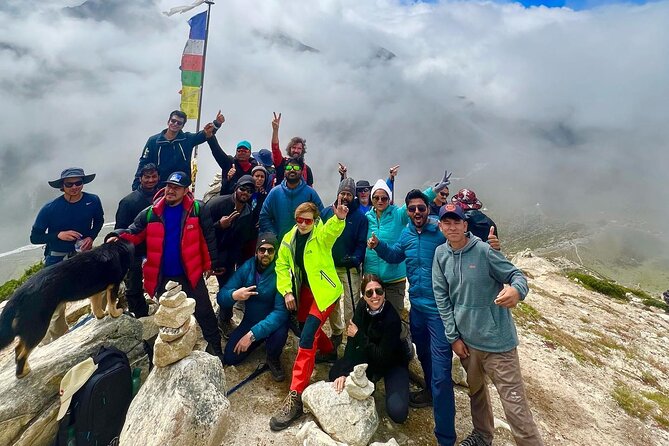
Day 7 pushes toward Lobuche at about 4,900m. The walking time is around 7 hours / 9 km. You head along the Himalayan trail toward Everest Base Camp’s region, with big mountain views as you approach.
Day 8 is the heart of the base-camp segment. You go from Lobuche to Gorak Shep (around 5,160m), then continue to Everest Base Camp at 5,365m. This is described as a long day: nearly 12 hours and about 17 km, with an important rhythm—check into your lodge at Gorak Shep, have lunch, then walk to base camp for the views.
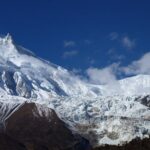
You’re also not just “getting to a place.” The base camp area is about perspective. From the route, you can see peaks such as Nuptse, Khumbuste, and Pumori. Even without technical knowledge, the geometry hits you: glacier lines, ridgelines, and how the valleys channel everything toward the big wall of Everest.
Then you walk back to Gorak Shep for overnight. That bounce—up to base camp, then back to sleep—keeps the day from being only one-way excitement. It also matters for stamina. It’s long, but structured.
Kala Patthar at Dawn and the Descent Back to Namche and Lukla
Day 9 includes the trek’s altitude “payoff” day. You start early, hike to Kala Patthar at about 5,555m, then descend to Pheriche (around 4,200m) for the night.
The description notes it takes about three hours to reach the summit point of Kala Patthar. After time at the top, you head back to Gorak Shep for lunch first, then continue down to Pheriche. That down-first structure is important. You’ll feel the difference when you stop climbing and start moving into lower air.
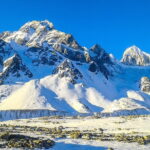
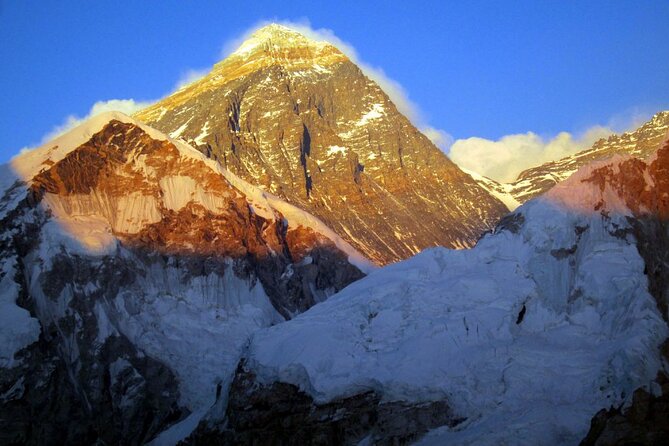
Kala Patthar is the kind of viewpoint that makes people go quiet. You’re higher than the base camp area, so you’re seeing Everest with a different angle. The plan specifically calls out views of Everest and other surrounding peaks like Lingtren, Khumbutse, and Changtse.
Day 10 is the start of leaving the highest zones behind. You descend back through villages like Pangboche and Tengboche and reach Namche Bazaar in the afternoon. It’s about a 5-hour trek, and overnight returns to a guesthouse setting.
Day 11 brings you from Namche back to Lukla (around 2,804m), roughly 6–7 hours. This day is both physical and emotional: it’s where the trek ends, and the description includes time to reflect with the group. The afternoon is free, and it mentions you can relax and enjoy a hot shower before celebrating later in the evening.
Then Day 12 is the flight back to Kathmandu, with transfers to your hotel.
Food, Teahouses, and Porter Support: What’s Actually Included
An all-inclusive trek can mean different things. Here, the key is that teahouse accommodation and meals are included during the trek: breakfast, lunch, and dinner are covered in the mountain portion.
That matters because food on Everest routes can be pricey if you’re buying everything. Having meals lined up helps you keep pace without constantly budgeting in your head.
You also get porter support planned as 2 trekkers per 1 porter. That’s a big deal on this kind of itinerary. You still carry your essentials, but you’re not dragging everything up day after day at altitude.
There’s also an experienced English-speaking, government-licensed trekking guide and a medical kit carried by your trek leader. Staff costs are included too, covering salary, insurance, equipment, domestic airfare, food, and accommodation.
What’s not covered includes things that often surprise people: personal expenses, phone calls, laundry, battery recharge, extra porters, bottle or boiled water, and most importantly any hot and cold drinks or snacks like soda and bottled mineral water. Tips for guide and porter are also not included.
My practical take: the included meals and porter plan protect your energy and your schedule. The extra costs are mostly optional comfort items, not the basic survival plan of the trek.
Price and Logistics: Is $1,390 Good Value for Everest Base Camp?
At $1,390 per person, this trek is positioned as a full-service package. To judge value, look at what you’re not paying separately.
Your price includes:
- domestic flights Kathmandu–Lukla–Kathmandu
- teahouse accommodation and trek meals
- guide and porter support
- permits and paperwork (National Park permit and TIMS)
- airport pickup and drop in Kathmandu
- local taxes and government-related costs
- a medical kit carried by your leader
When you total those pieces on your own, they start to look like a lot of individual bookings and handoffs. The budget you save isn’t just money; it’s the mental load. Everest planning gets expensive when you start piecing together permits, flights, lodging, and who carries what. Here, the package attempts to cover that coordination.
The trade-off: you still have to budget for what’s explicitly not included—especially Nepalese visa fee, travel and rescue insurance, tips, and discretionary drinks and snacks. Also remember the flight-delay reality in the Himalayas.
If you want a smoother experience with fewer moving parts, the price can feel reasonable. If you already have a strong plan for permits, flights, guides, and meals, then you might compare costs. But if you prefer someone else to handle coordination, $1,390 starts to make sense quickly.
Who Should Book This Trek (and Who Might Reconsider)
This trek is a good match if you have moderate physical fitness and you like structured days. The route includes acclimatization stops at Namche Bazaar and Dingboche, and the walking schedule is clearly laid out by day.
It’s also a strong fit if you want a guide-led approach on altitude and pacing. You’ll still do the walking, obviously, but having someone guide the process can help you avoid common rookie mistakes like too-fast starts.
You should think twice if you know you get stressed by uncertainty around air travel. The plan explicitly warns that Kathmandu–Lukla–Kathmandu flights can be delayed or canceled due to weather, sometimes for multiple days. You’ll want patience for waiting at airports at the start or end of the trek.
And because this is a private tour, it’s often a better fit for couples, friends, or small groups who want shared decision-making and consistent pace.
Should You Book This 12-Day Everest Base Camp Trek?
Book it if you want Everest Base Camp without turning the trip into a project. The included permits, domestic flights, teahouse meals, and porter support are the backbone of a smoother trek, and the acclimatization days make it feel more realistic than a straight-line grind.
Before you commit, double-check your comfort level with flight delays and with the extra costs that aren’t included (visa fee, insurance, tips, drinks). If you’re okay with that, you’re set up for a memorable mix of Sherpa villages, monastery visits at Tengboche and Pangboche, and those high-altitude viewpoint days like Kala Patthar.
If you do want extra confidence, this trip has a service reputation for clear communication and careful planning, including praise for Bishnu’s support.
FAQ
What time do we meet on Day 1?
The meeting time is listed as 5:15 am.
Is airport pickup and hotel transfer included in Kathmandu?
Yes. The tour includes airport pickup and drop, and on arrival in Kathmandu (Day 12) you’re transferred to your hotel.
Are trekking permits and paperwork handled for me?
Yes. The package includes all necessary paperwork and trekking permits, including the National Park Permit and TIMS.
What flights are included in the trek?
Domestic flights are included, specifically Kathmandu to Lukla and Lukla to Kathmandu.
Are teahouse accommodations and meals included?
Yes. You get teahouse accommodation and meals during the trek, including breakfast, lunch, and dinner. A farewell dinner is also included at the end.
Do I get a guide and porter support?
Yes. You’ll have an English-speaking, government-licensed trekking guide plus porter service planned as 2 trekkers to 1 porter.
What costs are not included in the $1,390 price?
The tour does not include the Nepalese visa fee, any excess baggage charges, sightseeing entrance fees, extra Kathmandu nights (if needed), lunch and evening meals in Kathmandu, international flights, travel and rescue insurance, personal expenses (like laundry, phone calls, and snacks/drinks), and tips for guide(s), porter(s), and driver(s).
What if the Lukla flight gets delayed or canceled?
The itinerary notes that flights often get delayed or canceled due to weather, and you should be prepared for long waits either at Kathmandu or Lukla airports, at the start or end of the trek or both.
Can I cancel and get a full refund?
Yes. You can cancel up to 24 hours in advance of the experience for a full refund.