REVIEW · KATHMANDU
Annapurna Base Camp Trek- 12 Days
Book on Viator →Operated by Scenic Nepal Treks Expedition Pvt. Ltd · Bookable on Viator
A short trek with a big-mountain payoff. You’ll cover Poonhill and reach Annapurna Base Camp (4,130m) in just 12 days, with a route that also passes through villages tied to Gurung, Magar, and Tibetan culture. I like how this package is built for limited time without turning the trip into a rushed checklist.
Two things I especially like: the licensed English-speaking guide setup and the fact that meals and tea-house lodging during the trek are handled for you. The main drawback is pacing and altitude: expect long days (often 7–8 hours of walking) and a serious high point at ABC, so you’ll want moderate physical fitness and a smart attitude about going slow.
In This Review
- Quick take: what stands out on this 12-day route
- Price and logistics: what $828 really buys
- Day 1 in Kathmandu: arrive, reset, and get ready
- Day 2: Kathmandu to Pokhara, then the first uphill step
- Day 3: Ulleri to Ghorepani (2750m) and the long climb grind
- Day 4: Ghorepani to Poonhill and down to Chiule
- Day 5: Chiule to Sinuwa (2,340m), a reset that still works
- Day 6: Sinuwa to Deurali (3,230m) and the altitude shift
- Day 7: Deurali to Annapurna Base Camp (4,130m)
- Day 8: Back down from ABC to Sinuwa (2,340m)
- Day 9: Sinuwa to Kyumi (1,340m) for the big elevation drop
- Day 10: Kyumi to Nayapul, then back to Pokhara
- Day 11: Pokhara to Kathmandu by tourism bus
- Day 12: final departure
- Lodges, meals, and the comfort reality of tea houses
- Guide and safety: what to look for on this kind of trek
- Fitness level and the altitude math you can’t ignore
- Who this trek suits best
- Booking tips that keep the trip smooth
- Should you book this 12-day Annapurna Base Camp and Poonhill trek?
- FAQ
- What is included in the $828 tour price?
- Is the Kathmandu to Pokhara flight included?
- What time do we meet to start?
- Are meals included during the trek?
- What kind of accommodation do you use on the trek?
- Do I need travel insurance?
- How big is the group?
- What is the minimum age to join?
- What information is required at booking?
- What extra costs should I plan for?
Quick take: what stands out on this 12-day route
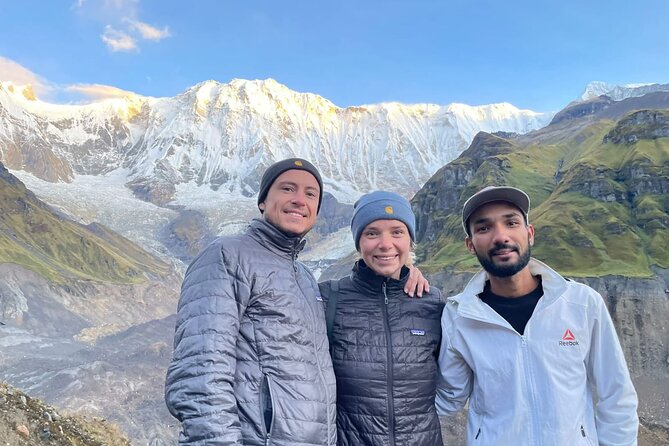
- Poonhill + ABC in one trip when you don’t have time for the longer Annapurna circuit styles
- Government-licensed English-speaking guide plus a first-aid kit included
- Tea-house lodge trekking with daily meals from Pokhara to Pokhara
- Tight timing, real altitude: Ulleri to Ghorepani, then the push up to Deurali and ABC
- Small groups and private feel: max 10 people, your group only
- Extra costs to plan for: Kathmandu–Pokhara flight, tips, and personal spending like hot showers and charging
Price and logistics: what $828 really buys
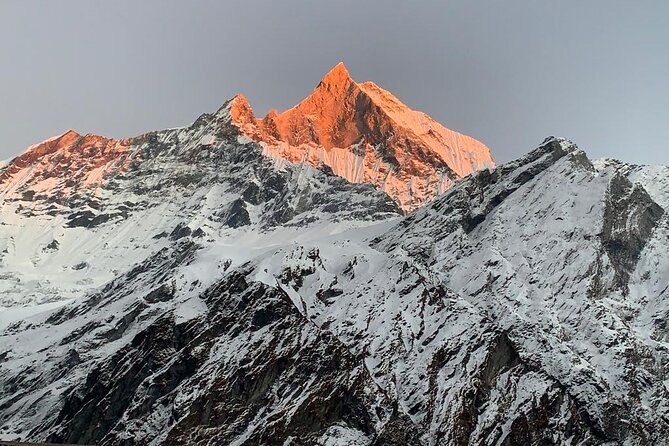
The base price is $828 per person, and it covers a lot of the “moving parts” that normally eat your time and attention. You get sharing hotel nights in Kathmandu and Pokhara with breakfast, trekking meals (breakfast/lunch/dinner) during the hike, tea-house lodge stays, an experienced government-licensed guide with his expenses covered, plus airport-to-trek support via an air-conditioned vehicle.
The main thing to notice is what’s not included, so you’re not surprised later:
- Kathmandu to Pokhara flight (listed as $120)
- Travel/trekking insurance
- Tips for staff (expected)
- Personal costs like hot showers, Wi‑Fi, charging, bottled drinks, and water
For value, the question is simple: do you want someone else to coordinate guide, food, and lodge logistics while you focus on walking and breathing high up? If yes, this package is priced to reduce hassle. If you’d rather DIY, you’ll save money only if you’re confident handling guides, accommodations, and daily meal planning on your own.
You can also read our reviews of more tours and experiences in Kathmandu.
Day 1 in Kathmandu: arrive, reset, and get ready
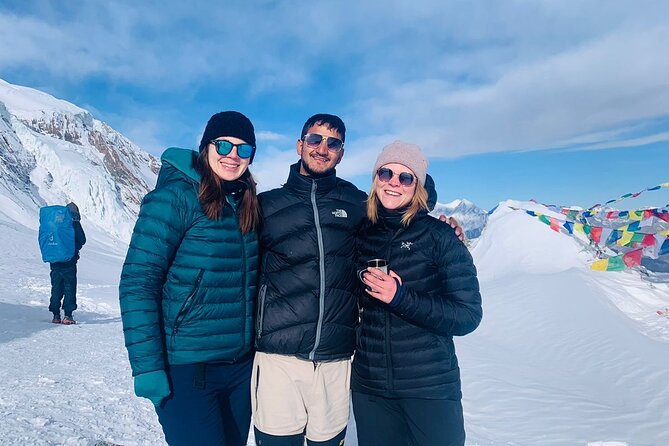
Day 1 is straightforward: you arrive in Kathmandu, and you stay in a sharing tourist hotel with breakfast. This matters more than it sounds. Kathmandu can be a little chaotic on day one—traffic, noise, altitude at lower elevations—and you’ll be thankful you’re not trying to start trekking immediately.
You’ll also want to take care of the administrative basics early. The trip requires your passport name, number, and expiry date at booking, so make sure your details are correct before you travel. And keep an eye on start timing; the meeting time is listed as 6:15 am, so your gear and sleep plan should be organized the night before.
Day 2: Kathmandu to Pokhara, then the first uphill step
On Day 2, you fly from Kathmandu to Pokhara (about 25 minutes). Then you drive to Naya Pul and start trekking to Ulleri (2,050m). The day combines: short transfers and a full walking block.
Why this leg is useful: Ulleri is a “get your legs working” start. You’ll typically feel it the most in your calves. The upside is you’re not going straight to the top; you’re building rhythm.
Expect roughly:
- 1 hour drive
- 5–6 hours trek
Even if you feel good, keep your pace gentle. This trek is short by design, and your body will still notice the altitude.
Day 3: Ulleri to Ghorepani (2750m) and the long climb grind
Day 3 is Ulleri to Ghorepani (2,750m), a trek around 4–5 hours. Ghorepani is a classic rest point on this region’s routes, and it sets you up for the Poonhill day.
This is also where your pacing matters. Ghorepani sits higher than Ulleri, and you’ll probably feel the air a bit thinner. I like that this itinerary uses a staged climb: you get work, then a payoff day.
Day 4: Ghorepani to Poonhill and down to Chiule
Day 4 is the key “views day.” You’ll trek from Ghorepani to Poonhill, then continue on to Chiule (2,700m). The walking time listed is about 7 hours.
What you should watch for on this day:
- Cold mornings are common at higher elevations, so dress in layers
- The Poonhill segment tends to mean you’re up and moving when you’re still not fully awake
- After a viewpoint push, you’ll start descending toward Chiule—steady steps save your knees
Chiule at 2,700m keeps you in the mid-altitude band, so you’ll still feel altitude while you recover for the next jumps.
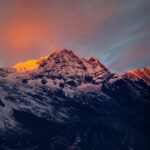
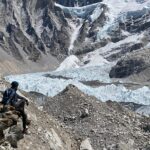
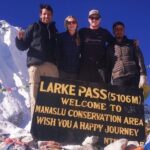
Day 5: Chiule to Sinuwa (2,340m), a reset that still works
Day 5 takes you from Chiule to Sinuwa (2,340m) with a listed walking time of 7–8 hours.
Sinuwa is lower on paper than Chiule, and that can feel like a reprieve. But don’t assume it’s “easy walking.” These routes still involve steady elevation changes and long hours. This is the day I’d think of as your rhythm anchor—get through it cleanly, and the climb toward Deurali and ABC gets easier mentally.
Day 6: Sinuwa to Deurali (3,230m) and the altitude shift
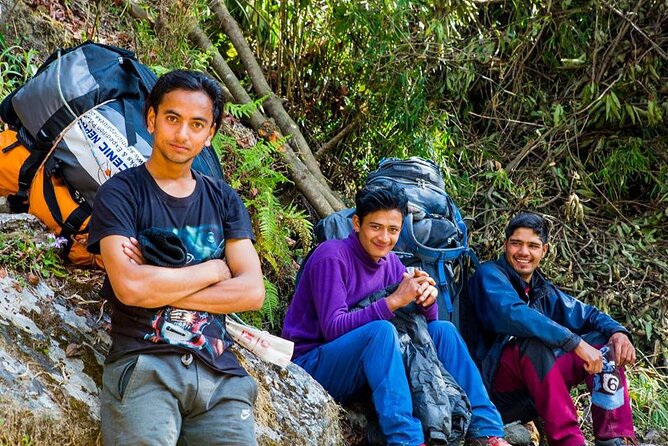
Day 6 is Sinuwa to Deurali (3,230m), about 7 hours. This is a bigger altitude step than the last couple of days.
Why it matters: going from the 2,000s into the 3,000s is where breath and effort start to feel less forgiving. I’d plan to walk slower than your instincts. Long days plus altitude is how fatigue shows up early.
Day 7: Deurali to Annapurna Base Camp (4,130m)
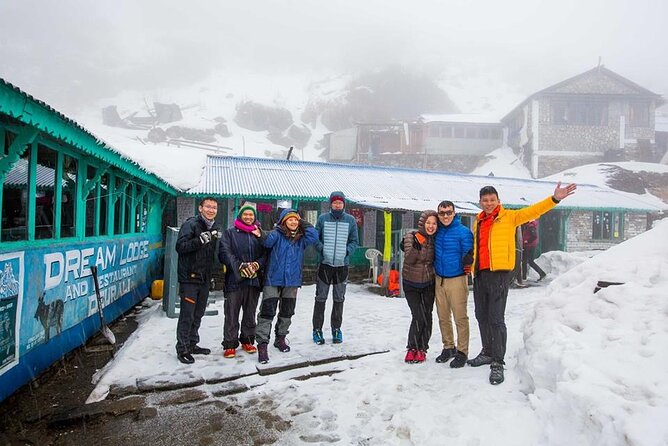
This is the “yes, you did it” day. You trek Deurali (3,230m) to Annapurna Base Camp (4,130m) in 7–8 hours.
At 4,130m, the air is thin and the temperature can drop hard, even when the daytime sun is strong. This is also the day where having the right energy strategy matters:
- Eat your meals even when you’re not starving
- Sip water regularly
- Take breaks on purpose, not only when you’re forced
ABC is more than a destination point. It’s the place where the Annapurna massif feels close enough to touch, and you’ll also notice how the trek’s cultural stops connect to the local way of seeing the mountain. The itinerary’s design supports that big-mountain feeling without pretending it’s a gentle stroll.
Day 8: Back down from ABC to Sinuwa (2,340m)
Day 8 is ABC back to Sinuwa (2,340m), about 7 hours. You’ll likely feel both relief and stiffness. Downhill can be tougher than it looks because your knees take the hit.
This is a good time to practice smart foot placement—shorter steps, slower cadence. You’ll also likely start to warm up again, which is a welcome shift after a high camp night.
Day 9: Sinuwa to Kyumi (1,340m) for the big elevation drop
Day 9 goes from Sinuwa to Kyumi (1,340m) in about 7 hours. The jump down is dramatic on paper, and it can make you feel lighter—plus your body can finally breathe easier.
Even with the drop, you still need steady hiking habits. Dusty sections and long walking days can wear you out. This is the day where you’re thinking about arrival comfort, because you’re getting closer to the end of the trek portion.
Day 10: Kyumi to Nayapul, then back to Pokhara
Day 10 is Kyumi to Nayapul (listed 4–5 hours) and then drive back to Pokhara. This is a shorter hike day, and it’s exactly what you need after the high-altitude grind.
In Pokhara, you’ll likely appreciate simple pleasures: warm shower if available, a proper sit-down meal, and time to let your legs stop bracing.
Day 11: Pokhara to Kathmandu by tourism bus
Day 11 drives you from Pokhara to Kathmandu. The itinerary notes transport by tourism bus for the Pokhara–Kathmandu leg (while other legs use private transport options). If you’re prone to feeling cramped, pack a neck pillow or plan on moving around when you can.
This day is mostly about transit and recovery, not scenery.
Day 12: final departure
Day 12 is your final departure. The trek portion is done, so now it’s about getting paperwork, valuables, and last-day comfort sorted. If you arrive back early or late due to reasons beyond your control, you might need extra nights—those are listed as not included.
Lodges, meals, and the comfort reality of tea houses
This trek uses good tea-house lodges, which is a big part of why packages like this feel workable. You’re not finding and booking accommodations every day. You also get everyday meals during the trek from Pokhara to Pokhara (breakfast, lunch, dinner).
Still, tea-house comfort is not hotel comfort. What you should expect:
- Basic rooms and shared common areas
- Warm drinks and charging often cost extra (charging and Wi‑Fi are listed as personal expenses)
- Hot showers may be available but are not guaranteed as included—plan to pay if you want one
One helpful detail: the package includes a duffel bag by the company that you’ll need to return. That’s not just a gimmick—it can reduce what you personally carry while porters handle day-to-day logistics.
Also included: a first aid kit and an adventure certificate. You should still bring your own essential medicine because the kit is listed as medicine recommended to use your own.
Guide and safety: what to look for on this kind of trek
This package includes an experienced, government-licensed English-speaking guide and covers his expenses. That’s a key quality marker for a shorter ABC route where pacing decisions matter.
In feedback tied to this trek style, the guide role gets praise for attention to group needs. For example:
- Safety was called out as a top concern for a group with members in their 40s to 60s, with the guide Mr. Kumar described as attentive and knowledgeable in practice.
- Another set of trip notes highlights the professionalism of guide KK and porter teamwork for comfort and well-being.
- For planning support, names like Dipendra and Rajan show up in how people built or adjusted the route to fit time.
For you, the practical takeaway is this: in a short itinerary, your guide’s decision-making around breaks, pace, and when to push or slow down affects whether the trip feels fun or punishing. A licensed, English-speaking guide reduces communication friction. It doesn’t remove altitude risk—but it helps you manage it.
And yes, tips are expected for staff. If you like good service, budget for it.
Fitness level and the altitude math you can’t ignore
The program calls for moderate physical fitness, with a minimum age of 10 years. That’s a reasonable baseline, but ABC is still ABC: you’re targeting 4,130m, and your itinerary includes multiple 7-hour-plus days.
Here’s the simple altitude reality I’d plan for:
- You’ll gain altitude in steps (Ulleri → Ghorepani → Deurali → ABC)
- You’ll also do long walking days even when the elevation changes are moderate
- The shorter duration means you’ll need to be mentally flexible when your pace slows
If you’re coming from a sedentary routine, I’d treat this as a training call, not a gamble. If you already walk regularly and understand that you’ll slow down at altitude, this itinerary is built for you.
Who this trek suits best
This is a smart fit if:
- You have limited holiday time but want both Poonhill and Annapurna Base Camp
- You’d rather pay for structure than plan meals, lodges, and guide logistics yourself
- You want a small group feel: up to 10 people, and your trip is private to your group
It may not be ideal if:
- You hate long days of walking
- You’re very altitude-sensitive and want a gentler, longer acclimatization style
- You’re allergic to extra costs like charging, hot showers, bottled drinks, and tips
Booking tips that keep the trip smooth
A few practical points before you go:
- Bring the essentials for altitude days: layers, a hat, and a plan for cold mornings
- Keep water access in mind. Bottle water is listed as a personal expense, so don’t assume it’s included in your trek meals
- Don’t rely on charging being included; charging is listed as personal spending
- Plan your departure day in Kathmandu so you’re not stuck rearranging logistics last-minute
- Make sure your insurance is solid. The trip specifically asks for good insurance for your trek
Should you book this 12-day Annapurna Base Camp and Poonhill trek?
If your goal is a high-impact Himalaya experience without taking a full two-week or three-week bite out of your schedule, I think this is an easy “yes” to consider. You get a guided, structured trek with tea-house lodging and daily meals handled, plus the classic Poonhill viewpoint moment and the real ABC target at 4,130m.
I’d only hesitate if you don’t have the fitness for 7-hour days or you’re worried about a short itinerary’s altitude demands. If you’re the type who walks consistently, takes breaks, and listens to your body, this package is built to deliver a memorable trek with less hassle and more clarity.
FAQ
What is included in the $828 tour price?
The price includes sharing hotel nights in Kathmandu and Pokhara with breakfast, trekking tea-house lodging, and meals (breakfast, lunch, and dinner) during the trek from Pokhara to Pokhara. It also includes an experienced government-licensed English-speaking guide, private transport excluding the Pokhara–Kathmandu tourism bus segment, a duffel bag (to be returned), an adventure certificate, a first aid kit, and an air-conditioned vehicle.
Is the Kathmandu to Pokhara flight included?
No. The flight fare from Kathmandu to Pokhara is listed as an extra cost of US$120.
What time do we meet to start?
The start time is listed as 6:15 am.
Are meals included during the trek?
Yes. Everyday meals (breakfast, lunch, and dinner) are included during the trekking portion from Pokhara to Pokhara.
What kind of accommodation do you use on the trek?
You stay in good tea-house lodges during the trekking.
Do I need travel insurance?
Yes. The trip notes that you need good insurance for the trek, and travel/trekking insurance is listed as not included.
How big is the group?
The maximum is 10 people per booking, and the trip is private so it’s only your group.
What is the minimum age to join?
The minimum age is 10 years.
What information is required at booking?
You need to provide passport name, number, expiry, and country for all participants.
What extra costs should I plan for?
Not included items include hot shower, Wi‑Fi, charging phones/cameras, bottled water, bottled drinks, tips for staff, and any additional hotel nights if your schedule changes from the planned itinerary.