REVIEW · KATHMANDU
Mardi Himal Trek
Book on Viator →Operated by Ace the Himalaya · Bookable on Viator
Mardi Himal stays quiet while Annapurna steals the spotlight. What makes this 10-day trek so interesting is the mix of forest-to-ridge walking and the payoff of up-close mountain views without the constant crowds you see on the big-name routes. I also like that the operator keeps logistics tight, so you’re focusing on the trail instead of figuring things out. One possible drawback: the trek can get cold fast, especially above the tree line, and winter ridges can be snowy.
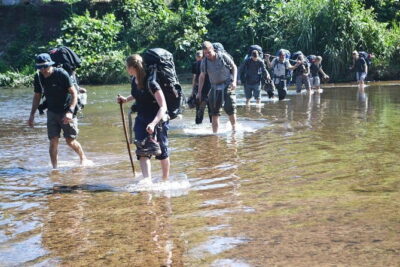
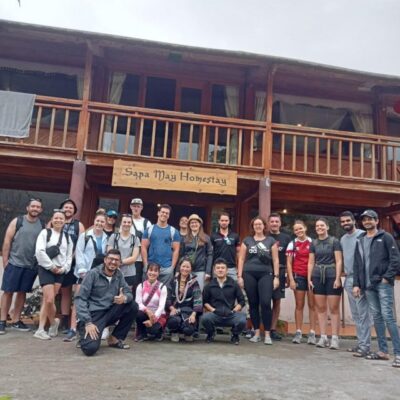
You start with a proper welcome in Kathmandu, including a pre-trek meeting where you meet your leader and sort out key documents. Groups here are typically small, with a maximum of 15 travelers, and you’ll often have a guide and porter who help keep the pace comfortable. If you want the Annapurna region but with a calmer feel, this itinerary is built for you.
In This Review
- Key things that make Mardi Himal work
- Why this trek feels different: south of the Annapurna crowd
- Price and logistics: what $821.34 covers, and what you still must plan
- Day 1 in Kathmandu: meeting, duffel, and paperwork that actually matters
- Day 2 to Pokhara: the 6–7 hour drive that softens the trip
- Kande to Australian Camp: your first real mountain close-up
- Forest Camp and Deurali: the quiet jungle switch that sets the tone
- Low Camp: out of the forest, into the grassy ridge world
- High Camp and sunrise: colder air, higher effort, steady pacing
- Up to Mardi Himal base camp viewpoint: the reward climb with a smart return
- Sidhing descent to Pokhara: finish strong, not broken
- Kathmandu return and the farewell dinner with performances
- Guide and porter support: why this trek earns strong ratings
- Seasons and weather: when Mardi Himal makes sense
- Should you book Mardi Himal with Ace the Himalaya?
- FAQ
- How many days is the Mardi Himal Trek?
- Where does the tour start and end?
- What kind of lodging is included before and after the trek?
- Who supports you on the trek?
- Is trekking gear included?
- What meals are included during the trip?
- What transport is included?
- What is not included in the price?
- How large is the group?
- FAQ
- Is travel insurance required for this trek?
- What happens if the trek can’t run due to weather?
Key things that make Mardi Himal work
- Quieter trekking: Mardi Himal runs south of the Annapurna Base Camp trail, so you don’t feel “tour bus altitude” as often.
- Jungle to altitude: oak, maple, and rhododendron forest on Day 4 sets up the big change once you climb out.
- Australian Camp first big payoff: early mountain views help you fall in love with the range before the real climbs.
- Tea and acclimatizing rhythm: Low Camp, High Camp, and the return-to-breakfast pattern keeps your body from getting rushed.
- Named guide teams: past groups have cited guides like Ishwor, Rajan, Ram, Deepak Neupane, and Krish for safety and pacing.
- Small-group feel: maximum 15 travelers, plus a porter for two clients.
Why this trek feels different: south of the Annapurna crowd
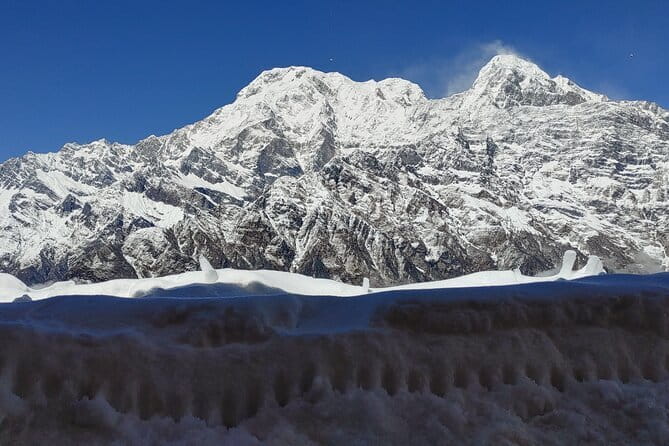
Mardi Himal sits just off the mental map most people have for Nepal trekking. It runs in the Annapurna region, but it’s positioned so you often see fewer trekkers around your day-to-day moves. That matters. When the trail is quieter, you can actually hear yourself think, enjoy forest shade, and take photos without playing “wait your turn” all day.
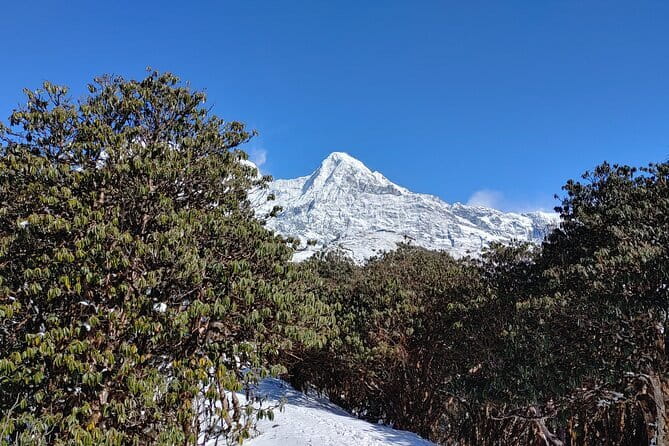
This route also threads two very different Nepal trekking moods. The early days lean green and wooded, then the trek flips into open ridges where the mountains look close enough to reach. If you like contrast, you’ll enjoy this one: forest calm, then ridge intensity, then panoramic rewards at the upper viewpoints.
One more practical point: because it’s less packed, you tend to move with your group more than with a crowd flow. That helps on steep bits and in slower weather moments.
You can also read our reviews of more tours and experiences in Kathmandu.
Price and logistics: what $821.34 covers, and what you still must plan
At $821.34 per person, you’re paying for a lot of the “messy middle” that can wreck a trek if you DIY it. The package includes airport transfers, Kathmandu and Pokhara hotels, a licensed English-speaking guide, guesthouse stays during the trek, permits, and guided transport between key points.
Meals are also mostly covered: the trek includes 9 breakfasts, 6 lunches, and 6 dinners. That’s a real value piece because it keeps your budget steadier and saves time each day.
The part you should double-check is how the included airfare fits into your route. The package lists airfare from Kathmandu to Lukla and back. Your day-by-day plan here focuses on Kathmandu, Pokhara, and trekking from Kande onward, so ask your operator how the Lukla portion applies to your departure dates. Don’t skip this question.
Not included items are also important to budget: Nepal entry visa, international airfare, travel insurance for emergency high-altitude rescue and evacuation, alcohol, drinks, tips for guide and driver, and personal trekking equipment. Tips are expected, so factor that in even if you prefer to keep it simple.
Day 1 in Kathmandu: meeting, duffel, and paperwork that actually matters
Your trek starts with a pickup at Tribhuvan International Airport in Kathmandu. You’re met with a sign for Ace the Himalaya, then transferred by private tourist vehicle to your hotel.
After you settle in, there’s a pre-trek meeting. This is where you get clarity early: you meet your trek leader/guide, you can ask questions, and you go through the required forms. They also supply a trek duffel bag and a cap (yours to keep). You’ll want to bring your passport, three copies of passport-size photos, and a readable copy of your travel insurance policy. Yes, it’s paperwork. But getting it handled on Day 1 helps everything run smoother once you’re on the trail.
Why I like this setup: it reduces confusion later. It also helps you confirm what you’re supposed to carry and what gear support is included.
Day 2 to Pokhara: the 6–7 hour drive that softens the trip
On Day 2, you travel from Kathmandu to Pokhara by tourist bus, about 200 km and roughly 6–7 hours. This day is travel, but it’s not wasted travel. The route passes rivers and rivulets, and you get repeated mountain views in the distance.
Once you arrive, you move straight into hotel check-in. This matters because the next day begins with a drive and then trekking starts. You don’t want to spend your first full trekking day tired from an unplanned sightseeing schedule.
Kande to Australian Camp: your first real mountain close-up
Day 3 is the start of the trek. After breakfast, you head to Kande by jeep, about 1 hour. From there, you climb toward Australian Base Camp (Australian Camp) for around three hours.
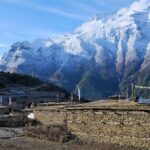
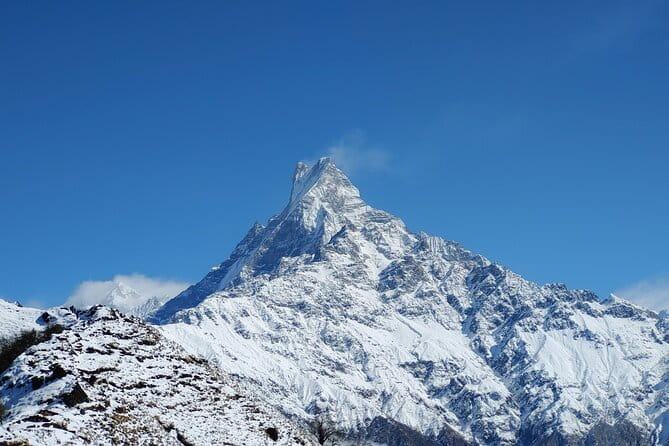
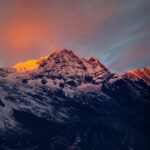
Australian Camp is described as a place where, on clear days, you can get an unobstructed look at major peaks like the Annapurna range, Machhapuchhre (Fishtail), and parts of the Manaslu range. The reason this is a smart early stop is psychological. You get a payoff before the harder altitude days.
Also, this is a day you can enjoy without needing to prove anything. It’s not just about distance. It’s where you learn the trek rhythm: steady walking, short pauses for views, and keeping energy for the next climb.
Forest Camp and Deurali: the quiet jungle switch that sets the tone
Day 4 is a classic transition day. You walk about 6–7 hours to reach Forest Camp. The trail moves slightly downhill from Base Camp area to Pothana (1950 m), then climbs to Deurali (2100 m). From Deurali, there’s a signboard pointing toward Forest Camp.
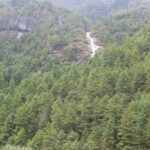
Here’s the key: the trail enters a quiet jungle through oak, maple, and rhododendron. That forest feel can be a huge relief after the first ridge-and-view moments. It’s cooler under tree cover and the terrain often feels more forgiving than exposed sections.
When you’re nearing Forest Camp, you’re building altitude without going straight into the open-sky exposure. That gradual shift helps your body adapt, and it makes the next snowline/rockier ridges feel more natural.
Low Camp: out of the forest, into the grassy ridge world
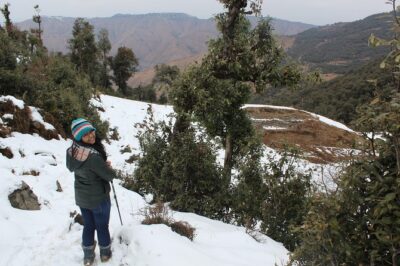
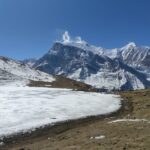
Day 5 brings a steep climb that can last a few hours. Then you’re out of the forest onto a grassy ridge. Sometimes that ridge can hold snow, so expect a mix of sun and cold depending on the weather.
The walk to Low Camp is about 6–7 hours, arriving in the afternoon. Low Camp is where the plan gives you a break to acclimatize and take in the views. You’ll likely be sipping tea while looking at close-up views of Annapurna South and Machhapuchhre.
Two practical notes. First, if you’re sensitive to cold, you’ll feel the temperature more on open ridges. Second, don’t rush your photos. This stop is designed for slowing down—views, rest, then energy for the next day.
High Camp and sunrise: colder air, higher effort, steady pacing
Day 6 starts early for sunrise views and then breakfast. The trek itself runs about 4–5 hours up to High Camp.
You’ll walk across grassy ridges, and in winter these can be snow-filled. The route goes above the tree line, and the temperature drops as you climb. This is where good pacing matters most. Even if the distance looks manageable, the cold and thinning air can make each step feel heavier.
Past groups have praised the way guides like Ishwor and Deepak Neupane support safety and comfort through pace and responsiveness. That’s not a small detail. On a day like this, you want someone watching how you’re doing, not pushing the group to keep up with a stopwatch.
Up to Mardi Himal base camp viewpoint: the reward climb with a smart return
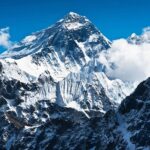
Day 7 is the “big views” day. You wake early and walk a few hours to the upper viewpoint or Mardi Himal Base Camp. From there, the plan highlights clear sightlines to the Annapurna Sanctuary, plus panoramic views of the south face of Mt. Annapurna, Himchuli, and Machhapuchhre.
After spending a few hours up there, you return to High Camp for breakfast. Then you descend about 2 hours to Low Camp.
This up-and-back structure is a good design for most trekkers. You get the payoff without turning the day into an all-day exhaustion sprint. It also helps because you’re not sleeping at the highest point after a long climb. You’re getting your rest at the already-reached High Camp.
Sidhing descent to Pokhara: finish strong, not broken
Day 8 is the last trek day. You descend toward Sidhing village, with about five hours of walking. Then you stop for lunch and drive back to Pokhara in a 4WD jeep.
The descent includes a drastic change in elevation, which can feel tough if your legs are already tired. Still, it’s usually better than another major climb. Think of Day 8 as a controlled finish: keep your steps quick and light, and let the day be about recovery.
The package also includes a small celebration in Pokhara after you reach the city. That’s not just a feel-good moment. It’s a useful mental reset after a serious effort.
Kathmandu return and the farewell dinner with performances
On Day 9, you head back to Kathmandu by tourist bus, around seven hours. You get one last look at the mountains as the route unwinds.
In the evening, you have a farewell dinner in a traditional Nepalese restaurant with cultural performances. It’s a nice way to end the trek without turning your last night into another long logistics headache.
Day 10 is straightforward: you’re dropped at Tribhuvan International Airport for your departure.
Guide and porter support: why this trek earns strong ratings
The repeated theme in named guide mentions is safety, support, and pacing. Groups have talked about guides like Ishwor, Rajan, Ram, Krish, and Deepak Neupane for being attentive and responsive. Sherpa and porter support also comes up, including mentions of Suka, Bizal, and porter Kismat.
Even if you’re fit, a trek like Mardi Himal is where small choices matter: when to slow down, how to manage cold, and how to handle weather changes. Having a guide who keeps things organized and a porter who shares the load reduces stress.
One practical detail: the plan includes 1 porter for two clients. That’s a meaningful support ratio. It can be the difference between enjoying the ridge views and arriving at camp already worn out.
Seasons and weather: when Mardi Himal makes sense
This experience requires good weather. If weather disrupts the trek, you’re offered a different date or a full refund. That’s important in the Annapurna region where clouds and snow can change fast.
As for timing, one group specifically mentioned October 2019 with perfect weather. That’s a good clue for when to aim, but it’s still weather-dependent. Pack your attitude for variability. You’re in the mountains. The best approach is to be flexible and let the guide plan around conditions.
Also, expect winter-style cold on higher ridges. Even if you’re not trekking in deep winter, your days include early starts and above-tree-line walking where temperatures drop.
Should you book Mardi Himal with Ace the Himalaya?
You should strongly consider booking if you want:
- a less crowded trek in the Annapurna region
- forest walking early, then open ridge views as the payoff
- a guided setup with hotels, permits, and most meals handled
- small-group energy, with a maximum of 15 travelers
I’d hesitate only if you dislike cold conditions and fast weather shifts. High points like the route to upper viewpoints can be chilly, and some ridges can carry snow in winter.
If your priority is calm trails and close-up mountain scenery without the nonstop crowds, Mardi Himal is a smart pick. It’s the kind of trek where the mountains feel near and the days feel more human-paced—especially when you’re guided well and you keep your expectations flexible.
FAQ
How many days is the Mardi Himal Trek?
The trek is listed as 10 days approximately.
Where does the tour start and end?
It starts at Tribhuvan International Airport in Kathmandu and ends back at the same meeting point.
What kind of lodging is included before and after the trek?
You get three-star hotels in Kathmandu for 2 nights and in Pokhara for 2 nights. During the trek, you stay in guesthouses, with twin-share and dormitory room options.
Who supports you on the trek?
You have a licensed English-speaking trekking guide, and the package includes 1 porter for two clients.
Is trekking gear included?
You receive a down jacket and sleeping bag for the trek (to be returned). You also get a duffel/kit bag and sun hat to keep.
What meals are included during the trip?
Breakfast is included for 9 days, lunch for 6 days, and dinner for 6 days. Lunch and dinner in Kathmandu and Pokhara are not included.
What transport is included?
The package includes airport transfers, a tourist bus between Kathmandu and Pokhara, and a tourist vehicle for the route covering Pokhara to Kande, then Siding to Pokhara by 4WD jeep.
What is not included in the price?
Not included are travel insurance for emergency high-altitude rescue and evacuation, international airfare, Nepal entry visa, alcohol and hot/cold drinks, personal trekking equipment, and tips for the guide and driver.
How large is the group?
The maximum group size is 15 travelers.
FAQ
Is travel insurance required for this trek?
Travel insurance is not included, and the package specifically notes coverage for emergency high-altitude rescue and evacuation.
What happens if the trek can’t run due to weather?
This experience requires good weather. If it’s canceled due to poor weather, you’re offered a different date or a full refund.