REVIEW · KATHMANDU
Manaslu Circuit Trek – Untouched trail
Book on Viator →Operated by Trek Around Himalayas Pvt. Ltd. · Bookable on Viator
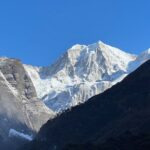
One of the most exciting things here is how fast you leave the normal world behind. This trek moves through Manaslu Conservation Area—glaciers, high lakes, rivers, forests, and villages—ending with big-mountain payoff near Larkya La. I like two things most: the wilderness feel of the route and the way the itinerary builds in acclimatization before the high pass. One consideration: this is a serious trekking trip, with long days and a high-altitude crossing, so you’ll want moderate fitness and good weather.
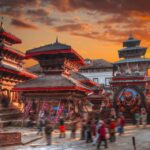
Kathmandu is handled in a practical way so you’re not scrambling on day one. You get airport pickup/drop plus sightseeing time around Kathmandu Durbar Square and major UNESCO sites like Boudhanath and Pashupatinath (with admission details handled as noted). The trekking side stays focused on getting you safely through the Manaslu circuit with an experienced English-speaking guide. A possible drawback is that some comforts are limited on the trek—hot shower and drinking water are not listed as included—so plan around tea-house trekking reality.
In This Review
- Key Highlights You’ll Actually Care About
- Manaslu Circuit: Why This “Untouched” Feeling Matters
- Kathmandu Setup: Durbar Square First, Then UNESCO Days
- Day 1: Arrival and Kathmandu Durbar Square time
- Day 2: Boudhanath, Pashupatinath, and Monkey Temple
- Hitting the Trail: From Soti Khola to Machha Khola
- Day 3: The real start after Soti Khola
- Day 4: Approaching Machha Khola plus hot spring relief
- Gurung Villages, Rivers, Bamboo, and Forest Switchbacks
- Day 5: Philim to Deng via bamboo forest
- Day 6: Into the Budi Gandaki valley toward Namrung
- Day 7: Views toward Ganesh, Siringi, Himchuli, plus Lho and Gompa visit
- Samagaon Acclimatization: Mani Stones and Pungyen Gompa
- Day 8: Acclimatize in Samagaon and visit Pungyen Gompa
- Up to Samdo: Juniper, alpine grassland, and wooden bridge moments
- Day 9: Toward Samdo via forests and Kermo Kharka
- Larkya Glacier Area: Dharmashala and the approach mood
- Day 10: Salka Khola valley and Dharmashala
- Larkya La Day: Highest point and the day you remember
- Day 11: Over Larkya La (5,160m) to Bimthang
- Descending into the Annapurna Conservation Area: Meadows, rhododendrons, and Gho
- Day 12: Sangure alpine meadow to Dharapani
- Finishing the circuit and getting your Kathmandu freedom back
- Day 13: End in Kathmandu (free choice after trekking)
- Price and Logistics: Is $1,350 a Good Deal?
- What’s Included on the Trek (and What You Should Plan For)
- Wildlife and Bird Notes: Spotting Doesn’t Mean Guaranteeing
- Who This Trek Suits Best
- Should You Book This Manaslu Circuit Trek?
- FAQ
- How long is the Manaslu Circuit trek?
- Where does the trip start?
- Is this a private tour?
- What kind of accommodation do you use during the trek?
- Are meals included?
- What permits are included?
- Is airport pickup and drop-off included?
- What is not included in the price?
- Is emergency help included?
- Does the itinerary depend on weather?
Key Highlights You’ll Actually Care About
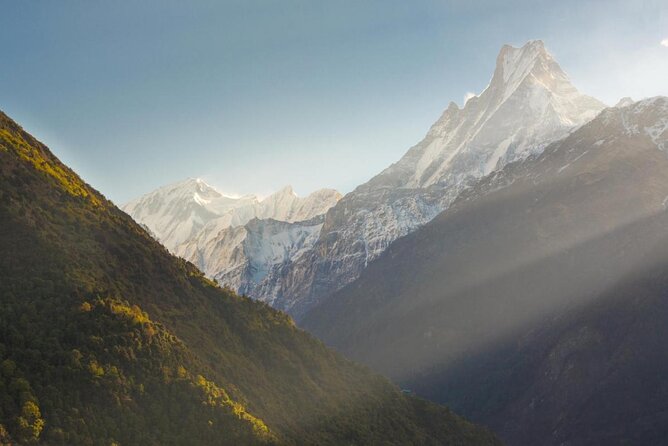
- A protected, pristine route inside Manaslu Conservation Area with glacier-and-river variety
- High-altitude big views from Larkya La (5,160m) and the surrounding peaks (including Manaslu)
- Wildlife and bird watching potential with listed species like blue sheep, musk deer, grey wolf, and Himalayan tahr
- Smart pacing with acclimatization on the Samagaon day before you head higher
- Tea-house comfort with real guidance via an experienced English-speaking trekking guide and rescue support
- Operator support that goes beyond paperwork thanks to the planning style associated with Bimal and the guide team
Manaslu Circuit: Why This “Untouched” Feeling Matters
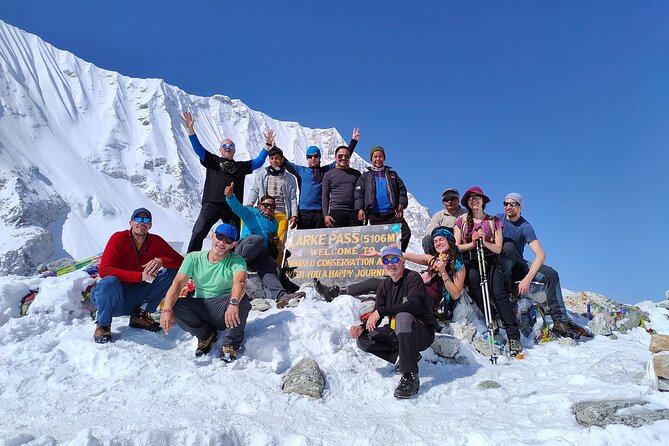
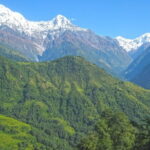
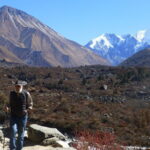
The Manaslu Circuit trek is interesting because it doesn’t feel like it’s trying to copy other well-known routes. You’re in the Manaslu Conservation Area (1,663 km²), and that shows up in the kind of terrain you’re walking: dense forest sections, river crossings, alpine grasslands, and then the stark high-mountain look as altitude climbs.
I also like how the trip is framed around the mountain ecosystem, not just the top view. You’ll be passing through areas where you might spot wildlife, and the supplied info lists a strong set of mammals and birds that live in the region. If you like noticing details—tracks, different vegetation zones, and how the trail changes as temperatures drop—this kind of trek rewards your attention.
Now, the honest part: it’s still a circuit with real altitude challenges. You’re crossing Larkya La at 5,160m, and at least one day runs close to a 9-hour trekking window. If you’re comfortable with hikes that last most of the day and you know how your body handles climbing, this becomes a great adventure. If you want a gentle walk, this one isn’t built for that.
You can also read our reviews of more tours and experiences in Kathmandu.
Kathmandu Setup: Durbar Square First, Then UNESCO Days
Your trip begins in Kathmandu, and the early days are designed to get you oriented without eating all your energy.
Day 1: Arrival and Kathmandu Durbar Square time
After landing at Tribhuvan International Airport, you’ll go through customs and immigration, then meet the company’s representative. You’re dropped at your designated hotel in a private vehicle, then you have time to either rest or do light trekking prep and shopping.
The itinerary specifically includes Kathmandu Durbar Square (with an admission ticket noted as included). This is a good first-choice sight because it’s close to the feeling of real Kathmandu street life. Even if your sleep is off from travel, walking around Durbar Square helps you get bearings fast.
What to watch for: Kathmandu traffic and noise can be intense. If you need a calm start, keep day one flexible and don’t over-plan.
Day 2: Boudhanath, Pashupatinath, and Monkey Temple
Your second Kathmandu day goes deeper into UNESCO-listed cultural stops. After breakfast, you visit Boudhanath, Pashupatinath, and Monkey Temple. The info highlights that Boudhanath is an ancient stupa with major Buddhist significance, and Pashupatinath is a key Hindu pilgrimage site.
This day matters because it gives you context for Nepal beyond the trekking brochures. You see different sides of sacred space and daily life, and it helps the rest of the journey feel more grounded when you later pass through villages on the trek.
Practical note: the admission ticket for these listed sites is noted as not included for this day, so budget for entry fees if you’re doing all stops.
Hitting the Trail: From Soti Khola to Machha Khola
Once you reach the trek start area, the pace changes. This is where the “Untouched trail” idea becomes real: you shift from city life to a path shaped by altitude and weather.
Day 3: The real start after Soti Khola
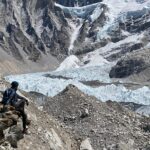
You wake up in Soti Khola, eat breakfast, and begin trekking. The route segment between Soti Khola and Machha Khola is listed as about 14.1 km (8.7 miles), with roughly 6 hours of trekking time. It also notes a climb from around 700m to 869m, and that the trail passes through Gurung villages—including places like Lapubesiu and Khanibasi.
This is a great early trek day because it’s long enough to feel like trekking, but it’s also culturally rich. Villages along the way mean you see the rhythm of local life while still moving forward in altitude.
What I’d suggest: take it slow early. The first day on a trek is about settling your legs and checking your breathing, not racing the clock.
Day 4: Approaching Machha Khola plus hot spring relief
Today continues the climb toward Machhakhola (listed at 1,340m). The itinerary says about 6 hours on average. It also calls out a notable break: there’s a hot spring in Khola Besi, which gives you a chance to relax after a hilly day.
That hot spring stop is more than comfort. In a high-altitude trek, recovery time is what keeps your body calm. Even if you use it briefly, it can take the edge off sore muscles.
Potential drawback: hot spring options depend on conditions and access. Don’t assume it will work exactly like a full spa day.
Gurung Villages, Rivers, Bamboo, and Forest Switchbacks
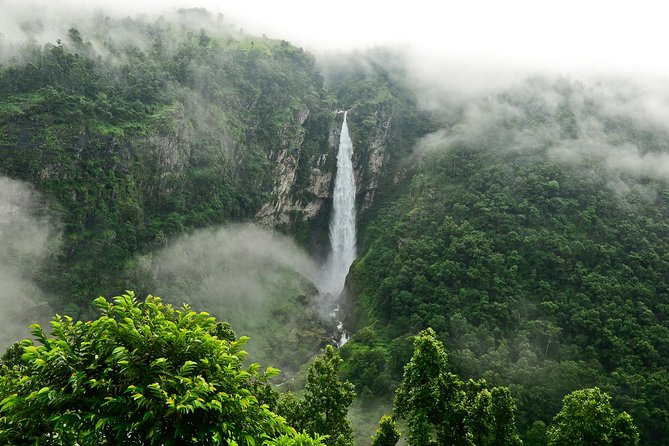
The middle portion of the trek is where the Manaslu Circuit feels like a true circuit: villages, farmland, forest, and river crossings in changing combinations.
Day 5: Philim to Deng via bamboo forest
You trek via Gurung village Philim, then through cultivated lands to Ekle Bhattai. The day includes crossing the Budi Gandaki river, then continuing through bamboo forest to Deng.
You’ll spend the night in Deng. This kind of day is valuable because you’re not only chasing mountain views. You’re learning how the route shifts between vegetation zones, which is part of why this conservation area feels “untouched.”
Day 6: Into the Budi Gandaki valley toward Namrung
Today you cross the Budi Gandaki again and enter the Budi Gandaki valley. You pass Prok village while viewing Mount Siringi, and then trek upstream, crossing the river several times before reaching Namrung for the night.
The repeated crossings are a reminder that this trek is about movement, not just scenery. It’s one reason the trail feels immersive in real life: you’re always adjusting footing, pacing, and how you carry yourself on uneven ground.
Day 7: Views toward Ganesh, Siringi, Himchuli, plus Lho and Gompa visit
You continue from Namrung to Lihi, moving through forests, farm fields, and chortens. You pass Sho village and reach Lho village, where you get magnificent views of Mount Manaslu.
The day also includes exploring Ribung Gompa in Lho, then trekking onward to Shyala, which is known for dramatic views of Himchuli, Peak 29, Manaslu, and many snowcapped peaks. You finish at Samagaon for the night.
Why this day matters: you’re stacking viewpoint after viewpoint. It helps keep motivation high while you’re still building altitude.
Samagaon Acclimatization: Mani Stones and Pungyen Gompa
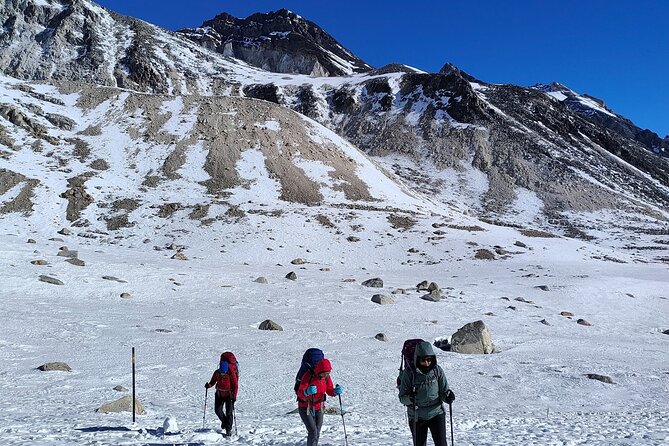
You’ll love this day if you’re the type who prefers calm breathing over nonstop walking.
Day 8: Acclimatize in Samagaon and visit Pungyen Gompa
You spend the day at Samagaon, with time to explore the village and acclimatize. The info points out thousands of Mani stones in the village, which makes the place feel alive with spiritual markers and daily ritual.
Samagaon is mostly inhabited by Sherpa community, and the day includes a visit to Pungyen Gompa where your guide shares stories about the village and mountains. After that, you sleep in Samagaon again.
This is a strong design choice. Without acclimatization, high passes feel more punishing. With this pause, you’re more likely to keep moving comfortably later.
Up to Samdo: Juniper, alpine grassland, and wooden bridge moments
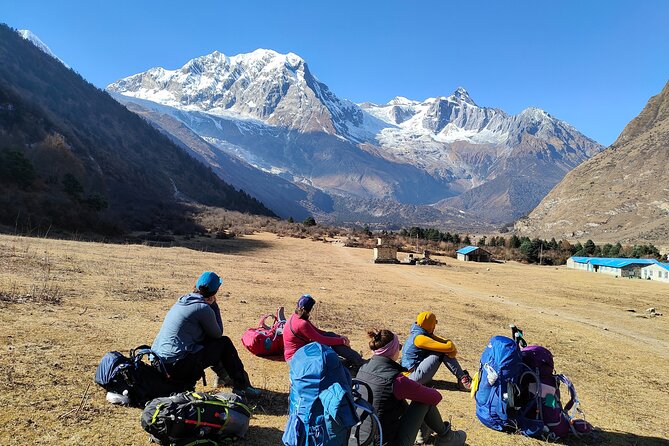
Day 9: Toward Samdo via forests and Kermo Kharka
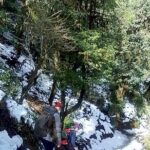
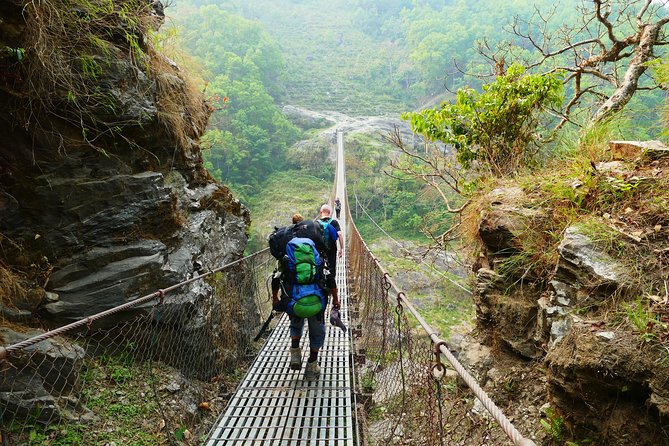
You trek to Samdo through birch and juniper forest, then pass Kermo Kharka alpine grassland. You also cross the Budi Gandaki on a wooden bridge before reaching Samdo.
Overnight is in Samdo. This is another day that shows the conservation area’s range: from tree cover to open high grazing zones.
Larkya Glacier Area: Dharmashala and the approach mood
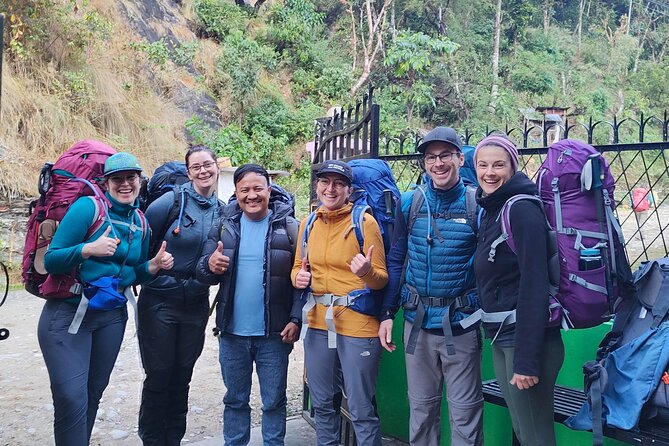
Day 10: Salka Khola valley and Dharmashala
You trek around the Salka Khola valley, with views of Larkya glacier, then continue to Dharmashala, described as a stone-made hut. The itinerary lists about 5 hours for the day.
When you reach this type of stopping point, the trip psychology shifts. You’re getting close to pass country, and the trail feels more about weather and footing than about village sightseeing.
Larkya La Day: Highest point and the day you remember
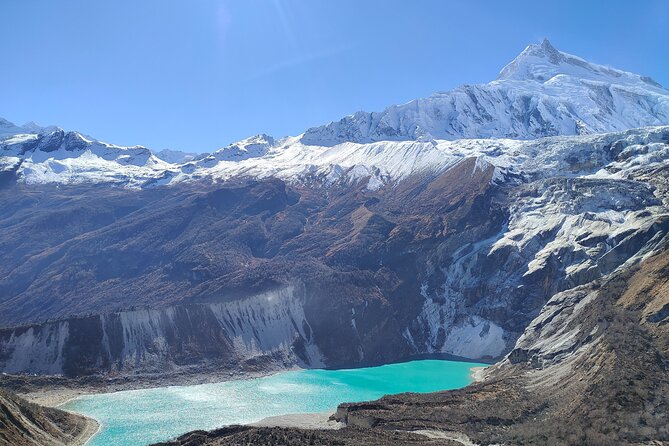
Day 11: Over Larkya La (5,160m) to Bimthang
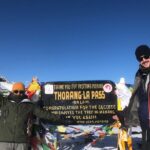
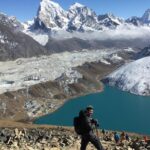
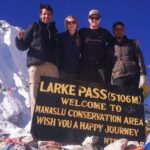
This is your big pass day. You trek through moraines of the glacier, then reach Larkya La at 5,160m. The info lists stunning views of Larkya Peak, Mount Himlung, Cheo, Kangguru, plus Annapurna II. After crossing the pass, you continue to Bimthang, where you overnight.
The itinerary calls this day about 9 hours. It’s long, and it’s high. If weather turns, this day is the one most affected—so keep your energy and attitude steady.
Practical consideration: even if you feel fine at the start, don’t count on it. Cold and wind at passes can change how your body feels fast.
Descending into the Annapurna Conservation Area: Meadows, rhododendrons, and Gho
Day 12: Sangure alpine meadow to Dharapani
Today you descend through Sangure alpine meadow and cross the Dudh river. You get dramatic views of Manaslu, plus Lamjung, Himlung, and Cheo.
Then you continue through rhododendron forests and farm fields to Gho, and trek to Dharapani for the night. The itinerary notes that this day is when you step into the Annapurna conservation area.
This “two-conservation-area” feeling is part of why the trek feels special: you’re not stuck in one repeat scenery type all the way through. You also get the relief of descending, which changes your trekking rhythm.
Finishing the circuit and getting your Kathmandu freedom back
Day 13: End in Kathmandu (free choice after trekking)
The trek finishes on day 13, and you’re given freedom to choose where to go and stay afterward. The itinerary includes Kathmandu Durbar Square admission included on this last day.
In plain terms: this day is your reset button. You’ll likely be tired, and you’ll also want good food, real rest, and a few easy hours with no packing.
Price and Logistics: Is $1,350 a Good Deal?
At $1,350 per person for an approx. 13-day Manaslu Circuit trek, you’re paying for more than walking. Your inclusions include tea-house accommodations during trekking, meals (10 dinners, 12 breakfasts, 11 lunches as listed), ground transportation, permits/paperwork (including TIMS and special permits), and an experienced English-speaking trekking guide.
I think this price makes sense if you value safety and planning. The list also includes emergency rescue service, plus airport pickup/drop and Kathmandu sightseeing. Those details matter when you’re dealing with permits and mountain logistics, where mistakes are expensive.
The costs you should plan for yourself are also clear: Nepali visa and international airfare are not included, and personal expenses, bar bills, laundry, phone calls, internet, hot shower, and drinking water are not included. Tipping for guides/porters is also not included.
So the deal is: you get structured trekking support, but you still control your personal comfort spending.
What’s Included on the Trek (and What You Should Plan For)
The trip’s “included” list is fairly standard for a well-run Himalayan trek, but it’s worth translating into real-life expectations.
Included:
- Twin-sharing tea-house accommodation during trekking
- All ground transportation listed in the itinerary
- Permits/paperwork: TIMS and special permits, plus necessary approvals
- An experienced English-speaking trekking guide
- Emergency rescue service
- Meals: breakfasts, lunches, and dinners as listed
Not included:
- Nepali visa and international airfare
- Personal expenses, including hot shower and drinking water
- Emergency rescue cost (separate from service)
- Entrance fees for Kathmandu sightseeing spots (noted as not included for day 2)
- Tips for guide/porters and others
If you like comfort, bring a mindset that tea-house trekking is about function, warmth, and routine—not luxury.
Wildlife and Bird Notes: Spotting Doesn’t Mean Guaranteeing
One of the coolest aspects of the Manaslu Conservation Area info is the specificity. The trek is described as having potential encounters with wildlife such as snow leopard, grey wolf, musk deer, blue sheep, and Himalayan tahr. It also lists bird species you might see, including Variegated laughing-thrush, Grandala, and Northern Goshawk.
Here’s the honest way to use that info: in the Himalaya, sightings depend on season, weather, and chance. But having listed species in your head changes how you look. You’ll notice movement, call patterns, and different trails through habitat edges.
Even if you don’t see a snow leopard, the conservation-area setting makes the trek feel like it has ecological purpose, not just views.
Who This Trek Suits Best
This trek fits you best if:
- You have moderate physical fitness and you’re comfortable with several hours of walking daily
- You like real hiking over cushy tourism
- You value mountain scenery plus village life and conservation-area nature
- You want a private group format (your group only, not mixed with strangers)
It may not be the best choice if you:
- Want a short, low-altitude experience
- Get miserable with long trekking days (like the ~9-hour day around Larkya La)
- Need guaranteed hot showers and unlimited drinking water on the trail
Should You Book This Manaslu Circuit Trek?
If you’re aiming for a pristine, high-mountain circuit with real trekking days and a strong planning structure, I’d say this is a solid booking. The inclusion list covers the big moving parts—permits, guide support, meals, accommodations, and emergency rescue service—so you can focus on your walking and your acclimatization.
But choose it with your eyes open: Larkya La is high, and your comfort on the trek will be tea-house realistic, not resort-level. If that sounds like your kind of adventure, then booking makes sense.
And a final nudge: if your coordinator or guide team includes Bimal, the planning style described for him is efficient and professional. That kind of calm organization helps a lot when weather shifts in the mountains.
FAQ
How long is the Manaslu Circuit trek?
It’s listed as about 13 days.
Where does the trip start?
The trip is in Kathmandu, Nepal, with airport pickup and Kathmandu valley sightseeing included.
Is this a private tour?
Yes. Only your group will participate.
What kind of accommodation do you use during the trek?
You stay in twin-sharing tea houses during the trekking portion.
Are meals included?
Yes. The package includes 12 breakfasts, 11 lunches, and 10 dinners (as listed).
What permits are included?
The package includes necessary paper works, special permits, and TIMS (plus MCA/ACAP permits as stated).
Is airport pickup and drop-off included?
Yes, airport pick and drop are included in Kathmandu.
What is not included in the price?
Not included are the Nepali visa, international airfare, personal expenses, bar bills, laundry, phone calls, internet, hot shower, and drinking water. Also not included are entrance fees for Kathmandu sightseeing spots (day 2 notes admission not included) and tipping.
Is emergency help included?
Emergency rescue service is included, but the emergency rescue cost is not included.
Does the itinerary depend on weather?
The experience requires good weather. If it’s canceled due to poor weather, you’ll be offered a different date or a full refund.