REVIEW · KATHMANDU
Manaslu circuit trek and side trips
Book on Viator →Operated by Nepal Trek Ways Pvt. Ltd. · Bookable on Viator
Manaslu Circuit is one of those trips that feels like a long, breathing exhale. You get authentic mountain villages plus a thick mix of Tibetan and Nepalese culture, with Manaslu’s drama growing day by day. Two things I really like: the way the route strings together prayer flags, Mani walls, chortens, and gompas, and the clear progression toward the Larkya La area. The main drawback to plan for is the pace: you’re looking at long hiking days, with many days described as about 15 hours of trekking time.
What makes this itinerary especially workable is the built-in structure and the people behind it. You meet at Hotel Moonlight in Kathmandu at 7:15 am, then you move by jeep and bus to the trailhead and back, with a private group and an English-speaking guide from Nepal Trek Ways. One small consideration: porter service is not included, and tea house accommodation fees during the trek are also listed as not included, so you’ll want a cash plan for meals and shelter on the mountain.
In This Review
- Key highlights to know before you go
- Why the Manaslu Circuit still feels special
- The $600 price: real value, plus a couple of places to double-check
- Kathmandu to Machhakhola: your first taste of western Nepal
- Days 2 to 5: Jagat, Philim, Deng, and the Budhi Gandaki rhythm
- Shyala to Samagaun: forests to prayer flags, with Manaslu growing daily
- Acclimatization day in Samagaun and the Pung-gyen Gompa walk
- Toward Samdo and the Larkya La pass: where the views turn serious
- Days 11 to 12: Dharapani, riverbanks, and the return drive
- Guides, permits, and what a private trek changes
- Packing for long days and a pass you actually have to earn
- Should you book this Manaslu Circuit trek?
- FAQ
- How long is the Manaslu Circuit trek on this tour?
- Where does the trek start in Kathmandu?
- What time does the experience start?
- How much does the tour cost?
- What permits are required for this trek?
- Is the trek private or shared?
- Is food, accommodation, and insurance included?
- Is there porter service included?
- If you want, I can help you budget
Key highlights to know before you go
- A restricted-area route (opened to trekkers in 1991) that keeps the vibe quieter and more intact than many high-profile trails
- Built-in acclimatization in Samagaun, plus the option to visit Pung-gyen Gompa for big glacier views
- Larkya La day with standout mountain sightlines, including views named for Cho Danda, Himlung Himal, Cheo Himal, Kangguru, and Annapurna II
- Culture stops that feel real, from hot springs and stone stair climbs to chortens shaped like arches and Mani walls on the way
- Private trekking with an English-speaking guide, which makes navigating permits and the day-to-day smoother
- No porter included, so your packing strategy matters more than you think
Why the Manaslu Circuit still feels special
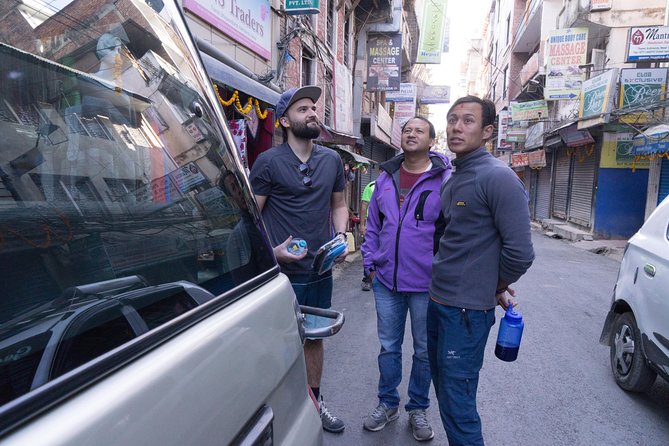
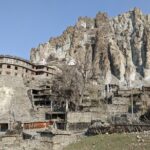
Manaslu Circuit isn’t just another loop. The region has been open to trekkers since 1991, which is long enough to bring visitors in, but short enough that a lot of the character still feels preserved. I like that the route doesn’t rush you into only teahouse towns. Instead, you pass through colorful villages, forests, and monastery areas where Tibetan influence shows up in the religious markers and architecture.
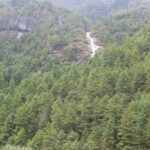
The trek’s main strength is how it combines wilderness and culture in a way that stays consistent. You’ll walk through pine, bamboo, and rhododendron forests, and then shift into valleys lined with Mani walls and prayer flags. As you gain altitude, the mountains become part of the trail itself, not something you only see from a single viewpoint.
The other “quiet” benefit is how you spend your nights. The itinerary is paced around village stops like Jagat, Philim, Deng, Shyala, Lho, Samagaun, and Samdo, so you’re not just chasing elevation. You’re also practicing the slower rhythm of mountain life: tea breaks, short village walks, and the kind of conversations that happen because you’re standing still long enough.
You can also read our reviews of more tours and experiences in Kathmandu.
The $600 price: real value, plus a couple of places to double-check
At $600 per person for a roughly 12-day trek, the value comes from what’s included: one English-speaking trekking guide, food, accommodation, and insurance, plus public transportation and the required trekking permits for the Manaslu restricted area and the Manaslu and Annapurna conservation zones.
But here’s the practical catch. The details also say tea house accommodation fees are not included, and all food and beverages are not included. That contradiction matters. Before you pay, I’d ask Nepal Trek Ways to clarify exactly what “food and accommodation” means on trek nights and what you’ll still need to pay at tea houses for the rest. You don’t want a surprise budget gap halfway through the climb.
Also not included: gratuities and porter service. If you usually travel light, you may be fine with carrying your own essentials. If not, the lack of porter can be the hardest part of the “value” equation, because it shifts physical strain onto you rather than onto the team.
Kathmandu to Machhakhola: your first taste of western Nepal
Day 1 is a long day of getting oriented, not a “big view” day—though you do get mountain scenery from the road. You start in Kathmandu and drive west for about 8 hours on a paved route up to Dhading Bensi, then the last stretch to Machha Khola turns partly bumpy and dirt-road-ish for about 30 km.
This first travel day matters more than it sounds. By the time you reach Machhakhola, your body has already loosened up from sitting, and your brain has started learning the terrain. You also get your first look at Nepalese farms, villages, and changing mountain angles, which helps you understand what you’ll be walking through tomorrow.
Practical note: the itinerary references a mobile ticket. That’s usually easy to handle, but still keep a screenshot or offline copy of your voucher so you’re not hunting for data in low-signal areas.
Days 2 to 5: Jagat, Philim, Deng, and the Budhi Gandaki rhythm
These days are about getting into the rhythm of the Budhi Gandaki valley system. You’ll see what the Manaslu area is famous for: villages stitched together with suspension bridges, river crossings, and climbs that feel like they were built one step at a time.
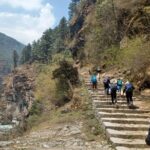
Day 2 to Jagat includes an undulating trail, stream and ravine crossings, and a hot spring stop at Tatopan. There’s also a suspension bridge and a wide, well-crafted staircase that climbs toward Dobhan. Later you cross another suspension bridge over Yaru Khola and reach Thado Bharyang, then finish the day at Jagat. If you like a trek with variety in one day (not just uphill grind), this is a good introduction.
Day 3 to Deng swings through Gurung village country at Philim, passes millet fields, and continues into a steep, uninhabited gorge stretch. You’ll walk into wider valley sections with bamboo forests before arriving in Deng for the night.
Day 4 onward you start mixing elevation with culture. You climb up the Budhi Gandaki valley, cross streams and rivers, and move toward the Sringi Valley. There’s even a specific option mentioned here: a side trip to Tibetan Gompas at Prok. If you’re feeling strong, this is the kind of add-on that makes the trek feel more “about people and belief,” not just altitude.
One real consideration for these days: multiple suspension bridges and rocky-trail segments can be slow in bad weather. If you tend to get tense on narrow footing, bring trekking poles and take your time on bridge approaches.
Shyala to Samagaun: forests to prayer flags, with Manaslu growing daily
From Deng to Shyala and onward to Namru, the trail shifts into forested walking. Day 5 has pine and birch, plus a narrow path through forest alongside a roaring gorge. You’ll pass Tibetan villages and chortens with detailed paintings, then push higher toward Lho and spend the night there.
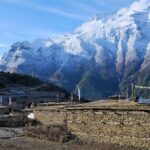
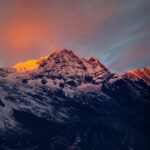
By Day 6, the scenery becomes huge even when you’re not at the highest point yet. You descend over a rocky torrent, cross the Thusang Khola, then walk through fir forest to Shyala on a plateau. From there you head into Samagoan (Samagaun), where the mountains feel close and the panoramas are explicitly part of the plan: Himal Chuli, Peak 29 (Ngadi Chuli), Manaslu, and Ganesh Himal are all named in the itinerary.
Samagaun is also where you get access to a monastery scene that isn’t just a drive-by. You’ll sleep in Samagaon/Samagaun, noted for the Sama monastery, and the next day is designed for adjusting to altitude.
What I like about this stretch is that it feels like a transition from trekking-for-views to trekking-for-meaning. You’re not just chasing the next big photo. You’re learning how daily life looks in a place that has long used mountains as part of the spiritual and practical calendar.
Acclimatization day in Samagaun and the Pung-gyen Gompa walk
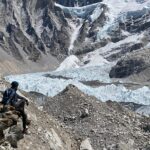
Day 7 is your acclimatization day in Samagaun. The itinerary gives you time rather than pushing a full climb. You can walk to Pung-gyen Gompa, described as a renowned monastery with views of the glacier, and use the rest of the day to explore and follow the rhythm of village life.
This is the kind of day I recommend you treat as real recovery, not a “just in case” buffer. If you’re tempted to cram extra miles, remember your next big challenge involves getting toward Samdo, then reaching the Larkya La pass area.
A small planning tip: if your body responds well, you’ll enjoy the gompa walk more. If you feel heavy, keep the pace gentle and focus on staying warm and hydrated. The itinerary already gives you a structure to help your body adjust.
Toward Samdo and the Larkya La pass: where the views turn serious
Day 8 starts from Samagaun and moves toward Samdo. You follow the foot of the Manaslu Glacier area, with a trail branching toward Manaslu Base Camp, then continue toward Larkya La. Expect Mani walls as the valley widens again, plus a shift through birch, juniper, and rhododendron before reaching Samdo for the night.
Day 9 takes you to Larkya Bhanjyang. You cross the Budhi Gandaki, watch the Larkya Glacier appear across the bank, and climb steadily toward a stone guest house called Dharmashalaat Larkya Phedi. This is one of those days where the day’s “feeling” is more about building altitude patiently than about hitting one dramatic moment.
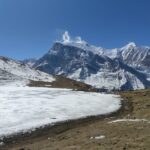
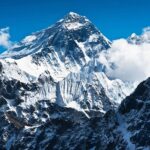
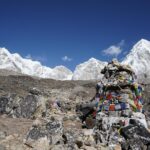
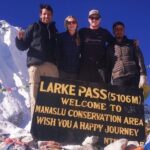
Day 10 is the named target day: Larkya La Pass. After a short ascent, you get views of Cho Danda and Larkya Peak. Then you walk across glacier moraines with a gradual ascent to the pass itself. The itinerary calls out major sightlines visible from the pass: Himlung Himal, Cheo Himal, Kangguru, and Annapurna II. After soaking in the views, you continue to yak pastures toward Bimtang, with evening mist mentioned.
This is also where you need to be honest with yourself about conditions. High passes can mean cold wind and sudden weather shifts, even if the trek has been comfortable up to that point. Bring layers that you can add quickly, not just a single warm jacket you have to wrestle with mid-day.
Days 11 to 12: Dharapani, riverbanks, and the return drive
Day 11 shifts you from pass-area trekking back into a descent and village walk: start from Bhimtang to Dharapani, passing Tilije, then walking along the Dudh Khola riverbank. There are crossings by wooden bridge, plus a chorten shaped like an arch and Mani walls at Thonje before reaching Dharapani for a night rest.
Day 12 is travel back. First, you drive to Beshisahar by local sharing jeep for about 4 to 5 hours. Then you go by bus along Prithivi Highway. The plan gives you options depending on your next travel: you can be taken either to Kathmandu or Pokhara. Kathmandu is listed as 7 to 8 hours by bus, Pokhara about 5 to 6 hours. You’ll also get river-banked scenery along the Marsyangdi and Trishuli rivers.
By the time you hit Kathmandu, you’re not just returning from a hike. You’re finishing a full circuit of ecosystems, village styles, and altitude stages. The last day tends to feel almost unreal: your legs are still awake, and your mind is trying to sort all the mountain faces you saw on the way.
Guides, permits, and what a private trek changes
Your guide experience matters because Manaslu is not a “wander and hope” kind of region. This trek includes the required permits: a special trekking permit for the Manasalu restricted area, plus Manaslu and Annapurna conservation permits. Having that handled means you can focus on route, timing, and pacing.
This is also a private tour/activity, so you’re not stuck in the middle of a mixed crowd. Your day-to-day decisions feel more flexible for your specific group, like how you handle optional culture side trips, or how you pace your acclimatization day.
From the way Nepal Trek Ways operates, I also like the communication vibe. In at least one case, their Germany contact (Bikash) handled questions quickly, and the team included airport pickup and a friendly send-off that included a final celebratory beer in Kathmandu. That kind of behind-the-scenes organization may not change the mountain, but it changes how smooth your first and last day feel.
Packing for long days and a pass you actually have to earn
The itinerary often describes days around 15 hours, so pack like you’re carrying your day. You’ll want a small “always on you” kit for warmth and comfort, plus enough layers to adjust as temperatures drop toward higher ground.
Since porter service is not included, I’d plan to carry your own essentials. That means you should think about what you truly need each day: water plan, snacks (even if tea house meals exist), a rain layer, and a headlamp for early mornings. Also consider trekking poles if you use them at all, especially on stairs, rocky sections, and bridge approaches.
Footwear matters too. You’ll see rocky trails, gorge-adjacent narrow paths, and suspension bridge crossings. If your shoes feel great on flat ground, that’s not enough. Test comfort on uneven surfaces before you leave home.
Should you book this Manaslu Circuit trek?
Book it if you want a circuit that still feels distinctly Nepalese and Tibetan at the same time. The route’s mix of Mani walls, gompas, forests, and village nights is exactly the kind of experience that tends to leave people with more than photos.
I’d also book it if you like a schedule that respects altitude. The trek includes an acclimatization day in Samagaun and gives you a staged build toward the Larkya La pass area.
Think twice if you don’t want long hiking days or if you’d rely on porter support. This trek lists tea house accommodation fees during the trek as not included, and it also lists food and beverages as not included, even while “food and accommodation” are listed under included items. That means you should confirm what’s truly covered on your specific booking before you commit.
FAQ
How long is the Manaslu Circuit trek on this tour?
The duration is listed as 12 days (approx.).
Where does the trek start in Kathmandu?
The meeting point is Hotel Moonlight, Paknajol Marg, Kathmandu 44600, Nepal.
What time does the experience start?
Start time is 7:15 am.
How much does the tour cost?
The price is $600.00 per person.
What permits are required for this trek?
You need a special trekking permit for the Manasalu restricted area, plus Manaslu and Annapurna conservation permits.
Is the trek private or shared?
This is a private tour/activity. Only your group will participate.
Is food, accommodation, and insurance included?
The tour details list food, accommodation, and insurance under Included, but they also list all food and beverages as not included, and tea house accommodation fees during the trek as not included. You should confirm what meals and lodge costs apply on trek nights for your booking.
Is there porter service included?
Porter service to carry your belongings during trekking is not included.
If you want, I can help you budget
If you tell me how many people are in your group, and whether you plan to carry your own bag or hire extra help, I can help you map likely extra costs for tea house nights, beverages, and gratuities so there are no surprises.