REVIEW · KATHMANDU
Manaslu Circuit Trek
Book on Viator →Operated by Base Camp Adventure Pvt. Ltd. · Bookable on Viator
Manaslu Circuit wakes you up to real Nepal. I love the way the trail moves from everyday Hindu life into Tibetan-flavored Buddhism as you climb higher. You also get real support from a licensed English-speaking trekking guide, and in feedback I saw, guides like Prakash were praised for staying professional and organized.
I also like the practical care built into the trip. With the included down jacket, sleeping bag, duffel bag, and an oximeter to check pulse and oxygen saturation, you’re not guessing how your body is doing at altitude.
The main consideration is effort plus conditions. Expect bumpy walking early on, and the big altitude moment is the Larkya La pass at 5160m, with good weather required for the experience to run.
In This Review
- Key points at a glance
- Manaslu Circuit Treks: What Makes This One Feel More Local
- Getting There and What 6:00 a.m. Starts Mean for Your Body
- Days 1–3: Soti Khola to Jagat, with Suspension Bridges and Waterfalls
- Days 4–6: Budhi Gandaki Canyons, Mani Walls, Namrung, Lho, and Shyala
- Rest Day in Sama Gaon: How to Acclimatize Without Feeling Like You’re Idle
- Samdo and Dharamsala (Larke Phedi): Yak Herding Meets High-Altitude Stillness
- Larkya La 5160m: The Pass Day and Its Trade-Offs
- Final Trek Days: From Fir Forest Calm to Dharapani’s End Point
- Off-Road Jeep to Beshisahar and Back to a 5-Star Night in Kathmandu
- Price and Value: Is $1,950 Fair for This 13-Day Circuit?
- Gear You Don’t Need to Rent: Down Jacket, Sleeping Bag, Duffel
- Health Checks, Permits, and Why the Oximeter Is More Than a Gadget
- Who Should Book This Trek, and Who Might Feel Frustrated
- Should You Book This Manaslu Circuit Trek?
- FAQ
- What time does the trek start and where do we meet?
- How long is the Manaslu Circuit Trek?
- What kind of accommodation is included during the trek?
- Is a guide and porter included?
- What trekking gear is included in the price?
- Does the tour include any altitude or health monitoring?
- What meals are included?
- What happens if the experience is canceled due to weather?
Key points at a glance
- Culture shift on the same trail: from Hindu Nepali villages into Tibetan Buddhist influence.
- Oximeter included: pulse and oxygen saturation checks built into the trek rhythm.
- Fir forests, deep canyons, and mani walls: lots of variety beyond just big mountain views.
- A true acclimatization day: Sama Gaon gives your body time to adjust before the pass.
- Larkya La panorama day: views of the Manaslu and Annapurna ranges from the top.
- Private group feel: it’s listed as a private activity, so you’re not mixing with strangers.
Manaslu Circuit Treks: What Makes This One Feel More Local
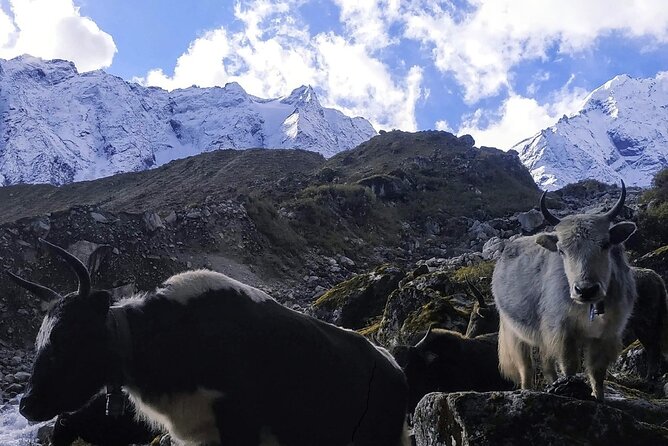
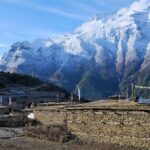
Manaslu sits a bit off the main trekking circuit, and that shows. You’ll spend days walking through working villages where people farm, trade, and manage basic tourism. Along the way, you pass slate roofs, gompas on hills, yak herding communities, and old stone paths that don’t feel built for tourists.
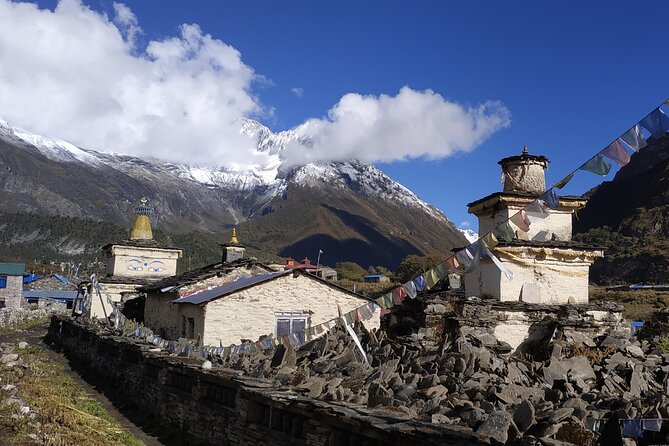
One of my favorite things about this circuit is the gradual cultural change. Early on, you’ll see Hindu Nepalese patterns in village life. As you climb toward higher, more remote areas, Tibetan Buddhist influence becomes more obvious in the gompas, prayer flags, and stone carvings you’ll see along the trail.
And the trek design supports that slow, real feel. You’re not rushed from high point to high point every day. There’s an actual rest day in Sama Gaon for acclimatization, then you move into the higher zone with Samdo, Dharamsala (Larke Phedi), and finally Larkya La. That pacing matters if you want your experience to be about the journey, not just survival.
You can also read our reviews of more tours and experiences in Kathmandu.
Getting There and What 6:00 a.m. Starts Mean for Your Body
The experience starts early. You’ll meet at Tridevi Sadak in Kathmandu around 6:00am, with pickup offered and a surface transfer toward the trekking start point.
Day 1 is mostly about getting you into position: a drive from Kathmandu to Soti Khola, then an overnight there. The roads are described as dirty and difficult to walk on, so treat this day like travel with comfort in mind, not a fitness workout.
You’ll still get plenty of payoff on the drive: rice fields, waterfalls, and green villages. En route, Arkhet bazaar is noted as an interesting older market area, with Arkhet Khola as a highlight. If you’re prone to getting motion-sick, pack a plan. And yes, you’ll likely feel a little stiff when you step out—this is normal.
Days 1–3: Soti Khola to Jagat, with Suspension Bridges and Waterfalls
Day 1 ends in Soti Khola, a small village where the scenery and greenery can feel almost sudden after city travel. It’s a gentle landing: you’re not climbing all day, but you’re stepping into rural rhythm.
Day 2 shifts into the Budhi Gandaki basin. The trail is described as bumpy and rocky. You’ll cross waterfalls, move through tropical vegetation, and tackle slippery rock sections. Suspension bridges also show up here, which is where you’ll feel the suspension part in your calves and your brain.
You end Day 2 in Machha Khola, a village on the slopes with places to sleep and basic services, including a medical clinic if needed. That’s one of the practical reasons this trek appeals to many people: even in remote country, there are support options.
Day 3 continues on narrow trails between the river and cliff areas. You’ll pass through Dobhan, Shyaule Bhatti, and reach Yaru, where the Budhi Gandaki River descends rapidly in cascades. Then you finish at Jagat, known for slate-paved streets and a campsite in the lower part of the village.
What I’d watch for on these first days: footing. When trails are narrow or slippery, slow down. If you try to “keep pace” for your ego, you’ll pay for it later.
Days 4–6: Budhi Gandaki Canyons, Mani Walls, Namrung, Lho, and Shyala
Day 4 brings a different kind of walking. You’ll walk up the riverbed, climb over a rocky point, and reach Salleri for views of Shringi Himal (7187m). Then you follow the left bank of Budhi Gandaki River, ascend to Philim, and keep pushing north out of Philim toward the Larkya-La region through thick forest and a narrowing valley.
Stops along this day include Ekle Bhatti and Deng. You’ll cross high above a gorge with pine trees, then gradually climb above Budhi Gandaki Gorge to Deng. The big value here is variety. Some days you’re in canyon terrain, some days in forest, some days on ridges. That variety keeps your legs from feeling like they’re doing the exact same drill for hours.
Day 5 takes you through iconic Manaslu Circuit visuals. You’ll cross Budhi Gandaki River on a suspension bridge, climb to Rana and Bihi, and continue in and out of gorges. You’ll cross Serang Khola and then gain height sharply before circling into Ghap.
This is also where you get mani walls displaying intricate carvings of Buddhas in meditation. Those details are worth slowing down for, because you’re not just hiking—you’re moving through a lived religious landscape.
From Ghap, you enter a fir forest with birds, cross on a wooden bridge in a narrow canyon, and arrive at Namrung after about 1.5 hours of additional climbing. Namrung is picturesque, and it’s a good place to reset before the higher villages.
Day 6 is about views and sacred spaces. You’ll pass Bhanzam with barley fields and stone houses, then enter Lihi and catch a reported 360-degree view that includes Manaslu (8163m). After that, you cross Hinang Khola to reach Lho, where a large gompa sits above the village on a hill. The vantage point from there is highlighted as undisturbed and strong for Manaslu views.
Then the trail climbs through compressed forest toward Shyala. Shyala is described as tightly packed with stone and wood houses, and the trail passes a slope linked to the Punggen Glacier area.
On these mid-trek days, the drawback is simple: altitude plus steepness. You may feel like you’re working harder than the distance suggests. That’s your cue to keep your pace steady, take breaks that are shorter and more frequent, and keep water intake consistent.
Rest Day in Sama Gaon: How to Acclimatize Without Feeling Like You’re Idle
Day 7 is your rest day in Sama Gaon. This is not “free day with no purpose.” It’s built for acclimatization and for letting the trek feel human.
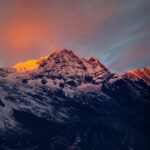
You can explore around Sama, including Birendra Tal, Manaslu Base Camp, Pema Chyoling Lhakang, and Punggen Gompa. You’re under the shadow of Manaslu here, and it’s one of the best chances to get panoramic context before the higher zones.
If you’re new to altitude hiking, here’s the practical approach: move a little, not a lot. Do a short walk to get your lungs working, then spend the rest of the day eating well and letting your body recover. The goal is comfort going into the next days, not a big fitness win.
Samdo and Dharamsala (Larke Phedi): Yak Herding Meets High-Altitude Stillness
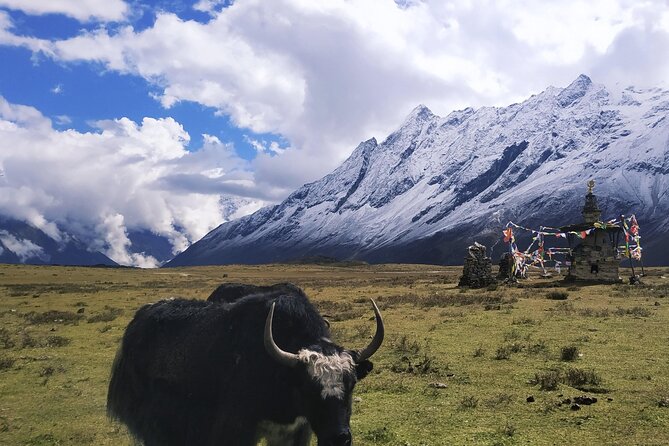
Day 8 starts uphill, via the frozen Birendra Tal (3450m) under the Manaslu Glacier. Then the trail eases into yak pastures. Long mani walls and wide open space create a different mood: quieter, windier, and more open to sky.
You’ll climb to a ridge, then drop to cross Budhi Gandaki River on a wooden bridge. From there you reach a white chorten above, and close behind is Samdo. Samdo is described as a village dedicated to yak herding, with more animal and hay shelters than human accommodation. That gives it a very grounded feel: people are there because work happens there.
Day 9 starts with descent past Samdo on a wide trail, crossing the reduced Budhi Gandaki River. The route continues with mani walls and juniper sections. You’ll pass through juniper with marmots noted, then cross two gorges on thin tracks to reach Dharamsala, also called Larke Phedi.
This is a key emotional moment. Dharamsala is a stone hut with three rooms and an almost integral roof, and the views from here are described as wonderful, with the whole Manaslu Himal range visible. It’s the place where the trek stops feeling like a normal hike and starts feeling like a high-mountain event.
If you’re sensitive to cold, bring layers that actually fit well. Even when the sun is out, nights around this zone can be real.
Larkya La 5160m: The Pass Day and Its Trade-Offs
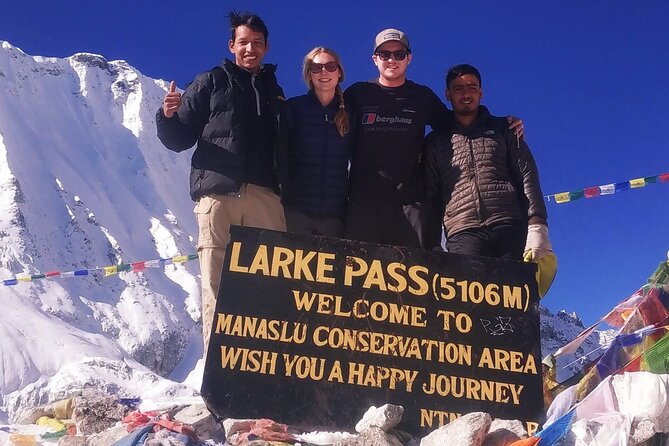
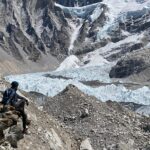
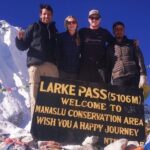
Day 10 is your Larkya La day. You climb gradually over an edge behind Dharamsala and alongside the large moraine of the Larke Glacier. The climb is described as long and rocky, and then you descend past four frozen lakes before making the final climb to the pass.
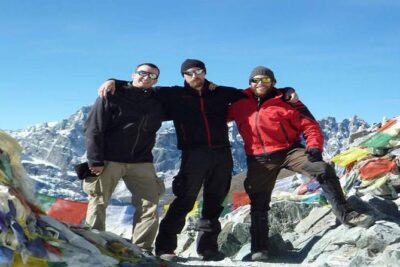
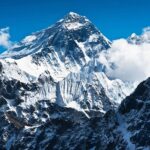
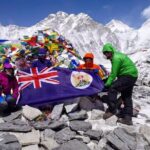
The top is marked by prayer flags. From there you get an astonishing panorama of the Manaslu Himal range and the Annapurna range. That view is the payoff for the push, but it comes with trade-offs: cold hands, slower breathing, and the need for steady foot placement.
After the pass, you incline down the moraine to the west and then drop gently toward Bimthang. Overnight in Bimthang is a good “legs-down” finish to a big altitude day.
Practical advice: on pass day, keep your expectations realistic. You might not feel like you’re sprinting toward the top. That’s fine. A steady pace beats a frantic one every time.
Final Trek Days: From Fir Forest Calm to Dharapani’s End Point
Day 11 continues south of Bimthang. The vegetation is described as lush, and the trail crosses the foot of Bimthang Glacier with fantastic background views. You climb to a spot decorated with prayer flags, then move into a fir forest. Later, you reach a lonely house in Yak Kharka for lunch, then continue through deep forest to Goa.
Overnight is in Dharapani. This last segment is where many people feel both relief and fatigue. The route is still real hiking, but you’re moving away from the absolute high points.
If you want to enjoy this day, it helps to treat it like a long walk, not a race. Stop for viewpoints when they appear, not only when you reach the next named village.
Off-Road Jeep to Beshisahar and Back to a 5-Star Night in Kathmandu
Day 12 is a change in pace. You take an off-road jeep for about four hours to Beshisahar. Then you do some more hiking: gradual descent to Syange village, trail ascent to Gharmu Phant, then descent to Beshisahar.
It’s a classic finish: you get the last footwork, but you’re not trekking all the way back down under your own power.
Day 13 brings the drive back to Kathmandu. The route is described as amazing, with lush hills and wide river networks. Then you get transferred to a 5-star hotel for your overnight stay.
That hotel night is more than comfort. It’s a way to reset your body and your sleep schedule after a trek day that’s closer to 100% “mountain living” than most travel experiences.
Price and Value: Is $1,950 Fair for This 13-Day Circuit?
At $1,950 per person for about 13 days, this trek isn’t “cheap,” but it also isn’t just selling scenery. The price bundle includes a lot of real costs that can add up fast in Nepal: permits and entry fees, a licensed English-speaking guide, and porter support (listed as 1 porter for 2 trekkers). That porter ratio matters because it helps keep your pack weight sane.
You also get included trekking gear: a down jacket, sleeping bag, and duffel bag. If you’ve ever priced gear rentals or quality cold-weather sleeping setups for trekking, you know how quickly that can turn into a separate budget line.
There’s also a health and safety component that’s unusual at this price point: an oximeter to check pulse and oxygen saturation and heart rate, plus first aid medical kits. You’re not going to treat this like a medical device that guarantees anything. But it does mean you get objective checks during the trek rhythm instead of vague guesses.
Finally, the trip includes surface transfer to and from Kathmandu. It also includes a route map and the “logistical glue” that makes it easier for you to focus on walking, eating, and sleeping.
What’s not included is just as important: travel insurance, international airfare, alcohol, hot and cold drinks, laundry, tips for trekking staff, and personal trekking equipment. If you show up without a good personal kit (boots, base layers, trekking poles if you use them), you’ll feel the gaps fast.
So is $1,950 fair? For me, yes, if you value guided pacing, included cold-weather gear, and the health monitoring piece. If you’re the type who wants to handle everything independently, you’ll pay less in some categories—but you’ll also lose a lot of structure.
Gear You Don’t Need to Rent: Down Jacket, Sleeping Bag, Duffel
This trip is unusually explicit about what you get. You’re provided with a down jacket, sleeping bag, and duffel bag. That matters because cold nights and windy ridgelines can be tough even when the day feels fine.
You still need personal trekking gear. The plan doesn’t spell out every item you bring, but it does list that personal equipment isn’t included. Use that as your reminder: pack thoughtfully for your feet, your hands, and your layers.
Also note the included route map. It’s a small thing, but having a map helps you connect each day’s walking to the bigger circuit, especially on the pass approach when things can feel like a long climb in a fog of fatigue.
Health Checks, Permits, and Why the Oximeter Is More Than a Gadget
The included oximeter is one of the most practical features here. It’s used to check your pulse and oxygen saturation and heart rate. That can help guide how you feel day to day and how you manage rest and effort.
You’re also covered on the administrative side: permits and entry fees are included, and first aid medical kits are part of the package. Again, that doesn’t remove risk, but it does reduce avoidable friction.
One more practical point: accommodations are described as best available guest houses during the trek, mainly in twin sharing. That means you’re not guaranteed the same standard in every village. Expect basic setups, and don’t judge the whole trek by one night. The pattern matters.
Who Should Book This Trek, and Who Might Feel Frustrated
This Manaslu Circuit trek suits you if you want an authentic mountain circuit with culture transitions, and you’re okay with basic village lodging and real trekking days. It also suits you if you like structure: a licensed English-speaking guide, porter support, and built-in acclimatization.
It’s listed for travelers with moderate physical fitness. That’s a helpful baseline, but it still assumes you’ll be able to handle long walking days, rocky stretches, and the big altitude moment at Larkya La.
The biggest reason you might rethink it is if you can’t commit to good weather. The experience requires good weather, and if it’s canceled due to poor weather, you’ll be offered a different date or a full refund. On mountain routes, weather is not a detail. It’s the controlling factor.
Also, since the trek includes a private group setup, it’s great for couples or small teams who want a consistent rhythm. Just remember: private doesn’t mean easy. It means your pace is still your responsibility, and your guide can only do so much.
Should You Book This Manaslu Circuit Trek?
I’d book this if you want a guided circuit that mixes culture, working villages, glacier-zone hiking, and a real high pass day. The value jumps out because gear and support are included, and the oximeter checks give you a bit more objective grounding during altitude.
I’d hesitate if you’re hoping for a smooth, low-effort trek. Early terrain is rocky and bumpy, and the Larkya La day is serious. Also, you’ll need to be flexible with weather since the experience needs good conditions to run.
If you’re the kind of person who likes authentic places and steady effort, this circuit is the kind of trip that sticks for years.
FAQ
What time does the trek start and where do we meet?
The start time is listed as 6:00am, and the ticket redemption meeting point is Tridevi Sadak, Kathmandu 44600, Nepal.
How long is the Manaslu Circuit Trek?
It’s listed as 13 days approximately.
What kind of accommodation is included during the trek?
Accommodation is listed as best available guest houses during the trek, mainly in twin sharing. You may also encounter campsite-style nights depending on the day.
Is a guide and porter included?
Yes. You get a local government licensed English-speaking trekking guide during the trek, plus a porter to carry luggage (1 porter for 2 trekkers).
What trekking gear is included in the price?
The included items are a down jacket, sleeping bag, and duffel bag.
Does the tour include any altitude or health monitoring?
Yes. It includes an oximeter to check your pulse and oxygen saturation and heart rate.
What meals are included?
Meals included are breakfast (12), lunch (11), and dinner (12), based on the package details.
What happens if the experience is canceled due to weather?
The experience requires good weather. If it’s canceled due to poor weather, you’ll be offered a different date or a full refund.