REVIEW · KATHMANDU
Ghorepani(Poonhill Trek)
Book on Viator →Operated by Himalayan Abode travels and Tours, Treks and Expedition · Bookable on Viator
Five days, big mountain payback. This private Ghorepani Poon Hill trek is interesting because you get a true private hike with pickup from Kathmandu, plus lodging and meals handled for you. I like that you can move at your own pace instead of getting shuffled with a faster group, and I also like the built-in mix of big viewpoints and village time. The one real consideration: the experience is weather-dependent, so you’ll want clear skies for the best sunrise and long-range views.
You’ll also be hiking at elevations that stay pretty reasonable for this part of Nepal. The maximum elevation mentioned is 2540m at Ghore, which is a big reason this trek is such a popular “first Annapurna” option. You’ll see the Annapurna Range, Mt. Dhaulagiri, and Mt. Fishtail from classic lookouts—plus you’ll finish in Pokhara for a calmer end to the trip.
In This Review
- Key highlights that matter on the trail
- Getting from Kathmandu to the trek start without the hassle
- Day 1: Kathmandu tour time that eases you into the region
- Ghorepani and the value of staying lower (max 2540m at Ghore)
- Poon Hill Sunrise and the early-morning rhythm you’re paying for
- Ghandruk and the Gurung settlement experience (with Mt. Fishtail moments)
- Pokhara finish: use the lake city as your recovery tool
- Price and value: is $600 reasonable for a private 5-day trek?
- The human side: guide, porter, and the difference they can make
- Weather and altitude: what to expect, and what you can control
- Before you go: passport, food preference, and what to pack
- Should you book this Ghorepani Poon Hill trek?
- FAQ
- Where does the trek start in Kathmandu?
- Is this trek private or shared with other hikers?
- What’s included in the tour price?
- Are meals included on the trek days?
- What should I wear for this trek?
- What is the cancellation refund timeline?
Key highlights that matter on the trail
- Private for your group: no pacing games, no waiting on other people
- Everything meal-and-lodge included: breakfast, lunch, dinner are planned for you
- Guide + porter support: added safety and less logistics stress on the days out
- Sunrise focus at Poon Hill: early morning viewpoints are built into the route
- Village culture at Ghandruk: you get the Gurung settlement feel and mountain sightlines
- Kathmandu to Pokhara connection: round-trip transportation is included so you’re not stuck
Getting from Kathmandu to the trek start without the hassle
Most people underestimate how much mental energy you spend on logistics in Nepal. This trip reduces that fast. You start at Tribhuvan Airport in Kathmandu, with a start time of 8:00 am, and you’re picked up through the hotel transfer included with the experience.
That pickup matters because the trek begins right away. You don’t want to spend your first Nepal day figuring out transport timing, money exchange tricks, or which office to trust. Here, the plan is already stitched together: guide and porter are part of the package, and the trip is designed around a smooth handoff from city life to trail life.
One small detail to keep in mind: the experience uses a mobile ticket, so you’ll want that accessible on your phone. Also, you can choose veg or non-veg, which helps if you’re picky or have diet needs.
You can also read our reviews of more tours and experiences in Kathmandu.
Day 1: Kathmandu tour time that eases you into the region
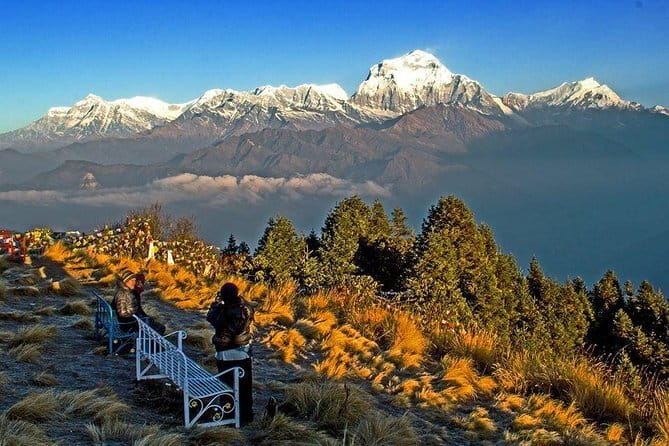
Day 1 has a practical purpose. You begin with a Kathmandu day tour connected to the trek start. Think of it as the “get oriented” block—so when trekking day starts, you’re not trying to learn Nepal from scratch while also walking uphill.
This is also where you’ll confirm your details with the operator. The trip requires passport information (name, number, expiry, country) and a passport photo copy. That’s not romantic, but it’s common for tours and permits in Nepal. If you want the trek to start without delays, make sure your document details are ready when booking.
You’re also going to get your first taste of how the Annapurna region is framed by viewpoints and weather. Nepal mountains can be hidden one minute and obvious the next. Day 1 lets you settle before the mornings that really count.
Ghorepani and the value of staying lower (max 2540m at Ghore)
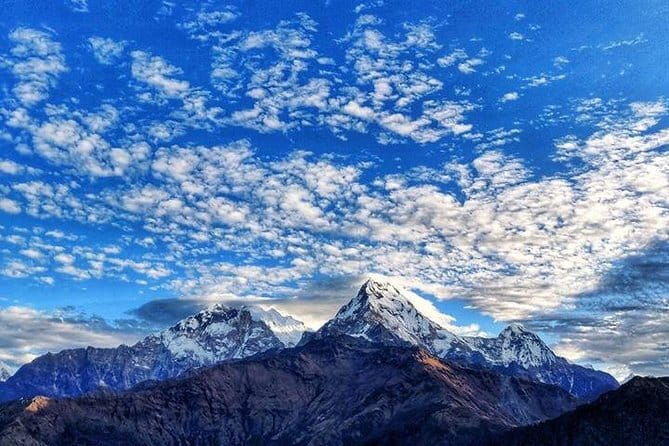
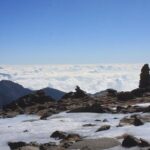
On this trek, Ghorepani is the first true viewpoint base. You’ll arrive and get the chance to see a wide mountain sweep in daylight—one of the best ways to understand what you’ll be chasing at sunrise later.
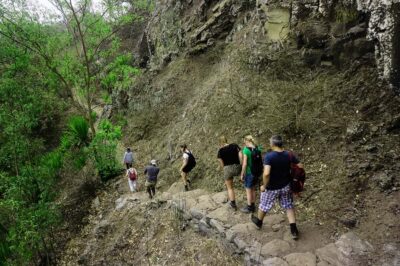
The big benefit here is pacing. The trek is described as short, and the maximum elevation given is only 2540m at Ghore. That doesn’t mean “easy,” but it does mean you’re not doing extreme high-altitude trekking for days on end. For many hikers, that turns the experience from a survival mission into a more scenic, sustainable hike.
You’ll also find that staying in the Ghorepani/Poon Hill area puts you close to multiple trail options. If skies aren’t perfect one day, you have more flexibility to try again the next morning. That flexibility is exactly why private guiding helps.
Possible drawback: Ghorepani is popular. If you’re someone who hates any feeling of crowds, mornings and key viewpoints can feel busy. The upside is you’ll still get solid views—and the trade-off is a trek that’s accessible in both time and effort.
Poon Hill Sunrise and the early-morning rhythm you’re paying for
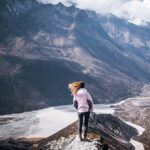
Poon Hill is the headline, and it’s where the trek earns its reputation. You’ll go toward Poon Hill for sunrise, and the day is built around the morning view rhythm: early start, cool air, then the moment the mountains come alive.
In practical terms, this is why people love Poon Hill. It’s one of the easier ways to experience the drama of the Annapurna region without committing to a longer trek. You’re moving up for a reason, not just walking for walking’s sake.
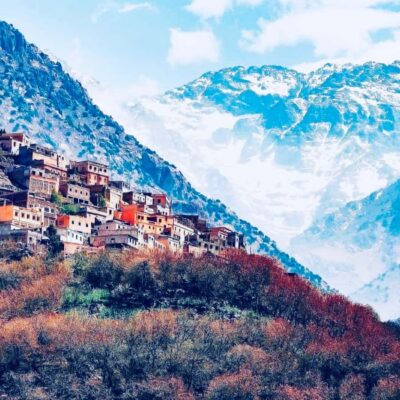
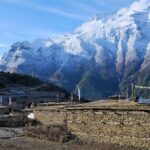
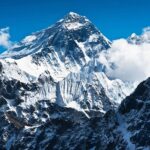
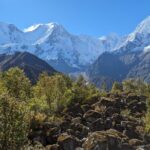
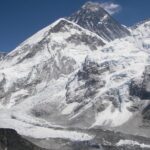
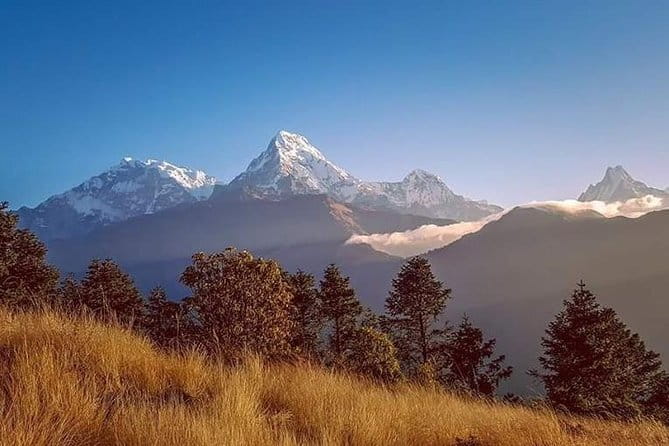
From the viewpoints included here, you can expect major names in Nepal mountaineering: the Annapurna Range, Mt. Dhaulagiri, and Mt. Fishtail are specifically mentioned as part of the scenery on this route. That’s a lot of “whoa” packed into a short itinerary.
Here’s a small reality check: sunrise mornings can be chilly, even when the day warms later. The tour notes suggest bringing a warm jacket, plus trousers and a T-shirt. That simple layering approach helps you stay comfortable while you wait for the sky to do its thing.
One more consideration: sunrise only works well with good weather. If skies are cloudy, you might not get the dramatic payoff. The operator notes this clearly—weather can be the deciding factor.
Ghandruk and the Gurung settlement experience (with Mt. Fishtail moments)
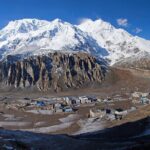
After Poon Hill, the route shifts toward Ghandruk. This is where the trek becomes more than viewpoints. Ghandruk brings in village time—specifically described as a Gurung settlement feel and a day to see the face of Mt. Fishtail.
That cultural shift is important. A lot of mountain treks become a blur of steps. A village day breaks that pattern. You get a slower pace, more opportunities to observe daily life, and a different kind of satisfaction than just staring at peaks.
Also, Ghandruk is a good “middle” day for photos and reflection. Sunrise is behind you, and the final transition toward Pokhara is ahead. It’s often the day where you feel the trip as a whole: the mountain drama, the trail effort, and the way the villages sit between you and the peaks.
If you’re hiking with family or a mixed group, village segments like this are often easier to enjoy because you can pause, recover, and take in the atmosphere without feeling like you have to keep moving every minute.
Pokhara finish: use the lake city as your recovery tool
Day 5 ends in Pokhara, described as the lake city. That’s a smart finish. Pokhara gives you a place to reset after trekking: fewer steep climbs, more room to breathe, and a city built around visitors who want to decompress.
You also benefit from the fact that round-trip transportation from Kathmandu is included. That means you’re not stuck solving the “how do we get there” puzzle at the end of your hardest day.
If you only have a short window in Nepal, this finish is part of the value. You get the mountain experience without dragging your schedule into a longer multi-week trek.
Price and value: is $600 reasonable for a private 5-day trek?
At about $600 for 5 days, this trek doesn’t look like the cheapest option on the market. Private treks almost never are. The real question is whether you’re paying for convenience, safety, and logistics—or just paying for a name.
Here’s what you’re getting that usually costs extra if you book piecemeal:
- Accommodation and meals are included (with breakfast, lunch, and dinner planned across the days)
- Guide and porter are included, along with guide/porter meals and insurance
- Park fees and national park fees are included, plus environmental management charge (reef tax) and local taxes
- Hotel pickup and drop-off is included
- A private setup means you’re not adapting your pace to a random group
When you add up those components, $600 starts to make more sense. You’re buying time and reducing decision fatigue. Planning a trek like this for yourself can take months of effort and a lot of back-and-forth. Here, the planning is done for you, and you can focus on hiking, resting, and enjoying the mountains.
So is it a deal? For many people, yes—especially if you care about comfort, smooth coordination, and not having to negotiate logistics while you’re tired.
The human side: guide, porter, and the difference they can make
This trip is “small team” trekking: you get a guide and porter, which changes the whole feel of your days. It’s not just convenience. It’s also safety and responsiveness when weather shifts, when you need a slower pace, or when you want to adjust plans without turning it into a negotiation.
Names that come up in the operator’s ecosystem include Prabin as a guide and Sabin as a porter—both described as patient, friendly, and flexible. The owner also appears to be hands-on; Nabin (and in one place written as Naveen) is mentioned as a warm, responsive point of contact. That kind of local attention matters when you’re far from home and want quick answers.
If you’re traveling as a couple, solo hiker, or family group that values a calmer pace, this guide-and-porter setup is often the difference between “we survived it” and “we enjoyed it.”
Weather and altitude: what to expect, and what you can control
Altitude is not the scary part here. The max elevation noted is 2540m at Ghore, and this is promoted as a short trek. That’s good news if you want mountain views without weeks of acclimatization.
Weather is the wildcard. The experience explicitly says it requires good weather, and if it’s canceled due to poor weather, you’ll be offered a different date or a full refund.
What you can control:
- Bring the warm jacket and layered clothing suggested (trousers and T-shirt are also recommended)
- Be mentally ready for the sunrise portion to depend on the sky
- Go into it with a “plan B” mindset. With a short trek and guided logistics, you still have chances to enjoy the region even if one morning is less dramatic
What you can’t control:
- Clouds. Nepal’s mountains can hide fast and clear even faster.
Before you go: passport, food preference, and what to pack
The tour data is clear about a few “don’t forget” items:
- You need a current valid passport
- You’ll need to provide passport details (name, number, expiry, country) for all participants
- A passport photo copy and passport size photo are requested
- You can choose veg or non-veg
- Suggested clothing includes a warm jacket, trouser, T-shirt, and comfortable dress
One more practical point: medicine isn’t included. If you use any personal prescriptions or need basic travel meds, bring them with you. Also, alcoholic drinks and drinks aren’t included, so budget for what you want at stops.
Should you book this Ghorepani Poon Hill trek?
Book it if you want:
- A private trek where you don’t have to keep matching a group’s pace
- A short timeframe trek that still delivers major Annapurna-region viewpoints
- Included lodging, meals, and fees so you can spend your energy on the mountains, not spreadsheets
- A team that includes guide and porter, which helps a lot on steep village-to-viewpoint days
You might think twice if:
- You’re very sensitive to cold mornings and you’re not comfortable layering up
- You only travel at times when weather is consistently clear (because sunrise depends on it)
- You’re trying to minimize cost at all costs—private treks tend to be pricier than group versions
If your goal is classic Annapurna views in a manageable 5-day window, this is one of the more practical ways to do it. You get the key sights—Ghorepani, Poon Hill sunrise, Ghandruk culture, and a Pokhara finish—without turning your trip into a logistics project.
FAQ
Where does the trek start in Kathmandu?
You’ll start at Tribhuvan Airport in Kathmandu, Nepal, with a start time of 8:00 am.
Is this trek private or shared with other hikers?
It’s a private tour/activity, meaning only your group will participate.
What’s included in the tour price?
The package includes accommodation, meals (breakfast, lunch, dinner), a trekking guide and porter, guide/porter meals, guide/porter insurance, hotel pickup and drop-off, and national park fees and taxes/charges such as an environmental management charge and fuel surcharge.
Are meals included on the trek days?
Yes. The included meals include 5 breakfasts, 5 dinners, and 6 lunches, plus meals for the guide and porter.
What should I wear for this trek?
The tour suggests bringing a warm jacket, trousers, a T-shirt, and comfortable dress.
What is the cancellation refund timeline?
You can cancel up to 6 days in advance for a full refund. For a 50% refund, cancel 2–6 days before the start time. If you cancel less than 2 days before the start time, the amount paid is not refunded. If canceled due to poor weather, you’ll be offered a different date or a full refund.