REVIEW · KATHMANDU
Ghorepani Poon Hill Trek
Book on Viator →Operated by Outfitter Nepal · Bookable on Viator
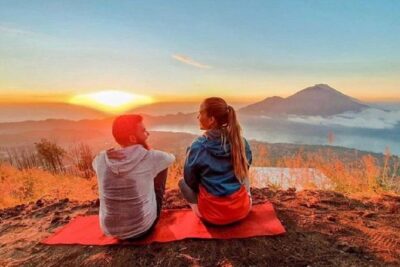
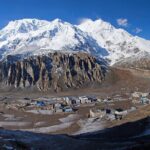
Poon Hill gives you big Himalayan payoffs fast. I love the sunrise over the Annapurna Himalaya—it’s early, it’s cold, and then suddenly it’s worth every step. I also like the small-group limit (max 14), plus a proper guide-and-porter setup that keeps the logistics sane. One possible drawback: weather can hide the top views, so you’re betting on clear skies at dawn as much as you’re betting on your legs.
This is also a trek that comes with reset time. You get three nights in Kathmandu for UNESCO-area sightseeing and orientation, then you’re off toward Pokhara before you start hiking day-to-day. If you’re the type who likes to start strong but not suffer for 3 weeks, this plan fits.
In This Review
- Key things to know before you go
- Ghorepani Poon Hill in 10 days: the short-trek sweet spot
- Price and value: what $700 covers (and what it doesn’t)
- The small-group advantage: guides, porters, and real safety
- Day-by-day: how the Kathmandu warm-up sets you up
- Day 1: Arrival and airport transfer
- Day 2: Kathmandu Valley sightseeing (UNESCO area focus)
- City reset: Kathmandu to Pokhara, then right onto the trail
- Day 3: Scenic drive to Pokhara
- Day 4: Pokhara to Nayapul, then to Tikhedunga
- Ghorepani: village life plus rhododendron trails
- Day 5: Tikhedunga to Ghorepani (around 2,675 m)
- Day 6: Hike to Poon Hill for sunrise, then down to Tadapani
- Ghandruk: the cultural payoff and the downhill momentum
- Day 7: Tadapani to Ghandruk (around 1,950 m)
- Day 8: Ghandruk back to Nayapul, then on to Pokhara
- Back through Kathmandu: wrap-up and airport transfer
- Day 9: Pokhara to Kathmandu
- Day 10: Airport transfer for your final flight
- Lodges, meals, and what “included” really means
- Gear note: what you can borrow
- Who this trek suits best (and who should think twice)
- Should you book the Ghorepani Poon Hill Trek?
- FAQ
- How long is the Ghorepani Poon Hill Trek?
- Where do I meet the group and when?
- What group size should I expect?
- What fitness level do I need?
- What meals are included?
- Do I need to bring a sleeping bag or down jacket?
- Are airport transfers and city transportation included?
- Can I get a Nepal visa on arrival?
- What if I need to cancel?
Key things to know before you go
- Max 14 people means less chaos at tea houses and more room to hear your guide
- Poon Hill sunrise is the emotional high point, and it happens at the hill’s lookout altitude
- Magar and Gurung village days give you culture without turning it into a museum stop
- Rhododendron forests on the way up add color and cool shade (especially earlier in the day)
- Guide + porter support is built in (1 porter for 2 people), which matters on a trek this short
Ghorepani Poon Hill in 10 days: the short-trek sweet spot
If you want Himalayan trekking but you don’t want a month-long commitment, this is one of the best “starter” formats. The trail mixes forest paths, farmland edges, and village sections, so you’re not staring at mountains 24/7. You’re walking through real life in the Annapurna region—watching how communities live up here, even when the route is busy.
The trek’s big trick is how it delivers your best view early enough to feel like a win. You hike up, you get your sunrise moment at Poon Hill, and then you keep moving toward villages like Tadapani and Ghandruk. It’s not only about one photo. It’s about the arc: climb, reward, then keep exploring instead of turning around immediately.
Also, the schedule gives you downtime. Those Kathmandu and Pokhara days aren’t filler. They help you adjust to altitude gradually, and they give you a chance to eat a real meal, wash up, and sleep like a human before you start hiking every day.
You can also read our reviews of more tours and experiences in Kathmandu.

Price and value: what $700 covers (and what it doesn’t)
At $700 per person, the value mostly comes from what’s handled for you. Your trek days include accommodations in lodges/tea houses and meals (breakfast, lunch, dinner) during the trek. On top of that, there are three nights in Kathmandu and two nights in Pokhara with breakfast included.
You’re also paying for people power: an experienced guide and porters (1 porter for 2 people). That ratio makes a difference when you’re moving through steep, uneven trails where you really want to keep your pack manageable.
Then there are the logistics bits that cost real time and stress if you plan them yourself. You get airport transfers by private vehicle, plus ground transportation by tourist bus for the Kathmandu–Pokhara–Kathmandu legs.
What you should expect to pay yourself:
- Drinks and dessert (alcohol and non-alcohol)
- Lunch and dinner while in Kathmandu and Pokhara
- Your Nepal entry visa fee
- Tips for guide/porter/driver
- Your travel insurance (required)
- Entrance fees during sightseeing
So the money isn’t just paying for walking. It’s paying for a smooth run: lodging, meals on trek days, support staff, and city logistics. If you like your trekking trip to feel organized instead of improvisational, this price can make sense.
The small-group advantage: guides, porters, and real safety
This trek runs as a small group of up to 14. That size is big enough to meet people, but small enough that the experience doesn’t feel like a checkout line in the mountains.
One of the strongest themes in the trip experience is safety and steadiness in changing conditions. Guides have been highlighted for keeping the group safe in cloudy and rainy weather, and for still finding good viewing opportunities around the Annapurna region. In other words: if the sky isn’t cooperating, you’re not left to guess what to do.
You may also see different guide names depending on your dates, but the guiding style is consistent. People have mentioned leaders such as Amrit, Jitu, Sanjay, Ravi, Ramesh, and Raj as part of the experience. The common thread: clear communication and competent pacing.
Porters are another big part of why this trek stays “manageable.” With 1 porter for 2 people, you avoid the classic short-trek mistake of carrying too much because the route looks shorter on a brochure.
And one more practical point that’s easy to overlook: the operator arranges an emergency helicopter service that your travel insurance company pays for. That doesn’t mean you’ll use it, but it does mean the plan has a safety net.
Day-by-day: how the Kathmandu warm-up sets you up
Day 1: Arrival and airport transfer
You start at Tribhuvan Airport with a 6:15 am start time. Then it’s straightforward: transfer to your hotel. This matters because early departures later in the trip are easier when you’ve already gotten your first night settled.
Day 2: Kathmandu Valley sightseeing (UNESCO area focus)
This day is all about getting oriented. You do a sightseeing tour of historical UNESCO World Heritage Sites in Kathmandu Valley. You won’t just be sightseeing for fun—you’re also learning the geography and culture so the rest of the trip feels connected instead of random.
If you’re someone who hates “wasted” rest days, here’s the compromise: you’ll do a full day in Kathmandu, then you have time afterward to rest.
City reset: Kathmandu to Pokhara, then right onto the trail
Day 3: Scenic drive to Pokhara
You travel from Kathmandu to Pokhara by road (about 6 hours). The point of this hop isn’t only distance. Pokhara is a mental reset. You get a different pace, a different vibe, and you wake up to a new base before trekking begins.
Day 4: Pokhara to Nayapul, then to Tikhedunga
You drive from Pokhara to Nayapul (around 1,050 m), then begin trekking to Tikhedunga (around 1,577 m). This is your first real walking day, so it’s a good time to test your boots, find your rhythm, and figure out how you handle early-day climbs.
The trek is only about a half-day, but don’t treat it like a stroll. Starting smart here keeps later days from feeling like a surprise.
Ghorepani: village life plus rhododendron trails
Day 5: Tikhedunga to Ghorepani (around 2,675 m)
Now you’re going deeper into the classic route. This is the day that starts feeling like you’re really in trekking mode: longer time on the trail, higher elevation, and more frequent village scenery.
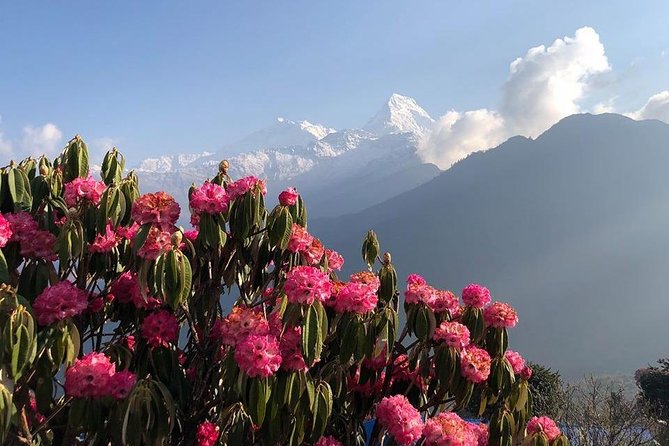
You’ll move through areas that include rhododendron forest—a big deal on this trek. Even if flowers aren’t at peak bloom, rhododendron-covered trails usually mean cooler shade and a more varied walk than a dusty ridge path.
You also get a sense of local life as you pass through places like Magar villages of Ghorepani. Instead of stopping at a single viewpoint and calling it culture, the route keeps you moving through community spaces as part of the journey.
Day 6: Hike to Poon Hill for sunrise, then down to Tadapani
This is the day you remember.
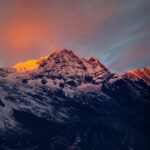
You hike up to Poon Hill (around 3,180 m) for sunrise, then continue onward to Tadapani (around 2,675 m). Expect it to be early, because sunrise waits for nobody.
Practical note: sunrise views depend on cloud cover. If you wake up to thick fog, don’t panic—your guide can often still help you find the best odds for viewing.
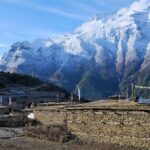
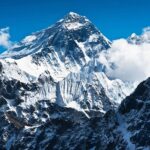
The reward is not just mountains. It’s that moment when the Annapurna region opens up across multiple ridgelines, and your brain finally catches up with your legs.
Ghandruk: the cultural payoff and the downhill momentum
Day 7: Tadapani to Ghandruk (around 1,950 m)
You trek from Tadapani to Ghandruk in about 3 hours. This is a strong “workout-to-village” ratio. The altitude drops enough that you can feel less drained, while still staying on a scenic and meaningful route.
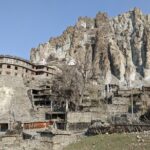
Ghandruk is known for Gurung village life, so you’re not only walking through views—you’re walking through identity. The village feel adds texture to the trek days, especially after spending the previous day focused on sunrise and wide mountain panoramas.
Day 8: Ghandruk back to Nayapul, then on to Pokhara
You go from Ghandruk to Nayapul (about 4 hours) and then return to Pokhara by drive. This is the day that finishes the loop and brings you back to city comfort.
After several days on trails, Pokhara can feel like a reward even if you’re tired. It’s a place to regroup: dry out, eat at a slower pace, and let your feet recover.
Back through Kathmandu: wrap-up and airport transfer
Day 9: Pokhara to Kathmandu
You drive back to Kathmandu (about 6 hours). This is a travel day, so plan for it like one: hydrate, move a bit when you can, and keep the day easy.
Day 10: Airport transfer for your final flight
You transfer to the international airport for departure. If you want the trip to feel like a victory instead of a sprint, aim for a flight schedule that doesn’t leave you stressed about timing.
Lodges, meals, and what “included” really means
Your trek accommodations are lodges/tea houses. Those places are simple by design. You’ll usually get a bed, warmth where available, and meals that keep you fueled for the next hiking day.
Meals are included on trek days:
- Breakfast, lunch, dinner
- Plus the hotels include breakfast in Kathmandu and Pokhara
But your schedule also clearly separates city meals. During Kathmandu and Pokhara sightseeing/down time, lunch and dinner aren’t included. That’s not a bad thing. It gives you freedom to eat what you like and to try local spots once the day’s sightseeing is done.
Gear note: what you can borrow
You’re provided a sleeping bag, down jacket, and trekking map (and you return them after the trek). That can be a big deal if you don’t want to buy cold-weather gear just for one trip.
Who this trek suits best (and who should think twice)
This trip is a match for active people with moderate fitness. It’s not framed as a casual walk, but it’s also not built like an extreme high-altitude expedition.
It’s especially good if:
- You want a Himalayan “starter trek” without going multi-week
- You like structure: lodging, meals, and transfers handled
- You want culture alongside trekking, not only trekking
It might not be ideal if:
- You dislike early mornings and cold wake-ups (sunrise at Poon Hill demands it)
- You don’t handle rain or clouds well, because views depend on weather
- You’re expecting luxury hotels during trek days (lodges are part of the deal)
Should you book the Ghorepani Poon Hill Trek?
I’d book it if you want a trip that’s short on paper but still delivers real trekking rhythm: villages, forest paths, and one big sunrise moment. The small-group setup, the guide-and-porter support, and the fact that most meals and lodging are included make it a practical way to spend $700 without turning your trip into a logistics project.
I’d also consider it if you’re planning a broader Nepal visit, because the Kathmandu and Pokhara days give your body time to catch up. If you only have about 10 days and you want maximum “wow” per day, this trek is hard to beat.
FAQ
How long is the Ghorepani Poon Hill Trek?
The tour runs for about 10 days.
Where do I meet the group and when?
The start point is Tribhuvan Airport in Kathmandu, Nepal, with a start time of 6:15 am.
What group size should I expect?
This tour has a maximum of 14 travelers.
What fitness level do I need?
The tour is aimed at people with moderate physical fitness.
What meals are included?
During the trek, breakfast is included, plus lunch and dinner. In Kathmandu and Pokhara, only breakfast is included (lunch and dinner are not included).
Do I need to bring a sleeping bag or down jacket?
You’re provided a sleeping bag and down jacket, plus a trekking map (and you return these after the trek).
Are airport transfers and city transportation included?
Yes. Airport transfers are included by private vehicle, and Kathmandu–Pokhara–Kathmandu transportation is included by tourist bus.
Can I get a Nepal visa on arrival?
Yes. The Nepal entry visa fee is not included, but you can issue the visa upon arrival at Tribhuvan International Airport. You’ll require 2 passport size photos.
What if I need to cancel?
You can cancel up to 3 days in advance for a full refund. If you cancel less than 3 days before the start time, the amount paid is not refunded.