REVIEW · KATHMANDU
Everest Gokyo Valley Trek – 12 days
Book on Viator →Operated by Trekking Planner Nepal · Bookable on Viator
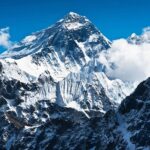
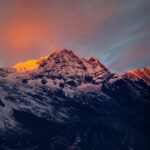
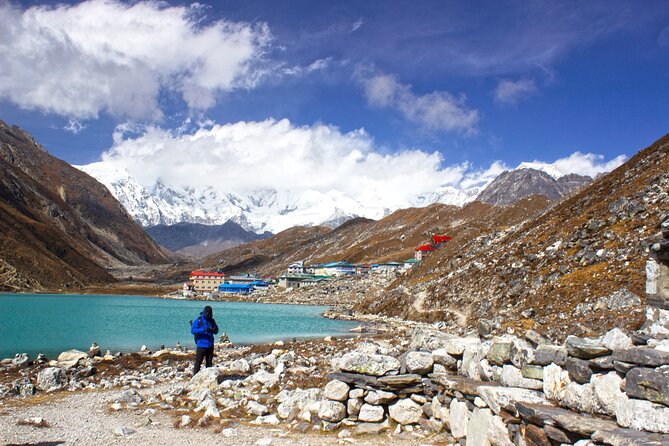
If you want Everest region scenery with fewer crowds, this trek makes a strong case. The route aims you toward Gokyo Valley and its emerald lakes, then rewards you with a sunrise hit from Gokyo Ri, with Cho-Oyu, Everest, Lhotse, and even Makalu showing up on clear mornings. I like how the itinerary balances altitude (rest day in Namche) with forward progress, and I like the cultural stops that make the trek feel grounded, from prayer wheels and mani stones to the Sherpa Museum visit option.
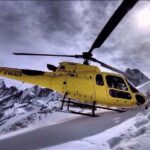
There’s one consideration: the Lukla flight is short but famously weather-sensitive. When conditions aren’t right, you need flexibility in your schedule and mindset.
This is a private 12-day trek designed for people with moderate fitness. The daily effort is steady uphill walking at altitude, plus a few long days for real leg work, so train your stamina before you come.
In This Review
- Key Things That Make This Trek Worth Your Time
- Entering the Everest Region via Lukla: 35 Minutes That Set the Tone
- Day-by-Day Breakdown: What You’ll Do and Why It Feels Right
- Day 1: Lukla to Phakding along the Dudh Koshi
- Day 2: Phakding to Namche Bazaar, Gateway to the Everest Region
- Day 3: Namche Acclimatization + Everest Viewpoint Timing
- Day 4: Namche to Phortse, Switchbacks and Buddhist Footprints
- Day 5: Phortse to Gokyo Lakes, Rhododendrons to High Pastures
- Day 6: Dole Area to Machhermo (4,410m), Views of Cho-Oyu
- Day 7: Machhermo to Gokyo, Ngozumpa Glacier Moraine Work
- Day 8: Gokyo Ri Sunrise (5,463m) + Afternoon to the 5th Lake
- Day 9: Gokyo Back to Dole via Machhermo
- Day 10: Dole Area to Namche, Mongla Dada and a Big Down-Up Day
- Day 11: Namche to Lukla, Finishing the Trek Legs
- Day 12: Lukla to Kathmandu + Airport Transfer
- The Value Angle: What You Pay For (and What You’ll Still Need to Budget)
- Guides, Support, and the Human Side of the Trek
- Who This Trek Fits Best (and Who Might Feel It Too Much)
- Should You Book the Everest Gokyo Valley Trek?
- FAQ
- How long is the Everest Gokyo Valley Trek?
- Where does the trek start and end?
- What time does the tour start?
- How do you get to Lukla?
- What trek support is included for carrying gear?
- What’s included in the price?
- What meals and costs are not included?
- Is the guide included?
Key Things That Make This Trek Worth Your Time
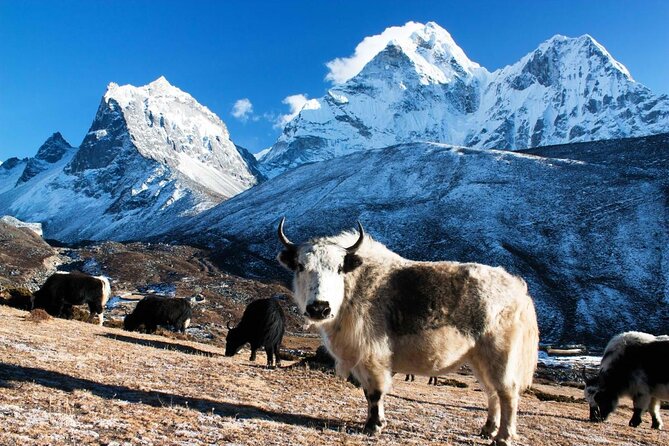
Gokyo Ri sunrise at 5,463m: an early start that gives you the high-altitude view checklist, weather permitting.
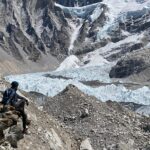
Ngozumpa Glacier access: you don’t just look at ice. You actually walk near the glacier’s moraine terrain.
Namche acclimatization built into the plan: you get a rest day plus an early hike above town for better morning visibility.
Tea house trekking with a clear support ratio: for every 2 guests, you get 1 porter with insurance, salary, food, accommodation, and equipment.
Culture on the trail: prayer flags, suspension bridges, and visits like Sherpa Museum and Mohang (Buddhist roots in the Khumbu).
Entering the Everest Region via Lukla: 35 Minutes That Set the Tone
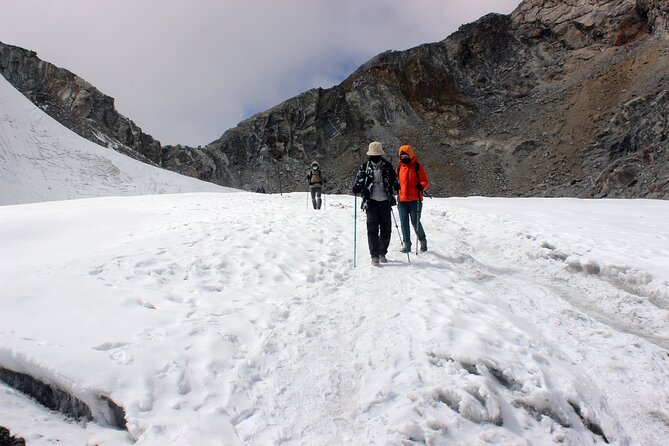
Your trek starts with an early transfer to Tribhuvan Airport in Kathmandu, then a 35-minute flight to Lukla. That flight is short, but it matters because it instantly drops you into Himalayan geography: terraced foothills below and the big mountain mass in the distance. After landing, your legs take over right away.
From a planning angle, this is a practical style of trip: you’re not spending days crawling across lower elevations. You go up fast, then the itinerary deliberately slows down where it counts.
One practical tip: keep your small essentials easy to reach for the walk out of Lukla. In this kind of region, the day starts early and packing mistakes compound quickly.
You can also read our reviews of more tours and experiences in Kathmandu.
Day-by-Day Breakdown: What You’ll Do and Why It Feels Right
Day 1: Lukla to Phakding along the Dudh Koshi
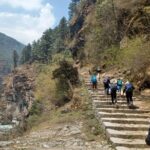
You land at Lukla and walk about 3 hours to Phakding, with a few up-and-downs along the Dudh Koshi River. Expect suspension bridges with prayer flags, and a valley trail that’s more about getting your rhythm than crushing your legs.
The value here is mental. You’re learning how the trail feels at the start of the Everest region, without yet demanding high-altitude endurance. You’ll sleep in a tea house in Phakding, with standard accommodation and meals (breakfast included) in the package.
Possible drawback: river-adjacent routes can feel damp and cold in the morning. Pack for that, not for a warm day.
Day 2: Phakding to Namche Bazaar, Gateway to the Everest Region
Today pushes longer: around 6 hours trekking as you keep following the Dudh Koshi. You cross the river repeatedly on suspension bridges decorated with prayer flags, which makes the route feel alive rather than like one long slog.
Then you enter Sagamartha National Park, and from Larja Dobhan the trail climbs steeply into Namche Bazaar. Namche is a true hub: shops, food stops, and plenty of people moving through the Everest orbit.
You’ll stay overnight at a tea house in Namche, again with standard accommodation and meals (breakfast included).
Why this day matters: it’s the first real altitude ramp in the itinerary, and you’ll feel it. Treat it as calibration, not a race.
Day 3: Namche Acclimatization + Everest Viewpoint Timing
Day 3 is a rest and acclimatization day in Namche. It’s also where the trek shows good judgment. Instead of forcing another grind, you get to breathe and reset.
There’s an early hike above town before clouds roll in. The goal is morning light and visibility for a sunrise view of Mt. Everest, Lhotse, Ama Dablam, and more. Then you return and can visit the Sherpa Museum, which covers traditional Sherpa lifestyle and includes a photography exhibit by a Nepalese naturalist. It’s a nice way to understand the people who live in and move through this high-altitude landscape.
You stay overnight in a tea house, with breakfast included and tea/coffee.
What to consider: morning hikes are still walking uphill. Use the day to acclimatize, not to overdo.
Day 4: Namche to Phortse, Switchbacks and Buddhist Footprints
From Namche, you climb Khumjung hill and descend toward the east side valley that leads to the Dudh Koshi, then the route turns north. Along the ridge there’s mention of a chorten on the way, and you descend via steep switchbacks down a sandy slope toward the Dush Koshi.
This day also includes cultural stops: you visit Mohang, described as the birthplace of the re-incarnate Lama of Rongbuk monastery of Tibet, connected to the introduction of Buddhism in the Khumbu region.
You’ll stay in a tea house in Phortse.
Why this portion is valuable: it breaks up altitude stress with varied walking—ridges, descents, and a more local feel than bouncing between major towns.
Day 5: Phortse to Gokyo Lakes, Rhododendrons to High Pastures
You climb steeply out of the valley through rhododendron forests, then the vegetation shifts as altitude rises. You pass Kharkas, which are summer settlements used by Sherpas to graze yaks.
The route includes Tongba (around 3,950m) and Gyele (around 3,960m) before you reach your tea house for the night. This segment is about transitioning into the Gokyo corridor.
You’ll stay overnight at the tea house with breakfast included.
Possible drawback: “steeply out of the valley” usually means you’ll work more than you expect. Pace early, keep water coming, and don’t wait until you’re gasping to start breathing slower.
Day 6: Dole Area to Machhermo (4,410m), Views of Cho-Oyu
From Dole, the trail climbs steadily along the valley side. Rhododendron gives way to juniper scrub as altitude increases. You pass summer settlements used when yaks graze in warmer months.
This is described as a day with excellent views of Cho Oyu, while looking back you can see peaks like Kantiaga and Thamsherku.
It’s a shorter day by schedule, arriving at Machhermo (around 4,410m) for lunch time, then tea house overnight.
Why I like this day: it gives you time to settle at a higher elevation before the big Gokyo steps.
Day 7: Machhermo to Gokyo, Ngozumpa Glacier Moraine Work
After Machhermo, the route climbs a ridge for a view both back down-valley and up toward Cho-Oyu (around 8,153m). Then the valley widens as you pass Pangram (around 4,390m).
You descend toward the river bank, then climb up toward the terminal moraine of the Ngozumpa glacier. The moraine climb is described as steep—this is the part where trekking turns from gentle valley walking into real terrain effort.
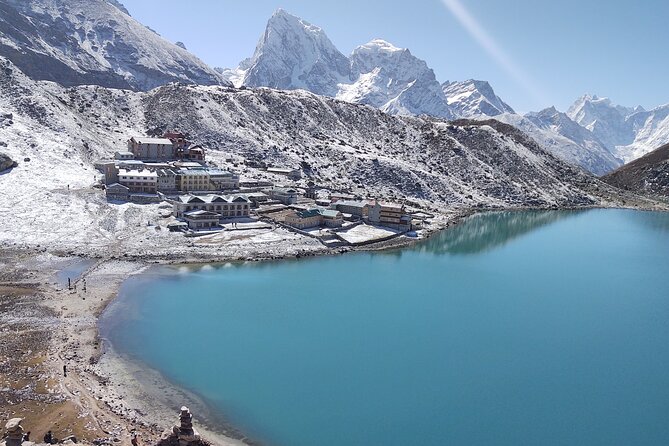
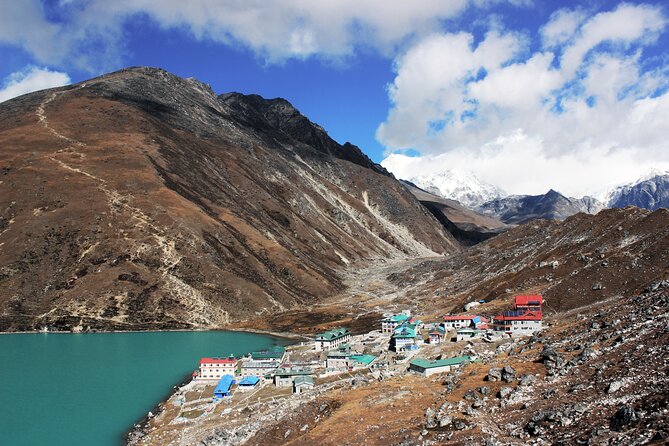
Then the trail levels out as you follow the valley past a second lake, called Longponga (around 4,690m), where you can see Lama footprints (a cultural stop tied to local belief). Finally, you reach Gokyo (around 4,750m) at the edge of the third lake.
You stay overnight at a tea house in Gokyo, with breakfast included.
Consideration: moraine days can feel awkward on the feet. Bring hiking poles if you use them, and keep your shoe tread in good shape.
Day 8: Gokyo Ri Sunrise (5,463m) + Afternoon to the 5th Lake
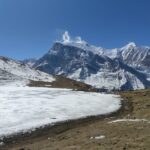
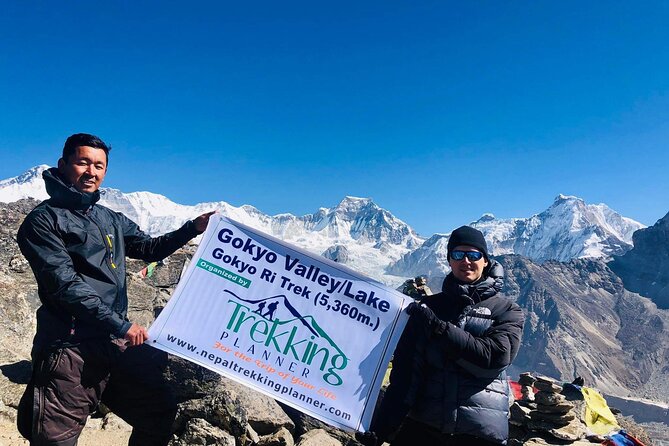
This is your star day, and the itinerary keeps it efficient. An early morning hike with your guide takes you to Gokyo Ri (5,463m / 17,923 ft) for sunrise views. The plan is to get a broad view of Everest and the surrounding giants, plus a look at the named Na-Jumpa glacier.
After breakfast, you have a second chance to explore in the afternoon, including walking up to the fifth lake and passing a fourth lake along the way.
You’ll stay overnight again in a tea house in Gokyo.
Why it’s worth it: Gokyo Ri gives you a different angle on the same drama you’d see near Everest, but through lakes, ice, and a high plateau feel.
What to consider: early mornings at 5,000m plus are cold. Your layers and gloves matter.
Day 9: Gokyo Back to Dole via Machhermo
Today you retrace part of the route: after breakfast you go back toward Dole via Machhermo. It’s scheduled as a 6-hour trek.
This day matters because it consolidates your acclimatization and reduces risk compared with jumping to new high points. It also gives your legs a chance to recover slightly, even though descents can still be hard on knees.
Overnight is in a tea house.
Day 10: Dole Area to Namche, Mongla Dada and a Big Down-Up Day
You climb and descend again: after breakfast you start on the same trail with a big descent until Phortse Tanga, then ascend to Mongla Dada. From there the plan says the trail goes slowly down all the way to Namche.
It’s a 6-hour day, and it’s the kind of schedule that requires careful pacing. Uphills at altitude can surprise you even when the day sounds like a “return” route.
Overnight: tea house in Namche.
Day 11: Namche to Lukla, Finishing the Trek Legs
After breakfast you trek back to Lukla with a few up-and-downs, scheduled at around 6 hours. You stay overnight in a tea house again.
This is where your feet will tell the truth. You’re almost done, but the last push still counts.
Day 12: Lukla to Kathmandu + Airport Transfer
You fly back from Lukla to Kathmandu in the morning, then your airport representative picks you up and transfers you to the hotel.
The big picture: you land back in Kathmandu after a full immersion in the high valleys, and the itinerary includes breakfast in Kathmandu, with the rest of your meals during trekking not included in the package.
The Value Angle: What You Pay For (and What You’ll Still Need to Budget)
Price is $1,399 per person for this 12-day private trek. That’s not cheap in Nepal terms, but the value is clearer when you look at what’s included beyond a basic guide.
Included items worth real money:
- Private vehicle airport pickup and drop in Kathmandu
- Kathmandu to Lukla to Kathmandu flights, with airport departure tax
- National Park entrance fee and TIMS card (Trekkers’ Information Management System)
- An English-speaking guide with salary, food, accommodation, and insurance
- Porter support: for every 2 guests, you get 1 porter, including insurance, salary, food, accommodation, and equipment
- Mountain twin/double sharing tea house accommodation
- Breakfast on 11 mornings
Not included, so you should budget for these:
- International flights to/from Nepal and Nepal visa fees
- Meals and accommodation in Kathmandu (besides breakfast), plus lunch and dinner during trekking
- Your personal travel and health insurance, plus insurance for helicopter evacuation
- Tips for the trekking crews and driver
My practical take: the biggest “hidden cost” risk on this kind of trek is not the listed price—it’s meals, tipping, and insurance. If you handle those early, the trek feels straightforward.
Guides, Support, and the Human Side of the Trek
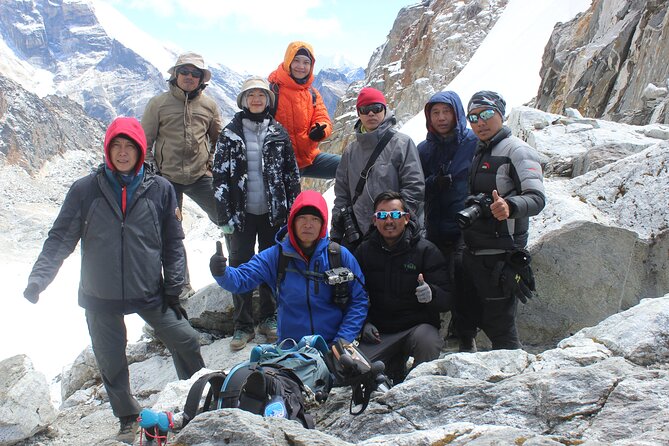
One theme that consistently shows up in this Everest region style of operation is how much your experience depends on the guide. In the feedback I saw, guides like Dibash and Dipendra are praised for being helpful when cold or small aches show up, and for keeping people moving calmly. Others, such as Pasang and FT Sherpa, get credited for friendliness and practical problem-solving.
The most telling example is how support extends beyond planning: there’s mention of getting extra help when someone couldn’t continue and arranging a way to get them back toward Lukla. That doesn’t mean every situation will be the same, but it does suggest the team is used to managing real-world constraints.
Also, the tour is private. That matters. You’ll have a group experience with fewer decision bottlenecks, and your guide can pace you without negotiating with a large crowd.
Who This Trek Fits Best (and Who Might Feel It Too Much)
This trek is best for you if:
- You want Gokyo Valley and Gokyo Ri as the centerpiece rather than only Everest viewpoints
- You’re comfortable with altitude climbing and daily hiking that can run 4 to 6 hours
- You value cultural stops like the Sherpa Museum and the Buddhist connections around Mohang
- You’d rather have a private setup and porter support
You might rethink it if:
- You’re very sensitive to cold mornings and long walks at altitude
- You can’t handle schedule shifts if Lukla flights are delayed
- You don’t have travel insurance that covers hiking needs (and possible helicopter evacuation)
Should You Book the Everest Gokyo Valley Trek?
Book it if you want big-name peaks in one day’s worth of views, but you’d rather experience them through lakes, glaciers, and high ridges than through constant bus-like logistics. The itinerary’s structure—Namche acclimatization, then a steady climb into Machhermo and Gokyo—makes sense for most moderate trekkers who train before coming.
Skip or ask more questions first if you’re unsure about your ability to handle the moraine terrain near the Ngozumpa glacier or you can’t build flexibility around potential Lukla weather issues.
If you’re ready for early starts, cold mornings, and serious views, this is a strong 12-day package that focuses on the part of the Everest region that many people miss.
FAQ
How long is the Everest Gokyo Valley Trek?
It’s listed as approximately 12 days.
Where does the trek start and end?
The meeting point is Tribhuvan Airport in Kathmandu, Nepal, and the activity ends back at the meeting point.
What time does the tour start?
The start time is 6:15 am.
How do you get to Lukla?
You take a short scenic flight from Kathmandu to Lukla, listed as 35 minutes.
What trek support is included for carrying gear?
For every 2 guests, the tour includes 1 porter with insurance, salary, food, accommodation, and equipment.
What’s included in the price?
Airport pickup/drop in Kathmandu, flights Kathmandu to Lukla and back, national park entrance fee and TIMS card, an English-speaking guide (with salary, food, accommodation, and insurance), mountain accommodation on a twin/double sharing basis, and breakfast on 11 days.
What meals and costs are not included?
International airfare, Nepal visa fees, meals and accommodation in Kathmandu (besides breakfast), lunch and dinner during the trek, personal travel and health insurance, insurance for helicopter evacuation, and tips.
Is the guide included?
Yes. The tour includes a highly experienced English-speaking guide.