REVIEW · KATHMANDU
Everest Base Camp Trek
Book on Viator →Operated by Top of The World Treks Pvt.Ltd · Bookable on Viator
Everest Base Camp is the kind of goal you remember forever. This trek pairs a classic Himalayan route with a smooth Kathmandu warm-up, then uses smart altitude pacing so you can keep moving confidently. You’ll fly into Lukla and start hiking within hours, with that unforgettable sense that you’re really going uphill—toward the top of the world.
Two things I love are the acclimatization structure (Namche, Pheriche, and a slower climb for altitude changes), and the human support. Recent feedback calls out guides like Vision Tamang and Biru for being patient, professional, and ready to help when the air gets thin. A fair consideration: this is still a long, high-altitude hike—one day runs around 9 hours and you’ll reach Kala Pattar (5,545m)—so you’ll want moderate fitness and a calm attitude toward slower days.
In This Review
- Key highlights you’ll actually feel on the trail
- Kathmandu warm-up: Tribhuvan Park, Swayambhunath, and Thamel prep
- Lukla flight and the valley climb to Namche: first Everest moments
- Acclimatization at Namche and Khumjung: what the slow days do
- Tengboche to Pheriche: Sherpa culture, monastery visits, and windier air
- Lobuche memorials and the long day to Everest Base Camp
- Kala Pattar at 5,545m and the descent that feels like a reward
- Tengboche backtrack, Namche shopping, and the last Lukla leg
- Returning to Kathmandu: Boudhanath calm, a celebration dinner, and clean clothes
- Price and logistics value: what $2,051.48 covers and what you still must plan
- Should you book this Everest Base Camp trek?
- FAQ
- What is the duration of the Everest Base Camp trek?
- Do you fly to Lukla as part of the trek?
- Are meals included while on the trek?
- What permits or fees are covered?
- Is your insurance included?
- What is the cancellation policy?
Key highlights you’ll actually feel on the trail
- Lukla flights timed for a real trekking start after a quick Kathmandu transfer and tea break
- Acclimatization days built in at Namche and Pheriche so altitude feels manageable, not chaotic
- Kala Pattar sunrise vantage at 5,545m for Everest and neighbor peaks photo moments
- Everest Base Camp during peak season in May, when the camp is actively used by climbers
- Guide and porter teamwork is the main quality signal, with Biru and Vision Tamang repeatedly praised
Kathmandu warm-up: Tribhuvan Park, Swayambhunath, and Thamel prep
Your trek begins in Kathmandu, and this itinerary doesn’t waste that first day by rushing. After you land at Tribhuvan International Airport, you’re met and transferred to your hotel, with time for something simple but essential: shower, tea, and a bit of orientation before dinner. You’re also scheduled for Tribhuvan Park, which helps you get your bearings in the city fast, even if jet lag hits.
On day two, you’re heading to Swayambhunath (Swyambhu Mahachaitya), a Buddhist stupa and monastery said to be over 2,000 years old. The view over the valleys is the point, but the “day before the mountains” energy matters too. You get the temple experience, the chance to see monkeys, and the sense that Kathmandu is a living place—not a backdrop.
Then you prep for the trek. The afternoon is intentionally flexible: packing checks, kit planning, and a first look at shopping in Thamel. I like this because most problems on treks start with small things: a missing layer, a bad fit on socks, or forgetting the gloves you actually need. Thamel is the practical fix, and having a dedicated window for it keeps you from scrambling later.
You can also read our reviews of more tours and experiences in Kathmandu.
Lukla flight and the valley climb to Namche: first Everest moments
The morning flight to Lukla is about 40 minutes, but it’s the kind of ride that stays with people because you’re flying over Himalayan foothills. Once you land at 2,800m, you’re not carrying the bulk of your load yourself—porters handle luggage—so you can start the trek feeling human, not overloaded.
From Lukla, the trail goes to Phakding at about 2,653m. This first walking day is short (around 3 hours) and follows villages and a river valley. That matters because it gives your lungs and legs time to wake up without punishment.
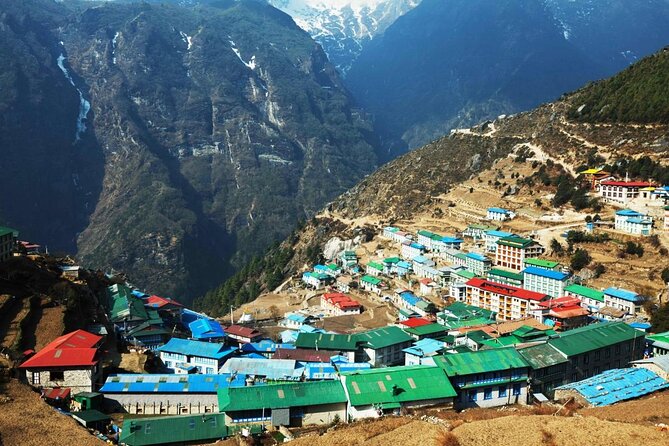
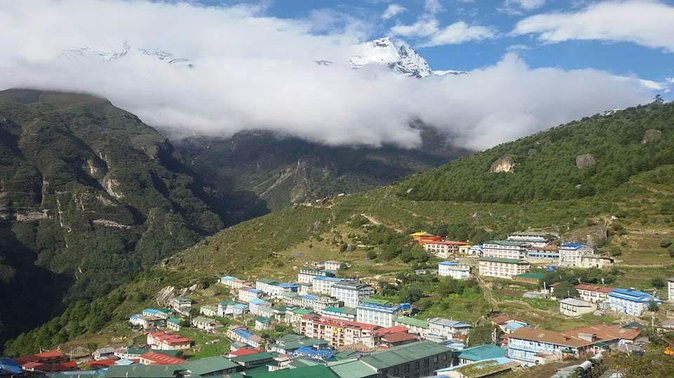
The next day is where the mountains start doing the talking. You trek up the valley, cross into Sagarmatha National Park, and follow the Dudh Kosi river route through villages before the climb really kicks in. You’ll stop at Monjo for lunch, then deal with a steeper rise toward Namche (around 3,440m). The itinerary calls out a well-timed rest stop where you get your first good view of Mount Everest. That moment isn’t just “nice”—it’s motivation. It also helps you connect the effort to the reward.
You also get a quirky, very real travel detail here: the route includes stops at named places like an Irish Pub for breaks on trekking days. It’s a funny reminder that this route is also supported by real towns and real businesses. Expect tea, snacks, and a chance to reset before the next stretch.
Acclimatization at Namche and Khumjung: what the slow days do
Day five is an acclimatization day in Namche, with a walk to Khumjung around 3,780m. The purpose is simple: go higher without exhausting yourself, then come back down to sleep. If you’ve ever wondered why people talk about acclimatization like it’s a big deal, here’s the practical version: it reduces the odds that altitude will knock your energy out of you when you need it most.
You’re also staying in Namche to give your body time. The itinerary is clear that altitude can start affecting people around this elevation. That’s not a scare tactic; it’s why the day is structured the way it is. You’ll likely notice it most as fatigue and breathiness—things that don’t feel dangerous on paper, but can ruin your pace if you push too hard.
This is where the “private tour” format can help, too. Your group can move as one unit, and if you need extra breaks, you’re not stuck with a big, mixed-speed crowd. The tour is described as private, meaning only your group participates, which usually makes the rhythm more controlled.
Tengboche to Pheriche: Sherpa culture, monastery visits, and windier air
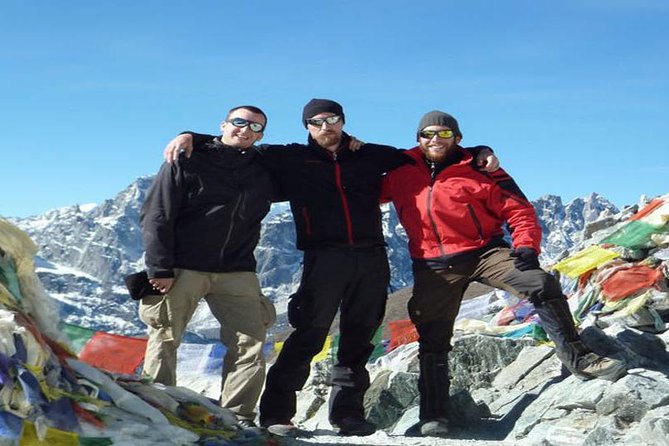
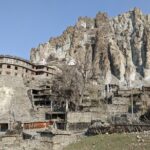
After Namche, the trek continues toward the religious center of the Sherpa region: Tengboche and its Gompa (monastery). You’re scheduled to finish that day in Devuche around 3,750m, but the real cultural highlight is the stop at Tengboche Gompa. The itinerary notes it as the largest monastery in Nepal and emphasizes the Sherpa spiritual heart of the area.
You’ll spend time visiting, learning about the religion and culture of the region, and grabbing photo opportunities with framed mountain views when weather allows. I like that this day isn’t just about walking; it reminds you that the people living here are part of the story, not a tourist prop.
Next comes the move to Pangboche and then Pheriche. The itinerary positions Pangboche at about 3,800m as the highest all-year settlement in the region. You’ll pass forests and mani stones, then reach a famous-feeling bridge moment before a tea break. After that, tree line disappears as you go higher, and the scenery shifts. You end the day in Pheriche at about 4,240m, where the area can be windy—so warm clothing isn’t optional.
Day eight is another acclimatization rhythm day: staying in Pheriche, taking a day walk higher, then returning down to sleep. That pattern—higher during the day, lower at night—is the simplest altitude strategy you’ll see on EBC routes. It’s also one of the biggest reasons this itinerary feels more manageable than many rushed schedules.
Lobuche memorials and the long day to Everest Base Camp
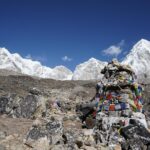
You’ll move from Pheriche up toward Lobuche (about 4,930m). The itinerary says you gain around 700m, which means you’ll feel the work. This is also when the emotional weight of the mountains can show up. The route includes an afternoon stop at Chukpilhara, described as stone monuments to climbers and mainly Sherpas—a place that many people remember because it ties the landscape to human stories and risk.
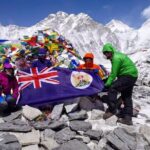
Then comes the day you’ve been waiting for: heading to Gorak Shep (5,160m), resting, eating, and then trekking onward to Everest Base Camp, used now by climbing teams during May peak season. The itinerary frames May as peak climbing time for summit attempts, which often means the base camp scene can feel active. That’s not a guarantee, but it does set expectations that you may see more activity and gear than in off-season months.
The day ends with a descent back to Gorak Shep for early night. I like that the schedule doesn’t try to cram everything into one endless day. Reaching Base Camp is a major goal, but you’re still at serious altitude afterward, and sleeping matters.
Kala Pattar at 5,545m and the descent that feels like a reward
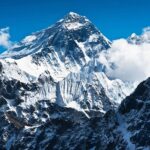
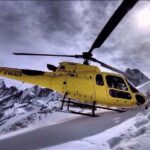
The peak day is next. You’ll start around 5am with tea and climb to Kala Pattar, listed at 5,545m. The itinerary is straightforward about why people do this: the early timing gives amazing views of Everest and neighboring peaks, and it’s the top of the trek.
On top, you get time for photos and to soak up the experience. The real value, though, is what happens right after. You descend to Gorak Shep for lunch, then continue down to Pheriche for the night. That long day is about 9 hours in the itinerary, so it’s a test—but it’s also structured. You get the view, you get the achievement, and then you start moving toward lower altitude.
When you’re already tired, the descent days can feel like both celebration and relief. The itinerary emphasizes that after this altitude push, you’ll notice the benefit as you go down—often people find uphill sections easier once their body has adjusted.
Tengboche backtrack, Namche shopping, and the last Lukla leg
After Kala Pattar, you keep dropping. You trek from Pheriche back down to Tengboche for an overnight. This short day (around 4 hours) helps your body digest what you just did, and it gets you back to a place with monastery vibes and familiar trail pacing.
Then you pass back through Namche, which means another chance for supplies and a more relaxed feel. The itinerary includes a stop at an Irish Pub again, plus time to stop for shopping you wanted earlier. There’s even mention of the famous apple pie—so yes, you’ll get that small, silly comfort on the way out, which is often what makes the trek feel human again.
Eventually you make your way down to Phakding via Monjo and finish the walking day in Lukla. The itinerary notes the trail descends steeply for about one and a half hours before small ups and downs. Expect around 4 hours total. The final hours in Lukla are built for recovery: time to wander, and the tour notes there’s even a Starbucks if you want something familiar before flying.
Returning to Kathmandu: Boudhanath calm, a celebration dinner, and clean clothes
Once you finish in Lukla, you fly back toward Kathmandu. The itinerary says flights are weather permitting, and the inclusions mention transport connected through Manthali and private transfers. In practical terms: plan for a travel-day flow that’s less predictable than trekking. The trip is designed to get you back for mid-morning arrival, then you’re set with a welcome shower and clean clothes.
Back in Kathmandu, you get a leisure day for Thamel shopping and normal life adjustments. Then comes a big cultural stop: Boudhanath Stupa, described as the largest Buddhist stupa in the world and a world heritage site. This is the perfect contrast after days of high-altitude exertion. You’re not hustling up a trail; you’re sitting with Nepalese Buddhism and the atmosphere around the stupa.
Your last night includes a group dinner to celebrate the end of the trek. It’s a small thing, but it matters because it gives closure. After the mountain effort, you’re not just traveling out—you’re wrapping up together.
Price and logistics value: what $2,051.48 covers and what you still must plan
At $2,051.48 per person for about 17 days, you’re paying for far more than a walking route. In the included list, the big value chunks are clear: all trek accommodations, guide and porter services with wages and insurance, domestic flights to Lukla and back (plus transport tied to Manthali), and key administrative items like national park permits, TIMS card, and municipality fees.
Meals are also structured in a helpful way: you can choose any food and tea for breakfast, lunch, and dinner while on trek, with breakfast (17), lunch (12), and dinner (12) covered. That matters because consistent meal support is part of altitude safety. Food and hydration are not just comfort; they affect your stamina and how well you acclimatize.
You still need to budget for what’s not included: lunches and dinners in Kathmandu, personal expenses like bar bills and bottle of water, tips for guides and porters, and your insurance. Insurance is explicitly not included, and for a trek at these elevations, that’s a line you shouldn’t ignore.
The private nature of the tour also affects value. This isn’t a giant group scramble. It’s meant for your group only, which often translates into smoother decision-making when someone needs extra time to rest.
Should you book this Everest Base Camp trek?
I’d book it if you want the classic EBC experience with a pacing plan that respects altitude. The itinerary hits the essentials—Namche acclimatization, Tengboche monastery time, a clear push to Everest Base Camp, and the Kala Pattar summit-day moment—without acting like speed is the goal.
You should think twice if you know altitude affects you strongly or if you’re not ready for a long, early morning day (around 9 hours) at very high elevation. Still, the schedule includes acclimatization days for a reason, and the guide-porter support is repeatedly praised in feedback, including calls out for people like Biru and Vision Tamang.
If you want an operator that keeps the logistics tight—flights, permits, guides, porters, and meals covered—this is a solid match.
FAQ
What is the duration of the Everest Base Camp trek?
The trip is about 17 days.
Do you fly to Lukla as part of the trek?
Yes. Flights to Lukla and return flights are included, along with Kathmandu to Manthali transfers by private car tied to the flight routing.
Are meals included while on the trek?
Yes. You can choose any food, any tea, for breakfast, lunch, and dinner while on the trek. Breakfast is included 17 times, and lunch and dinner are included 12 times each.
What permits or fees are covered?
The package includes national park permits, Pasang Lhamu Municipality fee, and TIMS Card.
Is your insurance included?
No. Your insurance is not included.
What is the cancellation policy?
Free cancellation is available up to 24 hours in advance of the experience start time for a full refund. If you cancel less than 24 hours before, the amount paid is not refunded.