REVIEW · KATHMANDU
Everest Base Camp & Gokyo Ri Trek
Book on Viator →Operated by Explore Himalaya Travel and Adventure · Bookable on Viator
Everest Base Camp is already a big deal. But this trek adds Gokyo Ri and Cho La, so you get two kinds of Everest scenery in one journey: wide-open panoramas and rough, high-altitude realism. I love the way the route mixes classic checkpoints (Namche, Gokyo Lakes, Gorak Shep) with quieter stretches in the Bhote Koshi and Dudh Koshi valleys. One thing to consider: the itinerary includes a genuinely hard day over Cho La, with a steep glacier traverse and icy, vertical rock sections—so you’ll want real stamina and calm focus.
Logistics are also handled in a practical, low-stress way. You fly Kathmandu to Lukla and back as part of the package, and you’re met at the airport in Kathmandu before trekking starts. I also like the small-but-important support structure: an English-speaking guide, porters with a 2 trekkers = 1 porter ratio, and permits arranged for the trek. The possible drawback is that the on-trek rooms are basic lodge standard with non-attached bathrooms, and you’ll still want to budget for personal comforts like hot showers and internet.
Key highlights you should care about
- Gokyo Ri: early climb for a huge Everest-region 360-degree panorama
- Cho La pass day: the hardest push, with glacier travel and ice-glazed rock
- Everest Base Camp visit: a glacier-pinnacle walk to the icefall area from Gorak Shep
- Hillary’s Khunde hospital: a meaningful stop in the Khumjung-Khunde area
- Lakes + scenery variety: Dudh Koshi valley forests to Ngozumpa Glacier views and turquoise lakes
- Real village rhythm: Namche market days, Thame Gompa area, plus a return through Lukla
In This Review
- Entering Kathmandu, Then Launching Into Lukla’s Mountain-Air Feeling
- Phakding and Namche: Suspension Bridges, Sagarmatha Park, and Altitude Tactics
- A Namche Rest Day Plus Khumjung and Khunde: Hillary’s Legacy and Khumbila Views
- Thame, Dole, and Machhermo: Rhododendron, Juniper, and Yak-Summer Settlements
- Gokyo Lakes and Gokyo Ri: The View That Makes You Slow Down
- Ngazumpa Glacier to Thagnak, Then Cho La: The Trek’s Real Test Day
- Dzongla, Lobuche, and Kala Patthar: Memorial Stones and an Early Sunrise Mission
- Everest Base Camp From Gorak Shep: Ice Pinnacles and the Route to South Col
- Down the Dudh Koshi via Tengboche and Namche: Wildlife, Forest Colors, and Chang
- Kathmandu Finish: Boudhnath, Pashupatinath, and Patan Durbar Square
- Price and logistics: what $2,800 buys you (and what you still handle)
- Who Should Choose This Trek, and Who Should Think Twice
- Should You Book Everest Base Camp & Gokyo Ri?
- FAQ
- How long is the Everest Base Camp and Gokyo Ri trek?
- Where does the trip start and end?
- Is the Kathmandu to Lukla flight included?
- What kind of accommodation will I have during the trek?
- Are meals included?
- Do I get a guide and permits?
- Is this trek suitable for my fitness level?
- Is free cancellation available?
Entering Kathmandu, Then Launching Into Lukla’s Mountain-Air Feeling
The trip starts in Kathmandu with that first wow moment: if the skies cooperate, flying into Tribhuvan International Airport can show you a sweep of the snow line before you even set foot outside. Once you land, you’re met by the support team and escorted to your hotel for the night—helpful when you’re still feeling jet lag and trying to get your bearings.
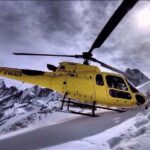
The next jump is the classic Khumbu ignition: a scenic flight from Kathmandu to Lukla, where the runway sits in a cliff-hugging pocket of the mountains. This matters more than people think. Trekking at altitude works best when you’re not fighting transportation problems on top of everything else. By including Kathmandu–Lukla–Kathmandu airfare, the trek keeps the adventure focused on walking, acclimatization, and views—not scrambling for flights.
If you like structure without feeling trapped, this start style fits you: pickup offered, airport transfers by private vehicle, and then the team moves you into the trek rhythm.
Phakding and Namche: Suspension Bridges, Sagarmatha Park, and Altitude Tactics
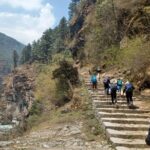
From Lukla you head up the Dudh Koshi Valley toward Phakding. It’s a steady on-ramp on a well-marked trail, and it’s timed so you arrive in time to settle into lodge life. Even at this stage, you feel the altitude building—not just in your lungs, but in the way you start pacing yourself.
On day 3, you move toward Namche Bazaar by crossing and re-crossing river bridges, including high suspension bridges that let you see the valley fall away below. Just beyond Monjo, you enter Sagarmatha National Park, set up to protect the fragile mountain environment. You’ll likely notice how that translates into trail behavior: things feel more regulated and clearly respected.
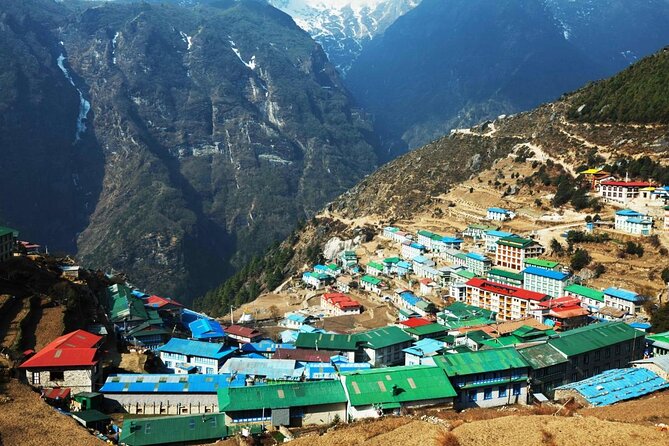
Namche is the big hub in the Khumbu—busy, practical, and full of tea houses, lodges, and trading energy. There’s also a Saturday market feel, where lowland traders and Tibetan yak caravans historically meet locals. If you time it right, the market atmosphere gives you a sense of how life works here beyond trekking.
Your first view of Everest can pop through on a clear day. That’s not a guarantee, but the way the trail climbs toward Namche makes sky moments more likely when the weather is good.
You can also read our reviews of more tours and experiences in Kathmandu.
A Namche Rest Day Plus Khumjung and Khunde: Hillary’s Legacy and Khumbila Views
Day 4 gives you a true acclimatization break in Namche. This is smart, not optional. At altitude, resting isn’t laziness—it’s how your body learns the new normal before the trek starts throwing higher days at you.
Then comes the westward shift toward Khumjung. The Bhote Koshi valley has a different feel—more open and “trade-route historic,” with prayer flags and mani stones appearing along the way. When you climb to Thame and the Thame Gompa area, the scenery around the valley starts to feel more spiritual and grounded. The Thame Gompa is linked with Mani Rimdu festival celebrations (spring), even if your exact dates won’t match festival season.
One of the more meaningful stops on this route is at Khunde hospital, set up by Sir Edmund Hillary. It’s the kind of place you can’t treat like a checklist. Even if you keep your visit brief, it adds a layer of human connection to the mountain story.
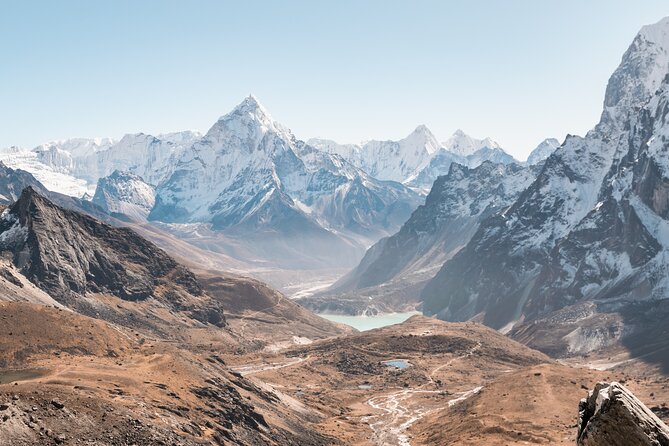
From the Khumjung area, you get views that frame the Khumbu like a photo wall: Thamserku, Kantega, and Ama Dablam show up with that famous three-dimensional realism. If you love geology and scale, the angles here are a big part of why this trek earns repeat admiration.
Thame, Dole, and Machhermo: Rhododendron, Juniper, and Yak-Summer Settlements
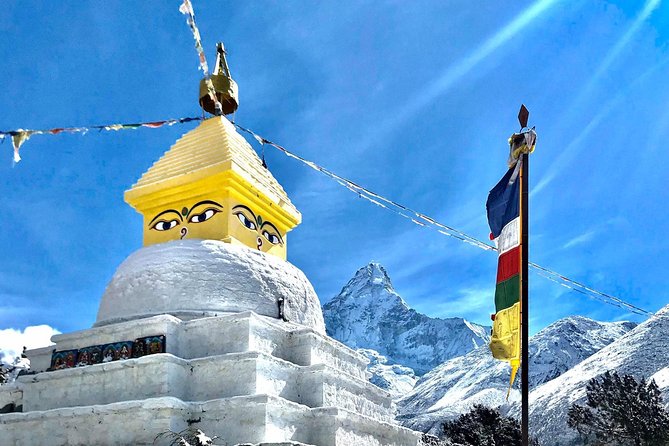
After the Khumjung-Khunde area, the trek continues deeper into the quieter village network. Leaving Khumjung, you’ll pass a large chorten on a ridge descending from Khumbila (a 5,734m peak described locally as the patron god’s abode). This is one of those trail stretches where religion and landscape are simply part of the route.
Lunch near the bridge leading to Phortse transitions you into higher terrain, and then you climb steeply through forests. Rhododendron and birch forests show up with hanging moss and lichens—small details, but they make the walk feel alive and less like you’re just moving between elevations.
You reach Dole, then continue climbing toward Machhermo. As altitude rises, rhododendron forests give way to scrub juniper. The trail also passes through summer settlements called yersa, used when yaks graze in summer pastures. That’s a useful mental image for you: these are not “empty mountains.” They’re working landscapes, seasonally.
This section also gives you a solid chance to see Cho Oyu ahead, while earlier down-valley views bring back Kantega and Thamserku. The pacing is generally manageable, and it sets you up for the big pivot toward the Gokyo area.
Gokyo Lakes and Gokyo Ri: The View That Makes You Slow Down
On day 9, the trek shifts toward the heart of the Gokyo region. You follow a scenic path to Pangka, then descend slightly by a melting river beside the Ngozumpa Glacier. This is where the scenery changes from forested valleys to high-alpine drama.
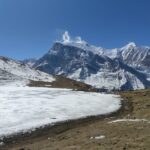
You move past the first of the holy lakes, then onto the second lake, and eventually the third: Dudh Pokhari, also called Milk Lake. Gokyo sits on the eastern shore of the area’s main settlement. Walking alongside the lakes feels different from other Everest-region trails because you’re not only climbing—you’re tracking reflections and color. With Cho Oyu and Gyachung Kang reflected in emerald green water, it’s the kind of contrast that helps you catch your breath mentally, even when your body is still working.
Then comes day 10, the reason many people choose this exact itinerary: the early climb to Gokyo Ri. You start just after first light, taking a steep path up the hillside. From the summit, you’re chasing a 360-degree panorama of snow-capped peaks in the Everest region, with Everest, Lhotse, and Makalu slowly coming into view.
Some hikers rate this summit experience even higher than Kala Patthar. I can’t tell you which one is best for your taste, but I can tell you why this works: you get a huge view area and a sense of “the mountain world as a whole,” not just one hero peak.
After your summit time, you walk onward toward Na at the foot of the Ngozumpa Glacier for the next stage.
Ngazumpa Glacier to Thagnak, Then Cho La: The Trek’s Real Test Day
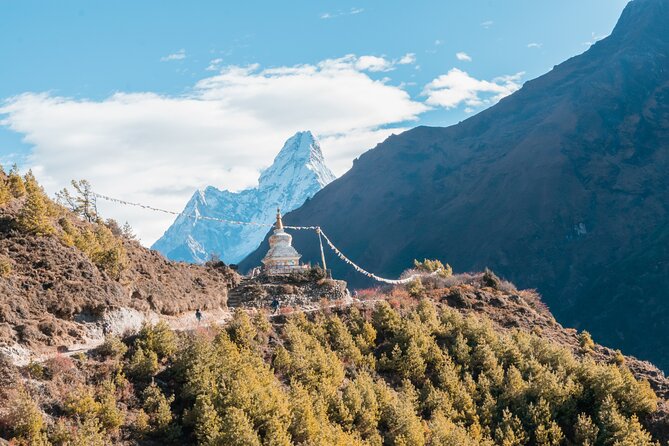
Day 11 moves you across the Ngazumpa Glacier zone toward the other side, then you traverse along the edge before reaching Thagnak. The short hike and afternoon rest are not wasted time. They’re how you reduce fatigue before the hardest day.
Day 12 is where you earn your Everest-region story. The trek heads toward Cho La pass, and while the pass itself may not look scary from afar, the reality is the difficulty comes from how steep it is and how it forces a glacier traverse on the eastern side. The trail is described as vertical and the rocks can be glazed by ice, making it slippery.
What to do with that information as a practical traveler? Don’t go into this day with a pushy mindset. Your best strategy is conservative pacing, careful footing, and listening to your guide about when to move and when to wait. If you start rushing here, your body will pay for it.
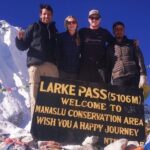
As you climb, you pass prayer-flag-decorated areas near the top of the pass. The views around the pass are dramatic—Ama Dablam dominates to the south, with peaks like Cholatse, Lobuche East, and Baruntse in the mix. You then pass crevasses before reaching Dzongla Village.
This is also a day where you’ll appreciate why having a guide and support plan matters. It’s not about speed. It’s about doing high-altitude risk management well.
Dzongla, Lobuche, and Kala Patthar: Memorial Stones and an Early Sunrise Mission
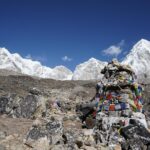
Day 13 moves to Lobuche. The trail passes the teahouses of Duglha, then you climb higher onto the terminal moraine of the Khumbu glacier. Along the way, you’ll see a row of stone monuments built in memory of Sherpas who died on mountaineering expeditions to Mt Everest. This adds weight to the walk. You’re not just chasing photos—you’re participating in a place with real history and real loss.
You descend and follow the west side of the valley to Lobuche. Sunset on Nuptse from here is described as spectacular, which makes sense because this area often gives clean light on the wall faces in late day hours.
Then day 14 targets one of the classic viewpoints: Kala Patthar (5,554m). You need a very early start to reach Gorak Shep first, and the walk includes climbing over a tributary glacier. It’s not just altitude—it’s uneven terrain and early-morning cold.
From Kala Patthar, you get a top-tier Everest-region panorama. You then return to Gorak Shep.
If you’re deciding between sunrise viewpoints, this is a strong reason to keep your schedule tight. Kala Patthar rewards early effort, and it’s one of those places where you’ll understand why people set alarms for mountain views.
Everest Base Camp From Gorak Shep: Ice Pinnacles and the Route to South Col
Day 15 is an excursion trek to Everest Base Camp. It’s several hours, and the trail weaves through ice pinnacles and near the crevasses of the Khumbu Glacier. You’re not walking on a tidy nature trail here. You’re moving through a route that requires caution and proper foot placement.
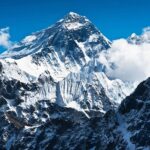
On the return leg, you can take a higher route to get a spectacular view of the Khumbu icefall and the route toward South Col. When the weather cooperates, this is the moment where Everest-region geography becomes real in your head.
Afterward, you return to Pheriche.
One useful mindset for this day: think of it as “walking into the Everest theater,” not “ticking off a destination.” If you go in calm and present, the route feels more meaningful and less like a checkbox.
Down the Dudh Koshi via Tengboche and Namche: Wildlife, Forest Colors, and Chang
The return trek brings a major change: you’re heading downhill and the valley opens up in a more human way. Day 16 moves toward Tengboche, crossing the bridge over the Dudh Koshi River, and then continuing to Kyanjuma—a junction connecting routes toward Gokyo Valley, Khumjung, and Namche Bazaar.
The route includes rhododendron forest where wildlife can appear. The trek description points to possible sightings like pheasants, griffons, musk deer, and wild goat. Even if you don’t see animals every day, this is a good reminder that the mountains aren’t only rock and snow—life exists here in the forests too.
Day 17 heads from the forested slopes down to Sansa, with views of Ama Dablam, Thamserku, and Nuptse, and then continues to Namche Bazaar.
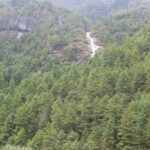
Day 18 brings you down the Dudh Koshi gorge through pine forests toward Lukla. As you’re working less against steep gain, you can start noticing trail textures again: prayer-flag bridges, river corridors, and the way the forest changes as elevation drops.
Day 18 ends in Lukla, and you get a farewell-style evening: a chance for a party with Sherpa guides and porters, including sampling chang (local beer), Sherpa dancing, and time to reflect. I love these moments because they turn the trek from “walking challenge” into “shared experience with people who live this world.”
Kathmandu Finish: Boudhnath, Pashupatinath, and Patan Durbar Square
After returning to Lukla, the trek ends with a flight back to Kathmandu. The rest of your day is free for your own plans.
Then you get a guided cultural run: Boudhnath (Nepal’s largest Buddhist stupa), Pashupatinath (Lord Shiva’s shrine), and then Patan (Lalitpur), including Patan Durbar Square with Malla-era architecture. The square includes temples like Mahaboudha, Kumbeshwor, Krishna, and a Golden Temple area. This pairing works well: you finish the trek in the mountains, then you come down into Nepal’s spiritual heart.
Finally, you’re taken to the airport for your onward flight home.
Price and logistics: what $2,800 buys you (and what you still handle)
At $2,800 per person for about 21 days, what stands out is not just the trekking idea—it’s the package coverage. You’re paying for:
- Kathmandu–Lukla–Kathmandu airfare
- Lodge and tea house accommodation during the trek, plus 3 nights in Kathmandu on a twin-share basis with breakfast
- A guide, permits, and porter support (with the 2 trekkers = 1 porter ratio)
- Airport transfers and included sightseeing
Meals are listed as included in the count shown (breakfast, lunch, dinner totals across the trek), so you’re not constantly guessing food costs at altitude.
What you should still plan for:
- Tips for guide, porters, and drivers
- International flights and any other airfare
- Personal expenses like drinks, snacks while walking, hot shower, and internet
- Medical costs and emergency evacuation costs if they ever apply (not included, by the tour description)
For value, this trek can make sense if you want less stress around flights and paperwork and you’re okay with basic lodge rooms (standard rooms with non-attached bathrooms). If you already have your own flights and want to DIY every detail, it could feel priced for convenience. If you want a guided plan that keeps the mountain focus, it’s a solid deal.
Who Should Choose This Trek, and Who Should Think Twice
This trek fits best if you:
- Have moderate physical fitness and can handle long trekking days with altitude
- Want variety: Dudh Koshi forests and valleys, Gokyo Lakes, then a realistic route into the Everest core area
- Are ready for real mountain days, especially Cho La
It’s a tougher pick if:
- You’re not comfortable with icy terrain and steep glacier travel
- You’re easily spooked by slippery footing or exposed sections
If you’re the type who loves planning and likes knowing what’s coming, this itinerary’s day-by-day rhythm helps. You know when the hard day is coming. You can prep your body and your mentality for it.
Should You Book Everest Base Camp & Gokyo Ri?
I’d book it if you want an Everest trip that feels like more than one view. The pairing of Gokyo Ri panoramas with an Everest Base Camp day gives you both scale and closeness to the Khumbu ice world. The inclusion of Lukla flights, permits, and porter support makes it easier to focus on acclimatization and safe movement—especially on the toughest day over Cho La.
I wouldn’t book it if glacier terrain makes you nervous or you’re not ready for basic lodge comfort and cold nights. This trek is built for people who can walk patiently, not for people who need everything to feel cushy.
If you’re weighing your options, choose this one if you’re excited by the full route: Namche’s human energy, Gokyo’s lake-and-glacier beauty, and the “real Everest” walking days that come after.
FAQ
How long is the Everest Base Camp and Gokyo Ri trek?
The duration is listed as 21 days approximately.
Where does the trip start and end?
It starts at Tribhuvan Airport in Kathmandu, Nepal, and ends in Kathmandu after trekking back down to Lukla and flying to Kathmandu.
Is the Kathmandu to Lukla flight included?
Yes. Kathmandu/Lukla/Kathmandu airfare is included as part of the package.
What kind of accommodation will I have during the trek?
You’ll stay in local lodge/tea houses in standard rooms with non-attached bathrooms, plus 3 nights in Kathmandu in twin sharing with breakfast.
Are meals included?
Yes. The tour includes meals during the trek (breakfast, lunch, and dinner counts are provided).
Do I get a guide and permits?
Yes. You’ll travel with an English-speaking local expert guide and porters, and permits during the trek are included. The porter ratio is 2 trekkers to 1 porter.
Is this trek suitable for my fitness level?
The tour notes a moderate physical fitness level. Keep in mind that the itinerary includes difficult high-altitude hiking, including a steep day involving glacier traverse and icy, vertical rock sections over Cho La.
Is free cancellation available?
Yes. You can cancel up to 24 hours in advance of the experience for a full refund.