REVIEW · OSH
8 Days Trekking in Kyrgyzstan: Alay Mountains Adventure
Book on Viator →Operated by Visit Alay - Travel Company · Bookable on Viator
High passes in Kyrgyzstan, plus yurt nights. This 8-day Alay Mountains trek out of Osh delivers English-speaking guidance and included Kyrgyz meals with a real homestay rhythm, not just a checklist of hikes. One heads-up: the days are long and the altitude starts early around 3,000 meters, so you’ll want solid fitness and a smart pace.
What makes this trek interesting is the flow between mountain effort and local life. You sleep in shared yurt camps and homestays, ride out parts with a horseman (and luggage moved up to 15 kg), and spend time around shepherd country where Kyrgyz nomad culture isn’t a museum topic. It’s a small group (up to 10), which usually means you get more attention on where to step next and what you’re actually looking at.
In This Review
- Key highlights to know before you go
- Osh to the Alay Mountains: your first day’s steady climb
- Day 2–5: valleys, river crossings, and the big push toward the passes
- Day 2: an easy road-to-trail transition
- Day 3: a long day with heavy up and down
- Day 4: big descent into greener ground
- Day 5: the Sarybell Pass payoff
- Day 6–7: Jiptok Pass to Tulpar-Kol and the homestay rhythm
- Day 6: up toward Jiptok Pass with switchbacks
- Day 7: shorter trekking, longer human time
- Day 8: the Peak Lenin Base Camp finish and the long ride out
- Sleep in a yurt, share a room, and let the horse carry the load
- Guides like Ernis, Dastan, Azi, and Asan make a difference
- Community tourism in Kyrgyzstan: what you’re paying for
- Price and value: is $1,100 fair for 8 days in the Alay?
- How challenging is it, really: altitude, distance, and a smart pace
- Should you book this Alay Mountains trekking adventure?
- FAQ
- What’s included in the price for this 8-day Kyrgyzstan trek?
- How hard is the hiking during the trek?
- Do I need to carry all my luggage on the trek?
- Where do you sleep each night?
- Is there WiFi during the trip?
- What happens if the weather is bad?
Key highlights to know before you go
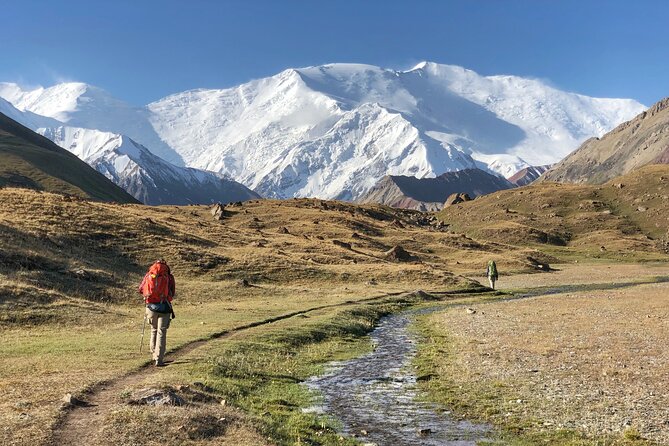
- English-speaking trekking guide focused on practical mountain knowledge, not just leading the line
- Yurt camp and homestay nights with meals that keep the trip culturally grounded
- High passes on the Alay route: Sarybell Pass and Jiptok Pass, plus a finish near Lenin base country
- Horse service for luggage up to 15 kg/person so your legs can focus on the trail
- Community-based tourism designed to support the local hosts you meet along the way
- Small group limit (max 10), which tends to make the pacing feel more human
Osh to the Alay Mountains: your first day’s steady climb
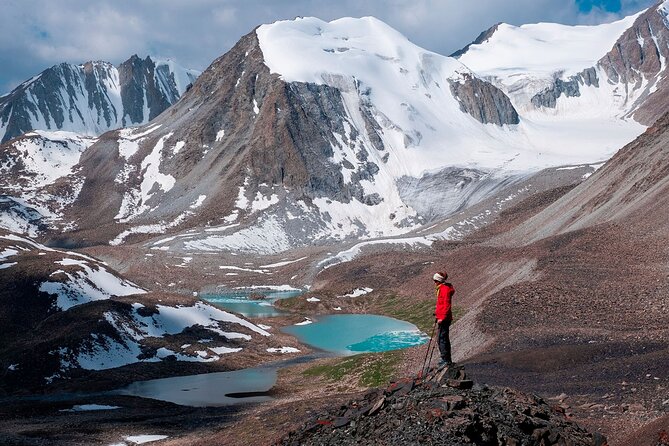
Your trek starts in Osh, driving about 220 km (around 4 hours) to the village of Sary-Mogul at 3,000 meters. After the ride, you begin hiking a shorter day by trekking roughly 6 km (about 3–4 hours). It’s not a speed run. The goal is to get your body used to moving at altitude without torching your energy.
This first day matters more than it looks on paper. When you’re starting near 3,000 meters, small choices make a big difference: go slow out of the gate, keep breathing controlled, and treat it like you’re testing your rhythm for the week. The route runs through open valleys and changing terrain, so you get a taste of the Alay variety early, before longer passes show up later.
Practical tip: pack your day bag so you can keep your most-needed items accessible while you hike. With shared camp nights ahead, you’ll appreciate not playing luggage Tetris every time you stop.
You can also read our reviews of more tours and experiences in Osh.
Day 2–5: valleys, river crossings, and the big push toward the passes
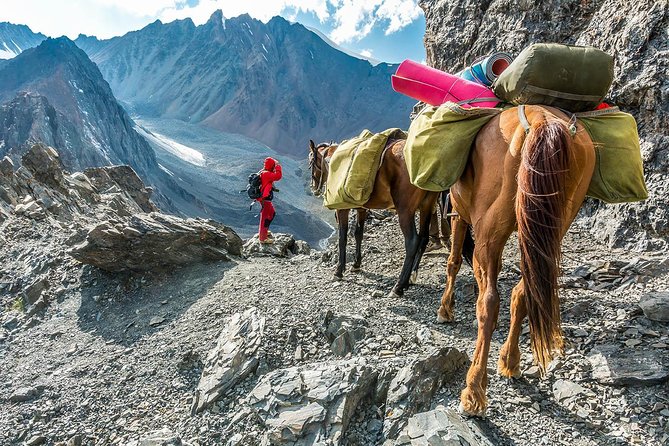
Days two through five are the core hiking block. The distances range from around 14 km to 24 km, and ascents and descents stack up. This is where you’ll feel the week shift from scenic sightseeing to real trekking.
Day 2: an easy road-to-trail transition
Day 2 brings a 14 km trek (about 4–5 hours) with a moderate climb (461 m up, 115 m down). You’ll follow an easy car road winding through open valleys, then transition into proper trekking. That mix is useful if you’re still finding your pace.
Day 3: a long day with heavy up and down
Day 3 is a longer one: 15 km (about 8–9 hours) with 1,059 m up and 859 m down. There’s also a short drive of about 30 minutes north from Sary Mogul to the trek start, then you begin walking. This day tends to be the first real “okay, we’re in it now” moment.
In plain terms: pace matters. On a day like this, trying to match a faster group member can quietly drain you. If you need to take short breaks more often, do it early, not only after you’re already fading.
Day 4: big descent into greener ground
Day 4 clocks in at 19.4 km (7–8 hours) with 866 m ascent and a tougher drop (1,596 m descent). The trail starts easier and downhill, and the description points to terrain shifting from rocky alpine to greener terrain, including river crossings.
That descent number is the kind your knees will remember later. Trek poles (if you use them) can be a game-changer here, especially when footing changes quickly.
Day 5: the Sarybell Pass payoff
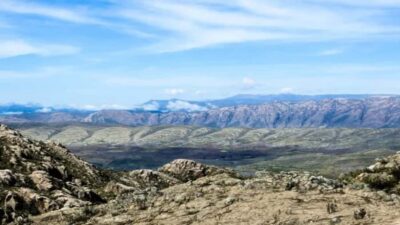
Day 5 is one of the trip’s high points. You trek 24 km (about 9 hours) with 1,299 m ascent and 1,095 m descent. The route includes crossing a stream, then climbing toward Sarybell Pass at 3,132 m. The pass climb is about 1 hour, and the reward is views over the Kichik Alay Mountains.
This is the kind of day where “the climb” is only half the story. The other half is what you do with the view once you reach it: stop, take a breath, and notice how quickly the Alay changes in color and shape. You go from step-by-step effort into a wide, open sense of space that feels very far from everyday travel.
Day 6–7: Jiptok Pass to Tulpar-Kol and the homestay rhythm
After Sarybell Pass, the route continues with more elevation work, then shifts toward more cultural time and rest.
Day 6: up toward Jiptok Pass with switchbacks
Day 6 trek is 16 km (about 8 hours) with 1,150 m ascent and 931 m descent. The path goes up along the river, reaching the foot of Jiptick (Jiptok) Pass. Then it turns steeper with switchbacks toward the top.
Even if you’re not chasing speed, switchbacks help your body. They turn big altitude gains into smaller sections you can manage. Use them to reset your breathing and keep your steps controlled.
Day 7: shorter trekking, longer human time
Day 7 is gentler on paper: 11 km (about 3 hours) with only about 40 m ascent and 320 m descent. But your day also includes time walking back toward Sary Mogul village (about 3 hours) and then arriving at a homestay.
Here’s where the trek shifts from mountain focus to living-with-people focus. You get a home-cooked lunch, then time to shower and enjoy WiFi (marked with a note), which is a nice sanity break after days of cold air and constant movement. After lunch, the schedule continues, but the big idea is that you’re not just dropped off—you’re hosted.
From the review notes, this homestay structure is one of the reasons the trip feels authentic: you’re around local families and shepherd-country conversation, not only on the trail.
Day 8: the Peak Lenin Base Camp finish and the long ride out
Your final day starts early. You trek 20 km (about 6 hours) with 760 m up and 760 m down, and then you drive about 5 hours to return. The route heads south from Tulpar Kol toward the alpinist Peak Lenin Base Camp area.
Two practical things stand out for me about a finish like this:
First, a 20 km final day at altitude can feel heavier than it did earlier in the week. Your legs adapt, but you also want to protect the last day by not saving all your energy for the end.
Second, the base camp direction ties into something important included in your package: a border permit for Peak Lenin Base Camp. There’s a note that last-minute permit requests may cost extra, so if you’re changing plans close to departure, ask early and confirm what will be required.
After the trek, that 5-hour drive is when you’ll feel grateful the week isn’t ending with another steep climb. It’s a proper recovery window.
Sleep in a yurt, share a room, and let the horse carry the load
This trek is built around shared sleeping arrangements. You’ll stay in yurts and homestays, and the program notes shared rooms for 3–5 people. That means you’ll hear other people’s breathing at night and deal with “shared space logistics,” especially when you’re packing gear for early starts.
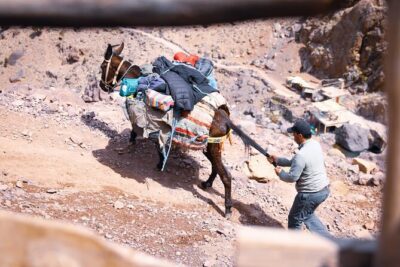
But there’s real value here. Yurt nights are not just a novelty photo op. They keep you close to how the nomad cycle actually works: move with the seasons, use the right structure for the climate, and eat what’s available. The trip also includes luggage service up to 15 kg/person via horse, plus a horseman. That’s a big deal on an 8-day trek—less to carry usually means you can hike more steadily and avoid the kind of fatigue that makes you rush downhill.
Meals are included: breakfast (7), lunch (8), dinner (7). The description also mentions a traditional twist, and some review notes call out an option for vegetarian food. If you eat differently from the group most days, this is the kind of detail worth confirming with your operator before you go.
Guides like Ernis, Dastan, Azi, and Asan make a difference
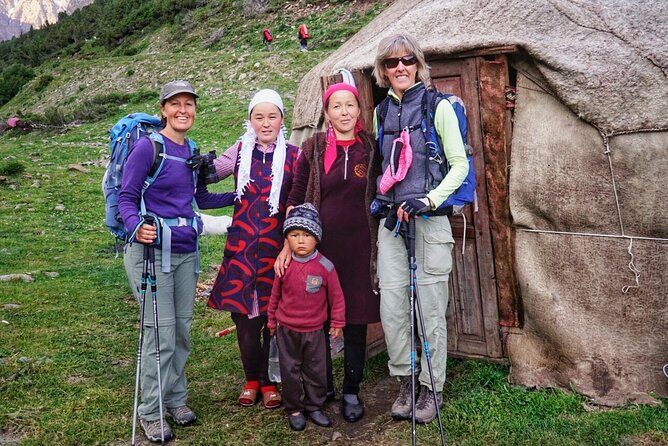
This is an English-speaking trekking guide trip, and the guide isn’t a background role. The tour is structured around knowledge-sharing and practical guidance, and the reviews give you names to connect the dots: guides including Ernis, Dastan, Azi, Asan, and a mention of Eshim.
From my perspective, guide quality is one of the biggest value drivers on this type of trek. You’re walking in changing terrain, overpasses, and sometimes with weather variables. A good guide helps you read the day: where to take it easy, when the path gets tricky, and how to avoid burning matches when your body is working hard.
Also, one review notes how slower hikers were handled, including keeping the group supported. That’s not just kindness—it’s safety and pacing.
Community tourism in Kyrgyzstan: what you’re paying for
The program highlights tourism that contributes to local communities, and you feel that most through who you’re with. You’re not only in camps; you’re also in village settings like Sary Mogul and at homestays after the trek days.
There’s a subtle but important benefit here: you’re less likely to feel like a passing customer. Even when you’re tired, you’re meeting people who live this landscape as work and season, not just scenery. That changes how you experience the day.
That said, I’ll add a balanced note: one critical review mentioned problems with organisation and care when people fell sick, including hygiene concerns. In other words, you should treat health and expectations with seriousness. If cleanliness, clear communication, or medical support is important to you, ask specific questions before booking, and make sure you understand who to contact if something goes wrong.
Price and value: is $1,100 fair for 8 days in the Alay?
At $1,100 per person, this is not a budget trek. But it can be good value if you add up what you’re actually getting.
Here’s what makes the price make sense:
- Transport from and to Osh is included, not just the trek
- Transport to and from Tulpar Kol is included
- English-speaking guide for the full trek
- Shared accommodation in yurt camps and homestays
- Meals across the trek days
- Luggage transfer up to 15 kg/person by horse plus a horseman
- Border permit for Peak Lenin Base Camp (with a warning that late requests can cost extra)
If you tried to DIY this in Kyrgyzstan, you’d likely spend far more time on coordination and still struggle to match the operational parts: permits, transport routing, and safe trekking logistics with the right local support.
One more value clue: the trip runs with a maximum of 10 travelers. Smaller groups often mean better pacing, and the cost typically reflects that staffing.
How challenging is it, really: altitude, distance, and a smart pace
The trip description says “moderate physical fitness level,” but the day-by-day stats tell you it’s a serious walking week. Expect long hiking days such as 8–9 hours and up to 24 km, plus real ascent and descent totals.
Also, you’ll likely feel altitude effects early. You’re in the Sary-Mogul area around 3,000 meters, then you gain to higher points like Sarybell Pass at 3,132 m. That doesn’t mean you’ll all feel unwell, but it does mean you should plan for slower starts and extra water discipline.
One review specifically mentions Diamox helping with altitude sickness. I can’t prescribe anything, but here’s the practical takeaway: if altitude concerns you, talk to a travel doctor ahead of time. Have a plan, don’t improvise at 3,000 meters.
My advice for pacing: treat the first two days as training for the rest of the week. You’ll still have plenty of challenge later, especially on the longer uphill and big-descent days.
Should you book this Alay Mountains trekking adventure?
I’d book this if you want an 8-day Kyrgyzstan trek that mixes real mountain work with local hosted nights, and you prefer a trip where the guide explains what you’re seeing and why it matters. The included meals, luggage help, and transport all reduce stress, which is a big deal when you’re tired and high up.
You should think twice if you:
- have very limited hiking stamina (the days can run long)
- know altitude hits you hard and you’re not prepared with a plan
- strongly need high standards on hygiene and care at all times, because a critical review signals that consistency can be uneven
If you’re an active traveler who likes small-group trekking and wants to spend time with Kyrgyz people beyond a photo stop, this Alay route has a lot going for it.
FAQ
What’s included in the price for this 8-day Kyrgyzstan trek?
The package includes an English-speaking trekking guide, shared accommodation in yurts and homestays, transport from/to Osh, transport to/from Tulpar Kol Yurt Camp, luggage service up to 15 kg/person via horse, a horseman, and a border permit for Peak Lenin Base Camp. Meals are included too: 7 breakfasts, 8 lunches, and 7 dinners.
How hard is the hiking during the trek?
You should expect moderate to challenging trekking. Distances range from about 6 km to 24 km and many days include steep totals of ascent and descent. Altitude starts around 3,000 meters and includes higher points like Sarybell Pass (3,132 m).
Do I need to carry all my luggage on the trek?
No. The tour includes luggage service up to 15 kg/person via horse, plus a horseman. Your own day pack still matters, but this reduces what you have to haul for hours.
Where do you sleep each night?
You sleep in shared yurt and homestay accommodations. The program notes 3–5 person shared rooms for both yurt and homestays.
Is there WiFi during the trip?
WiFi is mentioned on Day 7 at the homestay, with a note that it’s available there after lunch.
What happens if the weather is bad?
This experience requires good weather. If it’s canceled due to poor weather, you’ll be offered a different date or a full refund. Free cancellation is also available up to 24 hours in advance for a full refund.