REVIEW · KATHMANDU
Annapurna base Camp trek 10 Days
Book on Viator →Operated by Nepal Himalayan Hiker (P) Ltd. · Bookable on Viator
The Annapurna Base Camp trek feels like a whole world. You’ll start early from Thamel in Kathmandu and work up through local Gurung villages toward an amphitheater of giants at 4,130 meters.
I love the way this route strings together big mountain payoffs with real village trekking. You’re not just chasing altitude—you’re walking through lived-in Nepal, with time to notice flora and fauna along the way.
One thing to consider: you’ll be hiking most days, and altitude ramps up quickly. Even if it’s marketed as doable for most people, you’ll still want a calm pace and solid trekking stamina—plus you should double-check your exact day count in your confirmation.
In This Review
- Key highlights I’d circle on your plan
- Thamel start, early boots, and the Kathmandu-to-Pokhara reset
- Pokhara to Ghandruk: first high-mountain village rhythm
- Ghandruk to Sinuwa: climbing where the trail starts to feel serious
- Sinuwa to Deurali: the altitude wall starts approaching
- Deurali to Annapurna Base Camp (ABC): the amphitheater moment at 4,130 m
- Base Camp to Bamboo: start heading down while you’re still fresh
- Bamboo to Jhinu Hot Spring: recovery with real payoff
- Jhinu Hot Spring to Nayapul and back to Pokhara: the long drive finish
- The guide factor: why Prakash (and the team) can change your experience
- Price and logistics: does $853.34 feel like good value?
- Who should book this Annapurna Base Camp trek
- Should you book Nepal Himalayan Hiker’s ABC 10 days?
- FAQ
- Where is the trek start point in Kathmandu?
- What time does the trek start?
- Is this a private tour or shared with others?
- How long is the itinerary and what major transport happens?
- What are the key high points in the trek?
- Does the plan include the Annapurna Base Camp ascent and return?
- Is a mobile ticket provided?
- What is the cancellation policy?
Key highlights I’d circle on your plan
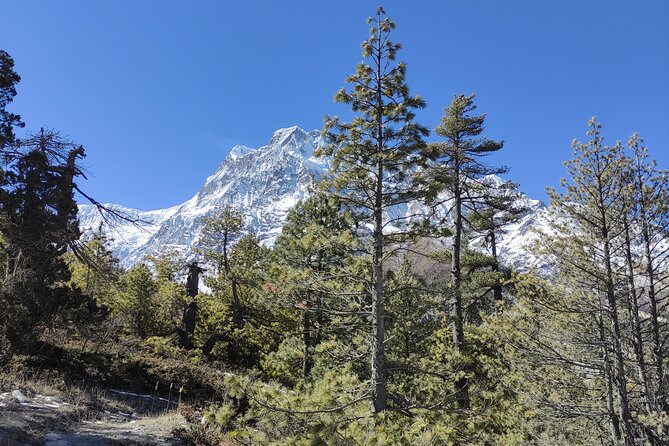
- Poon Hill viewpoint and peak names: you’ll get sightlines toward Annapurna South, Hiunchuli, Nilgiri, and Machhapuchhre.
- Gurung villages and culture along the trail: the trek is built around local life, not just scenery.
- Annapurna Base Camp as a natural amphitheater: that centered feeling with steep, towering walls around you.
- Machhapuchhre is sacred and off-limits to climbing: you’ll learn why the mountain is respected.
- A guided team approach: guides and porters help keep the trek organized and stress low.
- Jhinu Hot Spring for recovery: a practical end-of-trek reset after long downhill days.
Thamel start, early boots, and the Kathmandu-to-Pokhara reset
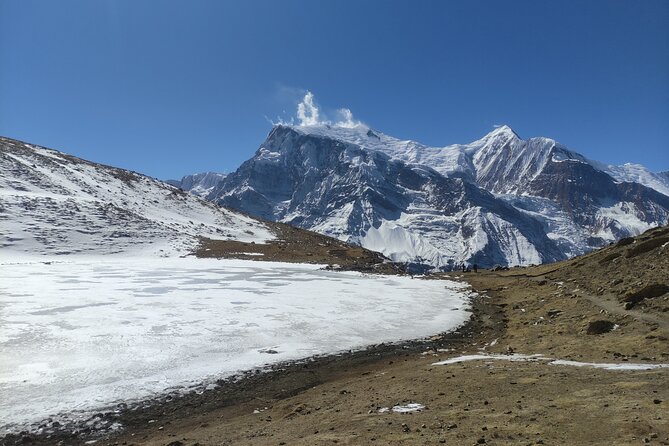
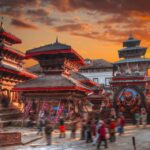
This trek kicks off from Thamel, Kathmandu, starting at 5:00 am. That early start matters. You’ll get more daylight for the work ahead and you’ll avoid the worst rush-hour chaos in the city. It’s also near public transportation, which helps if you’re arriving to Kathmandu on your own schedule.
On the Kathmandu side, your time is split into a landing day and an extra free/arrangement day. That’s a gift if you like to sort your gear, hydrate, and mentally set your pace before hiking starts. Then you’ll drive from Kathmandu to Pokhara (about 6–7 hours, at 820 m / 2,690 ft). Pokhara’s lower elevation is a practical breather before the staircase climb toward the high country.
Here’s what I like about this setup: the trek doesn’t pretend you can instantly jump into mountain mode. It gives you time to settle, then ramps up with the drive and first trekking day.
You can also read our reviews of more tours and experiences in Kathmandu.

Pokhara to Ghandruk: first high-mountain village rhythm
After the Pokhara transfer, you’ll head to Nayapul, then trek to Ghandruk (1940 m / 6,364 ft) in about 5–6 hours.
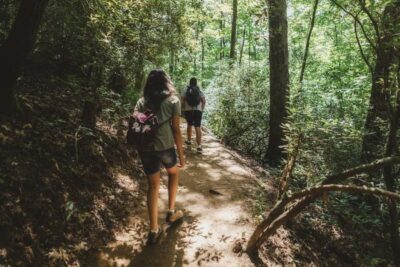
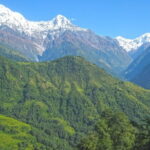
This first trek segment is important because it sets the tone. You’ll start feeling the rhythm of mountain trails—steady walking, frequent pauses for views, and the subtle shift from city life to rural Nepal. Since the route is described as passing through local Gurung villages, this is where you’ll likely start seeing the cultural side of Annapurna more clearly, not just the mountain posters.
A small practical caution: Ghandruk is still a hike at almost 2,000 meters. It’s not “high altitude” yet, but it’s high enough to make you notice hydration and pacing. If you tend to charge uphill early, rein it in here. You’ll thank yourself later when the climbs get steeper.
Ghandruk to Sinuwa: climbing where the trail starts to feel serious
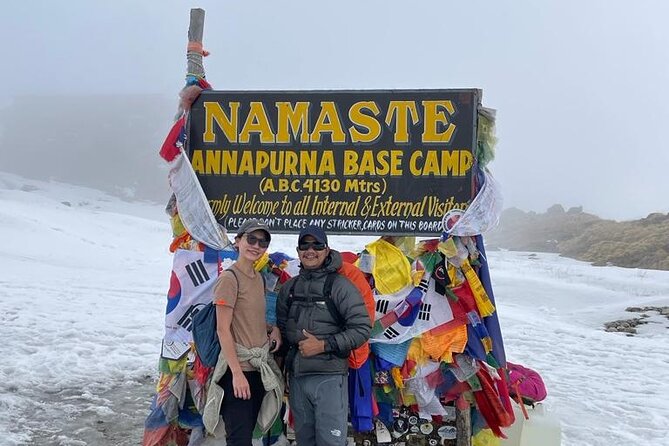
Day 5 takes you from Ghandruk to Sinuwa (2,360 m / 7,742 ft), roughly 5–6 hours.
Now the trek stops being only about views and turns into rhythm training. You’ll be gaining elevation steadily, and that’s where trekking gets physical in a way that feels manageable if you keep your effort consistent. The overview mentions diverse flora and fauna, and on a climb like this you’ll usually notice the environment changing as you move higher.
What I like here is that the itinerary doesn’t throw you straight to extreme altitude in one jump. It keeps things staggered. That’s not a guarantee you’ll feel great, but it’s a smarter structure than going from low elevation to ABC in a single day.
Sinuwa to Deurali: the altitude wall starts approaching
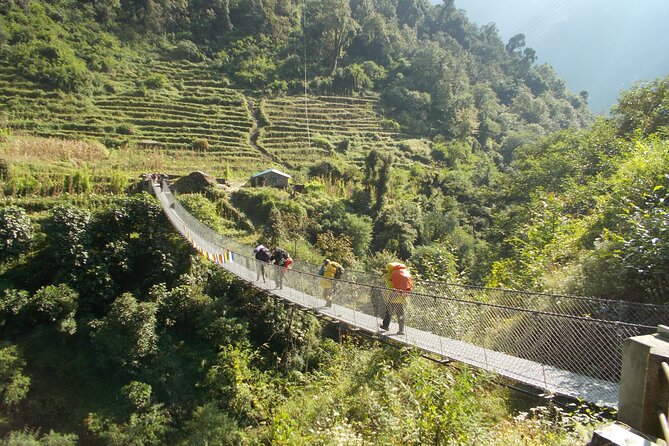
Next is Sinuwa to Deurali (3,230 m / 10,597 ft) for about 6 hours.
This is where many people feel the altitude creep. Even without any mountaineering required, you may notice that breathing takes more effort and your legs feel heavier. The good news: this trek is positioned as suitable for people without mountaineering or trekking experience, as long as you’re willing to take it slow and follow the guide’s pace.
Consider keeping your day simple. Stick to a steady walking tempo, eat when you’re supposed to, and avoid the temptation to sprint because you feel okay at the start. The trail will be there when you return; your job is to arrive feeling steady, not wiped out.
Deurali to Annapurna Base Camp (ABC): the amphitheater moment at 4,130 m
Day 7 is the headline: Deurali to Annapurna Base Camp (4,130 m / 13,549 ft) in about 5 hours.
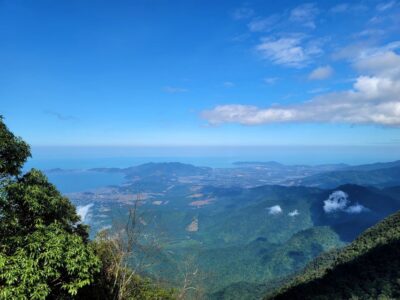
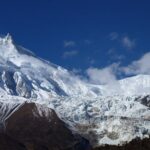
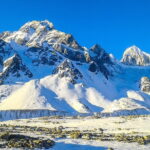
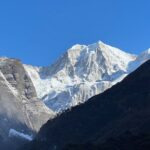
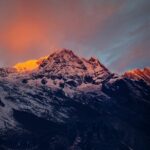
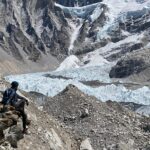
This is where the trek earns its reputation. You reach Annapurna Base Camp centered by pristine peaks that form a kind of natural amphitheater. It’s the “wow” space—bowl-like and dramatic, with your field of view packed full of granite giants.
The route also highlights what you’ll see from Poon Hill, and you can connect those distant view names to what you’re seeing near base camp:
- Annapurna South (7,219 m)
- Hiunchuli (6,441 m)
- Nilgiri (7,060 m)
- Barasikha
- Machhapuchhre, also called Fishtail Mountain
There’s also an important cultural detail: Machhapuchhre is sacred to the god Shiva and is off-limits for climbing. That’s not trivia. It shapes how people in the region treat the mountain—respect shows up in how routes are planned and what’s considered possible.
Practical tip: at ABC, you’ll likely feel cooler and more exposed. Even if the climb went fine, your body may still be catching up with the altitude. Take time at the camp, but don’t plan to turn it into an all-day sprint.
Base Camp to Bamboo: start heading down while you’re still fresh
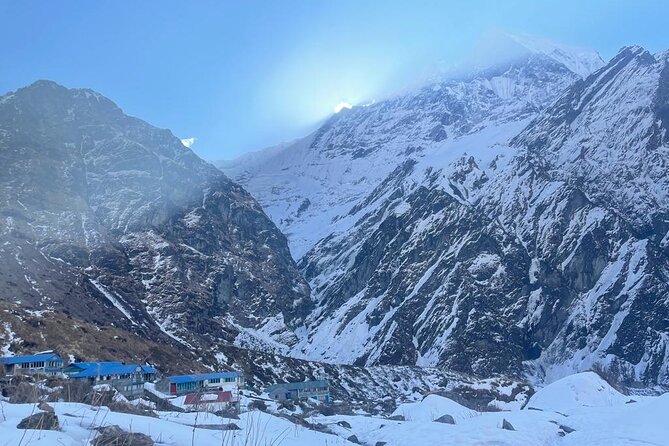
After the big day, you’ll descend to Bamboo (2,340 m / 7,677 ft) in about 6 hours.
Downhill days can be sneaky. They feel easier mentally, but your knees and calves work hard. Bamboo gives you altitude relief, which often helps you sleep better and recover faster. Think of this as your transition day—still trekking, but now with more focus on keeping your legs happy.
I like the itinerary’s pacing here. It doesn’t rush you straight into a hot spring immediately. It gives you a buffer with Bamboo first, which can make the next day feel like a reward rather than a punishment.
Bamboo to Jhinu Hot Spring: recovery with real payoff
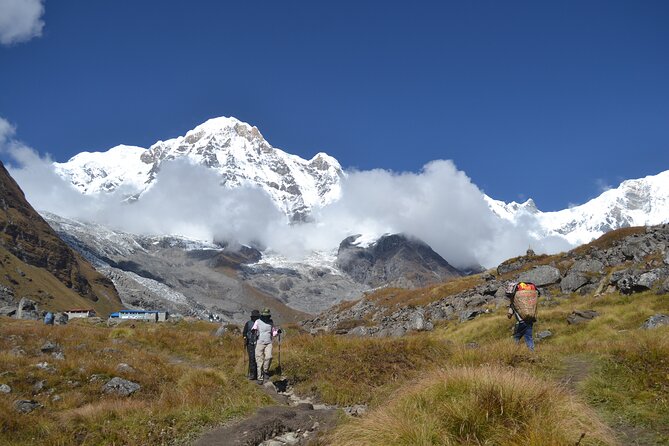
Day 9 is Bamboo to Jhinu Hot Spring (1,780 m / 5,839 ft) in about 5 hours.
This is one of the most satisfying parts of the whole itinerary. The hot spring isn’t just a nice ending; it’s a practical recovery tool after several days of descent and exertion. Your body will appreciate that lower elevation too, which helps you feel less “plugged” to the altitude.
If you want the hot spring to actually help, don’t treat it like a marathon. Go slow, hydrate before and after, and keep an eye on how your body feels. Cold-to-warm temperature changes can be a bit much if you’re already drained.
Jhinu Hot Spring to Nayapul and back to Pokhara: the long drive finish
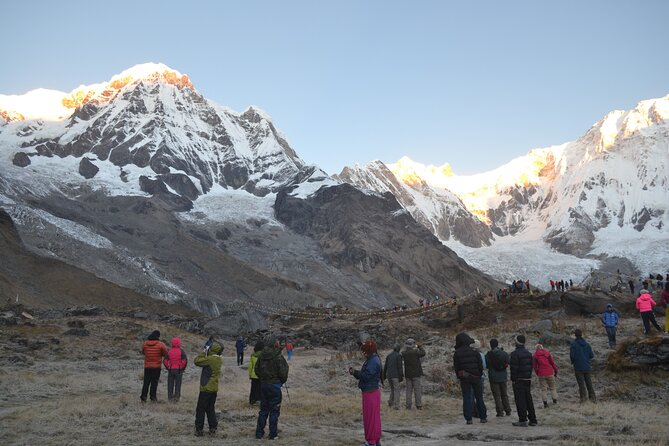
Your last trekking day is Jhinu Hot Spring to Nayapul, then a drive back to Pokhara (about 7 hours).
After that long drive, you’ll be tired in a normal, human way—the kind of tired that comes from doing something real. It’s also a good time to reflect on why Annapurna Base Camp works so well as a trek: you get multiple days of steady effort, not just one “big day.” That makes the payoff feel earned.
The guide factor: why Prakash (and the team) can change your experience
Organization matters on a trek. A lot of comfort comes from the small stuff: keeping your pace sensible, staying attentive to how you’re doing, and handling the tiny decisions that make a difference when you’re at altitude.
In this trek, the guide and support team take a key role. Prakash is mentioned as professional, funny, and relaxed, with an attentive style that checks in and reassures you that you can do the trek well. There’s also mention of Raj joining for some days at the beginning and end, plus porters being part of the team experience.
That kind of guidance is valuable because Annapurna isn’t a movie. Conditions, energy levels, and weather can shift. Having someone informative and steady helps you focus on walking and breathing instead of second-guessing every step.
One more practical note: this is described as a private tour/activity with only your group participating. That can make the experience feel smoother and less chaotic than a big mixed group, especially when timing matters.
Price and logistics: does $853.34 feel like good value?
The price is listed as $853.34 per person, and the booking includes a mobile ticket. There’s also mention of an admission ticket being included for one segment and another segment marked as admission ticket free, but the details are brief—so you’ll want to confirm what’s covered for your exact dates.
That said, you’re paying for more than a route on a map. You’re paying for:
- A planned itinerary with fixed hiking segments and elevations
- A guided experience with an attentive approach
- Private group handling (you’re not being shuffled into someone else’s plan)
- Support from porters as part of the trek structure
So is it good value? In my view, it’s strongest if you want a well-run, low-stress trek where someone else handles timing and coordination while you focus on walking and enjoying the mountains. If you’re the type who likes total independence and doesn’t mind figuring logistics yourself, a guided service may feel less necessary. But for most people, the guide + organization is the difference between a hard trip and a memorable one.
Also, since the data shows an inconsistency about duration (one place says around 2 days, while the route is mapped across 10 days), treat your confirmation as the truth. Make sure your actual dates match the full trek plan.
Who should book this Annapurna Base Camp trek
This trek is positioned for most travelers. It’s also described as suitable even if you don’t have mountaineering experience, which matters if you’re nervous about technical skills.
You’ll likely enjoy it most if you:
- Want a classic Annapurna route with village trekking mixed in
- Like structured days with clear goals and time estimates
- Prefer a private group setup with attentive guidance
- Want a meaningful mountain goal at 4,130 m and a relaxing send-off at Jhinu Hot Spring
If you’re prone to getting discouraged by altitude fatigue, plan to take it slow from the start. The itinerary already climbs in stages, which helps, but your mindset matters too.
Should you book Nepal Himalayan Hiker’s ABC 10 days?
I think this is a solid choice if you want the heart of Annapurna Base Camp—Poon Hill viewpoints, village days, and a real ABC moment—without complicated technical demands. The big plus is the human side: an organized plan and a guide team with an attentive, reassuring style (Prakash is named for a reason), plus porters and support.
Before you click confirm, do two quick checks:
- Make sure your confirmation reflects the full trek schedule you expect (the timing details in the info can be confusing).
- Ask what exactly is included beyond the admission ticket notes, so there are no surprises.
If you like trekking with guidance, and you want mountains plus culture in one package, this one makes sense.
FAQ
Where is the trek start point in Kathmandu?
The start point is Thamel, Kathmandu 44600, Nepal.
What time does the trek start?
Start time is 5:00 am.
Is this a private tour or shared with others?
It’s listed as a private tour/activity, so only your group will participate.
How long is the itinerary and what major transport happens?
The schedule includes multiple trekking days and driving days. You’ll drive Kathmandu to Pokhara (about 6–7 hours), and later drive back to Pokhara (about 7 hours), after reaching Nayapul.
What are the key high points in the trek?
The itinerary reaches Annapurna Base Camp at 4,130 m (13,549 ft). It also includes viewpoints from Poon Hill and a stop at Jhinu Hot Spring at 1,780 m (5,839 ft).
Does the plan include the Annapurna Base Camp ascent and return?
Yes. It includes trekking to Annapurna Base Camp and then trekking back down through stops including Bamboo and Jhinu Hot Spring before returning to Nayapul and Pokhara.
Is a mobile ticket provided?
Yes, the tour includes a mobile ticket.
What is the cancellation policy?
You can cancel up to 3 days in advance of the experience for a full refund. If you cancel less than 3 full days before the start time, the amount paid is not refunded.