REVIEW · KATHMANDU
10 Days Annapurna Circuit Trek
Book on Viator →Operated by Himalayan Trekking · Bookable on Viator
A high pass. A cold night. A calmer plan.
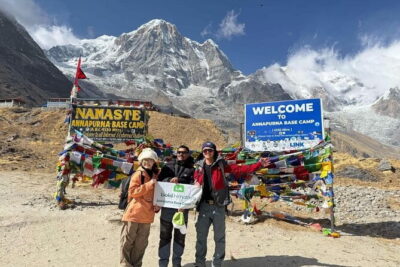
This 10-day Annapurna Circuit trek mixes mountain scenery, village life, and real Nepal culture in a route that climbs from about 2,300m up to Thorong La (5,416m). I like that you get organized day-to-day logistics with a guide and porter support, and you’re also given time to see places like Gangapurna Lake and Muktinath. The main drawback to plan for is the altitude and the tough footing on the way to the pass, especially on narrow, unstable slopes.
You start with a long drive out of Kathmandu, then settle into trekking days that include deep forests, long bridges, pine country, and dramatic river valleys. It’s a small-group trek too, with a maximum of 15 travelers, so the pace and attention tend to feel more human than factory-tour style. You’ll also appreciate the built-in finish: a morning domestic flight to Pokhara with great views, plus free time to unwind around the city and Fewa Lake.
In This Review
- Key Reasons This Trek Works So Well
- Kathmandu to Annapurna: How the Whole Adventure Sets You Up
- Manakamana Temple Day and the Drive to Besisahar
- Chame and Manang District: Forest Trails and First Big-Name Views
- Manang Village and Gangapurna Lake: Where the Trek Gets Personal
- Gunsang, Yak-Kharka, and Thorung Phedi: Tough Terrain, Clear Purpose
- Thorong La (5416m) and Muktinath: The High Point Meets the Sacred Stop
- Kali Gandaki Valley Descent: Arid Views and Tibetan Villages
- Jomsom-to-Pokhara Finish: A Flight with Big Canyon Views
- Price and Logistics: What $1,430 Is Really Buying You
- Who This Trek Fits Best (And Who Should Think Twice)
- Should You Book This 10 Days Annapurna Circuit Trek?
- FAQ
- What is the duration of the Annapurna Circuit trek?
- Where does the trek start and when do we start?
- What group size should I expect?
- What’s included in the trek price?
- What isn’t included?
- Do I fly back to Pokhara at the end?
- Is free cancellation available?
Key Reasons This Trek Works So Well
- Small group size (up to 15) keeps the trek feeling personal and flexible when conditions change.
- Thorong La day is the showpiece with a high point at 5,416m and views toward the Dhaulagiri range.
- Manang time is more than hiking: you’ll meet locals and visit Gangapurna Lake for a cultural and scenic break.
- Guide and porter pairing (1 porter for every 2 people) helps you focus on the trail.
- Domestic flight at the end saves time and lets you finish strong in Pokhara.
Kathmandu to Annapurna: How the Whole Adventure Sets You Up
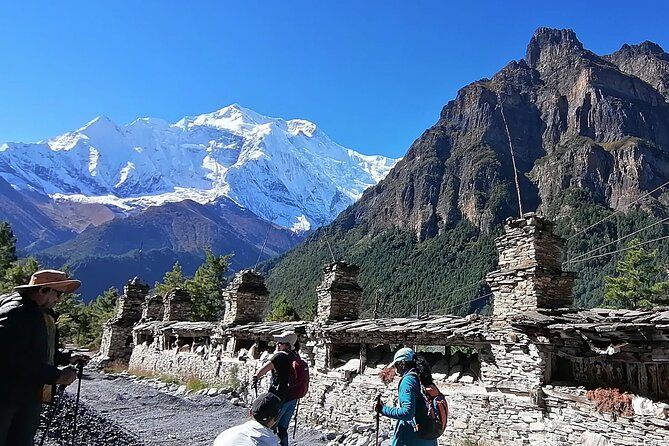
The trip is built around one simple idea: you want the Annapurna Circuit experience without the chaos. You meet at Himalayan Trekking and Tours in Kathmandu, with a start time listed as 7:15am, and pickup from your hotel happens early on the first morning. From there, you’re looking at a drive of roughly seven hours to Besisahar, which matters because it gets you trekking sooner and wastes less of your energy on transit.
From the start, you’re also in a guided setup. The package includes a guide and porters, and that changes everything about how you experience a trek like this. You’re not spending your mental bandwidth on logistics, rechecking schedules, or figuring out what comes next. You can pay attention to the trail, the weather, and how your body is handling altitude.
That altitude factor is not a footnote on this route. Your trek climbs in stages: for example, you’ll move through areas around 2,360m, 2,590m, and higher passes/valleys as the days go on. The payoff is huge, but your plan should be simple: walk steady, tell your guide early if you feel off, and don’t treat a mountain trek like a race.
You can also read our reviews of more tours and experiences in Kathmandu.
Manakamana Temple Day and the Drive to Besisahar
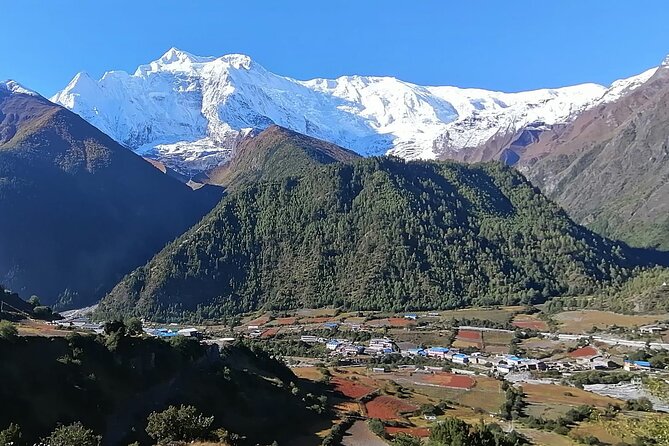
Day 1 starts as a travel day, but it’s not just sitting in a car. There’s a stop at Manakamana Temple, with the admission listed as free. This matters because it gives you a cultural anchor right away, and it helps break up that long Kathmandu-to-treks start moment.
Then comes the big stretch of road toward Besisahar (about 185km is referenced). Expect the first day to be about getting oriented: getting your gear sorted, meeting your trekking team, and getting your body used to being on the move even before the first steep uphill.
What you can realistically take from this day: it’s a buffer. It gets you into the Annapurna region with enough time to start trekking with fewer surprises. If you tend to feel stiff after long travel, use that first evening to stretch lightly and hydrate. Your later days will be tougher, especially once the route narrows.
Chame and Manang District: Forest Trails and First Big-Name Views
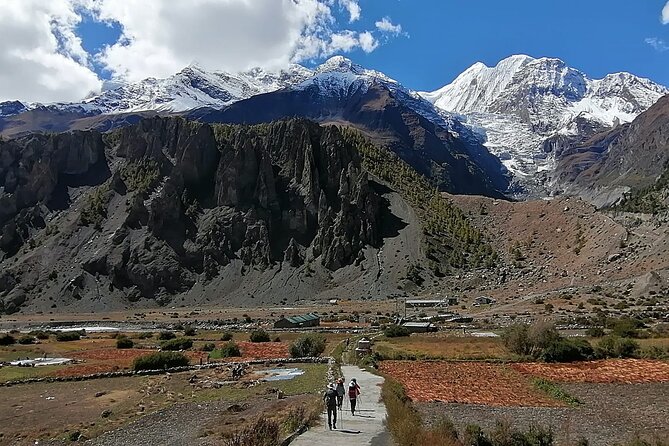
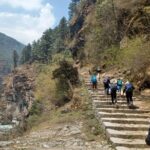
Once the trek starts in earnest, the route leans into variety. You’ll move from elevations around the 2,300m range and climb through forests and steep, sometimes narrow valleys.
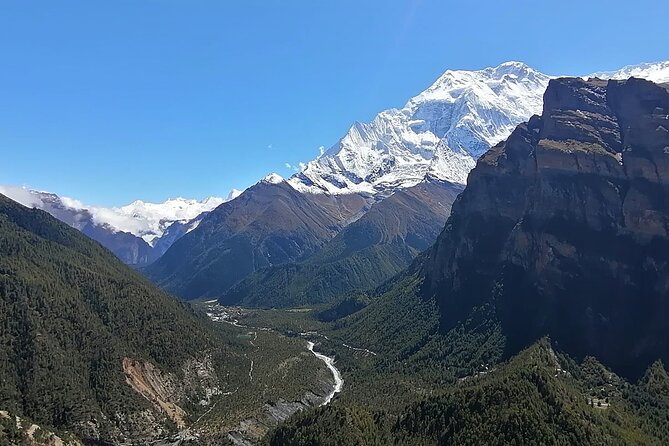
Day 2 pushes uphill to places like Tyanja (2,360m) and Kopar (2,590m), then continues toward Chame, the headquarters of the Manang district. The reason this day matters is the first serious visual reward. From Chame, you’re looking at fine views of peaks such as Annapurna II. In other words, you’re not trekking through “nothing.” You’re climbing toward a payoff that keeps showing up even on travel-heavy days.
Day 3 shifts into deep forest scenery and engineering moments. You cross a long bridge at about 2,910m, and later another bridge around 3,040m. Those crossings aren’t just scenic; they give your route a rhythm. When your trail alternates between bridge, river, and valley wall, you can settle into a steady walking pace without constantly guessing what’s next.
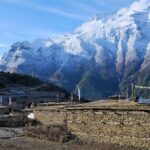
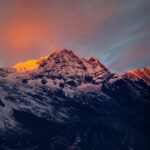
Day 4 is when the viewing angle gets even more specific. You’ll pass pine forests, and as you approach Manang, you get close-up sightlines toward Gangapurna, Annapurna II and III, Tilicho, Chulu east, and Pisang peak. This is the kind of day where you’ll want to pause often. Not for long speeches—just for a minute. On a high-altitude trek, those short stops keep you from rushing past the best moments.
One practical drawback here: forest and narrow valleys can be muddy after rain or snowmelt. Trekking shoes that grip well and a plan for quick drying matter. If you tend to get cold easily, bring layers that work even when the weather shifts.
Manang Village and Gangapurna Lake: Where the Trek Gets Personal
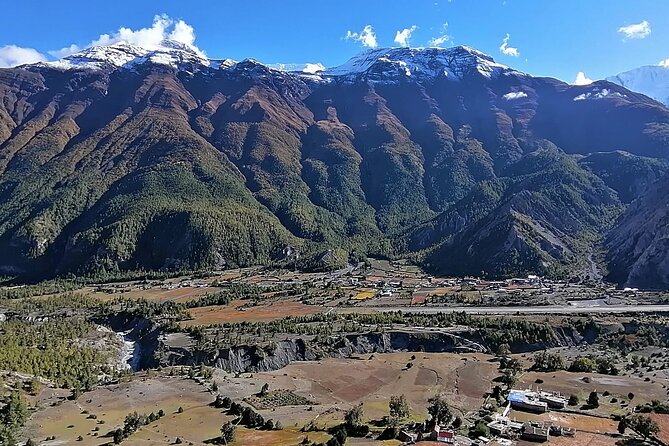
This is where I’d spend my attention, even if you’re mostly there for the pass. Day 5 includes time in Manang village and a visit to Gangapurna Lake. The lake stop is listed as free for admission, and the day includes time labeled as up to 20 hours on the schedule block—so it’s not a rushed “one photo and go” situation.
The value here is simple: the Annapurna Circuit can feel like endless walking if you never get social context. Manang adds that. You’re interacting with local life and seeing a landscape of daily routines, not just peak-bagging.
If you’re traveling with a guide who’s strong on culture and local explanation, this is the day that tends to feel most meaningful. In past Annapurna Circuit experiences with this company, guides like Babu/Babo and Resham have been praised for warm introductions and helpful context, while porter support (including names like Rojit) has been called out as friendly and accommodating. Even if your guide isn’t the same person, you can reasonably expect a guided explanation of what you’re seeing and why it matters.
A note to keep things honest: a longer day also means you’ll want to manage energy. If you know you struggle with afternoon fatigue, eat steadily and avoid leaving everything to the last moment.
Gunsang, Yak-Kharka, and Thorung Phedi: Tough Terrain, Clear Purpose
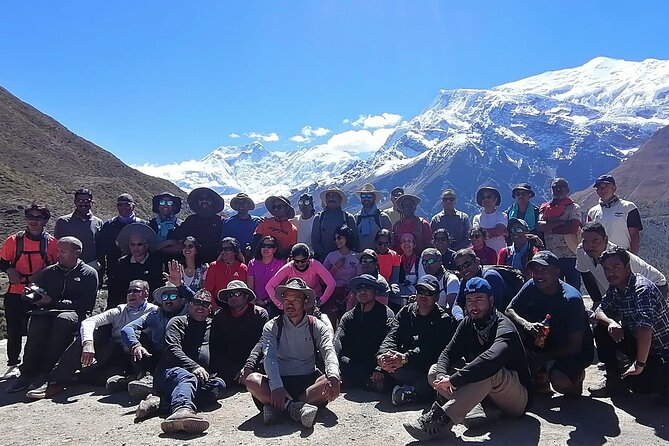
As you leave Manang behind, the trail starts aiming more directly at the pass approach. Day 6 climbs toward the Marshyangdi valley, including strenuous ascends. You reach Gunsang village and then Yak-Kharka, and you arrive at Ledar before sunset.
This stage is about building endurance without over-stressing your body. The route isn’t described as flat, so the practical goal is steady movement and good recovery between days. If your trekking style is fast, this is where you slow it down. Altitude doesn’t care about your ego.
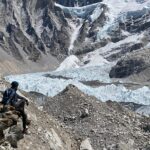
Day 7 is the setup day for the big crossing. You walk along the east bank of the Jorsang Khola and hike toward Thorung Phedi. The key detail here is terrain: the trail is tough because it has narrow paths with unstable slopes.
That wording is your warning label. Unstable slopes can mean loose rock, uneven edges, and places where one wrong step can become a twist. Use trekking poles if you have them. Keep your steps short. When it feels scary, it’s okay to take more time. Your success on Day 8 depends on getting there in one piece.
This is also a good day to check in with your guide about how you’re feeling. One Annapurna Circuit experience with this team specifically highlighted that guides supported trekkers when altitude hit and that attention to safety and wellbeing was a priority. You’ll get better results if you speak up early rather than waiting for the problem to get worse.
Thorong La (5416m) and Muktinath: The High Point Meets the Sacred Stop
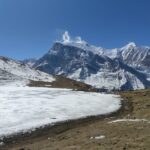
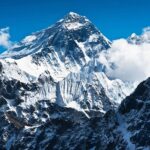
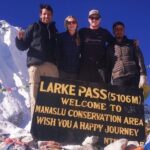
Day 8 is the most awaited day for a reason. You gear up for the hike to Thorong La (5,416m), described as the highest point of the trek. The route is along rocky ridges, and from the elevated viewpoint you can spot the Dhaulagiri range.
At that altitude, you’re dealing with two challenges at once: oxygen levels and physical strain. Your pace needs to feel almost boring. If you push too hard, you’ll pay for it on the descent and you’ll arrive at the day’s next stop weaker than you planned.
After the pass, the trek continues to Muktinath Temple, described as a holy site in the Mustang region. The schedule lists admission not included for this stop, so budget a bit if you want to visit and worship there. It’s a short stop on the plan, but it gives the day meaning beyond the summit moment.
Practical consideration: weather at Thorong La can turn quickly on exposed ridges. If your clothing system is bulky but not functional, you’ll feel it. Pack layers that you can adjust fast, and keep essentials protected from wind and sudden chill.
Kali Gandaki Valley Descent: Arid Views and Tibetan Villages
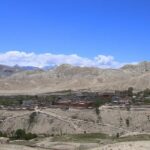
Day 9 flips the script. Instead of climbing, you descend through the Kali Gandaki Valley. The description notes arid landscapes, plus a dramatic valley feel as you work down. You’ll pass through places like Jharkot and Khingar, and you’ll see typical Tibetan villages along the way.
This day can feel long because your legs are doing the careful work of descending. Even if the distance isn’t the headline, the strain is real on knees and ankles. Think about your trekking rhythm: slow down on steep sections and keep your weight centered. Your goal is control, not speed.
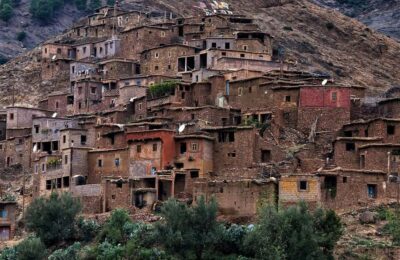
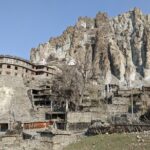
The cultural aspect is also stronger here than you might expect. Tibetan-style villages show up along valley routes, and the architecture and daily life give you a change from the forest-to-pine-to-pass story you’ve been living for days.
Jomsom-to-Pokhara Finish: A Flight with Big Canyon Views
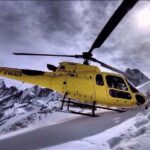
Day 10 ends with a win for sanity: after breakfast, you take a morning flight to Pokhara. The flight is described as spectacular, passing above the Kali Gandaki Gorge and offering great views of the Dhaulagiri and Annapurna ranges.
This is one of the best parts of this trek format. You get the feeling of having crossed something enormous, and then you’re allowed to recover without one more long travel day on foot.
Pokhara is your decompression zone. You get free time around the city, and the schedule specifically includes the chance for boating at Fewa Lake. Use that time for an easy meal, a warm shower, and slow walking. Your body will feel the cumulative effort, even if you handled the altitude well.
Price and Logistics: What $1,430 Is Really Buying You
The price is $1,430 per person, and the value comes from what’s already handled. Your package includes:
- A guide and porters (with a porter assigned for 1 porter for 2 people)
- Private transportation
- Domestic flight (Jomsom to Pokhara)
- Meals: breakfast (11), lunch (10), dinner (10), plus coffee and/or tea
- A sleeping bag
- All fees and taxes (with the note that certain temple admissions are marked as not included on the pass/temple stops)
The biggest value-driver is the porter support. When you’re carrying less, you can keep your steps smoother, which matters when trails are narrow and slope edges feel unstable. The second value-driver is the flight at the end. Without it, you’d likely burn extra days traveling back, and those days would add strain after the pass.
What you still need to plan for:
- Bottled water (not included)
- Alcoholic beverages (not included)
- An air-conditioned vehicle (not included)
- Possible small admissions at Thorung La Pass and Muktinath Temple, since those are listed as not included in the schedule blocks
One more practical note: the tour caps at 15 travelers. That doesn’t guarantee comfort, but it usually helps with pacing and makes it easier for your guide to manage the group when conditions shift.
Who This Trek Fits Best (And Who Should Think Twice)
This trek is described for travelers with moderate physical fitness. That’s a fair match for many people, but the route is not “easy.” You’ll face strenuous ascends, plus the Day 7 approach with narrow paths and unstable slopes, and then the Day 8 pass at 5,416m.
So, who should book?
- You want a classic Annapurna Circuit experience with big-view days and real village time.
- You’re okay with guided support and you like traveling with a small group.
- You want the structured finish in Pokhara with a flight over the gorge.
Who should reconsider?
- If you know you hate high altitude or you’ve struggled badly in the past, make sure you’re serious about acclimatization and listen closely to your guide.
- If unstable footing on narrow trails makes you anxious, talk to the company ahead of time and ask how they handle route conditions.
A final confidence boost from past experiences: Himalayan Trekking staff have been described as organized and attentive, with guides like Babu/Babo and Resham being flexible when altitude became an issue for a trekker. That kind of response is exactly what you want on a pass day.
Should You Book This 10 Days Annapurna Circuit Trek?
If you want the Annapurna Circuit highlights, enjoy guided travel, and you’re ready for altitude and some serious walking, I think this is a strong choice. The mix of culture (Manang village and Muktinath), views (Chame and the pass), and the practical finish (flight to Pokhara) makes it a well-rounded itinerary for most first-timers who still respect the mountains.
Before you book, do two things: confirm what you’ll pay for any Thorung La Pass or Muktinath admissions, and be honest about your altitude comfort. If you handle that, you’re set up for a trek that feels both adventurous and thoughtfully run.
FAQ
What is the duration of the Annapurna Circuit trek?
The trek is listed as 10 days (approx.).
Where does the trek start and when do we start?
The tour meeting point is at Himalayan Trekking and Tours in Kathmandu, and the start time is 7:15am.
What group size should I expect?
The trek has a maximum of 15 travelers.
What’s included in the trek price?
Coffee and/or tea, a sleeping bag, private transportation, all fees and taxes, a guide and porters (1 porter for 2 people), domestic flight (Jomsom to Pokhara), and meals: 11 breakfasts, 10 lunches, and 10 dinners.
What isn’t included?
Bottled water, alcoholic beverages, and an air-conditioned vehicle are not included. Admission is also marked as not included for Thorong La Pass and Muktinath Temple.
Do I fly back to Pokhara at the end?
Yes. On the final trekking day, after breakfast, you take a morning flight to Pokhara.
Is free cancellation available?
Yes. You can cancel for a full refund up to 24 hours in advance of the experience start time.