REVIEW · MARRAKECH
5 Days Desert Trekking from Marrakech
Book on Viator →Operated by Sahara Vibe · Bookable on Viator
Camel miles and desert silence start early in Marrakech. What makes this 5-day trek special is how it layers Morocco’s mountain history with real time in the dunes, guided by people who know the land. I love the detour to UNESCO-listed Ait Benhaddou, and I love the slow, steady start via a camel caravan before your feet take over.
One heads-up: the trek days on foot can be long, so plan for moderate physical fitness and time walking in sand (roughly 7 hours on multiple days).
In This Review
- Quick takes before you go
- Marrakech to M’Hamid: why this trek feels more local than a typical desert trip
- Day 1: Tichka Pass views, Ait Benhaddou, and arriving near the Sahara gates
- Day 2: M’Hamid to the Palm Grove, Tamaris shade, and Sidi Naji
- Day 3: Erg Zahar dunes, long walking hours, and border-country feel
- Day 4: Tamarisk trails, Lahdybat lunch, and the final night in the dunes
- Day 5: Head back to Marrakech and the 6 PM drop-off rhythm
- What you’re really paying for: price and value at $569.33
- The camp experience: nomadic tents, scheduled food, and time to breathe
- Meals and dietary style: vegetarian is included, but two lunches are on you
- Guides like Abdellah, Chef, and Said: what their role changes
- Walking days: how to handle the pace without burning out
- Who this trek is for (and who it might frustrate)
- Should you book Sahara Vibe’s 5-day Marrakech desert trek?
- FAQ
- How long is the desert trekking tour from Marrakech?
- What is the price per person?
- Do you get pickup in Marrakech and do you return to the city?
- What meals are included, and what isn’t?
- Is this a private tour?
- Do I need a certain fitness level?
- What is the cancellation policy?
Quick takes before you go
- High Atlas to the desert, in one trip: You cross the mountains via Tichka Pass on the way out of Marrakech.
- UNESCO stops on the drive: Ait Benhaddou is on the route, so your days aren’t just “drive and sleep.”
- Tea and food at set moments: Meals are scheduled around walking breaks, including lunch with tea in shaded spots.
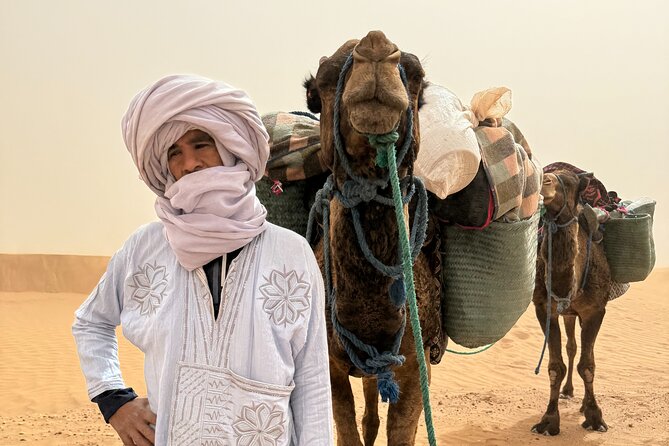
- Camel caravan meets desert trekking: You don’t jump straight into sand; you ramp up slowly from M’Hamid.
- Bivouac time for stargazing: Nights include free time under desert skies, with “silence” as part of the plan.
Marrakech to M’Hamid: why this trek feels more local than a typical desert trip
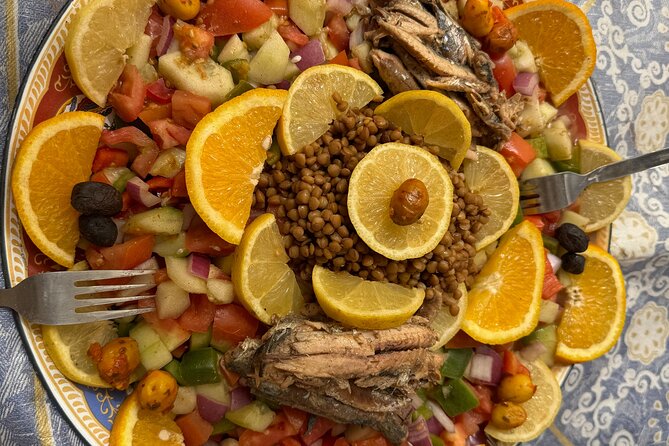
This is a desert trek that starts with Morocco at full scale: mountains, kasbahs, date country, then finally the edge of the Sahara. The best part is the pacing. You get time traveling through places that shaped caravan life before you ever reach the dunes.
You’ll be led by an experienced team that talks about the land you’re walking on—its ecosystem, hidden oases, and how people adapt to a harsh environment. That makes the trip more than scenery photos. It’s also practical: you learn what to watch for and why certain places matter.
This is a private tour, meaning you’re not squeezed into a mixed group shuffle. If you like a calmer rhythm and more direct guide attention, that setup helps.
You can also read our reviews of more tours and experiences in Marrakech.

Day 1: Tichka Pass views, Ait Benhaddou, and arriving near the Sahara gates
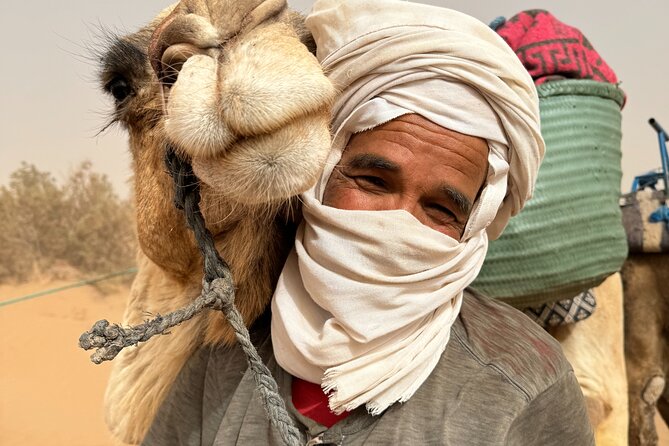
You start early from Marrakech, traveling across the High Atlas Mountains via the Tichka Pass (2260 m). The road here gives you big changing views: colored mountain tones, valleys, and scattered older villages along the way. Expect this to feel like a proper scenic drive, not a quick transfer.
On the way, you stop for kasbah time—Tamnougalte and then Ait Benhaddou. Ait Benhaddou is widely known as a top kasbah and it’s recognized as a UNESCO site from the 16th century. It’s also a familiar film location, but what you’ll remember is the scale and texture of the place itself.
After that, the route shifts toward the Draa river valley, with palm-lined stretches. Zagora comes next—often described as the capital of dates—before you continue to M’Hamid, often treated as a gate to the Sahara. Dinner and your first night are in a nomadic standard camp.
Practical note: Day 1 is mostly travel time, so it helps to sleep well before you go and keep your expectations grounded. You’re going far, and the reward is that you land in desert-country on Day 1 rather than just later in the week.
Day 2: M’Hamid to the Palm Grove, Tamaris shade, and Sidi Naji
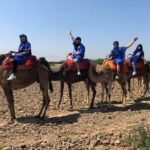
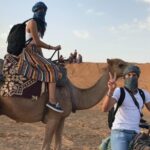
After breakfast, the trek ramps up in a way that feels manageable. You leave M’Hamid on foot, but you go with the guide and the camels caravan, which keeps the experience tied to how desert travel has long worked in this region.
Your first major rhythm change is the palm grove segment. You stop for tea and lunch served in the shade of Tamaris, which is a nice contrast to the open sand later. Then you continue trekking toward the sanctuary of Sidi Naji.
Sidi Naji is a place with local legend attached—where a marabout lived, according to the story. Visiting a sanctuary on a trek like this adds meaning beyond trekking mechanics. You’re walking through lived culture, not only geography.
Then comes the classic desert moment: you set a bivouac at the foot of the dunes. You’ll have free time until dinner, with a “star bath” and the silence of the desert promised as part of the experience. Translation: this is your chance to slow down, look up, and accept that the desert runs on its own clock.
Day 3: Erg Zahar dunes, long walking hours, and border-country feel
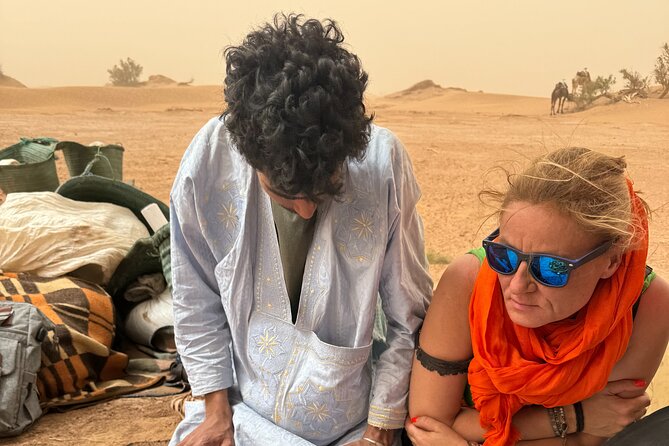
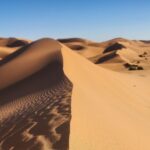
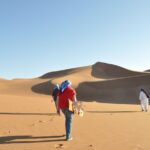
Day 3 is where the desert starts to feel like the main character. After breakfast, you head to Erg Zahar. The plan mentions about 4 hours of walking before you get the view of golden dunes and the mountains spreading out beyond them.
You’ll also be close to the Algerian border area. Even if you don’t spend the day thinking about the map, it changes the feeling of the horizon. The desert here reads as wide and open, with fewer “anchors” than you get near towns.
Once you arrive, you set camp and gather by the campfire. You’ll have free time after, but this day’s structure is built around rest after walking. This is a good time to keep your feet happy: slow down on sandy stretches and let the guide set the pace.
If you’re sensitive to repetitive long walking days, that’s the main thing to consider. Day 3 doesn’t feel like a short hike; it’s another full trek day.
Day 4: Tamarisk trails, Lahdybat lunch, and the final night in the dunes
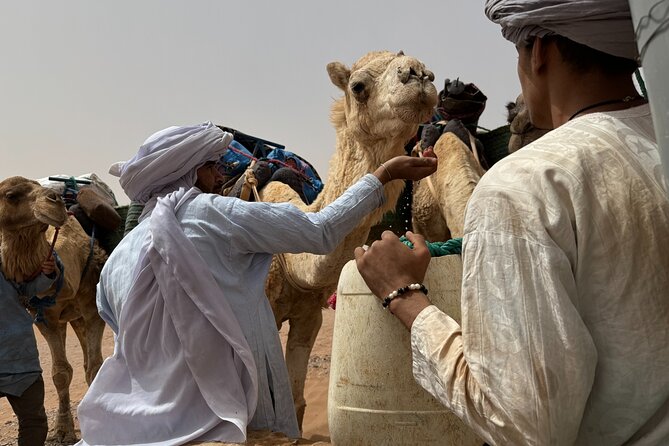
On Day 4, you continue from the night before toward Kraat Jamal. The route includes a pass by Lahdybat, where lunch is served. There’s also a mention of tamarisk trees lining the road, which helps break the monotony of sand by adding structure to the walk.
As you move forward, you’ll be surrounded by the Draa Valley scenery. This matters because it gives the trek a final “frame” before you return—an extra visual layer beyond just dunes.
You spend the last night in the desert here. That makes Day 4 the emotional peak for a lot of people: you’ve walked enough to feel part of the place, but you’re still close enough to be in the thick of it.
This is also the day when your routine matters most. When you know you’ll sleep in a tent camp again, you can pack your energy for one more night, not a whole week.

Day 5: Head back to Marrakech and the 6 PM drop-off rhythm
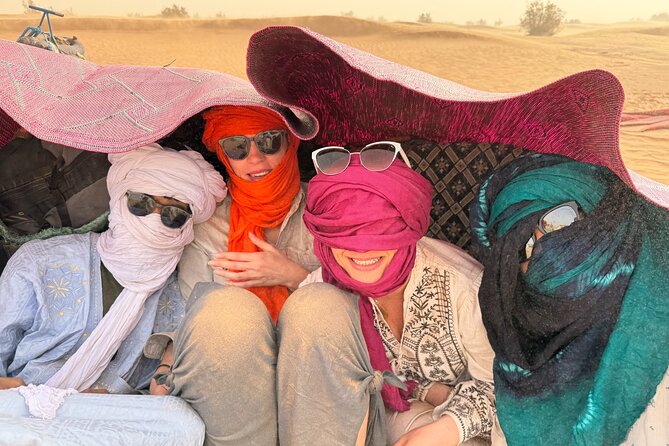
Day 5 is your return day. You head back by car, and you’re brought to Marrakech with a planned arrival around 6 PM, with you being seen in your riad.
That “early evening” finish is handy. You’re not landing in Marrakech at midnight when you’re exhausted and hungry. It also gives you time to eat a real meal, wash off dust, and reset your schedule before the next part of your trip.
If you’re building a Morocco itinerary after this trek, plan something forgiving on Day 5 evening. Your body will feel the desert, even if you kept a steady pace.
What you’re really paying for: price and value at $569.33
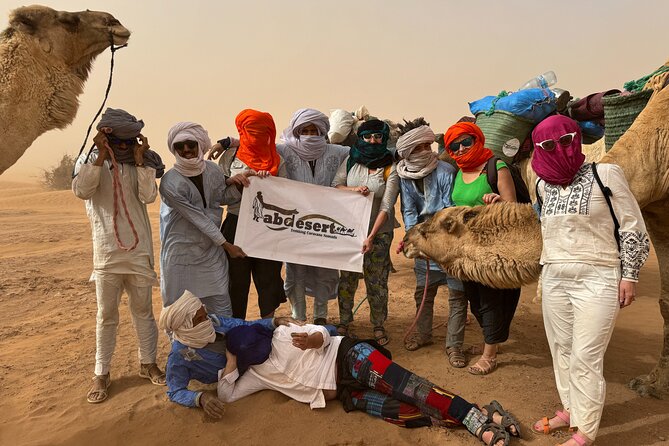
At $569.33 per person, this isn’t a bargain-style desert bus trip. You’re paying for several things that add real costs: private transportation, a professional guide team, camel support, and four nights in tent accommodation.
You also get multiple meals. The package includes vegetarian food, with breakfasts (4), dinners (4), and several lunches (listed as 3 included lunches). You’ll also have coffee and/or tea along the way, which sounds small until you’re tired and grateful for a warm pause.
What’s not included matters too. Tips aren’t included, and lunch x2 on the way isn’t included either. So your all-in budget will likely be a bit higher than the headline number.
My take on the value: if you want a desert trek with real structure (camel caravan plus multiple trekking days), and you prefer a private setup over shared tours, the price starts to make sense. If you’re trying to keep Morocco costs ultra-low, you may feel the difference quickly.
The camp experience: nomadic tents, scheduled food, and time to breathe
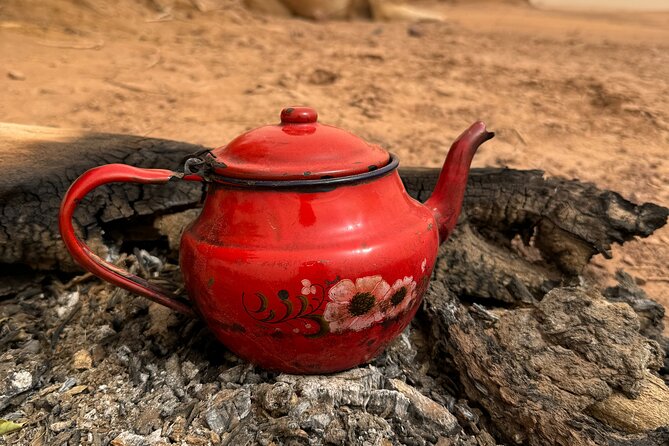
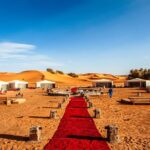
This trek uses nomadic standard tent accommodation for four nights. That’s a big part of the appeal: you’re not sleeping in a hotel “near” the desert. You’re in it.
Dinner and tea are built into the days, so you’re not constantly guessing what comes next. You’ll also have free time in the dunes after arrival and before dinner on at least one day, which is when the desert really takes over your attention.
Keep expectations realistic. This isn’t sold as luxury, and the whole point is the shift from daily city comfort to desert simplicity. The upside is the feeling of space. At night, with fewer sounds and fewer lights, the desert does what it does.
Meals and dietary style: vegetarian is included, but two lunches are on you
The tour includes vegetarian meals throughout the trek: breakfast (4), dinner (4), and lunch (3), plus coffee and/or tea. That means you don’t have to hunt down food during the hardest walking segments.
Two lunches on the way aren’t included, though. This is one of those “easy to forget” details that can affect your planning if you’re tracking every meal cost.
If you’re budgeting tightly, pack a simple strategy: carry a few snacks for walking days and use the included meals as your main meals. If you have dietary needs beyond vegetarian, you’ll want to ask ahead so the guide can plan accordingly.
Guides like Abdellah, Chef, and Said: what their role changes
The best thing about this experience is the human layer. Guides aren’t just there to lead the group; they’re there to explain the land as you walk it—ecosystem, oases, wildlife, and the nomadic way of life and its survival logic.
From what you’ll likely experience with Sahara Vibe, Abdellah is a key contact, including coordination before you even arrive in Marrakech. People also mention meeting Chef and Said as part of the team. That family-style organization can matter because you’re not dealing with a nameless operator.
Practically, this type of guiding helps in two ways. First, it keeps you oriented when desert travel can feel disorienting. Second, it turns stops like Sidi Naji and tea breaks into moments with context instead of quick photo stops.
Walking days: how to handle the pace without burning out
The trek includes multiple full walking days. Day 2 lists about 7 hours, Day 3 about 7 hours, and Day 4 about 7 hours. Day 3 also mentions roughly 4 hours before you see the golden dunes, so you’ll feel that gradual reveal.
If you’re active but not a long-distance hiker, you can still do this, but you should treat it as a serious hike. The sand does the work of adding resistance. The desert also changes how your body reads effort.
My practical advice: keep your pace steady, don’t fight the guide, and don’t try to sprint to views. If you want great memories, you need to be able to enjoy the horizon without feeling wrecked.
Who this trek is for (and who it might frustrate)
You’ll likely love this tour if you:
- Want a true desert trek with camel caravan support and multiple days walking
- Prefer a private setup where you can ask questions and move at your group’s pace
- Care about culture and survival knowledge, not only photos
You might hesitate if you:
- Don’t want long walking days (roughly 7 hours on several days)
- Prefer hotel-style comfort rather than tent camping
- Need every meal included, since some lunches on the way and tips are not included
Should you book Sahara Vibe’s 5-day Marrakech desert trek?
Book it if your main goal is a structured desert experience with real time in the dunes, and you’re okay trading some comfort for authenticity. The combination of High Atlas driving, Ait Benhaddou’s UNESCO kasbah stop, and then multiple trek days makes this feel like more than just a quick Sahara overnight.
Skip it or ask a lot of questions if your fitness is borderline or you want a lighter day schedule. The walking is the heart of the trip, and it’s not framed as a gentle stroll.
If you can handle moderate trekking and you like learning from guides who explain why the desert works the way it does, this is a strong fit.
FAQ
How long is the desert trekking tour from Marrakech?
The tour runs for 5 days (approx.).
What is the price per person?
The price is $569.33 per person.
Do you get pickup in Marrakech and do you return to the city?
Yes. You depart early from your riad/hotel in Marrakech, and you’re returned to Marrakech with you seen in your riad at about 6 PM. The meeting point is Hôtel AliRue Moulay Ismail, Marrakech.
What meals are included, and what isn’t?
Vegetarian food is included, including breakfasts (4), dinners (4), and lunch (3). Tips are not included, and lunch x2 on the way is not included.
Is this a private tour?
Yes. It’s private, so only your group participates.
Do I need a certain fitness level?
The tour says travelers should have a moderate physical fitness level.
What is the cancellation policy?
Free cancellation is available if you cancel up to 24 hours in advance for a full refund. If you cancel less than 24 hours before the start time, the amount paid is not refunded.