REVIEW · KATHMANDU
Upper Mustang Trekking
Book on Viator →Operated by Sherpa Expedition & Trekking · Bookable on Viator
Lo-Manthang feels like another world. This Upper Mustang trek targets the walled city of Lo-Manthang, a former Tibetan kingdom seat, plus the surrounding “hidden valley” culture shaped by centuries of Buddhist life. I like that the package takes the admin load off you with ACAP, Upper Mustang special permits, and TIMS already included, so you can focus on the trail and the people. One thing to consider: the schedule details are light for a trip labeled as 2 days, so you’ll want to confirm how many trekking days you’re actually getting versus the hotel nights.
I also like the strong on-the-ground support built into the plan: you get a trekking guide, and a porter shared between two people (so your pack doesn’t feel like a gym membership). The route includes the key flight link via Jomsom, which is often the practical way into this region when roads get slow or unreliable. The possible drawback is that weather matters here—if flights or mountain days are affected, the operator says the trip can shift dates or you can get a refund.
In This Review
- Key highlights worth your attention
- Forbidden Kingdom Feeling: Upper Mustang and Lo-Manthang Basics
- Your Ground Plan: Kathmandu, Pokhara, and the Jomsom Flight Connection
- A Day-by-Day Look at the Provided Itinerary (and What It Means for You)
- Permits, TIMS, and What the Package Covers on the Admin Side
- On the Trek: Guide, Porter, Food, and Daily Comfort Realities
- Cost Check: What $2,666.67 Per Person Buys You (and What It Doesn’t)
- Weather, Timing, and Why Flights Matter Here
- Who This Private Upper Mustang Trek Suits Best
- Should You Book This Upper Mustang Trek with Sherpa Expedition & Trekking?
- FAQ
- Where is the meeting point and what time does the tour start?
- Does the tour include transport between Kathmandu and Pokhara?
- How do you travel to the trekking area—are flights included?
- What trekking permits and cards are included?
- Is a guide and porter included?
- What meals are included?
- Are hotel stays included in Kathmandu and Pokhara?
- Is Wi-Fi, hot water, or hot shower included?
- What fitness level do you need?
- How does cancellation work?
Key highlights worth your attention
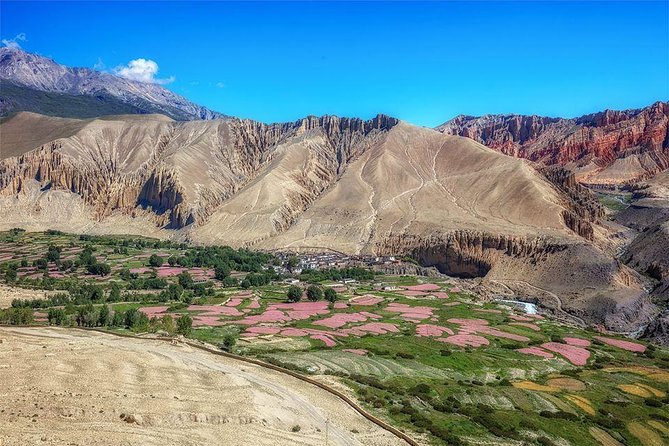
- Lo-Manthang, a walled city tied to the Tibetan kingdom of Gungthang (until the 1830s)
- Permits handled in advance: ACAP, Upper Mustang special permit, and TIMS included
- Jomsom flight connection from Pokhara to support the trek logistics
- Guide + shared porter (one porter for two people) to keep trekking realistic
- Simple comfort package: Kathmandu and Pokhara breakfasts plus trek meals
Forbidden Kingdom Feeling: Upper Mustang and Lo-Manthang Basics
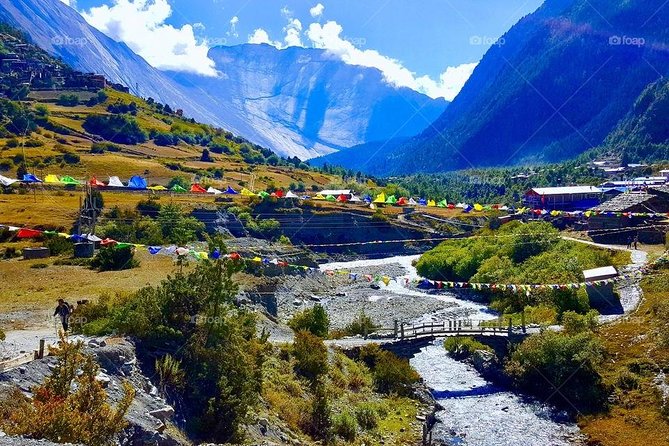
Upper Mustang is often described as a “forbidden kingdom” area for a reason. It’s a high, remote pocket between Tibet and the Himalayas where Tibetan-influenced culture has been stronger and longer than in many other parts of Nepal. Instead of chasing one big monument, this trek is about how daily life looks when it has been shaped by isolation, walls, and old religious patterns.
The headliner is Lo-Manthang, the walled city that used to be part of the Tibetan kingdom of Gungthang until the 1830s. Its early story mixes myth and legend more than documented dates, which makes it feel closer to a living tradition than a checklist destination. When you arrive, you’re not just visiting buildings—you’re seeing a place with around 275 houses and four castes, where Buddhist learning still shows up in day-to-day rhythms.
A special detail I’d keep in mind is the restoration work happening in the region. The info you have notes crumbling artworks being restored and monasteries being rebuilt. You can also expect monastery life to be part of the experience, including children studying Buddhist teachings—described as shaved-headed students in robes. That kind of detail matters because it shapes your expectation: this is a cultural trek, not a theme park.
The other “why this trek works” angle is scale. Upper Mustang is unique, but you won’t just see it from a bus window. With a guide and porter support built into the plan, you’re set up to walk, slow down, and actually notice how the culture holds its shape even as change comes to the region.
You can also read our reviews of more tours and experiences in Kathmandu.



Your Ground Plan: Kathmandu, Pokhara, and the Jomsom Flight Connection
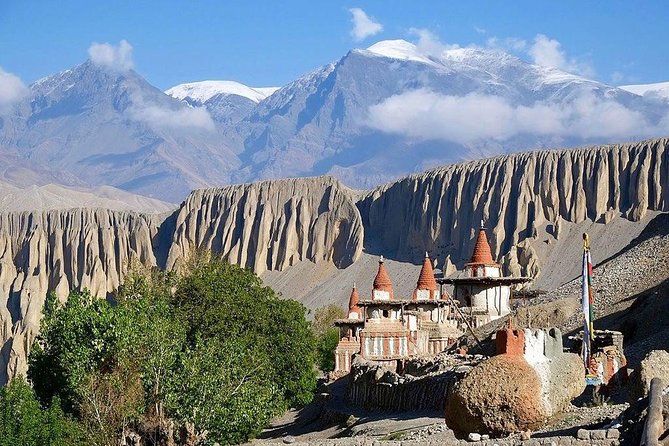
Most people don’t reach Upper Mustang by simple road travel. Your package leans on air links at the right point, using Pokhara → Jomsom → Pokhara flights, which is exactly what you’d want if your goal is to reduce wasted time. It also helps keep the trekking days more focused on walking rather than sitting in transit for hours on end.
Here’s how the logistics look in the info you have:
- Meeting point: Tribhuvan International Airport, Ring Rd, Kathmandu
- Start time: 6:15 am
- Pickup: private car/jeep
- Kathmandu ↔ Pokhara: tourist bus mentioned in the plan
- Pokhara ↔ Jomsom: flight included (fare covered)
You also have accommodation covered in both Kathmandu and Pokhara, with breakfast included for two nights in Kathmandu and two nights in Pokhara. That’s a big clue that the “2 days” label is more of a summary than a full picture. In other words, you should expect “journey time” to take up real blocks of your trip.
Why this matters for you: if you’re traveling on a tight schedule, you’ll want to align your flight into Kathmandu and your flight out of Nepal with the plan’s early start. A 6:15 am airport pickup is not a vibe choice—it’s a real wake-up call. The good part is it reduces uncertainty: you won’t be trying to figure out transport first thing in the morning.
One more note: the plan says you’ll be staying in Kathmandu and Pokhara with basic comforts like breakfast included, but it does not say anything about Wi-Fi, hot water, or hot showers. If you care about those, plan around it.
A Day-by-Day Look at the Provided Itinerary (and What It Means for You)
The itinerary details you provided list the same main transfer components for both Day 1 and Day 2: pickup/dropoff, Kathmandu to Pokhara to Kathmandu by tourist bus, and Pokhara to Jomsom to Pokhara flight fare. That duplication is a signal to treat this as a simplified outline rather than a minute-by-minute day plan.
So what can you safely expect from what’s stated?
You’ll start with the early airport pickup in Kathmandu, then do a Kathmandu–Pokhara–Kathmandu bus rhythm as part of positioning and timing. After that, you’ll use the Pokhara–Jomsom flight segment—again, this is built into the package—so you’re positioned to begin the trekking portion of your Upper Mustang experience.
Between those transfer days, the package explicitly includes all accommodations during the trek, plus meals during the trekking portion (breakfast, lunch, dinner) and coffee and/or tea. You also get a trekking guide and a porter shared between two people. So even though the itinerary text doesn’t lay out each walking day, you should assume the core of your experience happens while you’re trekking in/near the Upper Mustang and Lo-Manthang area.
Practical tip: because the walking schedule isn’t spelled out here, you should ask your operator to confirm:
- how many days are actually trekking versus hotel/rest time
- the expected daily walking time and altitude profile
- how you’ll be organized for porter load distribution
That’s not you being difficult. It’s you making the experience match your physical goals.
Permits, TIMS, and What the Package Covers on the Admin Side
Upper Mustang isn’t a free-for-all region, and your package treats that reality correctly. Included are:
- ACAP fee
- Upper Mustang special permit
- TIMS card fee
This is a big value point. Permits and registration are the kind of thing that can derail a trip if they’re missing, wrong, or late. Having them handled for you reduces risk and time spent chasing paperwork once you arrive in Nepal.
You also get basic trip support items included, like a first aid kit and a trekking kit extras package: Sherpa Expedition and Trekking T-shirt and a duffel bag. Those sound minor, but they can help you feel less “hodgepodge” on day one.
One more admin-win: the tour is listed as a private tour/activity, meaning only your group participates. That usually matters in mountains because it affects pace and coordination. You’re not trying to match a random mixed group’s rhythm while you’re adjusting to altitude.
On the Trek: Guide, Porter, Food, and Daily Comfort Realities
This trek package is built around support. You get a trekking guide and a porter—and the plan specifies one porter for two people. For you, that translates to less strain with your load. For your experience overall, it can mean you walk more comfortably, rather than turning every step into a fight with your own backpack.
Meals are also part of the included package for the trekking portion: breakfast, lunch, dinner, plus coffee and/or tea. That’s helpful because it reduces the number of decisions you have to make while you’re tired. It also helps with consistency day to day.
What’s not included becomes equally important. The plan says lunch and dinner in Kathmandu and Pokhara are not included, and it also doesn’t include things like Wi-Fi, hot water, hot showers, or laundry bills. So if you’re someone who expects to “refresh” with a hot shower at the end of the day, you’ll want to lower that expectation. If you can’t, bring backup plans for how you handle comfort.
Fitness level is listed as “moderate.” That doesn’t mean it’s easy. It means it’s meant for people who can walk and manage some physical effort without requiring extreme athletic conditioning. The practical move is to show up with enough stamina to keep a steady pace even when the air feels thin and the cold hits later in the day.
And here’s the cultural note I’d keep front and center: Upper Mustang is described as a place still clinging to unique culture even as it changes. That means your guide will matter. A good guide helps you connect what you see—monastery life, restored art, and the walled city setting—to what it means.




Cost Check: What $2,666.67 Per Person Buys You (and What It Doesn’t)
At $2,666.67 per person, this is not a budget trek. The value comes from bundling several expensive or complicated pieces together.
What’s included that typically costs you money separately:
- Permits + TIMS (ACAP, Upper Mustang special permit, TIMS fee)
- Guide and porter (shared porter for two people)
- All accommodations during the trek plus two nights in Kathmandu and two nights in Pokhara with breakfast
- Meals during the trek (breakfast, lunch, dinner) and coffee/tea
- Transport structure: pickup, tourist bus Kathmandu–Pokhara logistics, plus Jomsom flight fare
- A first aid kit and basic included trip items (t-shirt, duffel bag)
What’s not included, so you don’t get surprised:
- Nepal entry visa fee
- Lunch and dinner in Kathmandu and Pokhara
- Wi-Fi, hot water/hot showers, laundry
- Personal travel insurance
- Personal trekking gear
- Personal expenses
- Tips for trekking staff
So the real “value question” for you is: are you comfortable paying for convenience and reduced uncertainty? If you want a DIY-feeling trip where you arrange permits and transport piece by piece, this may not match your style. If you want a smoother path where the plan handles the key moving parts, this pricing starts to make more sense.
One more value signal: there are only four reviews tied to this experience, but the comments you have highlight that the operator is adaptable. In one note, the company’s contact person named Ram helped rearrange dates during COVID and kept things safe and organized. That kind of responsiveness matters more on a mountain trip than in a city trip.
Weather, Timing, and Why Flights Matter Here
This experience requires good weather. That’s not a generic warning—it directly affects your Jomsom flight segment and your ability to do trekking days as scheduled.
In practice, it means you should plan with a bit of flexibility in your travel dates. If conditions are poor, you’ll either be offered a different date or get a full refund according to the operator’s stated policy logic.
You should also consider cold and altitude reality. Even though the provided info doesn’t give specific temperature ranges, Upper Mustang is a high-altitude region, and the trip description emphasizes a region with Tibetan-influenced culture and religious life at elevation. Dress and layering matter, and your trekking gear choice will matter more than on lower routes.
Who This Private Upper Mustang Trek Suits Best
This Upper Mustang trek fits best if you want:
- A culture-forward visit to Lo-Manthang and the restored religious sites in the region
- A plan that handles permits and TIMS for you
- Private group pacing with a dedicated guide and porter support
- A practical route using Kathmandu and Pokhara logistics plus the Jomsom flight
It’s also a strong option if you care about organization and reliability. The operator’s adaptability shows up in the notes you provided, including date changes during COVID and confidence built through early communication.
It may not be the best fit if:
- you want a fully mapped, detailed itinerary day-by-day in writing
- you’re very sensitive to the possibility of weather-driven date changes
- you’re expecting lots of downtime for hotels with hot showers, Wi-Fi, and laundry services built in
Should You Book This Upper Mustang Trek with Sherpa Expedition & Trekking?
If you’re leaning yes, here are the decision checkpoints that will help you feel confident:
Book if you want the trip to handle the hard parts—permits, TIMS, guide/porter, and the Kathmandu–Pokhara–Jomsom route—so your time stays focused on walking and seeing Lo-Manthang up close.
Think twice (or at least confirm details) if the duration matters for your calendar. The package includes multiple hotel nights in Kathmandu and Pokhara, while the summary says 2 days approx. Ask the operator to clarify the number of trekking days and how the days break down in reality.
If you’re someone who values cultural context—restored art, monastery life, and the sense of a society that has held onto its identity—you’ll likely find Upper Mustang memorable for reasons that go beyond photos. And with private support and included meals/gear basics, the logistics should feel manageable.
FAQ
Where is the meeting point and what time does the tour start?
The start is at Tribhuvan International Airport, Ring Rd, Kathmandu, Nepal, with a listed start time of 6:15 am. Pickup and drop-off are offered by private car/jeep.
Does the tour include transport between Kathmandu and Pokhara?
Yes. The itinerary includes Kathmandu to Pokhara to Kathmandu transportation by tourist bus.
How do you travel to the trekking area—are flights included?
Yes. The package includes the flight fare for Pokhara to Jomsom to Pokhara.
What trekking permits and cards are included?
The included fees are ACAP, the Upper Mustang special permit, and the TIMS card fee.
Is a guide and porter included?
Yes. A trekking guide is included, along with a porter. The plan specifies one porter for two people.
What meals are included?
The package includes breakfast, lunch, and dinner, plus coffee and/or tea. It also includes breakfast during the Kathmandu and Pokhara accommodation nights.
Are hotel stays included in Kathmandu and Pokhara?
Yes. It includes two nights of accommodation in Kathmandu (with breakfast) and two nights of accommodation in Pokhara (with breakfast).
Is Wi-Fi, hot water, or hot shower included?
No. Wi-Fi, hot water, hot shower, and laundry bills are listed as not included.
What fitness level do you need?
The tour notes a moderate physical fitness level.
How does cancellation work?
Cancellation is free. You can cancel up to 24 hours in advance for a full refund, and the policy also notes weather-related changes and possible minimum traveler requirements.
If you want, paste the exact date range you’re considering, and I’ll help you sanity-check whether the 2-day label lines up with the hotel nights and flight timing so you can plan your flights out of Nepal with confidence.