REVIEW · KAMPALA
Mountain Rwenzori Trekking Uganda 9 Day Safari
Book on Viator →Operated by Travelmonke Tours and Travel · Bookable on Viator
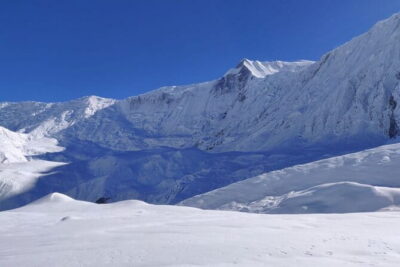
Snow peaks and thick fog kick off Rwenzori trekking. I love the fact that you’re climbing toward the Margherita summit in a range famous for permanently snow-capped peaks, so the effort feels earned and historic. This is a supported mountain trek in Rwenzori Mountains National Park, with day after day of real trail time and real altitude gains.
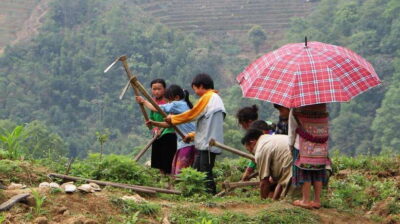
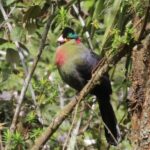
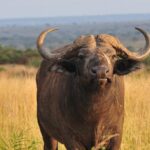
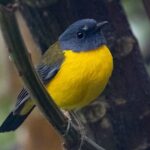
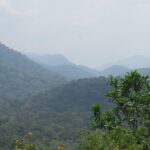
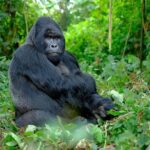
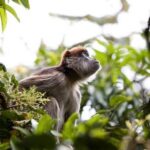
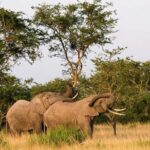
I especially like the human scale of the route: you walk past Bakonjo villages and through homesteads, not just empty wilderness. The park setting matters too, since this area is home to over 70 mammals and 217 bird species, including 19 Albertine Rift endemics—plus some of the rare vegetation you only see at this elevation.
One drawback to plan for: it’s weather-sensitive and physically demanding, with bogs, river crossings, and high passes at altitude. If you’re not ready for wet, cold, and a steady climb, you’ll feel it.
In This Review
- Key highlights you’ll remember
- Kampala to the Rwenzori: where the adventure starts
- First trek day: Nyakalengija to Nyabitaba Hut and the Bakonjo pathway
- Day three: John Matte Hut and the mix of bamboo, boulders, and heather
- Day four: Bujuku Hut at 3,977m with bogs and the everlasting flower legend
- Day five: Scott Eliot Pass and Elena Hut, preparing for the Stanley massif
- Day six: Stanley Plateau and the Margherita Glacier summit push
- Day seven: Freshfield Pass, Kabamba rock shelters, and Guy Yeoman Hut
- Day eight: Back down along the Mubuku River to Nyabitaba Hut
- Day nine: Steep descent to the base and return to Kampala
- Price and value for a 9-day Rwenzori trek
- Who this trek suits, and who should think twice
- Should you book this Rwenzori trekking experience?
- FAQ
- How long is the Mountain Rwenzori trekking safari?
- Where does the tour start, and is pickup included?
- What fitness level do I need?
- Is this a private tour?
- Are meals included in the price?
- What costs are included versus not included?
- Do I have to hire equipment for the trek?
- What if weather is bad?
Key highlights you’ll remember

- Equator photo stop on the drive from Kampala toward the mountains
- Nyakalengija to Nyabitaba trail through plantations and Bakonjo homesteads, with a river crossing
- High huts and passes at elevations like Scott Eliot Pass (4,372m) and Freshfield Pass (4,282m)
- The Margherita glacier summit push after reaching the Stanley plateau
- Bog-heavy scenery (Bigo bog, plus other bogs) and famous high-mountain vegetation
- Private group trek where only your group participates, so your pace stays yours
Kampala to the Rwenzori: where the adventure starts

Your trip begins with pickup in the Kampala area and a long, scenic drive southwest. You’ll get a handy early break from the road with a stop at the equator area—perfect for photos and quick context on how “north and south” works in real life. Even if you’ve seen the equator on a map, standing there is different. It’s a fast, low-effort way to make day one feel like a real start, not just transit.
After that, you’ll continue toward Mbarara town for lunch, then carry on toward the Rwenzori region in the evening. You’ll sleep in your chosen accommodation for dinner and overnight, then get ready for your first full trek day.
What I like about this setup is that you ease in. You’re not shoved straight onto a trail the moment you land. You get time to hydrate, sort your layers, and check your boots—because once the trail gets wet, you’ll be glad you did.
You can also read our reviews of more tours and experiences in Kampala.
First trek day: Nyakalengija to Nyabitaba Hut and the Bakonjo pathway

On day two, you report at the Rwenzori Mountains National Park headquarters for a briefing and to hire relevant equipment. This matters more than it sounds. In high mountain country, having the right gear and knowing what the trail expects can prevent stress later.
Then you start from Nyakalengija, moving through plantations and toward humble homesteads of the Bakonjo—people who have lived with these mountains for generations. The trail crosses the Mahoma River and continues up to Nyabitaba hut at about 2,652m. This day is described as roughly 5–6 hours hiking, so it’s a solid warm-up day that still leaves you with energy for the bigger days ahead.
Along the way, you get views of the portal peaks and Mount Kyniangoma. You’re also in an environment where you can spot mountain birds and wildlife if you keep your eyes up and your pace steady. I’d call this a good “first contact” day: you’re building rhythm, watching the vegetation change, and learning how your body handles altitude.
The practical consideration: you’ll start in real mountain terrain, and river crossings plus early wet sections can mean damp shoes from day two. Plan on comfort, not just speed.
Day three: John Matte Hut and the mix of bamboo, boulders, and heather

Day three follows the route as you descend the ridge to the Mukubu River, then climb through a bamboo forest toward John Matte hut (3,380m). This is one of those days where the scenery shifts frequently. One moment you’re in a tighter, cooler corridor of bamboo; the next, the trail starts to feel more open and rugged.
In the afternoon, the route turns more technical. You’ll climb and hop through boulders, then ascend via the north side of the Bukuju River through a giant heather forest. This mix is why Rwenzori trekking feels different from a simple “walk in the hills.” Your footing needs attention, and your legs need to adapt to uneven ground.
The day is also roughly 5–6 hours. You’ll finish at John Matte hut, where you’re set up for the bigger hut-to-hut climbs that come next.
If you’re prone to sore knees, bring a plan: slow down on the boulder sections and let your steps do the work. You don’t win anything by rushing.
Day four: Bujuku Hut at 3,977m with bogs and the everlasting flower legend

On day four, you trek from John Matte hut (3,380m) to Bujuku hut (3,977m). The signature feature here is bogs—described as the most common feature in this part of the mountain. You traverse via Bigo bog and pass Lake Bujuku, which means the trail can be slower than the hours suggest. Wet ground takes longer to cross, and your socks will learn things about you.
Along the route, there’s mention of a mythical everlasting flower, said to remain on the plant for about 40 years. Even if you don’t track it down like it’s a celebrity sighting, this is a helpful reminder: this mountain is famous for long-lived, oddball vegetation. Keep your eyes open and take short pauses to look around.
You spend the night at Bujuku hut. This is another day where I’d tell you to focus on consistency rather than distance. When the trail turns into boggy patches, the best move is controlled pacing and good foot placement.
Day five: Scott Eliot Pass and Elena Hut, preparing for the Stanley massif

Day five ramps things up. You leave Bukuju hut and climb through moss-covered groundsel greenery, then move toward Scott Eliot Pass (4,372m)—between Mount Baker and Mount Stanley. Higher passes change everything: the air feels thinner, the wind can feel sharper, and the views start to widen fast.
Once you reach Scott Eliot Pass, you proceed to Elena hut (4,540m) for the night. This day is listed around 5–6 hours, and the goal is clear: you’re sleeping high, so you’re ready for the summit push.
At this altitude, I think it helps to treat your body like it’s under instruction. Slow down. Drink when you can. Keep breathing smooth. You’re not chasing a personal best. You’re setting yourself up for a safe, steady climb toward the snow line.
Day six: Stanley Plateau and the Margherita Glacier summit push
This is the day people remember. You depart Elena hut early and hike to the Stanley plateau, then follow the Margherita glacier toward the summit. The summit hike is described as about 3 hours, which tells you it’s not a long grind all day—but it’s still a serious effort at high altitude.
From the glacier route, you reach the Margherita summit, the highest peak in the Rwenzori range and the third highest in Africa. You also get a sense of what makes Rwenzori special: permanently snow-capped peaks in the tropics. That combination is rare, and it makes the climb feel like you’re stepping into a different category of mountain travel.
After the summit, you descend back through the route toward Elena hut, then continue to upper Kitandara lake and then lower Kitandara lake, passing through thick mountain growth described as mad. You’ll halt at Kitandara hut, then the route continues toward peaks in the Mount Baker / Mount Louig do Savoia area, including mention of Vittorio sella.
Even if you’re not sure how far you’ll go toward those peaks on the day, the important point is this: day six is the core of the big mountain experience. It’s the day your legs work the hardest and your mind logs the sharpest memories.
Practical tip: keep your layers simple and functional. High altitude means you can overheat on a climb and then freeze during pauses.
Day seven: Freshfield Pass, Kabamba rock shelters, and Guy Yeoman Hut

Day seven takes you from Lake Kitandara and up toward Freshfield pass (4,282m). You’ll hike along a ridge of high alpine mossy glades, then descend through rocks and bogs. Yes, the bogs return. At this stage, wet ground is less of a surprise and more of a predictable companion.
After descending, you get panorama time, with views of Mount Stanley, Mount Baker, and Mount of Savoy. This is one of those moments where you stop thinking about foot placement and just take in the geometry of the peaks.
From there, the route continues on a soggy trail toward Bujongolo, Akendahi, and Kabamba rock shelters. At Kabamba valley, the path leads to Guy Yeoman hut (3,261m). This day can last up to about 6 hours.
I like day seven because it balances effort with the kind of scenery that makes you forget the ache in your calves. Still, it’s not “easy.” Treat it as a real trekking day with a steady pace.
Day eight: Back down along the Mubuku River to Nyabitaba Hut

Day eight shifts from high passes back to descent. You hike from Guy Yeoman hut to Nyabitaba hut, descending along the Mubuku River. The route passes Kichuchu, a rock shelter, then rejoins the original route down to the Bujuku River. The described hiking time for this segment is about 2–3 hours for the last part of the day.
You’ll sleep again at Nyabitaba hut. The reason this matters: it gives you a chance to recover before your final push down to the base.
This is the day where your body starts negotiating with gravity. The best help is smart pacing: short steps on steep sections, steady breathing, and stopping early enough that you don’t rush.
Day nine: Steep descent to the base and return to Kampala
Your last morning starts at Nyabitaba hut, then you descend steeply off the ridge through lush vegetation to the base of the mountain. From there, you proceed to park headquarters to hand in any equipment you hired.
After that, you drive back toward Kampala, arriving in the late evening. Day nine is about completion: goodbyes to the mountain trail, recovery mode for your body, and a final drive where you’ll probably watch the scenery blur into something less rugged than what you just walked through.
Price and value for a 9-day Rwenzori trek
At $2,390 per person for about 9 days, this trip isn’t a budget walk. But it also isn’t just “someone points at a trail and wishes you luck.”
Your package includes all fees and taxes, plus breakfasts (7), lunches (8), and dinners (7). That food coverage matters on a trek, because you’re spending days moving at altitude where appetite and energy are part of safety. Also, a private setup means only your group participates, which can be a real quality boost on mountain treks where timing and comfort matter.
What’s not included is the guide service fee, plus any private expenses and travel insurance. Those items are worth factoring into your budget early, because they can change the true total cost.
My bottom line on value: you’re paying for the hard stuff—high-altitude walking days, park setup, and meals—while keeping certain add-ons separate. If you want a guided trek with logistics handled, the pricing starts to make sense.
Who this trek suits, and who should think twice
This trek is for you if you have moderate physical fitness and you want a real hiking-and-mountaineering style experience in Uganda’s most famous mountain range. The days run about 5–8 hours depending on the segment, and you’ll hit bogs, river crossings, and steep drops.
It’s also a great match if you like travel that mixes nature and people. The route goes through Bakonjo areas and includes a nature-and-community feel, not only high-altitude scenery.
You might want to rethink if you’re uncomfortable with cold, wet ground, altitude risk, and the idea that some trails are slow. Even though the trek is organized, your pace and comfort still drive the experience.
Also, it requires good weather. If weather turns, the trek could be offered on a different date or refunded, depending on the situation.
Should you book this Rwenzori trekking experience?
I’d recommend booking if you want a guided route toward Margherita summit and you like the idea of trekking in a national park famous for endemics and rare mountain vegetation. This isn’t a sightseeing bus tour. It’s a serious hut-to-hut mountain trek with genuine high-altitude days, and the payoff is seeing tropical snow-capped peaks as a real, walkable thing.
Before you commit, be honest with yourself about wet-trail tolerance and altitude readiness. If you’re the kind of person who can slow down on steep sections and keep your footing calm, you’ll likely enjoy this more than you expect. If you’re looking for comfort-first hiking, you may feel the mountain is asking too much.
FAQ
How long is the Mountain Rwenzori trekking safari?
It’s listed as 9 days approximately.
Where does the tour start, and is pickup included?
The tour is based around Kampala, and pickup is offered. The meeting point is listed as Entebbe Airport (Entebbe Uganda).
What fitness level do I need?
The tour notes that travelers should have a moderate physical fitness level.
Is this a private tour?
Yes. It’s a private tour/activity, and only your group will participate.
Are meals included in the price?
Yes. Breakfast is included 7 times, lunch 8 times, and dinner 7 times.
What costs are included versus not included?
Included: all fees and taxes, plus the meals mentioned above. Not included: guide service fee, private expenses, and travel insurance.
Do I have to hire equipment for the trek?
At the park headquarters, you’ll report for a briefing and the hiring of relevant equipment.
What if weather is bad?
The experience requires good weather. If it’s canceled due to poor weather, you’ll be offered a different date or a full refund.