REVIEW · POKHARA
Annapurna Base Camp 7 Days Trek from Pokhara
Book on Viator →Operated by Pokhara Adventure Nepal (PAN) · Bookable on Viator
One trail and the Annapurnas take over your day. This 7-day Annapurna Base Camp trek from Pokhara mixes big-mountain panoramas with Gurung village culture and time-saving included permits. You walk through different elevations, from terraced areas and forest paths up toward the Annapurna massif, with moments that make you stop mid-step just to look.
I especially like how the plan doesn’t only chase altitude. It gives you full walking days that pass Modi River valley sights, rhododendron and bamboo stretches, and iconic viewpoints like Machhapuchare (Fishtail) and Annapurna South. One thing to consider: you’ll face long trekking days (around 6–7 hours), including a tougher climb early on, plus a higher-altitude finish at 4,130 meters.
In This Review
- Key Highlights You’ll Care About
- Pokhara to Ghandruk: starting with Annapurna in your peripheral vision
- Ghandruk to Sinuwa: Gurung scenery and a steady uphill push
- Into Annapurna Sanctuary: bamboo, rhododendron, and the climb that feels earned
- Annapurna Base Camp and Machhapuchare Base Camp: the 4,130 m payoff
- Descent to Bamboo: where careful feet matter and hot showers feel earned
- Jhinu Danda back to Pokhara: the last walk with a long suspension bridge
- Price and Logistics: what you’re really paying for at $435
- The guide experience: Ram and Krishna are the names that keep showing up
- Fitness, altitude, and what “moderate” really means on this route
- Should you book this Annapurna Base Camp trek?
- FAQ
- How high do you reach on this Annapurna Base Camp trek?
- What fitness level do I need for this 7-day trek?
- Is this trek suitable for wheelchair users?
- What is included in the $435 price?
- What permits do I need, and do I need to send a photo?
- What accommodation can I expect during the trek?
- Can I cancel and get a full refund?
Key Highlights You’ll Care About
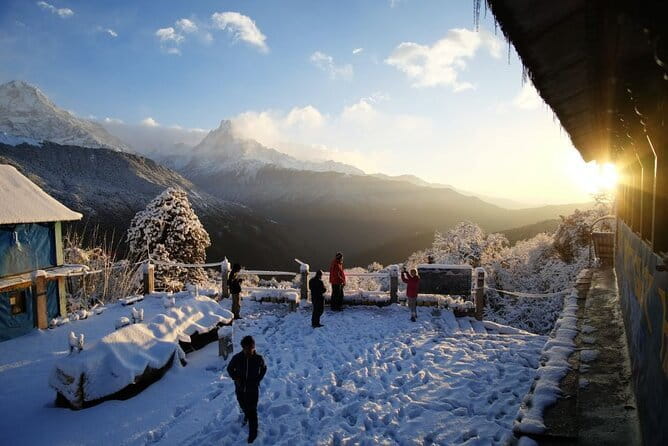
- Ghandruk to Sinuwa: Gurung villages with strong culture stops and classic mountain viewpoints
- Annapurna Sanctuary approach: bamboo + rhododendron forest walking toward ABC
- Base Camp day math: a 730 m climb to reach Annapurna Base Camp at 4,130 m
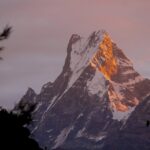
- Sunrise payoff: clear mountain moments often come in the early hours (your guide will time this well)
- Guest house stays: comfortable enough for a trek, with rooms and meals praised by past trekkers
- Return to Pokhara: a practical jeep transfer back after the final descent
Pokhara to Ghandruk: starting with Annapurna in your peripheral vision
Day 1 starts with a drive from Pokhara toward Kyu Mi Danda, passing Nayapul and Birethati, then switching to a sharing jeep because the road is unpaved. It’s not fancy, but it’s real Nepal logistics. The payoff is that you start trekking in a valley that already feels alive, with trails threading through hills and the Modi River area.
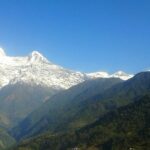
Once you’re on the way, the walk leads you into terraced farmland and authentic villages. Your first major cultural stop is Ghandruk, one of the best-known Gurung villages in the Annapurna region. Here you can slow down to take in local life, visit small museums, and soak up the daily rhythm of a community built around these mountains. Views from this area can be spectacular—especially of Annapurna South, Hiunchuli, Machhapuchare, Gangapurna, and Annapurna III—so even if you’re tired after travel, you’ll likely want to pause for photos and a quick scan of the peaks.
Practical tip: plan for a full day. Even though this is day one, it’s still listed as about 7 hours of trekking time, so pack smart and keep your daypack light.
You can also read our reviews of more tours and experiences in Pokhara.
Ghandruk to Sinuwa: Gurung scenery and a steady uphill push
Day 2 is the first day where you feel the trek’s “real work.” The route goes from Ghandruk toward Upper Sinuwa and includes trekking that fluctuates in steepness. You’ll do a strenuous walk to reach Upper Sinuwa—around 7 hours total trekking time, not counting lunch/tea breaks.
The path runs through Kimrung Danda and alongside the Kimrung River, then you pass through Chhomrong before reaching Sinuwa. This is one of those days where the trail keeps you moving, but the scenery changes often enough to stay interesting. You’ll see different vegetation zones as you gain elevation, and you’ll keep getting glimpses of the Annapurna range.
Culture matters here too. Your route threads through villages where Gurung customs and hospitality are part of the trek experience, not just a quick photo stop. Past trekkers highlight how much the “people part” improved the trip, and this day is where that starts to click.
Who this suits: If you can handle long, mostly continuous walking and you’re okay with a day that’s more effort than sightseeing, this is a good match. If you prefer short, easy walks, you’ll feel day 2.
Into Annapurna Sanctuary: bamboo, rhododendron, and the climb that feels earned
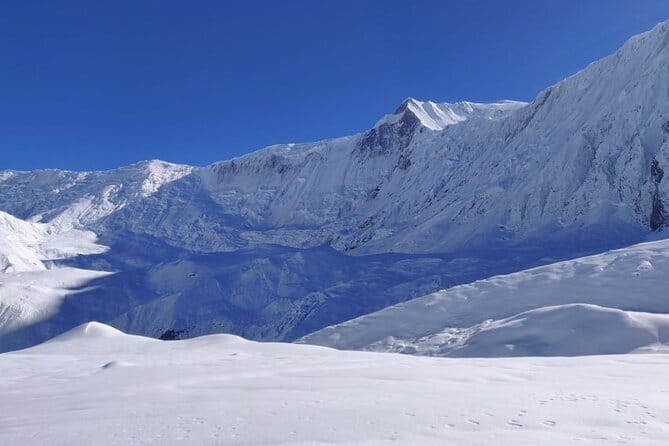
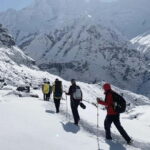
On Day 3, you push uphill toward Annapurna Sanctuary. As the air gets cooler, the walk changes in mood. This is the day where the trek starts to feel more like “the trek”—a mix of forest textures, air that feels thinner, and paths that curve through the valley.
The day’s route passes through places like Bamboo and Dovan, then transitions into bamboo and rhododendron forest. The route follows winding paths that keep opening to views of the wider massif from different angles. The Annapurna Sanctuary part is especially memorable because it’s the gateway to the high-altitude feeling you came for.
If you’re aiming for photos, Day 3 is smart to take seriously. Even when you don’t have a huge summit view, the forest lighting and the movement of peaks in the background make it feel like the landscape is shifting hour by hour. And after day 2, it’s satisfying to see the trek getting closer to the “big moment.”
Practical tip: pace yourself early. This day is listed at about 7 hours, so your best strategy is steady breathing and consistent footwork rather than sprinting the uphill sections.
Annapurna Base Camp and Machhapuchare Base Camp: the 4,130 m payoff
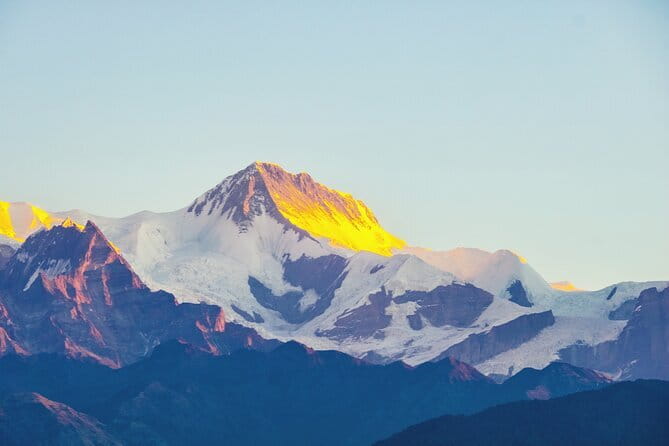
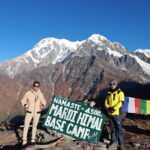
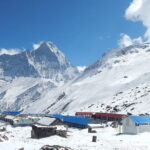
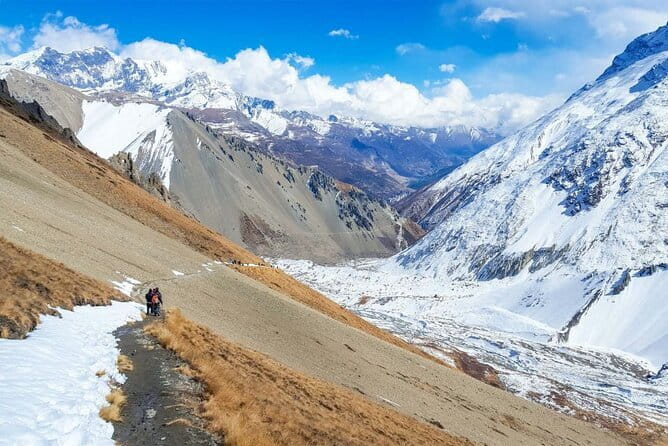
Day 4 is your “height day.” The trail goes up toward Machhapuchhre Base Camp, which sits at 3,900 m. From there, it’s described as climbing about 730 m to reach Annapurna Base Camp at 4,130 m. So you’ll feel the altitude during this segment, even if the climb isn’t constant steepness the whole time.
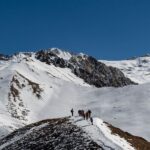
You’ll move uphill gradually through Annapurna Sanctuary, then continue into grassy higher areas. It’s a classic high-mountain shift: fewer trees, more open terrain, and better sightlines to the peaks around the sanctuary. The mountain faces—especially the Annapurna massif around the sanctuary—tend to look more “real” here because you’re closer to the source.
This is also a day where your guide’s timing matters. In the trek feedback, sunrise and clear mountain views get mentioned often, and the guide names that come up most are Ram and Krishna. A good guide helps you choose when to stop, when to push, and how to not waste energy on the wrong section.
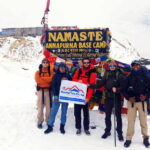
What to expect at ABC: the area is the main goal—big views, cold air, and a feeling that you’ve finally walked to the bottom of the mountains rather than just around them. Don’t underestimate the time you might want to spend there. Even if your legs are tired, your eyes will probably keep asking for “one more look.”
Descent to Bamboo: where careful feet matter and hot showers feel earned
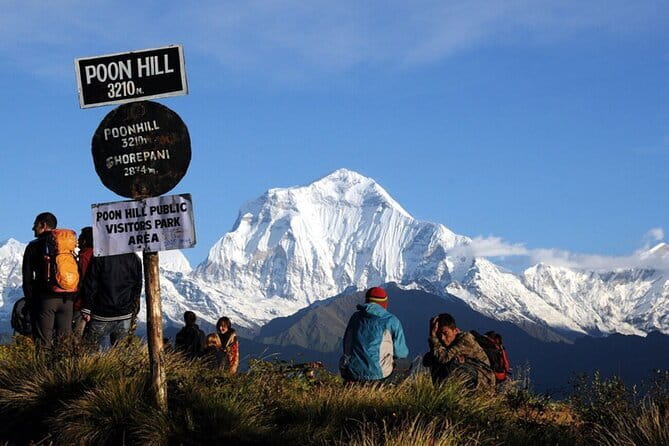
After the base camp high, Day 5 becomes a descent back down to Bamboo. This is listed as about 6 hours. The tone changes quickly: the route is decent, but descending takes focus. Your calves will notice it, and loose footing can turn a relaxing day into a grumpy day fast.
The itinerary describes a descent that goes via Deurali, Himalaya, and Dovan, then returns to Bamboo for the overnight stay. Expect a mix of ups and downs along forest and tree line areas, which can be mentally tricky because you’re not getting the full “downhill only” relief.
One detail that stands out from past experiences: a stop for a warm hot shower at Baboo. When you’ve spent days trekking and your body is running on grit, that kind of simple comfort is a big deal. It also helps you sleep better and recover for the final two days.
Advice: treat the descent like a skill day. Shorter steps, steady rhythm, and frequent checks on the trail surface make a bigger difference than you’d think.
Jhinu Danda back to Pokhara: the last walk with a long suspension bridge
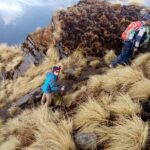
Day 6 shifts gears again. You start from the higher trail area and work your way toward Jhinu Danda through a mix of short steep up sections and forest downhill sections. The route mentions a short steep up to KhuldiGhar, then downhill into the forest, reaching lonely spots like Sinuwa-Danda.
Then the walk descends to Chomrong Khola, crosses a bridge, climbs briefly, and reaches Chomrong village for lunch. After Chomrong, there’s another short up to reach Chomrong ridge, and finally a downhill trek toward Jhinu-Danda. Total trekking time is about 6 hours.
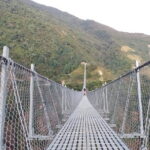
Day 7 is the exit. You do a short downhill crossing a long suspension bridge to reach Samrung Khola. After that, you catch a local jeep back to Pokhara, and the drive is listed as about 4 hours. The route passes through Kimrung village, Syauli Bazaar, Birethati Nayapul, Kande, and Naudanda before arriving in Pokhara. This is a practical close: you’re not just “finished on paper,” you actually get back to town.
How it feels: Day 7 can be surprisingly emotional. You’ve got the last look at peaks, the fresh relief of less altitude pressure, and then the reality check of sitting in a jeep after days of walking.
Price and Logistics: what you’re really paying for at $435
At $435 per person for about 7 days, the value depends on what’s included. In this package, the following are included:
- hotel pickup and drop off
- round trip transfer by sharing bus/jeep
- trekking permit and TIMS card
- English speaking trekking guide
- guest house accommodation
- private trip (your group only)
Not included: personal expenses and gratitude (tips).
That’s a lot of the “hard stuff” baked in. Permits and TIMS can be a headache to sort out on your own, and they’re easy to forget until the last second. The English speaking guide is also meaningful—especially when you’re trying to understand trail choices, timing, and what to pay attention to at higher elevations.
Two logistics perks also appear in the trip features:
- pickup offered
- mobile ticket
- group discounts
Even without knowing exact group size, those details usually translate into smoother days—less time negotiating transportation, more time just walking and looking at mountains.
Where the cost might feel tight: if you need a lot of paid add-ons on your own (extra drinks, hot showers outside the mentioned stop, laundry, snacks), personal expenses can add up fast. This isn’t unusual on treks, but it’s worth budgeting.
The guide experience: Ram and Krishna are the names that keep showing up
When trekking plans go well, it’s often because of two things: good pacing and good communication. Past trek experiences for this operator repeatedly highlight Ram and Krishna as supportive guides.
In particular, they’re praised for:
- helping make the trek enjoyable, not just doable
- guiding well enough to see good mountain views
- good morning timing tied to sunrise moments
- solid support with transport, rooms, and meals
You’ll also see praise for room and food quality, plus transport being “good.” That matters because on an Annapurna trek, the lodge nights and meal breaks shape how strong you feel for the next day. The guide’s job isn’t only narration. It’s also about keeping the experience flowing.
If English communication is a priority, this tour includes an English speaking trekking guide, which reduces a lot of the friction that can happen when you’re trying to coordinate simple things like meal timing and trail explanations.
Fitness, altitude, and what “moderate” really means on this route
This trek is recommended for people with moderate physical fitness. It’s also explicitly not recommended for wheelchair users since you’re hiking on trekking trails.
The itinerary itself signals the workload:
- several days at about 6–7 hours of walking
- a strenuous day on the route from Ghandruk to Upper Sinuwa
- a significant climb segment on Day 4 (about 730 m to ABC)
- altitude reaching 4,130 m
Altitude isn’t only about breath. It also affects your energy and your mood. You’ll want to take it slow on the climb days and not chase speed. If you tend to sprint early in hikes, you’ll probably learn quickly that ABC demands a steadier approach.
Practical prep that pays off:
- pack layers for cooler high sections
- keep footwear ready for rocky downhill days
- bring a small daypack so you’re not constantly juggling items
Even if you feel fit at sea level, the trek’s rhythm is different. The smart goal is to finish each day with enough energy to enjoy the next stop.
Should you book this Annapurna Base Camp trek?
You should book this trek if you want a structured ABC experience that handles the key admin parts (permits, TIMS, guide) and focuses on real walking days through Gurung villages, forests, and the Annapurna Sanctuary area. The included private format is also a plus if you want your group to move together without mixing with strangers.
I’d be cautious if you don’t like long walking days or if you struggle with steep uphill sections. Day 2 and the height gain toward ABC aren’t the type of challenge you can ignore.
One final check before you commit: look at the itinerary’s total trekking time and the Day 4 climb to 4,130 m. If that fits your current fitness and acclimatization style, this is a solid way to experience Annapurna Base Camp with guides like Ram or Krishna guiding the pace and the timing.
FAQ
How high do you reach on this Annapurna Base Camp trek?
You reach Annapurna Base Camp at about 4,130 meters. The route also mentions Machhapuchhre Base Camp at around 3,900 meters before continuing to ABC.
What fitness level do I need for this 7-day trek?
The trek is recommended for travelers with moderate physical fitness. The itinerary includes strenuous walking on some days and several days of about 6–7 hours of trekking time.
Is this trek suitable for wheelchair users?
No. It is not recommended for wheelchair users because it involves hiking on trekking trails.
What is included in the $435 price?
The package includes hotel pickup and drop off, round trip transfers by sharing bus/jeep, trekking permit and TIMS card, an English speaking trekking guide, guest house accommodation, and a private trip for your group.
What permits do I need, and do I need to send a photo?
Yes. A passport copy and a passport size photo are required prior to the trek so the trekking permit can be made for you.
What accommodation can I expect during the trek?
You stay in guest houses during the trek. Rooms and overall lodging quality are noted positively in past experiences.
Can I cancel and get a full refund?
Yes. You can cancel up to 24 hours in advance for a full refund. If you cancel less than 24 hours before the start time, you do not get the refund.