REVIEW · KAMPALA
8 days Murchison Falls, Chimpanzee & Gorilla Trekking Safari
Book on Viator →Operated by Simba African Expeditions · Bookable on Viator
A trip through Uganda like this is a whole lot of nature in one breath. I like how the route stacks chimpanzees and gorillas with classic savanna sightings, and I also like the early Ziwa Rhino Sanctuary hike that sets the tone. The main thing to consider is that you’ll start early and spend serious time on the road between parks.
This is a private safari, so you’re not sharing the experience with strangers. Based on what I’ve learned from guide feedback on this itinerary, the guide team quality is a big part of the win, including names like Meddie Buwendo and Tom, plus an administration team that keeps the plan clear from the start.
In This Review
- Key highlights that make this itinerary work
- From Kampala to gorillas: how the route flows
- Ziwa Rhino Sanctuary: a smart first day in Uganda
- Murchison Falls: game drive morning, Nile launch afternoon
- Kibale National Park: chimpanzee tracking plus Bigodi Swamp
- Bwindi gorillas: the one-hour rule and group assignments
- Ishasha tree-climbing lions and Batwa culture: the human-animal balance
- Lake Bunyonyi: canoe time after gorillas
- Getting back to Entebbe: equator stop and fly-home timing
- Price and value: what $4,209 buys you
- Small logistics that affect your comfort
- Who this safari suits best
- Should you book this Uganda safari?
- FAQ
- What are the main permits included on this safari?
- Where does the safari start and end?
- How long can you spend with the gorillas during trekking?
- What happens on the Murchison Falls afternoon cruise?
- Is this a private tour?
- Is free cancellation available?
Key highlights that make this itinerary work

- Ziwa Rhino Sanctuary trek first, so rhino time isn’t left to luck
- Murchison Falls game drive paired with a Nile launch cruise at the base of the falls
- Kibale chimp tracking plus a Bigodi Swamp nature walk for birds and primates
- Bwindi gorilla trekking with a briefing and a strict no more than one hour rule with gorillas
- Ishasha tree-climbing lions chance while crossing toward Bwindi
- Lake Bunyonyi canoe ride as a slower, scenic reset before flying out
From Kampala to gorillas: how the route flows
This 8-day safari is built like a wildlife on-ramp: start with rhinos and savanna, then shift into rainforest, then end with calm lake time. You’re based in lodges each night, and the days are structured around early starts for animals that move on their own schedule.
You begin in Kampala, and the trip ends back at the meeting point after returning through Entebbe. Along the way, you’ll cover several very different habitats: Murchison’s river-and-savana feel, Kibale’s chimp country, Bwindi’s steep rainforest, and Lake Bunyonyi’s relaxed waterside pace.
You can also read our reviews of more tours and experiences in Kampala.
Ziwa Rhino Sanctuary: a smart first day in Uganda

Day 1 is intentionally active but not overwhelming. After early breakfast, you’re picked up around 7:00 am and drive north toward Ziwa Rhino Sanctuary. The sanctuary hike is the first “big ticket” moment, because it focuses on tracking white rhinos on foot.
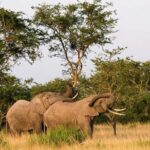
Even if you’re mostly there for rhinos, this is also where you get a broader preview of Uganda wildlife variety in a contained setting. The sanctuary is described as home to animals like hippos, bushbucks, oribis, plus lots of birds. Practically, it’s a good warm-up for safari eyes before you move into Murchison National Park’s larger, wilder spaces.
Then you drive on to Masindi for lunch and continue to Murchison Falls. After check-in, the rest of the day is dinner and sleep—no extra rushing.
Why it’s valuable for you: starting with a guided, focused tracking hike means you’re not banking everything on sightings later. It also gives you a feel for how the guides pace groups on foot, which matters for the rainforest days ahead.
One drawback to keep in mind: day 1 is long and drive-heavy. If you’re sensitive to road time, plan to treat the first day as transition fuel rather than a “rest day.”
Murchison Falls: game drive morning, Nile launch afternoon

Day 2 is built around two different ways to see the same dramatic system: land first, river after.
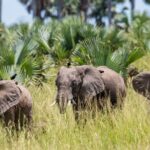
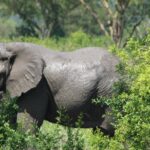
You start with tea/coffee around 6:00 am, then you’re on a game drive at roughly 6:30 am. The drive runs about four hours, and the expected mix includes lions, elephants, buffaloes, giraffes, and Uganda kob, plus Jackson’s hartbeets and warthogs. If you like wildlife that looks like it belongs in a safari photo, this is where you get that.
After breakfast and lunch back at the accommodation, you shift gears. The afternoon includes an on-Nile launch cruise along the route toward the falls. Here the sightings focus on water life and shore edges: hippos, crocodiles, buffaloes, elephants, and water birds.
Then comes the falls. At the base of Murchison Falls, you can choose to add a hike up toward the top of the falls. The day is designed so your driver meets you at the top and transfers you back to the lodge afterward.
What you should love about this day: you’re not just doing one safari activity. You’re getting two “animal styles”—savanna behavior in the morning and river behavior later—while the falls provide a constant backdrop to the whole experience.
Practical consideration: the optional falls hike is only “optional” in the planning sense. If you’re tired from the early start, consider whether you’ll enjoy the hike or whether you’ll be happier skipping it and saving energy for chimps and gorillas.
Kibale National Park: chimpanzee tracking plus Bigodi Swamp
Day 3 moves you from Murchison to Kibale. The drive follows the Albertine Rift Valley scenery and includes a lunch stop en route. This is another day where you’re trading movement for variety, because Kibale is a different world from Murchison.
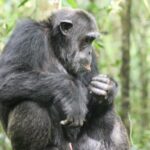
Kibale is where you’ll do chimpanzee tracking on Day 4. The morning begins with an early wake-up and breakfast, then a transfer to the park offices for briefing. By around 8:00 am, you trek into the forest to find chimps.
This is the part of the itinerary that tends to feel most intense—not because it’s “hard” in a climbing way, but because forest time can be unpredictable. You’re following signs, listening for activity, and moving at the pace set by your guides. Once tracking is done, you return for lunch.
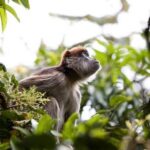
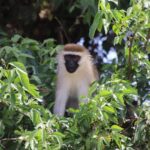
Later that day, you add a nature walk in Bigodi Swamp, which focuses on primates and birds. This is a smart pairing: the chimp trek gets the headline moment, and Bigodi helps you keep your eyes open for smaller action you’d otherwise miss.
Why this pairing matters: you’re not just checking off a permit. You’re learning how primates and birds use the same wet forest edges differently. It’s also a nice change after the more open savanna feel of Murchison.
Bwindi gorillas: the one-hour rule and group assignments
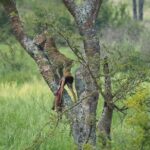
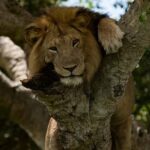
Day 5 is your move into Bwindi Impenetrable National Park, with a stop that could make the cross-park drive feel like its own safari. You drive through Queen Elizabeth park’s Ishasha region, which is known for tree-climbing lions. The plan says sightings are possible if luck is with you. Even when you don’t see the lions, Ishasha is a reminder that Uganda’s wildlife doesn’t behave in a single predictable way.
Arriving at Bwindi, you check in and settle for dinner and sleep—then Day 6 becomes the gorilla day.
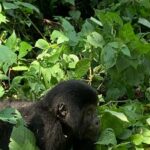
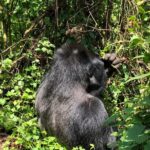
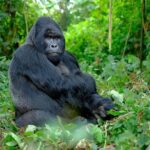
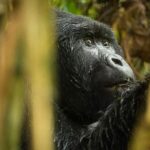
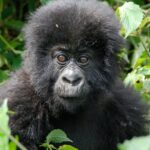
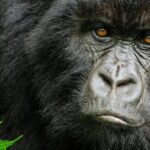
On gorilla day, you start early with breakfast and then a transfer to the park offices for briefing. You’re assigned a gorilla group to track, and by about 8:00 am you head into the forest. The rules are clear: you’re allowed no more than an hour with the mountain gorillas, then you return to meet your driver. After a snack and refresh time, you also visit a local Batwa community to see indigenous ways of living.
What to expect emotionally and practically: gorilla trekking can feel both precious and intense because of that one-hour limit. You’ll want your guide to help you keep perspective—where you are, what the group is doing, and what to do if you need to reposition for viewing. Your group assignment matters, because it affects where you start and how your trek unfolds.
And the Batwa visit adds depth: it turns the day from a single-animal focus into a human story too, which helps make the experience feel grounded rather than just photo-driven.
Ishasha tree-climbing lions and Batwa culture: the human-animal balance
Even though Ishasha and Batwa happen on different days, they play a similar role in the flow of the safari.
- Ishasha (during the Day 5 transfer) introduces a “wildlife surprise” element. Tree-climbing lions are a special talking point, and the itinerary gives you a real shot at that instead of treating it as a far-off myth.
- Batwa community visit (on Day 6 after your gorilla trek) adds context for how people have long understood the forest. It’s not a separate sightseeing detour. It’s timed right after the gorillas, while the rainforest experience is still fresh.
Why I appreciate this balance: you get both the animal highlight and the cultural thread. That combination tends to make the overall trip feel more complete, and it gives you something meaningful to discuss back home beyond what you saw.
Lake Bunyonyi: canoe time after gorillas
Day 7 is your reset day, switching from rainforest intensity to lake calm. You transfer to Lake Bunyonyi and get to your accommodation in time for lunch. After lunch, you relax, then go for a canoe ride on the lake.
You can choose to ride the canoe yourself or have a guide. Either way, the goal is slower pacing and scenery—Bunyonyi is described as a warm-weather spot, which helps the body recover after trek-heavy days.
What makes this day worth it: it’s not just downtime. It gives you time to process what you saw with chimps and gorillas, and it changes your senses after long hours of tracking and walking.
Getting back to Entebbe: equator stop and fly-home timing
Day 8 brings the return drive to Entebbe. You’ll have breakfast, check out, travel back for an evening flight or drop-off to your destination, and have lunch en route.
There’s also a stopover at the Equator point for picture moments. It’s a small add-on, but it helps make the last day feel like you’re still “doing” something instead of only driving and waiting.
Price and value: what $4,209 buys you
At $4,209 per person for 8 days, this is not a budget safari. But it also isn’t priced like a basic driving tour.
Here’s what you’re paying for that matters:
- Chimpanzee tracking permit is included
- Gorilla tracking permit is included
- Meals are included across multiple days (breakfasts, lunches, and dinners listed as part of the package)
- The itinerary is private, meaning the timing and movement are designed for your group
If you’ve ever shopped wildlife trips in Uganda, you already know the permits are a major part of the total cost. Getting both chimp and gorilla permits included is a big reason this itinerary can feel like solid value when compared to piecing things together day by day.
Also, the private structure matters more than it sounds. Private doesn’t just mean comfort. It usually means less compromise on pacing, more attention from your guide team, and fewer timing headaches.
The main “cost reality” is the road time. You’re covering several parks in one trip, so energy management is part of the price you pay. If that tradeoff works for your travel style, the value tends to make sense.
Small logistics that affect your comfort
A few details from the tour setup that can shape your experience:
- It’s a private tour/activity, so only your group participates.
- You’ll receive a mobile ticket.
- Service animals are allowed.
- The tour is described as near public transportation and most travelers can participate, which suggests a range of comfort levels are catered for, even though you’ll still do trekking days.
One more point: confirmation happens at booking time, and that reduces uncertainty before you arrive.
Who this safari suits best
This itinerary fits well if you want:
- Multiple wildlife highlights in one tight package (rhinos, savanna mammals, chimps, gorillas)
- A route that goes from savanna to rainforest to lake calm
- A guide-driven experience where assignments and briefings are taken seriously
You might think twice if:
- You strongly dislike early starts and long drives
- You’re expecting a fully relaxed schedule with no trekking-heavy days
But if you’re okay with a “go early, see a lot” rhythm, this is a strong way to experience Uganda’s variety.
Should you book this Uganda safari?
I’d book this if you want a practical, high-impact Uganda route that does more than one headline species. The combination of chimpanzee tracking in Kibale, gorilla trekking in Bwindi, and the scenic off-days (Nile cruise and Lake Bunyonyi canoe) makes the trip feel balanced instead of one-note.
I’d also feel comfortable booking because the guide experience appears to be a real strength, with standout names like Meddie Buwendo and Tom showing up in feedback for professionalism, patience, and responsiveness.
The decision comes down to one thing: are you ready for early mornings and long park-to-park drives? If yes, this itinerary has a clear logic and a lot of real wildlife time behind it.
FAQ
What are the main permits included on this safari?
The tour includes one chimpanzee tracking permit and one gorilla tracking permit.
Where does the safari start and end?
It starts in Kampala, Uganda, and ends back at the meeting point after you return via Entebbe.
How long can you spend with the gorillas during trekking?
You’re allowed no more than one hour with the mountain gorillas.
What happens on the Murchison Falls afternoon cruise?
You’ll go for a launch cruise along the Nile to the base of Murchison Falls. At the base, you can opt to also launch and hike along the falls to the top.
Is this a private tour?
Yes. It’s private, and only your group participates.
Is free cancellation available?
Yes. You can cancel up to 24 hours in advance for a full refund. If you cancel less than 24 hours before the start time, the amount you paid is not refunded.