REVIEW · MARRAKECH
The secret of the camel trekking desert
Book on Viator →Operated by Vision Berbere · Bookable on Viator
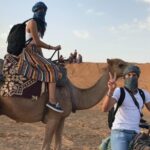
Camel trekking in the Sahara beats anything scripted.
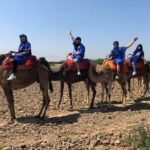
This 8-day route is built around Sahara solitude and a small-group vibe (max 15), with pickup offered and nights in both a hotel and desert bivouacs. I like how the days mix steady walking with camel time and a camp rhythm that actually lets you recover. I also like that the trip leans into trusted local leadership, with guide Mustapha’s team approach showing up again and again in guest feedback. The main drawback to plan for: you need moderate physical fitness because several days include 4+ hours of walking in desert conditions.
Day 7’s shift to Marrakech is the other reason I’d recommend it. After dunes and starlight, you land back in a place of souks and narrow streets, which makes the week feel balanced instead of one long, monotonous slog. Just remember the desert part is real: expect heat by day and cold-ish air at night, and dress/prioritize accordingly.
In This Review
- Key highlights that matter on the ground
- What the secret of camel trekking really delivers: solitude + real logistics
- Ouarzazate arrival and Day 1 transfer: getting oriented without stress
- Days 2–4: M’Hamid, Ras N’Khal, and the Erg walking rhythm
- Erg Aït Ounir to Erg Ezzahar: long views, big skies, and real recovery
- Sidi Naji dunes to Ouled Driss: the days that make stargazing feel personal
- Day 7 Marrakech: switching from dunes to souks without adding extra travel days
- Meals and bivouacs: what you’re actually buying besides the camel trek
- Price and value: what $1,018.99 covers and how to judge it fairly
- Day-by-day distances you should plan for (so you don’t regret it later)
- What to pack and how to handle desert heat without overthinking
- Who should book this trip, and who should skip it
- Should you book The Secret of the Camel Trekking Desert?
- FAQ
- How long is the camel trekking desert trip?
- Where does the trip start and end?
- Is pickup offered?
- What’s included in the meals?
- Where do we sleep during the trek?
- How physically demanding is it?
- How many people are in the group?
- What happens if weather is poor?
Key highlights that matter on the ground
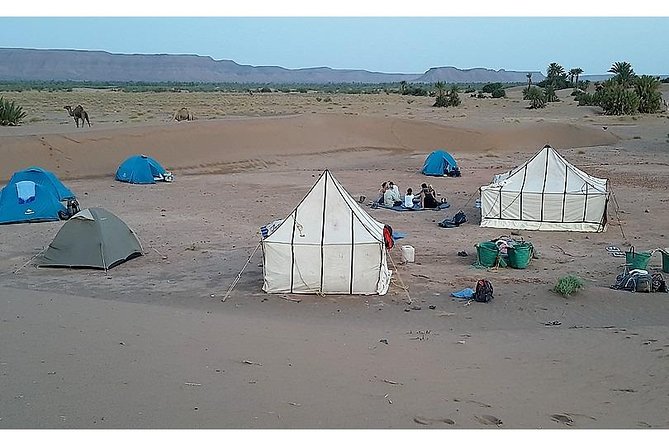
- Small group size (max 15) means you don’t feel lost in the crowd, especially at camp.
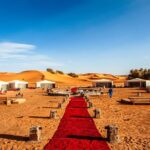
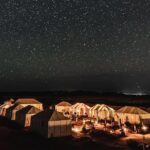
- Bivouac nights give you that Sahara stillness and wide-open skies.
- Camel trekking logistics keep the journey enjoyable even when your legs get tired.
- Mustapha-led guidance and team setup shows up in multiple comments about safety and smooth running.
- Marrakech finish lets you swap dunes for souks without adding extra travel days.
What the secret of camel trekking really delivers: solitude + real logistics
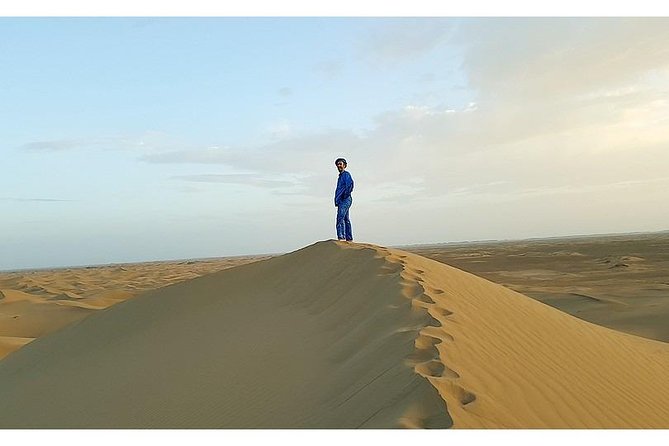
This trip sells the desert as a reset. And that’s not marketing fluff. You’re leaving the road network for a run of days where your world gets smaller: walking, camp, food, and the night sky. In a good way, it removes the constant “what’s next?” feeling. The plan is paced around walking blocks, rest, and group camp life.
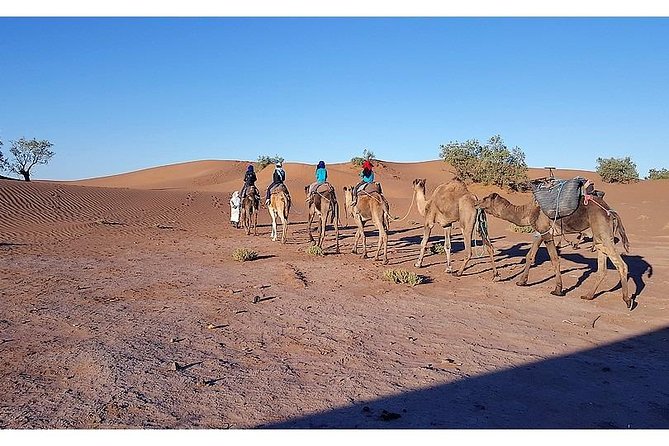
At the same time, it’s not a rough-and-unmanaged adventure. Your days are supported by organized transport, camel handling, and a team that sets up camp and cooking. In guest notes, people repeatedly call out the professionalism of the crew—camel drivers, cooks, and guides. That matters because the desert isn’t hard because it’s extreme in theory. It’s hard because it’s exposed. Having the logistics handled lets you focus on the experience.
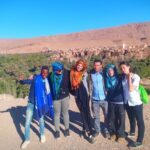
The operator is also putting a cap on group size (up to 15). That’s a big deal for comfort—less waiting, easier meal flow, and a calmer camp atmosphere when you’re tired.
You can also read our reviews of more tours and experiences in Marrakech.
Ouarzazate arrival and Day 1 transfer: getting oriented without stress
Day 1 starts with an airport transfer to your accommodation in Ouarzazate. You’ll get checked in for the night at a hotel with breakfast (they list night + breakfast as included). That matters because it gives you a clean landing day before the desert rhythm begins.
Ouarzazate also plays a practical role. It’s the place where you pick up bearings for the week ahead—where you go from city travel mode to desert mode. Even if you’re arriving tired, the first-day structure is simple: reception, short orientation, then sleep.
One small but helpful detail: the plan shows admission tickets as free for the listed stop(s). I treat that as a small cost-control win. You still may want to budget for personal extras, but the core sights aren’t asking you to add more ticket fees.
Days 2–4: M’Hamid, Ras N’Khal, and the Erg walking rhythm
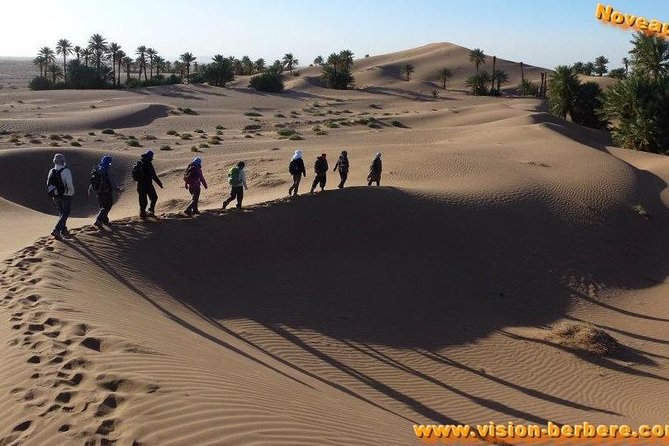
The heart of this trip is the multi-day trek through desert terrain. You’ll move from RAS N’KHAL toward Erg Aït Ounir, then across to Erg Zaher. Each day has a walking block measured in hours, followed by another night in bivouac.
Here’s what to expect, practically:
Walking time and pacing
- Day 2 includes about 1h30 walk.
- Day 3 ramps up to roughly 4h30.
- Day 4 again lists about 4h30.
This pattern is important. It’s not just “one hard day then suffering.” You get at least one smaller day to settle in, then a couple of longer walking sessions. I like that because it helps you find your pace before you’re fully in the endurance mode.
Bivouacs as the real reset
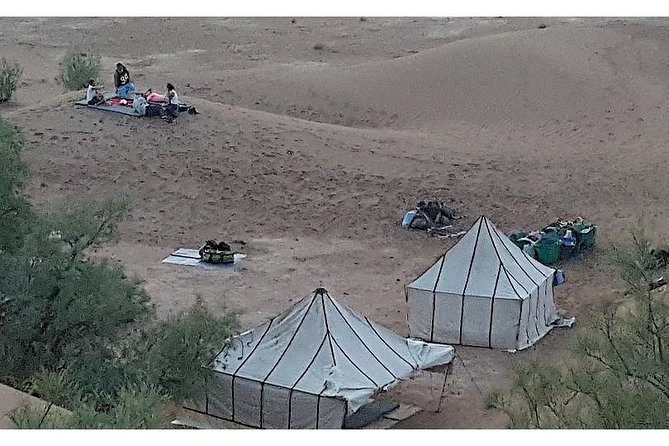
On Days 2–4 you’ll sleep in bivouac. That’s where the desert magic happens, but also where comfort is won or lost by the team setup. In the guest feedback, people highlight camp meals and the overall team vibe, including the way the crew keeps things running smoothly at night. That’s the difference between camp as a backdrop and camp as part of the experience.
If you’re someone who needs a clear routine, bivouac life helps. Walk, rest, eat, stargaze, sleep. Repeat. With fewer moving parts, you stop thinking so hard and start enjoying.
Erg Aït Ounir to Erg Ezzahar: long views, big skies, and real recovery
Day 5 takes you from Erg Ezzahar to the Sidi Naji dunes area. The walk time listed is again about 4h30, followed by another bivouac night.
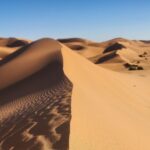
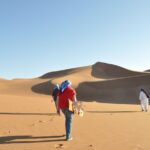
This is the part of the trek where the desert can start feeling repetitive—unless you pay attention to how it changes. Dune color shifts with light. Wind patterns alter the feel of the day. Even the way shadows stretch can make each session feel different. So I suggest you treat each walking block like a “watch, don’t rush” moment. Slow down mentally.
Also, this is where your recovery habits matter. You don’t need fancy gear tricks. Just the basics: drink when you’re supposed to, keep your clothing layered for temperature swings, and don’t try to “make up time” by walking faster than the group.
Because the itinerary has you walking similar hour ranges across consecutive days, the best strategy is consistent energy. If you go hard on one day, you’ll feel it later.
Sidi Naji dunes to Ouled Driss: the days that make stargazing feel personal
Day 6 brings another classic desert day: dunes around Sidi Naji and Ras N’Khal, then onward to Ouled Driss for your bivouac night. The walk time is listed at about 4 hours.
This is a good turning point. Day 6 is shorter than the 4h30 days, and you’ll feel it. Shorter walk time can sound small on paper, but in the desert it’s the difference between feeling drained and feeling ready for the evening.
What I think makes this day special is the camp payoff. The stargazing angle here isn’t generic. Multiple guest notes talk about starry skies and unforgettable night moments—so plan on a calm evening after dinner rather than thinking you’ll be up and active all night. If you want photos, go early enough in the evening light fade to avoid rushing.
And again, this isn’t only about “nature.” The team side matters: multiple comments mention guides and staff creating a good atmosphere, plus strong meal quality. When camp life is handled well, you stop worrying and start noticing.
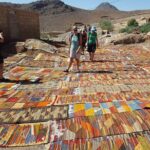
Day 7 Marrakech: switching from dunes to souks without adding extra travel days
Day 7 changes the whole mood. You move from Ouled Driss and the Ouarzazate area back to Marrakech, with a travel day listed around 8 hours. Your night is in a hotel or a riad with breakfast (they list night + breakfast).
This is one of the smartest design choices in the plan. You end the desert week with a payoff city day—narrow souks, lively streets, and a place where you can eat something hot and familiar-ish after days of desert meals.
I’d use Day 7 to do three things:
- Get comfortable fast: shower, reset your clothes situation, and eat like a person with a normal schedule again.
- Take one short walk through the souks rather than trying to “cover everything.”
- Plan one easy evening, because desert travel days can leave you tired even after a shower.
Also, the desert-to-city contrast is where the memories lock in. You’ll feel it the moment you’re back around people, lights, and bargaining energy.
Meals and bivouacs: what you’re actually buying besides the camel trek
This trip includes breakfast (6), lunch (6), and dinner (5). In practical terms, that’s a major part of the value. In the Sahara, you don’t want to spend your mental energy hunting food or figuring out where the next meal comes from. Having meals built into the schedule keeps you moving with less friction.
Guest comments also call out excellent meals and a strong team cook presence. One comment explicitly praises the chef and team setup, and others mention quality eating in the middle of the dunes. Even if every meal isn’t a food-Instagram moment, the consistency is the point. You’ll eat, you’ll rest, and you’ll keep going.
As for the bivouacs: you’re paying for the ability to sleep outside the normal routine. That’s where the solitude happens. And the group size helps here—bivouac time tends to feel more relaxed with fewer people.
Price and value: what $1,018.99 covers and how to judge it fairly
At $1,018.99 per person for about 8 days, this isn’t a “budget desert weekend.” So the question isn’t the sticker price. It’s what’s included and how much work you’re spared.
Here’s what you do get, based on the trip data:
- Pickup offered
- Hotel night in Ouarzazate with breakfast
- Multiple bivouac nights
- Lunch/dinner/breakfast built into the schedule
- A small group (max 15)
- Several full desert walking days supported by a team setup
- Return transfer on the final day to the airport area timing your departure
When you break it down, you’re paying for logistics and safety, not just the scenery. Camel trekking works only if the crew runs smoothly—camels, drivers, camp setup, cooking, and guidance. That’s why guest feedback repeatedly emphasizes professional team support and the guide’s attentiveness.
If you’re the type who hates uncertainty, this price starts to look more reasonable. The trip is basically buying you “someone else handles the hard parts.” If you prefer fully independent travel, you could build something similar yourself—but you’d also have to manage logistics, guides, and camp coordination.
Day-by-day distances you should plan for (so you don’t regret it later)
The plan lists walking durations that range from about 1h30 up to 4h30, with multiple days in the 4+ hour range. That’s the key physical reality here. Even though the overall rating says easy, the desert changes the meaning of easy. Sand, sun, and heat make every step feel longer.
My advice is to prepare with two mindsets:
- You don’t need to be a runner. You need endurance for steady walking.
- You need to pace. Fast walking burns you out early, and later days are when you’ll want your energy for camp and the city payoff.
If you’re unsure, aim for moderate cardio before you go and do a few longer walks. Not to “train for a race,” but to make sure your legs can handle repeated daily walking.
What to pack and how to handle desert heat without overthinking
You’re going to be exposed during the day and in a sleeping setup at night. The trip text calls out heat and starry skies, and that combination means you should plan for temperature swings.
Here’s a practical packing shortlist based on common desert trekking needs (and what your comfort will depend on):
- Sun protection: hat or cap, sunglasses
- Lightweight layers you can adjust
- A reusable water bottle
- A headlamp or small flashlight for camp evenings
- Comfortable walking shoes with decent grip
- A warm layer for nights (even if you don’t think it will be cold)
- Basic sun-safe sunscreen
Don’t wait until you’re on the ground to figure out your hydration rhythm. During the walking blocks, drink steadily rather than trying to “catch up” later.
Also, because the group size is small, you’ll likely feel more comfortable asking questions on the fly. Don’t. Bring what you need so you aren’t stuck borrowing items.
Who should book this trip, and who should skip it
This trip is ideal if you want:
- A real desert week with multiple bivouac nights
- Camel trekking that still lets you get up and walk
- A guided experience focused on safety and local knowledge
- The “disconnect” vibe, plus a Marrakech ending
It may not be ideal if:
- You expect mostly vehicle time with light walking
- You have difficulty with several days of 4+ hour walking
- You hate bivouac sleeping setups, even when the camp experience is well run
On the plus side, the operator states the trip suits travelers with moderate physical fitness and calls it easy overall, which lines up with the structured pacing. Still, desert days aren’t “sit around.” You’ll be walking most days.
Should you book The Secret of the Camel Trekking Desert?
If you want a desert trek where the planning is handled for you—meals, camp setup, camel logistics, and guidance—and you also want a city payoff afterward in Marrakech, I think this is a strong choice. The small group cap (15) and the hotel-to-bivouac rhythm make it feel focused rather than chaotic. And the repeated praise for the guide team and camp atmosphere suggests you won’t be left to figure things out alone.
My one caution: be honest about your comfort with daily walking. The itinerary includes multiple 4+ hour days. If that sounds doable now, it’ll feel rewarding later, especially when the starlight nights arrive and Marrakech looks like a dream.
If that sounds like your kind of trip, book it and prepare your legs and sun gear. Then just let the desert do what it does best.
FAQ
How long is the camel trekking desert trip?
It runs for about 8 days.
Where does the trip start and end?
It starts with arrival in Ouarzazate, and it ends with a transfer from Ouarzazate to the airport on the final day.
Is pickup offered?
Yes, pickup is offered.
What’s included in the meals?
Breakfast is included for 6 days, lunch for 6 days, and dinner for 5 days.
Where do we sleep during the trek?
You’ll have one hotel night in Ouarzazate (with breakfast), and the rest of the trek includes bivouac nights. On the Marrakech day, you stay in a hotel or riad with breakfast.
How physically demanding is it?
The trip is described as easy, with a note that travelers should have moderate physical fitness. Several days include hours of walking.
How many people are in the group?
The maximum group size is 15 travelers.
What happens if weather is poor?
This experience requires good weather. If it’s canceled due to poor weather, you’ll be offered a different date or a full refund.