REVIEW · KATHMANDU
Annapurna Base Camp Trekking
Book on Viator →Operated by himalayan sanctuary adventure private limited · Bookable on Viator
Himalayas, minus the stress. This private Annapurna Base Camp trek pairs world-famous views with smart planning: you get all meals included and a private guide who handles the moving parts so you can focus on the trail. You also get a real Kathmandu warm-up day with visits to major World Heritage sites, then it’s off to Pokhara and into the Annapurna region.
One watch-out: you do need moderate fitness. Some days include steady climbing and long walks, and altitude is part of the deal even if the route is paced for comfort.
In This Review
- Key highlights at a glance
- Entering the Himalayas through Kathmandu and UNESCO sites
- Price and logistics: what $899 actually buys you
- Day 1 to Day 2: airport pickup, hotel time, and your Kathmandu warm-up
- Day 3: the Pokhara transfer that sets your tempo
- Days 4 to 6: Ulleri, Ghorepani, and Poon Hill sunrise at 3,210 m
- Days 7 to 8: Tadapani to Chhomrong, then bamboo-cool Dovan
- Day 9 to Day 10: Deurali, Machhapuchhre Base Camp area, and the push to Annapurna Base Camp
- Day 11 to Day 12: the downhill work, Bamboo/Chhomrong retrace, and Jhinu hot spring
- Days 13 to Day 14: back to Pokhara, then Kathmandu
- Guides, porters, and food care: the part you feel every day
- Pace, fitness, and who this trek suits best
- Weather and the flexibility factor when conditions change
- Should you book this Annapurna Base Camp trek?
- FAQ
- Where does the tour start and how are you transferred to Kathmandu?
- How long is the Annapurna Base Camp trekking experience?
- Is this a private tour?
- What’s included during the trek meals and lodging?
- Do I need to arrange permits like TIMS and ACAP?
- How do you get from Kathmandu to Pokhara?
- What trek highlights are built into the route?
- Is there a hot spring stop?
- What sightseeing in Kathmandu is included?
- What is not included for meals, drinks, or sightseeing?
- What about cancellation?
Key highlights at a glance
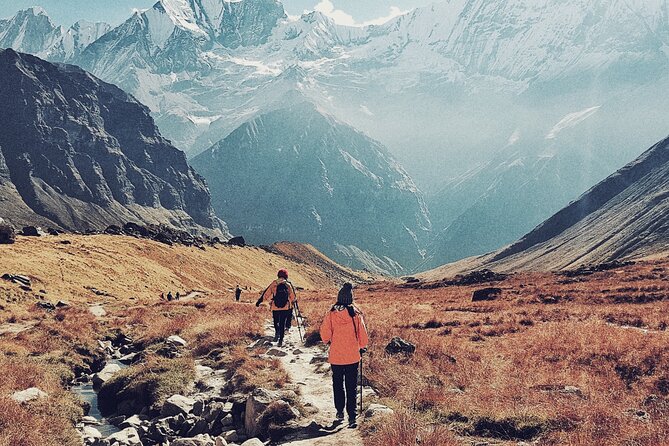
- Private guide attention: English-speaking support and help with day-by-day pacing
- Meals included on trek: teahouse breakfast, lunch, and dinner take the planning off your plate
- Kathmandu UNESCO day: Pasupatinath, Boudhanath, Patan Durbar Square, and Swayambhunath for big cultural hits
- Poon Hill sunrise option: early hike to 3,210 m for Himalayan sunrise views
- Permits handled: ACAP and TIMS paperwork and local taxes are included
- Porter support (2:1): porters carry your trekking luggage so you can hike lighter
Entering the Himalayas through Kathmandu and UNESCO sites
I like trips that build excitement before the first step. This one does. Day 1 has airport pickup from Tribhuvan and an overnight in Kathmandu, so you start relaxed instead of scrambling on arrival. Day 2 is a full Kathmandu valley sightseeing day focused on UNESCO World Heritage sites, and it helps you understand Nepal beyond the mountains.
You’ll visit Pashupatinath Temple (a major Shiva shrine), Boudhanath Stupa (huge, well-known, and sacred), Patan Durbar Square (palace-courtyard architecture and temples), and Swayambhunath—the Monkey Temple on a hill above the city. Even if you don’t call yourself a history person, these stops make the country feel real. They also serve a practical purpose: you get your bearings, practice the rhythm of Kathmandu traffic, and use day time to prep mentally before the quieter pace of trekking.
A good consideration here: entrance fees for sightseeing are not included. The sites you go to are major, and you’ll want to budget a bit for tickets while you’re in Kathmandu.
You can also read our reviews of more tours and experiences in Kathmandu.
Price and logistics: what $899 actually buys you
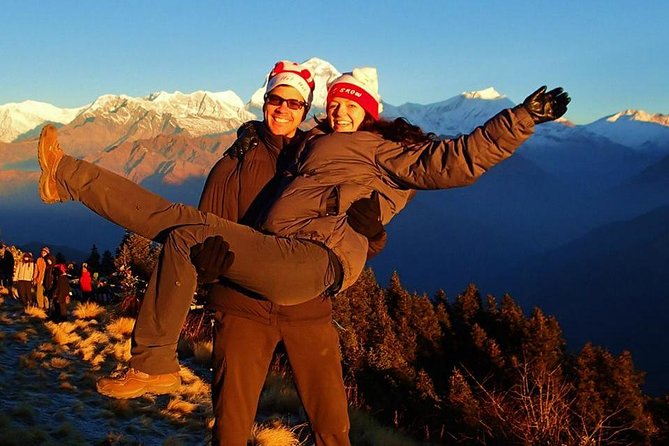
At $899 per person, the value comes less from any one thing and more from the way responsibilities are bundled. You’re not just paying for a guide and a route map—you’re buying a system.
Here’s what’s included:
- Airport pickup in Kathmandu
- 3-star hotel stays in Kathmandu and Pokhara (with breakfast)
- Teahouse accommodation during the trek, plus breakfast, lunch, and dinner
- Tourist coach/bus transport Kathmandu–Pokhara–Kathmandu
- An English-speaking trekking guide and porters (carrying luggage, with a 2 trekkers to 1 porter ratio)
- Permits and paperwork: ACAP and TIMS, plus government and local taxes
- Required paper work handled for you
What’s not included:
- Hot water, cold drinks (including cola/fanta/sprite), and bottled/mineral water
- Phone calls, laundry, beer and bar bills
- Entrance fees for sightseeing
- Lunch and dinner in Kathmandu and/or Pokhara
- Tips for guides and porters
- Anything outside the planned schedule like extra hotel nights due to late starts or early returns
My take: this price makes sense if you want a comfortable, guided trek with minimal decision fatigue. If you love controlling every detail yourself, you may feel boxed in. But if you want to hike and let other people handle permits, transport timing, and food logistics, this is structured like a smooth trip.
Day 1 to Day 2: airport pickup, hotel time, and your Kathmandu warm-up
Your arrival day is handled. A representative picks you up from Tribhuvan International Airport and transfers you to your hotel for an overnight stay in Kathmandu.
Then you get a full sightseeing day that doubles as trekking preparation. The key benefit is pacing: you’re not trying to do heavy walking on arrival day, and you’re not heading straight into long cultural days and long hikes back-to-back.
What I like about this setup is that it gives you a quick Nepal primer:
- Pasupatinath and its holy Bagmati River rituals
- Boudhanath’s scale as a Buddhist stupa and gathering point
- Patan’s palace complex feel and temple architecture
- Swayambhunath, perched above the valley with monkeys wandering around
One practical note: the tour says lunch and dinner in Kathmandu and/or Pokhara aren’t included. You’ll want to plan for some extra meals on those non-trek days.
Day 3: the Pokhara transfer that sets your tempo
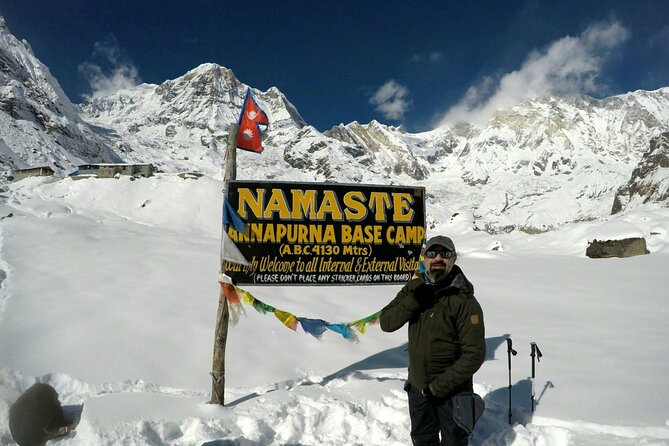
On Day 3, your trekking staff meets you around 6:30 am, escorts you to the tourist bus station, and you head toward Pokhara (departing around 7:00–7:30 am depending on the day’s timing). This part matters more than it sounds. A calm, early departure gets you to Pokhara with time to breathe before you start the trek.
Pokhara is also chosen for a reason: it’s generally calmer than Kathmandu and serves as a practical base for trekking into the Annapurna region. You’re there for views and a reset—not chaos.
Days 4 to 6: Ulleri, Ghorepani, and Poon Hill sunrise at 3,210 m
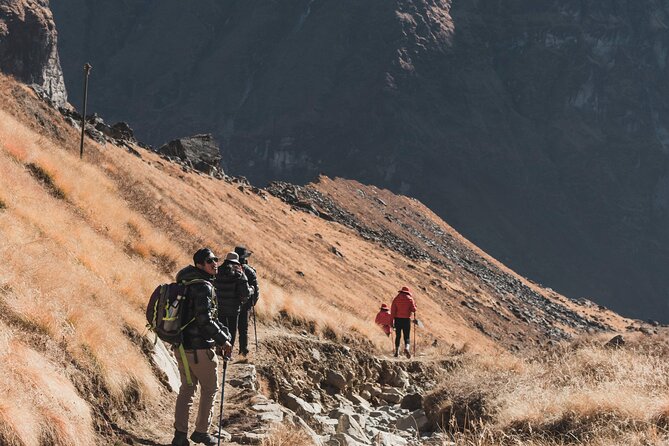
This is where the trip turns into a real hike.
Day 4 starts with a short drive from Pokhara to Nayapul. From there you walk about 15 minutes along the Modi Khola banks to Birethanti (1,015 m), a village packed with shops and teahouses. From Birethanti you follow the valley route and climb toward Hille and Tikhedhunga.
Day 5 pushes into bigger altitude gains, heading toward Ghorepani (around 2,840 m) through oak and rhododendron forests. Ulleri is a key marker on this day (around 2,070 m), and the walking is a mix of climb and forest trails.
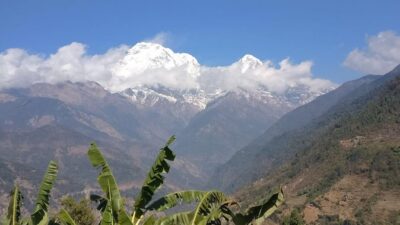
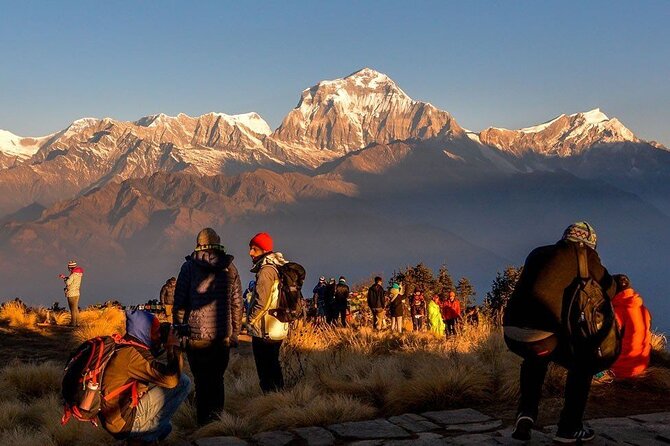
Then comes Day 6, and it’s a favorite for a reason: you start very early for the Poon Hill sunrise hike, reaching about 3,210 m. The payoff is unobstructed sunrise views over the Himalayan ranges, and you also get broad sightlines toward places like Mustang and Dhaulagiri ranges (the itinerary specifically calls out multiple major views from Poon Hill). After sunrise, you’ll have breakfast back around Ghorepani and then hike onward toward Tadapani (around 2,700 m) through rhododendron forests and waterfalls.
What I like here: this section gives you the classic Annapurna feel—forested trails, small villages, and a high lookout moment—without jumping straight into the steepest parts of the route on Day 4.
Possible drawback: Poon Hill means an early start. If you hate dawn alarms, you’ll feel it. If you like early mornings and quiet mountain air, it’s a highlight.
Days 7 to 8: Tadapani to Chhomrong, then bamboo-cool Dovan
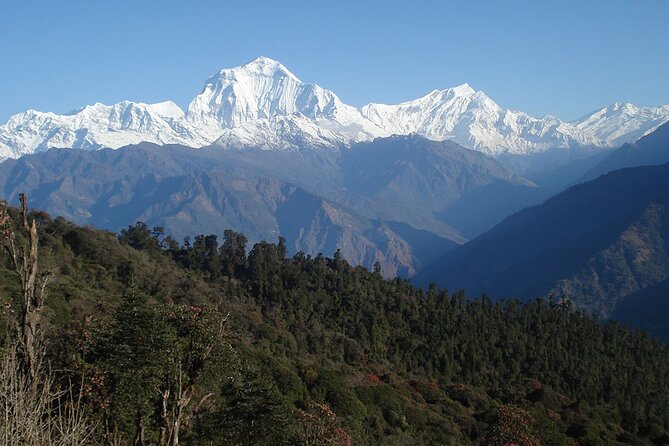
Day 7 brings you to Chhomrong (around 2,170 m). The trail begins with a steep descent through rhododendron forests. Then the route eases out into terraced fields and village walking, with a suspension bridge stop along the way. Chhomrong is positioned right below the giant Annapurna massif, so it feels dramatic—more “mountain stage” than “village stop.”
Day 8 shifts the vibe again. You move through a damp, cold bamboo forest and then start uphill again. Later, the forest opens up and the views expand, including glacial river scenery in the valley. Your day ends at Dovan, after a steep climb and passing places like Hinku Cave and the surrounding river valley.
This section is one of the most satisfying for me because it mixes walking styles: forest shade, wet-cool air, then sun and wider outlooks. And it keeps the days from feeling monotonous.
Day 9 to Day 10: Deurali, Machhapuchhre Base Camp area, and the push to Annapurna Base Camp
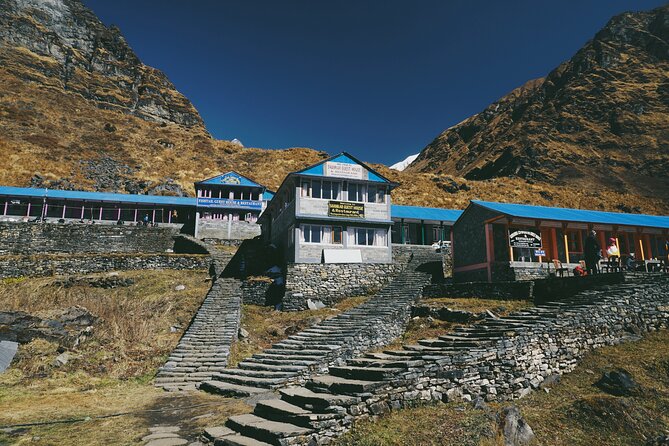
Day 9 continues on the trail with a steady climb through a valley route. The path sticks to rocky cliff edges at times and can feel steep. You’ll eventually reach the area around Machhapuchhre Base Camp (noted in the itinerary) as part of the route network toward Deurali.
Then Day 10 is the big one: trekking up to Annapurna Base Camp (roughly a 5–7 hour trek). The description focuses on rapid ascent to the base camp area. That’s not a gentle stroll day, even with a guide and porter support.
Altitude handling matters here. Your best tool is not gear—it’s pacing. If the pace feels fast, slow down early. Take breaks before you feel out of breath. Let your breathing settle and don’t force a big push just because your legs feel okay. Base camp rewards consistency.
Also remember: weather can affect what’s possible. One of the experiences shared in the trip history notes that weather conditions can limit how far you’re able to go. That’s not unique to this itinerary. It’s mountain trekking reality, and the best teams adjust plans to keep you safe.
Day 11 to Day 12: the downhill work, Bamboo/Chhomrong retrace, and Jhinu hot spring
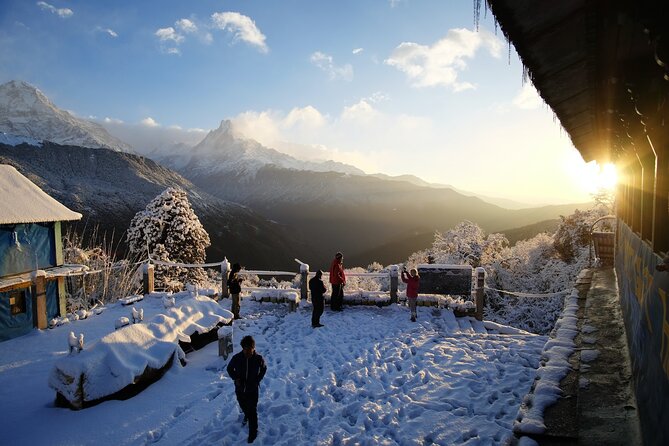
After reaching Annapurna Base Camp, the route turns downward, but don’t underestimate how tiring descent can be. Day 10 ends at base camp; Day 11 is described as trekking down to Bamboo (about 5–7 hours), passing back through key waypoints like the Machhapuchhre Base Camp area, Deurali, Himalayan Hotel, and Doban.
The itinerary then has Day 11 as continuing the retrace logic: back toward Chhomrong and onward to Bamboo for overnight. The route is repeatedly described as downhill, and that’s where your knees get the workout. If you’re using trekking poles, this is where they earn their keep.
Day 12 heads out from Bamboo/Jhinu area toward Jhinu Danda (about a 5 hour trek) and includes a hot springs visit. The idea is simple and satisfying: after hard walking, you soak. Jhinu Danda is a common trekking reward stop, and here it’s specifically part of the plan.
This is also where I’d judge the value of teahouse routing: you’re sleeping at established spots with meals included, so you can focus on hiking and recovery instead of searching out food.
Days 13 to Day 14: back to Pokhara, then Kathmandu
Day 13 has you trekking out to Nayapul and then driving back to Pokhara. Day 14 continues with the long ride back to Kathmandu after breakfast, using tourist transport that takes about 7–9 hours.
I appreciate this ending style. It’s not just a drop-off. You get at least one night back on the lower-elevation side so you can wash, rest, and reset before your final transfer.
As with Day 2, food in Kathmandu and/or Pokhara is listed as not included for lunch and dinner, so you’ll want to treat those last meals as your personal splurge money.
Guides, porters, and food care: the part you feel every day
The route is beautiful, but what makes it feel easy is support.
This tour includes an experienced English-speaking trekking guide, plus porters to carry luggage. The porter ratio is clearly stated as 2 trekkers for 1 porter, and their included coverage includes salary, insurance, equipment, flight, food, and lodging. That’s a big “invisible” value item: you’re not just getting manpower; you’re getting the logistics and cost coverage that let them show up ready.
From the trip experiences shared, one of the strongest themes is care and friendliness. Names that came up include Bishnu Bhatta and Vishnu, and there are also mentions of Prem dai as a friendly presence. What matters for you is the practical result: guides help you keep things comfortable, and that includes pacing and support on the trail.
Food is another quiet win here. Teahouses cover breakfast, lunch, and dinner during the trek, and one shared experience highlights that the team watched food so the traveler didn’t end up dealing with a stomach issue. I can’t promise how your body will react, but it’s a good sign that food is part of how the team runs the trek—not an afterthought.
Pace, fitness, and who this trek suits best
This trek is described as requiring moderate physical fitness. That’s the right phrase. It’s not a casual stroll, but it’s also not framed as a technical climbing expedition.
If you’re considering this, think in terms of your weekly walking routine:
- Can you walk 4–7 hours with breaks on hilly ground?
- Are you comfortable with early starts for sunrise and long travel days?
- Do you know you’ll take it slow when altitude rises?
You’ll also want to pack for changing conditions. The trek moves through rhododendron forest areas, bamboo-cool sections, and higher zones near base camp. Even when the sun comes out, the air can still feel sharp.
Weather and the flexibility factor when conditions change
Mountains don’t always cooperate. One shared experience notes they couldn’t trek further to base camp due to weather conditions. That’s not a dealbreaker, but it is a reason to choose a company that plans with safety and adjustment in mind.
In this itinerary style, the route has an internal logic—Kathmandu to Pokhara, then a classic Annapurna traversal—but if visibility or storms roll in, you may need to adjust. Having a guide and a team on the ground matters when that happens.
Should you book this Annapurna Base Camp trek?
Book it if you want:
- A private setup with an English-speaking guide handling the day-to-day logistics
- Meals and teahouse accommodations included during the trek
- Permits and paperwork taken care of (ACAP and TIMS)
- A classic route with big viewpoints like Poon Hill and Annapurna Base Camp
- Porter support so you hike lighter
Skip it or ask more questions if:
- You hate early mornings (Poon Hill sunrise means you’ll start before sunrise)
- You’re expecting fully included sightseeing fees and drinks (they’re not included)
- You’re unwilling to do long walking days at altitude, even at a moderate fitness level
If you want the Himalayas with fewer headaches, this one is built for that.
FAQ
Where does the tour start and how are you transferred to Kathmandu?
The tour starts in Kathmandu. On arrival day, a representative picks you up from Tribhuvan International Airport and transfers you to your hotel. The itinerary also lists a meeting point with a start time of 6:45 am.
How long is the Annapurna Base Camp trekking experience?
It’s approximately 14 days (listed as 14 days in the tour summary). The overview also refers to a 15-day experience.
Is this a private tour?
Yes. It’s described as a private tour/activity, and only your group participates.
What’s included during the trek meals and lodging?
During the trek, you stay in teahouses with breakfast, lunch, and dinner included, and the itinerary notes breakfast as included multiple times during the trip.
Do I need to arrange permits like TIMS and ACAP?
No. The tour includes all necessary paper work and permits, including ACAP and TIMS, plus government and local taxes.
How do you get from Kathmandu to Pokhara?
You take a tourist bus/coach from Kathmandu to Pokhara. The schedule shown for Day 3 says your staff escorts you to the bus station early morning, with departure around 7:00–7:30 am.
What trek highlights are built into the route?
The itinerary includes Poon Hill sunrise (at about 3,210 m) and trekking all the way to Annapurna Base Camp.
Is there a hot spring stop?
Yes. Day 12 includes Jhinu Danda Hot Spring as part of the route before an overnight there.
What sightseeing in Kathmandu is included?
The tour lists visits to Pasupatinath Temple, Boudhanath Stupa, Patan Darbar Square, and Swayambhunath.
What is not included for meals, drinks, or sightseeing?
Hot water and cold drinks are not included, as well as entrance fees for sightseeing. Lunch and dinner in Kathmandu and/or Pokhara are also not included.
What about cancellation?
Free cancellation is offered. You can cancel up to 24 hours in advance for a full refund, and changes made less than 24 hours before the experience start time aren’t accepted.