REVIEW · KANDY
Knuckles Spice Trail Trek from Kandy
Book on GetYourGuide →Operated by Nature Paradise Tours · Bookable on GetYourGuide
A waterfall swim is not a bonus here. On the Knuckles Spice Trail Trek from Kandy, you move through tea country, spice forests, and terrace rice fields, finishing with a village-style lunch. The whole day feels like a guided walk through how this region grows its food and flavors.
I love how your guide turns plants into something you can actually spot and name, from tea to spices and everyday herbs. I also love the mix of views and village contact: cloud-forest footpaths, then back to traditional gardens and rice terraces. One note: the route can get wet and muddy, so bring rain gear and expect a slower, careful footing if the weather turns.
In This Review
- Tea Rows to Spice Forests: What Makes This Trek Worth Your Time
- Key Highlights You’ll Remember
- A Morning Out of Kandy: Pickup, Transfer, and When the Trek Starts
- Tea Plantation Trails and Pine–Eucalyptus Shade
- Spice Forests, Wildlife, and the Cloud-Forest Feel
- Waterfall Crossing and the Natural Swimming Pool
- Terrace Rice Fields to Village Gardens: The View Shift That Feels Like Travel
- Picnic Lunch or Village Authentic Lunch: The Meal Is Part of the Experience
- Price and What You Get for Around $101 per Person
- Timing, Group Size, and Pace: Know What You’re Signing Up For
- What to Pack (Without Overpacking)
- Should You Book This Knuckles Spice Trail Trek?
- FAQ
- What time do you get picked up in Kandy?
- When does trekking start and end?
- How long is the trek, and how far do you walk?
- What kind of difficulty is the trek?
- What altitude range is involved?
- Is swimming included?
- What language is the guide?
- What’s included in the price?
- Is this tour suitable for everyone?
Tea Rows to Spice Forests: What Makes This Trek Worth Your Time
This is a hike built around variety. You get tea plantation trails, pine and eucalyptus shade, spice-forest paths, and the step-down feeling of moving from higher ground toward lower valleys. Along the way, the day is structured so you’re not just walking—you’re stopping often enough to notice birds, small animals, and butterflies, and to understand how people farm these slopes.
If you want a day where the scenery changes constantly, this delivers. But if you’re hoping for a flat, all-day stroll, you’ll want to match your expectations to the terrain: it’s classed as smooth medium grade and designed for hikers who can handle uneven paths for a few hours.
Key Highlights You’ll Remember
- Tea plantation walking with clear explanations of how tea plants are managed
- Cloud-forest feel in the Knuckles hills, with pine and eucalyptus along the route
- Waterfall crossing and a natural swimming pool you’ll actually use if conditions allow
- Magical terrace rice fields that make the downhill feel like a different world
- Traditional village time with vegetable and spice gardens, plus a local lunch
You can also read our reviews of more tours and experiences in Kandy.


A Morning Out of Kandy: Pickup, Transfer, and When the Trek Starts
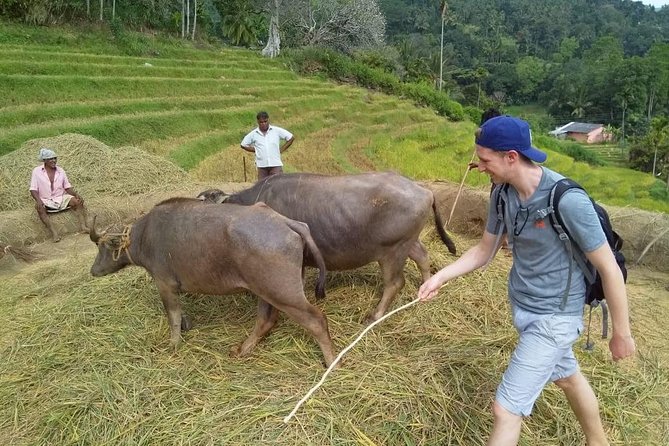
Your day starts early. You’re picked up in Kandy around 7:00–7:30 am, then you ride out toward the Knuckles area (about 1.30 hours from Kandy, one-way). Even though you’re leaving early, the trek itself typically begins later—around 9:30–10:00 am.
That gap matters. It gives your group time to settle in, meet your guide properly, and arrive before the busiest heat of the day. It also means you should treat this as a full-day outing, not just a morning hike, even though the trekking portion is 4–5 hours.
The trek ends back near Kandy around 2:30–3:00 pm, so you still have an afternoon to decompress instead of getting stuck on the road late.
Tea Plantation Trails and Pine–Eucalyptus Shade
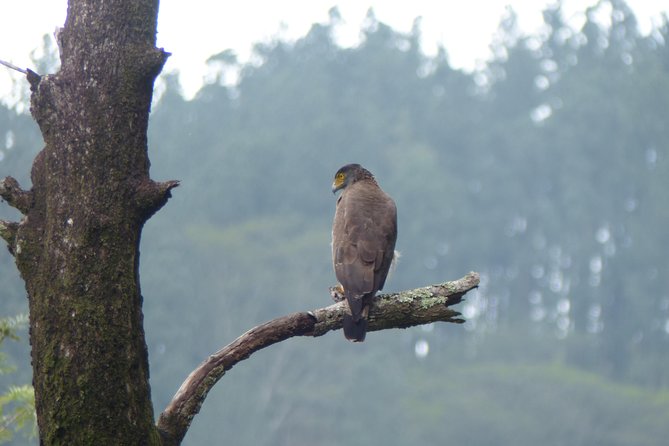
Tea in Sri Lanka isn’t a background here—it’s part of the main route. You’ll walk through tea state trails, where the plants sit in neat rows and the slope shaping the fields feels very practical. This is one of those hikes where you’ll look at leaves and then suddenly see them differently after your guide explains what you’re actually seeing and why it’s grown that way.
Along the trek you also move through pine and eucalyptus forest. The change is noticeable: the air feels cooler in shade, and the sound of birds (and sometimes wings) becomes a bigger part of the experience. It’s also the kind of section where you can slow down and pay attention, because the paths are meant to be walked, not rushed.
Based on what your guide shares in real time—how different plant parts are used, what’s harvested, and how gardens are maintained—you’ll likely come away with a better sense of how “tea country” really works on a hillside.
Spice Forests, Wildlife, and the Cloud-Forest Feel
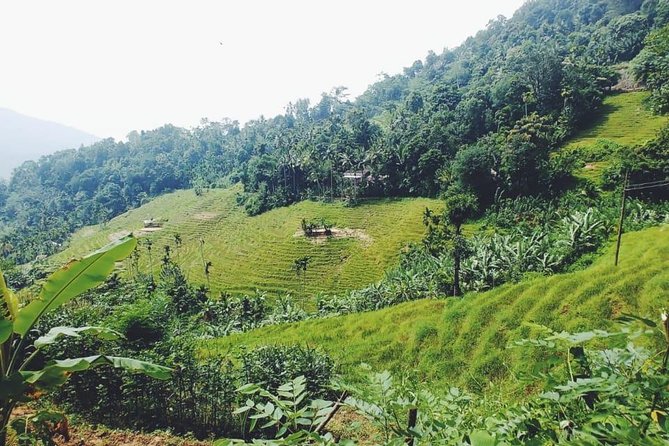
The best part of the Knuckles area is that it feels alive. As you walk, you’re not stuck inside one type of view. You’ll pass spice gardens and vegetable gardens, and you may also spot birds, small animals, and butterflies if your timing and weather are kind.
This is also where a guide matters most. Names are helpful, but what you really want is context—how people recognize plants, which ones have a use, and what work goes into keeping gardens productive on steep ground. Many people describe the guides on this route as especially strong at pointing out plants you’d otherwise walk past.
If you’re the type who likes to smell and look closely, you’ll probably enjoy the way the day builds from tea into spices and then back into everyday foods.
Waterfall Crossing and the Natural Swimming Pool
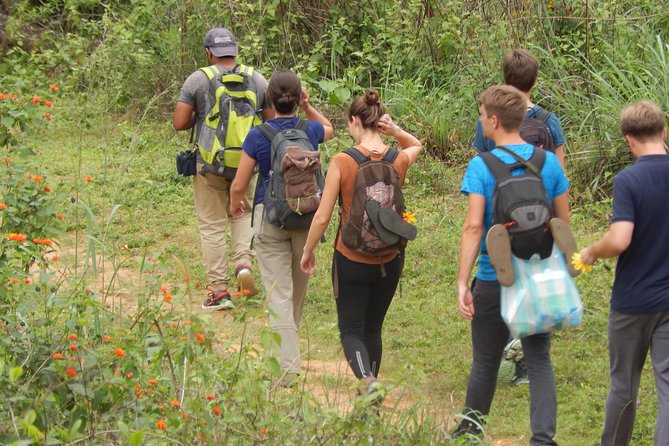
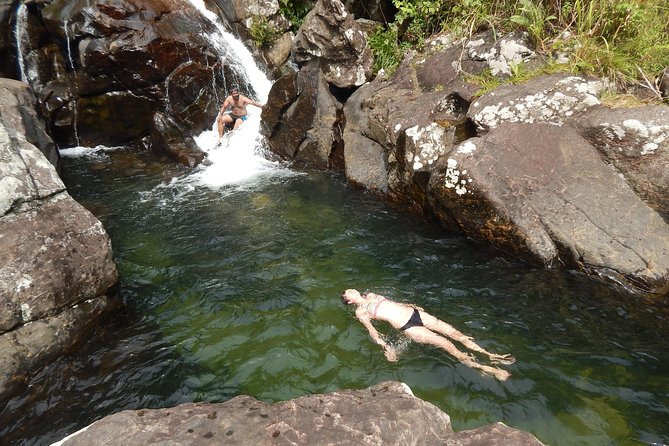
One of the most memorable parts is the waterfall crossing and the natural pool near the falls. This is where the hike turns from “walking and learning” into “doing something,” because you can swim.
A few practical points:
- Your swimwear is worth packing even if you think you won’t use it. When conditions are good, it’s genuinely refreshing after hours on trails.
- The water can be cold. It’s not a warm-pool situation, so consider whether you’re comfortable with that first shock.
- If it’s been raining, the ground can be slippery. One thing I’d plan for is that wetter conditions can also bring small, annoying surprises like leeches in muddy areas.
There’s also an extra little moment if you’re curious: you may find fish nibbling at your feet in the pool, which turns a simple swim into a quirky, quick memory.
Terrace Rice Fields to Village Gardens: The View Shift That Feels Like Travel
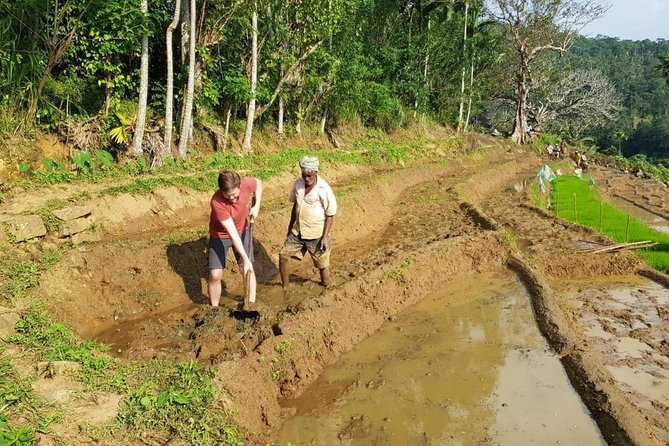
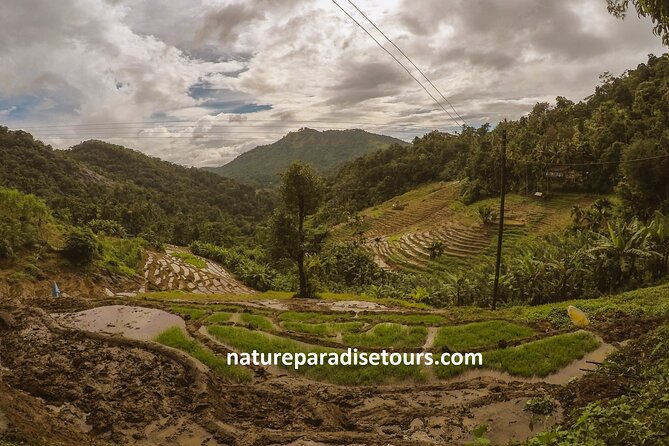
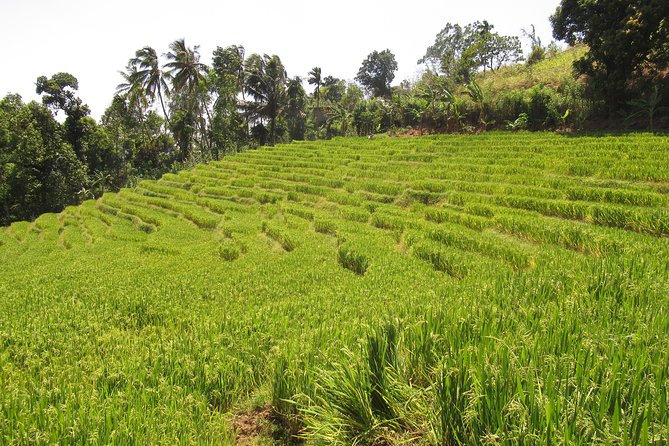
After the forest sections, you’ll walk through terrace rice fields. This part changes the mood fast. Instead of tall plants and forest shade, you get stepped greens and open sightlines that show how people shape rice-growing land across hills.
Then the trek transitions to traditional village life. You’ll move through the area where vegetable gardens and spice gardens grow side by side. This is where the day feels most human: you can meet village people and learn about village culture, not just look at it from the trail.
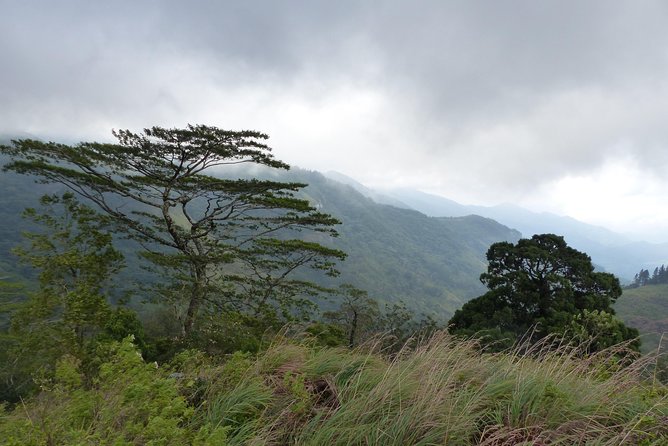
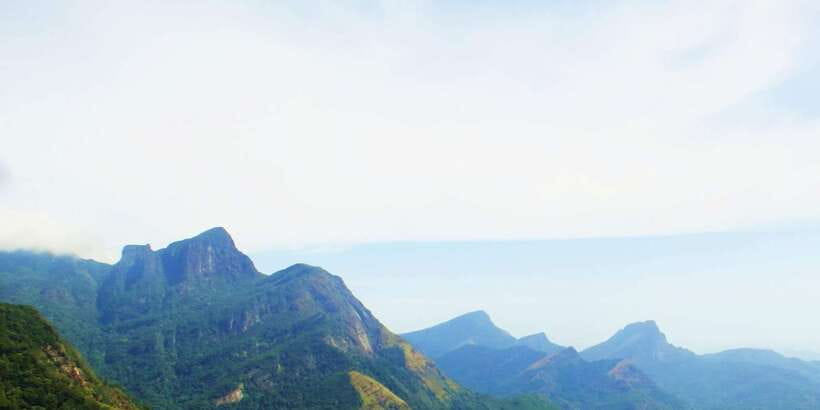
The views here can include a cloud forest feel—often misty at higher spots. Even when the top is hazy, it usually adds texture to the day rather than ruining it.
Picnic Lunch or Village Authentic Lunch: The Meal Is Part of the Experience
You’ll stop for food that’s not designed for tourists sitting in a hurry. Your tour includes a picnic lunch or a village authentic lunch, and the best value here is that it fits the setting. You’re not eating far from the walk—you’re eating because you’re part of the walk.
Expect water and snacks during the trek, then a proper meal at the end of the hiking day. One common detail people love is that the food is fresh and cooked locally, and it often includes rice and curry style dishes. If you’re vegetarian, you should still tell your guide in advance—some meals can be adapted—but your best move is to communicate dietary needs clearly before you start.
If you’re imagining a bland “tour lunch,” adjust that expectation. This is set up to be a genuine village meal.
Price and What You Get for Around $101 per Person
At $101 per person, this trek sits in the midrange. The key question is: what portion of the day is actually guided and included? Here’s what’s covered:
- Specialized guide (English)
- Transport
- Entrance ticket
- Lunch (picnic or village authentic)
- Water and snacks
- Passenger insurance
- Precautions guidance
For me, the value is strongest when you treat the guide as part of the ticket. You’re not just paying for movement—you’re paying for interpretation: plants, spices, tea work, and how gardens operate in real conditions. If you’ve ever done a “walk-only” tour, this feels different because the stops come with explanation and context.
The trek time is 4–5 hours, but your whole day comes to about 8 hours including transfer and the schedule between pickup and start. That full-day structure is normal here, just plan your next plans accordingly.
Timing, Group Size, and Pace: Know What You’re Signing Up For
This is listed as a private group, and the pace is described as a smooth medium grade trek. That usually translates to steady walking on uneven ground, not a gentle path suitable for everyone who wants minimal effort.
The distance is about 10–15 km, and the altitude range is roughly 1000 to 500 meters. That’s a meaningful change, and you’ll feel it—especially in the morning when you’re warming up and in the later sections when you’re tired but still moving.
Your guide sets the tempo, and your job is simple:
- wear proper trekking shoes
- keep a small backpack
- use sunscreen
- add rain gear quickly when weather shifts
And yes, you should bring swimwear if you want the pool option, plus a dry layer for afterward.
What to Pack (Without Overpacking)
The tour gives a clear packing direction, and you’ll be glad you followed it. Bring:
- Trekking shoes
- Rain jackets
- Swimwear
- Small back pack
- Sun cream
- Comfortable clothes
I’d add one small practical habit: pack a dry bag or plastic bag for your phone and anything you don’t want soaked. Rain happens in this region, and wet shoes can turn a fun day into a cold one if you don’t plan.
Also, expect the day to be warm at lower elevations and cooler when shade or mist rolls in. Dressing in layers is usually the smartest play.
Should You Book This Knuckles Spice Trail Trek?
If you want a day that mixes tea, spices, terrace rice, village culture, and a real waterfall swim, this is a strong match. It’s especially worth booking if you like nature walks where the guide helps you connect what you see with how people use plants in daily life. Guides like Lakmal and Ashoke are known for being friendly and for explaining plants and work in a way that makes the whole route feel purposeful.
I’d skip it if:
- you need wheelchair access (the route isn’t designed for that)
- you travel with very small babies (not suitable under 1 year)
- you’re 95+ or have mobility limitations that don’t handle uneven paths
If you’re unsure about weather, you can still feel confident about flexibility because the experience offers free cancellation up to 24 hours in advance and reserve & pay later options.
FAQ
What time do you get picked up in Kandy?
Pickup is typically 7:00 am to 7:30 am from your hotel in Kandy.
When does trekking start and end?
Trekking starts around 9:30 am to 10:00 am and ends around 2:30 pm to 3:00 pm.
How long is the trek, and how far do you walk?
The trekking portion lasts about 4 to 5 hours, with a distance of roughly 10 to 15 km.
What kind of difficulty is the trek?
It’s described as a smooth medium grade trek. Expect uneven trail walking rather than a flat route.
What altitude range is involved?
The trek ranges from about 1000 to 500 meters altitude.
Is swimming included?
You can swim in a natural pool by the waterfall, and the tour includes guidance about bringing swimwear.
What language is the guide?
The live tour guide speaks English.
What’s included in the price?
Included are a specialized guide, transport, entrance ticket, picnic lunch or village authentic lunch, water and snacks, precautions, and passenger insurance.
Is this tour suitable for everyone?
It is not suitable for wheelchair users, babies under 1 year, or people over 95 years.