REVIEW · KATHMANDU
Manaslu Circuit Trek (15 Days)
Book on Viator →Operated by Sole Encounters Adventures · Bookable on Viator
Manaslu feels like Nepal’s quieter big sibling. This 15-day trek takes you into remote high country with Tibetan-influenced villages, dramatic mountain views, and a calmer feel than the Everest/Annapurna main routes. I like that the trip is set up for real-world trekking: clear pre-trek steps, a careful pace, and safety planning you can actually understand.
I also really like the human setup. You get a government-licensed first-aid trained guide, plus a porter team at a 2 trekkers to 1 porter ratio and an assistant guide for added support (one per 5 trekkers). One possible drawback to weigh: the program lists that meals during the trek aren’t included, so you’ll budget for daily food and plan around teahouse basics.
In This Review
- Key points before you go
- Manaslu Circuit: why this route feels different from the big-name treks
- Price and value: what $1,657.50 actually buys you
- Before Day 1: permits, passport originals, and the paperwork you can’t skip
- Kathmandu start: Thamel base, airport transfer, and a day of waiting for permits
- Getting to the trail: Machha Khola to Jagat and Deng (Day 3–5)
- Namrung, Lihi, and Shyala/Samagaon: the mid-elevation culture days (Day 6–9)
- Samdo to Dharamsala: acclimatization without rushing (Day 10–11)
- Dharamsala to Bimthang and the Larke Pass approach: the hardest day logic (Day 12)
- Downhill relief: Bimthang to Dharapani and back to Kathmandu (Day 13–15)
- Teahouses, water, and charges: what comfort really means here
- Safety and the support team you’ll feel on tough days
- Who should book this, and who should think twice?
- Should you book this Manaslu Circuit Trek?
- FAQ
- How long is the Manaslu Circuit Trek?
- Where does the tour start and end?
- Does the price include permits?
- What transportation is included?
- Are meals during the trek included?
- Do I need travel insurance?
- What about drinking water?
- How much support do I get on the trail?
- What’s the maximum group size?
Key points before you go
- Permits handled start to finish: Manaslu Conservation Area, Annapurna Conservation Area, and a Special Restricted Area permit are covered.
- Support team is built-in, not optional: first-aid trained guide, assistant guide, and porters to carry your overnight bag.
- A practical acclimatization rhythm: short, crucial hikes before the harder day when you’re headed toward the Larke Pass area.
- Teahouses, not hotel-style comfort: expect simple rooms and pay attention to water, charging, and warm layers.
- Small group size: the maximum is 15 travelers, which keeps the experience more manageable.
- Guides have real reputations: in prior feedback, people singled out strong pre-arrival communication and on-trail care from team members like Prashant, Prem, Ishwor Rai, Raj Rai, Tshering, and Pemba Sherpa.
Manaslu Circuit: why this route feels different from the big-name treks
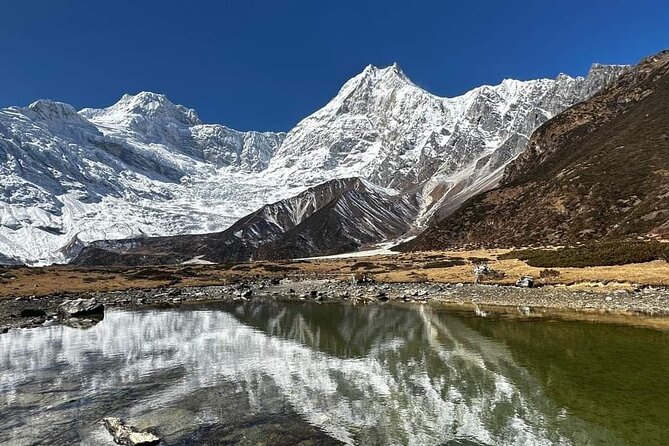
If you want the Nepal Himalaya feeling without the nonstop crowds, the Manaslu Circuit is a smart target. The route leans into remoteness: you spend time moving through smaller villages, crossing alpine terrain, and returning to a landscape of monastery stops and yak country rather than just following the busiest viewpoints.
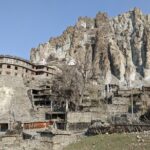
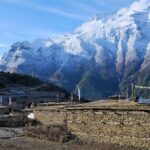
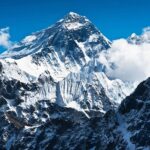
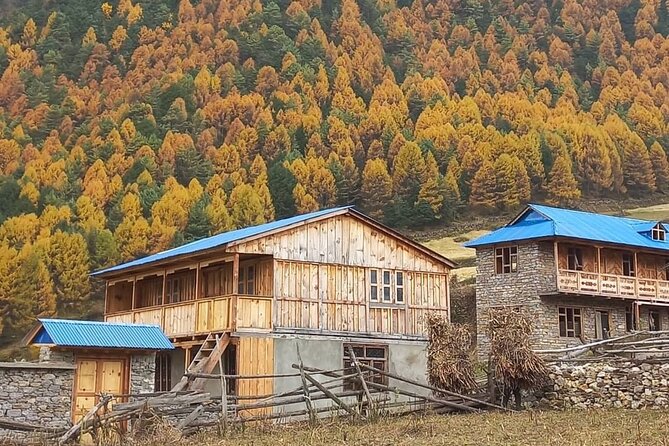
What makes it especially appealing is the mix of cultures. As you climb, the villages you pass start showing Tibetan influence—things like mani walls and the look of stone houses you’ll notice along the mid-elevation days. Then, near the high villages (Shyala and Samagaon), the mountain scenery becomes the main event, with peaks like Manaslu, Himalchuli, Peak 29, and Ngadi Chuli called out along the way to Shyala.
One more reason I’d pick this over “main route” trekking: the walking has a real structure. You’re not just grinding day after day; there’s a built-in logic to the climb, the acclimatization, and the big push that follows later.
You can also read our reviews of more tours and experiences in Kathmandu.
Price and value: what $1,657.50 actually buys you
At $1,657.50 per person for about 15 days, you’re paying for more than a guide and a map. This package includes the items that usually add up fast on trek tours:
- Kathmandu lodging: a 3-star hotel in Thamel with breakfast.
- Trek lodging: standard teahouse accommodation during the trek.
- Transportation: airport arrival/departure transfers, plus private transport from Kathmandu to Machha Khola and from Besisahar back to Kathmandu.
- Permits and conservation fees: Manaslu Conservation Area Permit, Annapurna Conservation Area Permit, and the Special Restricted Area permit.
- Crew support: licensed, first-aid trained trek guide, porters (2 trekkers : 1 porter), and an assistant guide per 5 trekkers.
- Insurance for the trek crew: coverage for guides and porters.
What’s not included matters just as much, because it affects your day-to-day budget. The big one: meals during the trek are not included. So while teahouses are part of the plan, your breakfast/lunch/dinner during the walking days are something you’ll pay for separately. Also, drinking water isn’t included, and you’ll want a filter or purification tablets (the trip recommends bringing them).
When you look at it this way, the cost starts to make more sense. You’re paying for permits, logistics, and staffing—then you pay for food and personal choices along the trail.
Before Day 1: permits, passport originals, and the paperwork you can’t skip
This trek is permit-heavy, and the company handles the process by collecting your physical passport and two passport-sized photos during the Kathmandu preparation day(s). The reason you should care: Nepal’s immigration requirements are strict about originals for permit issuance. If you show up with digital copies only, you’re stuck.
I also like that they set expectations early around fitness and readiness. The trip specifically calls for moderate physical fitness, and the walking plan includes long hiking days and a demanding section during the pass approach period.
Practical tip: start thinking about your documents before you leave home. Keep a clear list of what you’ll need (passport, photos, and any required travel insurance proof). Even a smooth operation still depends on you having the basics ready when they ask for them.
Kathmandu start: Thamel base, airport transfer, and a day of waiting for permits
Your first day begins with arrival. After landing at Tribhuvan International Airport, the team greets you with a Namaste and transfers you to your Kathmandu hotel in Thamel.
Then comes a day you shouldn’t treat as “free time.” Day 2 is for trek preparation and waiting for your Manaslu permits to be officially issued. The program notes that your representative collects your passport and photos on that day for the permit process. It’s a small detail, but it changes your planning: don’t plan a long travel day of your own activities that could conflict with document handling.
What I like here is that this is built into the schedule rather than dumped on you late. That reduces stress when you should be saving energy for the first trek drive.
Getting to the trail: Machha Khola to Jagat and Deng (Day 3–5)
The first real “Nepal trek” feeling often hits during the drive. Day 3 is the long, scenic road transfer from Kathmandu to Machha Khola. Expect to be in a vehicle for a while as you move from capital life toward foothill trekking country. Then your body begins its rhythm: breakfast, pack check, and early bedtime so you’re ready for distance the next day.
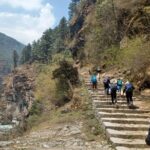
Day 4 follows the Budi Gandaki River along narrow, rocky trails. Two named stops stand out:
- Tatopani hot springs near the riverbank. The plan says you won’t stop to soak during the trek, which keeps the day on time.
- Dobhan, near the confluence of Shiar Khola and Budi Gandaki, where the river scenery turns dramatic.
You end Day 4 in Jagat. The hike is described as about 15 km, taking 6–7 hours, with roughly 600m of ascent and 250m of descent. That “descent” matters: your legs get a workout early on, and you’ll feel it more than you expect.
Day 5 is longer, with a climb that’s more serious. The trek to Deng is around 18 km and 7–8 hours, with about 1,050m ascent, 400m descent, and 500m flat trail. You’ll pass through the large Gurung village of Phili after Salleri. If you’re the type who gets distracted by scenery, this is a good day for that—because the walking is steady enough to enjoy the villages and river sounds without feeling like you’re constantly white-knuckling the trail.
Possible consideration: early days are about building consistency. If you treat Day 5 like a casual walk, you’ll feel it later.
Namrung, Lihi, and Shyala/Samagaon: the mid-elevation culture days (Day 6–9)
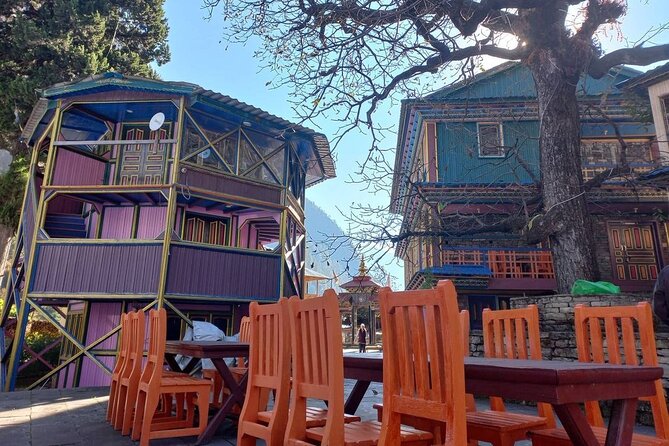
Day 6 climbs after Deng through mixed pine and rhododendron forest, passing smaller settlements like Bihi and Rana. The trip highlights Tibetan-influenced stone houses and carved details you may notice along the way. Then you reach Namrung after a trek of about 19 km over 7–8 hours, including roughly 1,100m ascent and 150m descent through winding forest trails.
Day 7 is a shorter-feeling cultural rise. You trek to Lihi, with a climb of about 700m and descent around 100m. The route includes terraced fields, forested switchbacks, and yak pastures. This day is a nice break from the longest distance days because it’s focused more on elevation gain and village rhythm.
Day 8 is a high point—literally and visually. You hike toward Shyala, a high-altitude village described as surrounded by big peaks, including Manaslu and others. The trail continues through pine and rhododendron forest, passing mani walls, then descends and climbs gently toward Samagaon. The total distance is listed around 17 km with about 500m ascent. The goal here isn’t speed; it’s giving you a reason to slow down and enjoy the altitude shift.
Day 9 gives you a monastery day. You can do a 3–4 hour roundtrip to Pungyen Gompa, described as perched on a ridgeline with sweeping views of Mt. Manaslu and surrounding peaks. The hike starts with a gradual forest ascent before it gets steeper. After that, you stay the night back in Samagaon, described as the largest village in the Nubri Valley.
If you want a trek that mixes “walk days” with “wow days,” these mid-section days are where Manaslu pays back.
Samdo to Dharamsala: acclimatization without rushing (Day 10–11)
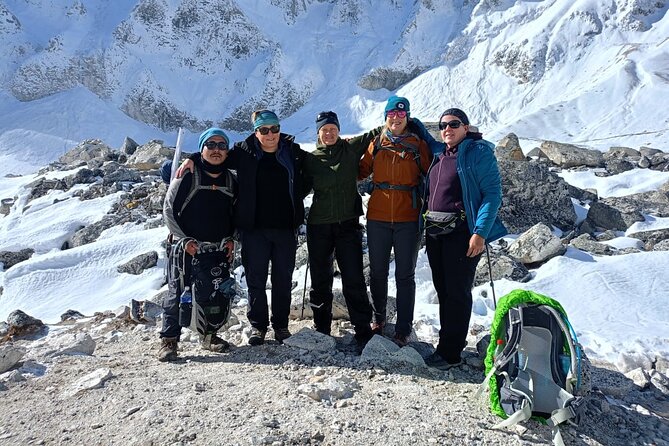
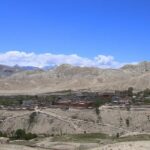
Day 10 shifts from higher village life toward alpine transition. The route begins with a gentle descent to a wooden bridge over the Budhi Gandaki River, then climbs steadily past dry yak pastures and mani walls that signal the move into higher Himalayan terrain. You arrive at Samdo.
Day 11 is labeled a short but crucial acclimatization hike from Samdo to Dharamsala. The key detail is the terrain: rocky alpine ground with sparse vegetation and broad views. This is where you should keep your effort controlled. If you go too hard, you’ll pay for it when the real demanding day arrives.
I like that the program makes this acclimatization step explicit. It doesn’t treat the harder sections like a surprise; it gives you a setup day for how your body should feel.
Dharamsala to Bimthang and the Larke Pass approach: the hardest day logic (Day 12)
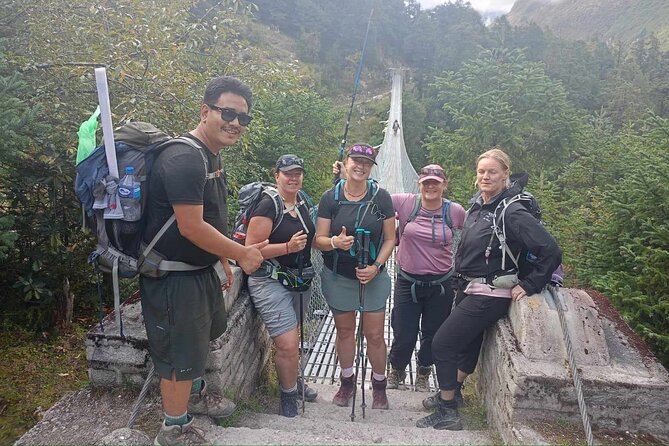
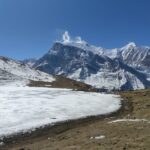
Day 12 is described as the most demanding and rewarding day. You start before dawn from Dharamsala and hike steadily uphill over rocky moraine and glacier-draped terrain. That combination tends to feel physically tough and mentally long.
The most practical advice here: treat this as a pacing test, not a fitness brag. Start slower than you think you need to. If your breathing feels out of sync, that’s the sign to reduce pace early. High terrain makes small mistakes add up.
Also, this is where the earlier acclimatization days matter. The day-to-day pattern—villages, monastery, short acclimatization hike—exists to help you handle this push. You’ll appreciate that structure once you’re on that rocky ground.
Downhill relief: Bimthang to Dharapani and back to Kathmandu (Day 13–15)
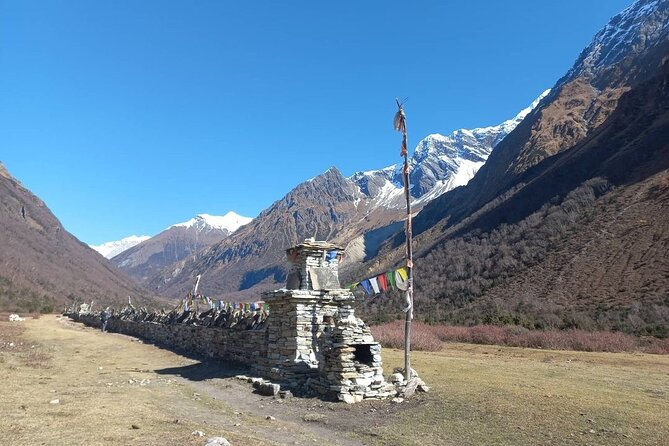
Day 13 starts your descent into more forested territory. You go from Bimthang to Dharapani, transitioning from alpine scrub into dense pine, rhododendron, and oak forests. The route passes Yak Kharka, a seasonal grazing area where herders bring livestock. It’s a reminder that this is not a one-season trail; people live and work in these patterns.
Day 14 is travel back toward civilization. After breakfast, you take a shared jeep from Dharapani to Besisahar, then continue the scenic (and bumpy) drive along the Marsyangdi River. The route passes Tal village and waterfalls along the way. It’s not “comfort travel,” but it does let you watch how Nepal’s rivers shape daily life.
Day 15 returns you to Kathmandu and back to the meeting point. If your flight timing allows, Thamel is an easy place to kill a few hours—souvenir shopping, a café, and the normal rhythm of a city after days of trekking.
Teahouses, water, and charges: what comfort really means here
This program uses standard teahouses during the trek. That’s great for cultural simplicity and access, but it means you should expect:
- basic rooms (not a uniform standard like hotels)
- variable warmth depending on season and altitude
- and extra costs for creature comforts
The package explicitly notes that hot showers, battery charging, and Wi‑Fi are available for an extra fee at most teahouses. So if you care about phone power for photos or navigation apps, plan to limit usage and buy charging when it makes sense.
Water is another big one. Drinking water isn’t included, and you’re recommended to bring a filter bottle or purification tablets. Don’t treat this as a suggestion you can ignore; it affects both your health and your trekking confidence.
Safety and the support team you’ll feel on tough days
Manaslu is not an Everest-style circus, but it’s still high altitude trekking with a demanding route profile. The trip’s safety emphasis shows up in the staffing:
- a government-licensed trek guide who’s first-aid trained
- assistant guide support (1 per 5 trekkers)
- porters to carry your overnight bag at a 2 trekkers to 1 porter ratio
- insurance coverage for the trekking crew (guides, assistants, porters)
Prior feedback also highlighted communication and care from team members like Prashant and Prem (pre-arrival information support) and guides such as Ishwor Rai, Raj Rai, Tshering, and Pemba Sherpa. That lines up with what you want to hear: people who pay attention before and during the climb.
One more practical note from the data: the travel insurance requirement is not vague. It should cover accidental, medical, and helicopter evacuation up to 5200 meters in altitude. If your current policy doesn’t, you’ll need to adjust before you go.
Who should book this, and who should think twice?
This trek fits best if you:
- have moderate physical fitness
- want fewer crowds than the classic big-name routes
- enjoy village culture, monastery sights, and long-distance days with a planned rhythm
You might want to think twice if:
- you hate the idea of paying extra for trek-day meals, charging, or hot showers
- you’re not prepared for cold nights and basic teahouse comfort
- you’re uncomfortable with the permit paperwork step requiring your original passport
Because the group max is 15, this is also a better size if you like small-group organization without feeling isolated.
Should you book this Manaslu Circuit Trek?
If you’re choosing between “adventure trekking” and “tour-bus trekking,” this one leans toward the real thing. You get clear support, a licensed guide, and permits handled, and the route design includes acclimatization steps instead of pretending the pass approach is easy.
I’d say book it if you want:
- the quiet remote feel and Tibetan-influenced village culture
- a team that’s known for pre-arrival communication and on-trail safety focus
- a small group set up that keeps logistics manageable
Before you hit confirm, double-check your budget for trek meals and charging, and make sure your travel insurance covers helicopter evacuation up to the stated altitude. Do that, and you’re set up for a serious, satisfying Himalayan trek that stays grounded in everyday mountain life.
FAQ
How long is the Manaslu Circuit Trek?
The trek is listed as 15 days (approx.).
Where does the tour start and end?
It starts in Thamel, Kathmandu 44600, Nepal, and ends back at the same meeting point.
Does the price include permits?
Yes. The package includes entrance fees for the Manaslu Conservation Area Permit, Annapurna Conservation Area Permit, and Special Restricted Area Permit.
What transportation is included?
You get private transportation for airport arrival/departure, the drive from Kathmandu to Machha Khola, and the drop from Besisahar to Kathmandu, plus a shared jeep from Dharapani to Besisahar.
Are meals during the trek included?
No. Meals during the trek are not included. In Kathmandu, the package includes hotel breakfast plus a welcome dinner and farewell dinner.
Do I need travel insurance?
Yes. Travel insurance is not included and must cover accidental, medical, and helicopter evacuation up to 5200 meters.
What about drinking water?
Drinking water is not included. The trip recommends bringing a filter bottle or purification tablets.
How much support do I get on the trail?
The trek includes a government-licensed, first-aid trained guide, plus porters at a 2 trekkers to 1 porter ratio for your overnight bag. There is also 1 assistant guide per 5 trekkers.
What’s the maximum group size?
The tour has a maximum of 15 travelers.