REVIEW · KATHMANDU
Ghorepani Ghandruk Trek ( Poon Hill circuit, Annapurna sunrise view trek)
Book on Viator →Operated by Nepal Trekking Routes Pvt. Ltd · Bookable on Viator
Morning light over the Annapurnas is addictive. This trek strings together the best-of region hits: UNESCO Kathmandu sights, a forested approach from Nayapul, and the big payoff at Poon Hill with Annapurna sunrise views.
I especially love how the trail balances rhododendron-and-oak forests with real village life, not just scenery. You’ll also get a well-supported small-group feel, with a local guide and a route that’s tough enough to feel like a trek, but manageable for most people. One consideration: you’ll do early starts for sunrise and you’ll climb thousands of stone steps along the way.
In This Review
- Key things I’d circle before you go
- Kathmandu Valley warm-up: temples first, mountains second
- Getting to Pokhara: highway views or a faster flight
- From Nayapul to Ulleri: the start of real uphill work
- Ghorepani: forest hiking plus the best kind of village night
- Poon Hill sunrise: the climb is short, the moment is not
- Tadapani to Chhomrong to Jhinu Danda: views, villages, and a soak
- Ghandruk-style circuit days: Landruk, Tolka, and the Modi River route back
- Back to Pokhara and onward to Kathmandu
- Price and value: what $590 buys you (and what it doesn’t)
- Guide quality and small group size: why it matters on a short circuit
- What you should pack for this trek
- Who should book this Ghorepani Ghandruk trek
- Should you book this Ghorepani Ghandruk trek?
- FAQ
- How long is the Ghorepani Ghandruk Trek?
- Where does the trek start and where do you meet the group?
- What is the price per person?
- Do you provide pickup or transfers?
- What’s included in the tour cost?
- Is vegetarian food available?
- What’s the group size?
- Is free cancellation available?
- Can I take alcohol or drinks?
Key things I’d circle before you go
- Poon Hill sunrise timing: A very early morning hike (about an hour from Ghorepani) for first light over major peaks.
- Ghandruk and Gurung culture: Villages tied to Gurkhas and Gurung traditions, with village views and daily life you can actually see.
- ACAP forest hiking: Lush oak and rhododendron trails, including the region’s unusually big rhododendron forest.
- Hot spring option at Jhinu Danda: A natural soak to reset after trekking days.
- Kathmandu Valley UNESCO day: Temple and stupa hopping that gives context before you hit the mountains.
- Small group size: Max 10 travelers, with a local guide and private-style attention.
Kathmandu Valley warm-up: temples first, mountains second
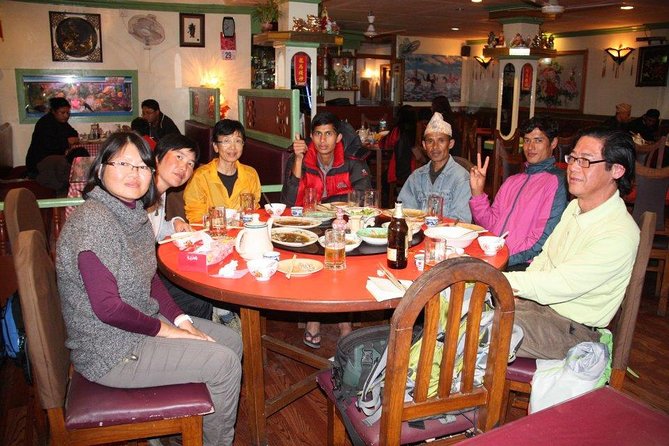
Your trip starts in Kathmandu with a real taste of Nepali culture before you lace up trekking boots. After pickup and settling into your hotel, there’s a welcome dinner at a Nepali restaurant. It’s a nice way to break the travel day and get your appetite back.
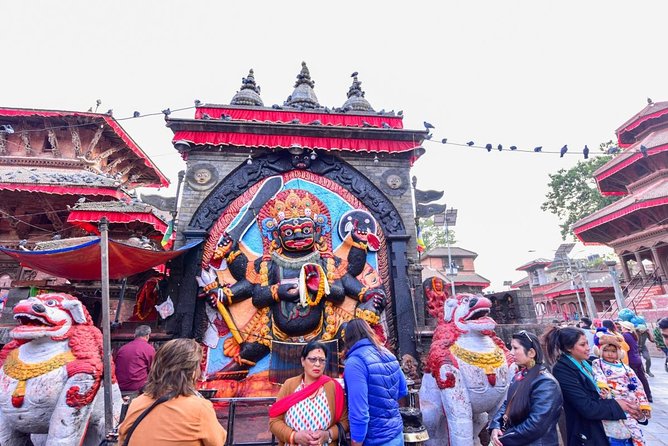
Then comes a full day in the Kathmandu Valley UNESCO zone. You’ll visit Pashupatinath Temple, Bouddhanath Stupa, Swayambhunath (Monkey Temple), and Patan Durbar Square. Here’s why this matters: Annapurna treks are more than hiking. When you understand the spiritual and cultural landscape of Nepal—even briefly—you start noticing the way temples, prayer flags, and village traditions show up again along the trail.
Practical note: this is a sight day, not a recovery day. Wear shoes that can handle uneven stone, and keep your camera ready for quick angles—stupas and temple courtyards are best when you’re moving.
You can also read our reviews of more tours and experiences in Kathmandu.

Getting to Pokhara: highway views or a faster flight
To reach the trekking base area, you go from Kathmandu to Pokhara using either driving or flying. Driving is slower, but it gives you the long-window view—especially along the Prithvi Highway built beside the Trishuli River and the Marsyangdi River. You pass small towns and multiple mountain ridgelines, so it feels like a moving panorama.
Flying is quicker and often smoother on tired legs, with an aerial view of Himalaya ridges and natural landmarks. If you’re worried about conserving energy for the first walking days, flying can make the whole itinerary feel easier.
When you arrive in Pokhara, you’ll transfer to your hotel and have free time to explore the lake area. Even if you don’t do a big activity, it’s useful downtime. You’ll appreciate it more once the trek starts asking for early mornings.
From Nayapul to Ulleri: the start of real uphill work
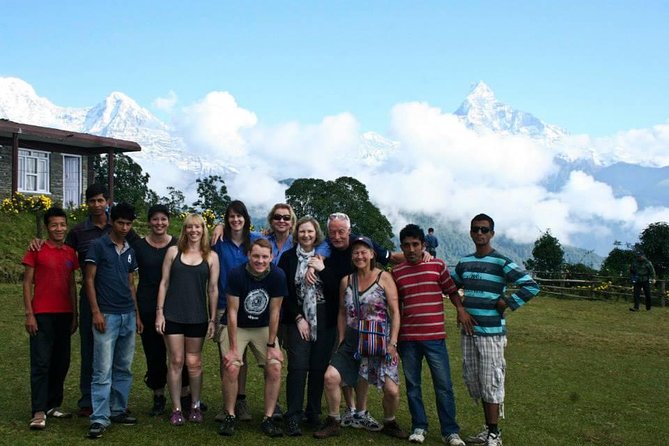
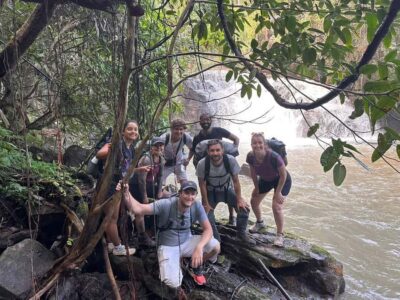
The trek proper begins after breakfast, heading to Nayapul, the common gateway into the Annapurna region. From there, you follow the trail along the Modi Khola banks. Early on, you’ll feel the shift from road travel to trail rhythm: a steady walking pace, occasional village stops, and a lot of forest.
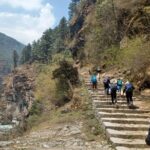
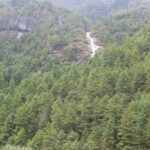
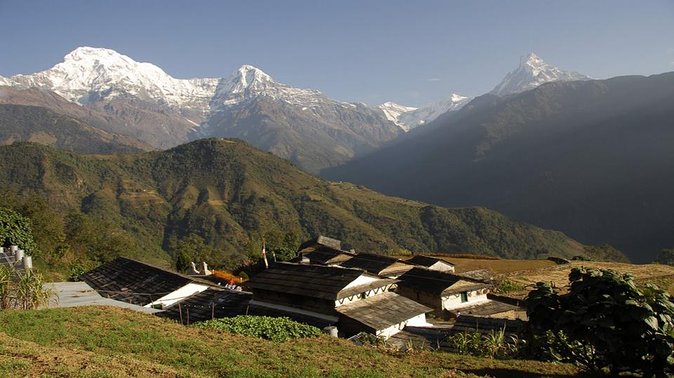
The route moves through deep rhododendron and oak and offers Annapurna Massif views as you climb. A standout feature of this leg is the amount of uphill stonework—your route includes 3,000+ stone staircases. That detail matters. It’s not technical, but it will work your legs. If you’ve got knee issues, take the stairs slowly and use trekking poles if you have them.
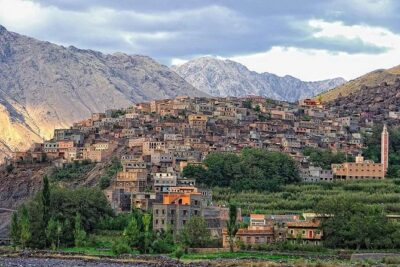
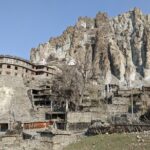
You reach Ulleri, a Magar village. This is more than just a place to sleep. The village gives you a feel for the local lifestyle and traditions, and you might even meet Gurkhas who share stories connected to bravery and service.
Ghorepani: forest hiking plus the best kind of village night
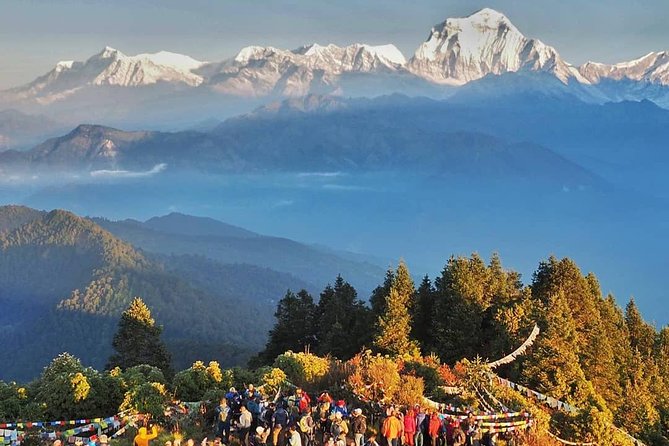
After Ulleri, the trail keeps moving through hamlets, small rivulets, and dense forest. The walking stays in the “rugged but easy” zone—enough effort to feel accomplished, but not the kind of ascent that forces you into survival mode.
This part is also where the region’s plant life really shows off. Ghorepani is known for having the largest rhododendron forest in the world, with 8 of Nepal’s 32 rhododendron species. Translation: you’re not just seeing trees. In season, the trail can feel like it has its own color theme.
You also walk through protected-area wildlife zones (part of the ACAP), so you might spot birds and animals—often indirectly, like movement or calls, rather than a clear wildlife “moment.”
That night in Ghorepani is one of the practical keys to the whole trek. You’re positioned close to the sunrise payoff and surrounded by village guesthouses, so you can settle in, keep your gear sorted, and get ready for an early wake-up.
Poon Hill sunrise: the climb is short, the moment is not
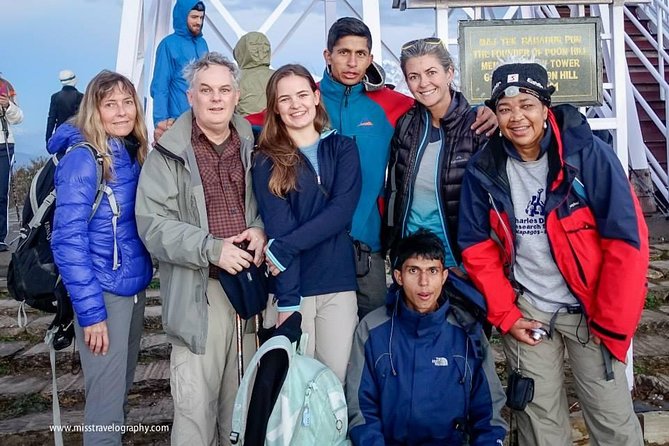
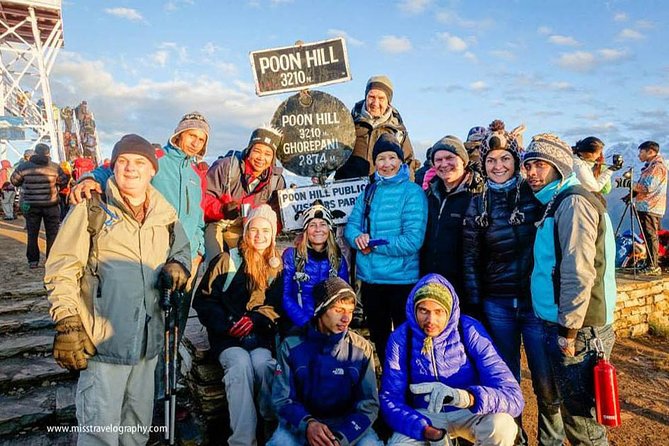
This is the headline for a reason. You wake up early and head to Poon Hill (3,210 m), a hike of roughly an hour from Ghorepani.
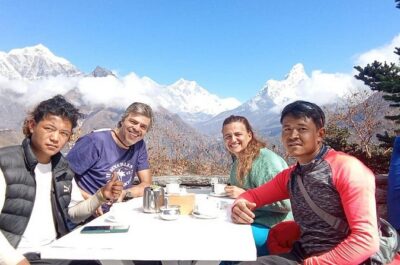
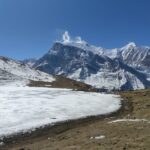
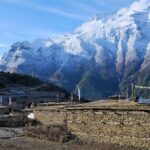
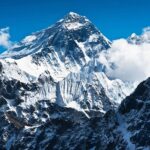
From the top, you’re in the open-air viewing zone for major peaks: Dhaulagiri (8,167 m) and the Annapurna Massif (8,091 m) dominate the view, and Mt. Machhapuchhre (Fishtail, 6,993 m) is often included in the same panorama. The descriptions you’ll hear are accurate: seeing snow sparkle in the first light is a visual punch you don’t get from photos.
After sunrise, you head back and have breakfast—then you continue walking toward Tadapani. This section follows terraced farmlands and rhododendron forests. The vibe shifts from “stand and stare” to “keep moving and notice details.” If sunrise is the gift, this afternoon stretch is the part where you digest it and keep the trek feeling alive.
Tadapani to Chhomrong to Jhinu Danda: views, villages, and a soak
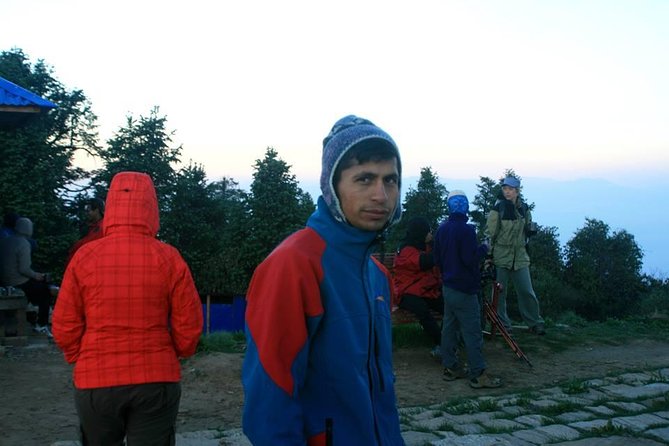
The next day starts with breakfast plus more of the Annapurna region scenery. You’ll follow a downhill trail at first, then climb again toward Chhomrong. Chhomrong Village is a popular type of destination for a reason: you’re in the thick of the Annapurna Massif views and surrounded by that mix of mountain and forest that makes this region special.
From there you move on to Jhinu Danda. The big “why” here is the natural hot spring option at Jhinu Danda. After days of walking, soaking in warm water does something practical: it helps you recover and also gives your mind a break from movement. Even if you don’t treat it like a wellness ritual, it’s a satisfying reward.
You’ll also see that the route can flex. There’s an alternative described that lets you trek to Ghandruk from Tadapani in about 3–4 hours via a mostly downhill route. That shorter hop can be helpful if you want to spend more time in the Ghandruk area rather than pushing down toward Jhinu Danda.
Ghandruk-style circuit days: Landruk, Tolka, and the Modi River route back
Past Jhinu Danda, the trekking pattern keeps giving you variety—water, bridges, and village rhythm. You descend toward Komrong Khola, then walk through lush forest, crossing a new bridge. After that comes a waterfall crossing near Himalpani, then you reach Landruk, another Gurung village.
Landruk tends to feel like the kind of place where you understand the region’s human side: you’re not only passing through scenery; you’re passing through households and farmland. Then the route continues to Tolka, described as a typical Magar village.
There’s also a version of the plan where you spend the night in Ghandruk Village, following the Modi River banks early on. You cross a bridge, then walk through terraced fields, reaching Landruk and eventually Tolka. Either way, you’re building the circuit loop feeling—less “single-file out-and-back,” more “moving through a living region.”
From Tolka, you head down toward Phedi by leaving villages such as Pritam Deurali, Pothana, and Dhampus. This is a classic hiking downshift: more downhill time, more village atmosphere, and big mountain views whenever the path angles allow them.
Back to Pokhara and onward to Kathmandu
After finishing the trek segments near Phedi, you have options to get back to the highway route area and then into Pokhara. One described approach goes from Tolka to Nayapul via Deurali, and another goes via Pothana back through villages that connect toward the return path.
The key point for you: the last day is about recovering your legs while still closing the loop. Once you reach Nayapul and connect back to Pokhara, it feels like exhale time.
From Pokhara, you can either fly back to Kathmandu in the morning or drive on a scenic highway route. If you’re prone to motion sickness, flight can be easier; if you like the comfort of seeing the terrain pass by slowly, driving gives you that final taste of river valleys and ridgelines.
Then you return to Kathmandu. Your final day includes a representative escort to the airport depending on your departure time.
Price and value: what $590 buys you (and what it doesn’t)
At $590 per person for an approx. 11-day experience, you’re not just paying for trail days. You’re paying for the whole support package that makes a shorter Annapurna circuit doable without a lot of planning stress.
The included items listed are solid: local guide, private tour, round-trip shared transfer, accommodation as per the itinerary, and dinner (plus breakfast as listed). You also get pickup offered and a mobile ticket. For many first-timers, that’s the value. It reduces decisions, reduces translation hassles, and keeps you focused on walking and views.
What’s not included is also clear: food and drinks beyond what’s listed, and alcoholic drinks (available to purchase). In practical terms, that means you’ll still make daily choices about meals at teahouses or village stops, and you should budget for that.
How to judge value for yourself: if you want a guided introduction to Annapurna with cultural time in Kathmandu and you don’t want to coordinate every transfer independently, this kind of package often feels worth it. If you already know your way around Nepal logistics and plan to self-organize, the same trek could cost less—but the “smoothness” factor would drop fast.
Guide quality and small group size: why it matters on a short circuit
This trek is built for people who want a classic region feel without spending weeks on the trail. That makes the guide important. On a route with stairs, river crossings, and early sunrise timing, you want someone who can keep the day organized.
The reviews you supplied highlight that the operator’s staff will communicate and help answer questions, even when a trip comes with uncertainty. You might work with guides such as Shailesh (noted in one review as running details and giving ongoing contact) and Nawin (mentioned by a solo trekker as an experienced guide). You also see a pattern: the team is described as professional, safe, and attentive to finding clean, affordable lodging.
Also, the trip has a max group size of 10 travelers. That’s big enough to feel social, small enough to avoid a chaotic trail crowd in your group. If you like moving as a unit—without feeling trapped—that sweet spot matters.
What you should pack for this trek
Nothing here is extreme, but you’re still doing multiple days of walking with early sunrise.
Bring basics like:
- Layers for early morning cold near viewpoint hours and warmer afternoons.
- A daypack for water and snacks during walking hours.
- Good walking shoes for stairs and rocky trail.
- Sunglasses and sun protection. Poon Hill sunrise is bright once the sun clears the horizon.
- A small first-aid kit (blisters happen on stair-heavy routes).
Gear isn’t listed in the data, so I’ll keep it general. But if you already hike often, you’ll recognize the essentials immediately. If you don’t, this is still a friendly trek to do with simple, reliable gear.
Altitude note: you hit 3,210 m at Poon Hill. That’s not the highest in Nepal, but sunrise means you may feel colder and more wind-exposed than you expect. Plan to go slow, breathe normally, and don’t treat it like a sprint.
Who should book this Ghorepani Ghandruk trek
You’ll likely love it if:
- You have limited time but want the Annapurna region highlight loop.
- You like a mix of culture (Kathmandu) and trail days.
- You want a sunrise moment at Poon Hill without committing to a long, high-altitude trek.
- Forest hiking and village stops are your kind of travel.
You should think twice if:
- You have knee pain or issues with heavy stair days. The route includes 3,000+ stone steps plus daily ups and downs.
- You hate early starts. Sunrise hiking is the core event here.
Should you book this Ghorepani Ghandruk trek?
If you want a short, well-supported taste of Annapurna—sunrise at Poon Hill, classic forest trail, and village culture in Ghorepani, Chhomrong, and (likely) Ghandruk—this is a strong fit. The biggest “yes” factor is that you get the view payoff quickly, without ignoring the cultural warm-up in Kathmandu.
If your ideal trek is all mountaintop camping and long wilderness days, this might feel too village-and-guesthouse based for your taste. But if your goal is memorable Annapurna scenery, good pacing, and a guided route that keeps logistics under control, I’d say book it and focus on the early morning sunrise. That’s the day you’ll still be talking about months later.
FAQ
How long is the Ghorepani Ghandruk Trek?
It’s listed as 11 days (approx.).
Where does the trek start and where do you meet the group?
The meeting point is Tribhuvan Airport, Kathmandu, Nepal.
What is the price per person?
The price is $590.00 per person.
Do you provide pickup or transfers?
Yes. Pickup is offered, and there are round-trip shared transfers.
What’s included in the tour cost?
Included items listed are dinner, accommodation as per itinerary, local guide, private tour, round-trip shared transfer, and breakfast (2) (as listed).
Is vegetarian food available?
Yes. A vegetarian option is available; you need to advise at booking.
What’s the group size?
The tour has a maximum of 10 travelers.
Is free cancellation available?
Yes. You can cancel up to 24 hours in advance for a full refund.
Can I take alcohol or drinks?
Alcoholic drinks are not included. They’re available to purchase.