REVIEW · KATHMANDU
Everest Base Camp Trek from Salleri (Overland)
Book on Viator →Operated by Mount Mania Treks Expedition P. Ltd. · Bookable on Viator
A start with fewer shortcuts, more Nepal, more pace. The Everest Base Camp trek from Salleri (overland) trades the usual Lukla flight jump for a jeep-and-vehicle route that gets you into the Everest region with time to adjust. I like the way this itinerary builds altitude step-by-step, and I love that you travel with an experienced, English-speaking, government-licensed trek leader who also carries a medical kit. One thing to consider: you have a long first travel day from Kathmandu to Salleri (8–9 hours), and the trekking days stay demanding.
You’ll walk through a mix of river paths, forest sections, and classic Khumbu villages, then spend your big days pushing up to Everest Base Camp and Kalapathar. The vibe here is energetic and practical, not fluffy—like the region is asking you to pay attention and move smart. If your goal is to see more of the Everest area without flying from Kathmandu to Lukla, this plan fits.
In This Review
- Key highlights that make the Salleri EBC plan click
- Why the Salleri overland route feels different from the Lukla-start trek
- Your 17-day rhythm: walking days, rest days, and altitude logic
- Day-by-day: from Kathmandu arrival to Salleri and the first trekking steps
- Namche Bazaar and Tengboche: acclimatize, then aim higher
- The Nagarjun acclimatization day: why it matters before Lobuche
- Everest Base Camp and Gorakshep: your long, meaningful Day 12
- The trek home: Pheriche to Namche, then down to Lukla and back to Kathmandu
- What you get for the $1,500 group price
- Guides, comfort, and teahouse reality checks
- Who should book the Salleri Everest Base Camp overland trek
- Should you book this Everest Base Camp trek from Salleri?
- FAQ
- How long is the Everest Base Camp trek from Salleri?
- What is the altitude profile like at the start?
- Is there an acclimatization day during the trek?
- Are meals and lodging included on the trek?
- What does the package include in Kathmandu?
- Do I fly back from the trek?
- Is this tour private, and how many people are required?
Key highlights that make the Salleri EBC plan click
- Overland access to Salleri instead of starting the trek right after a Kathmandu-to-Lukla flight
- Real acclimatization built in, including a day hike around Namche and a hike to Nagarjun hill (5080m)
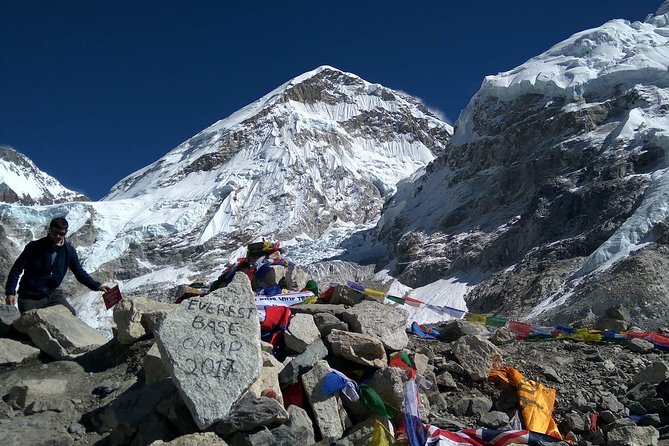
- Everest Base Camp + Gorakshep in one go, then Kalapathar (5545m) early the next morning
- All meals on trek with teahouse accommodation and Kathmandu breakfast included
- Group logistics that stay controlled, with private ground transport and a porter setup (2 trekkers per 1 porter)
- Guides praised for warmth and support, including references to Rupak, plus support described with Binod & Ballaram
Why the Salleri overland route feels different from the Lukla-start trek
Most Everest Base Camp itineraries start with a flight, then jump you into trekking with little lead-in. The Salleri version changes that rhythm. You drive from Kathmandu to Salleri (2309m) in about 8–9 hours, and your trek begins from there. That matters because it smooths the start. Your legs still work, but your body isn’t hit with the same abrupt entry.
This route is also described as covering a less touristic part of the Everest region. You still end up in the familiar Khumbu circuit, but you spend earlier days closer to hillside, river, and forest sections—places where you’re more likely to feel like you’re moving through local life rather than a single-file trekking conveyor belt.
There’s another practical upside: you avoid arranging your Kathmandu-to-Lukla flight for the start of the trek. You still fly at the end—Lukla to Kathmandu is included (about 35 minutes)—but you’re doing it after the trek instead of before your first step.
You can also read our reviews of more tours and experiences in Kathmandu.



Your 17-day rhythm: walking days, rest days, and altitude logic
This itinerary is roughly 17 days total. It’s not just a schedule; it’s altitude management on foot. You go from Kathmandu (around 1320m) to Salleri (2309m), then steadily increase your sleeping elevations through the trek.
The “smart pauses” are what make the whole plan safer and more comfortable. You get:
- A rest day with a day hike around Namche Bazaar (3440m)
- An acclimatization day where you hike up toward Nagarjun hill (5080m) and then return to recover
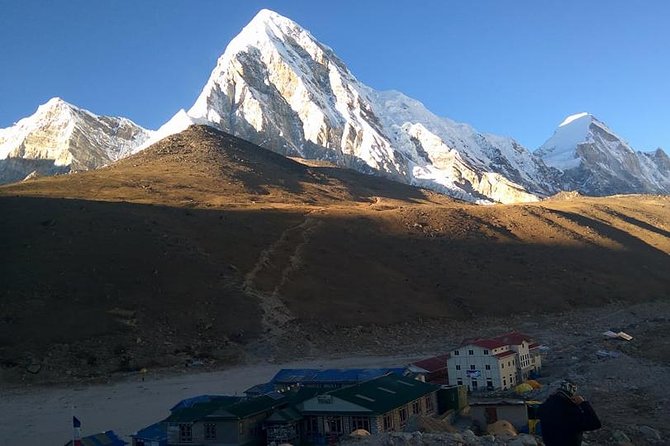
Then the climb into the Everest zone is staged. After Dingboche (4410m) and Lobuche (4930m), you hit Everest Base Camp (5364m) and Gorakshep (5180m) on Day 12. The next morning you go even higher to Kalapathar (5545m) before trekking back down to Pheriche (4200m).
That up-then-down pattern is exactly what you want: enough elevation gain to feel the mountains, then enough descent to keep your body from feeling like it’s being punished nonstop.
One more reality check: the trek includes several days in the 6–7 hour range (and some 7–8 hour big days). Even with teahouse breaks, it’s still a serious hike plan, best suited for people who already have consistent walking fitness.
Day-by-day: from Kathmandu arrival to Salleri and the first trekking steps
Day 1 is straightforward: you arrive in Kathmandu (using TIA airport), and you’re picked up and dropped at your Kathmandu hotel. Day 2 is the big transition day, with a private vehicle transfer from Kathmandu to Salleri (2309m) for about 8–9 hours. It’s long. Bring something to keep you comfortable and hydrated, because this is the moment you go from city logistics into mountain living.
On Day 3, you begin trekking from Salleri to Nunthala (2190m) in about 5–6 hours. Notice the altitude dip: this is not just a random walk day. It helps you get moving while your body calibrates.
Day 4 takes you from Nunthala to Puiyan (2300m) for about 6–7 hours. Day 5 is Puiyan to Phakding (2652m), again around 6–7 hours. This stretch is where the terrain starts to feel more “Everest region,” with trails that keep you close to watercourses and steep valley sides.
By the end of Day 5, you’ve gone from early trekking at lower elevations into the start of the Khumbu-style trail rhythm. It’s also the part where you learn what your body likes: pace, snack timing, and how often you need a short stop before you get breathy.
Practical tip: because all meals on trek are included, you don’t have to guess your food timing. Still, you should bring personal snacks you trust, especially if you like having something extra during long stretches.
Namche Bazaar and Tengboche: acclimatize, then aim higher
Day 6 brings the rise to Namche Bazaar (3440m), usually in 6–7 hours. Namche is a turning point: it’s busier than the trail villages behind you, and it’s also the place where people start looking at the sky more often. You’ll likely feel the altitude shift quickly here.
Day 7 is not another grind day. It’s a day hike around Namche, built for acclimatization. That’s a smart design, because it gives your body extra exposure to higher elevation without forcing you to sleep higher every day.
On Day 8, you trek from Namche to Tengboche (3880m) in about 4–5 hours. This is usually a more manageable day in terms of trekking time. It’s also the kind of segment where you’re rewarded with dramatic views as the trail opens up.
Day 9 continues the climb to Dingboche (4410m) in about 6–7 hours. Dingboche feels like a place where people settle in. You’re higher now, and your breathing becomes part of your walking rhythm.
The Nagarjun acclimatization day: why it matters before Lobuche
Day 10 is your acclimatization day, and it’s specifically a hike up to Nagarjun hill (5080m) for about 4–5 hours. Even without inventing details, you can think of this as a stress test with a safety valve: you go high enough to help your body adapt, then you have time to recover before the next big push.
Day 11 takes you to Lobuche (4930m) in about 4–5 hours. Lobuche sits close to the atmosphere of the Khumbu high country. You’ll feel the cold more, and you’ll notice how important steady pace becomes.
This part of the trek is where the plan earns its keep. A lot of people get into trouble by rushing altitude gains. This itinerary doesn’t pretend you can “power through” acclimatization. It gives you a structured day to adjust, then steps up again.




Everest Base Camp and Gorakshep: your long, meaningful Day 12
Day 12 is the headline day. You trek from Lobuche to Everest Base Camp (5364m), then onward to Gorakshep (5180m), usually 7–8 hours total. That’s a long day, and it’s also a day with a clear payoff: you’re reaching the point most people dream about.
What makes this day feel different is the combination of effort and thin air. Even if the walking hours are “only” listed as 7–8, the altitude makes every stop count. You’ll want to manage energy carefully, especially on the route segments where you start feeling that time-to-breath increases.
Teahouse life kicks in again on the higher ground. It’s basic, but it’s warm enough if you dress correctly. Since teahouse accommodation and all meals during the trek are included, you don’t need to plan meal logistics day-to-day.
Day 13 is the follow-up: early morning climb to Kalapathar (5545m), then trek back down to Pheriche (4200m) in about 7–8 hours. Kalapathar is where the view of the region can feel wide and sharp—often better for photos than Base Camp itself because of the elevation. The trade-off is you’ve got less room for mistakes: move steady, take breaks early, and don’t wait until you’re exhausted to slow down.
The trek home: Pheriche to Namche, then down to Lukla and back to Kathmandu
Day 14 takes you from Pheriche to Namche (3440m) in about 6–7 hours. After the high days, this descent feels like recovery. Still, descent is work. Your knees will remind you, politely but firmly.
Day 15 is Namche to Lukla (2860m), again about 6–7 hours. This is the day you start feeling like you’re leaving the high zone behind. Lukla is lower, but it can still feel hectic compared to the quiet trail villages.
Day 16 includes your flight from Lukla to Kathmandu (about 35 minutes). It’s a short hop, but it’s the clean break from trekking life into city life.
Day 17 is your final departure from Kathmandu (to TIA airport).
What you get for the $1,500 group price
The price is listed as $1,500 per group (up to 15). That pricing structure can be a big deal. If your group size is large, the per-person cost can drop substantially. With smaller groups, it may feel higher. Either way, it’s not just “a guide and a dream.” The included items are what you should evaluate.
Here’s what’s included:
- Private airport pickups and drops in Kathmandu
- 3-star hotel accommodation in Kathmandu with breakfast
- Teahouse accommodation during the trek
- All meals during the trek (breakfast, lunch, dinner)
- Farewell dinners
- All ground transportation by private vehicle as per the itinerary
- Domestic flight (Lukla to Kathmandu)
- An English-speaking, government-licensed trek leader
- Porter service with a 2 trekkers to 1 porter ratio
- Staff costs (insurance, food, accommodation) and taxes
- A medical kit carried by your trek leader
What’s not included is equally important for budgeting:
- Nepal visa fee
- International airfare to and from Kathmandu
- Excess baggage charges
- Meals in Kathmandu (besides breakfast in the included hotel setup)
- Extra hotel nights in Kathmandu if your schedule changes
- Travel and rescue insurance
- Personal expenses (Wi-Fi, phone calls, laundry, shower, battery recharge, bottled/boiled water, etc.)
- Tips for guide(s), porter(s), and driver(s)
Value angle I like: since meals and teahouse lodging are included, you avoid the day-to-day spending that can quietly drain a budget on trek. The big variable becomes your Kathmandu time and your personal comfort costs.
Also, this is a private tour/activity, so only your group participates. That usually means fewer coordination headaches.
Guides, comfort, and teahouse reality checks
This is one area where the story matters, and the reviews you shared point in a consistent direction. The trekking experience has been praised for the human side, especially around support and kindness. Names that come up include Rupak (described as treating trekkers like family) and also support involving Binod & Ballaram. That sort of guide energy makes a difference on a trek where your body is working hard and your mind can get noisy.
The tour includes an experienced, English-speaking, government-licensed trek leader, and that’s not just a paperwork checkbox. It also pairs with a medical kit carried by your trek leader, which is exactly the kind of practical backup you want in remote terrain.
Comfort-wise, you’re in teahouses. That means you should expect basic rooms and shared mountain infrastructure. Electricity, hot water, and Wi-Fi can be limited. Your “personal expenses” line item covers those typical add-ons like battery recharging, Wi-Fi, and shower costs.
Comfort also depends on your packing. Since the trek operates in all weather conditions, you’ll want rain protection and warm layers you can use even if temperatures drop fast at higher elevations. A lot of the discomfort on Everest treks comes from weather gear that doesn’t do the job, not from the itinerary itself.
Small humorous note: teahouse beds can feel like they were designed by a minimalist artist. Bring a strategy: warm sleepwear, earplugs if you’re sensitive, and a calm mindset.
Who should book the Salleri Everest Base Camp overland trek
This trek is meant for people with moderate physical fitness and the willingness to walk 6–8 hours on multiple days. If you’re comfortable with sustained hikes and you’re not afraid of altitude, you’re likely to find the pacing manageable.
It’s also a good match if you want:
- A less touristic feel early on via Salleri access
- A trek that avoids flying from Kathmandu to Lukla at the start
- A plan that includes acclimatization days (not just a straight line upward)
It’s not recommended for children aged 10 and under, which is consistent with the physical and schedule demands.
Two other considerations before you book:
- Day 2 is long (8–9 hours driving). If you hate sitting still, plan comfort tricks for the vehicle ride.
- The itinerary includes a lot of real elevation work. Even with good logistics, you need to pace yourself and take rest seriously.
Should you book this Everest Base Camp trek from Salleri?
If you want Everest Base Camp but prefer a route that feels more like you’re traveling through Nepal rather than just rushing into a single famous viewpoint, I’d lean yes. The strongest reason to choose it is the mix of overland access, structured acclimatization, and a package that includes meals, teahouses, your leader, porters, and the return flight.
But if your top priority is minimizing travel time from Kathmandu or you’re very sensitive to altitude exposure, you should compare your comfort level carefully. This trek is built to help you adapt, yet it still asks a lot of hiking days and high elevation days.
My practical decision rule:
- Book it if you’re ready for a real mountain hike and you like the idea of starting the Khumbu region from Salleri.
- Consider another option if long vehicle hours on Day 2 or the overall trekking load doesn’t fit your current fitness.
Either way, you’ll be walking into one of the planet’s most famous mountain worlds, with a plan designed to get you there in a smart, steady way.
FAQ
How long is the Everest Base Camp trek from Salleri?
The trek runs for about 17 days, including arrival and departure from Kathmandu, the trek days, and the flight from Lukla back to Kathmandu.
What is the altitude profile like at the start?
You begin in Kathmandu (around 1,320m), then travel to Salleri at 2,309m on Day 2, where trekking begins shortly after.
Is there an acclimatization day during the trek?
Yes. You have a day hike around Namche on Day 7, and on Day 10 you hike to Nagarjun hill (5,080m) for acclimatization.
Are meals and lodging included on the trek?
Yes. The trip includes teahouse accommodation and all meals during the trek (breakfast, lunch, and dinner), plus farewell dinners.
What does the package include in Kathmandu?
You get airport pickups and drops by private vehicle, and 3-star hotel accommodation in Kathmandu with breakfast.
Do I fly back from the trek?
Yes. The itinerary includes a domestic flight from Lukla to Kathmandu (about 35 minutes) on Day 16.
Is this tour private, and how many people are required?
It’s a private tour/activity where only your group participates. A minimum of 2 people per booking is required, and the group price is listed as up to 15.