REVIEW · KATHMANDU
Everest Base Camp Trek
Book on Viator →Operated by Adventure White Mountain Pvt.Ltd · Bookable on Viator
Everest Base Camp begins with one breathy flight. This trek is built around Sherpa guides and porters for safety, then uses smart acclimatization days in Namche Bazaar and Dingboche so your body has time to adjust. You’ll also get a proper Kathmandu warm-up in Thamel, plus sightseeing like Kathmandu Durbar Square before you head for the mountains.
Two things I really like: the itinerary is paced so you’re not hiking hard every single day, and the support system is practical (an English-speaking guide and a porter for two trekker spots). One consideration: part of the cost reality is that national park permits and teahouse-style accommodation during the trek aren’t included, and personal gear (warm layers, gloves, hat, etc.) is on you.
In This Review
- Key highlights you’ll feel from day one
- Thamel and Kathmandu Durbar Square: a calm start before the climb
- The Lukla flight to Phakding: where the mountains start talking
- Monjo to Namche Bazaar: Sagarmatha National Park gate and a real altitude bump
- Namche acclimatization day: adjust your body, not your confidence
- Tengboche day: forests, river valleys, and Danfe spotting
- Dingboche: cool air, big views, and the rhythm that keeps you steady
- Dingboche acclimatization plus Nagarkshang hill: training your body gently
- Douglas to Khumbu Glacier toward Lobuche: when the cold becomes part of the plan
- Everest Base Camp day: the dream moment, plus the strategic move to Gorakshep
- Kalapatthar sunrise views and Pheriche: the payoff and the reset
- Coming back through Tengboche to Namche: your legs learn to descend
- Lukla Bazaar on Day 12: souvenirs, breathing space, and the long exhale
- Flight back to Kathmandu and farewell dinner: close the loop in style
- Price and logistics: what your $1,800 is really paying for
- What’s included vs not: permits, teahouses, and the gear you carry
- Who should book this Everest Base Camp trek, and who should think twice
- Should you book Adventure White Mountain for Everest Base Camp?
- FAQ
- What time does the tour start?
- Where do you get picked up, and how do you get to the meeting point?
- How do you travel from Kathmandu to Lukla, and how long does it take?
- How long is the whole trek?
- Is this a private tour?
- Do you have a guide and porter support?
- Are there acclimatization days?
- What’s included in the price?
- What costs extra that I should budget for?
- Is free cancellation available?
Key highlights you’ll feel from day one
- Dawn Lukla flight cuts down travel fatigue and gets you onto the trail quickly
- Acclimatization in Namche Bazaar and Dingboche helps you climb smarter, not just harder
- Sagarmatha National Park time adds context to what you’re walking through
- Everest Base Camp + Kalapatthar gives you both the destination moment and top-view payoff
- One porter for two trekkers keeps your load reasonable on steep days
- Tour team coordination aims to keep flights and connections from turning into stress
Thamel and Kathmandu Durbar Square: a calm start before the climb
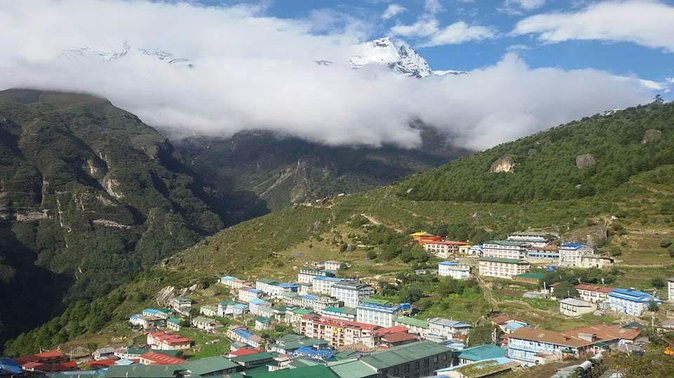
Day 1 is all about getting organized without rushing you. You’re picked up on arrival and transferred to a hotel in Thamel, the area where most trekking travelers base themselves. If you still have energy after your flight, you can wander for mini refreshments, get your bearings, and buy small essentials you forgot.
Then there’s a straightforward optional add-on: Kathmandu Durbar Square. It’s close enough to manage without turning the first day into a marathon. For many people, this is useful because Everest trekking logistics can feel like a lot—having a simple cultural stop helps you settle in and stop thinking only about gear lists and altitude.
What I’d do on this first day: keep it light. Kathmandu can feel busy and hot, and sleep matters once you start climbing. Your goal here is to arrive, recharge, and be ready for a very early start the next morning.
You can also read our reviews of more tours and experiences in Kathmandu.
The Lukla flight to Phakding: where the mountains start talking
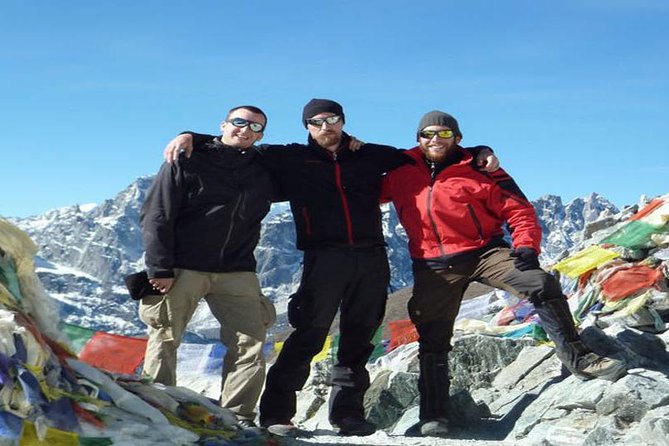
On Day 2, you head toward Tribhuvan Domestic Airport at dawn to catch the flight to Lukla. The flight is about 30 minutes, and yes, it’s short—but that short hop matters because it sets the rhythm. In many places, you can spend hours on roads and still arrive tired. Here, you transition quickly from city to trail.
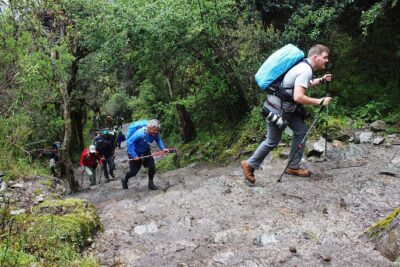
Once you land in Lukla, the trek begins right away toward Phakding. This first walking day is designed for getting your legs used to the rhythm. You’ll also get that classic early-Himalaya feel: forested sections, river valleys, and a sense that you’re already moving in a different world even before you reach the big names like Namche.
Practical tip: treat Day 2 like a warm-up, not a victory lap. Save your energy for the longer altitude work that comes after Namche.
Monjo to Namche Bazaar: Sagarmatha National Park gate and a real altitude bump
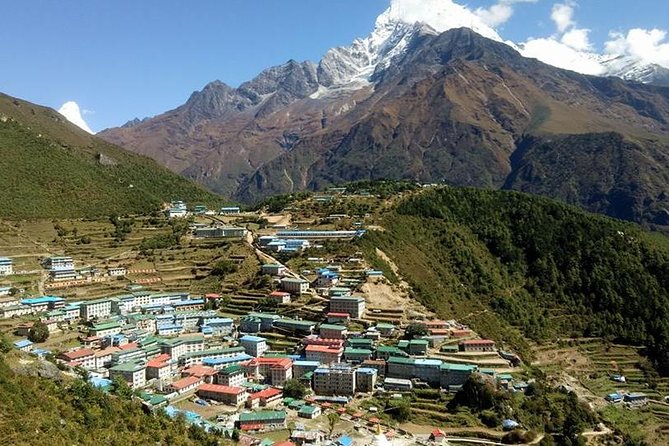
Day 3 takes you through the route of Dudh Koshi, crossing rhododendron and pine forests as you work toward Monjo and then Namche Bazaar. Monjo is the entrance area to Sagarmatha National Park, so this isn’t just a scenic walk. You’re starting to step into the protected landscape that defines the whole Everest experience.
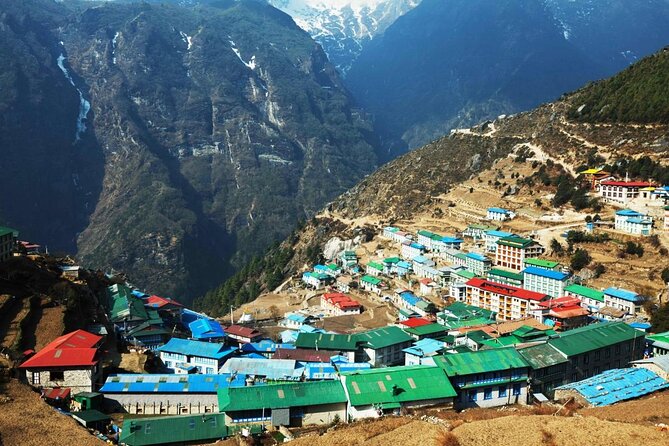
Once you reach Namche, the day shifts from “travel” to “settle.” You’ll enjoy time around the town and with locals, which matters more than people think. Namche is where you start seeing the trekking ecosystem at full scale—routes, teahouses, gear shops, and the steady flow of porters and guides moving day by day.
The realistic value of Namche: it’s not only a stop. It’s where your acclimatization strategy becomes real. If you go in tired or too focused on racing ahead, you’ll feel it.
Namche acclimatization day: adjust your body, not your confidence
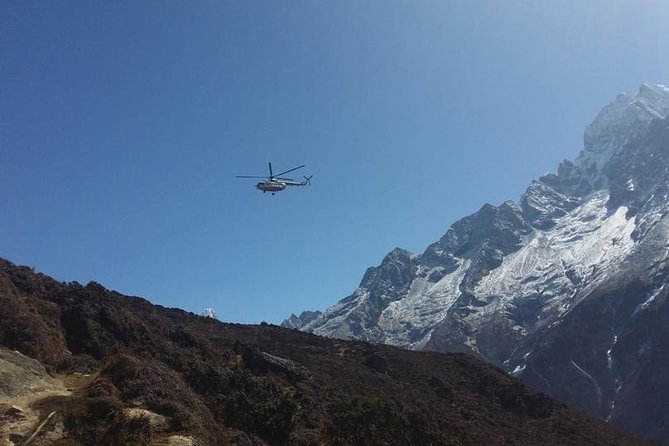
Day 4 is an acclimatization day, and it’s one of the most important days in the whole plan. You’re not stuck doing nothing; you explore the culture of Namche and also visit Sagarmatha National Park areas. The point is to help your body adjust to altitude so you’re less likely to have problems later.
I like that this day is practical: it supports your health plan without pretending altitude is easy. You get movement, but you don’t keep climbing all day to chase distance. That balance is exactly what helps the trek feel doable, even if you’re not a hardcore mountain athlete.
How to use this day well:
- Keep your pace gentle while exploring.
- Stay aware of how you sleep and how your breathing feels.
- Don’t treat acclimatization as a free day to overdo it.
Tengboche day: forests, river valleys, and Danfe spotting
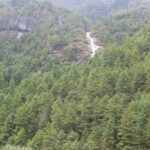
Day 5 is when the trek turns into a more serious uphill effort. You climb upward and move above the Dudh Koshi River, with the path bounded by the other Himalayan peaks. You’ll also pass through a mix of environments, including green forest sections, and you may encounter wildlife—like Danfe, the national bird of Nepal, which is described as common in the region.
The day’s structure matters:
- You get the climb and the view-building effort.
- You also get a lunch moment along the way.
- Then you continue up to Tengboche, a place many people associate with big mountain beauty.
Tengboche is a good overnight because it feels like a transition point: you’re high enough for dramatic scenery, but still early enough that the trek hasn’t fully “hardened” into the cold, thin-air zone.
Dingboche: cool air, big views, and the rhythm that keeps you steady
On Day 6, you head toward Dingboche via routes that include rhododendron forests and the feeling of moving into a cooler environment. The plan mentions white mountains in your sightlines and a “cool environment,” which is a simple way of saying: you’ll start to notice temperature and air changes more often.
The standout value of this section is that it’s not just about reaching a place. It’s about building the rhythm that keeps you from suffering. You’re moving gradually, and you’re getting regular photo moments without needing to stop every ten minutes.
Overnight in Dingboche sets you up for one more acclimatization day, which is exactly what you want before you push higher.
Dingboche acclimatization plus Nagarkshang hill: training your body gently
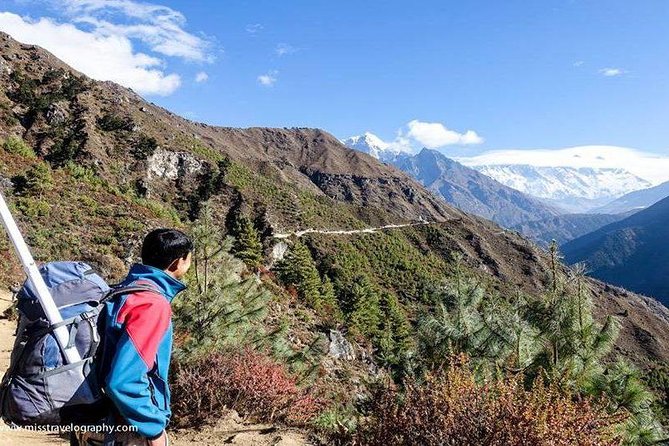
Day 7 is another acclimatization day, this time in Dingboche. You explore the village and climb up to Nagarkshang hill, then return to your hotel for the night.
This is a smart approach because it’s a controlled “workout” at altitude rather than a random hike. If you’ve ever wondered why altitude treks feel different than weekend hikes, it’s partly because your body learns gradually. This day helps you practice that.
If you want to get the most out of it: keep your effort steady. Don’t sprint up the hill just because it’s shorter than other days. Short, hard pushes are what can mess with breathing later.
Douglas to Khumbu Glacier toward Lobuche: when the cold becomes part of the plan
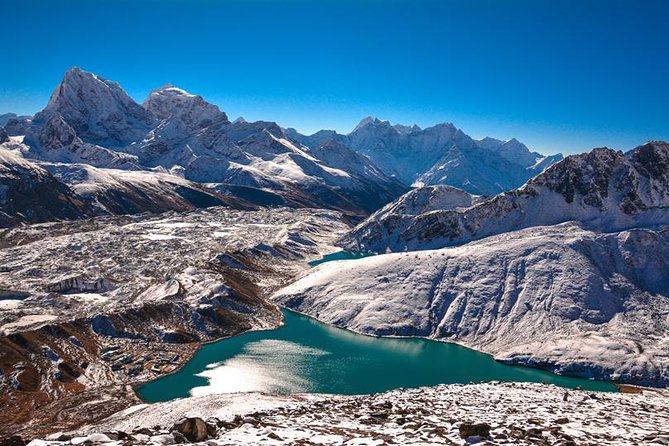
Day 8 moves you toward Douglas, then toward Khumbu Glacier and Lobuche. The description makes the point clearly: Lobuche is very cold due to geography, so expect conditions to feel sharper here.
This is where planning matters. When you’re cold, you burn more energy just staying functional, and your hands and feet become your limiting factor. Even if you’re mentally strong, your body can lag if you’re underprepared.
So in the days leading up to Lobuche, make sure your warm layers are reachable and not buried in a bag you can’t access quickly.
Everest Base Camp day: the dream moment, plus the strategic move to Gorakshep
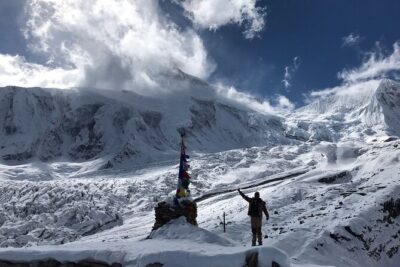
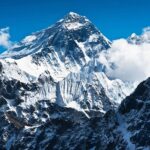
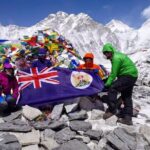
Day 9 is where the whole trip turns into the destination moment. You head toward Everest Base Camp (EBC), described as the place where mountaineers prepare for climbing Everest (8,848 meters). At this stage, the trek stops being “a challenge” and becomes a scene you’ll remember for years.
Then, at noon, the plan continues to Gorakshep for the night. This is a practical move. It sets you up for an early-morning push on Day 10 when the goal shifts from Base Camp to top-view perspective.
What you’ll feel at EBC is hard to measure. It’s the meeting of effort and scale. But the real win of doing it this way is that you don’t arrive and then waste time. You arrive, you take the moment, and you still move smartly for the next day’s highlight.
Kalapatthar sunrise views and Pheriche: the payoff and the reset
Day 10 starts early for Kalapatthar, which is the immediate destination for a reason: you’re surrounded by mountains, and the payoff is all about those wide, high-altitude views. After walking for hours, you arrive at Pheriche and break your day there.
This day is about two kinds of success:
- The view success from Kalapatthar.
- The body success from stepping down and resetting in Pheriche.
Even if you feel like you’ve “done it,” Day 10 is still working day. Treat it as both a celebration and a continuation. You’ll be glad later that you didn’t burn out here.
Coming back through Tengboche to Namche: your legs learn to descend
Day 11 returns toward Tengboche first, with a couple of hours to explore, and then continues to Namche Bazaar for the night. The mountains still look impressive, but the walking feel changes. Descents can be tricky on knees and feet even when altitude is lower.
Tengboche is a good stop for this return day because it keeps the journey scenic while you’re moving back to the higher-activity region of the trek.
Then Namche again means food options and town energy—use it to rest properly.
Lukla Bazaar on Day 12: souvenirs, breathing space, and the long exhale
Day 12 is a longer distance day, but the payoff is that the landscapes make fatigue feel lighter. You reach Lukla Bazaar, with time to buy souvenirs for family and relatives, then you halt at Lukla.
This stage is mental too. You’ve already had the big moments, and now you’re focusing on finishing smoothly. I like the structure here: you don’t just rush straight to flight time. You get a realistic final trekking day and a last chance for small town moments.
Flight back to Kathmandu and farewell dinner: close the loop in style
Day 13 gets you back to Kathmandu. You catch your flight from Lukla, described as about 35 minutes, and then enjoy Kathmandu for some time. In the evening, the team from Adventure White Mountain offers a farewell dinner for completing the trek.
That dinner matters more than it sounds. After days of routine and altitude, you get a normal meal schedule and a chance to unwind. It also gives you a clean “end” to the experience instead of a scramble.
Price and logistics: what your $1,800 is really paying for
At $1,800 per person, you’re paying for a full package of expedition logistics—not just the hiking. Included items listed here include:
- Professional English-speaking guide plus a porter for two trekkers
- Both-way flights to Lukla and back to Kathmandu, including a sharing vehicle
- Meals are shown as included in counts (11 lunches, 11 dinners, 12 breakfasts)
That last point is important because the document also says breakfast/lunch/dinner are not included under food and drinks. I can’t fix the math for you, but you should treat this as a “confirm before you go” item. Ask what exactly is included meal-wise versus what you’ll pay for in the teahouses.
Where the price is strong: you’re outsourcing the altitude pacing, translation of local decisions, and daily planning. For Everest, that kind of operational support can be the difference between a trek that feels structured and one that feels stressful.
What’s included vs not: permits, teahouses, and the gear you carry
Here’s what the data is clear about as not included:
- Accommodation during the trip
- National park permit fees
- Personal equipment (examples given: jacket, trousers, gloves, hat, etc.)
- Hot shower fee, battery charge, and WiFi (plus tips for guide and porter)
This is typical for Everest trekking, but it still affects your budget. Your lodging and meals in higher towns can add up, especially once you’re farther from Kathmandu. If you’re someone who hates surprises, you’ll want a quick total estimate from your operator based on your preferred teahouse standard.
Also, plan your charging strategy. If you know you’ll need to charge phone/camera batteries, it helps to budget for battery charging and accept that Wifi may be limited and fee-based in many spots.
Who should book this Everest Base Camp trek, and who should think twice
This works best if you want:
- A guided experience with safety-focused support
- A trek that includes acclimatization days instead of only “push higher”
- Practical logistics: flights, transfers, and team handling
You might think twice if:
- You want a fully cost-included package with zero extras (this one has permit fees, teahouse accommodation, and several pay-as-you-go items)
- You have very low tolerance for cold, because Lobuche is specifically described as very cold
In terms of fitness, the plan asks for moderate physical fitness. That’s encouraging. You don’t need to be a marathoner, but you do need to be ready for multiple days of sustained walking in thin air.
Should you book Adventure White Mountain for Everest Base Camp?
If you want Everest Base Camp with organized logistics, English-speaking guidance, and a trek rhythm that respects acclimatization, this is a solid choice. I’d book it if you’re comfortable handling the parts that cost extra on the ground (permits, teahouse accommodation, and personal gear) and you confirm the meal inclusion details since the document reads inconsistently.
If you’d rather keep every expense wrapped into one number, or you’re unsure about the cold stage around Lobuche, ask pointed questions first. Get clarity on meals, permits, and the expected teahouse standard. Then decide.
FAQ
What time does the tour start?
The listed start time is 7:15 am.
Where do you get picked up, and how do you get to the meeting point?
You’re picked up (the experience notes pickup is offered). The meeting point is described as near public transportation, and the first stop is in Thamel in Kathmandu.
How do you travel from Kathmandu to Lukla, and how long does it take?
You fly from Tribhuvan Domestic Airport to Lukla, with a flight time of about 30 minutes.
How long is the whole trek?
The duration is listed as 13 days (approx.).
Is this a private tour?
Yes. It’s described as a private tour/activity, with only your group participating.
Do you have a guide and porter support?
You have a professional English-speaking trekking guide. You also get one porter for two trekker(s).
Are there acclimatization days?
Yes. There is an acclimatization day in Namche Bazaar and another acclimatization day in Dingboche (including a walk to Nagarkshang hill).
What’s included in the price?
Included items listed are guide and porter support, transport including both-way flights to Lukla and back to Kathmandu (with a sharing vehicle), and meals listed by counts (11 lunches, 11 dinners, and 12 breakfasts).
What costs extra that I should budget for?
National park permit fees and accommodation during the trek are not included. Also not included are personal equipment, hot shower fees, battery charge, WiFi, and tips for the guide and porter. Drinks are also listed as not included.
Is free cancellation available?
Yes. You can cancel up to 24 hours in advance for a full refund. If you cancel within 24 hours of the start time, the amount paid is not refunded.