REVIEW · KATHMANDU
Annapurna Circuit Trek with Tilicho Lake (16 Days)
Book on Viator →Operated by Sole Encounters Adventures · Bookable on Viator
Tilicho Lake turns this circuit into a quest. I love the mix of big-mountain moments (Tilicho at 4,919m and Thorong La at 5,416m) with real village trail life, and I also like how the trip is built around practical support like porters and an assistant guide ratio. One possible drawback: meals during the trek aren’t included, so you’ll want to budget and plan your daily refuel routine.
You’ll start in Kathmandu, drive to Dharapani, then work your way up through Manang Valley and high alpine basins. After Tilicho, the itinerary pushes you over Thorong La, drops into pilgrimage country at Muktinath, and continues down through Mustang-style scenery toward Jomsom and Pokhara—an excellent arc if you want both altitude challenge and cultural contrast.
In This Review
- Key highlights at a glance
- Kathmandu to Dharapani: starting the trek without the usual hassle
- Marsyangdi Valley stepping stones: from Bagarchhap to Pisang and Manang
- Manang acclimatization day: how you protect yourself before Thorong La
- Siri Kharka and Tilicho Base Camp: the quiet before the lake
- Tilicho Lake at 4,919m: one of the trek’s real payoffs
- Yak Kharka to Thorong Phedi: staging for the pass
- Thorong La to Muktinath and Kagbeni: from thin air to pilgrimage tones
- Lower Mustang trails to Jomsom and Kalopani: the last hiking reel
- Pokhara and Kathmandu: real rest, not just a date change
- Teahouses, porters, and guide ratios: what the support really means
- Price and value: $1,800 plus what you still need to budget
- Who this trek fits best (and who should think twice)
- Should you book this Annapurna Circuit with Tilicho Lake?
- FAQ
- What’s included in the Annapurna Circuit with Tilicho Lake package?
- How high does the trek go?
- Are trek meals included?
- Do I need trekking permits?
- What do I need to bring?
- Where do the tour start and end?
Key highlights at a glance
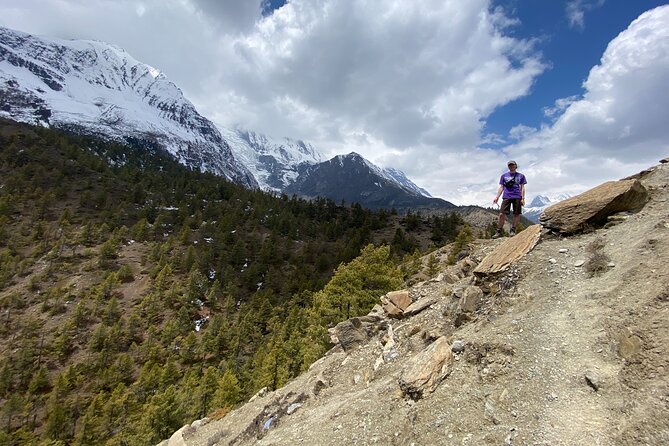
- Tilicho Lake detour to one of the world’s highest alpine lakes at 4,919m
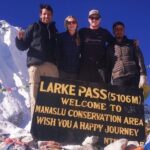
- Thorong La (5,416m) reached via a pre-dawn push from Thorong Phedi
- Support you can feel: porters for your overnight bag (2 trekkers per porter) plus an assistant guide per 5 trekkers
- Teahouse nights across a gradual climb and descent, with cozy village stops along the route
- End in Pokhara lakeside with a proper decompression day after the pass days
Kathmandu to Dharapani: starting the trek without the usual hassle
Day 1 is a reset day. You land at Tribhuvan International Airport, get a greeting from the local office team, and transfer straight to your Kathmandu hotel. It’s a nice change from the chaotic start that can happen on trek trips where you’re left figuring out transportation on your own.
The meeting point is in Thamel, which is convenient for getting your bearings fast. Your welcome day is not packed with travel logistics, so you can focus on basics: gear checks, buying any missing essentials, and hydrating like you mean it. (Altitude treks punish sloppy prep, and everyone learns that lesson eventually.)
On day 2 you head out of Kathmandu on the Prithvi Highway corridor, with stops at places like Trishuli River, Mugling, and Besisahar. You’re not hiking yet, but you are building the day’s mental rhythm: Nepal road travel is part scenic road-trip, part bus-and-truck choreography, so it helps that the schedule includes planned breaks rather than forcing you to guess.
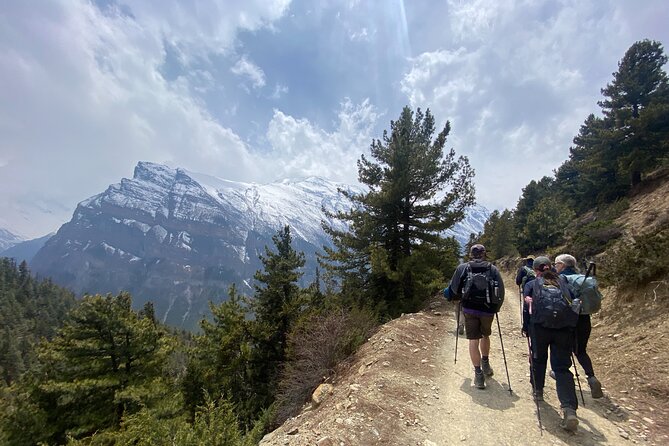
Then comes Dharapani, your start point for the walking life. Dharapani sits at about 1,960m in the Marsyangdi Valley area, under pine forests and ridges. I like this staging because it feels like the trek proper begins gently: your body starts adapting while the scenery is already doing the work.
Practical tip: keep your overnight bag light. Porters carry your overnight bag, but you still carry what you need for the day—layers, water solution, snacks, and your warm stuff for higher camps.
You can also read our reviews of more tours and experiences in Kathmandu.
Marsyangdi Valley stepping stones: from Bagarchhap to Pisang and Manang
The next few walking days move you through the classic Annapurna Circuit rhythm: village-to-village, gradual climbs, and enough altitude gain to make tomorrow’s weather feel different.
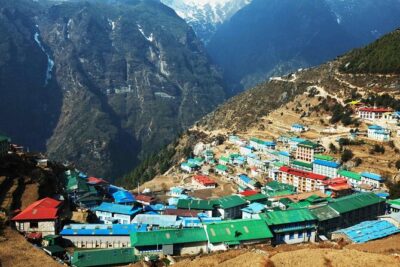
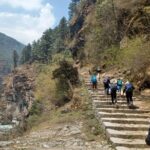
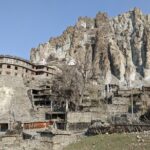
You’ll pass early ridge villages like Tachi Bagarchhap and then reach Chame, the administrative center of Manang District at around 2,670m. Chame often feels like a turning point. It’s still walkable terrain, but you’re clearly heading into a more mountain-focused world—more Tibetan-influenced architecture, more stony paths, and less of the lush lowland vibe you left behind.
Bhratang (around 2,850m) adds a slower moment. It’s described as a rest stop inside a narrow gorge along the Marsyangdi River, known for apple orchards and small juice farms. Even if you don’t need calories, it’s a good place to breathe and watch how village life sits around the river and the trail.
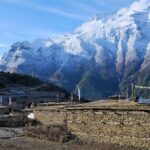
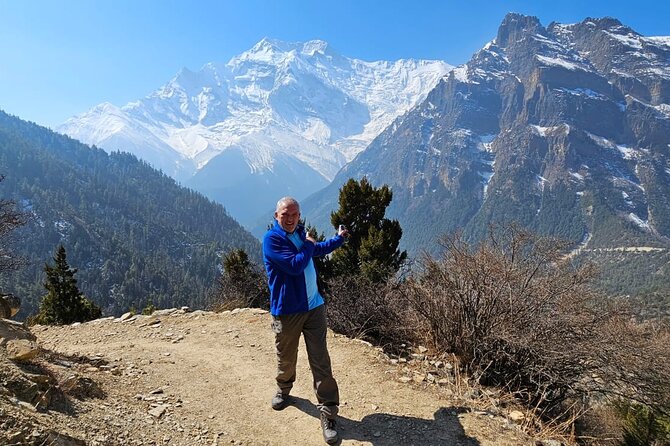
Upper Pisang (around 3,300m) is where the views sharpen. You’re perched high above the Marsyangdi River, with strong sightlines toward peaks like Annapurna II and Pisang Peak. This stretch is a good reminder that your hiking effort pays off as soon as you step away from the road-town reality.
Then you reach Manang (around 3,540m), the cultural and trekking hub. You’re not just collecting altitude here—you’re stepping into a valley where you’ll see community rhythm and trekking infrastructure at the same time. Manang sits under major peaks, including Annapurna III and Gangapurna, and it feels like a place where locals and hikers understand each other’s schedules.
A day in Manang is also your acclimatization engine. You have a scheduled acclimatization day with options for hikes (your guide helps you choose). I like this approach because it’s not random “wander and hope.” It’s structured to help your body adjust before the climb gets serious.
Manang acclimatization day: how you protect yourself before Thorong La
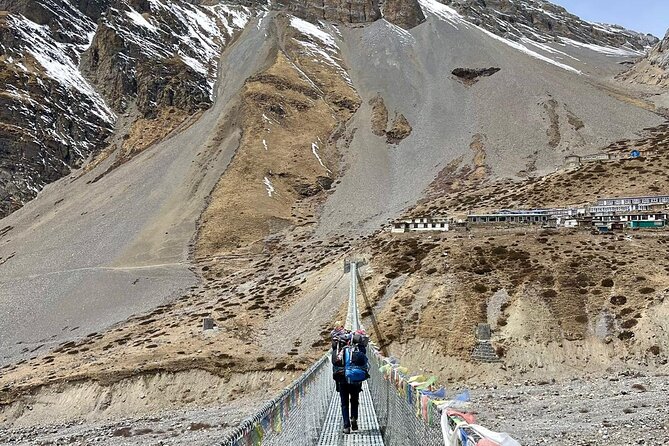
This trek’s high point isn’t just about willpower. It’s about timing and smart choices. The acclimatization day around Manang matters because later you’ll be dealing with thin air around Siri Kharka, Tilicho Base Camp, and ultimately Thorong La.
The itinerary gives you a menu of acclimatization hikes—three choices, discussed with your guide. I like having options because you’ll know your own limits. If you’re feeling strong, you might choose something steeper. If you’re dragging, you’ll still have a path up that’s intended to help you rather than exhaust you.
This is also where you’ll see the value of a guide who’s organized. The trek includes a professional government-licensed guide, plus an assistant guide for every five trekkers. That matters in real life on mountain days: it’s easier to keep pace, check on people who fall behind, and respond if weather or trail conditions change.
What to expect on these higher days: more dusty ridgelines, colder mornings, and a slower hiking pace where you breathe like you’re underwater. Even if you feel fine, take the acclimatization day seriously. Your goal is to arrive higher, not hero your way there.
Siri Kharka and Tilicho Base Camp: the quiet before the lake
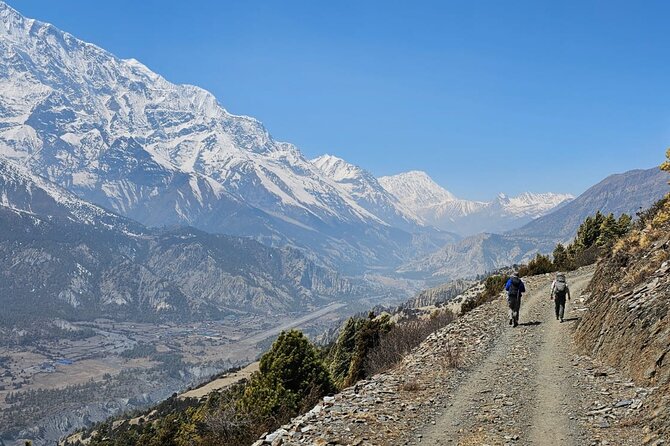
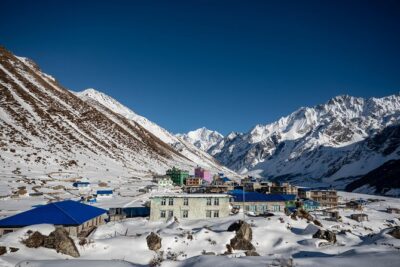
After Manang, the route pushes you toward higher, emptier terrain. Siri Kharka (around 4,060m) is described as a remote ridge-top settlement with big views of the Gangapurna and Chulu ranges. The climb is steady through juniper shrublands and windswept stretches, which is a polite way of saying the trail gets more exposed.
Then you head to Tilicho Base Camp (around 4,150m). This is one of those days where the trek feels different: the trail becomes narrow, the basin feels more isolated, and you’re moving through a high-altitude zone beneath cliffs and glacier-carved slopes. The pace is intense not because it’s technically hard every minute, but because your body is already working harder at 4,000m+.
If you’re the type who likes predictability, this is where you’ll appreciate that the trip has been planned so you’re not forced to “wing it” at the edge of your comfort zone. Teahouse nights keep you from hunting for shelter. Your overnight bag is handled by a porter system, so you don’t have to haul everything yourself.
Practical tip: pack your warm layers where you can reach them. At these altitudes, a cold wind can make you feel like your fingers are negotiating for better terms.
Tilicho Lake at 4,919m: one of the trek’s real payoffs
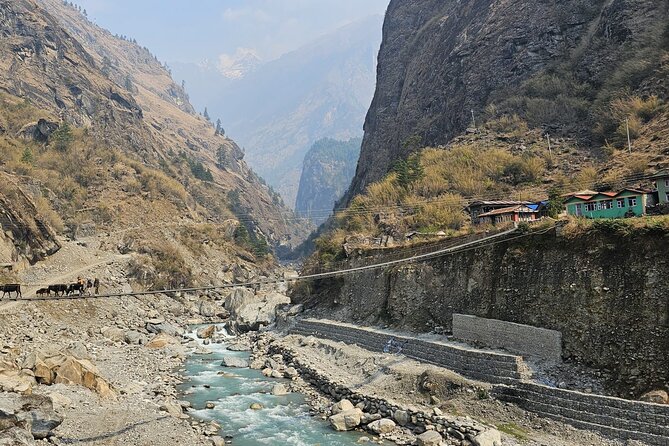
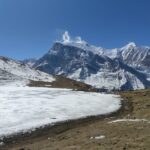
Tilicho Lake (around 4,919m) is the signature detour and the main reason many people pick this route over a standard circuit. The lake is described as one of the highest alpine lakes accessible by foot, and it’s revered in both Hindu and Buddhist traditions.
On paper, it’s “a day” from Tilicho Base Camp. In reality, it’s the kind of day that changes how you measure effort. You’ll likely feel altitude more than you expect, even if you’ve been hiking comfortably. This is still a trekking day, not a sightseeing stroll, so go slow and steady.
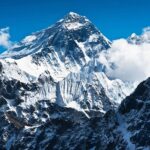
The reward is a high, frozen-looking world of snow-covered peaks and an intense sense of space. Even when clouds move in, the atmosphere has a dramatic quality that makes the climb feel worth it. I also like that this isn’t just one more viewpoint; it’s an actual destination with spiritual significance, which brings a different kind of stillness to the walk.
Safety note: this is also a zone where weather can affect visibility and comfort. The trip is framed around expert guidance and planned acclimatization, but you should still treat Tilicho as a day where you don’t rush.
Yak Kharka to Thorong Phedi: staging for the pass
After Tilicho, the itinerary stages you back down and then up again. Yak Kharka sits around 4,050m and functions as an acclimatization and staging point before the Thorong La climb. The route involves a descent and then a climb pattern that helps you reset.
Then you reach Thorong Phedi (around 4,540m), the final overnight stop before crossing the pass. This is the part of the trek that demands good sleep. You’ll be dealing with colder temperatures and pre-dawn timing for the pass.
The trek description highlights a strenuous pre-dawn climb of more than 900 meters from Thorong Phedi to Thorong La Pass at 5,416m. That is your big day: you’ll feel like you’re walking uphill forever, and you may wonder if the trail is actually going somewhere. It is. The pass is legendary for a reason.
What I like about this structure: you’re not crossing the pass randomly. You’re given the proper staging stop, plus earlier acclimatization days to reduce the risk of altitude misery.
Thorong La to Muktinath and Kagbeni: from thin air to pilgrimage tones
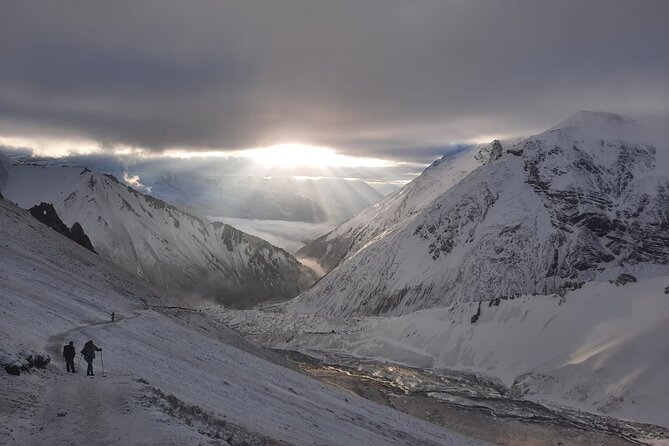
Thorong La is the peak moment. Once you cross, the tone shifts from high-altitude grind to big descent terrain. The itinerary drops you toward Muktinath (around 3,760m), described as one of Nepal’s most revered pilgrimage destinations.
This descent is long enough that your legs will ask questions. The trail goes down around 1,600 meters through rocky terrain and desert-like valleys, with views toward Mustang. You’re trading altitude stress for endurance stress, which is why earlier pacing and acclimatization matter so much.
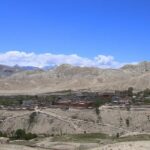
Muktinath brings culture into the mix in a very direct way: it’s not just scenery; it’s pilgrimage space. Then you continue to Kagbeni (around 2,810m), a centuries-old village near the Kali Gandaki and Jhong river confluence, often seen as a gateway to Upper Mustang. Kagbeni is known for its ancient red-walled monastery and narrow stone streets.
I like this section because it gives you a sense of place beyond trekking. You’re seeing how route and religion overlap in daily life here. The trail doesn’t just move you forward; it adds meaning.
Lower Mustang trails to Jomsom and Kalopani: the last hiking reel
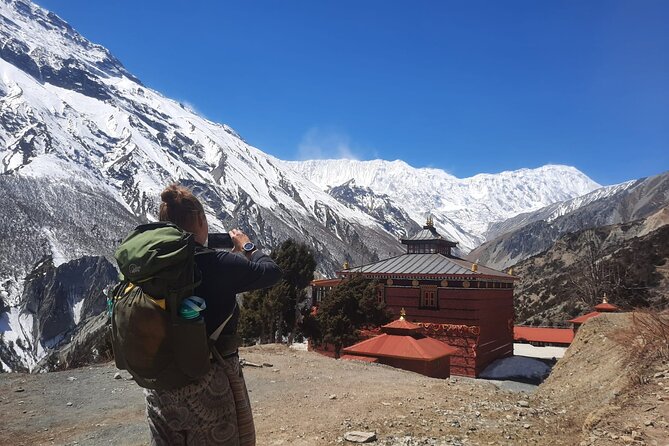
From Kagbeni you head toward Jomsom (around 2,720m), following the windswept Kali Gandaki River corridor. The descent pattern is described as descending about 250 meters along the way, and the terrain remains open and exposed compared to the wetter upper valley days.
Jomsom is the administrative center of Mustang in this area and a major stop on the lower circuit. It’s also where you’ll see trekking routes become part of regional life: buses, schedules, and people moving in and out of teahouse-style accommodation.
Then the itinerary transitions toward the green contrast villages like Kalopani (around 2,530m), described as one of the greenest villages in Mustang and a sharp change from the arid desert feel above. After Kalopani, you travel down to Beni (around 850m), a busy river valley market town and an important urban node on the return route.
Finally, you arrive in Pokhara Lakeside (around 822m). This is the payoff for all the altitude work: the air feels calmer, the views of peaks and hills feel less punishing, and Phewa Lake provides a peaceful finish.
Pokhara and Kathmandu: real rest, not just a date change
You get a full day range to decompress. In Pokhara, the itinerary is framed around a relaxed lakeside stay with time to breathe before your return. It’s not just comfort theater. Rest helps your legs recover and helps you process the trek’s highs and lows without rushing into the airport cycle.
Then you take a tourist bus back toward Kathmandu along the Prithvi Highway corridor. The route is long—around 200 km is mentioned from Pokhara—so treat it as a recovery ride, not an exploration day.
Your final day in Kathmandu gives you a bit of freedom: time around Thamel for last-minute shopping and simple café time. This is the right kind of ending for a trek: not a frantic sightseeing sprint.
Teahouses, porters, and guide ratios: what the support really means
This trek uses standard teahouses for nights during the walk. That usually means shared bathrooms are common in mountain areas, hot showers may cost extra, and Wi-Fi or charging isn’t guaranteed everywhere—though charging and hot showers are available for an extra fee at many teahouses.
What matters most is that you’re not traveling with the stress of shelter planning. You know you’ll get a bed each night and a place to warm up. Also, you’re not carrying a full pack every day. Porters carry your overnight bag using a 2 trekkers to 1 porter ratio.
Add to that the guide structure: a first-aid-trained trek guide, plus an assistant guide per five trekkers. In practice, that helps you keep a realistic pace and get help if something goes sideways.
I also like that the trek crew’s insurance coverage is included for guides, assistant guides, and porters. It doesn’t remove risk, but it shows the operator is thinking about the whole system, not just the scenic highlights.
One more thing: you’re included in permits for the Annapurna Conservation Area (ACAP) and the TIMS Permit. That removes a common “paperwork scramble” issue for trekkers.
Price and value: $1,800 plus what you still need to budget
At $1,800 per person, the price isn’t cheap—but it also isn’t just a ticket to walk up a trail. This is a supported package with:
- Kathmandu and Pokhara stays in 3-star hotels with breakfast
- Private transportation elements in key transition points
- Shared road transport for specific sections
- Teahouse accommodation during the trek
- A government-licensed guide plus assistant guide coverage
- Porter support for your overnight bag
- Permits included (ACAP and TIMS)
- Trek-crew insurance
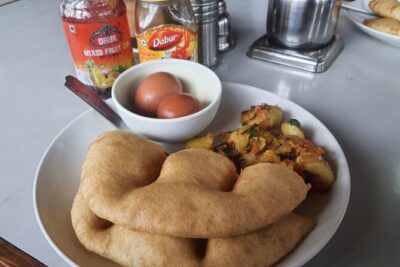
Still, you should budget for the items explicitly not included. The big one is meals during the trek. Your package includes only a limited set of breakfasts and dinners (hotel breakfasts plus welcome/farewell dinners are included), but daily trek meals aren’t. This affects your total trip spend, especially if you like caffeine, soups, and salty snacks as much as most hikers do.
Also, government fees are listed separately as $50 per person, and international flights aren’t included. Travel insurance is required but not included—you’ll need it to cover emergency evacuation and the highest altitude reached.
So is it good value? For me, it’s fair if you want guided pacing, organized logistics, and porter support without paying for a private, full-on luxury expedition. If you’re trying to do this ultra-budget style on your own, this package won’t match that plan.
Who this trek fits best (and who should think twice)
This is best for hikers with a strong physical fitness level. The pass climb to Thorong La at 5,416m is the headline, and you’ll also spend time at Tilicho Lake’s altitude of 4,919m.
You’ll likely enjoy this tour if you want:
- A classic circuit arc with an actual high-altitude detour
- Teahouse comfort and porter support (instead of heavy backpack carry)
- Real cultural stops like Manang and the pilgrimage town vibe at Muktinath
- A finish in Pokhara where you can recover
You might think twice if:
- You hate the idea of paying for most daily trek meals
- You’re not comfortable with pre-dawn effort for the pass
- You’re unsure you can handle altitude, even with acclimatization days planned
Also, keep in mind the group size: the trek is capped at a maximum of 14 travelers. That’s usually a sweet spot—less crowded than huge groups, still enough people to make the trip feel alive.
Should you book this Annapurna Circuit with Tilicho Lake?
If your heart is set on the Annapurna Circuit but you also want the extra statement of reaching Tilicho Lake and crossing Thorong La, this is a strong match. The operator builds in acclimatization time, uses teahouses to keep you sheltered, and provides structured support with porters and assistant guidance—exactly what you want when altitude is the real boss.
I’d book if you can handle a demanding high-altitude trek and you’re okay budgeting for daily meals during the walk. I’d pause if your plan is ultra-low-cost or if you’re hoping for a mostly easy stroll. This trek earns its reputation.
FAQ
What’s included in the Annapurna Circuit with Tilicho Lake package?
The package includes Kathmandu and Pokhara accommodations (3-star hotels with breakfast at both ends), teahouse accommodation during the trek, a licensed first-aid trained trek guide and assistant support, porters for your overnight bag, insurance coverage for the trek crew, and permits for ACAP and TIMS. Transportation is also included in multiple segments, along with welcome/farewell dinners and some breakfasts.
How high does the trek go?
The highest point mentioned is Thorong La Pass at 5,416m. Tilicho Lake is at 4,919m, and there are other high passes and staging points along the route.
Are trek meals included?
Meals during the trek are not included. The trip includes hotel breakfasts and a limited set of dinners (listed as two dinner inclusions), but you’ll need to pay for daily trek meals.
Do I need trekking permits?
Yes. The package includes the Annapurna Conservation Area (ACAP) Permit and the TIMS Permit, plus government fees are listed separately as $50 per person.
What do I need to bring?
Personal trekking gear is not included. Drinking water is also not included, and the recommendation is to bring a filter bottle or purification tablets.
Where do the tour start and end?
It starts in Thamel, Kathmandu (44600, Nepal) and ends back at the meeting point after returning from Pokhara to Kathmandu.