REVIEW · KATHMANDU
Annapurna Base Camp Trek
Book on Viator →Operated by Alpine Luxury Treks Pvt Ltd · Bookable on Viator
A sunrise forecast turns this trek into a test. You’ll work your way to Annapurna Base Camp with big mountain moments along the way, plus a dawn detour to Poon Hill for sunrise over Annapurna and Dhaulagiri ranges.
I love the way this trip handles logistics for you: airport transfers, permits, and even trekking gear like a down jacket and sleeping bag are included (you return the gear after the trek). I also like the support style, especially the porter setup (1 porter for 2 trekkers), which matters when you’re walking steep stone steps day after day. One consideration: this is not a casual walk—your own fitness needs to be strong, and weather can affect what you see on key mountain days.
Kathmandu also gets real attention before you head for the trail. You’ll visit major sights like Swayambhunath (Monkey Temple), Pashupatinath, Boudhanath, and Kathmandu Durbar Square, then settle into Thamel with easy wandering options like Ason market nearby. The trade-off is time: you’ll start early (days often begin around 6:15–8:00 am), so if you like slow mornings, plan to adjust fast.
In This Review
- Key highlights worth planning around
- Value check: what $1,623 buys on the Annapurna trek
- Kathmandu start: Thamel life and 4 major temples
- To Pokhara and into the hills: Nayapul, Ghorepani, and Poon Hill
- From villages to Base Camp: stone stairs, Machhapuchhre, and the main payoff
- Downhill to Jhinu Danda hot springs and the Pokhara recovery
- Back to Kathmandu: timings, flights, and how to finish smart
- Should you book this Annapurna Base Camp trek?
- FAQ
- How long is the Annapurna Base Camp trek package?
- Where does the trip start and end?
- What’s included in the tour price?
- Do I have to travel to Pokhara by bus?
- Are flights and Nepal visa included?
- Is travel or rescue insurance included?
Key highlights worth planning around
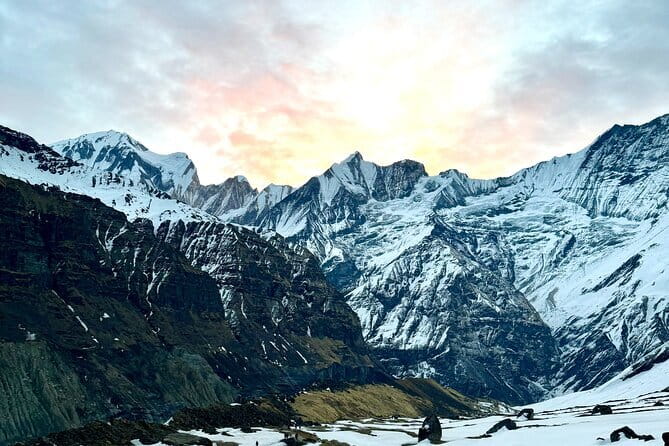
- Poon Hill sunrise timing: an early hike up from Ghorepani for sunrise views
- Annapurna Base Camp payoff: a long push that brings you close to Machhapuchhre and Annapurna peaks
- Cold-weather gear included: down jacket and sleeping bag provided for the trek
- Porter support for comfort: 1 porter for 2 trekkers reduces the load you carry
- Jhinu Danda hot spring recovery: a real reward day after the steeper walking
Value check: what $1,623 buys on the Annapurna trek
At $1,623 per person, the value here is mostly about what you don’t have to arrange yourself. The price covers trekking permits and paperwork, a medical kit, sightseeing entrance fees in Kathmandu, and airport pickup/drop-off by private vehicle. It also covers the practical stuff that’s easy to underestimate: a porter (shared at 1 porter for 2 trekkers), walking poles, and cold-weather gear (down jacket plus sleeping bag).
Meals are also included on the trekking portion: 14 breakfasts, 10 lunches, and 9 dinners. That’s important because it reduces daily decision fatigue on the trail—when you’re tired, you want simple. What’s not included is also clear: Nepalese visa fee, international flights, tea house personal expenses, and travel/rescue insurance. If you already have your own trekking poles or gear, you might question the cost, but for many people this package is a shortcut to less hassle and less gear shopping.
One more value angle: group size is kept small (maximum 10 travelers). A small group usually means easier coordination on early mornings and less crowding on viewpoints—especially around key sunrise and transition points.
You can also read our reviews of more tours and experiences in Kathmandu.



Kathmandu start: Thamel life and 4 major temples
You’ll land in Kathmandu and be met by a representative at the international airport, then transferred to your hotel in Thamel for an overnight stay. Your first free time is designed for low-stress acclimation. Thamel is the base for lots of trekking visitors, and you can walk to nearby spots like Ason market, one of Nepal’s oldest markets.
Day 2 is sightseeing with variety. You’ll visit Swayambhunath (Monkey Temple) for a hilltop perspective of the city, Pashupatinath (the crematory area), Boudhanath with its Buddhist monastery atmosphere, and Kathmandu Durbar Square—an ancient palace area. This set matters because it’s not only photos. Each place gives you a different lens on how Kathmandu life, religion, and daily routines intertwine.
The main drawback is timing and mental switching. You’ll go from temples and crowds straight into an early travel rhythm the next morning to reach Pokhara. If you’re sensitive to packed schedules, take it easy on Day 1 dinner and don’t overdo nightlife in Thamel before you start trekking.
To Pokhara and into the hills: Nayapul, Ghorepani, and Poon Hill
On Day 3, you head to Pokhara early. The overland option uses a bus leaving at 7 a.m. from the Tourist Bus Station, with a lunch stop along the way. There’s also a private vehicle option, and a flight option for those who want to skip the bumpy road (flight time is about 30 minutes).
Day 4 is your first real hiking day. You drive from Pokhara to Nayapul, then start trekking on a trail with stone paved steps through small villages. Near the area below Ulleri, you get early glimpses of Annapurna South and Himchuli, which is exactly what you want in the first push—proof the work is earning you views.
Day 5 shifts into rhododendron forest trekking. In spring, the rhododendrons can bloom in seven colors, and reaching Ghorepani brings that first big viewpoint payoff. The itinerary also includes a hot cup of tea with awe-inspiring mountain views—simple, but this is often when the trek starts to feel worth the effort.
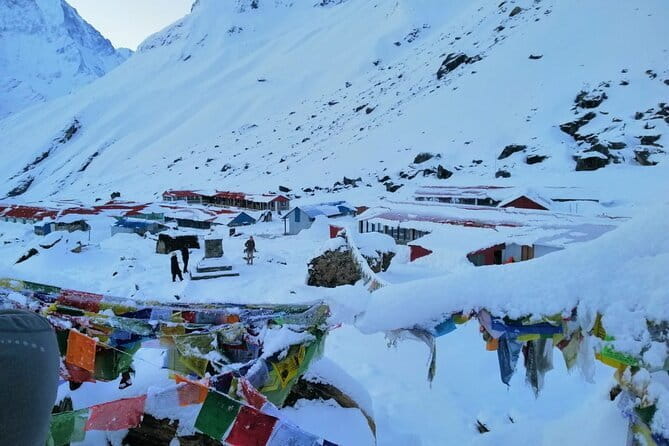
Day 6 is your dawn mission to Poon Hill. You wake early, take a torch for the climb (about one hour from Ghorepani), then catch sunrise over the Dhaulagiri and Annapurna Himalayan ranges. After breakfast back in Ghorepani, you trek to Tadapani, with mountain views continuing to follow you.
Practical tip: even if your body is ready, sunrise hikes need your head ready too—pack layers so you’re not stuck shivering at the viewpoint.
From villages to Base Camp: stone stairs, Machhapuchhre, and the main payoff
Days 7 through 10 are where the trek gets more serious. Day 7 starts with a trail ascending to Kimrong, then a gentler walk toward Chhmommorng, described as a small Gurung village. You’re getting both motion and culture here: village stops are your way to recharge with a meal and adjust to altitude and effort.
Day 8 is an easier rhythm. You trek toward Bamboo, passing Sinuwa (2360m) and enjoying views of Annapurna plus the Ghandruk village area. This is a good day for steady pacing. No hero moves—just keep walking and let the mountains do the talking.
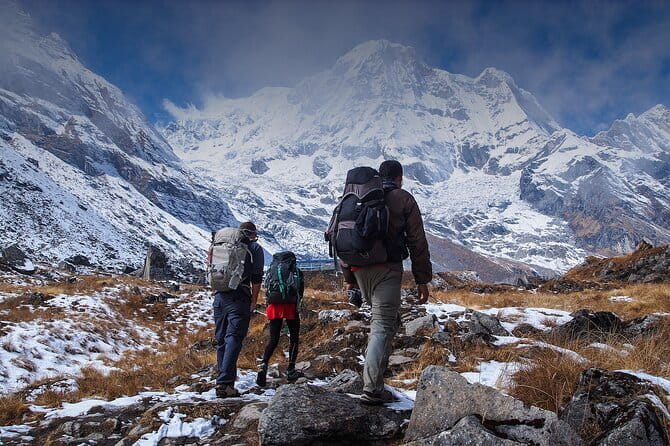
Day 9 builds the steep side of Annapurna. You start after early breakfast and walk a long stretch with stone staircase sections to Dobhan (2600m). From there you continue to Himalaya (2920m), pass Hinku Cave, and reach Deurali. The reason this day matters is that it sets you up for the emotional intensity of Day 10.
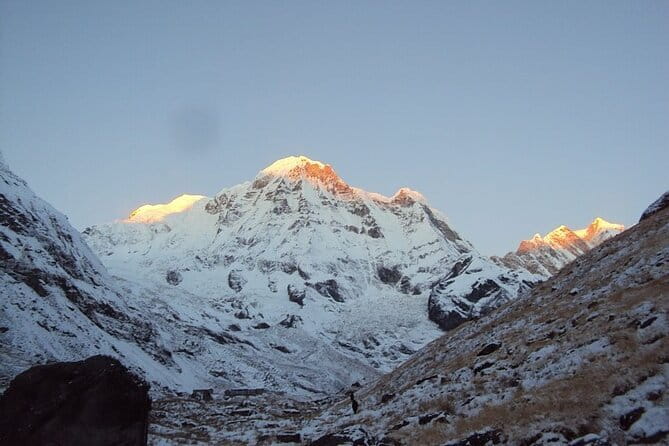
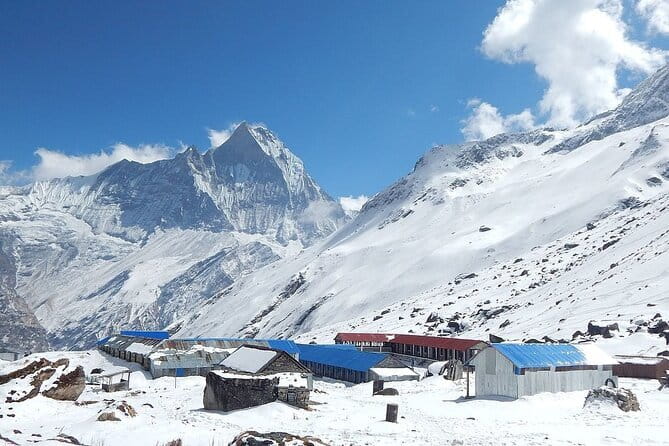
Day 10 is the hard-but-rewarding day. First you climb up to Machhapuchhre base camp, which the itinerary highlights as offering views of Machhapuchhre and peaks like Hiunchuli, Annapurna South, Annapurna I, Annapurna III, Gandharvachuli, and Gangapurna. Then you push onward to Annapurna Base Camp, with views that include Annapurna South, Machhapuchhre, Annapurna I, Hiunchuli, and other surrounding peaks. This is the day you planned for, so protect it: go slow early, eat what’s offered, and don’t waste daylight.
Possible consideration: your experience on Day 10 depends heavily on weather and visibility. The trek requires good weather, so if conditions are poor, the overall trip can be affected.
Downhill to Jhinu Danda hot springs and the Pokhara recovery
Day 11 is long but easier in effort because it’s mostly downhill. You trek gently to Bamboo while taking in extraordinary scenery. For many people, the best part of a downhill day is mental relief—your legs work, but you’re not constantly climbing.
Day 12 is early start again, but with a fun payoff. You trek toward Khuldighar (2540m), then head downhill to Chhomorng and further down to Jhinu Danda. The big reward is the natural hot spring place where you can take a dip in a hot water pond to refresh tired legs. This is one of the strongest reasons to do Annapurna Base Camp rather than stopping earlier: you finish the harder sections with a recovery moment you can actually feel.
Day 13 brings you down to Nayapul and then a drive back to Pokhara. You also get some free time in Pokhara to walk around on your own. There’s an optional shortcut worth noting: the itinerary says that if you want to skip the trekking part, you can drive back to Pokhara directly from Jhinu Danda.
Practical recovery advice: plan to eat something salty after hot springs. The goal isn’t just comfort; it’s bringing your body back to normal so you can handle your final bus ride to Kathmandu the next morning.




Back to Kathmandu: timings, flights, and how to finish smart
Day 14 is your return journey. The itinerary has a bus leaving early at 8 a.m. from the Tourist Bus Station and driving back to Kathmandu, with a lunch stop along the way. You can also choose private vehicle transport, or fly (about 30 minutes) if you want to reduce time on the road.
In Kathmandu, you’ll do last shopping in Thamel. This matters because trekking trips often leave you wanting small fixes: a last pair of socks, a warmer layer, gifts, or a camera accessory.
Day 15 is straightforward. You’re transferred to Kathmandu International Airport for your return flight, and the trip ends back at the meeting point. The smooth finish is valuable because after days of walking, you don’t want a stressful scramble on your final day.
One more thing to remember: this trek runs on an early schedule throughout. The meeting point details also show a start time of 6:15 am at Hotel Thamel Park Pvt. Ltd., Chaksibari Marg 594-16, Kathmandu. If you’re the type who needs a slow wake-up, build in extra calm for your first days.
Should you book this Annapurna Base Camp trek?
I’d book this if you want a classic Annapurna route that balances a big summit-day feel with sunrise magic at Poon Hill and a real recovery stop at Jhinu Danda. The value is strong for the price because it includes down jacket and sleeping bag, permits and paperwork, and trekking meals during the walking days, plus walking poles and porter support (1 porter for 2 trekkers).
I’d hesitate if your fitness is still building. The itinerary includes long days, stone stair sections, and an early sunrise climb. Also, if you need predictable weather to enjoy the main viewpoints, know that the experience requires good conditions and visibility.
If you’re planning your first trek, this also reads like a sensible “learn the rhythm” trip: organized transfers, a small group (maximum 10), and enough built-in structure that you can focus on the trail.
FAQ
How long is the Annapurna Base Camp trek package?
The itinerary is about 15 days (approx.).
Where does the trip start and end?
It starts at Hotel Thamel Park Pvt. Ltd., Chaksibari Marg 594-16, Kathmandu and ends back at the meeting point.
What’s included in the tour price?
The package includes down jacket and sleeping bag, walking poles, a porter setup (1 porter for 2 trekkers), medical kit, trekking permits and necessary paperwork, entrance fees for sightseeing in Kathmandu, and breakfast/lunch/dinner during the trek (14 breakfasts, 10 lunches, 9 dinners), plus airport pickup and drop-off by private vehicle.
Do I have to travel to Pokhara by bus?
No. You can take the bus (leaving at 7 a.m.), arrange a private vehicle, or choose a flight option (about 30 minutes).
Are flights and Nepal visa included?
No. International airfare and the Nepalese visa fee are not included.
Is travel or rescue insurance included?
No. Travel and rescue insurance is not included.